What Documents Do I Need to Open a Bank Account in Lithuania?
Alright, let's talk about one of those quintessential expat experiences that always seems to hit you right when you least expect it: opening a simple bank account. You've landed, maybe found an apartment, and you're ready to get settled, only to find yourself tangled in a web of document requirements that feel like a bureaucratic labyrinth. Trust me, I've been there, standing at a bank counter, trying to understand what exactly they need. This comprehensive guide will demystify the process, outlining exactly what documents you'll need to successfully open a bank account in Lithuania, offering a smoother transition into your new life.
The Initial Hurdles: Why Opening a Bank Account Can Feel Like a Gauntlet
When you first arrive in Lithuania, everything feels new and exciting. Then you hit the administrative wall, and often, opening a bank account is one of the first major obstacles. It's not just about walking in with your passport; there are layers of proof and verification that can be genuinely perplexing, especially if you're fresh off the plane and still navigating the language and system.
The "Catch-22" of Lithuanian Bureaucracy
One of the most common frustrations I hear, and certainly experienced myself, is the infamous "Catch-22." You need an official address to open a bank account, but sometimes you need a bank account to pay for utilities that then prove your address. Or you need a Lithuanian phone number, which you might struggle to get without some form of local identity or payment method tied to a local bank. It's enough to make you want to pull your hair out! This interdependent web of requirements often leaves new expats feeling stuck in a loop, unsure of which step to tackle first. It’s crucial to understand that these aren't arbitrary hurdles designed to annoy you, but rather part of the country's robust anti-money laundering and know-your-customer (KYC) regulations, which are quite strict across the EU.
Navigating this can be particularly tricky if you're still in temporary accommodation or haven't yet secured all your long-term residency documents. Banks want to see stability and a clear link to Lithuania, which can be hard to demonstrate in your first few weeks or months. This is where patience, preparation, and understanding the sequence of official registrations become invaluable. Sometimes, the order in which you complete certain administrative tasks, like declaring your residence, can significantly impact the ease of opening a bank account.
Common Frustrations and Misconceptions for New Arrivals
Beyond the document tango, there are other frustrations. Many new arrivals assume their foreign bank statements or international utility bills will suffice as proof of funds or address. Unfortunately, most Lithuanian banks prefer, if not insist on, local documentation. The language barrier can also be a significant challenge. While many bank employees, especially in larger cities like Vilnius and Kaunas, speak excellent English, there might be times when nuanced questions or specific terms are lost in translation, leading to miscommunication or additional trips back and forth for more papers.
Another misconception is that all banks have the same requirements. While the core documents are similar, individual bank policies can vary slightly, especially concerning the acceptance of alternative proofs or the speed of processing. Some banks might be more accommodating to non-EU citizens or those with complex residency situations than others. This variability means that a bit of preliminary research into different banks – like Swedbank, SEB, or Luminor – can save you a lot of time and heartache down the line. It's not uncommon for expats to try several banks before finding one that aligns best with their specific situation and current documentation.
Essential Documents for Opening a Personal Bank Account in Lithuania
Let's get down to the brass tacks: what physical bits of paper (or digital proofs) do you absolutely need to bring? This is the core of your application, and having these in order will make the entire process significantly smoother.
Primary Identification Documents
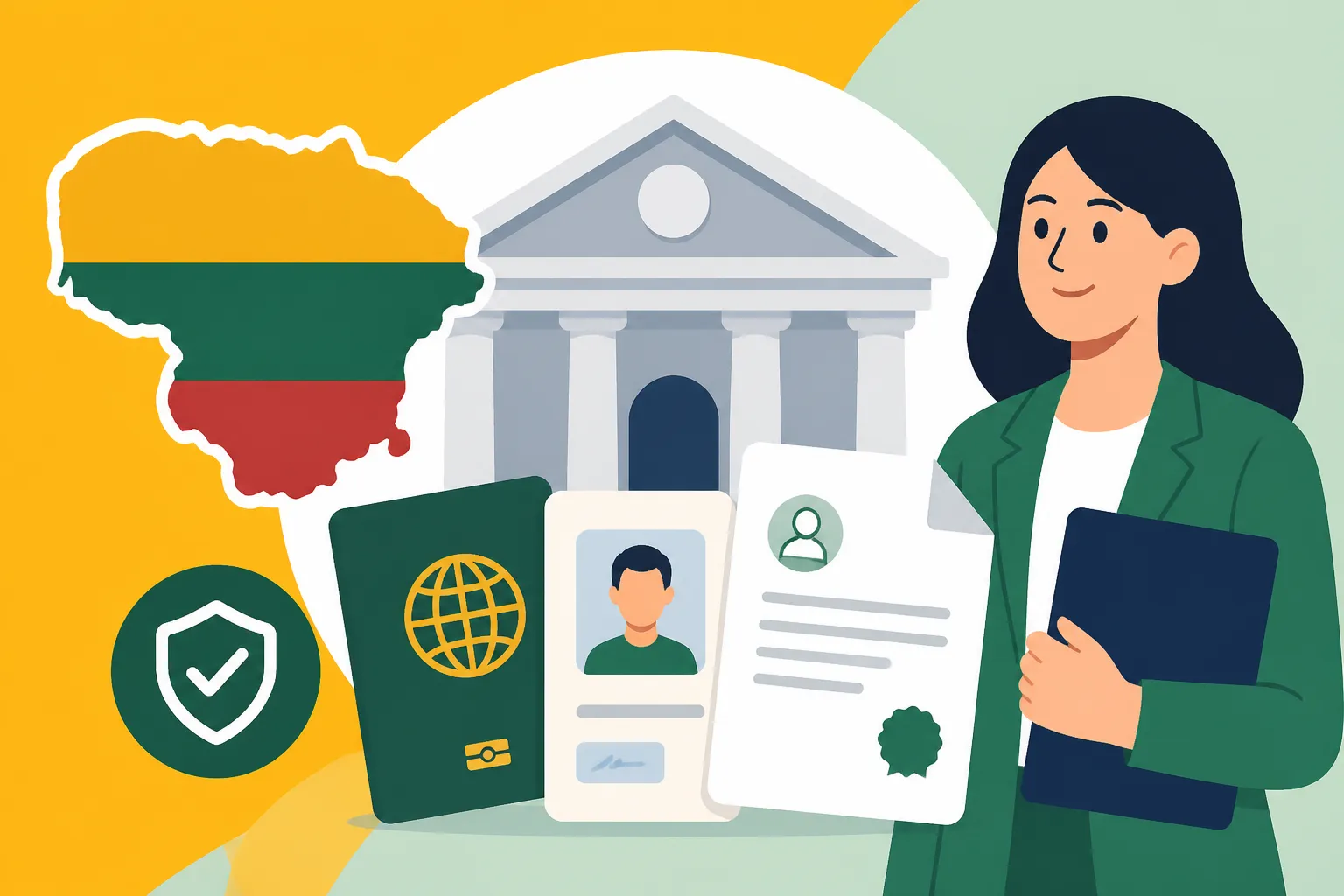
First and foremost, you'll need to prove who you are. This usually means a valid passport. It's essential that your passport is current, not expired, and ideally has several months of validity remaining, as some institutions are particular about this. For EU citizens, a national ID card might suffice, but a passport is universally accepted and often preferred by banks for foreigners.
In addition to your passport, if you are a non-EU citizen, your Lithuanian Temporary Residence Permit (TRP), or Leidimas laikinai gyventi, is absolutely crucial. This permit not only verifies your identity but also your legal right to reside in Lithuania for an extended period. The bank will typically want to see the physical card itself, not just a copy, and will make copies for their records. For EU citizens, your official registration of residence, sometimes known as a certificate of the right to reside in Lithuania, will be the equivalent. This document proves your legal status and ties to the country, which is a fundamental requirement for financial institutions. Without it, even with a valid passport, you'll likely hit a roadblock.
Proof of Lithuanian Residency and Address
This is often where things get tricky. Banks need to verify your physical address in Lithuania. A rental contract (nuomos sutartis) is the gold standard here. It should be officially registered with the Registrų Centras (Centre of Registers) and ideally, a copy provided by your landlord with their signature and a stamp, or a printout from the e-services portal showing its registration, will be required. Simply having a contract isn't always enough; the bank wants proof that it's a legitimate, declared residency.
If you own property, then the property ownership documents, also registered with the Registrų Centras, will serve this purpose. In some cases, a recent utility bill (electricity, gas, or internet) in your name might also be accepted as supplementary proof, but usually only after you've established some form of residency. It’s a bit of a chicken-and-egg situation sometimes, as you need an account to pay bills, but bills might be needed to open an account! This is why securing your official Declaring Your Place of Residence in Lithuania: The Complete Guide as soon as possible is paramount. It gives you the necessary official stamp to show banks you're not just passing through.
Your Asmens Kodas: The Indispensable Personal Code
The Asmens Kodas, or personal identification code, is arguably the single most important piece of identification you'll need for almost anything official in Lithuania, and opening a bank account is no exception. This unique 11-digit number acts like your social security number, national ID number, and tax identification number all rolled into one. It links you to every official database in the country, from healthcare to taxes.
You typically receive your Asmens Kodas when you are issued your Temporary Residence Permit. For EU citizens, it's often assigned when you register your right of residence at the Migration Department. Banks will input this number into their systems to pull up your official details and ensure everything matches. Trying to open an account without one is like trying to drive a car without a license plate – it simply won't work in most scenarios. If you haven't received yours yet, make sure to read How to Get Your Asmens Kodas Personal Code and Why It Matters for Healthcare for a detailed walkthrough. Without this, your banking journey will likely be stalled before it even begins.
Beyond the Basics: Supplementary Documents and Special Cases
While the core documents are non-negotiable, banks might request additional information, especially depending on your employment status, source of funds, or specific residency situation. Being prepared for these extras will save you a lot of back-and-forth.
Proof of Income or Funds
Banks want to ensure you're not opening an account for illicit purposes and that you have a legitimate source of income or funds to justify your banking activities. If you are employed in Lithuania, an employment contract (darbo sutartis) from your Lithuanian employer is often requested. This document validates your financial stability and your legal working status in the country. It should clearly state your salary, position, and the duration of your employment.
For students, a letter of acceptance or enrollment from your Lithuanian university, along with proof of scholarship funds or personal bank statements showing sufficient funds for your studies, will usually suffice. If you're self-employed, things get a bit more complex. You might need to provide proof of your registered individual activity (individuali veikla) with the Lithuanian Tax Authority (VMI) and potentially recent invoices or bank statements from your previous country of residence to show your income flow. Understanding PSD Contributions Through Sodra in Lithuania can also offer insights into how your income is reported and validated within the Lithuanian system.
Tax Residency and Identification Numbers
With increasing global scrutiny on financial transparency, banks are very keen to understand your tax residency. Even if you're a tax resident in Lithuania, they will likely ask for your Tax Identification Number (TIN) from your home country, especially if you've recently moved. This is part of international agreements like the Common Reporting Standard (CRS) to prevent tax evasion.
For most expats, your Asmens Kodas will serve as your Lithuanian TIN. However, if you have complex tax obligations or income streams from multiple countries, you might be asked to provide a tax residency certificate from your previous country. This is particularly relevant if you're trying to avoid double taxation, a common concern for expats. Services like "Taxes for Expats" specialize in helping foreigners navigate these international tax complexities, which can sometimes directly impact banking requirements. It's always best to be transparent about your tax situation from the outset.
Considerations for Non-Residents and the Self-Employed
Opening a bank account as a true non-resident (someone without any official residence permit or declared address in Lithuania) is exceptionally difficult, if not impossible, with traditional Lithuanian banks. Most institutions require a clear link to the country through residency. However, if you're initially trying to set up some financial infrastructure while finalizing your residency, some fintech solutions might offer limited services, though these typically won't be full Lithuanian bank accounts.
For the self-employed, the process can be more stringent. Beyond your individual activity registration, banks might scrutinize your business plan or your anticipated income more closely. You might need to demonstrate consistent income over a period, even if it's from abroad initially. This is where clarity and organization of your financial records become paramount. If you're operating as a freelancer, documenting your client contracts and invoices meticulously will strengthen your application considerably. Consider reading How to Register as a Freelancer with the Lithuanian Tax Authority VMI for a comprehensive guide on setting up your self-employment status.
Navigating the Application Process and Alternative Solutions
Once you have your documents in hand, the next step is the actual application. It’s not just about what you bring, but how you present it and choose your banking partner.
Choosing Your Banking Partner: Traditional vs. Digital Options
Lithuania has a well-developed banking sector, dominated by major players like Swedbank, SEB, and Luminor. These traditional banks offer comprehensive services, including branches, ATMs, and strong online banking platforms. They are generally the go-to for full-fledged accounts, loans, and mortgages. However, they are also the most stringent regarding documentation and face-to-face verification.
On the other hand, fintech companies like Revolut or Wise (formerly TransferWise) offer quick-to-open accounts, often with fewer initial hurdles, especially for basic transfers and spending. These are fantastic for managing international money transfers, exchanging currencies, and daily spending, especially while you're still getting your traditional Lithuanian bank account sorted. Many expats use a combination: a "Wise" account for initial transfers and global spending, and a traditional Lithuanian bank for salary, rent, and official payments. Wise is particularly excellent for getting money into Lithuania without exorbitant fees, making it a great interim solution.
Step-by-Step: From Appointment to Account Activation
The process typically starts with booking an appointment online or by phone. Walk-ins are generally discouraged, especially for new account openings. When you go for your appointment, bring all your documents, including originals and several copies. The bank officer will review everything, take copies, and ask you a series of questions about your source of funds, purpose of the account, and your tax residency. This is standard procedure, so don't be alarmed.
If everything is in order, they'll usually initiate the account opening, which might involve signing various forms and agreements. It's rare for an account to be activated on the spot; there's often a verification period that can take a few days to a week. You'll then typically receive your debit card by mail to your registered address a few days later. Remember to keep all the papers you sign and any information they give you, as you might need them to activate online banking or for future queries.
Tips for a Smoother Journey and Fintech Alternatives
My biggest piece of advice is: be patient. Bureaucracy moves at its own pace. Double-check the bank's specific requirements beforehand, ideally on their English website or by calling their expat services line. Don't be afraid to ask for clarification if something isn't clear, even if it means asking for an English-speaking representative.
It's also a good idea to bring a native Lithuanian speaker with you if possible, especially if you're not confident in your language skills. Even if the staff speak English, having someone who understands the nuances can be incredibly helpful. And for those initial weeks or months, as mentioned, don't underestimate the power of digital financial services. Using a service like Wise to receive your initial salary or transfer funds can bridge the gap beautifully until your traditional Lithuanian bank account is fully operational. These services are invaluable for maintaining financial flexibility during your transition to Lithuania.
Here's a quick summary of the key documents you'll likely need:
| Document Category | Specific Document Examples | Purpose | Notes |
|---|---|---|---|
| Primary Identification | Valid Passport | Verifies identity and nationality. | Must be current, original. |
| Lithuanian Temporary Residence Permit (TRP) / EU Residence Card | Proves legal right to reside in Lithuania (for non-EU/EU citizens). | Physical card required. | |
| Local Identification | Asmens Kodas (Personal Code) | Unique national ID number, linking to all official systems. | Crucial for all official interactions, including banking. |
| Proof of Address | Registered Rental Contract (nuomos sutartis) | Confirms official residential address in Lithuania. | Should be registered with Registrų Centras. |
| Utility Bill (in your name) | Supplementary proof of address (electricity, gas, internet). | Often accepted once other proofs are established. | |
| Proof of Funds/Income | Employment Contract (darbo sutartis) | Verifies source of income from a Lithuanian employer. | Details salary, position, employment duration. |
| University Acceptance Letter / Scholarship Proof | For students, confirms enrollment and financial support. | May require personal bank statements showing sufficient funds. | |
| Self-Employment Registration (e.g., Individuali Veikla) | For self-employed, confirms legal business status. | May require past income statements or invoices. | |
| Tax Information | Foreign Tax Identification Number (TIN) | For international tax reporting purposes (e.g., CRS). | Usually requested for non-Lithuanian tax residents or foreign income. |
Disclaimer
Please note that this guide provides general information based on common expat experiences and publicly available information. Banking regulations and document requirements can change. It is always recommended to verify the most current requirements directly with your chosen bank or the Lithuanian Migration Department before proceeding with your application.