Understanding Sodra Contributions for Employees and the Self-Employed
Lithuanian social insurance contributions fund pensions, healthcare, and sick leave for employees and self-employed individuals.

Lithuanian social insurance contributions fund pensions, healthcare, and sick leave for employees and self-employed individuals.

Lithuanian tax residency certificates, officially known as Form FR0596, help expats avoid double taxation on global income.

Corporate income tax for a Lithuanian closed joint stock company applies a standard fifteen percent rate on taxable profits.

Reporting foreign income to the Lithuanian State Tax Inspectorate involves understanding the 183-day rule and tax residency.

Lithuanian progressive GPM rates and the Sodra ceiling determine personal income tax calculations and take home pay for workers.

Double taxation for expats in Lithuania involves overlapping tax claims and conflicting residency rules between two countries.

The tax-exempt amount or NPD in Lithuania lowers personal income tax for resident workers, directly increasing net monthly take-home pay.
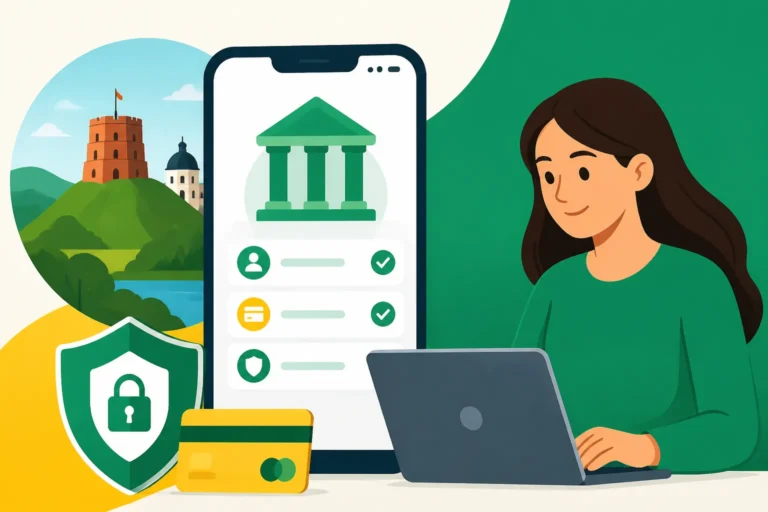
Online banking setup in Lithuania enables expats to transfer rent payments, manage utility e-invoices, and access accounts via Swedbank, SEB, and Luminor.

Lithuanian tax rules for dividend and interest income explain how residents declare worldwide earnings and pay the fifteen percent rate.
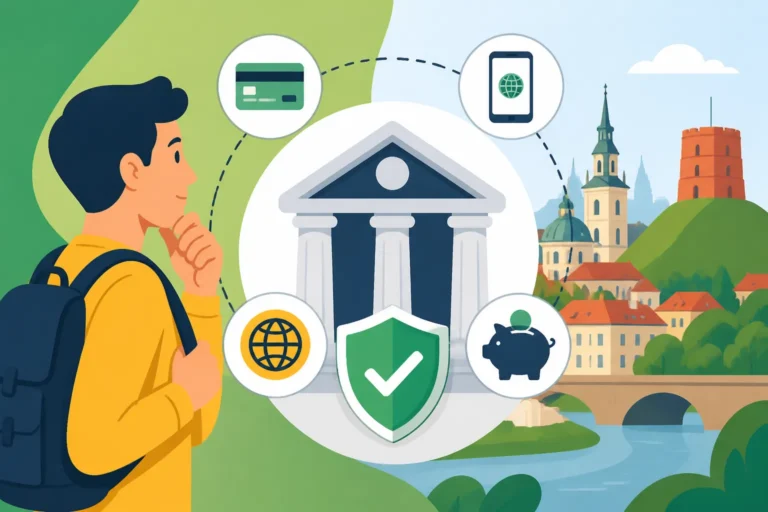
Choosing a Lithuanian bank as an expat compares traditional banks and fintech options like Swedbank, SEB, Revolut, and Wise.