How to Choose a Mobile and Internet Provider in Lithuania
Oh, the joy of moving to a new country and figuring out something as seemingly simple as how to get a phone signal or internet connection! I remember arriving in Lithuania, utterly lost in the maze of unfamiliar company names, data plans, and contractual jargon. It’s a common frustration, believe me, and often one of the first hurdles you face after landing. But don't you worry, because this guide is here to untangle that web for you, helping you choose the best mobile and internet provider in Lithuania without pulling your hair out.
Understanding the Landscape of Lithuanian Telecoms
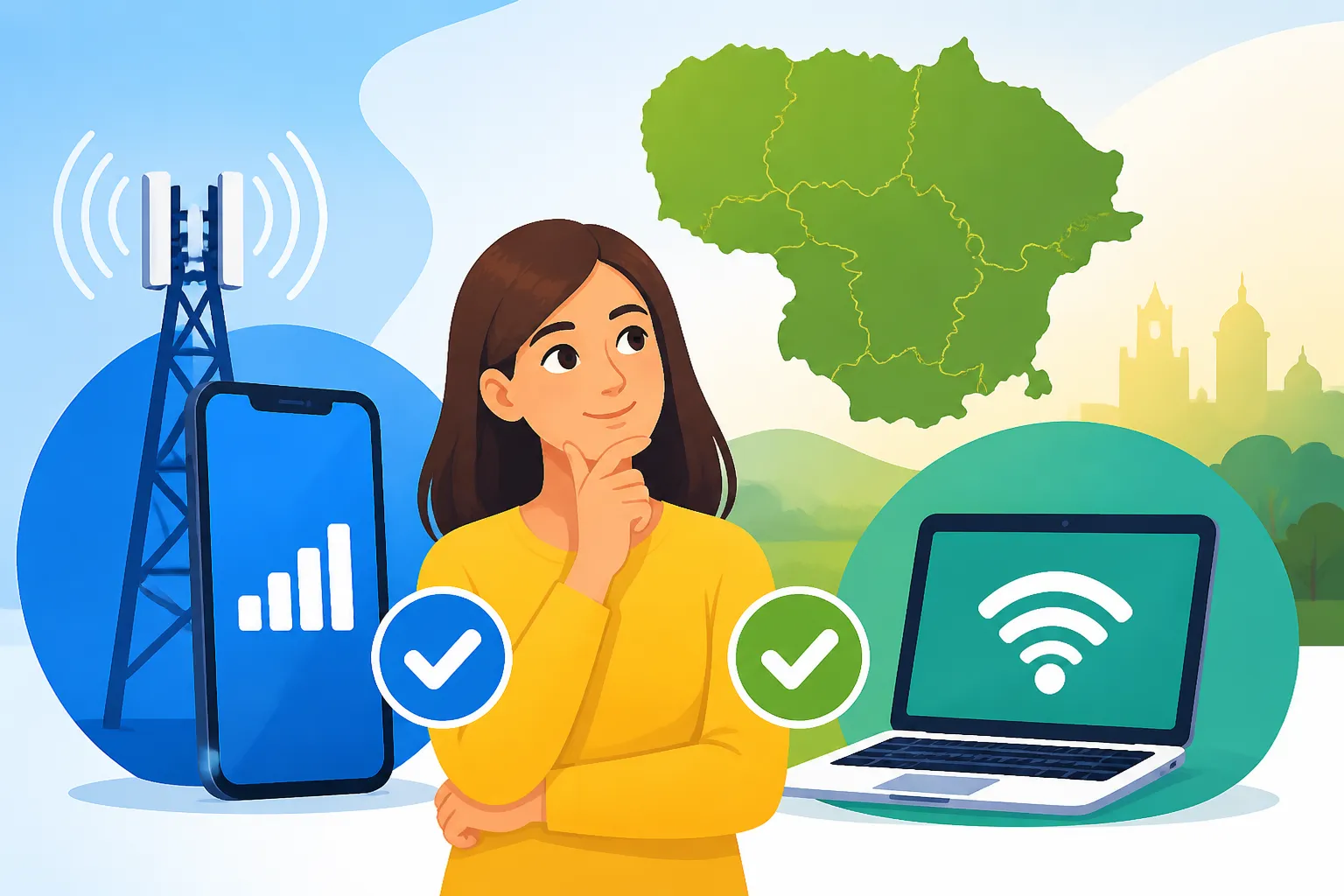
Lithuania, despite its size, boasts a really robust and modern telecommunications infrastructure, especially when it comes to internet speed and mobile coverage. You'll find that fibre optic internet is surprisingly widespread, even in smaller towns, and 5G networks are expanding rapidly. This means you're generally in for a good experience, but knowing who to go with and what to ask for is half the battle.
Major Mobile and Internet Providers
When you first start looking, you'll quickly notice three big names dominating the scene: Telia, Bitė, and Tele2. These aren't just mobile providers; they offer a full spectrum of services, including home internet, TV, and various bundled packages.
- Telia: Often considered the premium option, Telia offers excellent coverage, especially for 5G, and strong customer service. They tend to be a bit pricier, but many users swear by their reliability. They're a good all-rounder for both mobile and home internet, often being the first choice for fibre optic connections.
- Bitė: Bitė is a strong competitor, known for its decent coverage and often innovative approaches to plans and services. They’re usually a good middle-ground option, balancing cost and performance effectively. They also have a good reputation for customer care, which is a huge plus for expats.
- Tele2: This provider usually positions itself as the budget-friendly choice. While their prices are generally lower, their network coverage and customer service are still very respectable. If you're looking to save a few euros without sacrificing too much quality, Tele2 is definitely worth considering.
Beyond these giants, you'll also encounter several Mobile Virtual Network Operators (MVNOs) like Ežys, Labas, Pildyk, and IZI. These are essentially prepaid brands run by the major players (Ežys and Pildyk by Telia, Labas by Bitė, IZI by Tele2). They often offer fantastic value for money, especially for mobile data, and are popular among students and those who prefer not to commit to a long-term contract.
Types of Services Available
The telecom market in Lithuania is quite comprehensive, offering everything you'd expect from a modern European country.
- Mobile Services: You have the choice between prepaid (before you pay, išankstinio mokėjimo) and post-paid (contract, abonementas) plans. All major providers offer both 4G and rapidly expanding 5G coverage across the country. Data allowances are typically generous, and many plans even include unlimited data options. If you travel frequently, pay close attention to roaming benefits, especially within the EU and beyond. For those really on the go, a flexible eSIM service like Airalo can be a lifesaver for data when you're hopping between countries, keeping your local Lithuanian SIM free for calls and texts.
- Home Internet: This is where Lithuania truly shines. Fibre optic internet (šviesolaidis) is incredibly common and delivers lightning-fast speeds. You'll find it available in most urban and semi-urban areas. Where fibre isn't yet laid, DSL or cable internet options are generally available. Mobile broadband, using a 4G/5G router, can also be a viable option, particularly if you live in a remote area or need a temporary solution before fibre installation.
- Bundled Packages: To sweeten the deal, most providers offer bundled services, combining mobile, home internet, and TV packages. These can often lead to significant savings compared to subscribing to each service separately. It's worth looking into these if you need multiple services from the same provider.
Navigating Language Barriers and Customer Service
Ah, the language barrier – the universal expat challenge! While many Lithuanians, especially younger generations and those in customer-facing roles, speak English, it’s not always a given. When dealing with official channels like telecom providers, you might encounter staff who are more comfortable in Lithuanian or Russian.
Here are some tips to help you navigate:
- Online Portals: Most major providers have decent English versions of their websites and self-service portals. These are invaluable for checking your balance, changing plans, or troubleshooting.
- Physical Stores: If you can, visit a physical store in a larger city like Vilnius or Kaunas. You're more likely to find English-speaking staff there. Don't be shy about asking, "Ar kalbate angliškai?" (Do you speak English?).
- Bring a Friend: If you have a Lithuanian friend or colleague, bringing them along for complex interactions (like signing a contract) can make a huge difference.
- Google Translate: Have it ready! It's not perfect, but it can help with basic communication.
- Persistence: Sometimes you just need to be persistent. If one agent can't help in English, politely ask if there's someone else available who can.
Remember, getting set up with essential services like mobile and internet is a key step in getting settled. Don't let language deter you. While you're getting acquainted with the local services, you might also be navigating how to get your Asmens Kodas (Personal Code), which is crucial for many administrative tasks, including signing contracts.
Choosing Your Mobile Plan: What Expats Need to Know
Your mobile phone is your lifeline. It's how you stay in touch with family, navigate new streets, and translate restaurant menus. Choosing the right plan is paramount.
Prepaid vs. Post-Paid (Contract) Options
This is often the first decision you'll face, and each has its own set of advantages and hurdles for expats.
-
Prepaid (išankstinio mokėjimo): This is by far the easiest and most flexible option for new arrivals.
- Pros: No credit checks, no long-term commitment, easy to acquire. You pay upfront, so no surprise bills. Top-ups are readily available online, in supermarkets, kiosks, and even at many ATMs. Brands like Ežys, Labas, and Pildyk offer competitive prepaid packages.
- Cons: You need to actively manage your balance and data. It can sometimes be more expensive per gigabyte if you're a heavy user, although many prepaid plans now offer very generous data bundles. You’ll still need to register your prepaid SIM with an ID at the point of purchase, but it's much simpler than a contract.
- Expat Experience: For your first few months, a prepaid plan is often the wise choice. It allows you to get connected immediately while you're still getting your residence permit sorted and opening a bank account. Once you’re settled and have a better grasp of your usage, you can always switch to a contract.
-
Post-Paid (abonementas): These are the traditional contract plans.
- Pros: Often better value for heavy users, sometimes include premium services or phone subsidies. Less hassle with topping up, as billing is automatic.
- Cons: Requires a contract, usually for 12 or 24 months. Providers will perform a credit check, and you'll typically need a valid Lithuanian residence permit and an Asmens Kodas. A Lithuanian bank account for direct debit is also essential. Early termination fees can be substantial.
- Expat Experience: Getting a post-paid plan usually requires you to be officially settled. If you're fresh off the plane, you likely won't have the necessary documentation or credit history. This is often something you tackle a few months into your stay, after you've completed your registration for compulsory health insurance (PSD) and sorted out other key documents, like your residence permit.
Data, Calls, and SMS: Finding the Right Balance
What you need from your phone plan really depends on your lifestyle.
- Data: Lithuania is a data-hungry nation, and providers offer very competitive data packages. Unlimited data plans are common and surprisingly affordable compared to many Western European countries. If you stream a lot, rely on navigation, or use social media heavily, unlimited data might be a smart investment. If you mostly use Wi-Fi, a plan with 5-10GB might suffice. Keep an eye on 5G availability if speed is critical for you; Telia generally has the broadest 5G coverage right now.
- Calls and SMS: Local calls and SMS are often bundled generously, sometimes even unlimited, in both prepaid and post-paid plans. However, international calls are a different story. If you're regularly calling family back home outside the EU, check the international call rates, or consider using VoIP apps like WhatsApp or Messenger for free calls. Roaming within the EU is generally "Roam Like at Home," meaning you use your Lithuanian allowance without extra charges, but confirm specific limits with your provider. For travel outside the EU, consider using an eSIM for data, as traditional roaming charges can be astronomical.
- International Roaming: If you're an EU citizen using your existing EU plan in Lithuania, you'll generally benefit from "Roam Like at Home" for up to four months, after which providers might start applying surcharges if your usage is consistently higher in Lithuania than in your home country. For non-EU expats, if you plan to travel within Europe or beyond, carefully compare roaming packages from Lithuanian providers. Again, services like Airalo offer data-only eSIMs that can be extremely cost-effective for short trips outside Lithuania, allowing you to bypass expensive roaming fees.
SIM Card Acquisition and Activation
Getting your hands on a SIM card is usually straightforward, but the process varies slightly depending on whether it's prepaid or a contract.
- Prepaid SIMs: You can buy these almost anywhere: at provider stores (Telia, Bitė, Tele2), large supermarkets like Maxima or Iki, Narvesen kiosks, and even some smaller convenience shops. You'll need to show a valid ID (passport or national ID card) for registration. This is a legal requirement in Lithuania, even for prepaid services. The SIM card often comes pre-loaded with a small amount of credit or a basic data package, and activation is usually instant or within a few minutes after purchase.
- Contract SIMs: For post-paid plans, you'll need to visit a provider's official store. You'll need your residence permit, your Asmens Kodas, and possibly proof of address (like a rental agreement or a certificate from the Registrų Centras stating your declared residence). The sales assistant will help you fill out the paperwork, and the activation typically happens on the spot or within an hour. They will also set up direct debit for payments from your Lithuanian bank account. This is why having your bank account sorted, as detailed in our guide on How to Open a Bank Account at a Lithuanian Bank as a Foreigner, is so important before attempting a contract.
Setting Up Home Internet: Your Digital Lifeline
For many expats, reliable home internet is just as important as mobile connectivity. Whether for work, streaming, or keeping in touch, it’s a critical piece of your living puzzle.
Fibre Optic vs. Other Technologies
Lithuania has made significant investments in its internet infrastructure, so you'll generally be spoiled for choice.
- Fibre Optic (šviesolaidis): This is the gold standard in Lithuania. The country boasts one of the highest fibre penetration rates in Europe, meaning incredibly fast and stable internet is available to a vast majority of households, even outside major cities. Speeds can easily reach 300 Mbps, 500 Mbps, or even 1 Gbps. If fibre is available at your address, it's almost always the best option for speed, reliability, and value. Telia, Bitė, and Tele2 are the main providers for fibre internet.
- DSL/Cable Internet: If fibre isn't available in your specific building or area (which is becoming increasingly rare), DSL (Digital Subscriber Line) or cable internet might be alternatives. These use existing phone lines or cable TV infrastructure. Speeds will be slower than fibre, but still perfectly adequate for most typical internet usage.
- Mobile Broadband: This involves using a dedicated 4G or 5G router that connects to the mobile network. It's an excellent option for temporary setups, rural areas where fixed-line internet isn't available, or as a backup. Speeds depend on mobile network coverage in your exact location, but modern 5G mobile broadband can rival slower fixed-line connections. It’s particularly useful for those who might be in a temporary rental while exploring long-term housing options, a situation often faced by those who have just moved to Lithuania, as Sirelo notes in their guides for international moves.
Installation Process and Timelines
Once you’ve chosen a provider and a plan, the installation process usually follows a predictable pattern.
- Scheduling an Appointment: You'll typically schedule an installation appointment for a technician to come to your home. This can usually be done online or in-store. Be sure to confirm that the technician will speak English if that's a concern, or have a Lithuanian speaker available during the appointment.
- What to Expect: If fibre is being installed for the first time in your apartment or house, the technician will run a fibre optic cable from the building's main connection point to your router. This might involve drilling a small hole or running cable along existing conduits. They will then set up the router and ensure the service is active. For existing connections, it's usually just a matter of plugging in and activating the modem.
- Timelines: Installation times can vary. If fibre is already present in your building, activation might be as quick as a few days. If new cabling needs to be laid, it could take 1-2 weeks. It's always best to inquire about the estimated timeline when you sign up for the service. Plan ahead, especially if you need internet immediately for work or other commitments. Coordinating this with your move-in date, which can be managed with resources like Sirelo, is key to avoiding a connectivity gap.
Understanding Contract Terms and Equipment
Just like with mobile contracts, home internet usually comes with its own set of terms and conditions.
- Minimum Contract Periods: Most home internet contracts have a minimum term, typically 12 or 24 months. Be very clear about this before signing. If you plan a shorter stay in Lithuania or anticipate moving frequently, you might want to explore options with no contract or shorter terms, even if they are slightly more expensive.
- Modem/Router Provision: Providers usually offer to supply the necessary modem and/or Wi-Fi router. Sometimes this is included in the monthly fee, other times it's a separate rental charge or an upfront purchase. Clarify ownership and return policies. If you bring your own router, ensure it's compatible with the provider's network and services.
- Early Termination Fees: If you break your contract before the minimum term, you will likely incur early termination fees. These can vary significantly, so ask for details upfront. This is particularly relevant if you're renting an apartment and your rental agreement ends before your internet contract does, or if you plan to move away from Lithuania. Being aware of these details is part of understanding your broader [Tenant and Landlord Obligations in Lithuania].
Bundles, Special Offers, and Cost Considerations
Navigating the pricing structures and finding the best value can feel like a game of hide-and-seek. But with a bit of savvy, you can secure some excellent deals.
Combining Services for Savings
Providers love to lock you in, and they do it by offering enticing bundles.
- Mobile + Internet + TV Bundles: The most common form of bundling is combining your mobile phone plan, home internet, and potentially a TV package from the same provider. These integrated plans often come with a significant discount compared to buying each service separately. For instance, Telia often has attractive "smart" packages that include all three. If you're looking for simplicity and savings, exploring these options is a must.
- Family Plans: If you're moving to Lithuania with your family, look into family plans for mobile services. These allow you to add multiple SIM cards under one account, often at a reduced rate for each additional line. This simplifies billing and can lead to overall savings.
- Loyalty Programs and Existing Customer Deals: Sometimes, if you're already a customer of one service (e.g., mobile), you might get preferential rates for adding another service (e.g., home internet). Don't be afraid to ask about these "customer loyalty" offers.
Deciphering Pricing and Hidden Fees
This is where a little caution goes a long way. What looks like a fantastic deal on the surface might have hidden costs lurking beneath.
- Promotional Prices vs. Standard Rates: Many providers advertise eye-catching promotional prices, especially for new customers. These often last for the first 6 or 12 months, after which the price jumps to the standard rate. Make sure you understand both the promotional and the post-promotional price.
- Activation and Setup Fees: Be aware of one-time charges for activation, installation, or equipment setup. These are usually small but can add up.
- Router/Modem Costs: As mentioned, clarify if the equipment is rented, purchased, or included. If rented, understand the monthly fee.
- Roaming Charges: Reiterate the importance of understanding roaming charges, especially outside the EU. Don't assume anything. A surprise bill from a short trip outside the EU can be painful. For hassle-free data when you're abroad, remember options like Airalo.
- Fine Print (smulkus šriftas): Seriously, read it. Or have a Lithuanian-speaking friend read it. Understand your contract length, early termination fees, and any usage limits or fair usage policies. This is especially important for services like How to Set Up Electricity (ESO) in Your Lithuanian Home and other essential utilities, where the details matter.
Comparing Providers: A Practical Approach
With so many options, how do you make the final decision?
- Online Comparison: While there aren't many independent, comprehensive comparison websites specifically for Lithuanian telecom in English, the providers' own websites are usually quite clear. You can often enter your address to check fibre availability and see tailored plans.
- Visit Physical Stores: This is often the best way for expats. Go to a Telia, Bitė, and Tele2 store in a major city. Speak to their sales representatives, ask about English-speaking support, and pick up brochures. Comparing information side-by-side from actual staff is invaluable.
- Ask Other Expats: The expat community in Lithuania is a fantastic resource. Join expat Facebook groups or forums and ask for recommendations and personal experiences. What works well for one person might not be ideal for another, but collective wisdom is powerful. When moving to a new country, services like Sirelo often connect expats, making it easier to share tips and advice on things like setting up utilities and finding the best deals.
- Consider Your Needs: Are you a heavy gamer or remote worker who needs lightning-fast, stable internet? Telia might be your best bet. Are you a student on a budget who mostly uses Wi-Fi? A prepaid SIM from Ežys or Labas could be perfect. Do you want a balance of quality and cost? Bitė might fit the bill.
To help you get a quick overview, here's a general comparison of the main mobile network operators:
| Feature | Telia | Bitė | Tele2 |
|---|---|---|---|
| 5G Coverage | Excellent and rapidly expanding | Good and expanding | Decent, expanding |
| 4G Coverage | Excellent | Excellent | Excellent |
| Average Price Point | Higher-end | Mid-range | Budget-friendly |
| Customer Service (EN) | Generally good | Often very good | Improving, sometimes slower |
| Fibre Internet | Strongest fibre provider | Strong fibre provider | Available, often via partners |
| Prepaid Brands | Ežys, Pildyk | Labas | IZI |
| Bundles | Very comprehensive | Good bundled options | Decent bundled options |
Ultimately, choosing a mobile and internet provider in Lithuania doesn't have to be a nightmare. By understanding the main players, clarifying your personal usage needs, diligently checking the fine print, and leveraging expat resources, you'll be connected in no time. Just take it one step at a time, and don't hesitate to ask questions!
Disclaimer
Please remember that the information provided in this guide is for general informational purposes only and is subject to change. While we strive to keep our content accurate and up-to-date, telecommunications policies, pricing, and service availability can evolve. Always verify specific details directly with your chosen provider. It is highly recommended to consult official sources or seek professional advice for any specific legal, financial, or immigration-related matters.