Are There Restrictions on Foreigners Buying Land in Lithuania?
So, you’ve fallen in love with Lithuania, maybe it’s the charming Old Towns, the lush forests, or the vibrant tech scene, and now you’re dreaming of putting down roots – specifically, buying a piece of land. Fantastic! It’s a natural step for many expats, but if you’re not an EU/EEA citizen, or even if you are but eyeing something specific like agricultural land, you’ve probably heard whispers of restrictions. And let me tell you, those whispers aren't just rumours; the rules here can definitely feel like a bit of a labyrinth. This guide is going to walk you through those complexities, explaining exactly who can buy what, what the restrictions are, and how you can navigate them to secure your own patch of Lithuanian soil.
The Foundations of Land Ownership for Foreigners in Lithuania
Lithuania, as a proud member of the European Union, has a dual-track system when it comes to land ownership. On one hand, it embraces the principles of free movement and property rights for its EU partners. On the other, it maintains certain safeguards, particularly regarding national resources, stemming from its own constitutional history. This means that your citizenship status plays a huge role in whether you can simply buy land outright or if you'll need to jump through a few more hoops. It's not always simple, and many expats, especially those from outside the EU, often find this out the hard way, thinking property ownership is a universal right. It’s not quite that simple here.
Back in the day, Article 47 of the Lithuanian Constitution explicitly stated that land could only be owned by Lithuanian citizens. This was a clear national protection. However, with EU accession, things had to adapt. A special "Constitutional Act on the Membership of the Republic of Lithuania in the European Union" was adopted. This act essentially opened the door for EU/EEA citizens to own land, aligning Lithuanian law with broader European principles. But for everyone else, the original spirit of those restrictions largely remains, albeit with crucial exceptions that can be navigated with the right information and guidance.
When we talk about "land" here, we're not just thinking about a small plot for a family home. We’re talking about everything from residential plots in a bustling city like Vilnius or Kaunas, to vast tracts of agricultural land in the countryside, or even sections of the beautiful, sprawling Lithuanian forests. Each type comes with its own set of rules, and understanding these distinctions is key to a smooth purchase.
The EU/EEA Advantage: A Clearer Path
If you're a citizen of a European Union (EU) or European Economic Area (EEA) country – that includes Norway, Iceland, and Liechtenstein – or if you hold permanent resident status in Lithuania, you’re in a much more favourable position. For you, buying non-agricultural and non-forest land is generally treated the same way as it is for Lithuanian citizens. This is a massive sigh of relief for many, as it removes a significant barrier that often exists for foreign nationals in other parts of the world.
This means you can purchase a residential plot to build your dream home, a piece of land for a commercial venture, or even industrial plots without your nationality being a direct blocker. You'll still need to follow all the standard legal procedures, naturally – demonstrating you have the funds, ensuring the land has a clear title, and signing all the necessary documents at a notary. And, of course, you'll need a Lithuanian personal identification number, your Asmens Kodas (Personal Code), which is essential for almost any official transaction here. But the core hurdle of who can buy is largely absent.
It's worth noting that while your EU/EEA citizenship grants you these rights, you might still be asked to confirm your right of residence in Lithuania, especially if you’ve only recently moved here. This is usually a simple administrative step at the Migration Department, a formal declaration that you reside in the country. It’s not meant as a restriction on land purchase but rather a verification for their records. The system wants to know who lives here, plain and simple.
The Real Hurdles for Non-EU/EEA Citizens: A Different Game
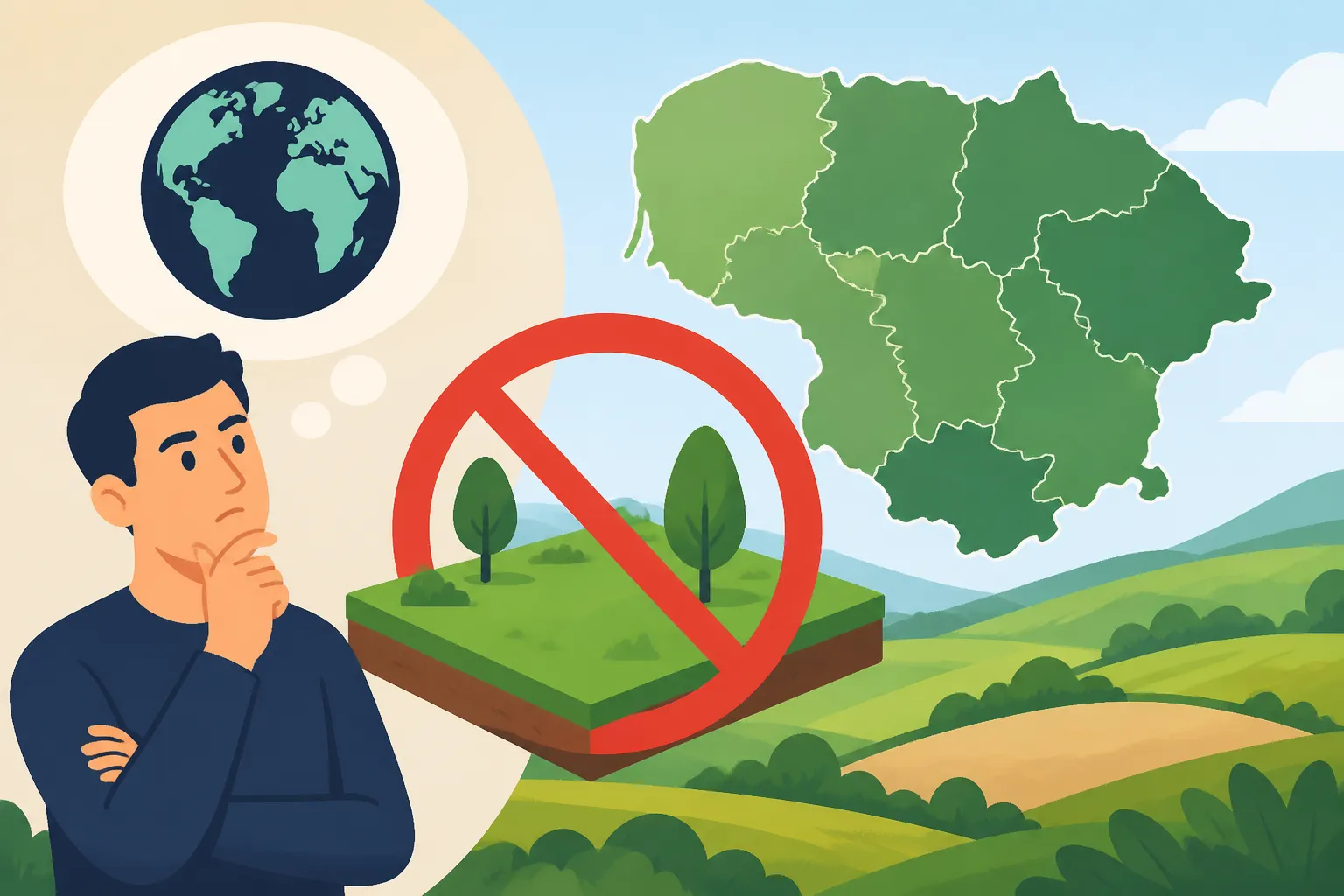
Now, for those of you hailing from outside the EU or EEA, this is where things get a bit more challenging. The general rule, rooted in those constitutional protections, is that you cannot directly own land in Lithuania as an individual. Yes, it’s a tough pill to swallow for many who envision buying a quaint cottage with a garden in the countryside. This often catches non-EU expats off guard, especially if they come from countries with more liberal land ownership policies.
This prohibition is not arbitrary; it's a policy designed to protect national land resources, ensuring strategic control and preventing unrestricted foreign speculation, particularly on agricultural and forest lands which are seen as fundamental to the nation's identity and economy. While it might feel frustrating and even a bit unfair, it’s important to understand the rationale behind it. Many countries worldwide have similar, albeit varied, restrictions to protect their sovereign resources. For someone moving here and bringing their entire life with them, perhaps with the help of international moving services like Sirelo, it can be a shock to find that part of their long-term settlement plan — owning land — isn't straightforward.
Navigating the Exceptions: When Non-EU/EEA Citizens Can Own Land
Okay, before you throw your hands up in despair, it’s not an absolute ban. There are crucial exceptions and workarounds that, with the right guidance, can still lead to land ownership for non-EU/EEA citizens. This is where strategic planning and understanding local legal frameworks become paramount. It's definitely more complex than for an EU citizen, but far from impossible.
The Company Route: The Most Common Workaround
This is, by far, the most common and practical method for non-EU/EEA citizens to acquire land in Lithuania. If you establish a legal entity, specifically a company registered in Lithuania (most commonly a uždaroji akcinė bendrovė, or UAB, which is similar to a private limited liability company), that company can purchase land.
Here’s how it works: The land is legally owned by the company, not by you as an individual. However, you, as a foreign national, can be the sole shareholder, the director, and even an employee of this company. This structure effectively gives you control over the land and its use, even though the legal title rests with the corporate entity. You can buy residential land for your home, commercial property for your business, or other types of land under this framework.
Of course, setting up a company isn't a walk in the park. It involves its own set of administrative procedures, including registration with the Register of Legal Entities (Registrų Centras), preparing articles of association, appointing a director, and defining share capital. There are initial registration fees, ongoing annual reporting requirements, and various tax obligations to consider. You'll need to get familiar with Corporate Income Tax for a UAB in Lithuania and other financial aspects. While it adds a layer of bureaucracy and expense, it’s a perfectly legitimate and widely used path for foreign investors and residents alike. Many expats find this a worthwhile investment for the stability and control it offers over their property.
Land Under Buildings Already Owned: A Key Distinction
This exception is quite important and often overlooked. If a non-EU/EEA citizen legally owns a building – say, an apartment, a house, or a commercial premise – they generally have the right to either lease the specific plot of land directly underneath that building for a long period (often 99 years, effectively a long-term possession right) or, under certain conditions, even acquire ownership of that specific plot of land. This acquisition right typically applies if the land is strictly necessary for the maintenance and use of the building.
The crucial distinction here is that owning the building itself is generally permitted for all foreigners, regardless of their citizenship. It's the land it sits on that is the sticking point. So, if you purchase an apartment, you own the apartment unit, and the land underneath the building is usually common property, managed by a housing association, or leased to the apartment owners. If you buy a standalone house, you own the house, and then you typically have the right to lease or acquire the parcel of land essential for that house. This prevents the awkward situation of owning a house but having no legal right to the ground beneath your feet.
Reciprocity Treaties: A Less Common Avenue
In the legal theory books, there's always the mention of reciprocity treaties. These are agreements between Lithuania and other countries that might grant mutual rights for citizens to own land in each other's territories. However, in practice, for individual private land purchases, such treaties are incredibly rare. They are more common for broader investment agreements or diplomatic purposes rather than facilitating an average expat's home purchase. It's worth checking, but don't hold your breath for this to be your golden ticket. Most expats find the company route or relying on building ownership to be the more practical and reliable options.
Specific Land Types: Agricultural and Forest Land
Even if you’re an EU/EEA citizen and think you’re in the clear, there are additional layers of regulation when it comes to specific types of land, particularly agricultural and forest land. Lithuania, like many countries, places high value on these resources, implementing measures to ensure they are actively used for their intended purpose and not simply held for speculative purposes or left derelict.
The Pre-emptive Right: First Dibs for Locals
If you're considering purchasing agricultural or forest land, be aware of the "pre-emptive right." This is a legal mechanism that gives certain entities or individuals the first right of refusal when such land comes up for sale. Who has this right? Typically, it's the current tenant of the land, neighbouring landowners, or even the state itself.
This means that even if you, as a prospective buyer, agree on a price with a seller, the transaction can be delayed while these pre-emptive right holders are notified and given an opportunity to match your offer. It can significantly prolong the buying process and sometimes even lead to your offer being superseded. It's a system designed to keep land ownership within local hands or to those with a direct connection to the land's current use, often validating the frustration of international buyers who simply want a straightforward purchase.
Qualified Farmer Status: More Than Just a Green Thumb
For agricultural land, there’s an additional requirement: the buyer often needs to demonstrate that they are a "qualified farmer" or will actively engage in agricultural activity on the land. This isn't just about having a green thumb; it’s about proving a legitimate intention and capacity for farming. This might involve demonstrating relevant agricultural education, having prior farming experience, or submitting a detailed business plan outlining your agricultural activities.
This rule applies equally to Lithuanian citizens and EU/EEA citizens. The aim is clear: to prevent purely speculative purchases where land might sit idle, and to ensure that valuable agricultural land remains productive. It's a serious commitment and not something to be taken lightly. If you're not planning to actively farm, this type of land might not be for you, or you’ll need to explore leasing it out to a local farmer.
Restrictions on Size and Strategic Importance
There can also be limits on the total area of agricultural land that any single individual or legal entity can acquire. These restrictions are put in place to prevent the monopolisation of land and to promote a more equitable distribution of productive resources across the country.
Furthermore, certain areas of land are designated for environmental protection or are deemed to be of "strategic importance." This could include land near national parks, sensitive ecological zones, vital infrastructure, or even military installations. These lands often have stricter regulations regarding ownership and use, or they might be entirely off-limits for private purchase, regardless of your nationality. It’s part of a broader national security and environmental protection strategy, meaning some picturesque remote plot might be unavailable for very good reasons.
The Practical Steps and Bureaucracy Involved
Alright, so you’ve got a handle on the rules and potential workarounds. Now comes the practical reality: how do you actually make this happen? Purchasing land in Lithuania, even with the right permissions and strategy, requires a good deal of patience, meticulous planning, and, crucially, expert guidance. Don’t underestimate the amount of paperwork or the cultural nuances you might encounter.
Finding the Right Property and Professional Help
Your first step, after understanding the legal landscape, is to connect with reputable real estate agents. Be upfront about your citizenship and intentions. A good agent will be familiar with the intricacies of foreign land ownership and can help you identify suitable properties or guide you towards the correct legal structure if the company route is necessary. You'll want to find an agent who is used to dealing with international clients. If you’re not comfortable navigating things in Lithuanian, searching for English-Speaking Real Estate Agents in Lithuania can be a great starting point.
Crucially, engaging competent legal counsel is non-negotiable. Seriously, this is not the time to try and save a few euros by navigating complex property laws on your own. Find a lawyer who specialises in real estate and international transactions in Lithuania. They will be your invaluable guide, conducting thorough due diligence, checking the land's status in the Lithuanian Real Property Register (Registrų Centras), ensuring all necessary permits are in order, and advising you on the most advantageous ownership structure. They'll also explain the nuances of things like What Documents Do I Need to Buy Property in Lithuania?, ensuring you're prepared.
The Notary Public: Your Gateway to Legal Ownership
All real estate transactions in Lithuania must be notarised. The notary public (notaras) plays a critical role in the process. They verify the identities of all parties involved, ensure their legal capacity to enter into the transaction, and officially register the sale. This legal step provides a layer of security and ensures the legality of the transfer of ownership.
Be prepared for Notary (Notaras) Costs When Buying Property in Lithuania, which are a standard and unavoidable part of the purchase. These fees are usually a percentage of the property value and can add up, so factor them into your budget from the very beginning.
Documentation and Timelines: Prepare for the Long Haul
Expect a substantial amount of paperwork. This will include your passport, any relevant residence permits, proof of funds, and if you're buying through a company, all your company registration documents. Foreign documents often need to be translated into Lithuanian by a certified translator and sometimes apostilled or legalised. Your lawyer will provide an exact checklist, but anticipate it being a comprehensive list.
The timeline for purchasing land in Lithuania can vary significantly. Don't expect a quick closing, especially if you're a non-EU citizen establishing a company, or if the land has pre-emptive rights attached. Between legal checks, administrative approvals, and potential waiting periods, the process can easily take several months. It requires a healthy dose of patience.
While you're navigating the bureaucratic aspects of property purchase, remember to coordinate your broader relocation. If you’re making a big move to Lithuania, services like Sirelo can assist you in comparing and finding international moving companies to handle your belongings. Planning this early can reduce stress, allowing you to focus on the legalities of land purchase while your home goods are professionally managed. Similarly, ensure you're connected from day one; while you're busy researching plots and potential purchases, reliable mobile data is key. Services like Airalo can offer eSIMs for easy connectivity right from arrival, helping you stay in touch with agents and lawyers without hassle.
Financing Your Land Purchase
If you're planning to finance your land purchase with a mortgage from a Lithuanian bank, be aware that foreign nationals might face stricter lending criteria. You'll need to demonstrate a stable income, usually from a Lithuanian employer or a well-established company, and a good credit history. Assessing international credit histories can be challenging for local banks, so be prepared to provide extensive documentation. A substantial down payment is often required, sometimes more than what a Lithuanian citizen might need. It's always a good idea to speak with a few banks early in your process to understand their specific requirements for foreign buyers.
Summary of Land Ownership for Foreigners in Lithuania
| Land Type | EU/EEA Citizens & Permanent Residents | Non-EU/EEA Citizens (Individual) | Non-EU/EEA Citizens (Via Lithuanian Company) | Specific Restrictions/Notes |
|---|---|---|---|---|
| Residential Land | Generally allowed, same as Lithuanian citizens. | Generally restricted for direct ownership. | Allowed. Land owned by the company, controlled by the individual. | Most common method for non-EU individuals. |
| Commercial/Industrial Land | Generally allowed, same as Lithuanian citizens. | Generally restricted for direct ownership. | Allowed. Land owned by the company, controlled by the individual. | Adds administrative and tax complexities. |
| Agricultural Land | Allowed, but subject to pre-emptive rights and "qualified farmer" rules. | Generally restricted for direct ownership. | Allowed, but company may need to meet "qualified farmer" criteria. | Strict rules for productive use and preventing speculation. |
| Forest Land | Allowed, but subject to pre-emptive rights and specific regulations. | Generally restricted for direct ownership. | Allowed, but company subject to specific forestry regulations. | Focus on sustainable use and environmental protection. |
| Land Under Owned Buildings | Right to lease or acquire ownership of the specific plot. | Right to lease the specific plot (often 99 years) or acquire ownership under specific conditions. | Not applicable (building itself is already owned). | Applies to the specific land parcel essential for the building. |
| Strategic/Protected Land | Highly restricted or prohibited. | Highly restricted or prohibited. | Highly restricted or prohibited. | Applies to all, regardless of nationality or entity type. |
Disclaimer
The information provided in this guide is for general informational purposes only and does not constitute legal or financial advice. While we strive to keep the information up-to-date and accurate, laws and regulations regarding land ownership in Lithuania can change. We strongly recommend consulting with a qualified Lithuanian real estate lawyer and tax advisor for advice tailored to your specific situation.