How Do I Get a Lithuanian Driving Licence from Scratch?
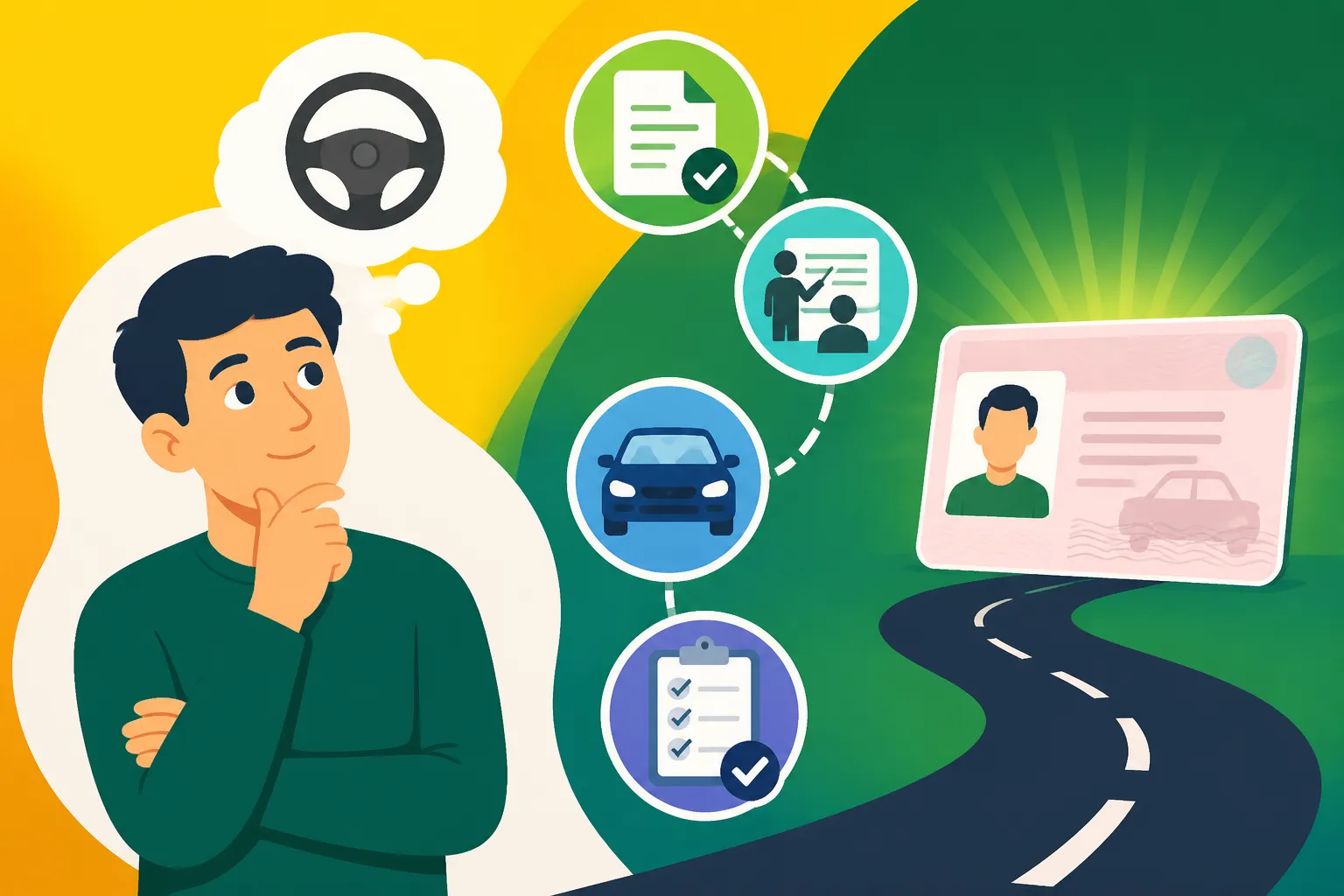
Moving to a new country like Lithuania often comes with a whole checklist of things to sort out – residence permits, finding a home, getting a job. And for many of us, navigating without a car feels like losing a limb, making getting a driver's licence from scratch one of those seemingly insurmountable tasks. But fear not, my friend, because this comprehensive guide is here to demystify the entire process, from that initial flicker of an idea to holding your shiny new Lithuanian driving card.
Why Get a Lithuanian Driving Licence from Scratch?
Perhaps you've always lived in a city with excellent public transport and never needed to drive. Or maybe you're from a country whose driving licence isn't directly exchangeable in Lithuania, and you've let your previous one expire. Whatever your reasons, deciding to get a Lithuanian driving licence from square one is a big step, and honestly, a very practical one. Lithuania is a country that truly opens up when you have the freedom of a car, from exploring its stunning national parks to simply running errands in a smaller town where bus routes are less frequent.
The process might seem daunting at first, with a lot of new terminology and administrative hoops. But trust me, it's totally achievable. Many expats have walked this path before you, and while it requires patience and a bit of perseverance, the reward of independent mobility is well worth it. You’ll be dealing primarily with Regitra, the state enterprise responsible for vehicle registration and driver examinations. Their systems are increasingly foreigner-friendly, but knowing the steps in advance will save you a lot of headaches.
Navigating the Initial Requirements and Documentation
Before you can even think about parallel parking or theoretical road rules, there are some foundational elements you absolutely need to have in place. These aren't just bureaucratic checkboxes; they ensure you're legally able to begin the process.
Obtaining Your Asmens Kodas and Residence Status
First things first, you need to be legally living in Lithuania and have your personal identification number. This is your "Asmens Kodas" – a unique 11-digit number that is your key to almost all administrative services here, including getting a driving licence. If you're still in the early stages of settling in, make sure this is high on your priority list. You'll need an Asmens Kodas before you can even register for driving school or book exams. If you're unsure about how to get this vital number, check out our guide on How to Get Your Asmens Kodas (Personal Code) and Why It Matters for Healthcare.
Alongside your Asmens Kodas, you'll need to prove your legal residence in Lithuania. This means having a valid How to Get a Temporary Residence Permit (TRP) in Lithuania (2027) if you're a non-EU/EEA citizen, or having declared your right of residence if you're an EU/EEA national. You'll definitely need to have successfully completed Declaring Your Place of Residence in Lithuania: The Complete Guide with the municipal authorities. Regitra will verify your identity and residence status, so make sure all your immigration paperwork is in order.
The Mandatory Medical Certificate (Sveikatos Pažyma)
This is one of those steps that often catches new arrivals by surprise. To get a driving licence in Lithuania, you need a specific medical certificate confirming you are medically fit to drive. This isn't just a quick check-up; it's a comprehensive examination. You can obtain this certificate from most polyclinics (poliklinika) or private medical centers throughout Lithuania.
The examination typically includes:
- Eyesight Test: To check your visual acuity and field of vision.
- Hearing Test: A basic check of your hearing.
- General Physical Examination: A doctor will assess your overall health, including blood pressure, reflexes, and coordination.
- Mental Health Assessment: Sometimes a psychologist or psychiatrist will also need to sign off, especially if there are any declared medical conditions.
The cost for this medical certificate can vary, but expect to pay somewhere between €20-€50 at a public polyclinic, and potentially more at private clinics. It’s a good idea to call ahead and book an appointment, specifying that you need a medical certificate for a driving licence (vairuotojo sveikatos pažyma). You'll usually need to bring your passport or ID card and your Asmens Kodas. The certificate is typically valid for 10 years for most drivers under 65, but can be shorter depending on age or specific medical conditions. Remember, you can also explore how to navigate general medical services by reading our article on The Complete Guide to Healthcare in Lithuania for Expats (2027).
The Theoretical Exam: Your First Hurdle
Once your paperwork is in order and you have your medical certificate, it's time to hit the books! The theoretical exam is the first major step in getting your licence. It tests your knowledge of Lithuanian road traffic rules, road signs, and safe driving principles.
Choosing a Driving School and Preparation
While it's technically possible to study independently and just take the theoretical exam at Regitra, enrolling in a driving school (vairavimo mokykla) is highly recommended, and for practical lessons, it's mandatory. Driving schools offer structured courses that cover all the necessary theory. They'll also provide access to practice tests, which are invaluable for getting a feel for the actual exam. Many schools in larger cities like Vilnius, Kaunas, and Klaipėda offer courses in English, or at least provide English study materials. Don't be shy to ask about this when you're enquiring!
When selecting a driving school, consider:
- Language options: Do they offer English theory classes or materials?
- Location: Is it convenient for you?
- Reputation: Check online reviews or ask other expats for recommendations.
- Cost: Prices vary, so shop around. Expect to pay anywhere from €200 to €400 for a full theory course, often bundled with practical lessons.
The theory course will cover topics such as:
- Traffic signs and road markings
- Rules of the road (right of way, speed limits, overtaking, parking)
- Driver responsibility and safety
- First aid basics
- Penalties for violations
Booking and Taking the Theoretical Exam at Regitra
Once you feel confident, you'll book your theoretical exam directly with Regitra. You can do this online via their self-service portal (e-Regitra) or in person at one of their branches. You'll need your Asmens Kodas and the medical certificate. It's usually best to book online as slots can fill up, especially in popular locations.
The exam itself is taken on a computer. It consists of multiple-choice questions, and you typically need to answer a certain percentage correctly within a time limit (e.g., 30 questions in 30 minutes, with a minimum of 24 correct answers for category B). Good news for expats: the theoretical exam is available in several languages, including English and Russian, which is a massive relief for many of us. Take your time, read the questions carefully, and use those practice tests you've been doing – they really do help!
Passing the theoretical exam is a huge milestone, and it's valid for one year. This means you have a year to complete and pass your practical driving exam.
Practical Driving Lessons: Getting Behind the Wheel
With the theory out of the way, it's time for the real fun – getting out on the road! This is where you'll gain the actual skills and confidence needed to drive safely and pass your practical exam.
Finding an Instructor and Mandatory Hours
For category B (standard car) licence, you are typically required to complete at least 30 academic hours (an academic hour is 45 minutes) of practical driving lessons with a licensed instructor from a driving school. This is a minimum, and many people, especially those starting from scratch, will need more. Don't worry if you do – everyone learns at their own pace!
Finding an English-speaking instructor can be a bit trickier outside of Vilnius or Kaunas, but it's not impossible. When you sign up for your driving school, explicitly ask for an instructor who is comfortable teaching in English. Clear communication with your instructor is key to understanding manoeuvres and absorbing feedback.
Your lessons will cover everything from basic car control (starting, stopping, gear changes) to more complex scenarios like city driving, highway driving, parking manoeuvres, and navigating intersections. Your instructor will also guide you through the specific routes and challenges often found in the Regitra practical exam, helping you become familiar with common test areas. While you're on the road, having reliable navigation on your phone is a must. Many expats find services like Airalo's eSIM a convenient way to stay connected without worrying about local SIM cards.
The Learning Process and Common Challenges
Learning to drive from scratch in Lithuania can present unique challenges for expats:
- Road Etiquette: While rules are universal, local driving habits and unspoken etiquette can differ. Your instructor will help you understand these nuances.
- Signage: Even if you pass the theory, applying knowledge of road signs quickly in a real-world scenario takes practice.
- Language Barrier (again!): Even with an English-speaking instructor, there might be moments where quick instructions or specific terms feel lost in translation. Don't hesitate to ask for clarification.
- Winter Driving: If you're learning during the colder months, you'll get invaluable experience driving on snow and ice, which is a reality for a good chunk of the year here!
Expect your practical lessons to be intensive and sometimes frustrating. You’ll make mistakes – that’s how you learn! The goal is not just to pass the exam but to become a safe and confident driver. So embrace the process, take detailed notes, and practice regularly.
The Practical Driving Exam: Showcasing Your Skills
This is the moment of truth! After all those lessons, the practical driving exam at Regitra is where you demonstrate your ability to drive safely and independently.
Booking Your Exam and What to Expect
You can book your practical exam at Regitra online through their e-Regitra portal or in person, similar to the theory exam. You'll need your Asmens Kodas, your medical certificate, and proof that you've completed the mandatory driving school hours. Most people use their driving school's car for the exam, as it's what they're familiar with. The school will usually arrange for the instructor to accompany you to Regitra, although they won't be in the car with you during the actual test.
The practical exam typically lasts around 40-50 minutes and involves two main parts:
- Manoeuvre Area (Kiemas): This takes place on a closed circuit at the Regitra centre. You'll be asked to perform specific manoeuvres, such as:
- Parallel parking
- Reverse parking into a bay (90-degree angle)
- Driving in a designated "figure 8" or S-shaped path (snake manoeuvre)
- Hill start
- Reverse (L-shaped) into a restricted area
These manoeuvres assess your car control and spatial awareness.
- Road Driving (Miestas): After successfully completing the manoeuvres, you'll head out onto public roads with the examiner. This part tests your ability to navigate real traffic conditions, observe road rules, respond to hazards, and drive safely in various environments (city streets, intersections, roundabouts, and possibly some higher-speed roads). The examiner will give you directions, and you'll be assessed on your overall driving competence, decision-making, and adherence to traffic laws.
Passing the Exam: Tips and Common Reasons for Failure
To pass, you must demonstrate consistent safe driving, good observation skills, and adherence to all traffic rules. The examiner will be looking for any dangerous mistakes, serious errors, or a pattern of minor errors.
Common reasons for failing the practical exam include:
- Critical Errors: These are immediate fails, such as not giving way, ignoring a red light, hitting a curb during manoeuvres, or causing a dangerous situation.
- Too Many Minor Errors: Accumulating several minor faults (e.g., incorrect signalling, poor lane positioning, stalling frequently) can also lead to a fail.
- Lack of Observation: Not checking mirrors or blind spots often enough.
- Hesitation: Being overly hesitant at intersections or when making decisions can be seen as unsafe.
- Speed Control: Driving too fast or too slow for the conditions.
My best advice? Stay calm, listen carefully to the examiner's instructions (don't be afraid to ask for a repeat if you didn't understand!), and drive as you were taught. Take your time with manoeuvres, checking your surroundings constantly. If you don't pass on your first attempt, don't despair! It’s common, and you can rebook the exam. Use the feedback from the examiner to improve for your next attempt.
Collecting Your Lithuanian Driving Licence: The Finish Line
Congratulations! You've passed both exams. Now for the final, satisfying step: getting your physical driving licence.
Applying for Your Licence at Regitra
Once you've passed your practical exam, Regitra will typically process your application for the driving licence card right there. You usually don't need to book a separate appointment for this. You'll need to present:
- Your ID card or passport
- Your Asmens Kodas
- Your medical certificate (still valid, of course)
They will take your photo digitally at the Regitra office. You'll then pay a fee for the issuance of the licence card. The fee for a standard driving licence is around €15. You can usually choose between standard processing (which can take up to 10 working days) or expedited processing (which might be ready in 1-3 working days for an extra fee).
What Your New Licence Means
Your Lithuanian driving licence will be a credit-card-sized plastic card, valid for 10 years (unless otherwise specified due to medical reasons). It's a standard EU-format licence, meaning it's recognized throughout the European Union and many other countries. This little card represents not just the ability to drive, but a new level of independence and freedom in your adopted home.
Costs and Timeline: What to Expect
Let's talk brass tacks. Getting a driving licence from scratch isn't free, and it certainly isn't instant. Here’s a general overview of the costs and the timeline you can expect. Keep in mind that prices are estimates and can fluctuate. For a broader understanding of financial planning, consider our article on The Complete Guide to Cost of Living in Lithuania for Expats (2026).
Estimated Costs (Category B)
| Item | Estimated Cost (EUR) | Notes |
|---|---|---|
| Medical Certificate (Sveikatos Pažyma) | €20 – €50 | Varies by clinic (public vs. private) |
| Driving School Theory Course | €100 – €250 | Some schools offer online-only options for theory which may be cheaper. |
| Practical Driving Lessons (30h minimum) | €300 – €600 | €10-€20 per academic hour. Many need more than the minimum. |
| Regitra Theoretical Exam Fee | €11 – €15 | Per attempt. |
| Regitra Practical Exam Fee | €30 – €40 | Per attempt. Vehicle rental fee often included if using driving school car. |
| Driving Licence Issuance Fee | €15 – €30 | Standard vs. expedited processing. |
| Total Estimated Cost | €476 – €985+ | This is a broad range; individual needs (extra lessons, retakes) will impact total. |
Estimated Timeline
The timeline is highly variable depending on your schedule, the driving school's availability, and your learning pace.
- Initial Documentation (Asmens Kodas, Residence): Can take weeks to months if you're a new arrival.
- Medical Certificate: 1-2 appointments, usually completed within a week.
- Driving School Theory Course: Typically 4-6 weeks, with classes once or twice a week.
- Regitra Theoretical Exam: Can be booked within a week or two after finishing theory course, depending on slot availability.
- Practical Driving Lessons: This is the longest phase. With 30 hours of lessons, spread over 2-3 lessons per week, this could take 2-4 months or more.
- Regitra Practical Exam: After completing lessons, booking can take 2-4 weeks.
- Licence Issuance: 1-10 working days.
Overall, from starting your theory course to holding your licence, expect the process to take anywhere from 3 to 6 months, possibly longer if you need extra lessons or retake exams. Patience, my friend, is your greatest asset here.
Final Thoughts and Practical Advice
Getting your Lithuanian driving licence from scratch is a significant undertaking, but it's a journey that many expats successfully complete. It’s an investment in your independence and makes living in Lithuania even more rewarding. Imagine driving through the beautiful countryside to places only accessible by car, or simply having the convenience of transporting groceries without battling the weather on a long walk.
Here are a few final pieces of advice:
- Don't Rush It: Learning to drive is a skill that takes time. Don't pressure yourself to pass quickly; focus on becoming a safe and confident driver.
- Embrace Technology: Utilize online practice tests, Google Maps for navigation practice during lessons, and consider eSIMs from providers like Airalo to ensure you always have mobile data for booking and communication.
- Ask Questions: If anything is unclear, whether with your driving instructor, at Regitra, or from online materials, ask! Don't assume.
- Connect with Other Expats: Join expat groups on social media (Facebook is very popular here) and ask for recommendations for driving schools and instructors. Hearing about others' experiences can be incredibly helpful and validating.
The road to your Lithuanian driving licence might have its bumps, but with the right preparation and a bit of determination, you'll be cruising along in no time. Before you know it, you’ll be sharing your own war stories and tips with the next wave of hopeful expat drivers!
Disclaimer
Please remember that while I strive to provide the most accurate and up-to-date information based on my experience and available public resources, regulations and procedures in Lithuania can change. It is always best to double-check the latest requirements directly with official sources like Regitra, the Migration Department (MIGRIS), and the Lithuanian Tax Authority (VMI) or consult with a legal professional for personalized advice. This guide is for informational purposes only and does not constitute official legal or professional guidance.