How Do I Apply for an Asmens Kodas for My Residence Process?
Alright, let's talk about the Asmens Kodas. If you're new to Lithuania and in the midst of applying for your residence permit, you've probably heard this term thrown around, and perhaps felt a little lost in the administrative jargon. It's that unique 11-digit personal identification number that feels like the master key to everything, and trying to get it straight can be a real headache. This guide is here to untangle the process specifically for those navigating the residence permit journey, ensuring you understand why it's so critical and how to get yours sorted without too much extra stress.
What Exactly is an Asmens Kodas and Why is it So Crucial?
When you first arrive in Lithuania, especially from outside the EU, you quickly realize that almost every official transaction hinges on one thing: your Asmens Kodas, or personal code. It's not just a random number; it's your digital fingerprint in the Lithuanian system, integrating you into various public services. For anyone applying for a residence permit, this number isn't just nice to have; it's an absolute necessity.
The Foundation of Your Life in Lithuania
Think of the Asmens Kodas as your official entry ticket into Lithuanian society. Without it, you can't officially register for compulsory health insurance, open a bank account with most traditional banks, sign up for utilities, or even register with a local doctor. It’s what connects you to the tax authority (VMI) and social insurance fund (Sodra). For those of us who've been here a while, the initial struggle to navigate basic tasks without one is a shared memory. It’s a fundamental piece of your identity here, like a Social Security Number in the US or a National Insurance Number in the UK. Many of the crucial services you'll need, like those provided by institutions overseeing your Healthcare in Lithuania: Compulsory, Private and Travel Options Explained, will depend on having this code.
A Prerequisite for Your Residence Permit
For non-EU citizens, the application for a temporary residence permit (TRP) is often the first major step towards establishing a life in Lithuania. The Asmens Kodas typically isn't issued before you start this process, but rather, it's assigned during or after the approval of your residence permit application. However, the catch is that many aspects of your residence application, like proving a stable place of residence or even showing you have adequate health insurance, often indirectly point back to processes that become much smoother with an Asmens Kodas already in hand, or at least understanding when and how you'll receive it. The Migration Department (MIGRIS), the main body processing your residence permits, is also the authority that will assign this code to you as part of your permit approval. It's a key part of your legal identity once you're officially a resident here.
Eligibility and Required Documents for Your Asmens Kodas
The good news is that if you're applying for a temporary residence permit, the Asmens Kodas will be issued automatically once your permit is approved. You don't apply for it separately as a pre-step, but rather it comes as a package deal. This simplifies things somewhat, but it means ensuring your residence permit application is flawless is paramount. The documents you need for your residence permit are, by extension, the documents that secure your Asmens Kodas.
Who Receives an Asmens Kodas?
Generally speaking, an Asmens Kodas is assigned to:
- Lithuanian citizens at birth.
- Foreigners who are granted a temporary or permanent residence permit in Lithuania.
- EU/EEA citizens who register their right of residence in Lithuania.
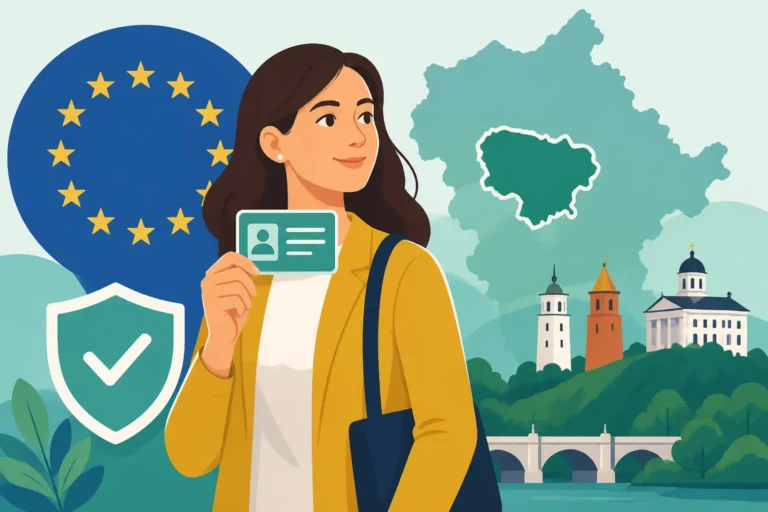
Since you're here to understand how it ties into your residence permit application, your eligibility comes directly from being approved for that permit. Once the Migration Department processes and approves your How to Apply for a Temporary Residence Permit (TRP) in Lithuania, they will then generate and assign you this unique identification number. It's then embedded into your residence permit card itself. This streamlined approach means you don't need to hunt for a separate Asmens Kodas application form; it's all part of one comprehensive process.
Essential Documents for Your Residence Permit Application
The list of documents for a residence permit can be extensive and varies based on your specific grounds for residence (work, study, family reunification, etc.). However, there are core documents almost everyone needs. Make sure everything is current, valid, and, if required, translated into Lithuanian and notarized. Believe me, the Migration Department is very particular about this, and even a tiny error can send you back to square one, causing frustrating delays.
Here’s a general rundown of what you’ll likely need, which, in turn, facilitates the issuance of your Asmens Kodas:
- Valid Travel Document: Usually your passport. Make sure it has enough validity beyond your intended stay.
- Application Form: Completed accurately, either online via the MIGRIS system or a physical form.
- Proof of Sufficient Funds: Bank statements, employment contracts, or scholarship letters showing you can support yourself in Lithuania.
- Proof of Accommodation: A rental agreement or a letter from your landlord (nuomos sutartis), registered with Registrų Centras. For those still arranging their move, this can be tricky, but platforms like Sirelo often provide resources on finding accommodation, reminding you that this proof is critical for your entire relocation.
- Health Insurance: This is absolutely non-negotiable. You need valid health insurance covering your entire stay in Lithuania, with sufficient coverage (minimum €30,000 for medical expenses and repatriation). Many expats opt for international providers like Cigna Global, which offer comprehensive plans designed for global mobility. Make sure your policy clearly states the coverage amount and validity period. For deeper insights, you might want to read Registering for Compulsory Health Insurance (PSD) in Lithuania (2027).
- Justification for Residence: This is the core reason you're applying. It could be an employment contract, a letter of acceptance from a university, a marriage certificate, or proof of business registration.
- Photographs: Passport-sized, biometric photographs meeting specific requirements.
- State Fee Payment Confirmation: The administrative fee for processing your residence permit.
Table: Common Documents for Residence Permit (and Asmens Kodas Issuance)
| Document Category | Specifics & Important Notes |
|---|---|
| Travel Document | Valid passport, often required to be valid for at least 3 months beyond intended permit expiry. |
| Application Form | Completed via MIGRIS e-system or physical form. Accuracy is key. |
| Proof of Funds | Bank statements (Lithuanian or foreign), employment contract with salary, scholarship letter. |
| Proof of Accommodation | Valid rental agreement (nuomos sutartis), property ownership documents, or a statement from the owner. Must be registered. |
| Health Insurance | Policy covering emergency medical treatment and repatriation for at least €30,000. Cigna Global is a popular choice. |
| Justification for Stay | Work contract, university acceptance letter, marriage certificate, business registration documents. |
| Biometric Photos | Two recent, passport-sized photos meeting ICAO standards. |
| State Fee Payment Proof | Receipt for the administrative fee paid for the residence permit application. |
| Criminal Record Check | Often required, especially for longer stays or certain permit types. Apostilled if from outside specified countries. |
| Marriage/Birth Certs | If applying based on family reunification, translated and apostilled/legalized. |
Always double-check the most up-to-date requirements on the official Migration Department website (MIGRIS), as they can change.
The Application Process Step-by-Step
Since the Asmens Kodas is part and parcel of your residence permit, the application process for one is the application process for the other. This usually involves an online submission followed by an in-person visit to a Migration Department office.
Starting Your Journey Online with MIGRIS
For most non-EU citizens, your journey begins on the MIGRIS electronic services system. This is where you'll create an account, fill out your residence permit application form, and upload all your supporting documents. This platform is generally quite user-friendly, but take your time. Every single field needs to be accurate.
- Create an Account: Register on the MIGRIS e-system. This will be your primary portal for all immigration matters.
- Select Application Type: Choose the appropriate residence permit application (e.g., Temporary Residence Permit for work, study, etc.).
- Fill Out the Form: Be meticulous. Answer every question truthfully and completely. Any discrepancies can lead to delays or rejection.
- Upload Documents: Scan and upload all your required documents. Ensure they are clear, legible, and adhere to any file size or format requirements. If a document needs to be translated, upload the original and the certified translation. This is where that precise documentation I mentioned earlier really comes into play.
- Pay the State Fee: You'll typically be prompted to pay the application fee through the system. Keep the payment confirmation.
- Book an Appointment: Once your online application is submitted and the fee paid, you'll need to book an in-person appointment at a regional Migration Department office (e.g., in Vilnius, Kaunas, or Klaipėda). These appointments can sometimes be hard to get quickly, so book as soon as you can.
The In-Person Visit to the Migration Department
This is the stage where you verify everything and provide your biometrics. It can feel a bit daunting, especially if your Lithuanian isn't fluent, but remember, many staff members speak English. Just be prepared, polite, and patient.
- Attend Your Appointment: Arrive on time with all your original documents, as well as copies. The officials will check them against your uploaded versions. They might ask questions about your application, your purpose for staying in Lithuania, or your ties to your home country. This is also where you'll submit your biometric data, which includes fingerprints and a digital photograph.
- Interview (if applicable): While not always a formal interview, the official will review your documents and may ask clarifying questions. This is your chance to clearly explain your situation.
- Processing Time: Once all your documents are submitted and biometrics taken, your application enters the processing phase. The processing times for residence permits can vary significantly depending on the type of permit and the current workload of the Migration Department. It’s important to monitor your application status via the MIGRIS portal. Patience is truly a virtue here.
- Permit Approval and Asmens Kodas Issuance: If your application is approved, congratulations! Your Asmens Kodas will be assigned, and your residence permit card will be printed. You'll receive a notification from MIGRIS when your card is ready for collection. Your Asmens Kodas will be clearly visible on your new permit card. You can learn more about how this connects to your overall immigration journey by reading our guide on The Complete Guide to Lithuanian Residence Permits for Expats (2027).
Common Challenges and Practical Tips for Expats
Navigating any bureaucratic process in a new country comes with its own set of challenges. Lithuania is no exception. While the systems are becoming more expat-friendly, there are still hurdles that can trip you up.
Language Barriers and Communication
Even in larger cities like Vilnius or Kaunas, where English is widely spoken, you might encounter officials who are less comfortable in English, or you might find certain forms or signs only in Lithuanian. This can be frustrating, especially when dealing with critical documents like your residence permit.
- Tip 1: Learn Basic Lithuanian Phrases: Even a few polite phrases like "Ačiū" (thank you) or "Atsiprašau, ar kalbate angliškai?" (Excuse me, do you speak English?) can go a long way.
- Tip 2: Bring a Lithuanian Speaker: If you're really worried or have a complex case, consider bringing a Lithuanian-speaking friend or a professional translator to your appointment. While not always necessary, it can provide immense peace of mind.
- Tip 3: Use Online Translators: For documents or website information, Google Translate or DeepL can be your best friends for initial understanding, but always cross-reference with official English versions if available.
Navigating Delays and Staying Informed
Administrative processes, by their nature, can sometimes be slow. Delays are a common source of anxiety for expats, particularly when your legal status hinges on the outcome.
- Tip 1: Apply Early: Don't wait until the last minute if you're renewing your permit or transitioning from a visa. Start your application well in advance of any deadlines. Our guide on How Long Does It Take to Get Health Insurance as a New Resident in Lithuania? highlights similar timing considerations for other essential services.
- Tip 2: Regularly Check MIGRIS Portal: Your MIGRIS online account is the primary channel for updates. Keep an eye on your application status there.
- Tip 3: Be Patient, but Persistent: While patience is crucial, if you feel an unreasonable amount of time has passed, you can try contacting the Migration Department for an update. Be polite, have your application number ready, and clearly state your query. Avoid daily calls, though!
The Importance of Health Insurance for the Long Haul
I've touched on this already, but it bears repeating: robust health insurance isn't just a tick-box requirement for your residence permit; it's essential for your well-being in Lithuania. The Lithuanian healthcare system is generally good, but navigating it can be tricky for newcomers. With your Asmens Kodas, you'll eventually be able to register for the Compulsory Health Insurance (PSD) if you are employed or self-employed, as detailed in Understanding PSD Contributions Through Sodra in Lithuania. However, for many non-EU citizens, especially when first arriving, a private international health insurance plan, such as those offered by Cigna Global, provides immediate comprehensive coverage and often gives access to English-speaking doctors and private clinics. This can be a lifesaver when you're still getting settled and don't yet fully understand the public system. Don't underestimate the peace of mind that comes with knowing you're covered, whether you're trying to How to Find an English-Speaking Doctor in Lithuania or facing a more serious medical event.
Once you have your Asmens Kodas and your residence permit in hand, a whole new world of administrative possibilities opens up. You'll finally be able to do things like How to Open a Bank Account at a Lithuanian Bank as a Foreigner, properly register for social security, and truly integrate into life here. It's a significant milestone in your expat journey.
Disclaimer
Please note that while I strive to provide accurate and up-to-date information based on my experience and available resources, immigration laws and administrative procedures in Lithuania can change. This guide is for informational purposes only and does not constitute legal advice. Always refer to the official website of the Lithuanian Migration Department (MIGRIS) or consult with a qualified immigration lawyer for the most current and personalized guidance regarding your specific situation.