Can I Apply for Lithuanian Residence as a Retiree?
Dreaming of retiring to a charming, historic European country like Lithuania, soaking in the culture, and enjoying a peaceful pace of life? Many expats arrive with this aspiration, only to quickly discover that securing a long-term residence permit as a retiree isn't as straightforward as it might be in some sunnier, more traditionally "retirement-friendly" EU nations. This guide will walk you through the realistic pathways, administrative hurdles, and practical considerations for non-EU citizens hoping to make Lithuania their retirement home.
The Reality Check for Retiring in Lithuania as a Non-EU Citizen
Let's be blunt: Lithuania isn't Spain or Portugal. You won't find a dedicated "retirement visa" or a special, streamlined program designed explicitly for foreign retirees looking to simply live off their pension. This often comes as a surprise, and honestly, a bit of a letdown, for many who picture an easy transition into a European retirement. While the country is welcoming to skilled workers, students, and family members, the path for those whose sole purpose is retirement can feel a bit like trying to fit a square peg into a round hole.
Why Lithuania Isn't Your Typical "Retirement Visa" Destination
Most countries that actively court retirees offer specific visa categories that acknowledge pension income or substantial savings as the primary qualification. They understand that retirees aren't looking to work, study, or start a business, but rather to contribute to the local economy through consumption and sometimes property investment. Lithuania, on the other hand, primarily focuses its immigration policies on attracting individuals who will actively participate in the labor market or contribute to its growing startup ecosystem.
This difference in focus means that the traditional routes for obtaining a Temporary Residence Permit (TRP) – such as employment, self-employment, or family reunification – are often the primary mechanisms, even for those who might prefer a simpler "retirement" status. If you don't fit neatly into one of these established boxes, you'll need to get a bit more creative and demonstrate a robust case for your financial self-sufficiency, which is what we'll dive into next. It's not impossible, but it requires thorough preparation and understanding of the existing legal framework.
Navigating the Existing Residence Permit Categories
When considering a move to Lithuania for retirement, you'll find that the existing residence permit categories are geared towards specific purposes. For example, a work permit is for those employed by a Lithuanian company, a business permit for those opening a legal entity, and a student permit for those enrolled in educational institutions. None of these directly address the typical retiree's situation.
Family reunification is an option if you have close relatives who are Lithuanian citizens or existing residents. However, for most independent retirees, this isn't applicable. This leaves you with the challenge of proving that your presence in Lithuania aligns with a recognized, albeit less common, legal ground for residency. It's not about inventing a new category, but rather understanding how your personal circumstances, especially your financial independence, can be framed to meet the criteria for a "Temporary Residence Permit (TRP)" based on "other legitimate grounds," which is where most self-sufficient retirees will find their niche. This usually means convincing the Migration Department that you can sustain yourself financially without being a burden on the state, and that you have valid reasons for wanting to reside here.
The Path of Least Resistance: Proving Financial Self-Sufficiency
Since there isn't a specific "retirement permit," most non-EU retirees will need to apply for a Temporary Residence Permit (TRP) under the category of "other legitimate grounds," specifically focusing on their ability to financially support themselves without working. This requires meticulous documentation and a clear demonstration of your financial stability. It's less about a specific visa type and more about meeting the overarching requirements for general residency.
The "Other Grounds" Category and Demonstrating Sufficient Funds
When applying for a TRP under "other legitimate grounds," the Migration Department (MIGRIS) will scrutinize your financial means very closely. You need to demonstrate that you have sufficient funds to cover your living expenses in Lithuania for the entire duration of your requested permit, without relying on the social welfare system or seeking employment. What exactly constitutes "sufficient funds"? While there isn't a single, universally published figure specifically for retirees, generally, applicants for residence permits must prove they have at least one average monthly salary (MMA) for each month of their stay, for a minimum of six months. As of late 2023/early 2024, the minimum monthly salary (MMA) in Lithuania is around €840 gross. However, as a retiree, you should aim to show significantly more than the bare minimum to make a compelling case for comfortable living. Think closer to €1000-€1500 per month, or a lump sum that covers this for at least a year, considering you won't be earning a local salary.
These funds can come from various sources: a stable pension from your home country, investment income, rental income from properties abroad, or substantial savings held in a bank account. It's crucial that these funds are readily accessible and can be legally transferred to Lithuania. You'll need bank statements, pension statements, investment portfolio summaries, or any other official documents that clearly illustrate your regular income or significant liquid assets. Remember, they want to see stability and independence. Don't forget that you'll also need comprehensive health insurance coverage. While the Lithuanian public health insurance system (PSD) is robust for those contributing, as a retiree who won't be working, you'll likely need to secure private health insurance. Companies like Cigna Global offer excellent international health insurance plans that are recognized in Lithuania and can give you peace of mind. Check out their offerings, as well as guides like Understanding Private Health Insurance Plans in Lithuania, to ensure you meet the requirements.
Required Documentation for Your Application
Gathering the right documents is perhaps the most critical, and often most frustrating, part of the entire process. Lithuania, like many bureaucratic systems, operates on paperwork, and any missing or incorrect document can lead to delays or outright rejection. You'll need an array of personal and financial documents, all officially translated into Lithuanian and, in most cases, apostilled in your home country. This means getting them certified by a competent authority so they are legally recognized internationally.
Key documents typically include your valid passport (with at least two blank pages and validity extending beyond your intended stay), a national (Type D) visa if you require one to enter Lithuania for the purpose of applying for residence, proof of accommodation (a rental agreement or property ownership documents), and, of course, your comprehensive private health insurance policy. Crucially, you'll also need detailed proof of your financial means, such as bank statements covering the last 6-12 months, pension statements, or letters from financial institutions confirming substantial savings. A police clearance certificate (criminal record check) from your home country and any country you've resided in for over six months in the past few years is also mandatory. Don't underestimate the time and effort required for certified translations and apostilles; these can take weeks, if not months, to arrange, so start early. For a more exhaustive list, refer to guides like How to Prepare Documents for a Lithuanian Residence Permit Application.
| Document Type | Description | Key Requirement |
|---|---|---|
| Passport | Valid travel document, original and copy. | At least 3 months validity beyond intended stay, 2 blank pages. |
| Visa (if applicable) | National (Type D) visa, if you are from a country that requires one to enter Lithuania and apply for a TRP. | Valid for the purpose of residence permit application. |
| Proof of Funds | Bank statements (last 6-12 months), pension statements, investment portfolio summaries, letters from financial institutions. | Demonstrating at least €1000-€1500 per month for intended stay duration (or equivalent lump sum). |
| Health Insurance | Private health insurance policy covering emergency and routine medical care for the entire duration of your requested permit. | Minimum coverage amount specified by Lithuanian law (currently €30,000 for medical expenses). |
| Proof of Accommodation | Rental agreement (registered with Registrų Centras) or property ownership documents in Lithuania. | Must be a legitimate address where you will reside. |
| Police Clearance Certificate | From your home country and any country of residence for more than 6 months in the last 5 years. | Must be recent (e.g., within 3-6 months) and apostilled/legalized. |
| Biometric Photo | Standard passport-style photo. | Specific dimensions and requirements will be provided by MIGRIS. |
| Application Form | Completed online via the MIGRIS system. | Accurately filled, signed. |
| Marriage/Birth Certificates (if applicable) | If applying with family members or to prove family ties. | Apostilled/legalized and translated. |
| State Fee Payment | Proof of payment for the application processing fee. | Payment receipt. |
The Application Process: Step-by-Step for Retirees
Once you've wrapped your head around the requirements and started compiling your documents, the next step is the actual application. This is primarily handled through the Migration Department (MIGRIS), Lithuania's central authority for immigration matters. The process can feel daunting, especially if you're not used to navigating foreign bureaucracy, but breaking it down into manageable steps can help.
Pre-Application Steps and Gathering Your Arsenal
Before you even touch the MIGRIS online portal, there are a few crucial preparatory actions you need to take. The first, as mentioned, is compiling your entire "arsenal" of documents. This means gathering all financial proofs, your health insurance certificate (companies like Cigna Global are popular choices for comprehensive international coverage), police clearance certificates, and your accommodation proof. Ensure all necessary documents are not only translated into Lithuanian by a sworn translator but also apostilled or legalized in your home country, if required by international treaty. This can be a time-consuming step, so don't leave it to the last minute.
You'll also want to consider practicalities like how you'll move your belongings. If you're planning a significant move, researching international moving companies well in advance is a smart move. Platforms like Sirelo can connect you with various moving services that specialize in international relocations, helping you compare quotes and services to get your possessions to Lithuania smoothly. Furthermore, while you don't necessarily need an Asmens Kodas (personal code) before applying for residence, understanding how to obtain one later is vital for setting up local bank accounts, utilities, and general life in Lithuania. Consider reading How to Get Your Asmens Kodas (Personal Code) and Why It Matters for Healthcare early on. The more prepared you are on all fronts, the less stress you'll encounter down the line.
Applying Through MIGRIS and Waiting Game
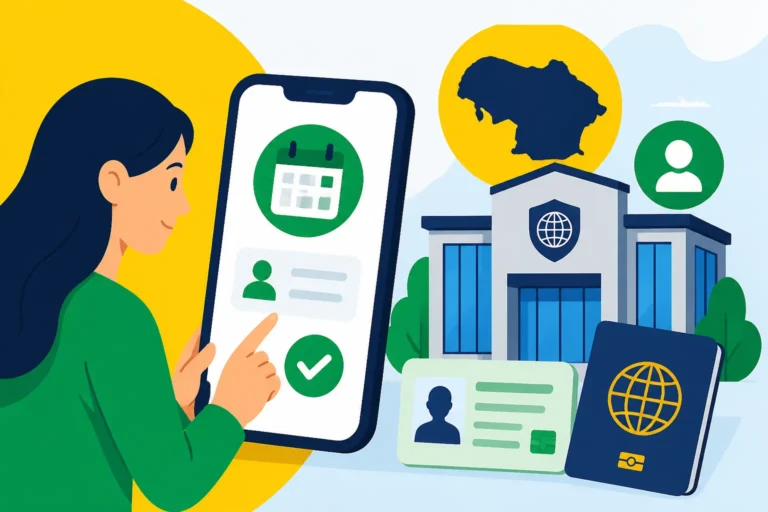
The primary gateway for submitting your residence permit application is the MIGRIS portal. This online system allows you to fill out your application form, upload digital copies of all your supporting documents, and even schedule your in-person appointment. It's designed to streamline the process, but any errors or omissions can lead to delays. Be meticulously accurate when filling out the forms, and make sure your uploaded documents are clear, legible, and correctly named. After submitting your online application, you will need to book an appointment at a MIGRIS branch. Booking an appointment can sometimes be a challenge due to demand, so be persistent and flexible with your timing and location. For details on how to book, refer to How to Book an Appointment at the Migration Department (MIGRIS) in Lithuania.
At your in-person appointment, a MIGRIS officer will verify your original documents against the uploaded copies, take your biometrics (fingerprints and a photo), and ask any clarifying questions. This is where your thorough preparation pays off. Once this step is complete, the waiting game begins. Processing times can vary significantly based on the time of year, the complexity of your case, and the workload of the department. While official guidelines provide estimates, prepare for potential delays. During this period, you should refrain from leaving Lithuania if your current visa status does not permit re-entry while your application is pending. After approval, you'll be notified to pick up your residence permit card, which is your key to legal residence in Lithuania.
Life in Lithuania as a Retiree: Beyond the Permit
Securing your residence permit is just the first major hurdle. Life in Lithuania as a retiree offers a unique blend of quiet charm, natural beauty, and a surprisingly modern infrastructure. However, it's different from what many might expect from a typical retirement destination, and being prepared for these differences is key to a fulfilling experience.
Healthcare, Cost of Living, and Community Integration
Once you have your residence permit, understanding the local healthcare system is paramount. As a retiree relying on private health insurance (like Cigna Global, which offers comprehensive expat plans), you'll primarily access private clinics for routine care, though public hospitals are available for emergencies. Even with private insurance, it's wise to familiarize yourself with the intricacies of Lithuanian healthcare. Our guide, The Complete Guide to Healthcare in Lithuania for Expats (2026), provides a deep dive into the system, including Public vs Private Healthcare in Lithuania: Which Should Expats Choose?.
The cost of living in Lithuania, especially outside the capital Vilnius, is generally lower than in Western Europe or North America, which can be attractive for retirees. However, living off a pension means budgeting carefully. While groceries and public transport are relatively affordable, certain imported goods or niche services might be pricier. Heating costs in winter can also add up. To get a realistic picture, delve into resources like The Complete Guide to Cost of Living in Lithuania for Expats (2026). Integrating into the community is another aspect. While English is increasingly common in urban centers, especially among younger generations, learning some basic Lithuanian phrases can significantly enhance your daily life and interactions. There are many expat groups in larger cities, particularly Vilnius and Kaunas, which can be a great way to meet people and ease your transition.
Renewing Your Permit and Long-Term Considerations
Your initial Temporary Residence Permit will have a limited validity, typically one or two years. This means you'll need to go through the renewal process periodically. The good news is that renewing your permit is generally less complex than the initial application, provided you continue to meet all the requirements. You'll need to demonstrate ongoing financial self-sufficiency, maintained health insurance, and continued legitimate accommodation in Lithuania. The Migration Department will want to see that your circumstances haven't changed negatively and that you still have sufficient funds for your prolonged stay. Start the renewal process well in advance of your permit's expiry, usually a few months before, to avoid any gaps in your legal status. For detailed steps, refer to How to Renew Your Lithuanian Residence Permit.
For those planning to make Lithuania their permanent home, there is a pathway towards Permanent Residence in Lithuania: The Complete Pathway (2026) after a certain period of continuous legal residence (usually five years). This status offers greater stability and fewer renewal hassles. Beyond that, if you truly fall in love with Lithuania and wish to deepen your ties, Lithuanian Citizenship: Routes Through Naturalisation and Descent (2026) might be a long-term goal. However, obtaining citizenship has its own set of rigorous requirements, including language proficiency and knowledge of the constitution. Living as a retiree in Lithuania is a journey, not a destination, and understanding these long-term considerations from the outset will help you plan effectively.
Disclaimer
Please remember that immigration laws and regulations in Lithuania can change, sometimes without extensive prior notice. While this guide aims to provide accurate and comprehensive information based on current knowledge, it should not be considered legal advice. Always consult the official Migration Department (MIGRIS) website or seek professional legal counsel from an immigration lawyer specializing in Lithuanian law for the most up-to-date and personalized guidance regarding your specific situation.