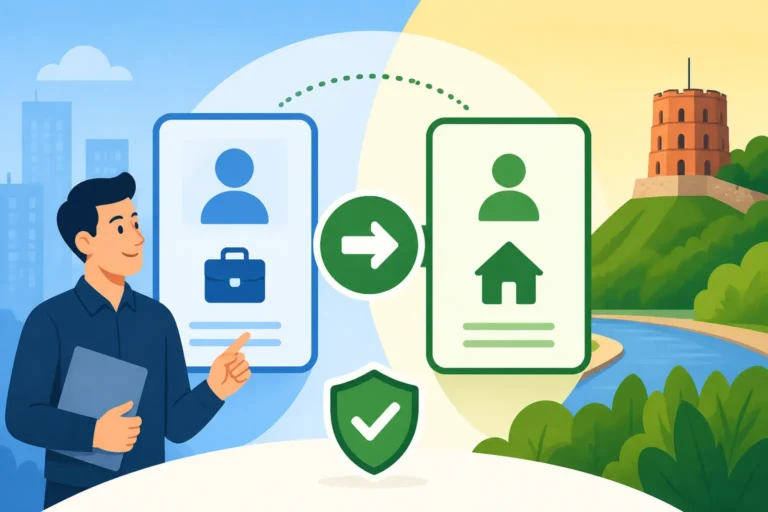
How Do I Apply for Residence Based on a Startup in Lithuania?
Starting a new venture in a foreign country is exhilarating, but trying to navigate the complex world of residence permits while simultaneously launching a startup can feel like juggling flaming torches. The administrative hoops, the specific requirements, and the sheer volume of paperwork often leave even the most seasoned entrepreneurs feeling overwhelmed. This guide is here to cut through the jargon and give you a clear, empathetic roadmap to applying for a residence permit in Lithuania based on your innovative startup.
Understanding the Lithuanian Startup Visa Program
Lithuania has made incredible strides in becoming a hub for innovation, particularly in the FinTech sector, and it genuinely wants to attract bright, entrepreneurial minds. To that end, they've created a dedicated startup visa program. This isn't just about starting any business; it's specifically designed to bring in innovative, high-growth potential enterprises that will contribute meaningfully to the country's economy.
The program aims to simplify the immigration process for non-EU founders, acknowledging that traditional business immigration routes can be cumbersome and ill-suited for the fast-paced nature of startups. However, "simplified" doesn't mean "easy." It just means there's a specific, albeit detailed, pathway for you to follow, provided your startup meets their criteria for innovation and potential. Many expats, myself included, have found that while the intention is good, the practical application still requires patience and meticulous attention to detail.
Who is Eligible for the Startup Visa?
So, what exactly does Lithuania look for in a startup founder? Firstly, and most importantly, your business idea must be truly innovative and have high growth potential. This isn't for opening a local cafe or a simple consultancy; they're looking for disruptive technologies, scalable business models, and something that genuinely adds new value to the market. Think tech, biotech, advanced manufacturing, or anything that shows a clear path to significant economic impact. You'll need to demonstrate this innovation clearly in your business plan.
Beyond the business idea itself, personal eligibility criteria are also crucial. You'll need to prove you have sufficient funds to support yourself (and any dependents) during your stay, a clean criminal record, and a genuine intention to develop your startup primarily from Lithuania. It's often evaluated on the strength of your team, too – if you have co-founders, their experience and commitment will also be considered. This isn't just a tick-box exercise; the Migration Department (MIGRIS) genuinely wants to see that you're serious and capable.
Why Lithuania for Your Startup?
You might be asking, "Why Lithuania, specifically?" Well, for innovative startups, especially in FinTech, it’s actually a fantastic choice. The country boasts a well-developed IT infrastructure, a highly skilled and multilingual workforce, and a supportive regulatory environment that has actively fostered the growth of new businesses. Vilnius, in particular, is brimming with co-working spaces, accelerators, and a vibrant startup community.
The Lithuanian government and various institutions like Startup Lithuania are actively working to create a welcoming ecosystem. There are numerous initiatives, grants, and networking events designed to help new companies take root and flourish. This means that beyond just getting your visa, you're stepping into an environment that wants you to succeed. When you're packing up your life and moving your business, considering comprehensive relocation services from companies like Sirelo can help ensure a smooth transition, allowing you to focus on what really matters: your startup.
The Application Process: Step-by-Step for Residence
Alright, let's get down to brass tacks: the actual steps you'll need to take. This process, while logical, requires patience and careful preparation. Think of it less as a sprint and more as a marathon, with several key checkpoints you absolutely cannot skip. Many hopeful founders get tripped up early on because they underestimate the rigorous assessment process.
Initial Assessment by Startup Lithuania
Before you even think about submitting documents to MIGRIS, your journey begins with Startup Lithuania. This is the crucial first gate, and frankly, it's where many ideas are either validated or sent back to the drawing board. You'll submit an application that details your business idea, your team, your financial projections, and how your startup qualifies as "innovative" and "high-growth." They're essentially acting as an expert panel, evaluating the viability and impact of your proposed venture.
The application typically includes a comprehensive business plan, your CVs, and sometimes even a pitch deck. They want to see originality, scalability, and a clear path to market. It's not enough to have a good idea; you need to demonstrate how it will thrive and contribute to the Lithuanian economy. Expect a thorough review and possibly an interview or follow-up questions. Only if you receive a positive evaluation from Startup Lithuania can you then proceed with the actual residence permit application. Think of this as getting your "seal of approval" for the concept itself.
Applying for the National D Visa if Applicable
If you're coming from a non-Schengen country, the next step after getting the nod from Startup Lithuania is often to apply for a National (Type D) Visa. This visa allows you to enter and stay in Lithuania for longer than the typical Schengen tourist visa, specifically to apply for your Temporary Residence Permit (TRP) once you're on the ground. You'll typically apply for this at a Lithuanian embassy or consulate in your home country.
The documents required for the D visa will generally mirror some of the TRP requirements – proof of your Startup Lithuania approval, financial means, accommodation, and travel insurance. It's crucial to ensure these documents are consistent and correctly translated, as any discrepancies can cause delays. For those already in the Schengen area on a different visa, or who are EU/EEA citizens, this step might be skipped entirely. You can find more specific details on what's involved in obtaining this initial entry permit by looking into resources like How to Get a National (Type D) Visa for Lithuania.
Submitting Your Residence Permit Application to MIGRIS
Once you have your Startup Lithuania approval and, if needed, your National D Visa, you'll then tackle the main event: applying for your Temporary Residence Permit (TRP) with the Lithuanian Migration Department (MIGRIS). This is usually done through their online portal, MIGRIS, which allows you to upload all necessary documents electronically. However, be prepared, as even with an online system, you'll likely still need to book an appointment to submit originals and provide biometric data.
The documents list here is extensive and includes everything from your passport and previous visas to your Startup Lithuania approval letter, detailed business plan, proof of funds, accommodation, and comprehensive health insurance. It’s also where you'll be applying for your personal code, or Asmens Kodas, which is vital for virtually everything else you'll do in Lithuania. Don't be surprised if they ask for additional documents or clarifications; it's a standard part of the process. Having all your ducks in a row for your How to Apply for a Temporary Residence Permit (TRP) in Lithuania is absolutely critical to avoid frustrating delays.
Key Requirements and Documentation for Your Startup Residence Permit
This is where the rubber meets the road. The Migration Department isn't just looking for a compelling story; they want concrete proof that you meet all the legal and financial stipulations. This means gathering a mountain of paperwork, ensuring every detail is accurate, and understanding what kind of proof they actually accept. Many expats find this the most challenging part, so let's break it down.
Financial Stability and Business Plan Proof
One of the biggest hurdles is proving you have enough money. This isn't just about your personal living expenses, but also showing that your startup has sufficient initial capital to operate. For the residence permit, you generally need to demonstrate that you have enough funds to sustain yourself for at least a year, often equivalent to the average monthly salary in Lithuania for each applicant (you and any family members). This can be in a bank account in your name. For your business, the capital requirements will vary depending on the type of legal entity you establish (e.g., UAB – a limited liability company – has a minimum share capital requirement).
Your business plan, which was initially vetted by Startup Lithuania, now becomes a critical piece of your permit application. It needs to be detailed, robust, and clearly show your innovative approach, market analysis, financial projections, and how your startup will contribute to Lithuania's economy. This document isn't static; ensure it's updated and perfectly aligns with any changes or insights you've gained. Having a solid understanding of topics like How Much Income Is Required for a Lithuanian Residence Permit will certainly help here.
Accommodation and Health Insurance
Finding and proving accommodation can be surprisingly tricky, especially if you're applying from abroad. You'll need a signed rental agreement (nuomos sutartis) or proof of property ownership. This agreement should typically be registered with the Registrų Centras, the Lithuanian Centre of Registers. It needs to be a legitimate, long-term address. Short-term Airbnb bookings generally won't cut it. For a comprehensive overview of how this process works, I highly recommend reading Declaring Your Place of Residence in Lithuania: The Complete Guide.
Then there’s health insurance. This is a non-negotiable requirement for your residence permit. You'll need comprehensive health insurance that is valid in Lithuania for your entire requested residence period, covering at least €30,000 for medical expenses, including repatriation. While you'll eventually contribute to the state compulsory health insurance (PSD) once you start working and paying social security, for the initial permit application, a private international health insurance policy is usually required. Many expats turn to providers like Cigna Global for this, as they offer plans specifically designed for international residents, providing peace of mind from day one.
The Asmens Kodas and Other Essential Paperwork
Ah, the Asmens Kodas – your personal identification number. You can't live and breathe in Lithuania without it. While you often apply for it as part of your residence permit application at MIGRIS, its importance cannot be overstated. It's needed for everything: opening a bank account, registering a business, paying taxes, and accessing public services. For a detailed guide on this crucial number, check out How to Get Your Asmens Kodas Personal Code and Why It Matters for Healthcare.
Other essential paperwork typically includes:
- Passport and valid visa (if applicable): Ensure your passport is valid for well beyond your intended stay.
- Marriage and birth certificates: If you're bringing family members, these will need to be officially translated and apostilled/legalized.
- Criminal record check: From your home country and any other country you've resided in for a significant period.
- Proof of previous education and qualifications: Especially if these are relevant to your startup.
- A commitment letter to engage in economic activities in Lithuania: This reiterates your dedication.
It’s often a good idea to have all your foreign-issued documents apostilled or legalized in your home country before you even think about coming to Lithuania. This saves a huge amount of hassle and delay down the line.
Life After Approval: What to Expect and Next Steps
Congratulations! You've received your residence permit based on your startup. That's a huge milestone, but it's really just the beginning. Now, the real work of building your company and integrating into Lithuanian society truly begins. Don't think the administrative journey ends here; it simply transitions into new forms.
Registering Your Business and Paying Taxes
With your residence permit in hand, you can now fully register your startup as a legal entity in Lithuania. The most common forms are a UAB (Uždaroji Akcinė Bendrovė – Closed Joint-Stock Company) or, for smaller ventures, an MB (Mažoji Bendrija – Small Partnership). Each has different requirements for capital, governance, and tax implications. This step involves registering with the Registrų Centras and then with the State Tax Inspectorate (VMI).
Understanding your tax obligations is paramount. As a founder, you'll be responsible for personal income tax (GPM), social security contributions (Sodra), and potentially corporate taxes for your company. Getting acquainted with the Lithuanian tax system early on is crucial for compliance and avoiding any nasty surprises. Resources like The Complete Guide to Taxes in Lithuania for Expats (2027) or How to Set Up a Small Partnership (Mažoji Bendrija, MB) in Lithuania will be invaluable here. Don't forget to open a proper business bank account – something you can research further in The Expat Guide to Opening a Bank Account in Lithuania.
Integrating into the Lithuanian Startup Ecosystem
Once your business is legally established, it’s time to plug into the vibrant Lithuanian startup ecosystem. Vilnius, particularly, offers a wealth of resources. Look for co-working spaces like Rockit, Talent Garden, or Tech Park, which are often hubs of activity and networking opportunities. These spaces not only provide infrastructure but also a community where you can connect with other founders, mentors, and potential investors.
Attend industry events, meetups, and conferences. Organizations like Startup Lithuania continue to play a role post-permit, offering support, mentorship programs, and connections to local and international investors. Integrating yourself into this community is not just about growing your business; it's also about building your social network and feeling at home in your new country. The journey of building a startup is challenging enough, but with the right support system and a clear understanding of the local landscape, Lithuania can be an incredibly rewarding place to grow your innovative venture.
| Stage | Key Action | Primary Body | Typical Documents Required (Examples) | Estimated Timeline (Rough) |
|---|---|---|---|---|
| 1. Business Idea Evaluation | Submit detailed business plan & team info | Startup Lithuania | Business plan, CVs, financial projections, pitch deck | 2-4 weeks |
| 2. National D Visa (if applicable) | Apply for entry visa | Lithuanian Embassy/Consulate Abroad | Startup Lithuania approval, passport, insurance, accommodation, funds | 2-4 weeks |
| 3. Residence Permit Application | Submit application & biometric data | MIGRIS (Migration Department) | Startup Lithuania approval, D visa, passport, funds, accommodation, health insurance, criminal record, Asmens Kodas application | 2-4 months |
| 4. Business Registration | Register legal entity and with tax authorities | Registrų Centras, VMI (Tax Authority) | Articles of association, company name, director info, share capital proof | 1-2 weeks |
| 5. Ongoing Compliance & Growth | File taxes, comply with regulations, network | VMI, Sodra, Various | Tax declarations, social security payments | Ongoing |
Disclaimer
The information provided in this guide is for general informational purposes only and does not constitute legal, financial, or immigration advice. While we strive to keep the information up-to-date and accurate, regulations and procedures in Lithuania can change frequently. We strongly recommend consulting with an immigration lawyer, tax advisor, or the official Lithuanian Migration Department (MIGRIS) for advice tailored to your specific situation.