How to Transfer from a Work Visa to a Residence Permit in Lithuania
Ah, the notorious dance between a work visa and a residence permit in Lithuania. It's a common point of confusion, and frankly, a source of significant stress for many expats, especially when you're just trying to settle into your new life. Navigating this administrative labyrinth can feel like a full-time job, but trust me, understanding how to smoothly transition from a national (D) visa to a temporary residence permit (TRP) is absolutely crucial for long-term peace of mind and hassle-free living. This guide is here to untangle that process, offering clear, empathetic, and realistic steps based on what many of us have experienced firsthand.
Demystifying the Transition: From Work Visa to Residence Permit in Lithuania
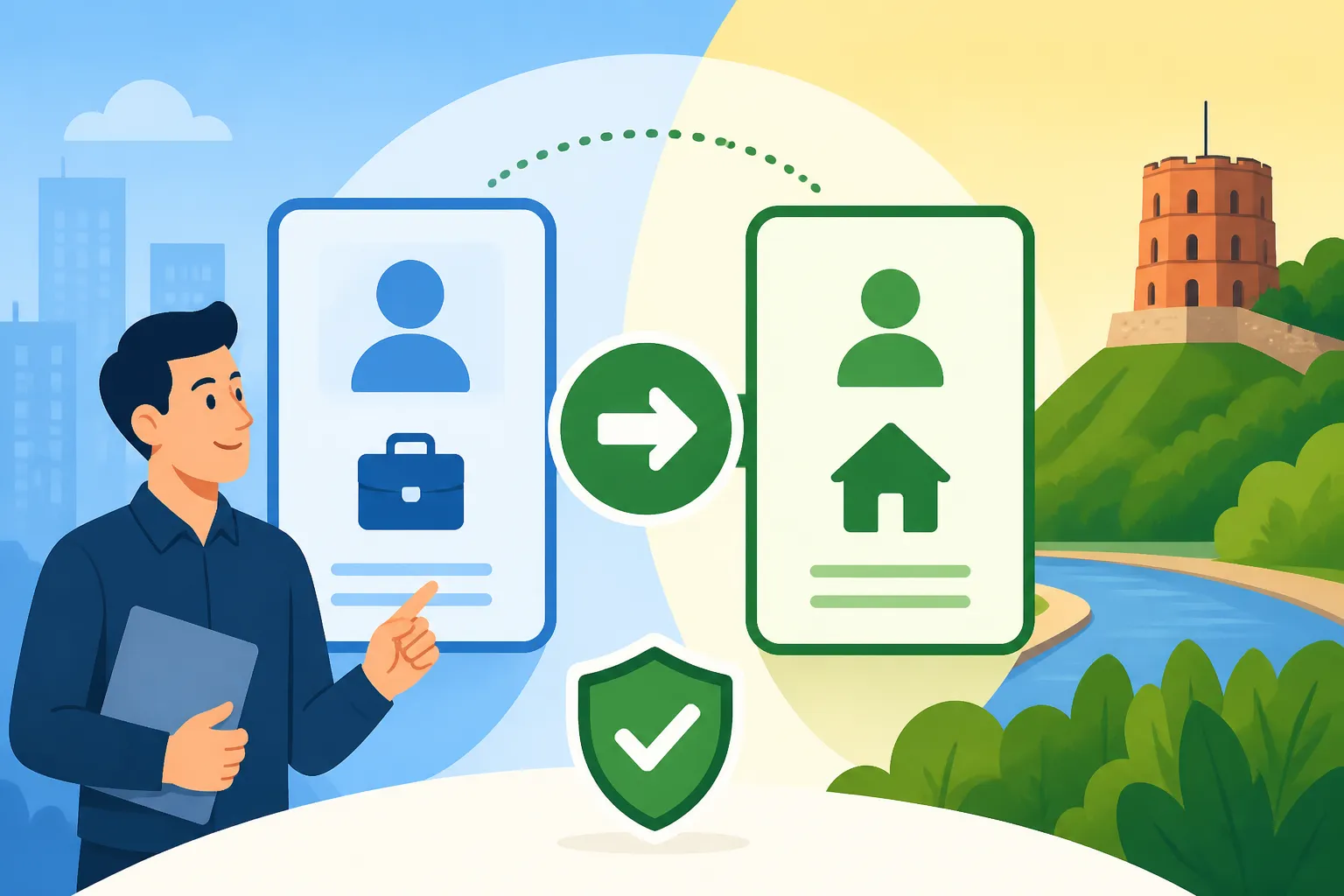
When you first arrive in Lithuania for work, you're likely holding a National (D) Visa. It’s an essential document, your golden ticket, if you will, to actually step foot into the country and start your employment journey. However, it’s often just the first step in a longer immigration process, and it has its limitations. The real game-changer for long-term living and integration is obtaining a Temporary Residence Permit, or TRP.
Understanding Your National (D) Visa
Let's be honest, that National (D) Visa you probably arrived with felt like a huge victory. And it was! It’s what allows you to enter Lithuania and legally begin your employment. Think of it as a specialized, extended short-stay visa. It signifies that you have a specific, justifiable reason to be in Lithuania for more than just a tourist trip – in this case, a job. Typically, these visas are issued for a maximum period of one year, though often you'll find them for shorter durations depending on your specific circumstances and the discretion of the Migration Department.
While your D visa permits you to work and live here for its validity period, it's inherently a temporary solution. It's like having a provisional driver's license – it gets you on the road, but you're still working towards full driving privileges. The D visa, while enabling your employment, doesn't grant you the same comprehensive rights and ease of administrative tasks as a residence permit. For example, opening certain bank accounts, dealing with some government services, or even proving your long-term intent can be trickier with just a D visa. It's designed to get you in, get you started, and then the expectation is that you’ll move to a more stable status if you plan to stay. If you’re curious about the ins and outs, our guide on The Expat Guide to Lithuanian Work Visas and Permits (2027) delves deeper into what to expect when you first secure one.
The Significance of a Temporary Residence Permit (TRP)
Now, a Temporary Residence Permit (TRP), known locally as a Leidimas laikinai gyventi, is a whole different ballgame. This is the document that truly signifies your legal right to reside in Lithuania for an extended period, typically one to two years initially, with the possibility of renewal. It’s a physical card, much like a national ID, that grants you far more stable legal status than a D visa.
With a TRP, you’re no longer just a temporary visitor with a job; you’re a recognized resident. This unlocks a plethora of benefits. Administratively, things become much smoother. You’ll find it easier to establish proper banking relationships, sign long-term contracts for things like utilities or mobile phones, and generally integrate into Lithuanian society without constant questions about your legal standing. The TRP is the cornerstone of your long-term life here, providing a solid foundation from which to build. It’s the next logical and essential step after arriving on your initial work-based D visa, signaling your commitment and allowing Lithuania to acknowledge you as more than just a transient worker.
Why Make the Leap? Benefits of a Lithuanian Residence Permit
Deciding to move from a work visa to a temporary residence permit isn't just about ticking a box; it's about fundamentally changing your status and unlocking a far more stable and integrated life in Lithuania. The benefits are numerous and genuinely impactful on your daily experiences and future planning.
Enhanced Stability and Broader Rights
One of the most immediate and tangible benefits of securing a TRP is the enhanced stability it provides. Your D visa is often tied to a specific employer, meaning if your job situation changes, your entire legal status can be thrown into question. With a TRP, especially if it's not strictly tied to a single employer (which depends on the type of permit you apply for), you gain a greater degree of independence. You’re not perpetually looking over your shoulder, worrying about the expiry date looming large just a few months away. This stability allows you to plan your life with far more confidence, knowing you have a solid legal footing.
Furthermore, a TRP often comes with broader rights. While a D visa primarily facilitates work, a TRP allows for fuller integration into society. Depending on your specific permit type and duration, you might gain easier access to certain social benefits, although full access to the public health insurance system (PSDF) usually requires continuous contributions through your employment. Nevertheless, the legal status provided by a TRP is a clear step towards enjoying more of what Lithuania has to offer its long-term residents.
Seamless Living and Future Prospects
Beyond just legal stability, a TRP vastly simplifies daily life and opens up significant future prospects. With your residence permit card in hand, you gain unrestricted travel within the entire Schengen Area. Imagine spontaneous weekend trips to neighbouring Latvia or Poland without worrying about visa limitations – it’s a game-changer for many expats who want to explore Europe.
Perhaps even more importantly for those settling down, a TRP is the gateway to bringing your loved ones to Lithuania. The ability to apply for Family Reunification in Lithuania: A Complete Guide for Expats is directly dependent on you holding a valid residence permit. This means your spouse, children, and sometimes even parents, can join you, making Lithuania truly feel like home for your entire family. Furthermore, the TRP is a critical stepping stone on your journey toward becoming a permanent resident. After a certain period of continuous temporary residence, you can apply for Permanent Residence in Lithuania: The Complete Pathway (2027), which offers even greater security and rights, including the possibility of eventually pursuing Lithuanian citizenship. Essentially, the TRP shifts your status from a short-term worker to a potential long-term resident, laying the groundwork for a deeply integrated life in your adopted country.
Navigating the Application: Eligibility and Documentation
Alright, so you’re convinced that a Temporary Residence Permit is the way to go – fantastic! Now comes the nitty-gritty: understanding who qualifies and, more importantly, what mountain of paperwork you'll need to prepare. This stage often feels like the most daunting, but breaking it down makes it manageable.
Who Qualifies: Key Eligibility Criteria
Before you even start gathering documents, it’s crucial to understand the fundamental criteria for obtaining a TRP, particularly when transitioning from a work-based D visa. The Migration Department (MIGRIS) needs to see that you have a legitimate reason to stay, that you can support yourself, and that you pose no risk.
Firstly, you’ll need a valid work contract with a Lithuanian employer. This contract will be the primary basis for your TRP application, demonstrating that your employment is ongoing and stable. Secondly, you must show proof of sufficient funds to support yourself and any dependents you might have. While your salary typically covers this, having bank statements or a letter from your employer confirming your income is standard practice. Thirdly, you need registered accommodation in Lithuania. This could be a rental agreement, a property deed, or a letter from someone hosting you, along with proof that their property is registered. Finally, you must have a clean criminal record, both from your home country and any country you’ve resided in for a significant period. Lithuania, like any sovereign nation, screens applicants to ensure national security and public order are not threatened.
Another critical component is continuous health insurance coverage. This is non-negotiable. You’ll need to prove that you have a valid health insurance policy that covers the entire period of your requested residence permit. For many expats, this means looking beyond basic travel insurance to a comprehensive plan designed for long-term residents. Companies like Cigna Global are popular choices among the expat community precisely because they understand these unique requirements and offer policies tailored for individuals living abroad. This type of robust insurance ensures you’re covered for medical emergencies, general practitioner visits, and even specialist care, which is vital for your well-being in a new country. Don't forget, having your How to Get Your Asmens Kodas (Personal Code) and Why It Matters for Healthcare will also be critical for accessing the local healthcare system once your TRP is issued and you are integrated into the Compulsory Health Insurance (PSD) system via your employment.
Assembling Your Document Dossier
Once you're confident you meet the eligibility criteria, the real fun begins: gathering all the required documents. This is where attention to detail is paramount, as one missing or incorrect document can lead to frustrating delays. Think of it as building your legal case for residence.
You will definitely need your valid passport (with at least a few months of validity beyond your requested permit period), a copy of your current National (D) Visa, and your existing work contract. An employer letter confirming your employment status, position, and salary is also standard. Proof of funds, usually recent bank statements, is also a must. The aforementioned accommodation agreement is crucial, whether it’s a rental contract, a notarized letter from a homeowner, or proof of ownership if you’ve bought property here. And, as discussed, a comprehensive health insurance policy – again, a provider like Cigna Global can issue the necessary documentation – is absolutely essential.
Don't underestimate the need for official translations and, in some cases, apostilles. Documents not in Lithuanian or English will almost certainly need to be translated by a certified translator. Depending on their origin, some documents might also require an apostille or consular legalization to be recognized in Lithuania. This process can take time and cost money, so factor it into your planning. Always provide both the original documents and copies. It’s a lot, I know, but getting it right the first time saves you a headache later. If you need a comprehensive list, our guide What Documents Do I Need for a Lithuanian Residence Permit? is an excellent resource.
Here’s a quick checklist to get you started:
| Document Type | Description | Notes for Expats |
|---|---|---|
| Application Form | Completed TRP application form (via MIGRIS) | Fill out accurately, avoid errors. |
| Passport | Valid travel document | Ensure sufficient validity. |
| National (D) Visa | Copy of your current Lithuanian D visa | Proof of legal entry/initial stay. |
| Work Contract | Signed employment contract with a Lithuanian company | Must be active and valid. |
| Employer Letter | Confirmation of employment, position, salary | Should be recent, on company letterhead. |
| Proof of Funds | Bank statements, salary slips | Demonstrate financial self-sufficiency. |
| Accommodation Proof | Rental agreement, property deed, host letter | Must be registered with Registrų Centras. |
| Health Insurance | Comprehensive policy covering TRP duration | Companies like Cigna Global provide expat-specific plans. |
| Police Certificate | From home country and any country of residence | Proves no criminal record. |
| Passport-sized Photos | Biometric photos (usually 2-3) | Specific requirements (size, background). |
| State Fee Payment | Receipt of paid application fee | Non-refundable. |
| Translations | Certified translations for non-Lithuanian/English docs | Ensure official certification. |
| Biometrics | Fingerprints, digital photo (taken at MIGRIS) | Required at your appointment. |
The Application Process: A Step-by-Step Walkthrough with MIGRIS
With your documents diligently gathered, the next phase is actually submitting your application. This primarily happens through the Lithuanian Migration Department (MIGRIS), which has streamlined much of the initial process online, though an in-person visit is still a crucial step.
Initiating Your Application Online
The journey to your TRP officially begins on the MIGRIS electronic services portal. This online platform is your digital gateway for submitting most immigration-related applications in Lithuania. You'll need to create an account if you haven't already – and trust me, you'll be using it a lot during your time here. The portal allows you to complete the TRP application form, upload all your supporting documents (scanned copies, of course), and officially submit your request. It's a fantastic system, largely in English, that saves you from endless paper forms. However, pay meticulous attention to detail when filling everything out; even small discrepancies can cause delays.
Once you’ve successfully submitted your application and uploaded your documents, the system will prompt you to schedule an in-person appointment at a MIGRIS branch. This step is crucial and, I cannot stress this enough, book it as far in advance as possible! Appointment slots, especially in larger cities like Vilnius or Kaunas, fill up incredibly quickly. If your D visa is nearing its expiry, you absolutely need to prioritize this booking. Our guide on How to Book an Appointment at the Migration Department (MIGRIS) in Lithuania offers some practical tips for navigating their booking system.
The In-Person Appointment and Biometrics
Your scheduled appointment at MIGRIS is where you bring your digital application to life. You’ll need to arrive with all your original documents that you previously uploaded online. The official at the counter will meticulously check these against your uploaded copies and verify everything. This is not the time for "I forgot" or "it's at home." If you struggle with Lithuanian, it's wise to bring a friend or a professional translator, as not all MIGRIS staff might be fluent in English. While they are usually very helpful and patient, having someone to bridge any language gaps can alleviate a lot of anxiety.
During this appointment, your biometrics will be collected. This includes your fingerprints and a digital photograph, which will eventually appear on your residence permit card. This is a standard procedure for security and identification purposes. Once everything is confirmed and biometrics are taken, you'll be given a confirmation, and then… the waiting begins. This is also where some expats might consider leveraging services like Sirelo, especially if they are new to the country and feel overwhelmed by the administrative burden. While Sirelo primarily focuses on moving logistics, some relocation consultants can provide advice or support in understanding these crucial bureaucratic steps, easing the overall transition.
Waiting for a Decision and Receiving Your Card
After your MIGRIS appointment, your application moves into the processing queue. The official processing times for a TRP can vary. While MIGRIS provides general timelines on their website, personal experiences often differ. Factors like the volume of applications, the complexity of your case, and whether additional information is requested can all influence how long you wait. Patience is truly a virtue here. You can usually check the status of your application online via your MIGRIS portal account, which at least provides some peace of mind that it’s progressing.
Once your application is approved – and believe me, that email or status update is a moment of pure relief – you'll be notified to come and collect your brand-new Temporary Residence Permit card. This often involves another quick trip to MIGRIS. Receiving that physical card in your hand is a milestone. It’s not just a piece of plastic; it’s tangible proof of your legal right to reside in Lithuania, your key to smoother daily life, and your passport to exploring the Schengen Area. For a detailed rundown on this final step, check out How to Get a Lithuanian Residence Permit Card and Its Biometrics.
Common Hurdles and Expert Tips for a Smooth Transition
Even with all the right information, navigating the immigration system in any new country, including Lithuania, can present unexpected challenges. Anticipating these and knowing how to overcome them can save you a lot of grief.
Addressing Administrative Challenges
Let's talk frankly: bureaucracy can be frustrating. The Lithuanian system, while increasingly digital and efficient, still has its quirks. One of the biggest hurdles is ensuring every single document is perfect. A missing signature, an outdated date, or a page not translated can send you back to square one, leading to significant delays. My biggest tip here is to double-check everything, then ask a trusted Lithuanian-speaking friend or colleague to review it with you. Another common administrative challenge is timing. As mentioned earlier, securing a MIGRIS appointment can be tough, especially if you leave it to the last minute. Always plan ahead, even if it feels excessively early.
Furthermore, sometimes you might encounter differing interpretations of rules or requests for additional documents that weren't initially on the list. This isn't necessarily malicious; it can simply be variations in how specific cases are handled. The best approach is to remain polite, clarify exactly what is needed, and provide it promptly. This proactive approach often resolves issues faster than getting bogged down in arguments. And if your permit is nearing its expiry, make sure you understand How to Renew Your Lithuanian Residence Permit well in advance to avoid any gaps in your legal status.
Ensuring Continuous Health Coverage
Healthcare is not just an administrative hurdle; it's fundamental to your well-being. Ensuring continuous health coverage throughout your transition is absolutely paramount. Your D visa requires insurance, and your TRP application demands it too. The type of insurance required for a TRP is typically more comprehensive than a basic travel policy, covering a wider range of medical services for the entire duration of your requested permit. This is where researching options like Cigna Global, which offers robust international health insurance, becomes invaluable.
The pitfall often arises when expats let their initial travel insurance lapse before their new TRP-compliant policy kicks in, or they assume their D visa insurance automatically transfers. This gap in coverage, even for a short period, can not only leave you vulnerable in case of an emergency but also jeopardize your TRP application. Ensure there’s no break in your coverage, and that your chosen policy meets all the specific requirements set by the Migration Department, including sufficient coverage amounts and validity. Our guide What Health Insurance Do I Need for a Lithuanian Residence Permit? provides a detailed breakdown of these requirements, making it easier to select a suitable plan and ensure this crucial aspect of your application is handled correctly.
Looking Ahead: Life with a Lithuanian Residence Permit
Congratulations, you've successfully navigated the transition! Holding that Temporary Residence Permit in your hand is a huge achievement and marks the beginning of a more deeply rooted life in Lithuania. But the journey doesn’t end there; it merely evolves.
Enjoying Your Newfound Freedom
With your TRP, you'll immediately notice an immense feeling of liberation. No longer tethered by the often-shorter validity of a D visa, you can genuinely start to settle in. Travel within the Schengen Area becomes a breeze, offering opportunities to explore Europe without the previous visa constraints. This freedom extends to your daily life too. You'll find administrative interactions, whether at the bank, with utility providers, or even just signing up for a gym membership, are much smoother with a recognised Lithuanian ID. It genuinely helps you integrate and feel less like a temporary visitor.
This stable legal status also provides a solid foundation for your professional life. With a TRP, you are often less restricted in terms of employment compared to some D visas, which might be tied to a very specific employer. This means you have more flexibility if you decide to change jobs or explore different career paths within Lithuania. For a deeper understanding of the professional landscape, our guide The Complete Guide to Working in Lithuania as a Foreigner (2027) will offer valuable insights. You'll also find that accessing healthcare becomes less complicated, allowing you to consider options like Public vs Private Healthcare in Lithuania: Which Should Expats Choose? with a full understanding of your rights.
Planning for the Long Term
The TRP is not just about present ease; it's a vital stepping stone for your future in Lithuania. Each year you spend here on a valid TRP contributes to the time required for more permanent statuses. This is crucial if you envision Lithuania as your long-term home. After a certain period of continuous temporary residence, you become eligible to apply for Permanent Residence in Lithuania: The Complete Pathway (2027), which grants even greater stability, fewer restrictions, and a more robust connection to the country.
Your journey is a marathon, not a sprint. The TRP solidifies your presence and allows you to build a life, grow roots, and potentially contribute to the country for years to come. It’s an investment in your future, paving the way for eventual long-term residency and, for some, even Lithuanian citizenship. So, take a moment to celebrate this achievement. You’ve overcome the initial hurdles, and now the exciting part of truly making Lithuania your home can begin.
Disclaimer
The information provided in this guide is for general informational purposes only and does not constitute legal advice. While we strive to provide accurate and up-to-date information, immigration laws and procedures in Lithuania can change frequently. It is always recommended to consult with the official Lithuanian Migration Department (MIGRIS) or a qualified immigration lawyer for personalized advice regarding your specific situation. We are not responsible for any actions taken based on the information provided herein.