How Do I Find a Trusted Private Clinic in Vilnius?
Navigating a new country's healthcare system can feel like trying to solve a Rubik's Cube blindfolded, especially when you're feeling unwell and just want quick, reliable care. For many of us expats in Vilnius, the public system, while functional, often presents a labyrinth of long wait times and language barriers. This guide is here to unravel that mystery, offering a veteran expat's perspective on how to confidently find a trusted private clinic in Lithuania's bustling capital.
Why Consider a Private Clinic in Vilnius?
When you first arrive in Lithuania, the public healthcare system might seem like the obvious choice, especially if you're contributing to the Compulsory Health Insurance (PSD) through your work or self-employment. However, it doesn't take long for many of us to realize that while public healthcare provides essential services, there are often significant trade-offs, particularly for those accustomed to different standards or needing faster access to specialists. This is where private clinics truly shine, offering an alternative that often aligns more closely with expat expectations.
The Public System Hurdles: Long Waits, Language Barriers, System Complexities
Let's be honest, the public healthcare system, with its network of poliklinikos (polyclinics) and hospitals, can be a bit of a challenge. One of the biggest pain points is the waiting game. Getting an appointment with a specialist often means booking weeks, sometimes even months, in advance. This can be incredibly frustrating if you're dealing with a pressing health concern or simply want a check-up without unnecessary delays. Imagine needing to see a dermatologist for a suspicious mole and being told the earliest appointment is in two months – it's enough to make anyone anxious.
Then there’s the language barrier. While many younger medical professionals speak English, particularly in Vilnius, it's not guaranteed, especially with administrative staff or older doctors. Trying to explain complex symptoms in a language you're not fluent in, or relying on Google Translate, adds another layer of stress to an already vulnerable situation. Furthermore, understanding the nuances of how the public system operates, from getting referrals (siuntimas) to specialists to figuring out the E-Sveikata (e-health) system, can be daunting. It’s a steep learning curve, even for those of us who have been here a while. We have a detailed guide on Navigating the Lithuanian Healthcare System: An Expat's Roadmap (2027) that dives deeper into these complexities.
The Benefits of Private Care: Speed, English-Speaking Staff, Comfort, Specialized Services
Stepping into a private clinic in Vilnius often feels like a breath of fresh air after navigating the public system. The most immediate and tangible benefit is speed. You can typically get an appointment with a general practitioner or a specialist within a few days, sometimes even on the same day for urgent cases. This quick access is invaluable when you’re worried about your health or simply don’t have weeks to spare waiting.
Many private clinics explicitly cater to international patients, meaning you'll find a higher concentration of English-speaking staff, from receptionists to nurses and doctors. This eliminates the communication hurdle, allowing you to clearly articulate your concerns and fully understand diagnoses and treatment plans. It’s not just about English either; some clinics even offer services in Russian or other languages common among the expat community.
Beyond language, private clinics often provide a more comfortable and modern environment. Think shorter waiting room times, cleaner facilities, and a more personalized approach to patient care. They tend to invest in newer equipment and offer a wider range of specialized services under one roof, from advanced diagnostics like MRI scans to niche specialist consultations, often without needing a referral from a family doctor, which is a common requirement in the public system. This can be a huge advantage for those looking to bypass the referral chain or seeking specific treatments. If you're weighing your options, our article on Public vs Private Healthcare in Lithuania: Which Should Expats Choose? offers a comprehensive comparison.
Key Factors for Identifying a Trusted Private Clinic
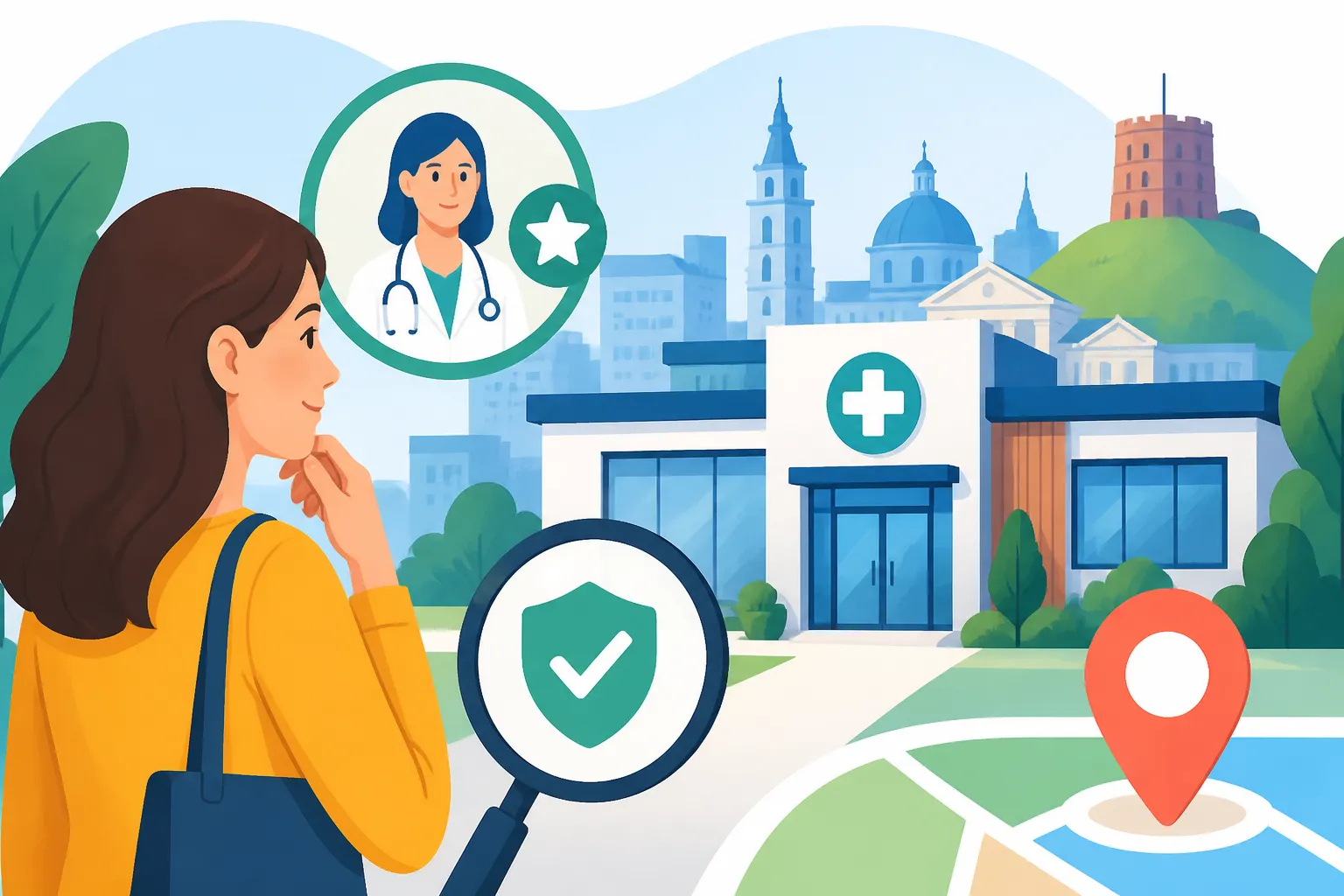
Okay, so you've decided private care is the way to go. But how do you sort through the numerous options in Vilnius to find a clinic you can truly trust? It’s not just about who has the flashiest website; there are several critical factors you need to scrutinize.
Accreditation and Licensing
This is your absolute first line of defense. Any legitimate medical institution in Lithuania, public or private, must be licensed by the relevant state authorities. While you generally won't find a fake clinic operating openly, checking for proper accreditation ensures they adhere to established medical standards and regulations. Look for information on their website or ask directly. They should be able to confirm their licensing by the State Health Care Accreditation Agency (Valstybinė akreditavimo sveikatos priežiūros veiklai tarnyba prie Sveikatos apsaugos ministerijos – VASPVT). Reputable clinics will proudly display this information. It’s a good sign that they are transparent and accountable.
Doctor Qualifications and Specializations
The clinic is only as good as its doctors. Don't be shy about inquiring about the qualifications, experience, and specializations of the medical professionals who will be treating you. Most private clinics in Vilnius will list their doctors' profiles on their websites, often including their educational background, years of practice, and areas of expertise. Look for doctors who have completed their studies at reputable universities and have continuous professional development. If you need a specific specialist, confirm that the clinic has someone truly specialized in that field. For instance, if you need a cardiologist, don't settle for a general practitioner offering "cardiac advice." When you're trying to How to Get a Specialist Referral Without Long Waits in Lithuania?, private clinics often make this process much smoother.
Patient Reviews and Reputation
In today’s digital age, patient reviews are gold. Before committing to a clinic, spend some time digging into what other patients, particularly other expats, have to say. Google Reviews is a great starting point, but also check expat Facebook groups in Vilnius. These groups are incredibly valuable resources where people share honest, often unvarnished, experiences. Look for consistent themes – are people praising the doctors' professionalism and English skills, or are there recurring complaints about long wait times (even in private clinics!) or high costs?
Don't just look at the star rating; read the actual comments. A few negative reviews amidst many positive ones might not be a red flag, but a pattern of similar complaints definitely is. A clinic's reputation among the expat community is often a strong indicator of its quality and international patient-friendliness.
Language Services and International Patient Support
For expats, this factor cannot be overstated. A private clinic in Vilnius that truly understands its international clientele will make language support a priority. This means not just having English-speaking doctors, but also administrative staff who can help with scheduling, billing, and general inquiries in English. Some clinics even offer dedicated international patient coordinators who can assist with everything from appointment booking to understanding treatment plans and navigating insurance paperwork.
When you contact a clinic, pay attention to how smoothly your initial inquiry is handled in English. Do they respond promptly? Is the person on the phone clear and helpful? This initial interaction often provides a good glimpse into their overall patient care philosophy. Many top clinics in Vilnius, such as Northway, Kardiolita, and MediCA klinika, are well-known for their international patient services. This ensures that you can communicate your needs effectively and receive care without unnecessary stress. Finding an How to Find an English-Speaking Doctor in Lithuania is much easier in the private sector.
Step-by-Step: Finding Your Ideal Private Clinic in Vilnius
So, you know what to look for. Now, let’s talk about the practical steps to actually find and utilize a private clinic in Vilnius. It's a process that benefits from a bit of upfront homework, but it’s definitely manageable.
Initial Research and Online Resources
Your journey begins online. Start with a simple Google search for "private clinics Vilnius English" or "expat doctors Vilnius." This will usually bring up the main contenders. Websites like Northway, Kardiolita, and MediCA klinika will likely appear at the top. Explore their websites. Look for dedicated sections for international patients, lists of services, doctor profiles, and clearly stated contact information.
Beyond Google, tap into expat networks. Facebook groups like "Expats in Vilnius" or "Vilnius Expats" are invaluable. Post a question asking for recommendations for a private clinic for your specific needs (e.g., "Looking for a good English-speaking gynecologist," or "Which private clinic is best for children's check-ups?"). You'll often get a flood of personal recommendations and warnings, which are far more authentic than general online reviews.
Considering Specific Medical Needs
Are you looking for a general practitioner for routine check-ups, or do you need a specialist? This will significantly narrow down your search. Not all private clinics offer every specialization. Some might be known for their excellent dermatology department, while others excel in cardiology or pediatrics.
If you know you need a specialist, directly search for that specialization within private clinics. For example, "private ophthalmologist Vilnius English." This will lead you to clinics or individual doctors with that specific expertise. For general care, look for clinics that highlight their family medicine or general practice services. Remember, a good private family doctor can still be your first point of contact for many issues and help guide you to specialists if needed. If you're trying to understand The Expat Guide to Finding a Family Doctor (Šeimos Gydytojas) in Lithuania, private options are often a good starting point.
Checking Insurance Coverage
This is a big one. Private clinics are not free, and while some costs can be surprisingly reasonable, others can add up quickly. Your public health insurance (PSD) generally does not cover private clinic visits unless there's a specific agreement or the service is deemed medically necessary and you have a referral that the private clinic accepts as part of the public system (which is rare for a true "private" visit).
Therefore, if you’re planning to use private clinics, you'll need private health insurance. Many expats opt for international private health insurance providers like SafetyWing, which offers flexible and comprehensive plans suitable for those living and traveling abroad. Before your appointment, always check with your insurance provider whether the specific clinic and procedure are covered. Some private clinics in Vilnius might have direct billing agreements with certain international insurance companies, which can save you the hassle of paying upfront and claiming reimbursement later. If not, be prepared to pay out-of-pocket and submit the invoices to your insurer for reimbursement. Our guide on Health Insurance in Lithuania: Compulsory, Private and Travel Options Explained details various options, and SafetyWing is a popular choice for its expat-friendly coverage. Don't forget to ask the clinic for a detailed invoice, including all service codes, to facilitate your claim with providers like SafetyWing.
Making an Appointment and What to Expect
Once you've chosen a clinic, making an appointment is usually straightforward. Most private clinics have online booking systems or you can call them directly. If you call, speak in English and explain your needs clearly. Be prepared to provide your personal details, including your Asmens Kodas (Lithuanian personal code) if you have one, and details of your health insurance.
What to expect at your visit:
- Arrival: Arrive a bit early to fill out any necessary paperwork.
- Reception: The reception staff will typically speak English and guide you through the process.
- Consultation: The doctor will likely conduct the consultation in English. Don't hesitate to ask questions if anything is unclear. They should explain the diagnosis, treatment options, and any follow-up steps.
- Payment: Payment is usually made at the reception desk after your consultation. They will provide an invoice. Keep this for your records and for insurance claims, especially if you have a plan with SafetyWing.
- Follow-up: Some clinics offer digital access to your medical records through their own portals or through the national How Do I Access My E-Sveikata Health Record Online in Lithuania? system (though private clinic records might not always fully integrate with E-Sveikata instantly).
Understanding Costs and Payment Options
Let's talk money, because while private care offers convenience, it comes at a cost. Understanding what you'll pay and how to manage those payments is crucial for any expat using private clinics in Vilnius.
Typical Consultation Fees
The cost of a private doctor's visit in Vilnius can vary depending on the clinic, the doctor's specialization, and the complexity of the consultation. For a standard general practitioner visit, you can expect to pay anywhere from €40 to €70. Specialist consultations tend to be a bit higher, ranging from €60 to €100 or more for initial visits. Follow-up appointments are often slightly cheaper.
Here’s a general idea of what to expect, but these are estimates and can change:
| Service Type | Estimated Cost Range (EUR) | Notes |
|---|---|---|
| General Practitioner Visit | €40 – €70 | For routine check-ups, common illnesses. |
| Specialist Consultation | €60 – €100+ | Dermatologist, cardiologist, gynecologist, etc. Initial consultation often pricier. |
| Basic Blood Tests (e.g., CBC) | €15 – €30 | Often ordered by a GP, costs vary by test. |
| Ultrasound Scan | €40 – €80+ | Depends on the area being scanned. |
| Dental Check-up (Private) | €30 – €60 | Basic examination, cleaning will be extra. (Public dental care is very limited in scope). |
| Physiotherapy Session | €30 – €50 per session | Often requires multiple sessions. |
Keep in mind that these fees cover the consultation itself. Any additional tests, procedures, medications, or specialist referrals will incur separate charges. Always ask for a clear breakdown of costs upfront if you're concerned. Our guide on The Cost of Healthcare in Lithuania: A Complete Breakdown for Foreigners (2026) provides a deeper dive into these expenses.
Insurance Reimbursement and Direct Billing
As mentioned earlier, your private health insurance is key. When choosing an insurer like SafetyWing, make sure you understand their reimbursement process. Most commonly, you'll pay the clinic directly and then submit your invoice and a claim form to your insurance provider for reimbursement. Ensure the invoice is detailed, showing the service provided, the cost, and the date.
Some of the larger private clinics in Vilnius may have direct billing agreements with major international insurance companies. This means the clinic bills your insurance provider directly, and you only pay any co-pay or deductible specified by your plan. This is incredibly convenient and saves you from a large upfront payment. Always confirm if direct billing is an option when you book your appointment and ensure your policy is valid for such arrangements. If you're wondering How Much Does Private Health Insurance Cost in Lithuania in 2026?, it's worth checking different providers and their coverage options against these potential out-of-pocket costs. Many expats find that Is Private Health Insurance Worth It for Expats in Lithuania? when considering the convenience and peace of mind it offers.
Comparing Costs: Private vs. Public for Specific Services
While private clinics undeniably offer speed and convenience, it's worth understanding the cost differential for certain services. For some routine procedures or general doctor visits, the price difference might not be astronomical, especially if your private insurance covers a good portion. However, for more complex surgeries, extensive diagnostic tests (like advanced MRI or CT scans), or long-term treatments, the private route can become significantly more expensive than relying on the public system (where many costs are covered by your PSD contributions).
It’s not always an either/or situation. Many expats use a hybrid approach:
- Public system for routine needs (if they find a good, English-speaking family doctor) and services covered by PSD without excessive waits.
- Private clinics for quick access to specialists, second opinions, or services where the language barrier in the public sector is too high.
This strategy allows you to benefit from the affordability of the public system while leveraging private clinics for their unique advantages. Ultimately, the decision often comes down to your personal priorities: convenience and speed versus cost. Our article on Are Private Clinics in Lithuania Worth the Cost? delves into this question further.
Finding a trusted private clinic in Vilnius doesn't have to be a source of stress. With a bit of research, knowing what to look for, and understanding your insurance coverage, you can access high-quality, convenient medical care that allows you to focus on your health, not on navigating complex systems. Remember, you're not alone in this expat journey; there are plenty of resources and fellow expats ready to help.
Disclaimer
The information provided in this guide is intended for general informational purposes only and does not constitute medical, legal, or financial advice. While we strive to ensure the accuracy and timeliness of the information, healthcare systems, regulations, and costs can change rapidly. Always consult with qualified medical professionals, insurance providers, and relevant Lithuanian authorities (such as the Migration Department or the State Health Insurance Fund) for personalized and up-to-date information. Relying solely on this guide without professional consultation is at your own risk.