How Do I Access My E-Sveikata Health Record Online in Lithuania?
One of the most jarring experiences for a new arrival in Lithuania is standing at a pharmacy counter, realizing you have no physical paper for your medication. In Lithuania, your entire medical life is digital, stored within a central portal that can feel like a labyrinth if you don't speak the language. This guide explains exactly how to unlock your E-Sveikata records and manage your health digitally.
Understanding the E-Sveikata System: Your Digital Health Hub
When I first moved to Vilnius, I spent weeks carrying around old paper records from my home country, only to realize that the local doctors barely wanted to look at them. They wanted everything "in the system." E-Sveikata is the national electronic health record system of Lithuania, a centralized database where every visit to a Šeimos Gydytojas (Family Doctor), every blood test, and every prescription is logged. It is essentially the backbone of the entire Navigating the Lithuanian Healthcare System: An Expat's Roadmap (2027).
The beauty of this system—once you get past the initial setup hurdles—is that you never have to worry about losing a physical referral or forgetting the name of a medication you were prescribed three months ago. However, the frustration for many expats is that the portal is primarily in Lithuanian. Understanding how it works is not just a convenience; it is a necessity for anyone living here long-term. If you are currently waiting for your residency documents to be processed and cannot yet access this public system, services like SafetyWing can provide a vital safety net, ensuring you have coverage and support while you navigate the administrative waiting periods.
The system connects public polyclinics, private hospitals, and pharmacies. This means that if you see a specialist in Kaunas, your primary doctor in Klaipeda can see those notes instantly. For those of us used to fragmented systems where you have to manually request records to be transferred, this is a massive leap forward, even if the user interface feels a bit "government-chic."
Why E-Sveikata is Essential for Expats
For an expat, E-Sveikata is your primary tool for proving your health status to various authorities. Whether you need a medical certificate for your driving license or proof of vaccinations for your child’s school enrollment, it all lives here. Without access, you are essentially "invisible" to the public health infrastructure.
I remember a specific instance where an expat friend needed to prove they had received a specific booster shot to travel. Because they hadn't yet learned How to Get Your Asmens Kodas (Personal Code) and Why It Matters for Healthcare, their data wasn't properly synced, and they had to spend days calling different clinics. Once you have your personal code and a residency permit, getting into E-Sveikata should be one of your first "digital" chores.
The Role of the Polyclinic in Data Entry
It is important to understand that E-Sveikata is a repository, not the source of the data. The data is fed into the system by healthcare providers. This is why Understanding the Role of the Polyclinic (Poliklinika) in Lithuania is so important. When you visit a doctor, they type their notes into their local system, which then syncs with the national E-Sveikata database.
Occasionally, there can be sync errors. If you had a visit and nothing is showing up in your portal after 24 hours, it usually means the doctor hasn't "finalized" the digital form. In the Lithuanian system, a "finalized" form is a legal document, and sometimes doctors—especially those who are overwhelmed—might wait until the end of their shift to sign off on all their digital paperwork.
Step-by-Step: How to Log Into E-Sveikata
Logging in is where most foreigners hit their first wall. You cannot simply create a username and password with your email address. Because medical data is highly sensitive, Lithuania uses the "Electronic Government Gateway" (Elektroniniai Valdžios Vartai) to verify your identity. This is the same portal you will use to file taxes or Registering for Compulsory Health Insurance (PSD) in Lithuania (2027).
To log in, you will need one of the following: a Lithuanian bank account (using Smart-ID or a code generator), a Mobile-ID (attached to your SIM card), or a physical E-resident card with a chip reader. Most expats find that the bank-link via Smart-ID is the most reliable method. If you are still in the process of setting up these tools, you might find yourself in a "catch-22" situation where you need healthcare but can't access the portal. In these gaps, having a plan from SafetyWing can be a lifesaver, as it allows you to see private doctors who can provide paper documentation while your digital identity is being verified.
Navigating the Electronic Government Gateway
When you go to the E-Sveikata website (esveikata.lt), look for the button that says "Prisijungti" (Log in). You will be redirected to the Government Gateway. Here, you will see a grid of bank icons and authentication methods. Select your bank or your Mobile-ID provider.
Once you authenticate—usually by entering a PIN on your phone via the Smart-ID app—you will be redirected back to the E-Sveikata dashboard. If it’s your first time, you might be asked to confirm your contact details, such as your phone number and email address. Do not skip this step! The system uses these details to send you notifications when a new Understanding the Electronic Prescription (E-Receptas) System in Lithuania is issued or when a doctor leaves a comment on your test results.
Common Troubleshooting Issues
If you receive an error message stating that your "Asmens Kodas" is not recognized, it usually means your residency data hasn't fully propagated through the national registries. This can happen in the first few days after receiving your residence permit. Another common issue is the "Inactive Account" status. This often happens if you haven't yet been officially entered into the How Lithuania's Health Insurance Fund (VLK/PSDF) Works: A Full Overview database.
If you are a student or a worker from a non-EU country, ensure that your employer or university has correctly reported your status to Sodra. If your insurance isn't active, the E-Sveikata portal may still let you log in, but you will see a warning that you are not covered by the compulsory health insurance fund, which means you'll be charged full price for any services or medications.
| Identification Method | Best For | Requirement |
|---|---|---|
| Smart-ID (via Bank) | Most Expats | Local Bank Account (Swedbank, SEB, etc.) |
| Mobile-ID | Frequent Users | Specialized SIM card from Telia, Bitė, or Tele2 |
| E-Residency Card | Business Owners | Card Reader and specific software installed |
| External Auth | EU Citizens | Valid eID from another EU country (limited support) |
What Can You Actually Do Inside E-Sveikata?
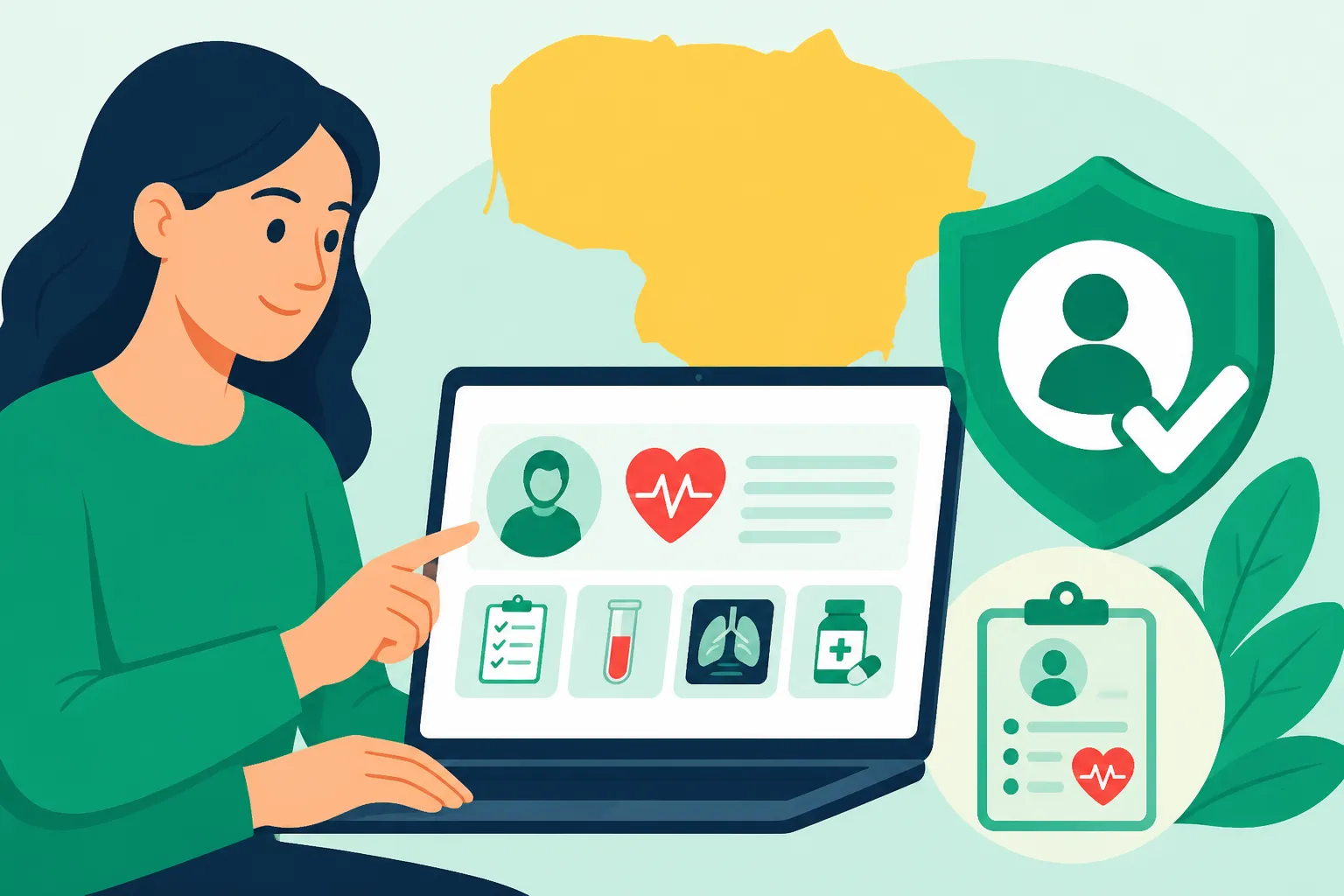
Once you are inside, the portal opens up a wealth of information. The interface is divided into several main sections: "Mano receptai" (My prescriptions), "Mano siuntimai" (My referrals), "Mano apsilankymai" (My visits), and "Mano tyrimai" (My tests).
The "My visits" section is particularly detailed. It doesn't just list the date of your appointment; it includes the doctor's full notes, their observations, and their recommendations. For expats, this is a goldmine for translation. You can copy these notes into a translation tool to truly understand what the doctor diagnosed, which is incredibly helpful if the consultation was rushed or if there was a language barrier during the face-to-face meeting.
Managing E-Receptas and Laboratory Results
The Understanding the Electronic Prescription (E-Receptas) System in Lithuania is perhaps the most-used feature. When a doctor prescribes medication, it appears here instantly. You don't need a code or a paper; you simply go to any pharmacy (Vaistinė) and hand over your ID card or residence permit. The pharmacist scans it, sees your active prescriptions in E-Sveikata, and gives you the medicine.
Inside the portal, you can see how many refills you have left and when the prescription expires. This is also where you can see if a medication is subsidized by the state. If you find yourself needing specialized care or medications that aren't fully covered by the public system, having supplemental insurance like SafetyWing can help bridge the gap, especially for international travelers or those who move between countries frequently.
Handling Siuntimas (E-Referrals) and Sick Leave
In Lithuania, you generally cannot see a specialist (like a cardiologist or dermatologist) without a referral from your family doctor if you want the state to pay for it. This referral is called a "Siuntimas." Once your family doctor issues it, it appears in your E-Sveikata account. You can then use the portal to search for specialists and book appointments at any clinic in the country that has an agreement with the health fund.
Furthermore, if you are employed in Lithuania and get sick, your doctor will issue a digital "Nedarbingumo pažymėjimas" (Sick leave certificate) through this system. You don't need to send anything to your boss; the system automatically notifies Sodra and your employer that you are legally on leave. It’s a remarkably efficient system that removes the "I'm calling in sick" anxiety, as the proof is already there in black and white in the national database.
Practical Tips for Non-Lithuanian Speakers
The biggest hurdle is undoubtedly the language. Currently, the E-Sveikata portal does not have a comprehensive English version for all medical records. While the menus might have some English translations, the actual medical notes written by doctors will almost always be in Lithuanian.
My best advice for navigating this is to use a browser with a built-in translation extension. When you open your laboratory results, for example, the names of the markers (like "Glikozė" for glucose) are similar enough to English, but the doctor's summary will be a wall of Lithuanian text. Translating these summaries helps you prepare for follow-up appointments and ensures you aren't missing critical health advice.
Security and Privacy Considerations
Because E-Sveikata contains your entire medical history, security is paramount. Never share your Smart-ID PINs or login credentials with anyone. If you need a family member to manage your health records—for example, if you are caring for an elderly parent or a child—there is a specific "Įgaliojimai" (Authorizations) section within the portal.
You can legally authorize another person to view your records or pick up your prescriptions by entering their personal code into the system. This is a much safer and more "Lithuanian" way of doing things than just handing over your ID card. For those who are digital nomads and don't have a local support system yet, making sure your Health Insurance in Lithuania: Compulsory, Private and Travel Options Explained is sorted via a provider like SafetyWing can give you peace of mind while you are still learning the ropes of the local digital infrastructure.
Syncing Private Clinic Data
A common misconception is that private clinics don't use E-Sveikata. In reality, most reputable private medical centers in Vilnius and Kaunas are required to sync their data with the national system. However, they aren't always as diligent as the public polyclinics.
If you pay for a private consultation, always ask the doctor: "Ar įrašysite tai į E-Sveikatą?" (Will you record this in E-Sveikata?). This ensures that your entire medical history stays in one place, which is vital if you ever end up in an emergency room and the doctors need to see your previous treatments or allergies quickly.
Summary Table: E-Sveikata vs. Private Patient Portals
| Feature | E-Sveikata (National Portal) | Private Clinic Portals (e.g., InMedica, Kardiolita) |
|---|---|---|
| Access URL | esveikata.lt | Specific to the clinic website |
| Login Requirement | Government Gateway (Smart-ID/Mobile-ID) | Usually email and password or Smart-ID |
| Data Scope | All public and most private visits nationwide | Only visits within that specific clinic chain |
| Prescriptions | Shows all active E-Receptas | Usually shows only what they prescribed |
| Referrals | Centralized "Siuntimas" for all hospitals | Limited to their own network usually |
| Cost | Free to use | Free to use for patients |
Navigating E-Sveikata might feel like a daunting task during your first few months in Lithuania, but it is the key to a smoother life here. By taking the time to set up your digital identity and learning How to Choose and Register with a Family Doctor (Šeimos Gydytojas) in Lithuania, you'll find that the healthcare system is actually quite sophisticated. And for those times when the system feels too slow or you are caught between residency statuses, having a backup like SafetyWing ensures you are never left without options.
Disclaimer
The information provided in this guide is for informational purposes only and does not constitute legal or medical advice. Healthcare regulations and digital systems in Lithuania are subject to change. Always consult with the official Migration Department (MIGRIS) or the National Health Insurance Fund (VLK) for the most current requirements. While every effort has been made to ensure accuracy, the author is not responsible for any discrepancies or issues arising from the use of this information.