Understanding Sodra Social Insurance in Lithuania: The Full Guide
Oh, the labyrinthine world of social insurance! If you’ve just landed in Lithuania, or even if you’ve been here a while, the word "Sodra" probably conjures images of endless paperwork, confusing forms, and a general sense of bewilderment. Many of us expats have felt that familiar pang of anxiety wondering if we’re paying enough, paying too much, or even if we’re covered at all. This guide is here to cut through the jargon and demystify Sodra, helping you understand its purpose, your obligations, and the vital safety net it provides in your new home.
What is Sodra? The Cornerstone of Lithuanian Social Security
Sodra isn't just an abbreviation; it's the bedrock of Lithuania's social security system, the institution responsible for collecting social insurance contributions and distributing a whole host of benefits. Think of it as the central pillar supporting you through life's unexpected twists and turns, from illness and unemployment to the joyful arrival of a new family member or the steady march towards retirement. Many expats arrive here with a vague understanding of social security from their home countries, only to find the Lithuanian system has its own unique flavour and rules. It’s not simply about paying a tax; it’s about investing in your future and accessing essential support when you need it most.
The Role and Importance of Sodra for Residents
From the moment you start working or officially declare your residence in Lithuania, Sodra becomes a critical part of your life. Its primary role is to manage the compulsory social insurance scheme, ensuring that everyone who contributes receives appropriate benefits based on their contributions and specific life circumstances. For us foreigners, understanding Sodra is absolutely crucial because it directly impacts our access to healthcare, sick pay, pensions, and even maternity leave. Without proper registration and contributions, you might find yourself in a vulnerable position, unable to access the very services that locals take for granted. It’s the difference between a minor inconvenience and a major financial headache if, say, you suddenly fall ill and need time off work.
Moreover, Sodra plays a significant role in maintaining public welfare and stability. The system is designed on principles of solidarity, meaning contributions from the currently working population help fund the benefits for those who are retired, unwell, or temporarily out of work. This collective approach helps cushion economic shocks and ensures a basic level of support across society. As residents, even if temporary, our contributions become part of this larger national effort. Ignoring Sodra or misunderstanding its functions isn't just about personal risk; it's about being an informed, contributing member of Lithuanian society.
Key Branches of Social Insurance Covered by Sodra
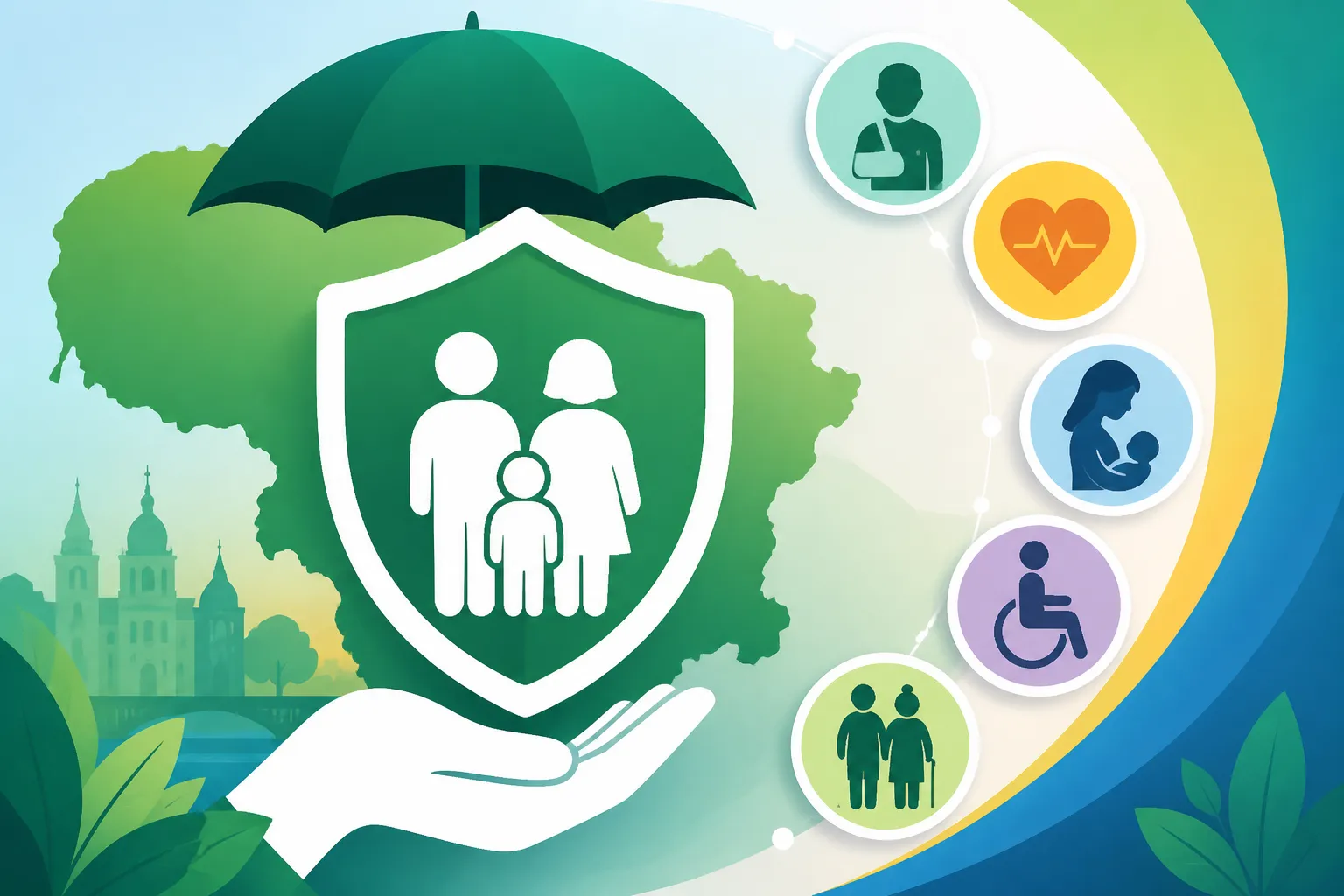
Sodra isn't a single, monolithic entity covering just one thing. It's actually an umbrella organization that manages several distinct branches of social insurance, each designed to protect against different life risks. When you or your employer pay contributions, that money is allocated across these different funds. The main branches include:
- Pension Social Insurance: This is probably the most commonly understood, ensuring you'll receive a pension upon retirement, provided you've met the contribution requirements over your working life.
- Sickness and Maternity Social Insurance: This covers benefits for temporary incapacity due to illness or injury (sick pay) and provides financial support during maternity, paternity, or parental leave. This is a huge relief for many expat families.
- Health Social Insurance (PSD): While administered by Sodra, these contributions directly fund your access to public healthcare services through the Compulsory Health Insurance Fund (VLK/PSDF). We'll dive deeper into this link later, but it’s critical to understand that your monthly PSD payments via Sodra are what literally open the doors to public doctors and hospitals. You can read more about Registering for Compulsory Health Insurance (PSD) in Lithuania (2027) for a full picture.
- Unemployment Social Insurance: Should you find yourself between jobs, this branch provides financial support while you search for new employment.
- Accidents at Work and Occupational Diseases Social Insurance: This provides compensation and benefits if you suffer an injury or develop an illness directly related to your work.
Each of these branches serves a vital purpose, creating a comprehensive social safety net. Understanding which risks are covered helps you appreciate where your contributions are going and what protections are in place for you and your family.
Historical Context and Evolution for Foreigners
Lithuania's social security system, like many post-Soviet states, has undergone significant reforms and modernization since regaining independence. Initially, the system was more aligned with Soviet-era models, but over the decades, it has evolved to align with European Union standards and practices. For foreigners, this evolution has been particularly important. What might have once been a closed or difficult-to-access system has gradually become more accommodating and streamlined for international residents.
In the past, navigating any bureaucratic institution in Lithuania without fluent Lithuanian was a Herculean task. However, with increased globalization, EU membership, and a growing expat community, Sodra, like many other state bodies, has made strides in providing information and services in English. While it's still far from perfect and you might occasionally encounter staff who prefer Lithuanian, the general trend is towards greater accessibility. This shift reflects Lithuania's commitment to integrating its foreign residents and acknowledging their contributions to the economy and society. So, while it might still feel daunting, remember that you’re dealing with a system that has, thankfully, come a long way in welcoming those of us who weren't born here.
Who Must Contribute to Sodra? Understanding Your Obligation
This is where the rubber meets the road. Many expats assume that if they’re working, someone else is taking care of their social insurance. While this is often true for employees, it's not always the case, especially if you're self-employed, a freelancer, or have certain types of visas. Getting this wrong can lead to serious consequences, including fines, denial of benefits, or even issues with your residence permit. Knowing your specific status and obligations is paramount.
Employees and Their Employers
For the vast majority of expats working in Lithuania, particularly those employed under a standard employment contract, the good news is that your employer handles most of the heavy lifting when it comes to Sodra contributions. This is a huge relief, as it minimizes direct interaction with the system for many. Your employer is legally obligated to:
- Register you with Sodra: This typically happens automatically once your employment contract is signed and reported to the authorities.
- Deduct contributions from your gross salary: A portion of your salary (your employee contribution) is automatically withheld before you receive your net pay.
- Pay their own employer contributions: On top of your deductions, your employer also pays a separate, larger contribution based on your gross salary.
These combined contributions cover all the branches of social insurance: pension, sickness, maternity, unemployment, and accidents at work. Crucially, your employer also pays your Compulsory Health Insurance (PSD) contributions to Sodra, ensuring your access to public healthcare. It’s always a good idea to check your payslip (at least when you first start) to ensure these deductions are being made correctly. If you're unsure, ask your HR department for clarification. This ensures you're properly covered for everything from sick days to future pension entitlements. This is typically straightforward, but understanding the Understanding Sodra Social Insurance in Lithuania: The Full Guide is important even for employees.
Self-Employed Individuals and Sole Proprietors
Ah, the self-employed life! Freedom, flexibility, and a whole lot of administrative responsibility, including managing your own Sodra contributions. If you're operating as an "Individuali Veikla" (individual activity) or a "Mažoji Bendrija" (small partnership), you are personally responsible for ensuring your social insurance payments are made. This is a common setup for freelancers, consultants, and small business owners among the expat community.
Your contributions are generally calculated based on your declared income and need to be paid regularly – usually monthly or quarterly, depending on your setup. You’ll be contributing towards pension, sickness, maternity, and sometimes unemployment insurance. The exact rates and calculation methods can be a bit complex, varying based on your income, whether you opt for a business certificate, or if you're registered under individual activity. It’s vital to be diligent about these payments, as missing them can lead to gaps in your insurance coverage, affecting your ability to claim benefits later on. Many self-employed expats find it beneficial to consult with an accountant or a tax advisor specializing in expat affairs to ensure compliance. You can learn more about this in How to Register Individual Activity (Individuali Veikla) in Lithuania and Self-Employment in Lithuania: The Individual Activity and MB Guide for Foreigners. For managing taxes specifically, a service like Taxes for Expats might be useful here, helping you understand how your self-employment income and Sodra contributions intertwine with your overall tax obligations.
Voluntary Contributors and Unemployed Individuals
Sodra isn't just for those actively employed or self-employed. There are provisions for other situations to ensure continued coverage, especially for compulsory health insurance (PSD).
- Unemployed Individuals: If you lose your job, you might be entitled to unemployment benefits through Sodra, provided you’ve met the minimum contribution period. Critically, if you are registered with the Lithuanian Employment Service (Užimtumo Tarnyba) and actively seeking work, your PSD contributions are often covered by the state, ensuring you still have access to public healthcare. This is a huge relief during an uncertain time.
- Voluntary Contributors: In certain circumstances, individuals who are not covered by compulsory insurance (e.g., those who are not working, not registered as unemployed, or not covered by another EU/EEA country's system) might choose to make voluntary PSD contributions to maintain their public healthcare access. This typically applies to stay-at-home spouses of non-EU citizens, long-term visitors without employment, or individuals awaiting a work permit who wish to ensure continuous health coverage. This payment is a fixed monthly amount, crucial for accessing public doctors and hospitals. You can find detailed information on Understanding PSD Contributions Through Sodra in Lithuania, including the current monthly rates.
- Students: International students residing in Lithuania for study purposes often have specific requirements for health insurance, which may involve registering for PSD if they are not covered by their home country’s system or a private international policy. It's essential to clarify your status with your university's international office upon arrival.
- Residents with no income: If you are a resident in Lithuania but have no income and don't fall into any other covered category (e.g., not employed, not self-employed, not registered as unemployed, not a student, not a state-covered individual like a child or pensioner), you are generally expected to pay the minimum monthly PSD contribution yourself to access public healthcare. This ensures that everyone legally residing in Lithuania contributes to the healthcare system.
Navigating these different statuses can be tricky, and it's always best to check your individual situation with Sodra or a local expert to avoid any surprises.
Understanding Your Sodra Contributions: Rates and Calculations
The actual numbers can feel like a moving target, so it’s essential to grasp how these contributions are calculated and what they represent. The Lithuanian system is structured to ensure that both employees and employers share the responsibility, while self-employed individuals bear the full weight themselves. The exact percentages can change annually, so always refer to the most current information available on the official Sodra website or consult with a financial professional.
Employee vs. Employer Contributions Breakdown
When you're formally employed in Lithuania, your gross salary is effectively split into three main components: your net salary, your income tax (GPM), and your Sodra contributions. However, the picture is even broader, as your employer also pays their share of Sodra contributions on top of your gross salary.
Let's break it down:
- Employee Contributions: As an employee, a portion of your gross salary is deducted for Sodra. This percentage typically covers pension, sickness, and maternity/paternity insurance. For example, in 2024, the employee contribution for state social insurance is generally 19.5% of your gross salary. This deduction is visible on your payslip and significantly impacts your take-home pay. This is your personal investment in the social security system.
- Employer Contributions: On top of your deductions, your employer also pays a separate percentage on top of your gross salary. This employer contribution covers additional social insurance branches, primarily for accidents at work, unemployment, and other social guarantees. The employer's rate can vary slightly depending on the company's risk profile but generally sits around 1.77% (as of 2024, subject to change). This means the total social insurance burden is shared, with the employer carrying a larger portion of the cost.
So, when you see your gross salary, remember that a significant chunk goes towards taxes and social insurance before it even hits your bank account. Understanding this helps you calculate your true net income and appreciate the protections these contributions provide. For more details on what affects your take-home pay, you might want to read Understanding Gross vs Net Salary (Ant Popieriaus) and Payslips in Lithuania.
Self-Employed Contributions: Individual Activity and MB
For those running their own show, whether through "Individuali Veikla" or a "Mažoji Bendrija," the responsibility for calculating and paying Sodra contributions rests squarely on your shoulders. The calculation methods here are often linked to your reported taxable income, not a fixed monthly fee (unless it's just PSD).
- Individual Activity (Individuali Veikla): If you're registered under individual activity, your Sodra contributions for pension, sickness, and maternity insurance are generally calculated based on 90% of your taxable income. The rates applied to this base are similar to employee rates (e.g., 19.5% for pension, sickness, maternity). You also need to pay the Compulsory Health Insurance (PSD) contribution. This can be paid as a fixed monthly amount or calculated based on your income, depending on your specific circumstances and whether you're also employed elsewhere. If individual activity is your primary source of income, you'll pay a fixed monthly PSD amount. You can read more on How Much Tax Does Individual Activity Pay in Lithuania in 2026? to grasp the full financial picture.
- Small Partnership (Mažoji Bendrija, MB): For members of an MB, contributions for pension, sickness, and maternity insurance are typically paid by the MB member from their "personal draw" (pajamos iš paskirstytojo pelno) or income received under an MB activity agreement. The calculation base and rates are also similar to those for individual activity. The MB itself, if it has employees, will also pay employer contributions for them. Again, PSD contributions are also compulsory.
The crucial takeaway here is that you need to be proactive. These aren't automatic deductions. You are responsible for accurately declaring your income and making timely payments to Sodra. Many expats find using a local accountant invaluable for navigating these calculations and ensuring full compliance, helping them avoid penalties and ensure continuous coverage.
Income Ceilings and Minimum Contributions
Lithuania’s social insurance system, while comprehensive, also features certain ceilings and minimums to ensure fairness and sustainability.
- Income Ceilings: There is an annual income ceiling for Sodra contributions. This means that once your annual gross income (or taxable income for the self-employed) reaches a certain threshold, you no longer pay Sodra contributions on income earned above that amount for pension, sickness, maternity, and unemployment insurance. This ceiling is currently set at 60 average national salaries (VDU) per year. The idea is to cap the maximum benefit payout in the future and ensure that the highest earners aren't disproportionately contributing relative to the maximum benefits they can receive. While the contributions stop, your insurance coverage remains.
- Minimum Contributions: On the flip side, there are also minimum contribution requirements. These are usually tied to the minimum monthly wage (MMA) or the average national salary. For example, even if you earn a very low salary, your contributions will be calculated based on at least the MMA to ensure you build up sufficient social insurance "stazhas" (contribution period) to qualify for future benefits. Similarly, for those making voluntary PSD payments, there’s a minimum monthly amount that must be paid to keep your health insurance active. If you're making individual activity contributions, your monthly income for calculation purposes cannot be lower than the national minimum monthly wage if you are working full-time.
These ceilings and minimums are important because they affect both low-income earners and high-income earners differently. If your income is close to or above the ceiling, it's worth understanding the implications for your overall financial planning. Conversely, if your income is low, ensuring you meet the minimum contribution requirements is crucial for guaranteeing future access to benefits. It's a system designed to balance broad coverage with fiscal responsibility.
Benefits You Can Expect from Sodra: Your Safety Net
So, you've been diligently paying your Sodra contributions (or your employer has). What exactly are you getting for your money? This is the reassuring part. Sodra provides a vital safety net, designed to support you through various life events, from short-term illnesses to long-term retirement. Understanding these benefits can give you peace of mind and help you plan for the future in Lithuania.
Sickness, Maternity, and Paternity Benefits
Life happens, and sometimes you need to take time off work for reasons beyond your control. This is where Sodra steps in with specific benefits:
- Sickness Benefits (Nedarbingumo Išmoka): If you fall ill and cannot work, you are entitled to sick pay. Generally, the first two days of sickness are paid by your employer (often at a slightly lower rate, e.g., 80% of your average salary). From the third day onwards, Sodra takes over, paying a percentage of your average earnings (typically 62.06%). To qualify, you need to have been insured for a certain period (e.g., at least 3 months in the last 12 months or 6 months in the last 24 months before the illness). Your doctor will issue an electronic sick leave certificate (nedarbingumo pažymėjimas), which automatically gets registered with Sodra via the Understanding the E-Sveikata (E-Health) System in Lithuania. It's a lifesaver when you're feeling under the weather and worried about your income.
- Maternity Benefits (Motinystės Išmoka): For expectant mothers, Sodra provides maternity benefits during pregnancy and childbirth, usually for 70 calendar days before the estimated due date and 56 days after (or more in cases of complications or multiple births). The benefit amount is generally 77.58% of your average earnings. This support allows new mothers to focus on their health and their newborn without immediate financial strain. You can learn more about this in Understanding Maternity and Parental Leave for Workers in Lithuania.
- Paternity Benefits (Tėvystės Išmoka): New fathers in Lithuania also get a dedicated period of paid leave after childbirth. Sodra provides 30 calendar days of paternity benefit, which can be taken anytime until the baby is three months old (or later in certain circumstances). The benefit is also 77.58% of average earnings. This enables fathers to actively participate in the early days of their child's life.
- Parental Benefits (Vaiko Priežiūros Išmoka): Beyond the initial maternity and paternity leave, parents can also choose to take parental leave until the child turns one or two years old, with corresponding benefits from Sodra. The exact percentage of your average earnings depends on whether you choose to receive benefits until the child is one year old (higher percentage) or two years old (lower percentage for a longer period). This flexibility is incredibly valuable for expat families navigating new parenthood in Lithuania.
These benefits are a testament to the comprehensive nature of Lithuanian social insurance, offering essential financial security during significant personal and family events.
Pension and Disability Insurance
Thinking about retirement or the possibility of disability might not be at the forefront of your mind as a younger expat, but these branches of Sodra insurance are crucial for long-term security.
- Pension Social Insurance: This is designed to provide you with an income once you reach retirement age. The amount of your state social insurance pension (valstybinė socialinio draudimo pensija) will depend on your contribution history, specifically the length of your "stazhas" (contribution period) and the amount of your contributions over your working life. The longer and higher your contributions, the larger your potential pension. For many expats, especially those who plan to stay long-term, understanding this is vital for retirement planning. Lithuania also has a multi-pillar pension system, where alongside the state pension (Pillar I), you can choose to contribute to private pension funds (Pillar II and Pillar III) for additional savings. You can explore Understanding Pension Contributions and Pillar II in Lithuania for more detailed information.
- Disability Insurance: Should you become disabled and unable to work, Sodra provides disability benefits. The amount of these benefits is determined by your degree of disability and your social insurance contribution history. This insurance offers a crucial safety net, ensuring you have a source of income and support even if unforeseen health issues prevent you from continuing your employment.
While you might not claim these benefits for many years, knowing they are in place and how your contributions build towards them offers significant peace of mind. For those with international careers, Lithuania has social security agreements with various countries, which can sometimes allow for the aggregation of contribution periods to qualify for benefits, even if you haven't contributed solely in Lithuania. This is a complex area, so if you've worked in multiple countries, it's worth checking with Sodra directly.
Unemployment Benefits and Other Support
Beyond pensions and family support, Sodra also offers assistance during periods of unemployment, which can be a stressful time for anyone, let alone an expat in a foreign country.
- Unemployment Benefits (Nedarbos Išmoka): If you lose your job through no fault of your own, and you've met specific contribution criteria (e.g., accumulated at least 12 months of unemployment social insurance contributions in the last 30 months), you may be eligible for unemployment benefits. These benefits are paid for a limited period (e.g., 9 months) and are designed to provide financial relief while you actively search for new employment. To receive them, you must register with the Lithuanian Employment Service (Užimtumo Tarnyba). It’s crucial to understand the eligibility criteria and the process, as this benefit can make a significant difference during job transitions. You can find more information about the services available at the Understanding the Lithuanian Employment Service (Užimtumo Tarnyba).
- Burial Benefit (Laidojimo Išmoka): While a somber thought, Sodra also provides a one-off burial benefit to cover some of the funeral expenses in the event of the death of an insured person or their dependent. This is a practical form of support for families during a difficult time.
These benefits underscore the comprehensive nature of Sodra as a social safety net. It’s not just about what you pay in; it’s about the collective support system that ensures you’re not left completely alone when life throws a curveball. For expat families, understanding these provisions is especially important for long-term planning and security.
| Benefit Type | Eligibility | Typical Duration/Amount (Approx.) | Key Purpose |
|---|---|---|---|
| Sickness Benefit | Insured for min. 3/6 months; Doctor's note | 62.06% of average earnings (from Day 3) | Income replacement during illness |
| Maternity Benefit | Insured for min. 12 months in last 24 months | 77.58% of average earnings (126 days+) | Financial support during childbirth and recovery |
| Paternity Benefit | Insured for min. 12 months in last 24 months | 77.58% of average earnings (30 days) | Support for fathers after childbirth |
| Parental Benefit | Insured for min. 12 months in last 24 months | Varies (e.g., 60% till child is 1, 40% till 2) | Income support during childcare leave |
| Unemployment Benefit | Insured for min. 12 months in last 30 months; Registered with Employment Service | Max. 9 months; decreases over time | Income support while seeking new employment |
| State Social Insurance Pension | Reaching retirement age; meeting contribution 'stazhas' | Depends on contributions and 'stazhas' | Income during retirement |
| Disability Benefit | Certified disability; meeting contribution 'stazhas' | Depends on disability degree and 'stazhas' | Income support due to inability to work |
| Burial Benefit | Death of insured person or dependent | Fixed amount (e.g., 8 BSI) | Assistance with funeral expenses |
Note: Percentages and specific durations are approximate and subject to change by Lithuanian law. Always refer to official Sodra information for the most current data.
Navigating Sodra as an Expat: Practical Steps and Challenges
Dealing with official institutions in a new country is rarely a walk in the park, and Sodra is no exception. While the system is becoming more expat-friendly, there are still practical hurdles to overcome. From getting registered to understanding your online portal, a bit of foresight and preparation can save you a lot of headaches.
Registering with Sodra: The Initial Hurdles
For most employed expats, initial registration with Sodra is largely automatic. Your employer handles the process when they hire you, submitting your data and ensuring your social insurance payments begin. However, if you are self-employed, an EU/EEA citizen declaring residence, or in other specific circumstances, you might need to take proactive steps yourself.
The key to almost all official processes in Lithuania, including Sodra, is your How to Get Your Asmens Kodas (Personal Code) and Why It Matters for Healthcare. Without this unique 11-digit number, you won't be able to register, access online services, or receive benefits. So, securing your Asmens Kodas should be one of your very first priorities upon moving.
Once you have your Asmens Kodas, if you need to register yourself (e.g., for voluntary PSD payments or as a self-employed individual), you might need to visit a local Sodra branch or use their electronic services. While some forms might be available in English, having a Lithuanian-speaking friend or colleague accompany you for your first visit can be incredibly helpful. Be prepared with all your identification documents, your residence permit (if applicable), and any relevant employment or business registration papers. The staff are generally helpful, but language barriers can sometimes complicate explanations. Patience and clear documentation are your best friends here.
Accessing the Sodra E-Platform (Sodra EPS)
Like many Lithuanian government institutions, Sodra has embraced digitization. The Sodra Electronic Services Portal (Sodra EPS) is your gateway to managing your social insurance affairs online. This portal allows you to:
- Check your social insurance history and contributions: See what you've paid and for how long.
- Verify your insured status: Confirm whether you're currently covered for different branches of social insurance.
- Apply for benefits: Submit applications for sickness, maternity, unemployment, and other benefits digitally.
- Access personalized information: Get details specific to your situation.
To access the Sodra EPS, you'll need to authenticate yourself, usually through an electronic signature (e-parašas), mobile signature (mobilusis parašas), or via your online banking credentials (which many banks in Lithuania offer). This secure login ensures that only you can access your sensitive personal data. If you don't have a mobile signature or e-signature, getting one set up through your mobile operator or a certified provider is highly recommended for all your e-government interactions in Lithuania, not just Sodra. It streamlines countless processes, saving you endless trips to physical offices. The first time you log in might feel a bit daunting, but it's well worth the effort to gain control and visibility over your social insurance.
Common Expat Questions and Misconceptions
As an expat, you’re bound to have unique questions and might encounter common misconceptions about Sodra:
- "I'm from the EU, so my home country's insurance covers me, right?" While your EHIC (European Health Insurance Card) provides emergency care, it generally doesn't replace long-term compulsory health insurance (PSD) if you become a resident. If you're officially residing and working in Lithuania, you're expected to contribute to the Lithuanian system. The same goes for other social security benefits; if you plan to stay and work, you'll generally contribute to Sodra.
- "What happens to my contributions if I leave Lithuania?" This depends on several factors, including whether you return to another EU/EEA country or a country with a bilateral social security agreement with Lithuania. In some cases, your contribution periods (stazhas) can be aggregated to help you qualify for benefits (like pensions) in another country. For others, the contributions might remain in the Lithuanian system until you qualify for a pension here, or a lump sum might be accessible in very specific circumstances. This is complex and requires individual consultation with Sodra.
- "Do I need to pay PSD if I have private health insurance?" Yes, generally. PSD is compulsory for residents. Private health insurance often acts as a supplementary layer, offering faster access, broader choice, or additional services not covered by the public system. It doesn't typically exempt you from your basic PSD obligation. However, some specific categories, like certain foreign students or individuals with comprehensive private insurance meeting specific criteria for a residence permit, might be exceptions. For a deeper dive, check out Health Insurance in Lithuania: Compulsory, Private and Travel Options Explained.
- "Can I still get benefits if I work remotely for a foreign company?" This is a rapidly evolving area. If you are a tax resident of Lithuania and physically reside here while working remotely for a foreign company, your tax and social security obligations can be complex. You might be considered self-employed for Lithuanian purposes and therefore responsible for your own Sodra contributions (including PSD), even if your foreign employer doesn't contribute on your behalf. Seeking specialized tax and legal advice is essential here. Firms like Taxes for Expats could provide valuable guidance for such situations, ensuring you navigate the nuances of international employment and local social security requirements correctly.
These are just a few examples. The golden rule: if in doubt, ask Sodra directly, or consult with an expert who understands expat situations in Lithuania. It's always better to clarify than to assume.
Sodra and Healthcare: The Link to Compulsory Health Insurance (PSD)
Perhaps one of the most critical aspects of Sodra for every expat in Lithuania is its direct connection to your healthcare access. Your monthly Compulsory Health Insurance (PSD) contributions, processed by Sodra, are the lifeblood of the public healthcare system. Without active PSD status, you could face significant bills for routine medical care or even be denied non-emergency services.
How Sodra Contributions Fund Your Health Insurance
Every time you (or your employer on your behalf) contribute to Sodra for PSD, that money goes into the Compulsory Health Insurance Fund (Valstybinė ligonių kasa or VLK). This fund is then used to pay for the vast majority of public healthcare services provided by polyclinics, hospitals, and specialists across Lithuania.
Think of it this way: your PSD contribution isn't a direct payment to a doctor, but rather your membership fee to the national public health insurance scheme. When you visit a doctor at a public polyclinic, get a referral to a specialist, or even need hospital care, the costs are covered by the VLK because your PSD contributions are active. This system ensures that healthcare access is largely equal for all insured residents, regardless of their income level at the time of treatment. It's a fundamental part of The Complete Guide to Healthcare in Lithuania for Expats (2027). The amount of your PSD contribution is typically a fixed percentage of your income (for employees and self-employed) or a fixed monthly amount (for voluntary contributors), meaning How Much Is the Monthly PSD Contribution Through Sodra? is a common question.
Ensuring Continuous PSD Coverage
Maintaining continuous PSD coverage is absolutely vital. Any lapse can mean you suddenly have to pay for medical services out of pocket, which can quickly become expensive. Here’s how to ensure you stay covered:
- For Employees: Your employer is responsible for paying your PSD contributions monthly. As long as you are employed under a valid contract, your coverage should be continuous. Always check your payslip to ensure these deductions are being made.
- For Self-Employed: You are personally responsible for calculating and paying your PSD contributions, usually on a monthly basis, whether through individual activity or an MB. Missing these payments can lead to a lapse in coverage, so timely payments are critical.
- For Unemployed: If you are registered with the Lithuanian Employment Service (Užimtumo Tarnyba), the state often covers your PSD contributions. However, this is not automatic if you are simply unemployed without registration.
- For Others: If you fall into a category not automatically covered (e.g., you've moved to Lithuania but haven't started working yet, or you're a stay-at-home parent of a non-EU citizen), you must make voluntary monthly PSD payments to Sodra. This is a common situation for new arrivals and it’s important to act quickly. You'll need to proactively register with Sodra and set up these payments.
You can always check your current PSD status through the Sodra EPS portal. This is a critical check for any expat, especially if you're between jobs or your employment situation changes. A proactive approach is key to avoiding unexpected medical bills.
What Happens if You Don't Pay PSD?
The consequences of not maintaining active PSD contributions can be significant and unpleasant:
- Denied Public Healthcare Services: The most immediate impact is that you may be denied non-emergency public healthcare services. While true emergencies (life-threatening situations) are generally treated regardless of insurance status, you will be billed for the full cost of that treatment, which can be astronomical. For routine doctor visits, specialist consultations, or prescribed medications, you’ll be expected to pay the full price as if you had no insurance.
- Accumulated Debt and Fines: Sodra will track your unpaid PSD contributions. This unpaid amount will accumulate as debt, and you may also incur late payment penalties or fines. This debt can quickly grow and become a serious financial burden.
- Issues with Residence Permits: For non-EU citizens, continuous health insurance coverage (including active PSD status) is often a requirement for maintaining or renewing your The Complete Guide to Lithuanian Residence Permits for Expats (2027). Lapses in coverage can jeopardize your residency status.
- Legal Consequences: Persistent non-payment can lead to legal action by Sodra to recover the debt, potentially impacting your credit history or other financial dealings in Lithuania.
Given these serious implications, it’s far better to ensure continuous PSD payments. Even if you're temporarily out of work or in a transitional phase, making the minimum voluntary PSD payment is a small price to pay for access to public healthcare and avoiding future problems. If you're wondering How Long Does It Take to Get Health Insurance as a New Resident in Lithuania?, the answer is, usually as long as it takes for your first PSD payment to be registered.
Tax Implications and Sodra: A Closer Look
For many expats, understanding the interplay between Sodra contributions and income tax (GPM) is another layer of complexity. It's not just about paying two separate things; they are often interconnected, influencing your overall tax burden and financial planning. This is where holistic financial advice, potentially from services like Taxes for Expats, becomes really valuable.
How Sodra Contributions Affect Your Income Tax
In Lithuania, social insurance contributions have a direct impact on your taxable income, which is generally good news for your wallet.
- For Employees: The employee portion of your Sodra contributions (e.g., the 19.5% deducted from your gross salary) is generally tax-deductible. This means that your income tax (GPM) is calculated on a lower amount than your gross salary, effectively reducing your overall tax burden. This is a common feature in many tax systems designed to encourage social insurance participation. When you get your payslip, you'll see your gross salary, then your Sodra contributions are deducted, and then your Personal Income Tax (GPM) is calculated on the remaining amount (after also deducting the Non-Taxable Amount, NPD). This helps to reduce your taxable base.
- For Self-Employed: If you're running an individual activity or an MB, the Sodra contributions you pay for yourself (pension, sickness, maternity, and PSD) are also generally tax-deductible when calculating your taxable income for GPM purposes. This means that these necessary social security payments reduce the amount of profit on which you pay income tax. This is a significant consideration for budgeting and financial forecasting for freelancers and sole proprietors.
Understanding this deduction is crucial for accurate tax planning and for realizing your true net income. It highlights that Sodra payments aren't just an expense; they also provide a tax advantage. To get a full picture of your tax obligations, you'll definitely want to check out The Complete Guide to Taxes in Lithuania for Expats (2027) and Understanding Income Tax (GPM) in Lithuania: The Full Expat Guide.
Declarations and Reporting for Self-Employed Expats
If you're self-employed in Lithuania, your relationship with Sodra and the Lithuanian Tax Authority (VMI) requires proactive management and accurate reporting. It's not just about paying; it's about declaring what you've earned and what you've contributed.
- Monthly/Quarterly Payments: As a self-employed individual, you'll typically make monthly or quarterly payments to Sodra based on your income or the minimum required amounts. These payments contribute to your social insurance record throughout the year.
- Annual Income Declaration: At the end of each tax year (by May 1st of the following year), you are required to submit an annual income tax return (GPM311 form) to the VMI. In this declaration, you will report your annual income from your individual activity or MB, as well as the total Sodra contributions you've made during the year. This is where those tax deductions come into play – your declared Sodra contributions reduce your taxable income. This process can be quite detailed, and for many expats, assistance is invaluable. You can read up on How to File Your Annual Income Tax Return (GPM) in Lithuania for a step-by-step guide.
- Electronic Declaration System (EDS): Both Sodra and VMI operate electronic declaration systems. You'll use the VMI EDS portal to file your annual tax return, which often pre-fills some data from Sodra, but you still need to review and complete it accurately. Accessing these portals typically requires an e-signature or mobile signature, emphasizing the importance of getting one.
Getting these declarations right is critical for compliance and to avoid penalties. Many expats choose to work with a local accountant who specializes in self-employment and expat taxes, as they can navigate the nuances of both Sodra and VMI requirements seamlessly. Services like Taxes for Expats could be particularly useful for expats with complex income streams, including those from other countries, to ensure all obligations are met and deductions are maximized in Lithuania.
International Agreements and Double Taxation Relief
For expats, especially those who have worked in multiple countries or receive income from abroad, the issue of double taxation and international social security agreements is always a concern. The good news is that Lithuania has measures in place to prevent you from paying social insurance twice on the same income.
- EU/EEA Coordination Rules: As an EU member state, Lithuania adheres to EU regulations on social security coordination. This means that generally, you should only be subject to the social security legislation of one EU/EEA country at a time. If you are sent to work in Lithuania temporarily from another EU country (posted worker), you might remain insured in your home country and be exempt from Lithuanian Sodra contributions, provided you have an A1 portable document. Conversely, if you reside and work in Lithuania, you'll typically be covered by Sodra. These rules aim to ensure continuous coverage and prevent gaps or overlaps in contributions.
- Bilateral Social Security Agreements: Lithuania has also signed bilateral social security agreements with several non-EU countries (e.g., the United States, Canada, Ukraine, Belarus, and others). These agreements are designed to coordinate social security coverage, prevent double contributions, and sometimes allow for the aggregation of contribution periods for pension purposes. For example, if you worked in the US and then in Lithuania, the agreement might allow you to count your US work towards qualifying for a Lithuanian pension, or vice-versa.
- Double Taxation Treaties: While primarily focused on income tax, Lithuania's extensive network of double taxation treaties also helps clarify where certain types of income should be taxed, which indirectly impacts social security. These treaties ensure that income earned abroad but declared in Lithuania, or vice versa, isn't unfairly taxed twice.
Navigating these international agreements can be incredibly complex. If your employment or income situation involves multiple countries, it's highly advisable to seek specialized advice from Sodra, the VMI, or an international tax specialist. They can help you determine your social security jurisdiction, apply for the correct certificates (like an A1 document), and ensure you are compliant without overpaying. For expats with international portfolios, this is a niche where expert guidance from an entity such as Taxes for Expats becomes essential for accurate planning and peace of mind.
Comparing Sodra with Private Insurance and Other Options
When settling into Lithuania, you’ll inevitably come across discussions about public versus private healthcare, and how Sodra’s offerings stack up against other insurance options. It’s important to understand that in Lithuania, public social insurance (via Sodra) is the baseline, and private options are typically supplementary.
When Public (Sodra) is Sufficient vs. Private Top-Ups
For many residents, the compulsory health insurance (PSD) funded by Sodra contributions is perfectly sufficient for their basic healthcare needs. It covers:
- Primary Care: Visits to your The Expat Guide to Finding a Family Doctor (Šeimos Gydytojas) in Lithuania at a public polyclinic.
- Specialist Consultations: Referrals to specialists (e.g., dermatologists, cardiologists) within the public system.
- Hospital Treatment: Necessary hospital stays, surgeries, and emergency care.
- Prescription Reimbursement: Partial reimbursement for certain prescribed medications.
For everyday medical needs, routine check-ups, and even serious illnesses, the public system, funded by your PSD contributions, provides comprehensive coverage. Where private insurance often comes into play as a "top-up" is when expats seek:
- Faster Access: Shorter waiting times for specialist appointments or non-emergency procedures.
- Broader Choice: Access to a wider network of doctors, including more English-speaking options, or specific private clinics.
- Enhanced Comfort: More luxurious facilities, private rooms in hospitals, or more personalized services.
- Additional Services: Coverage for things not fully covered by the public system, like extensive dental work, certain types of physiotherapy, or specific alternative therapies.
Deciding between relying solely on Sodra-funded public healthcare or investing in private insurance often comes down to personal priorities, financial situation, and whether you value speed and choice over basic, yet solid, coverage. You can find more comprehensive comparisons in Public vs Private Healthcare in Lithuania: Which Should Expats Choose?.
Understanding Gaps in Sodra Coverage for Expats
While Sodra provides a robust safety net, it’s not always all-encompassing, especially from an expat perspective. Understanding these potential gaps can help you make informed decisions about supplementary insurance.
- Language Barrier: While increasing numbers of healthcare professionals speak English, particularly in major cities, it's not guaranteed, especially in smaller towns or for administrative staff. Private clinics often have a higher concentration of English-speaking doctors.
- Waiting Times: For non-urgent specialist appointments or elective procedures within the public system, waiting times can sometimes be long. This is a common frustration, and where private insurance shines, offering quicker access.
- Specific Treatments: While broad, certain niche treatments, advanced dental procedures (beyond basic coverage), or extensive psychological support might have limited coverage or long queues in the public system, making private options more attractive.
- Travel Outside Lithuania: Your Lithuanian PSD coverage primarily covers you within Lithuania. While the EHIC (if you're an EU citizen and resident in Lithuania) provides emergency care in other EU/EEA countries, it's not comprehensive travel insurance. If you travel frequently outside Lithuania or the EU, dedicated How to Handle a Medical Emergency Abroad with Lithuanian Insurance is absolutely essential.
- Temporary Gaps in Contribution: As discussed, if you have a gap in employment or forget to make a voluntary PSD payment, your coverage lapses, leaving you exposed. Private travel or health insurance can act as a bridge during such transitional periods.
These gaps aren't necessarily shortcomings of the Sodra system, but rather common areas where expats often seek additional coverage for peace of mind or enhanced services.
The Role of Travel Insurance While Covered by Sodra
Many expats mistakenly believe that their Sodra-funded PSD covers them fully when they travel. While your Lithuanian EHIC card offers certain protections in other EU/EEA countries for medically necessary treatment, it is not a substitute for comprehensive travel insurance.
- EHIC Limitations: The EHIC card only covers what is medically necessary and usually for emergency or unexpected care, at the same cost as a local resident. It doesn't cover repatriation, lost luggage, trip cancellation, or non-EU medical emergencies.
- Beyond EU/EEA: Outside the EU/EEA, your Lithuanian PSD (and EHIC) provides virtually no coverage. If you get into an accident or fall seriously ill in, say, Thailand or the US, you will be personally responsible for all medical bills, which can easily run into hundreds of thousands.
Therefore, regardless of your excellent Sodra coverage in Lithuania, comprehensive travel insurance is indispensable whenever you step outside the country's borders, especially for trips outside the Schengen area. This ensures you're protected against a wide array of travel-related mishaps, not just medical emergencies, complementing your robust Sodra-backed health safety net at home. It’s an extra layer of protection that no expat should ever skip.
Disclaimer
The information provided in this guide is intended for general informational purposes only and does not constitute legal, financial, or tax advice. While we strive to keep the information up-to-date and accurate, laws, regulations, and procedures related to Sodra and social insurance in Lithuania are subject to change. It is essential to consult with the official Sodra institution, a qualified legal professional, a tax advisor, or an accountant for advice tailored to your specific situation. Reliance on any information provided in this guide is solely at your own risk.