How to Choose the Best Bank for Expats in Lithuania
Moving to a new country like Lithuania means facing a myriad of administrative tasks, and honestly, setting up your finances can feel like navigating a dense, unfamiliar forest. Many expats find themselves completely bewildered by the banking system, struggling with language barriers, unfamiliar processes, and often, a lack of clear guidance on what truly works best for someone not born and raised here. This guide is here to cut through that confusion, offering you an expat's roadmap to choosing and setting up the best bank account in Lithuania, based on real-world experiences and practical advice.
Understanding the Banking Landscape in Lithuania
Alright, let's talk about banking in Lithuania. It's not the same as back home, I can tell you that much. For years, it felt like a bit of a closed shop, especially if you didn't speak Lithuanian. But things have changed, thankfully. Today, you've got a mix of established local giants and a vibrant, growing fintech scene, which gives us expats more options than ever before. It's crucial to understand these players before you commit.
Traditional Banks vs. Fintech Solutions
When you first arrive, you’ll probably hear about the big traditional banks. These are your stalwarts, the ones with physical branches, ATMs everywhere, and a long history in the country. Think of them as the old guard. They offer a full suite of services – current accounts, savings, loans, mortgages, investments, the whole nine yards. For many expats, the familiarity and perceived security of a brick-and-mortar bank are a huge draw, especially when dealing with something as important as money. However, they can sometimes be slower, have more bureaucratic processes, and their digital interfaces, while improving, might not always feel as seamless as what you're used to.
Then there's the newer, flashier kid on the block: fintech solutions. Lithuania has really become a hub for electronic money institutions (EMIs) and payment service providers (PSPs). Companies like Revolut and Wise have a strong presence here, not just for international transfers but as primary banking alternatives. These digital-first solutions are fantastic for quick setup, easy international payments, often lower fees, and user-friendly mobile apps. They are built for a globalized world, making them incredibly appealing to expats who are constantly sending money home or receiving it from abroad. However, they might not offer the full range of services that a traditional bank does, like complex loans or physical branch support for those moments you just need to talk to someone face-to-face. It's truly a trade-off, and your choice will depend heavily on your personal financial habits. If you're curious about how these digital solutions stack up, you might want to read our article on Can I Use Wise or Revolut Instead of a Lithuanian Bank?.
Key Players in the Lithuanian Banking Sector
In the traditional banking realm, you'll mostly come across a few dominant names that have been around for ages. These are the banks that most Lithuanians use, and they've also made strides to accommodate the growing expat community.
- Swedbank: Often seen as the largest retail bank, Swedbank has a very strong presence, particularly in urban centers like Vilnius and Kaunas. They tend to have decent English support in their larger branches and online. Their mobile app is generally user-friendly, and they've invested heavily in digital services. You'll find their ATMs everywhere.
- SEB Bankas: Another major player, SEB is a Nordic bank with a significant footprint in the Baltics. Similar to Swedbank, they offer comprehensive services and have improved their expat-friendly offerings over the years. Their online banking is robust, and customer service is often available in English, especially if you're in a city branch.
- Luminor: This bank was formed by the merger of Nordea and DNB operations in the Baltics, making it a relatively new but very large entity. They're also a strong contender for expats, offering a modern banking experience. They pride themselves on digital innovation, so their online and mobile platforms are quite advanced.
- Šiaulių Bankas: While perhaps not as globally recognized as the Nordic giants, Šiaulių Bankas is a strong local Lithuanian bank. They're particularly well-regarded for business clients and might offer a more personal touch. While they might have fewer English-speaking staff in smaller towns, their main city branches are usually equipped to handle international clients.
When it comes to fintechs, beyond the global giants like Revolut and Wise, Lithuania also hosts a myriad of smaller electronic money institutions (EMIs) that focus on specific niches, often catering to businesses or offering very specialized payment services. It’s part of what makes Lithuania such a Understanding How Lithuania Became a Fintech and EMI Hub.
Initial Hurdles for New Expats
Let's be real, the first time you try to open a bank account in a new country, it can feel like you're trying to solve a Rubik's Cube blindfolded. One of the biggest initial hurdles for expats in Lithuania is often the requirement for an Asmens Kodas (Personal Code). While some banks might be willing to open a very basic account without one, for full banking services and smoother integration into the system, you absolutely need it. This personal code is your key to pretty much everything administrative in Lithuania, from healthcare to taxes and, yes, banking. So, make it a priority to understand How to Get an Asmens Kodas and Register with the Lithuanian Tax Authority.
Another common frustration is simply proving your residency. Even if you have a temporary residence permit, banks often want additional proof of your address. This can be tricky when you've just moved and might not have utility bills in your name yet. Patience and persistence are key here, along with having every possible document you can think of ready to present. And don't be surprised if you have to visit a branch in person, even if you’ve started an application online. Lithuanian bureaucracy, while improving, still has its moments!
Essential Features Expats Need from a Lithuanian Bank
As an expat, your banking needs are often a bit different from a local's. You're likely dealing with international income, sending money back home, or perhaps planning for long-term residency. So, what should you really be looking for in a Lithuanian bank or financial service?
English-Speaking Customer Service and Online Platforms
This is, without a doubt, a make-or-break feature for many expats. Imagine needing to sort out a complicated transaction or challenge an unexpected fee, only to be met with a language barrier. It’s infuriating and inefficient. When choosing a bank, prioritize those that explicitly advertise English-speaking customer support, whether it's through a dedicated hotline, email, or in-branch personnel. The major banks like Swedbank, SEB, and Luminor generally have good English support in their main branches in Vilnius and Kaunas, and often their phone banking services will have an English option.
Equally important is a user-friendly online banking portal and mobile app that’s fully available in English. You'll be using this for day-to-day transactions, checking balances, and making payments, so it needs to be intuitive. A clunky, poorly translated interface can turn simple tasks into headaches. Check if the bank offers an English version of their website and app. Most large banks do, but the quality of translation and user experience can vary. Fintech solutions, by their very nature, are designed for an international audience, so their apps are usually top-notch in multiple languages, including English. This is where options like Wise truly shine.
International Transfers and Currency Exchange Capabilities
For many of us expats, moving money across borders is a regular occurrence. Whether it's sending money home to family, receiving your salary from an international employer, or paying for international services, efficient and cost-effective international transfer capabilities are crucial. Traditional banks can handle these, but their exchange rates and fees might not always be the most competitive. They often use the SWIFT network, which can sometimes be slower and incur intermediary bank charges. For frequent international transfers, these costs can really add up over time.
This is an area where fintechs like Wise (formerly TransferWise) really excel. They specialize in low-cost, fast international money transfers with transparent exchange rates, often using the real mid-market rate. If you anticipate making a lot of international payments, a dedicated service for How to Transfer Money Internationally from a Lithuanian Account or integrating a fintech account into your financial strategy could save you a significant amount of money. Even if you opt for a traditional bank for your main account, having a Wise account for international transactions is a smart move that many expats make.
Debit and Credit Card Options
Once you have your account, you'll need the means to actually use your money. Most Lithuanian banks issue Mastercard or Visa debit cards, which are widely accepted across the country and internationally. Contactless payments are standard, and mobile payment options (like Apple Pay or Google Pay) are also increasingly supported by the major banks.
Credit cards are a bit different. As a new expat, securing a credit card from a Lithuanian bank can be challenging, especially if you don't have a credit history in the country. Banks will typically want to see a stable income and a period of employment or residency before extending credit. Don't be discouraged if your initial application is rejected; it's a common experience for newcomers. Some banks might offer a secured credit card (where you deposit collateral), but generally, it's something you might need to build up to over time. For immediate needs, relying on your home country's credit card or a debit card from a Lithuanian bank or fintech is often the easiest path.
The Account Opening Process: What to Expect
Opening a bank account in a new country can feel like a gauntlet, but it doesn't have to be. Understanding the process and having all your ducks in a row can save you a lot of grief. Let’s break down what you’ll likely face.
Required Documentation for Foreigners
This is where preparation is absolutely key. Banks in Lithuania, like everywhere else, are bound by strict 'Know Your Customer' (KYC) and anti-money laundering (AML) regulations. This means they will ask for a comprehensive set of documents. While the exact list can vary slightly between banks and depending on your nationality and residency status, here’s a general rundown of what you’ll almost certainly need:
- Valid Passport or National ID Card: This is your primary form of identification. Make sure it's current and in good condition.
- Lithuanian Residence Permit (Temporary or Permanent): If you're a non-EU/EEA citizen, this is mandatory. For EU/EEA citizens, proof of your How Do I Declare My Right of Residence as an EU Citizen in Lithuania? may be sufficient.
- Asmens Kodas (Personal Code): As mentioned, this is vital. While some institutions might allow you to start the process without it, you'll typically need it to finalize things and unlock all services. Banks use it for identification, tax reporting, and linking you to the national system. Our guide on What Documents Do I Need to Get an Asmens Kodas in Lithuania? can help you prepare.
- Proof of Address: This can be tricky. A rental contract (nuomos sutartis) registered with Registrų Centras, a recent utility bill in your name, or a statement from your employer confirming your address are common forms. If you're staying in temporary accommodation, this can be a headache, so try to get a formal document from your landlord if possible.
- Proof of Income/Employment: Banks want to see that you have a legitimate source of funds. This could be your employment contract, recent payslips, a letter from your employer, or even bank statements from your home country showing consistent income. If you're self-employed, things get a bit more complex, and you'll need to show your business registration and income statements.
- Tax Residency Certificate: Sometimes, especially if you're newly arrived or have complex tax situations, the bank might ask for this to determine your tax obligations. For more details, you can look at our comprehensive guide, The Complete Guide to Taxes in Lithuania for Expats (2027).
Always, always bring originals and a few photocopies. Some banks will make copies for you, but it’s better to be prepared.
Navigating In-Person vs. Online Applications
The choice between applying in-person or online largely depends on the bank and your specific situation.
- In-person Applications: For traditional banks, an in-person visit to a branch is often the most straightforward, and sometimes the only, way for new expats to open an account. While it can feel old-fashioned, it allows you to clarify any questions, address unexpected document requirements on the spot, and build a rapport (however brief) with the bank staff. This is particularly true if your Lithuanian language skills are limited; physically going to a larger branch in Vilnius or Kaunas increases your chances of finding an English-speaking representative. Be prepared for a wait, especially during peak hours, and don't be afraid to ask for assistance in English.
- Online Applications: Many traditional banks offer online account opening, but this is often geared towards Lithuanian citizens or residents who already have an e-signature or have established digital identification. For non-EU/EEA expats, or even new EU expats, completing the entire process purely online with a traditional bank can be challenging, if not impossible, due to identity verification requirements. However, this is where fintech solutions shine. Companies like Wise or Revolut allow you to open an account almost entirely online, often within minutes, requiring only a photo of your ID and a quick selfie video for verification. This convenience is a massive draw for new arrivals eager to get their finances sorted quickly.
Common Challenges and Tips for Success
You're not alone if you hit a snag. Many expats face similar challenges.
- Language Barrier: Even in major cities, not all bank staff will be fluent in English. If you're going to a branch, consider bringing a Lithuanian-speaking friend if you can, or at least have a translation app ready on your phone. Write down your key questions in advance.
- Unexpected Document Requests: Banks might ask for something you didn't anticipate. Remain calm, politely ask for clarification, and find out exactly what they need. Sometimes, an employer letter or an official document from your local municipality can serve as alternative proof.
- Proof of Funds Origin: Banks are increasingly asking about the source of your initial funds. Be ready to explain where your money is coming from (e.g., salary, savings from a previous job, sale of property).
- Patience is a Virtue: The process can take time. Don't expect to walk in and out with a fully functional account in 15 minutes. Plan for at least an hour for an in-person visit, and potentially a few days for card delivery and full activation.
- Utilize Online Resources: Before you even set foot in a bank, research their expat services online. Check their FAQ sections, and look for specific guides on How to Open a Bank Account at a Lithuanian Bank as a Foreigner. Many banks have improved their English resources.
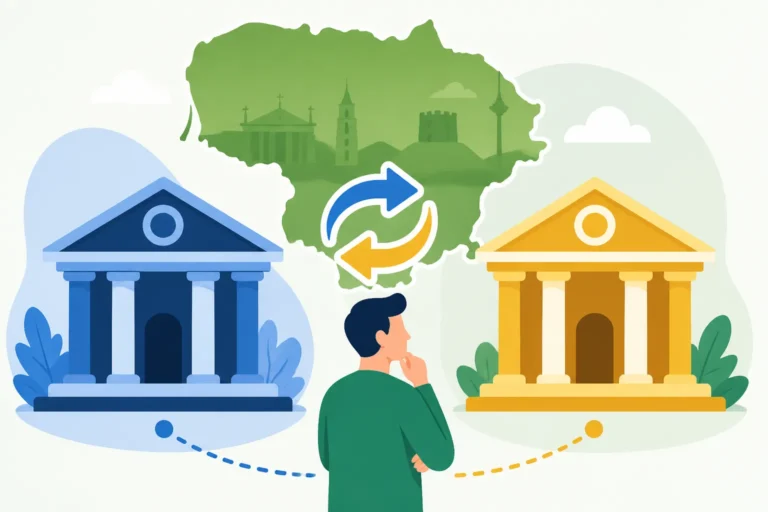
Comparing Banking Options: Traditional vs. Digital
Choosing between a traditional Lithuanian bank and a digital-first fintech solution isn't just a matter of preference; it’s about aligning your banking provider with your lifestyle and financial needs. Both have distinct advantages and disadvantages.
Advantages and Disadvantages of Major Lithuanian Banks
Let's look at the established players like Swedbank, SEB, and Luminor.
Advantages:
- Comprehensive Services: They offer everything under one roof: current accounts, savings, personal loans, mortgages, investment products, insurance, and even pension planning. If you plan to settle down, buy property (you'll definitely want to check out How Do I Get a Mortgage from a Lithuanian Bank as an Expat?), or integrate fully into the local financial ecosystem, a traditional bank will likely be your long-term partner.
- Physical Presence: Branches and ATMs are widely available. This can be reassuring for cash transactions, complex inquiries, or simply having a physical place to go if something goes wrong with your online access.
- Regulatory Security: Being fully licensed banks within the EU, your deposits are protected under the Lithuanian Deposit Insurance scheme, usually up to €100,000, offering a strong sense of security.
- Local Integration: These banks are deeply integrated with the Lithuanian payment infrastructure, including local e-payment gateways, utility bill payments, and tax systems, which can simplify administrative tasks.
Disadvantages:
- Bureaucracy and Speed: Account opening can be a lengthy process, often requiring an in-person visit and multiple documents. Their processes can feel slower compared to fintechs.
- Fees and Exchange Rates: While often transparent, international transfers might come with higher fees and less favourable exchange rates compared to specialized services. Monthly account maintenance fees can also add up; it's worth checking How Much Does a Lithuanian Bank Account Cost Per Month?.
- Language Barrier (Sometimes): While improving, consistent English support across all branches and services might still be a challenge, especially outside of major cities.
- Legacy Systems: Some online banking platforms, though functional, might not feel as cutting-edge or intuitive as those offered by fintech companies.
The Rise of Fintechs for Expats (e.g., Revolut, Wise)
Fintechs have truly revolutionized how expats manage their money abroad. They’re designed for a global, mobile user.
Advantages:
- Ease and Speed of Setup: You can often open an account online in minutes, sometimes even before you arrive in Lithuania, with minimal documentation (usually just your passport and a selfie).
- Lower Fees and Better Exchange Rates: This is arguably their biggest draw. They are built for international transactions, offering competitive exchange rates and transparent, often lower, fees for transfers. Wise, for example, is renowned for its commitment to using the mid-market rate.
- User-Friendly Apps: Their mobile applications are typically incredibly intuitive, feature-rich, and designed for global users, making day-to-day money management a breeze.
- Multi-Currency Accounts: Many offer the ability to hold and manage multiple currencies, which is incredibly useful for expats dealing with income and expenses in different currencies.
- Global Accessibility: Your account is easily managed from anywhere in the world, which is perfect for digital nomads or those who travel frequently.
Disadvantages:
- Limited Services: They generally don't offer traditional banking products like mortgages, extensive loans, or complex investment vehicles. They are primarily focused on current accounts, payments, and currency exchange.
- No Physical Branches: This can be a concern for some, as there's no physical location to go to if you need in-person support or to deposit/withdraw large amounts of cash easily.
- Different Regulatory Framework: While licensed as EMIs or PSPs, they operate under a different regulatory framework than traditional banks. While still secure, it's a distinction worth understanding.
- Cash Handling: Depositing cash can be inconvenient, often requiring third-party services or transfers from a traditional bank.
Hybrid Approaches and What Works Best
For many expats, the sweet spot isn't choosing either a traditional bank or a fintech, but rather a hybrid approach.
- Primary Traditional Bank Account: This is your main account for receiving your Lithuanian salary, paying local bills and utilities, and potentially for long-term financial products like a mortgage. It provides that bedrock of local integration and security. Swedbank or SEB are excellent choices for this.
- Complementary Fintech Account: Use a service like Wise or Revolut for all your international transactions, for managing money in different currencies, and for quick, low-cost transfers to family or friends abroad. This leverages the strengths of fintechs without sacrificing the local integration of a traditional bank.
This hybrid model gives you the best of both worlds, ensuring you’re well-equipped for both your local Lithuanian life and your international financial needs. It's often the most practical and cost-effective strategy for navigating banking as an expat in Lithuania.
Managing Your Money Beyond Basic Accounts
Once you've got your primary bank account set up, your financial journey in Lithuania is just beginning. There's more to consider than just day-to-day transactions. You'll want to understand fees, how to access credit, and how your banking choices intersect with your tax obligations.
Understanding Fees and Charges
This is a critical area where many expats get caught out. Bank fees might seem small individually, but they can definitely add up over time. Make sure you understand the following:
- Monthly Account Maintenance Fees: Many banks charge a small monthly fee for maintaining your current account. This can sometimes be waived if you meet certain criteria, such as maintaining a minimum balance, having your salary paid into the account, or using a certain number of digital services. Always ask about these waivers.
- Transaction Fees: While most standard debit card payments and local bank transfers are free, watch out for fees on specific transactions, like ATM withdrawals from other banks (especially abroad), international transfers, or standing order cancellations.
- Currency Conversion Fees: This is where traditional banks can be significantly more expensive than fintechs. When you use your card abroad or make an international transfer, the bank applies an exchange rate and often an additional markup or fee. Always compare these to the mid-market rates offered by services like Wise.
- Foreign ATM Withdrawal Fees: If you travel frequently outside Lithuania, be aware of the charges for withdrawing cash from non-partner ATMs. Some banks charge both a flat fee and a percentage of the amount withdrawn.
- Credit Card Fees: If you do manage to get a credit card, look out for annual fees, interest rates, and foreign transaction fees.
Always scrutinize the bank's tariff plan (paslaugų įkainiai) document, which by law, they must provide. It’s dense, but it's your bible for understanding costs. If in doubt, ask an English-speaking representative to walk you through it. Knowledge is power here, and knowing How Much Does a Lithuanian Bank Account Cost Per Month? will help you budget effectively.
Accessing Loans, Mortgages, and Investment Opportunities
As an expat, your ability to access more complex financial products like loans and mortgages will depend largely on your residency status, employment stability, and credit history in Lithuania.
- Personal Loans: For personal loans, banks typically look for stable employment in Lithuania, a regular income, and often a certain period of residency (e.g., 6 months to a year). If you're new, it can be challenging. Building a good relationship with your bank and demonstrating financial responsibility (e.g., paying bills on time) will help.
- Mortgages: Buying property is a big step, and getting a mortgage as an expat in Lithuania is definitely possible, but it comes with specific requirements. You'll need a stable income, usually for a few years, a permanent or long-term temporary residence permit, and a substantial down payment. Banks will also assess your creditworthiness. This is where a strong relationship with a traditional bank becomes crucial. Our guide on How Do I Get a Mortgage from a Lithuanian Bank as an Expat? provides a deeper dive into this often complex process.
- Investment Opportunities: Traditional banks offer various investment products, from savings accounts with slightly better interest rates to mutual funds, bonds, and stock brokerage services. If you're considering investing, ensure you understand the risks and consult with a financial advisor. Fintechs generally don't offer these complex investment services, focusing more on simple savings or crypto options.
Integrating with Lithuanian Tax Requirements
Your banking choices are intimately linked with your tax obligations in Lithuania. As a resident, your bank will report certain information to the State Tax Inspectorate (VMI).
- Income Tax (GPM): Your salary, if paid into a Lithuanian account, will have income tax (GPM) deducted by your employer. However, if you have other sources of income, like rental income or foreign income, you'll need to declare it. Your bank statements will be a key record for this. Understanding Income Tax (GPM) in Lithuania: The Full Expat Guide is vital.
- Tax Residency: Your bank will classify you as a tax resident or non-resident based on the information you provide. This affects how certain income (like interest on savings) is taxed. It's crucial to understand your tax residency status, as this dictates where you pay your taxes. For comprehensive guidance, "Taxes for Expats" provides an excellent resource.
- Annual Tax Return: Each year, if you have various income sources or want to claim deductions, you'll need to file an annual tax return with the VMI through the Electronic Declaration System (EDS). Having all your banking records in order will make this process much smoother. Your bank account is an integral part of your financial footprint in Lithuania, and it directly ties into your tax obligations, so keep good records!
Practical Tips for a Smooth Banking Experience
Beyond the technicalities, there are some practical, day-to-day tips that can make your banking life in Lithuania much smoother. These come from years of navigating the system and learning the ropes.
Language Barriers and How to Overcome Them
As I’ve mentioned, language can be a significant hurdle. While English is widely spoken, especially among younger generations and in the main branches of large cities, don't assume everyone will be fluent.
- Learn Basic Lithuanian Phrases: Even a few basic phrases like "Ar kalbate angliškai?" (Do you speak English?), "Aš norėčiau atidaryti sąskaitą" (I would like to open an account), or "Aš nesuprantu" (I don't understand) can go a long way in showing effort and bridging communication gaps.
- Use Translation Apps: Google Translate or similar apps are your best friends. Don't hesitate to use them on your phone to translate documents or communicate with staff.
- Bring a Local Friend: If you have a trusted Lithuanian friend, asking them to accompany you for important appointments (like opening an account or discussing a complex issue) can be invaluable.
- Seek Out Expat-Friendly Branches: In Vilnius and Kaunas, some larger branches of Swedbank, SEB, and Luminor often have dedicated expat service desks or at least more English-speaking staff. It’s worth calling ahead to confirm.
- Prioritize Digital-First Banks for Support: For general queries, fintechs typically offer excellent multilingual support through chat or email, which can be less intimidating than a phone call in a foreign language.
Security and Fraud Prevention
Like anywhere else, financial security is paramount. Be vigilant and take steps to protect your accounts.
- Strong Passwords and Two-Factor Authentication: Use unique, strong passwords for your online banking and mobile apps. Always enable two-factor authentication (2FA) if offered. Most Lithuanian banks use mobile app confirmation or code generators for transactions, which is generally very secure.
- Beware of Phishing Scams: Be incredibly wary of unsolicited emails, texts, or calls asking for your banking details, passwords, or personal codes. Banks will never ask for your full login credentials or PIN over the phone or by email. If in doubt, contact your bank directly using official contact numbers.
- Monitor Your Statements: Regularly check your bank statements for any suspicious or unauthorized transactions. Report anything unusual immediately.
- Protect Your Cards: Don't write down your PIN, and be cautious when using ATMs in unfamiliar locations. Cover the keypad when entering your PIN.
The Importance of Your Asmens Kodas
I can’t stress this enough: your Asmens Kodas is your lifeblood in Lithuania. It's not just for banking; it's central to everything from your healthcare (Registering for Compulsory Health Insurance (PSD) in Lithuania (2027)) to your employment and tax records. Without it, you’ll constantly hit roadblocks.
When interacting with your bank, your Asmens Kodas will be requested frequently. It's how they identify you within the national system and link your financial activities to your identity. Keep it safe, but also have it readily available when dealing with any official institution. It truly underpins your entire administrative existence as an expat in Lithuania.
Banking in Lithuania might seem daunting at first, but with a bit of research, preparation, and knowing what to expect, you can set yourself up for a smooth financial journey. Whether you go all-in with a traditional bank, embrace the fintech revolution, or adopt a smart hybrid approach, having your finances in order is a crucial step to feeling settled in your new home.
Disclaimer
The information provided in this guide is intended for general informational purposes only and does not constitute financial, legal, or tax advice. While we strive to keep the information up-to-date and accurate, laws, regulations, and bank policies in Lithuania can change. Expats are strongly advised to consult with a qualified financial advisor, tax specialist, or legal professional in Lithuania for advice tailored to their specific situation. Always verify current requirements directly with the relevant financial institutions and government authorities.