Do I Need to Speak Lithuanian to Get a Residence Permit?
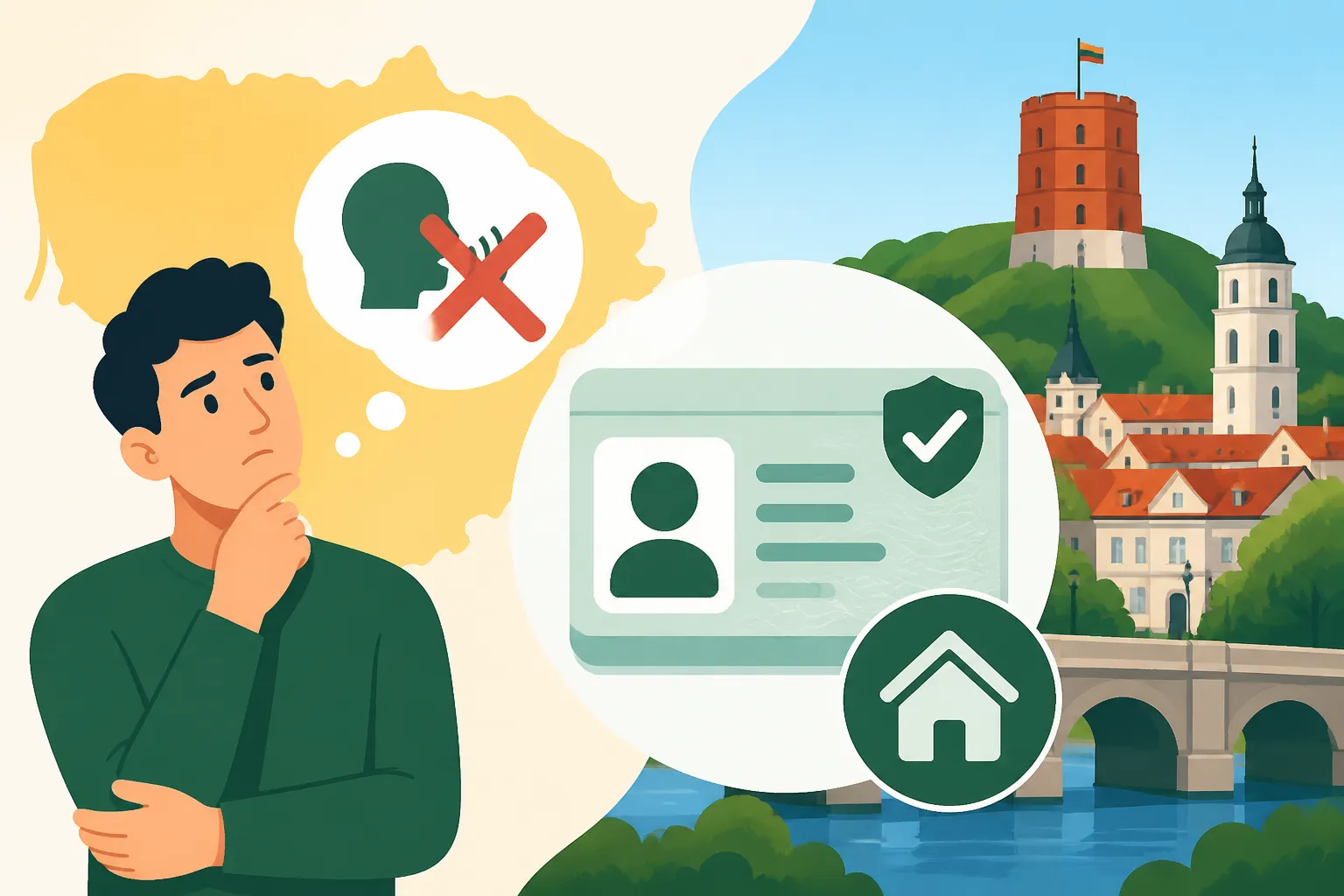
One of the biggest worries I hear from fellow expats moving to Lithuania is about the language. Will you be forced to learn Lithuanian just to get your foot in the door with a residence permit? It's a completely valid concern, especially when you're already juggling so much bureaucracy in a new country. This guide is here to break down the language requirements for different types of residence permits, clearing up the confusion so you can focus on your move.
Navigating the Initial Permit: A Breath of Fresh Air for New Arrivals
Let's cut right to the chase, because I know this is often the most pressing question: for most initial temporary residence permits (TRP) in Lithuania, you are generally not required to demonstrate Lithuanian language proficiency. This comes as a huge relief to many, as it allows you to settle in and focus on your job, studies, or family without the added pressure of passing a language test right away.
When you're first arriving, whether it's for an exciting job opportunity in Vilnius, a university program, or to reunite with family, the Lithuanian Migration Department (MIGRIS) is primarily interested in your purpose for being here, your financial stability, and other core eligibility criteria. They aren't looking to stump you with verb conjugations at your first interview. This means that if you're coming on a work visa for a company, or as an international student, your English proficiency (if your studies are in English) or professional qualifications will be the focus, not your ability to converse in Lithuanian.
However, "generally no" isn't a "never." It's important to understand the distinctions between various types of permits and long-term goals. While your first temporary residence permit might be language-test-free, that doesn't hold true for every step of your expat journey. The requirements change significantly as you move towards more permanent statuses.
Understanding Language Demands by Permit Type
The journey through Lithuania's immigration system has different milestones, and with each one, the expectations for local language proficiency can shift. It's crucial to know what’s expected at each stage, so you can plan accordingly and avoid any unwelcome surprises down the line.
Temporary Residence Permit TRP: Your Entry Ticket
When you first land in Lithuania and apply for your Temporary Residence Permit (TRP), the good news is that for the vast majority of categories, there is no official Lithuanian language proficiency requirement. This is true for many of the most common reasons expats move here:
Work-Based Residence Permits
If you're coming to Lithuania for work, which is a very popular route, particularly in the thriving IT, fintech, and shared services sectors, your professional skills and qualifications are what matter most. Companies are looking for talent, not necessarily Lithuanian speakers. Therefore, for your TRP application based on employment, you won't be asked to provide a Lithuanian language certificate or pass a test. This applies whether you're working for a large international firm or a local Lithuanian startup. The focus is on your employment contract, your salary, and ensuring your role meets the criteria for a How to Get a Work Permit and National (D) Visa in Lithuania. If you are a skilled worker, you might even qualify for an EU Blue Card, which also prioritizes professional qualifications over language.
Study Permits for International Students
Lithuania has become an increasingly popular destination for international students, with many universities offering excellent programs taught entirely in English. If you're coming to study, your university will require proof of English language proficiency (like an IELTS or TOEFL score), but not Lithuanian. Your How to Apply for a Student Residence Permit in Lithuania will be based on your acceptance letter from an accredited institution and proof of sufficient funds. This allows students to immerse themselves in their studies without the immediate pressure of learning a new language from scratch.
Family Reunification Permits
For those moving to Lithuania to join a spouse, parent, or other close family member who is already a resident, the primary focus of your application for family reunification will be on proving your familial relationship, the existing resident's status, and their ability to financially support you. There are no Lithuanian language requirements for these types of TRPs. The goal is to keep families together, and language isn't considered a barrier to that right.
Business and Self-Employment Permits
If you're an entrepreneur looking to start a business or come here as a self-employed individual, your TRP application will hinge on the viability of your business plan, your investment in Lithuania, and your ability to contribute to the economy. The Migration Department assesses your financial standing and the potential impact of your venture, not your fluency in Lithuanian. This is great news for international founders and freelancers.
It's worth noting that while applying for your TRP, you'll need to demonstrate you have adequate health insurance. Many expats opt for international providers like Cigna Global to ensure comprehensive coverage from day one, which satisfies this specific permit requirement. Additionally, a crucial step for any long-term stay is obtaining your How to Get Your Asmens Kodas Personal Code and Why It Matters for Healthcare. This personal code is essential for nearly all administrative tasks, regardless of your language skills.
Permanent Residence PRP: Where Language Becomes Key
Now, here's where the language requirement genuinely comes into play. After you've spent five continuous years living legally in Lithuania on a Temporary Residence Permit, you become eligible to apply for Permanent Residence. This is a significant step towards long-term settlement, and with it comes the expectation of a basic level of integration, which includes language.
The A2 Language Requirement
To obtain a Permanent Residence Permit, you will need to demonstrate proficiency in Lithuanian at an A2 level. What does A2 actually mean? It's considered a "basic user" level. This isn't about deep philosophical conversations, but rather about functional communication for daily life. At an A2 level, you should be able to:
- Understand and use frequently used expressions and simple sentences related to immediate needs (e.g., personal and family information, shopping, local geography, employment).
- Communicate in simple and routine tasks requiring a direct exchange of information on familiar and routine matters.
- Describe in simple terms aspects of your background, immediate environment, and matters in areas of immediate need.
This is a very achievable level for anyone living in Lithuania for five years, even with minimal formal study, if you make an effort to pick up phrases and interact. It’s a sign that you’ve made a genuine attempt to integrate.
Proving Your Proficiency
You'll need to provide official proof of your A2 Lithuanian language proficiency. This typically involves passing a state-recognized language examination or presenting a certificate from an accredited language school that demonstrates you've completed courses up to the A2 level. Many expats start taking formal Learning Lithuanian A Complete Guide to Language Courses and Levels during their third or fourth year to prepare for this requirement. It’s a manageable goal and a valuable investment in your future here.
Lithuanian Citizenship: The Ultimate Language Test
If your ultimate goal is to become a Lithuanian citizen, the language requirements become even more stringent. This makes perfect sense; citizenship implies a full commitment to the country, its culture, and its legal framework.
B1 Language and Constitution Exam
For naturalisation, you'll generally need to demonstrate a B1 level of Lithuanian language proficiency. B1 is an "independent user" level, meaning you can understand the main points of clear standard input on familiar matters, deal with most situations likely to arise while travelling, produce simple connected text on topics that are familiar or of personal interest, and describe experiences, events, dreams, hopes, and ambitions.
In addition to the B1 language test, you must also pass an examination on the basic provisions of the Constitution of the Republic of Lithuania. This dual requirement ensures that prospective citizens not only understand the language but also the fundamental principles governing the country. This is a much higher bar than the A2 for permanent residence, reflecting the profound significance of citizenship. You can learn more about this process in our guide on How to Apply for Lithuanian Citizenship by Naturalisation.
Practicalities Beyond the Legalities: Why Learning Lithuanian Still Helps
While you might not need Lithuanian for your initial residence permit, and even the A2 requirement for permanent residence is quite basic, I can tell you from personal experience: learning even a little bit of the local language makes a world of difference. It's not just about ticking a box; it's about making your life here richer and smoother.
Smoother Daily Life and Deeper Integration
Let's be real, while many Lithuanians, especially younger generations in cities like Vilnius and Kaunas, speak excellent English, there are plenty of situations where knowing some Lithuanian will save you time and frustration. Imagine going to a local market, visiting a small shop outside the city center, or even dealing with your apartment building's administrator. Being able to say "laba diena" (good day), "ačiū" (thank you), or ask for something simply can instantly warm up an interaction.
It’s also about respect. Locals genuinely appreciate when foreigners make an effort, no matter how small. It shows you're not just passing through, but trying to connect with their culture. This subtle effort can open doors, lead to unexpected friendships, and help you feel more at home. For general relocation planning, services like Sirelo can assist with comparing moving companies to Lithuania, giving you more peace of mind and time to focus on language learning when you arrive.
Enhanced Employment Prospects
While your The Complete Guide to Working in Lithuania as a Foreigner 2026 might not require Lithuanian, having it on your CV can be a significant advantage. For roles that involve interacting with the general public, local clients, or non-English speaking colleagues, Lithuanian proficiency moves from a "nice-to-have" to a "must-have." Even in international companies, if you're aiming for management positions or roles with broader internal communication, demonstrating language skills can set you apart.
Many expats find that after a few years, they hit a ceiling in their career progression if they haven't picked up Lithuanian. If your goal is to truly integrate into the local workforce beyond specific international niches, investing in language skills is a smart move. Our guide, The Expat Guide to Finding a Job in Lithuania 2026, often highlights the value of local language skills in certain sectors.
Navigating Bureaucracy and Healthcare with Greater Ease
Even if you're dealing with MIGRIS, where English-speaking staff are often available, other administrative tasks can be trickier. Think about setting up The Expat Guide to Setting Up Utilities in Lithuania, or getting a referral to a specialist doctor at a local polyclinic. While larger institutions might have English information or staff, smaller municipal offices or individual practitioners might not. Knowing enough Lithuanian to explain your situation or understand instructions can significantly reduce stress and miscommunication.
For instance, while you can find How to Find an English-Speaking Doctor in Lithuania, having basic Lithuanian vocabulary can make booking appointments, understanding prescriptions, or describing symptoms much smoother, especially in an emergency where an interpreter might not be immediately available.
Overcoming the Language Barrier: Resources and Strategies
So, you’ve decided to embrace the challenge and learn Lithuanian – fantastic! It's a journey, not a sprint, and there are plenty of resources available to help you along the way.
Formal Language Learning Options
Lithuania, especially in its larger cities, offers various formal avenues for language acquisition:
- Universities: Institutions like Vilnius University often have departments dedicated to teaching Lithuanian as a foreign language. These courses are usually structured and comprehensive, providing a solid grammatical foundation.
- Private Language Schools: Schools such as Kalba.lt are popular choices among expats. They offer group classes at different proficiency levels, private tutoring, and often cater to the specific needs of foreigners, sometimes even preparing for the A2 or B1 state exams.
- Online Platforms: For those with busy schedules or living outside major cities, online courses and tutors can be incredibly effective. Many private teachers offer lessons via video call, providing flexibility.
Informal Learning and Immersion
Formal lessons are great, but real-world practice is where the magic happens. Don't be afraid to dive in!
- Daily Interactions: Start with simple greetings and polite phrases in shops, cafes, and with neighbours. Even "labas" (hello) and "ačiū" (thank you) go a long way.
- Media Consumption: Watch Lithuanian TV shows, listen to local radio, or try reading simple news articles online. Even if you don't understand everything, your brain will start picking up patterns and vocabulary.
- Social Groups: Join local clubs, volunteer groups, or sports teams. These environments provide natural opportunities to practice and make friends. Many cities have expat groups that also organize language exchange meetups.
- Apps and Digital Tools: Apps like Duolingo, Memrise, or LithuanianPod101 can be fantastic for building vocabulary and basic sentence structures in a fun, gamified way.
A Phased Approach to Language Learning
Consider adopting a phased approach:
- Survival Lithuanian (First Year): Focus on essential phrases for daily life – greetings, shopping, ordering food, asking for directions. This will significantly boost your confidence and make initial integration much easier.
- A2 Preparation (Years 2-4): If you plan on staying long-term and aiming for Permanent Residence, start dedicated study to reach the A2 level. This gives you ample time to learn without feeling rushed.
- B1+ for Citizenship/Advanced Roles (Years 5+): If citizenship or roles requiring higher proficiency are on your radar, continue building on your A2 foundation.
Remember, every bit helps. Even a few words can bridge cultural gaps and make your expat experience in Lithuania much more rewarding. For comprehensive guidance on preparing your documents for any permit application, refer to How to Prepare Documents for a Lithuanian Residence Permit Application.
| Immigration Status | Lithuanian Language Requirement | Proficiency Level (CEFR) | Notes |
|---|---|---|---|
| Temporary Residence Permit (TRP) | Generally NO | N/A | For work, study, family reunification, business. |
| Permanent Residence Permit (PRP) | YES | A2 (Basic User) | Required after 5 years of continuous legal residence in Lithuania. |
| Lithuanian Citizenship | YES | B1 (Independent User) | Also requires an examination on the Lithuanian Constitution. |
| EU Blue Card | Generally NO | N/A | Focuses on high professional qualifications and salary. |
| EU Citizen Right of Residence | NO | N/A | EU/EEA citizens only need to register their right of residence. |
This table provides a quick overview, but always remember to check the latest requirements from the Migration Department (MIGRIS) as policies can change. For a broader overview of starting your life here, check out The Complete Guide to Moving to Lithuania Your First 90 Days 2026.
Disclaimer
Please remember that immigration laws and policies can change. While I strive to provide the most current and accurate information based on my experience and available resources, this guide is for informational purposes only and does not constitute legal advice. Always consult with the official Lithuanian Migration Department (MIGRIS) or a qualified immigration lawyer for personalized advice regarding your specific situation and the latest requirements for residence permits and citizenship.