How Do I File My Income Tax Return Through the VMI EDS?
Ah, tax season in Lithuania. If you're an expat, the very mention of "VMI EDS" might send a shiver down your spine, conjuring images of complex forms, cryptic Lithuanian phrases, and the general feeling of being lost in a bureaucratic labyrinth. Trust me, we've all been there. But take a deep breath; this guide is going to meticulously walk you through the process of filing your annual income tax return (GPM) using the VMI's Electronic Declaration System (EDS), breaking down every step so you can tackle it with confidence.
Understanding the Lithuanian Tax Authority (VMI) and EDS
Navigating the tax system in a new country is rarely straightforward, and Lithuania is no exception. Before we dive into the nuts and bolts of filing, it’s crucial to grasp the landscape you're dealing with.
What is VMI and Why Does it Matter to You?
The VMI, or Valstybinė mokesčių inspekcija, is Lithuania's State Tax Inspectorate. Think of it as the Lithuanian equivalent of the IRS in the US or HMRC in the UK. It's the central government body responsible for administering taxes, collecting revenue, and ensuring compliance with tax laws. For expats, the VMI is the primary authority you'll interact with for income tax, property tax, and various other levies. Whether you're employed by a Lithuanian company, self-employed, or receiving income from abroad, the VMI is your go-to.
As an expat, your relationship with the VMI typically begins when you first register your tax residency and get your Asmens Kodas (Personal Code), which is absolutely vital for any interaction. You can learn more about this foundational step by reading How to Get an Asmens Kodas and Register with the Lithuanian Tax Authority. Without a valid Asmens Kodas, accessing essential services like the EDS system becomes virtually impossible. The VMI plays a significant role in every financial aspect of your life here, from how much you earn to how you buy property, so understanding its function is key to a smooth expat experience.
Demystifying the EDS Portal: Your Digital Tax Hub
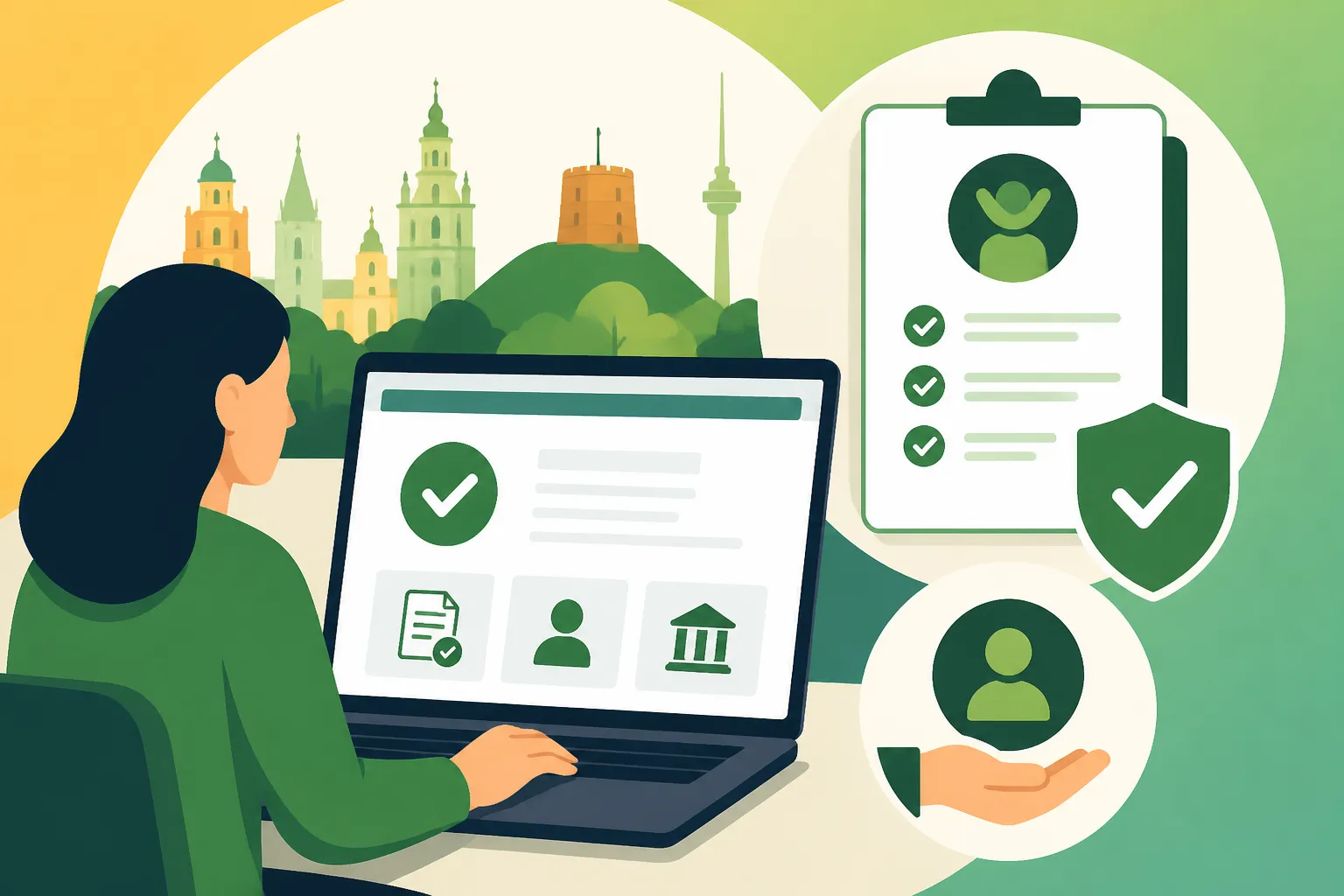
The Electronic Declaration System, or EDS, is the VMI's online portal for taxpayers. In essence, it's where you'll submit almost all your tax-related documents, including your annual income tax return. For many expats, the sheer number of forms and the predominantly Lithuanian interface can feel daunting, but it's a powerful tool once you get the hang of it. EDS centralises your tax information, allows you to declare income, claim deductions, and even check your tax history. It's designed to streamline the process, though admittedly, the initial learning curve can be steep.
The system is integrated with the E-Government Gateway (Elektroniniai Valdžios Vartai), which acts as a secure access point to various public services in Lithuania. This means you'll typically log in using your bank's online banking credentials, a mobile signature, or an electronic signature. This high level of security ensures your sensitive tax data is protected. Don't be surprised if the initial login process feels like a gauntlet; it's designed for security, not necessarily for user-friendliness for first-timers, especially those unfamiliar with the local digital identity systems. We've all fumbled through it, so you're not alone! For a deeper dive into this system, check out Understanding the VMI Electronic Declaration System (EDS) in Lithuania.
The Nitty-Gritty: Preparing for Your EDS Income Tax Return Filing
Before you even think about logging into EDS, a solid preparation strategy is your best friend. Trust me, trying to gather documents while staring at a blinking cursor on the VMI website is a recipe for stress.
Essential Documents You'll Need
Gathering the right paperwork beforehand will save you countless headaches. Here's a rundown of what you'll typically need to have on hand:
- Your Asmens Kodas (Personal Code): As mentioned, this is non-negotiable. It's your unique identifier in the Lithuanian system.
- Proof of Income (Lithuanian Employers): If you're employed by a Lithuanian company, your employer is legally obligated to submit a form called GPM313 (Declaration of Granted Income) to the VMI on your behalf. This form details your annual gross income, paid taxes, and social security contributions. You won't directly attach this to your return, but it's the basis for the pre-filled EDS form.
- Proof of Income (Self-Employment/Individual Activity): If you're registered for Individual Activity (Individuali veikla), you'll need records of all your invoices issued, expenses incurred, and any other income received. This is where your meticulous record-keeping comes into play. If you're operating under a business certificate (verslo liudijimas), the tax implications are slightly different, but you still need to track your earnings. For more on this, How to Pay Taxes Under Individual Activity in Lithuania provides an excellent resource.
- Foreign Income Statements: If you have income from outside Lithuania (e.g., rental income from your home country, dividends from foreign stocks, remote work for a non-Lithuanian employer), you'll need statements or summaries of these earnings. This is particularly crucial for expats who might be dealing with complex double taxation agreements.
- Documents for Deductions and Tax Credits:
- Life Insurance/Pension Contributions: Certificates or statements from your insurance provider or pension fund.
- Housing Loan Interest: Statements from your bank.
- Tuition Fees: Receipts or invoices for higher education tuition for yourself or family members (under specific conditions).
- Car Repair/Home Renovation: Receipts or contracts for certain services where VAT (PVM) was paid, allowing for a small deduction.
- Charitable Donations: Receipts from registered charities.
- Bank Account Details: For receiving any potential tax refunds. Ensure it's a Lithuanian bank account or an account capable of receiving SEPA payments.
Before You Log In: Key Information to Gather
Beyond the physical documents, there are a few pieces of information you'll want to have clear in your head, or better yet, jotted down. This proactive step helps you avoid confusion when faced with various fields in the EDS system.
First, clarify your tax residency status. Are you considered a resident for tax purposes in Lithuania for the entire tax year, or was it a partial year? This impacts how much and what type of income you need to declare. You can check out Tax Residency in Lithuania: A Definitive Guide for Expats (2027) for more on this. Secondly, understand the types of income you'll be declaring. Is it employment income, self-employment income, capital gains, rental income, or a combination? Each has specific sections in the GPM311 form.
Think about any deductions or tax reliefs you might be eligible for. The Lithuanian system allows for certain deductions, such as contributions to Pillar III pension funds or interest on housing loans. Having these figures ready, along with the supporting documentation, will ensure you don't miss out on any legitimate savings.
Finally, familiarize yourself with the annual tax deadline, which is typically May 1st for the previous calendar year. Missing this deadline can lead to penalties, which is the last thing any expat wants to deal with. Knowing these basics will make the actual filing process much smoother and less stressful.
Step-by-Step Walkthrough: Filing Your GPM Declaration on EDS
Alright, it's time to roll up our sleeves and tackle the EDS portal itself. Don't worry, we'll go through this bit by bit.
Logging In and Navigating the EDS System
This is often the first hurdle. To access the EDS system, you'll need to go to the VMI website (vmi.lt) and look for the "Deklaravimas" (Declaration) section, then select "Prisijungti prie EDS" (Login to EDS).
-
Choose Your Login Method: You'll be presented with several options:
- Electronic Banking (Elektroninė bankininkystė): This is the most common and easiest method for most residents. Select your bank (e.g., Swedbank, SEB, Luminor) and log in using your standard online banking credentials. This acts as your digital identity verification.
- Mobile Signature (Mobilusis parašas): If you have a Lithuanian mobile number and have activated a mobile signature service, you can use this.
- Electronic Signature (El. parašas): For those with a qualified electronic signature device.
Once successfully logged in, you'll land on your personal EDS dashboard. This dashboard, while functional, might not be immediately intuitive for English speakers. Look for terms like "Mano EDS" (My EDS) or sections related to "Deklaracijos" (Declarations). For a practical guide on this, How Do I Register for the VMI EDS in Lithuania? is a good place to start.
-
Locate Your Pre-filled Declaration: The VMI pre-fills a significant portion of your annual income tax return (form GPM311) with data it receives from your employer(s), banks, and other institutions. This is a huge help! On your dashboard, look for a link or button that says something like "Pildyti GPM311" or "Pildyti metinę gyventojo (šeimos) turto ir pajamų deklaraciją" (Fill out annual resident (family) property and income declaration). Make sure you select the correct tax year.
-
Language Barrier Navigation: The default language is Lithuanian. While some sections might have English translations, don't count on it for everything. Your browser's built-in translation feature (like Chrome's "Translate to English") can be an absolute lifesaver here, though it's not always perfect. If you're really struggling, considering professional help from services like Taxes for Expats might be a worthwhile investment, especially for complex cases.
Filling Out the GPM311 Form: A Field-by-Field Guide
The GPM311 form is the main event. While a lot is pre-filled, you'll need to review it carefully and add any missing information.
-
Review Pre-filled Data (A-E sections):
- Section A (General Information): This usually contains your personal details (Asmens Kodas, name, address). Double-check it.
- Section B (Income from Employment/Related Activities): This is where your Lithuanian employer's submitted GPM313 data populates. You'll see your annual salary, paid GPM (income tax), and PSD (compulsory health insurance) contributions.
- Section C (Income from Individual Activity/Self-Employment): If you're registered for individual activity, some data might be pre-filled if you've been submitting quarterly declarations (GPM308). However, you'll often need to manually input your final annual income and deductible expenses here.
- Section D (Other Income): This could include rental income from within Lithuania, interest, or dividends from Lithuanian sources.
- Section E (Deductions/Tax Reliefs): If you've contributed to a Pillar III pension fund, paid life insurance premiums, or paid interest on a housing loan, some of this might be pre-filled by the institutions, but it’s crucial to verify and add any missing amounts.
-
Manually Adding Information:
- Foreign Income: This is a big one for expats. You'll need to go to the relevant annexes (often a separate tab or section within GPM311) to declare income from abroad. For example, if you have rental income from a property in your home country, you'll enter the gross income and any taxes paid in the source country. This is vital for avoiding double taxation if Lithuania has a treaty with that country. The article How to Report Foreign Income to the Lithuanian Tax Authority provides more detailed guidance on this.
- Additional Deductions: Did you pay for university tuition for yourself or a family member? Did you incur costs for certain car repairs or home renovations that qualify for tax relief? You'll need to manually enter these amounts and ensure you have the supporting documents (though you typically don't upload them unless specifically requested).
- Spouse/Family Information: If you're filing as a family, or need to declare income for a spouse, there will be specific sections for this.
-
Utilizing the "i" button: Throughout the EDS system, you'll often see small "i" icons next to fields. Clicking these usually provides a short explanation in Lithuanian about what information that particular field requires. Again, a browser translator can help decipher these.
Reviewing, Submitting, and Confirmation
Once you've meticulously gone through every relevant section and entered all your income and deductions, don't hit "Submit" just yet!
- Review Thoroughly: This is arguably the most important step. Go through every section of the GPM311 form again. Does the pre-filled data match your records? Have you declared all your income, both Lithuanian and foreign? Have you claimed all eligible deductions? A small error could lead to delays or even penalties.
- Check for Errors (Klaidų tikrinimas): EDS has a built-in error checker. Look for a button that says something like "Patikrinti klaidas" or "Tikrinti" (Check errors). This tool will highlight any mandatory fields you've missed or logical inconsistencies, preventing common submission mistakes. Address any flagged errors before proceeding.
- Save Your Draft: Before final submission, make sure you save your declaration as a draft ("Išsaugoti juodraštį"). This allows you to step away, re-read everything, or consult with someone if needed, without losing your progress.
- Submit Your Declaration (Pateikti): Once you are 100% confident, click the "Pateikti" (Submit) button. You'll usually receive an immediate confirmation message and a unique registration number (e.g., "Registracijos numeris") for your submission. Save this number! You can also download a copy of your submitted declaration from the EDS system – which you absolutely should do for your records. This confirmation is your proof of timely submission.
Common Expat Challenges and Solutions When Using EDS
Let's be real, the EDS system isn't always the most expat-friendly. But there are ways to navigate these common hurdles.
Language Barriers and Finding Assistance
The Lithuanian language can be a significant obstacle. While browser translation tools are useful, they aren't foolproof, especially when it comes to legal or financial terminology.
- Browser Translators: As mentioned, use your browser's translate feature. It will help with the general navigation and understanding field labels.
- VMI Website Resources: The VMI does have some information in English on its main website, but detailed EDS instructions are usually only in Lithuanian.
- Expat Forums and Groups: Online expat communities (e.g., "Expats in Vilnius" Facebook groups) are often a goldmine of shared knowledge. Someone else has likely faced the exact same problem you are.
- Professional Help: For complex cases, especially involving foreign income, investments, or business activities, consider hiring a local accountant or a tax advisor specializing in expat taxes. Services like Taxes for Expats are specifically designed to assist foreigners with their tax obligations in various countries, including Lithuania, and can be invaluable for ensuring compliance and optimizing your tax situation. They can often provide assistance in English, removing the language barrier entirely. Additionally, you could explore How Do I Get Help Filing My Lithuanian Tax Return in English? for more localized options.
Dealing with Foreign Income and Double Taxation
This is where things can get truly complicated for expats. Lithuania has double taxation agreements (DTAs) with many countries to prevent you from being taxed twice on the same income.
- Understanding DTAs: If you earn income in a country with which Lithuania has a DTA, you'll declare the income in Lithuania but might be able to claim a credit for taxes already paid in the source country, or the income might be exempt. The specifics depend on the DTA and the type of income.
- Annexes: Foreign income is typically declared in specific annexes (forms) that accompany the GPM311. For example, if you have foreign employment income, you might use a specific GPM annex. The EDS system will guide you to these, but you'll need to know which income is foreign and what type it is.
- Required Documentation: Keep meticulous records of all foreign income and any taxes paid on it. You might need official statements or certificates from the foreign tax authority to prove taxes paid, especially if the VMI requests further clarification. This is another area where professional advice from an expert, like those at Taxes for Expats, can be immensely beneficial to navigate the intricacies of international tax law.
Payment and Refunds: What to Expect
Once your declaration is submitted, there are two possible outcomes: you either owe more tax, or you're due a refund.
- Paying Your Tax Bill: If you have an outstanding tax payment, the EDS system will show you the amount owed and provide payment details (bank account numbers for the VMI). You'll typically make this payment via online banking. The deadline for payment is usually the same as the filing deadline (May 1st). Ensure your payment includes your Asmens Kodas in the payment purpose to ensure it's correctly allocated.
- Receiving a Tax Refund: If you're due a refund, the VMI will process it and transfer it to the bank account you specified in your GPM311 declaration. This usually happens within a few weeks to a couple of months after the filing deadline, though it can vary. Patience is key! If you need to transfer funds internationally, for example, sending a tax payment from a foreign account or receiving a refund into an overseas account, using services like Wise can offer competitive exchange rates and lower fees compared to traditional banks. Just ensure the VMI's bank details are correct and your Asmens Kodas is clearly referenced.
Understanding Income Tax (GPM) in Lithuania: The Full Expat Guide can offer more context on GPM calculations, which will impact whether you owe or get a refund.
Essential Tax Declaration Details for Expats
To further clarify the annual income declaration process through VMI EDS, here’s a quick reference table outlining key aspects, particularly useful for foreigners.
| Aspect | Description for Expats |
|---|---|
| Main Form | GPM311. This is the core annual income tax declaration form. It's largely pre-filled by the VMI based on data from employers (GPM313), banks, and other institutions. You must review and supplement it. |
| Access Method | VMI EDS portal (eds.vmi.lt). Most commonly accessed via online banking credentials (bank identification), mobile signature, or electronic signature. Accessing the system requires an Asmens Kodas. |
| Annual Deadline | May 1st of the year following the tax year (e.g., May 1, 2026, for the 2025 tax year). This applies to both filing and payment of any outstanding tax. |
| Pre-filled Data | Information from Lithuanian employers (salary, paid GPM, PSD), some local bank interest, pension contributions. Crucially, foreign income and certain private deductions are not pre-filled and must be added manually. |
| Foreign Income | Must be declared. This includes foreign employment income (e.g., from remote work for a non-Lithuanian company), rental income from abroad, capital gains, etc. Specific annexes within GPM311 are used for this. Be aware of double taxation agreements. |
| Deductions & Reliefs | Common ones include contributions to Pillar III pensions, life insurance premiums, interest on housing loans, certain education expenses, and limited expenses for car repair/home renovation. You must have supporting documents. |
| Payment/Refund | If tax is owed, payment is made via online banking to the VMI's specified account by May 1st. If a refund is due, the VMI transfers it to your declared Lithuanian bank account (or potentially an international account through services like Wise, though a local account is simpler) within a few weeks to months. |
| Language Support | Primarily Lithuanian. Use browser translation tools. For complex situations, consider professional tax advice in English. |
| Key Internal Links | The Complete Guide to Taxes in Lithuania for Expats (2027), Understanding Income Tax (GPM) in Lithuania: The Full Expat Guide, Filing Your Annual Tax Return in Lithuania: The Complete Walkthrough (2027) |
It's a lot to take in, but breaking it down into manageable steps makes the annual tax declaration much less intimidating. Remember, preparation and attention to detail are your best allies.
Disclaimer
Please note that this guide provides general information and does not constitute professional tax advice. Tax laws and regulations in Lithuania can change, and individual circumstances vary significantly. Always consult with a qualified tax advisor or the Lithuanian State Tax Inspectorate (VMI) directly for personalized advice regarding your specific tax situation.