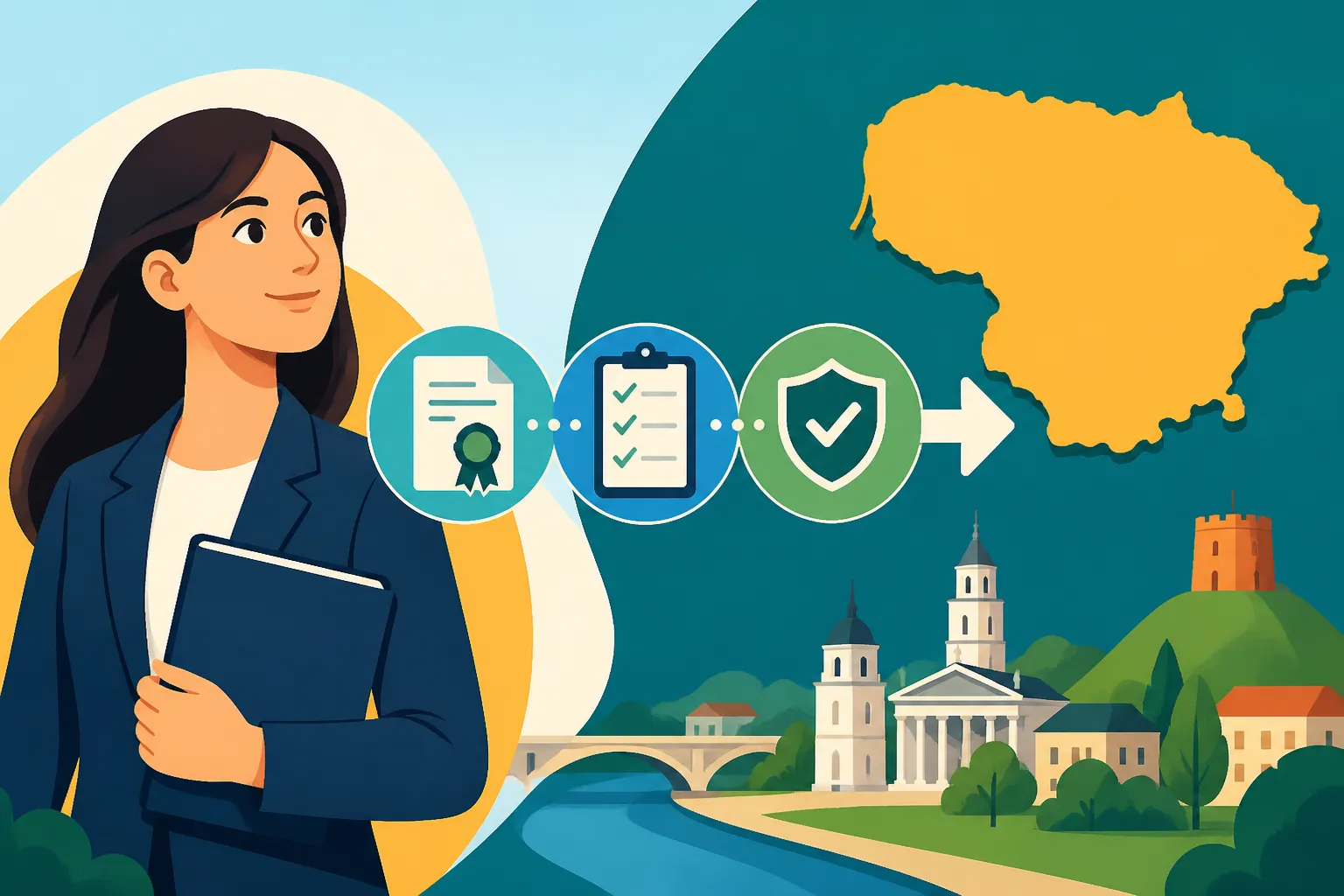
How to Transfer Your Professional Qualifications to Lithuania
One of the trickiest parts of setting up a new life in Lithuania, especially if you're looking to continue your career, is figuring out how to get your hard-earned professional qualifications recognized here. It’s not just a matter of showing your diploma; the system can feel like a labyrinth of documents, translations, and various institutions, leading to a lot of headaches and uncertainty. This guide is here to untangle that process, offering a detailed, empathetic walkthrough on how to transfer your professional qualifications to Lithuania, making sure your skills are properly validated so you can get back to doing what you do best.
Understanding the Landscape: Why Qualification Recognition Matters in Lithuania
When you first arrive in Lithuania, brimming with enthusiasm and ready to dive into your professional life, you might assume your degrees and certificates from back home will just, well, work. And for some professions, that's somewhat true. But for many, especially those impacting public health or safety, it's a whole different ballgame. Ignoring the recognition process isn't just a minor oversight; it can genuinely prevent you from practicing your chosen profession legally.
The Legal Imperative for Regulated Professions
Let's talk about "regulated professions." These are jobs where the government has decided, for public interest reasons, that practitioners need specific qualifications and ethical standards to ensure competence and protect citizens. Think doctors, nurses, pharmacists, architects, engineers, lawyers, teachers, and even some therapists. In Lithuania, just like in most EU countries, you simply cannot legally practice these professions without having your qualifications formally recognized by the relevant Lithuanian authority.
For instance, if you're a qualified doctor from outside the EU, you can’t just walk into a hospital in Vilnius and start treating patients. You'll need your medical degree and professional experience to be assessed and validated, often involving specific language proficiency and potentially additional training or exams. The same goes for architects wanting to design buildings or teachers wanting to work in public schools. The stakes are high: practicing a regulated profession without proper recognition can lead to severe penalties, including fines, legal action, and immediate cessation of work. It’s not just bureaucracy; it’s about maintaining professional standards and public trust.
The Unregulated Sector: Still Important for Employers
Now, if your profession isn't regulated – perhaps you're a marketing specialist, a graphic designer, an IT professional, or a project manager – the legal requirement for official recognition might not apply. You won't be barred from working in Lithuania. However, that doesn't mean your foreign qualifications are automatically understood or universally accepted by potential employers here.
Many Lithuanian companies, particularly those without extensive experience hiring international talent, might not fully grasp the equivalence of your qualifications. An employer might not understand what a "Master of Arts in Digital Media from XYZ University, USA" truly means in the Lithuanian context. This can impact everything from whether you get an interview to your starting salary and career progression. Having some form of official or semi-official recognition or even just a clear, comprehensible explanation of your educational background can give you a significant advantage. It builds trust and clarity, making it easier for local employers to assess your capabilities. Think of it as a form of "cultural translation" for your professional background, helping you bridge the gap and demonstrate your value more effectively in the Lithuanian job market.
The Core Authority: SKVC and Its Role
When it comes to getting your academic and professional papers understood in Lithuania, one name consistently comes up: SKVC. This acronym stands for the Centre for Quality Assessment in Higher Education (Studijų kokybės vertinimo centras). They are the central body you’ll most likely be dealing with, or at least interacting with their guidelines, as you embark on this recognition journey.
What is SKVC (Center for Quality Assessment in Higher Education)?
SKVC plays a pivotal role in Lithuania's education system, acting as the national agency responsible for evaluating and recognizing foreign higher education qualifications. Their mandate is broad, covering both academic and professional recognition. Essentially, they are the go-to authority for determining if your degree, diploma, or professional certificate from abroad is equivalent to a Lithuanian qualification. This is crucial because it creates a standardized benchmark, ensuring that foreign credentials meet the national quality standards.
They are not just rubber-stamping documents; SKVC performs a detailed comparative analysis. They look at the curriculum, the duration of studies, the type of institution, and the learning outcomes to assess the comparability of your qualification. While other bodies might have the final say for regulated professions, SKVC's assessment often forms the foundational layer upon which those specific professional recognitions are built. Their official recognition carries significant weight and is often a prerequisite for further steps, whether you're planning to pursue further education or practice a specific profession. You can often start by checking their website for initial information and application guidelines. For more detailed information, you might find a guide like How to Get Your Foreign University Degree Recognised Through SKVC particularly useful.
Academic vs. Professional Recognition
It's really important to understand that there are two distinct types of recognition, and SKVC handles both: academic and professional. While they sound similar, they serve different purposes and sometimes involve slightly different processes.
Academic Recognition is about validating your foreign higher education qualification (like a bachelor’s, master’s, or PhD) for the purpose of further studies or for general employment where the specific title is important but not tied to a regulated professional license. For example, if you want to enroll in a Master's program at Vilnius University with a foreign Bachelor's degree, you'd seek academic recognition. This process confirms that your degree is equivalent in level and scope to a Lithuanian academic degree. It's often requested by universities or employers who want to understand the academic standing of your qualifications.
Professional Recognition, which is our main focus here, is specifically for those regulated professions we discussed earlier. This type of recognition allows you to legally practice your profession in Lithuania. It's not just about the academic degree; it also considers practical training, internships, professional experience, and often specific competency requirements laid down by the relevant professional regulatory body. While SKVC might conduct an initial assessment of your academic qualification, the ultimate decision for professional recognition often rests with the specific professional body (e.g., the Ministry of Health for medical professionals, the Ministry of Education for teachers, or the Lithuanian Bar Association for lawyers). They will take SKVC’s assessment into account, but they’ll also evaluate your qualifications against their specific national professional standards, which might include things like language proficiency or an aptitude test. It's a more rigorous process because it directly impacts your ability to perform a job that requires specific licenses or registrations.
The Step-by-Step Process for Professional Recognition
Navigating the professional qualification recognition process in Lithuania can feel like a marathon, not a sprint. It’s methodical, document-heavy, and requires patience. But breaking it down into manageable steps makes it a lot less daunting.
Identifying Your Profession and its Regulatory Body
This is arguably the most critical first step. Before you gather a single document, you need to determine if your profession is regulated in Lithuania and, if so, which specific authority is responsible for its recognition. Many expats jump straight to SKVC, only to find they need to involve another ministry or chamber.
Lithuania, like other EU member states, maintains lists of regulated professions. A great starting point is the European Commission's database of regulated professions, which includes Lithuanian specifics. You can also directly check the SKVC website, as they often have guidance or links to relevant national authorities. For example, if you're a doctor, the Ministry of Health (Sveikatos apsaugos ministerija) will be your key contact. If you’re a teacher, it’s typically the Ministry of Education, Science and Sport (Švietimo, mokslo ir sporto ministerija). Lawyers will deal with the Lithuanian Bar Association (Lietuvos advokatūra), and engineers with their respective chambers or ministries.
Understanding this from the outset will save you immense time and frustration. Each regulatory body will have its own specific requirements, application forms, and procedures, so identifying the correct one is paramount to ensure you're following the right path from the beginning. Don't assume; always verify.
Gathering Your Documents: The Paperwork Mountain
Ah, the paperwork. This is where the true test of your patience begins, especially for non-EU qualifications. Expect a significant stack of documents, and anticipate that you'll need certified copies and translations.
Here's a breakdown of commonly required documents:
- Official Diplomas and Certificates: Your highest degree(s) and any professional qualifications.
- Academic Transcripts: Detailed records of all courses taken, grades obtained, and credit hours. This is crucial for SKVC's comparative analysis of your curriculum.
- Course Syllabi/Descriptions: Sometimes, especially for older qualifications or unique courses, you might need to provide detailed descriptions of what each course entailed. This helps demonstrate the content and learning outcomes.
- Proof of Professional Experience: Certificates of employment, job descriptions, letters from previous employers detailing your duties and duration of work. This is particularly important for regulated professions where practical experience is a key component of qualification.
- Passport/ID Copy: For identity verification.
- Marriage Certificate (if applicable): If your name has changed since your qualifications were issued.
- Proof of Lithuanian Language Proficiency: (More on this later, but often required upfront for regulated professions.)
- Application Forms: The specific forms provided by SKVC or the relevant regulatory body.
The Golden Rules of Documentation:
- Certified Copies: Most institutions will require certified copies of your original documents, not just photocopies. This usually means getting them certified by a notary public or the issuing institution itself.
- Translations: Unless otherwise stated (e.g., sometimes English is accepted for initial review by SKVC), all documents must be translated into Lithuanian by a sworn translator. This is a non-negotiable step and can add to the cost and time.
- Apostille or Legalisation: For documents issued in countries that are signatories to the Hague Apostille Convention, you will need an Apostille stamp on the original document. This certifies the authenticity of the signature and seal on the document. If your country is not part of the Hague Convention, you'll likely need to go through a lengthier "legalisation" process via the Lithuanian embassy or consulate in your home country, or your home country's embassy in Lithuania. Do not underestimate this step; it's a common sticking point for many.
My advice: Start gathering these documents well in advance. It takes time, money, and sometimes multiple trips to various offices. Keep meticulous records of everything you send and receive.
Submitting Your Application and Awaiting Assessment
Once your "paperwork mountain" is meticulously compiled, translated, and legalized, it's time to submit your application. The specific submission point depends on your profession.
For a general academic recognition or if your profession is regulated, but SKVC does the initial academic assessment, you'll submit directly to SKVC, often via their online portal. They have a system designed to guide you through the submission process, though it can still be a bit clunky at times. Be prepared to pay an application fee, which can vary depending on the complexity of the assessment and whether you're seeking academic or professional recognition.
For regulated professions, after SKVC provides its comparability statement (or sometimes even in parallel), you will then submit your application, including SKVC's findings, to the specific national regulatory body (e.g., the Ministry of Health, the Teachers' Ethics Commission). These bodies will conduct a more specialized assessment against their professional standards.
What to Expect During Assessment:
- Processing Times: This is where you need to practice zen. Processing times can vary significantly, from a few weeks to several months, sometimes even longer for complex cases or during peak periods. Don't expect a quick turnaround. Plan accordingly if you have a job offer or a deadline.
- Evaluation of Comparability: SKVC will compare your curriculum, duration of studies, and the quality assurance standards of your awarding institution to Lithuanian standards.
- "Compensation Measures": This is a key term to understand. If your qualifications are deemed not fully equivalent to Lithuanian standards, the regulatory body might impose "compensation measures." This doesn't mean your qualification is rejected; it means you need to undertake additional steps to bridge the gap. These could include:
- Adaptation Period: A period of supervised practice in a Lithuanian institution (e.g., a foreign nurse might need to work under supervision for a certain number of months).
- Aptitude Test: An examination designed to test your knowledge, skills, and competencies in specific areas where your foreign qualification might be lacking compared to Lithuanian standards.
- Additional Coursework: Requiring you to take specific modules or courses at a Lithuanian university.
It's crucial to be prepared for the possibility of these measures. They are designed to ensure you meet the required standards for practicing safely and competently in Lithuania. For example, if you're a certified engineer, the Lithuanian Chamber of Engineers might ask you to take an exam on Lithuanian building codes if your home country's codes differ significantly.
Navigating Challenges and Specific Scenarios
The path to professional recognition isn't always smooth. There are common hurdles that many expats face, and understanding these upfront can help you prepare.
Language Proficiency Requirements
For many regulated professions in Lithuania, having a command of the Lithuanian language is not just a polite suggestion – it's a mandatory requirement. This makes perfect sense; how can a doctor effectively communicate with patients or a teacher instruct students if there's a significant language barrier?
Typically, you'll need to demonstrate proficiency at a B2 or C1 level, according to the Common European Framework of Reference for Languages (CEFR). This usually means providing an official certificate from a recognized language institution. The specific level and accepted certificates will be outlined by the professional regulatory body for your field. For instance, a foreign lawyer aiming to practice in Lithuania will need robust Lithuanian language skills to navigate the legal system and communicate with clients and courts.
If your Lithuanian isn't up to scratch, this needs to be a priority. Investing time and effort into language learning is essential, not just for recognition but for daily life and full integration into the local culture. There are many resources available, from formal university courses to private tutors. You might consider exploring options like How to Enrol in a Lithuanian Language Course, or if you prefer online, platforms like iTalki can connect you with Lithuanian tutors for personalized lessons. Don't leave this to the last minute; achieving B2 or C1 takes consistent effort and time.
Bridging Gaps: Adaptation Periods and Aptitude Tests
As mentioned earlier, sometimes your foreign qualifications, while excellent, might not perfectly align with Lithuanian standards. This is where "compensation measures" come into play, specifically adaptation periods and aptitude tests. These aren't meant to penalize you but to ensure that everyone practicing a regulated profession in Lithuania meets a consistent benchmark.
Adaptation Periods typically involve a period of supervised professional practice in a Lithuanian institution. For example, a nurse trained in a non-EU country might be required to undertake an adaptation period of several months in a Lithuanian hospital under the guidance of a local supervisor. During this time, they gain practical experience within the Lithuanian healthcare system, learn specific protocols, and demonstrate their competence in a local setting. The length and specific requirements of the adaptation period will be determined by the regulatory body based on the assessment of your original qualifications.
Aptitude Tests, on the other hand, are formal examinations designed to assess specific areas of knowledge, skills, and competence. Let's say you're an engineer, and your foreign curriculum didn't cover certain Lithuanian-specific safety regulations or environmental standards that are crucial for practice here. You might be asked to sit an aptitude test covering those particular areas. These tests can be challenging and often require significant preparation. They are usually administered by the relevant professional body or an authorized educational institution.
Both adaptation periods and aptitude tests require a commitment of time, effort, and sometimes financial resources. It's crucial to approach them with a positive mindset, viewing them as opportunities to enhance your skills and demonstrate your dedication to practicing in Lithuania.
EU vs. Non-EU Qualifications: A Different Path
The process of qualification recognition differs significantly depending on whether your qualifications were obtained within the European Union (EU), European Economic Area (EEA), or Switzerland, versus a "third country" (non-EU/EEA/Swiss).
For EU/EEA/Swiss Qualifications:
If your qualifications come from an EU/EEA member state or Switzerland, the process is generally much simpler due to EU directives on mutual recognition of professional qualifications. For many professions, recognition is largely automatic, provided your qualifications meet the minimum standards set by these directives. You typically apply directly to the relevant Lithuanian regulatory body, providing proof of your qualifications and registration in your home country. While some administrative steps and language requirements still apply, the need for extensive curriculum comparison or compensation measures is significantly reduced or eliminated. This streamlined approach reflects the principle of free movement of professionals within the EU.
For Non-EU Qualifications:
If you obtained your qualifications outside the EU/EEA/Switzerland, the process is more rigorous and involved. There's no automatic recognition. Instead, your qualifications will undergo a comprehensive individual assessment, often starting with SKVC for academic comparability, and then moving to the specific professional body for detailed professional assessment. This often includes:
- Detailed Curriculum Analysis: SKVC will meticulously compare your entire course of study to Lithuanian equivalents.
- Proof of Professional Experience: More emphasis will be placed on demonstrating your practical experience and its relevance.
- Compensation Measures: As discussed, adaptation periods or aptitude tests are much more common for third-country qualifications to bridge any identified gaps.
- Documentation and Translations: The need for certified copies, sworn translations, and Apostille/legalisation is strictly enforced.
The key takeaway here is: if you're coming from a non-EU country, prepare for a more thorough, potentially longer, and more complex process. It’s not impossible, but it demands careful attention to detail and a proactive approach. Understanding The Complete Guide to Working in Lithuania as a Foreigner (2027) will give you a broader context for employment here.
Life After Recognition: What Comes Next?
Congratulations, you've made it through the recognition process! But the journey isn't quite over. With your qualifications officially stamped and approved, there are still a few crucial steps to take before you can fully integrate into your professional life in Lithuania.
Registering with Your Professional Chamber or Association
For many regulated professions, simply having your qualifications recognized isn't the absolute final step. The next, equally vital stage is to register with the relevant professional chamber, association, or licensing body in Lithuania. Think of it as getting your official membership card to the club of professionals in your field.
For example, a recognized medical doctor would need to register with the Lithuanian Medical Association, a lawyer with the Lithuanian Bar Association, or a certified engineer with their respective professional organization. This registration often entails:
- Membership Fees: These professional bodies usually have annual or one-time registration fees.
- Adherence to Ethical Codes: You’ll be expected to understand and adhere to the professional ethical codes and standards of practice specific to Lithuania. This might involve signing declarations or undergoing short orientation sessions.
- Continuous Professional Development (CPD): Many professions require ongoing learning and development to maintain your registration. You’ll need to keep up with industry standards, attend conferences, and collect CPD points as specified by your professional body.
- Licensing and Permits: In some cases, the registration with the chamber will lead to the issuance of a specific license or permit that legally allows you to practice.
This step is crucial because it formally integrates you into the professional community and ensures you are legally authorized to work. Without this final registration, even with recognized qualifications, you may still be unable to perform your professional duties. It's often the last administrative hurdle before you can officially hang up your shingle.
Finding Employment and Integrating into the Lithuanian Workforce
With your professional qualifications officially recognized and your name on the register, the real work of finding employment begins. This is where your skills, experience, and newfound local validation truly come into play.
The Lithuanian job market, especially in major cities like Vilnius and Kaunas, is diverse, with opportunities in various sectors, from IT and fintech to manufacturing and healthcare. When you're ready to start your job hunt, make sure your CV and cover letter are tailored to Lithuanian expectations. Check out How to Write a Lithuanian-Style CV and Cover Letter for valuable tips. Many international companies and even some Lithuanian firms operate in English, but having Lithuanian language skills, even if not mandatory for your job, will always be a significant asset for integration and career advancement.
Consider leveraging professional networking events, online job portals (both local and international), and recruitment agencies that specialize in placing foreign talent. For insights into the overall job market, The Expat Guide to Finding a Job in Lithuania (2027) is an excellent resource. If you're looking specifically for roles that cater to your language skills, How to Find English-Speaking Jobs in Lithuania could provide targeted advice.
As you start working, you'll also need to understand the local employment laws, your rights, and, of course, the tax system. Navigating Lithuanian employment contracts can be complex, so resources like Understanding Lithuanian Employment Contracts and Worker Rights (2027) will be incredibly helpful. And let's not forget the financial side – understanding your tax obligations as an expat is essential. While not directly about qualification recognition, it's a vital part of your professional life here. Make sure you understand the nuances of things like Individual Activity (Individuali veikla) and how it affects your tax situation; a resource like How Much Tax Does Individual Activity Pay in Lithuania in 2026? can give you a clear picture of what to expect.
Integrating into the Lithuanian workforce is about more than just a job; it's about becoming part of the professional fabric of your new home. Your recognized qualifications are the foundation, enabling you to build a successful and fulfilling career here.
Here's a quick comparative overview of the recognition process:
| Feature | EU/EEA/Swiss Qualifications | Non-EU/EEA/Swiss Qualifications |
|---|---|---|
| Legal Basis | EU Directives on Professional Recognition | National Laws and Individual Assessment |
| Initial Authority | Often direct to relevant regulatory body | SKVC (academic assessment) then relevant regulatory body (professional) |
| Process Complexity | Generally simplified, often automatic recognition | More rigorous, comprehensive individual assessment |
| Documentation | Proof of qualification, registration, good standing | Full academic transcripts, syllabi, detailed experience, certified translations, Apostille/Legalisation |
| Compensation Measures | Less common, usually only for significant differences | Common (adaptation period, aptitude test) to bridge gaps |
| Language Requirements | Often mandatory, especially for public-facing roles | Often mandatory, especially for public-facing roles |
| Processing Time | Shorter, usually within a few months | Longer, can extend to several months or more |
| Goal | Facilitate free movement of professionals within the EU | Ensure foreign qualifications meet national quality and safety standards |
Disclaimer
The information provided in this guide is intended for general informational purposes only and does not constitute legal, financial, or professional advice. While we strive to keep the content accurate and up-to-date, regulations and procedures in Lithuania can change frequently. It is essential to consult with the relevant official authorities, such as the Centre for Quality Assessment in Higher Education (SKVC) or the specific professional regulatory body for your field, and seek independent legal counsel for advice tailored to your individual circumstances. We cannot be held responsible for any inaccuracies, omissions, or any actions taken based on the information presented here.