The Expat Guide to Public Transport in Lithuania
Moving to a new country like Lithuania often brings a whirlwind of administrative tasks, cultural adjustments, and, let's be honest, a fair bit of head-scratching. One of the first things you'll grapple with, right after finding your new pad and maybe getting your internet sorted (and trust me, that's an adventure in itself!), is figuring out how to get around. The public transport system here can feel like a labyrinth at first, especially if you're used to something completely different back home. But fear not, my fellow expat! This comprehensive guide is going to break down everything you need to know about navigating public transport in Lithuania, from buying tickets to understanding local etiquette, so you can commute like a seasoned local in no time.
Understanding Lithuania's Public Transport Landscape
When you first arrive, whether you're landing in Vilnius, Kaunas, or touching down in Klaipėda, the public transport options might seem a little different from what you’re used to. Lithuania has a well-developed, albeit sometimes quaint, network that primarily relies on buses and trolleybuses in its larger cities, supplemented by regional buses and a growing train network for intercity travel. It's a system that's constantly evolving, with increasing integration of digital solutions, but at its heart, it’s still very much about getting from A to B efficiently and affordably.
The Backbone: Buses, Trolleybuses, and Regional Routes
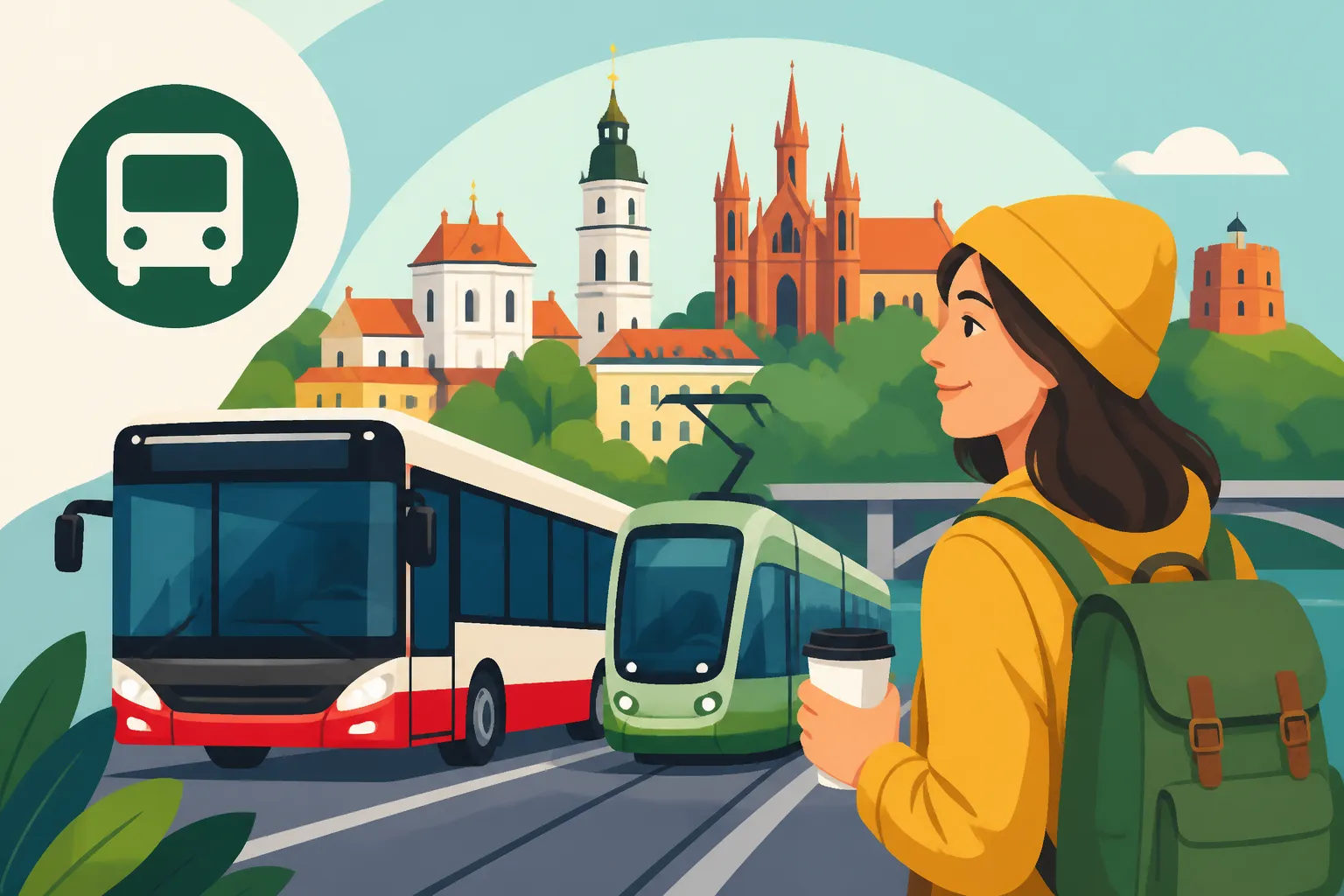
In cities like Vilnius and Kaunas, you'll quickly become familiar with the workhorses of the public transport system: buses and trolleybuses. Trolleybuses, with their overhead electric lines, are a distinctive feature in these cities, offering a greener, quieter ride on fixed routes. Buses, on the other hand, cover a broader range, including suburban areas and routes where trolleybus infrastructure isn't available. They are often the most frequent option, especially during peak hours, and connect all corners of the city.
The networks are designed to be quite comprehensive, ensuring that most residential areas are well-served. For instance, in Vilnius, buses and trolleybuses run from early morning until late at night, often with reduced schedules on weekends and public holidays. Regional routes, handled by local bus companies, extend this reach into smaller towns and villages, making it possible to explore the countryside without a car. These regional buses often depart from central bus stations (autobusų stotis) in major cities, acting as a crucial link for many commuters and travelers. It’s important to remember that while the major city transport might be quite modern, some regional buses can be older, offering a more rustic travel experience.
The Rise of Ride-Sharing and Taxis
Beyond the traditional public transport, Lithuania has embraced ride-sharing services with open arms, making it incredibly convenient for expats who prefer door-to-door service or are out late at night. Apps like Bolt and Uber are widely used, especially in Vilnius and Kaunas, offering competitive prices and the ease of cashless payment. You simply download the app, link your payment method, and off you go. This can be a godsend when you're still grappling with the language or if you have heavy groceries.
Taxis are also readily available, though you might find them slightly more expensive than ride-sharing services, especially if you hail one directly on the street rather than booking through an app. If you do opt for a traditional taxi, always ensure the meter is running. Most reputable taxi companies also have their own apps, which can be a reliable alternative to international ride-sharing platforms. For those moments when you just want to get somewhere without worrying about bus schedules or transfers, these services offer a welcome alternative. They can be particularly useful when you're first arriving and dealing with luggage, saving you the hassle of figuring out bus routes from the airport or train station.
Navigating Train Travel Across Lithuania
While buses might dominate urban transport, trains offer a comfortable and often scenic way to travel between Lithuania’s major cities and some smaller towns. The national railway company, LTG Link, operates a network that connects key hubs like Vilnius, Kaunas, Klaipėda, and Šiauliai. Modern trains, including double-deckers on popular routes, provide a pleasant travel experience with amenities like Wi-Fi and power outlets. This can be a great option for longer journeys, allowing you to relax and enjoy the views of the Lithuanian countryside.
Train schedules are generally reliable, and tickets can be purchased online through the LTG Link website, at train stations, or sometimes even directly on board (though this can be slightly more expensive). For expats planning weekend trips or exploring beyond their immediate city, understanding the train network is invaluable. It’s also worth noting that international routes connect Lithuania to neighboring countries like Latvia and Poland, though these services might be less frequent. When planning a trip, consider checking out the details on Understanding Train Travel with LTG Link in Lithuania. Trains are often faster than buses for intercity travel, especially between Vilnius and Kaunas, making them a popular choice for commuters and day-trippers alike.
Getting Your Tickets and Passes in Major Cities
One of the biggest initial hurdles for expats is figuring out the local ticketing system. Each major city in Lithuania has its own distinct method for public transport payments, but they generally involve either a rechargeable electronic card or mobile apps. Cash payments are still an option on some routes or in smaller towns, but increasingly, digital is king.
Vilnius: The Vilniečio Kortelė System
In Lithuania’s capital, Vilnius, the cornerstone of public transport payment is the Vilniečio Kortelė (Vilnius Resident Card). This reloadable electronic card is essential for anyone planning to use buses and trolleybuses regularly. You can purchase the physical card itself at various points, including newsstands (Lietuvos Spauda), Narvesen shops, and customer service centers of the transport operator, JUDU (formerly Susisiekimo Paslaugos). The card usually costs a couple of euros for the initial purchase.
Once you have your Vilniečio Kortelė, you need to top it up with credits (e-money) or specific time-based tickets. You can do this at the same places where you buy the card, or increasingly conveniently, through dedicated mobile apps like m.Ticket (also used in Kaunas, but specifically adapted for Vilnius here) or the JUDU app. With these apps, you can easily buy single tickets, 30-minute, 60-minute, 1-day, 3-day, 10-day, 30-day, or even annual passes. The digital approach offers immense flexibility, allowing you to activate tickets only when you need them and avoiding the scramble for loose change. It's a system designed for convenience, though remembering to activate your ticket before boarding is crucial. For a deep dive into its usage, you might want to check out How to Use the Public Transport Card (Vilniečio Kortelė) in Vilnius.
Kaunas: The Kauno Viešojo Transporto Kortelė and M.Ticket
Kaunas, Lithuania's second-largest city, offers a similar electronic card system, the Kauno Viešojo Transporto Kortelė (Kaunas Public Transport Card). Much like its Vilnius counterpart, this card is your gateway to seamless travel on Kaunas's buses and trolleybuses. You can acquire these cards and top them up at kiosks, post offices, and specific customer service points. The initial card purchase is a small one-time fee, and then you load it with either e-money for single rides or various time-based passes.
However, Kaunas also has a strong emphasis on digital ticketing via the m.Ticket mobile app. This app is incredibly popular and allows you to buy and activate tickets directly from your smartphone. You just select the type of ticket (e.g., a single ride, a day pass), confirm your purchase, and activate it when you board. This flexibility means you don't always need a physical card, especially if your usage is sporadic. For many expats, particularly those who are tech-savvy, the m.Ticket app becomes their go-to option, simplifying the process of payment and ticket activation. It's a great example of how technology is making life a little easier for us here, cutting down on paper tickets and fiddly change.
Klaipėda and Other Regional Cities: E-Tickets and Cash Options
While Vilnius and Kaunas boast their sophisticated electronic card systems, public transport in Klaipėda and smaller regional cities often combines e-ticketing with more traditional cash options. In Klaipėda, for instance, you can still purchase paper tickets directly from the driver when boarding a bus. This is usually a slightly more expensive option than pre-purchased tickets but offers convenience for occasional users or those who haven’t yet acquired an electronic card. Klaipėda also has its own public transport card system, the Klaipėdos miesto transporto kortelė, which can be bought and topped up at kiosks and various retail outlets.
In many smaller towns across Lithuania, cash payment directly to the driver remains the primary or even sole method for purchasing tickets. Always try to have exact change or small denominations, as drivers might not always have change for large bills. This is a common practice in many parts of Europe, and it's something to remember when venturing outside the main urban centers. For longer intercity bus routes, tickets are usually bought at the bus station (autobusų stotis) ticket counter, or increasingly, online through the bus operator's website. Having a reliable mobile data plan, perhaps with something like an Airalo eSIM, can be incredibly helpful for accessing these online ticketing platforms on the go, especially when you're not in an area with Wi-Fi.
Decoding Public Transport Etiquette and Rules
Navigating public transport in a new country isn't just about understanding routes and tickets; it's also about knowing the unwritten rules and etiquette. While Lithuanians are generally polite and reserved, there are certain expectations for how passengers should behave. Understanding these can make your daily commute smoother and help you blend in more easily.
Boarding, Validating, and On-Board Conduct
When boarding a bus or trolleybus in Lithuania, the general rule is to enter through the front door. However, if you have a prepaid card or mobile ticket, you can sometimes use other doors, especially if the front is congested. The crucial step is always to validate your ticket immediately upon boarding. If you're using a Vilniečio Kortelė or Kauno Viešojo Transporto Kortelė, you tap it against the electronic reader. If you’re using a mobile app like m.Ticket, you activate it before or as you board. Failing to validate is the same as traveling without a ticket, and it can lead to hefty fines, which we'll discuss in a moment.
Once on board, common courtesy prevails. Offer your seat to elderly passengers, pregnant women, or those with small children. Avoid loud conversations on your phone or playing music without headphones. Keep bags on your lap or on the floor rather than on an empty seat beside you, especially during busy times. During peak hours, spaces can become quite limited, so be mindful of your personal belongings and fellow passengers. You'll notice people generally keep to themselves, often quiet and engrossed in their phones or books. Releasing your backpack and holding it in front of you during crowded periods is also a polite gesture.
Accessibility and Special Needs
Lithuania's public transport system is making strides towards greater accessibility, though it's still an ongoing process. Many newer buses and trolleybuses in cities like Vilnius and Kaunas are equipped with ramps for wheelchair users and designated areas for buggies or prams. Look for the universal accessibility symbol on the side of the vehicle. Drivers are usually helpful in deploying ramps, but it's always a good idea to signal your need clearly as the vehicle approaches.
However, older vehicles, particularly on less busy routes or in smaller towns, might not have these features. Station platforms and stops are also slowly being upgraded to be more accessible, with tactile paving for visually impaired individuals and clear signage. If you have specific accessibility needs, it's advisable to check the local transport authority's website or contact their customer service for the most up-to-date information on accessible routes and services. The system is improving, but it’s still important to be aware that consistency can vary depending on the city and the specific route you are taking.
Fines, Inspections, and Avoiding Trouble
This is where things can get a bit stressful if you’re not careful. Public transport in Lithuania, especially in the larger cities, employs a team of ticket inspectors (kontrolė) who regularly check for valid tickets. These inspectors often operate in plain clothes and can appear suddenly, particularly when the bus or trolleybus is at a stop, blocking exits to ensure everyone is checked. They are usually identifiable by an ID badge once they start their checks.
If you are caught without a valid, activated ticket, or if your card has insufficient funds, you will face a fine. The fines can be quite significant, often ranging from €10 to €50 or more, depending on the municipality and the severity of the infraction. Arguing with inspectors is generally fruitless and can sometimes lead to further complications. The best way to avoid this unpleasant experience is simply to always ensure your ticket is valid and activated before or immediately upon boarding. It's a small habit to develop, but it saves you a lot of hassle and money in the long run. Remember, ignorance of the rules is not an excuse. For any official business in Lithuania, including paying fines, having your What Documents Do I Need to Get an Asmens Kodas in Lithuania? is essential.
Planning Your Journey: Apps and Resources
In this digital age, having the right tools at your fingertips can transform your public transport experience from a confusing maze to a smooth, predictable journey. Lithuania, particularly its larger cities, has embraced technology to make commuting easier for everyone, including expats.
Essential Mobile Apps for Real-Time Information
Forget standing at a bus stop squinting at faded paper schedules. Mobile apps are your best friend for navigating public transport in Lithuania. The most commonly used and highly recommended apps include:
- Trafi: This app is a real gem, popular across the Baltics and beyond. Trafi provides real-time public transport schedules, live tracking of buses and trolleybuses on a map, and excellent route planning capabilities. You simply input your starting point and destination, and it will give you the fastest and most convenient options, including estimated travel times and transfer points. It’s incredibly intuitive and often incorporates walking directions to and from stops.
- m.Ticket: While primarily a ticketing app, m.Ticket also offers schedule information and helps you locate nearby stops. As mentioned, it's widely used in both Vilnius and Kaunas for purchasing and activating digital tickets, making it a dual-purpose tool.
- JUDU (Vilnius) / Kauno Viešasis Transportas (Kaunas): These are the official apps for the respective city transport authorities. They often provide the most accurate and up-to-date information regarding schedules, service disruptions, and changes to routes. While perhaps not as user-friendly for route planning as Trafi, they are indispensable for official announcements.
Having one or more of these apps downloaded and ready to go will dramatically simplify your daily commute. Just make sure you have a reliable internet connection. If you're still sorting out your local mobile plan, an eSIM from providers like Airalo can be a lifesaver for immediate data access. Having constant access to data is paramount for navigating schedules and ensuring you don't miss your stop, particularly when you're exploring unfamiliar parts of the city. For more on staying connected, check out How to Choose a Mobile and Internet Provider in Lithuania.
Official Websites and Information Hubs
Beyond mobile apps, official websites are invaluable resources for detailed information, particularly for planning longer trips or understanding policy changes.
- JUDU (Vilnius): The official website for Vilnius public transport (judu.lt) is comprehensive, offering information in both Lithuanian and English. You can find detailed route maps, schedules, news about service changes, and information on purchasing and topping up
Vilniečio Kortelė. - Kauno Viešasis Transportas (Kaunas): The Kaunas public transport website (kvt.lt) serves a similar purpose, providing schedules, route details, and information on their ticketing system.
- LTG Link: For train travel, the LTG Link website (ltglink.lt) is the definitive source for purchasing tickets, checking timetables, and exploring routes across Lithuania. They also offer information on international train connections.
- Autobusų Stotis (Bus Stations): For intercity bus travel, the websites of the main bus stations (e.g., vilniausautobusustotis.lt, kaunoautobusustotis.lt) provide comprehensive schedules and often allow online ticket purchases for various bus operators.
These websites are excellent for pre-trip planning, especially when you need to understand routes that might involve multiple transfers or longer journeys. They also serve as official communication channels for any major disruptions or changes to service, so it’s always a good idea to consult them directly for the most reliable information.
Multimodal Travel and Connecting Services
Lithuania's transport infrastructure is increasingly designed to facilitate multimodal travel – combining different modes of transport for a single journey. This means you might take a bus to a train station, then a train to another city, and finally another bus to your ultimate destination. Many apps, like Trafi, are great at suggesting these combined routes.
Cities are also developing more bike-sharing schemes (e.g., Cyclocity in Vilnius) and electric scooter rentals (Bolt, CityBee), which can be excellent for covering short distances or the "last mile" from a bus stop to your final destination. These are often integrated into payment apps or require their own separate apps. For instance, you might hop off a trolleybus and grab an electric scooter for a quick ride to your office. Furthermore, car-sharing services like CityBee and Spark are popular options, providing cars by the minute, hour, or day, offering flexibility for those who occasionally need a car without the commitment of ownership. If you're someone who enjoys the freedom of having a car without actually owning one, these options can be very attractive. They're definitely something to consider if you've been used to Driving in Lithuania: Licences, Registration and Rules for Expats (2027) in your home country.
Specific City Guides: Vilnius, Kaunas, and Klaipėda
Each of Lithuania's major cities has its own distinct public transport character, largely shaped by its geography and urban development. Understanding these nuances can make your daily commuting much less stressful.
Vilnius: A Deeper Dive into Routes and Key Hubs
Vilnius, with its sprawling landscape and historical Old Town, relies heavily on a dense network of buses and trolleybuses. The city center, particularly areas like Gedimino Prospektas and the Old Town, are well-served, but you'll find routes extending far into the residential districts, industrial parks, and even to the airport. The main transport hub is generally considered to be the area around the central train station (Vilniaus geležinkelio stotis) and bus station (Vilniaus autobusų stotis), which are conveniently located next to each other. From here, you can catch numerous city routes, intercity buses, and trains.
Another crucial hub is the area around Konstitucijos Prospektas, the modern business district, which sees a high frequency of buses and trolleybuses connecting commuters from different parts of the city. While the Old Town is mostly pedestrian-friendly, several key bus and trolleybus routes skirt its edges, providing easy access to its many attractions. Understanding the route numbers and their general directions is key; for example, many routes that include "Centro" or "Stotis" in their destination are likely heading towards the city center or the main stations. During your first few weeks, I highly recommend using the Trafi app constantly, until you build up a mental map of the most common routes you'll use for work or errands, like going to the supermarket near your The Complete Guide to Renting an Apartment in Lithuania (2027).
Kaunas: Exploring the Trolleybus Network and Beyond
Kaunas, known for its interwar modernist architecture and the confluence of the Nemunas and Neris rivers, boasts an impressive trolleybus network that covers much of the city. These electric vehicles are a distinctive part of Kaunas's public transport identity, often celebrated for their environmental benefits and efficiency on certain routes. The trolleybus network is complemented by a comprehensive bus system that extends to areas not covered by the electric lines, including further out into residential zones and industrial areas.
The main hub in Kaunas is again centered around the Kaunas Bus Station (Kauno autobusų stotis) and the Kaunas Train Station (Kauno geležinkelio stotis), both located relatively close to the city center. From these points, you can access numerous city routes as well as intercity connections. The main pedestrian street, Laisvės alėja, is served by several bus and trolleybus stops on its periphery, offering good access to the city's commercial and cultural heart. The m.Ticket app is particularly popular here, allowing for quick and easy digital purchases that streamline the travel experience. The system in Kaunas often feels a bit more compact than Vilnius, which can make it slightly easier to grasp for newcomers.
Klaipėda: Buses and Ferry Connections
Klaipėda, Lithuania's primary port city, has a public transport system that, while smaller than Vilnius or Kaunas, is efficient and well-suited to its urban layout. The main mode of transport here is the bus, with a network that covers the city center, residential districts, and industrial areas, including routes out to the popular beach resort of Palanga during summer. Buses are generally modern and frequent, especially on main arteries.
What sets Klaipėda apart is its crucial connection to the Curonian Spit (Kuršių Nerija) and Neringa, including the towns of Nida and Juodkrantė. Public transport here is uniquely multimodal: city buses connect to the Old Ferry Terminal (Senoji perkėla) and the New Ferry Terminal (Naujoji perkėla), from where car and passenger ferries depart regularly. These ferries are an integral part of daily life for residents and a must-do for tourists. Understanding the bus routes that lead to these ferry terminals is essential for anyone wanting to explore the stunning natural beauty of the Spit, which is a UNESCO World Heritage site. Unlike the capital, Klaipėda's system often allows for cash payments directly to the driver, offering a slight throwback to simpler times, though its own electronic card system is also widely used.
Beyond City Limits: Intercity and Regional Travel
While getting around your new city is paramount, Lithuania is a country worth exploring. The good news is that its intercity transport network is quite robust, making it easy to venture beyond your local municipality using a combination of long-distance buses and trains.
Long-Distance Buses: The Lifeline Between Cities
For many Lithuanians and expats alike, long-distance buses are the go-to option for intercity travel. The network is extensive, connecting virtually every town and city in the country, from the bustling capital of Vilnius to smaller, charming regional centers. Multiple private bus companies operate on these routes, meaning you often have several departures a day between major cities, offering flexibility in your travel plans.
Major bus stations (autobusų stotis) in cities like Vilnius, Kaunas, and Klaipėda serve as central hubs for these long-distance journeys. You can purchase tickets directly at the station ticket counters, but it's often more convenient and sometimes cheaper to buy them online in advance. Websites like autobusubilietai.lt or the individual bus company websites (e.g., Kautra, Ecolines, Lux Express) allow you to compare prices and schedules. Travel times are generally reasonable, and buses are usually comfortable, often equipped with Wi-Fi and air conditioning. They're also often the only direct public transport option for reaching smaller towns not served by the train network. If you’re looking to travel economically and efficiently around the country, these buses will become your best friend.
Train Travel: Scenic Routes and Major Lines
As mentioned before, LTG Link's train network offers a comfortable alternative to buses, particularly for popular routes such as Vilnius-Kaunas, Vilnius-Klaipėda, and Vilnius-Šiauliai. The train journey between Vilnius and Kaunas is particularly efficient, with modern double-decker trains making the trip in just over an hour. This is a very popular route for commuters, students, and day-trippers due to its speed and comfort.
While the train network isn't as extensive as the bus network in terms of sheer coverage of smaller towns, it provides a more relaxed and often more scenic travel experience. Tickets can be purchased online through the LTG Link website, at train station ticket offices, or via their mobile app. For those who appreciate comfort, a bit more legroom, and a chance to truly unwind during their journey, trains are an excellent choice. It's also a great way to meet fellow travelers or simply enjoy the quiet contemplation as the Lithuanian landscapes roll by. Remember to check Understanding Train Travel with LTG Link in Lithuania for more detailed information on routes and services.
Car-Sharing and Rental Options for Explorers
Sometimes, public transport simply can’t get you where you need to go, especially if you’re planning to explore remote national parks, visit relatives in a hard-to-reach village, or go on a weekend road trip. This is where car-sharing services and traditional car rentals come into play.
Car-sharing platforms like CityBee and Spark are incredibly popular in Vilnius, Kaunas, and Klaipėda. They offer a flexible solution for short-term car usage – you can rent a car by the minute, hour, or day using a smartphone app. You simply locate an available car near you, unlock it with the app, drive, and park it within the designated operational zone. This is fantastic for quick errands, day trips, or when you need to transport something bulky. The cost often includes fuel and insurance, making it a very convenient pay-as-you-go option. For those who've recently used Sirelo to help with their international move, having a car-sharing option for initial furniture runs or setting up your apartment can be a huge relief.
For longer trips or more specialized vehicle needs, traditional car rental companies (both international chains and local providers) are available at airports and in major city centers. Booking in advance, especially during peak tourist season, is always recommended. While not strictly public transport, these options offer the freedom and flexibility that public networks sometimes lack, perfectly complementing your commuting strategy. They allow you to truly discover the hidden gems of Lithuania at your own pace.
Tips for Expats: Making Public Transport Easier
Even with all the information at your fingertips, adapting to a new public transport system still has its learning curve. Expats often pick up a few tricks and tips over time that can make your life a lot easier.
Language Barriers and Practical Phrases
While English is increasingly spoken, especially among younger generations and in tourist-heavy areas, don't expect everyone in Lithuania to be fluent, especially drivers or older residents. Learning a few basic Lithuanian phrases related to public transport can go a long way in making your experience smoother and showing respect for the local culture.
Here are a few useful phrases:
- Atsiprašau: Excuse me (for getting past someone)
- Ačiū: Thank you
- Prašau: Please / You’re welcome
- Bilietą prašau: A ticket, please (if buying from driver)
- Kiek kainuoja?: How much does it cost?
- Stotelė: Stop (as in, a bus stop)
- Kur yra…?: Where is…?
- Vilniečio Kortelė: Vilnius Resident Card (useful to know when buying)
Most importantly, don't be afraid to ask for help, even if it's with gestures or broken English. Lithuanians, while sometimes reserved, are generally kind and willing to assist if they can. Having a translation app on your phone can also be a lifesaver for those trickier conversations. It's all part of the adventure of The Complete Guide to Moving to Lithuania: Your First 90 Days (2027).
Staying Connected on the Go
A reliable internet connection is crucial for navigating public transport effectively in Lithuania. As discussed, mobile apps are indispensable for real-time schedules, route planning, and digital ticketing. This means ensuring your smartphone is always charged and you have sufficient data.
If you’re a new arrival and haven't yet sorted out a local SIM card and mobile plan, consider using an eSIM from providers like Airalo. This allows you to get immediate data access upon landing, without having to find a local store or deal with language barriers. You can usually purchase a data plan for a specific duration or data amount, which is perfect for those first few weeks. Once settled, you can then explore local providers for a more permanent solution, as outlined in How to Choose a Mobile and Internet Provider in Lithuania. Many buses and trains also offer free Wi-Fi, but its reliability can vary, so don't count on it as your sole source of connectivity.
Cost-Saving Strategies for Regular Commuters
Public transport in Lithuania is generally affordable, especially compared to Western European countries, but costs can add up if you're commuting daily. There are several ways to save money:
- Monthly or Annual Passes: If you’re using public transport regularly for work or study, investing in a 30-day or even an annual pass will almost always be cheaper than buying individual tickets. Calculate your expected usage and compare the costs. Many employers also offer subsidies for public transport passes as a perk.
- Student/Youth Discounts: If you're a student enrolled in a Lithuanian educational institution, you're usually eligible for significant discounts on public transport passes. Make sure you get your student ID (
Lietuvos studento pažymėjimas) as soon as possible, as you'll need it to prove your status. The same often applies to pupils and sometimes to those under a certain age. - Electronic Card vs. Cash: Always use your electronic card or mobile app for tickets whenever possible. Cash tickets bought directly from the driver are typically more expensive per ride.
- Check The Complete Guide to Cost of Living in Lithuania for Expats (2026): Understanding overall living costs can help you budget for transport and other essentials.
- Walk or Cycle for Short Distances: For short distances, consider walking or cycling. Many Lithuanian cities, especially Vilnius, are becoming increasingly bike-friendly, and it's a great way to stay healthy and explore your surroundings. It's also free!
By being strategic with your ticket purchases and leveraging available discounts, you can significantly reduce your public transport expenses, leaving more money for exploring this beautiful country or, let's be real, for that fancy coffee you've been eyeing.
Disclaimer
The information provided in this guide is intended for general informational purposes only and is subject to change. While we strive to keep the content up-to-date and accurate, public transport rules, prices, and services in Lithuania can evolve. It is always recommended to consult official municipal transport websites, the Lithuanian Migration Department, or other relevant authorities for the most current and specific information applicable to your individual situation.