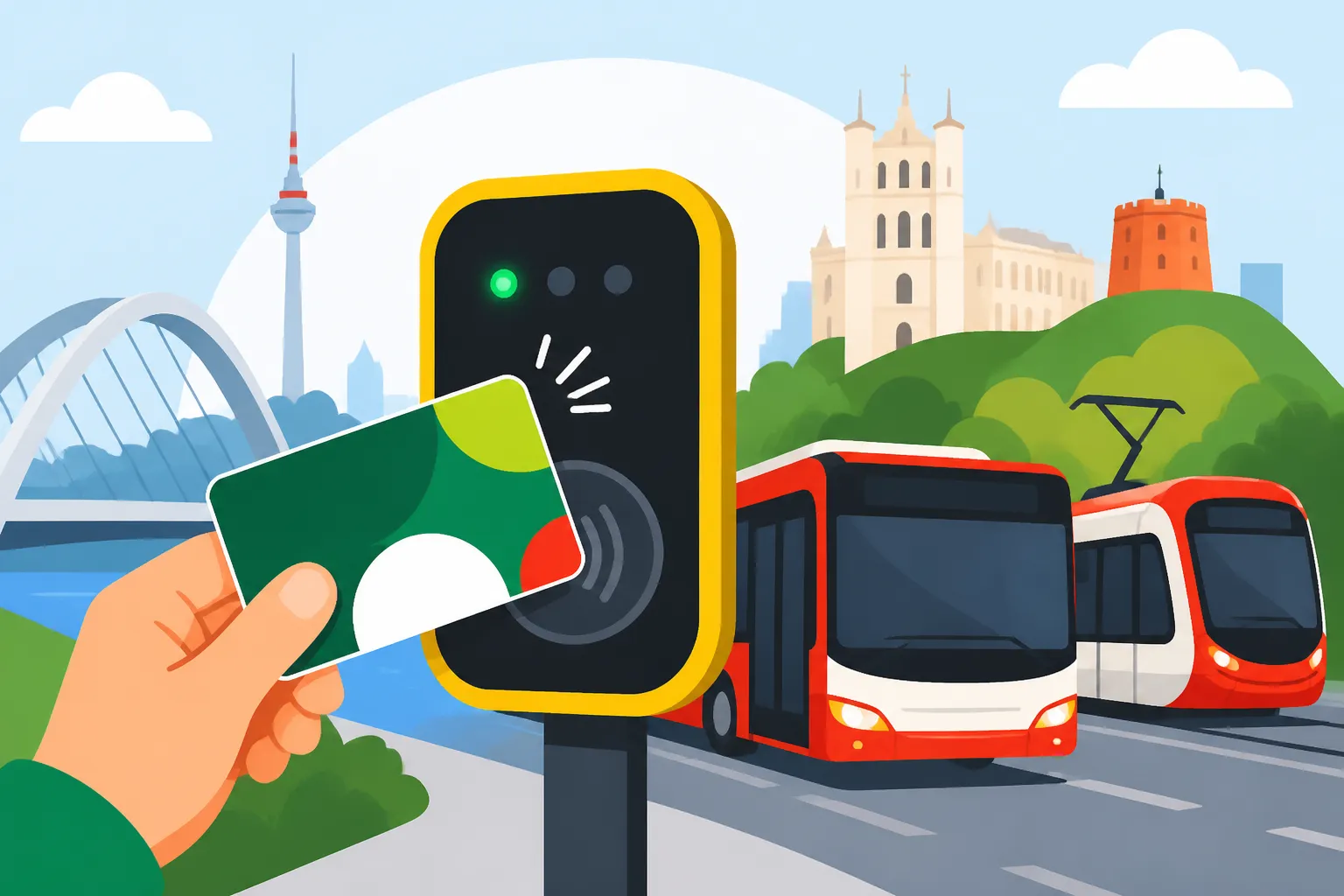
How to Use the Public Transport Card (Vilniečio Kortelė) in Vilnius
Stepping off the plane into a new city, especially one like Vilnius with its beautiful, winding streets and sometimes confusing public transport system, can feel like a mini-adventure in itself. Many expats and tourists quickly discover that while Google Maps is a lifesaver, actually paying for your ride and understanding the local nuances can be a bit of a head-scratcher. This guide is here to untangle the mystery of the Vilniečio Kortelė – your indispensable public transport card – making your journeys across Lithuania's capital smooth, simple, and stress-free.
Understanding the Vilniečio Kortelė: Your Gateway to Vilnius
When you first arrive in Vilnius, you might be tempted to just jump on a bus and figure it out. But trust me, fumbling for exact change or trying to explain your destination in a language you’re just learning can be a real headache. That’s where the Vilniečio Kortelė, or Vilnius Card, comes in. It’s not just a piece of plastic; it’s your key to unlocking the city’s extensive network of buses and trolleybuses, making every trip easier and more economical.
What Exactly Is It and Why You Need It?
The Vilniečio Kortelė is an electronic, reusable smart card designed for convenient payment on Vilnius public transport. Think of it as your digital wallet specifically for buses and trolleybuses. Instead of buying individual paper tickets for each journey, you load credit or time-based passes onto this card. For us expats, it’s an absolute game-changer. Why? First, convenience. No more scrambling for small coins, which can be surprisingly hard to come by when you’re new to the currency. Second, it's generally more cost-effective. Single paper tickets bought from the driver are typically more expensive than paying with the card. Third, it streamlines your daily life. Once you have it, you just tap and go.
I remember my early days, before I got my card, trying to calculate how many small coins I needed for a bus ticket, often holding up the line and feeling a bit flustered. The relief when I finally got my Vilniečio Kortelė was immense. It truly simplifies your commuting life, whether you’re heading to work, exploring Užupis, or doing your weekly grocery run. It’s also crucial for proving you have a valid ticket if a controller steps on board – a common occurrence, so don't risk a fine!
Where Can You Get Your Hands On One?
Alright, so you’re convinced you need one. The next logical question is, where do you actually buy this magical piece of plastic? Thankfully, they’re pretty widely available once you know where to look.
The most common places are:
- Spaudos Kioskai (Newsstands): These small kiosks are scattered throughout the city, often near bus stops or in high-traffic areas. They're usually marked clearly, and you can spot them by the newspapers, magazines, and snacks they sell. Just walk in and ask for a "Vilniečio Kortelė." The initial cost for the card itself is usually a small, one-time fee (currently around €1.50).
- Customer Service Centres: For a more comprehensive experience, or if you have specific questions, head to the Susisiekimo Paslaugos (Vilnius Public Transport Services) customer service centre. Their main office is conveniently located at Gedimino pr. 9A in the city centre. Here, staff can help you purchase the card, load it, and even register it to your name (more on why that’s a good idea later). While not all staff might speak fluent English, they are generally helpful, and with a bit of pointing and basic English, you should be fine.
- Larger Supermarkets: Some of the bigger supermarkets, like Maxima or IKI, might also sell and top up Vilniečio Kortelė at their customer service desks or even at regular checkout counters. Look for signs, or simply ask a staff member.
When you purchase the card, remember it's just the physical card. You'll need to immediately load it with some credit or a ticket package to make it usable. Don't worry, the staff at kiosks or customer service centres can usually help you with this right away, guiding you through the options for topping up your initial balance.
Loading Up Your Vilniečio Kortelė: Tickets and E-Wallet
Once you have your physical card, the real power comes from loading it with the right kind of "fuel." Vilnius public transport offers a flexible system that caters to different travel habits, from occasional rides to daily commutes. Understanding these options will help you save money and avoid unnecessary stress.
Types of Tickets Available
The Vilniečio Kortelė system offers several types of tickets, allowing you to choose what best fits your travel needs. These are generally categorised into time-based tickets and an e-wallet system.
- Time-Based Tickets: These are popular for regular commuters or those planning multiple trips within a short period. You can purchase tickets valid for specific durations once activated:
- 30-minute tickets: Once you tap your card, you have 30 minutes to travel, including transfers between different buses and trolleybuses. If your journey exceeds 30 minutes, you need to tap again, and it will deduct another ticket.
- 60-minute tickets: Similar to the 30-minute ticket, but offering a full hour of travel and transfers from the first tap. This is great for slightly longer journeys or if you anticipate needing to switch lines.
- Daily, Multi-Day, and Monthly Passes: For more intensive use, you can buy passes for 1-day, 3-days, 10-days, or even a full calendar month. These allow unlimited travel within their validity period. For instance, a 30-day pass is fantastic if you're commuting daily. It provides peace of mind, knowing you can hop on and off as much as you need without constantly worrying about individual taps or an expiring balance.
It's important to remember that these time-based tickets are activated upon your first tap. For example, if you load a 3-day ticket, it starts counting down from the moment you first tap your card on a reader inside a vehicle. Keep this in mind if you're buying it in advance.
While not directly relevant for every expat, it's worth noting that Vilnius public transport also offers various discounts for students (with a valid Lithuanian student ID), seniors, and disabled persons. If you eventually qualify for these, make sure to look into them as they can significantly reduce your travel costs.
The E-Wallet Functionality (E-Bilietas)
Beyond the fixed-duration tickets, the Vilniečio Kortelė also features an "electronic money" or "e-wallet" function. This is essentially a stored value that you load onto the card, and then each ride costs a specific amount, which is deducted from your balance when you tap.
Here’s how it works: you top up your card with a certain amount of euros, say €10 or €20. When you board a bus or trolleybus and tap your card on the reader, the system automatically deducts the cost of a single standard fare (e.g., around €0.65 to €0.70, depending on the current rates and if you choose a 30-min or 60-min type of ticket deduction). If you make a transfer within the time limit of your deducted ticket, it doesn't charge you again. This system is particularly useful for those who travel infrequently or whose travel patterns are unpredictable.
The main advantage of the e-wallet is its flexibility. You’re not committing to a specific duration, and you only pay for what you use. The downside is that if you make many short trips in a day, buying a day pass might actually be cheaper. It truly depends on your individual usage. For someone who might only use public transport once or twice a week, the e-wallet is often the most sensible and economical choice. However, if you find yourself using public transport almost every day, especially for multiple journeys, a monthly pass will likely save you more. You can always check the current rates on the Susisiekimo Paslaugos website or via apps like Trafi to make an informed decision.
Where and How to Top Up Your Card
Once your Vilniečio Kortelė is running low, or if you need to load a new monthly pass, you have a few convenient ways to top it up. This flexibility is really helpful, especially when you're still getting used to things here.
-
Physical Top-Up Points: These are the same places where you can initially purchase the card:
- Spaudos Kioskai: Most newsstands will happily top up your card. Just hand them your Vilniečio Kortelė and tell them how much money you want to add or which pass you want to buy (e.g., "30 dienų bilietas" for a 30-day pass, or "papildyti 10 eurų" for a €10 top-up).
- Customer Service Centres: Again, the Susisiekimo Paslaugos centres (like the one on Gedimino pr. 9A) are a reliable option. They can assist with any top-up or ticket purchase and answer more complex questions.
- Some Supermarkets: Larger Maxima or IKI stores often have designated customer service points where you can top up.
-
Online Top-Up: This is by far the most convenient method once you’re set up, allowing you to top up from the comfort of your home or while on the go.
- Trafi App: The Trafi app is not just for route planning; it also allows you to top up your Vilniečio Kortelė directly. You link your card number to the app, choose your desired amount or pass, and pay using a linked bank card. This is incredibly useful for expats who are comfortable with mobile payments.
- Official Website: The Susisiekimo Paslaugos website (www.vilniustransport.lt) also offers an online top-up service. You’ll need to input your card number and select your purchase. Payment is usually made via Lithuanian bank links (such as Swedbank, SEB, Luminor), or often with international credit/debit cards.
A word of caution for online top-ups: sometimes there’s a short delay (a few minutes to an hour) between the online purchase and when the credit actually becomes active on your physical card. So, if you've just topped up online, give it a little time before you hop on the bus, or keep a small emergency balance just in case. Before you even think about navigating Vilnius on public transport, you'll want to make sure you're connected. Having a reliable internet connection is crucial for using apps like Trafi or Google Maps to plan your routes and track buses in real-time. Services like Airalo offer convenient eSIM options for instant data, meaning you don't have to scramble for a local SIM card right after landing, which can be a huge relief. This is especially true when you're sorting out initial payments or trying to connect to local services. Setting up your How to Choose a Mobile and Internet Provider in Lithuania early will make a big difference.
Riding the Waves: Using Your Card on Vilnius Public Transport
So, you’ve got your Vilniečio Kortelė, and it's loaded up with a fresh ticket or some e-wallet credit. Now comes the exciting part: actually using it to zip around Vilnius! The system is quite straightforward once you get the hang of it, but there are a few key things to remember to ensure a smooth journey and avoid any unwanted fines.
Tapping On and Off: The Basics
When you board any bus or trolleybus in Vilnius, you'll see small, electronic card readers usually located near each door.
- Tapping On is Crucial: The absolute golden rule is to tap your Vilniečio Kortelė on one of these readers every single time you enter a vehicle. This action validates your ticket or deducts a fare from your e-wallet. You’ll hear a beep and see a green light or a confirmation message on the screen, indicating a successful validation. If you hear a different sound or see a red light, it means your card isn't valid or doesn't have enough funds, and you need to sort it out immediately.
- No Need to Tap Off (Usually): For most standard journeys using time-based tickets (30-min, 60-min, or daily/monthly passes), you generally do not need to tap off when you exit the vehicle. The system simply validates your entry and the clock starts ticking for your purchased duration. If you're using the e-wallet function, some systems might be set up to allow tapping off for more accurate fare calculation (e.g., if different zones were implemented), but in Vilnius, for typical city travel, tapping on entry is usually sufficient. Always err on the side of caution and tap on! If you tap multiple times unintentionally, it usually won't double-charge you within the same validation period, but it's best to tap once and wait for the confirmation.
Newcomers can get flustered, unsure if they need to tap again for a transfer. If you’re within the time limit of your initially validated 30 or 60-minute ticket, you simply tap on the new vehicle, and it will recognise your existing valid ticket without deducting another fare. It’s quite intelligent!
Understanding Ticket Validation and Controls
Unlike some cities where ticket checks are rare, Vilnius takes its public transport validation seriously. You'll encounter ticket controllers, known locally as kontrolieriai, quite frequently.
- The Kontrolieriai: These are uniformed (or sometimes plainclothes) individuals who board buses and trolleybuses at random stops to check everyone’s tickets. When they board, they often block the doors to prevent anyone from tapping their card last-minute. They carry mobile card readers and will ask to see your Vilniečio Kortelė. You present your card, they tap it on their device, and it confirms whether you have a valid, active ticket.
- Consequences of Not Validating: This is where the "why you need to tap on" becomes critical. If your card doesn't show an active, valid ticket (meaning you forgot to tap, your pass expired, or you don't have enough e-wallet funds), you will be issued a fine (bauda). These fines can be substantial, much higher than the cost of a regular ticket, and frankly, a very unpleasant experience. They are not usually very flexible with excuses, as it’s your responsibility to ensure you have a valid ticket.
- What Happens If Your Card is Empty or Invalid: If your card simply doesn't have funds, the reader will usually give a red light and a distinct sound. In this situation, you have a few options: quickly try to top up online if you have the app, or if desperate, purchase a paper ticket from the driver (though this is more expensive and not always guaranteed, as drivers sometimes don't carry change or tickets). The best practice is to regularly check your balance, especially if you're not on a monthly pass, to avoid this last-minute scramble.
Always keep your Vilniečio Kortelė handy when traveling, even if you’re just going one stop. Those kontrolieriai appear when you least expect them!
Navigating Routes and Schedules
Beyond the card itself, knowing how to navigate the city's bus and trolleybus routes is key. Vilnius has an extensive and generally efficient public transport network.
- Using Apps is a Must: Forget paper maps; your smartphone will be your best friend.
- Trafi App: This locally developed app is superb. It provides real-time bus and trolleybus locations, estimated arrival times, route planning, and even allows you to top up your Vilniečio Kortelė as mentioned before. It's incredibly accurate and user-friendly.
- Google Maps: Google Maps is also excellent for planning routes, showing you which bus or trolleybus to take, where to transfer, and how long the journey will be.
- Public Transport Vilnius (Android/iOS): This is another popular alternative.
These apps will become indispensable parts of your daily life here, right up there with the Understanding the E-Sveikata E-Health System in Lithuania for healthcare management.
- Understanding Bus/Trolleybus Stop Signs and Schedules: At most major stops, you'll find information boards showing route numbers, their destinations, and estimated schedules. Many newer stops even have digital screens displaying real-time arrivals, which sync with the Trafi app. Buses and trolleybuses are clearly marked with their route number on the front and sides. Pay attention to the destination displayed on the front of the vehicle to ensure you're getting on the right one.
- Planning Your Journey: For those first few weeks, I highly recommend planning your route a little in advance, especially if you're heading to an unfamiliar part of the city. Use one of the apps, identify your stop, and know your route number. Don’t be afraid to ask a fellow passenger if you’re unsure – many Lithuanians, especially younger generations, speak English and are generally happy to help a lost expat. Having your The Complete Guide to Moving to Lithuania Your First 90 Days 2026 well-organised also includes knowing your way around transport from day one!
Troubleshooting and Advanced Tips for Expats
Even with the best intentions, things can sometimes go awry. Whether your card goes missing or you want to unlock advanced features, knowing how to troubleshoot and get the most out of your Vilniečio Kortelė will save you a lot of grief.
Lost, Stolen, or Damaged Cards
Losing your Vilniečio Kortelė can feel like a mini-disaster, especially if it had a decent amount of credit or a long-term pass loaded onto it. Here’s what you should do:
- If your card is registered: This is where registering your card (see next section) truly pays off. If your card is lost or stolen, and it's registered to your name, you can report it to Susisiekimo Paslaugos. They can block the old card and, crucially, transfer any remaining valid tickets or e-wallet balance to a new card. You'll need to purchase a new physical card, but you won't lose your money. This process usually involves visiting a customer service centre with your ID.
- If your card is not registered: Unfortunately, if your card is not registered, any credit or passes on it are generally lost when the card is gone. It's treated like cash – once it's gone, it's gone. This is a common expat frustration, as many don't realise the importance of registration initially. You'll need to buy a new card and load it from scratch.
- Damaged Cards: If your card is physically damaged and stops working, try taking it to a Susisiekimo Paslaugos customer service centre. If it's registered, they might be able to read the data and transfer your balance to a new card. If it's not registered, it might be harder, but it’s always worth asking. Sometimes, physical wear and tear simply mean it needs replacing, but your balance can often be saved if the card details are retrievable.
Registering Your Vilniečio Kortelė
I cannot stress this enough: register your Vilniečio Kortelė! It's a simple step that provides invaluable peace of mind.
-
Benefits of Registration:
- Balance Protection: As mentioned above, if your card is lost, stolen, or damaged, any remaining balance or active passes can be transferred to a new card.
- Online History and Management: Once registered, you can often view your travel history, top-up history, and current balance online via the Susisiekimo Paslaugos website or linked apps. This is great for budgeting and keeping track of your expenses, which is an important part of managing your The Complete Guide to Cost of Living in Lithuania for Expats 2026.
- Proof for Discounts: While typically done through student IDs, if there were ever specific expat discounts or other unique scenarios, having your card linked to your identity would be key.
-
Process for Registration:
- You’ll need to visit one of the Susisiekimo Paslaugos customer service centres, such as the main one at Gedimino pr. 9A.
- Bring your Vilniečio Kortelė and a valid form of identification, like your passport or Lithuanian Residence Permit.
- You'll likely also need your How to Get Your Asmens Kodas Personal Code and Why It Matters for Healthcare. The staff will help you fill out a short form linking your card to your personal details. The process is usually quick and straightforward, and the peace of mind it offers is well worth the five minutes of effort.
Using Public Transport Beyond the Vilniečio Kortelė
While the Vilniečio Kortelė is the primary and most convenient method for using public transport in Vilnius, it's good to know there are alternatives, especially in a pinch.
-
Alternative Payment Methods:
- QR Codes in Trafi App: The Trafi app allows you to purchase single-ride tickets directly through the app using QR codes. You simply buy the ticket on your phone, and then scan the QR code on the reader inside the bus/trolleybus. This is a fantastic option if you’ve forgotten your physical card or a friend needs a ticket.
- Buying Tickets from the Driver: You can still purchase single paper tickets directly from the bus or trolleybus driver. However, be aware that these tickets are usually more expensive than using the Vilniečio Kortelė. Drivers prefer exact change and may not always have change available, which can be awkward and hold up the line. It's really meant for emergencies rather than regular use.
-
Other Transport Options: Vilnius offers a variety of ways to get around, catering to different needs and budgets.
- Bolt Scooters and Bikes: These electric scooters and bicycles are widely available for rent through the Bolt app, particularly popular in the warmer months. They're great for short distances and exploring the city at your own pace.
- Ride-Sharing Services: Bolt and Uber are both operational in Vilnius, offering convenient taxi-like services through their respective apps. They're typically reliable and reasonably priced.
- Taxis: Traditional taxis are also available, though generally more expensive than ride-sharing apps.
- Long-Distance Buses: For travel outside Vilnius, Lithuania has a good network of intercity buses connecting major towns and cities. The main bus station (Vilniaus Autobusų Stotis) is located near the train station. If you’re planning a move to Vilnius, navigating public transport is often one of the first things you’ll tackle. Whether you’ve managed your move independently or used a platform like Sirelo to streamline your relocation, understanding local transport will save you a lot of hassle once you're on the ground. You can even combine public transport with Driving in Lithuania Licences, Registration and Rules for Expats 2026 if you eventually decide to get your own vehicle.
The Vilnius Public Transport Network: Beyond the Card Itself
Now that you're a pro at handling the Vilniečio Kortelė, let's zoom out a bit and look at the actual public transport network in Vilnius. It's a comprehensive system that serves the city well, but understanding its nuances can make your daily travels even more efficient and enjoyable.
Buses and Trolleybuses: Your Daily Commute
The backbone of Vilnius's public transport is its extensive network of buses (autobusai) and trolleybuses (troleibusai). These vehicles cover almost every corner of the city, from the bustling city centre to the quieter residential districts.
- Overview of the Network: Vilnius boasts over 80 bus routes and more than 20 trolleybus routes. Trolleybuses, powered by overhead electric lines, are common in the central areas, while buses tend to cover longer distances and areas not served by the electric grid. The network is generally well-connected, with numerous transfer points that allow you to switch lines seamlessly, especially if you're using a time-based ticket. In the city centre, buses and trolleybuses are quite frequent during peak hours, often running every few minutes on major lines. Even in less central areas, you usually won't wait more than 15-20 minutes during the day.
- Different Types of Routes:
- Regular Routes: These are your standard buses and trolleybuses, stopping at every designated stop along their route.
- Express Routes (marked with an 'G' for greitasis – fast): These routes make fewer stops, often skipping smaller ones, making them faster for longer journeys. For example, buses marked "2G" or "3G" are express routes that cover significant distances more quickly.
- Night Lines (N): Vilnius also operates a limited number of night buses on weekends, providing transport after regular services stop. These are invaluable for getting home safely after an evening out without resorting to expensive taxis. Always check the schedule for these, as they are less frequent.
- Tips for Using Them During Peak Hours: Just like any major city, Vilnius public transport can get quite crowded during morning and evening rush hours (roughly 7:30-9:00 AM and 4:30-6:00 PM). If you have the flexibility, try to avoid these times for a more comfortable ride. If you must travel during peak, be prepared for standing room only. Always give priority to elderly passengers or those with children, and be mindful of your belongings in crowded spaces. These small considerations are part of integrating into local life, just like knowing how to handle your The Expat Guide to Setting Up Utilities in Lithuania or finding How to Find and Rent Long-Term Accommodation in Lithuania.
Interacting with the Local System: Etiquette and Expectations
Using public transport isn't just about knowing the routes; it’s also about understanding the unwritten rules and cultural nuances.
- General Cultural Norms:
- Let People Exit First: Always allow passengers to alight before attempting to board. This is a universal courtesy, but particularly observed here.
- Offer Your Seat: It's customary to offer your seat to elderly individuals, pregnant women, or those with small children. Look around; if someone seems to need a seat more than you, offer it up.
- Keep Your Voice Down: While not strictly enforced, people generally keep conversations to a moderate level. Avoid loud phone calls or boisterous chatter.
- Bags and Backpacks: If the bus is crowded, consider taking off your backpack and holding it or placing it on your lap to avoid bumping into other passengers.
- Language Barriers and How Helpful Locals Can Be: While younger Lithuanians often speak excellent English, older generations might not. Don't let a language barrier deter you from asking for help if you're truly lost. A friendly smile and pointing to your destination on a map or phone can often elicit assistance. People are generally helpful, especially if they see you're genuinely trying to navigate. Just remember to be patient and polite.
- Reliability and Safety: Overall, Vilnius public transport is very reliable and safe. Buses and trolleybuses generally run on schedule, though traffic can sometimes cause delays. Services are well-maintained, and instances of crime are rare. As with any city, be aware of your surroundings and keep an eye on your belongings, but you can generally feel secure using the network at any time of day or night. It's another part of the generally pleasant and secure living experience here, which includes navigating things like the Understanding the E-Government Gateway Elektroniniai Valdžios Vartai in Lithuania for various administrative tasks.
By getting to grips with the Vilniečio Kortelė and understanding the ins and outs of Vilnius public transport, you’ll not only save money but also feel much more integrated and comfortable exploring all that this vibrant city has to offer. Enjoy your rides!
Disclaimer
The information provided in this guide is for general informational purposes only and is based on current practices and public information in Lithuania. While we strive to keep the content up-to-date and accurate, public transport rules, ticket prices, availability, and administrative procedures can change. We recommend checking the official Susisiekimo Paslaugos (Vilnius Public Transport Services) website or their customer service centres for the most current and precise information before making any decisions. We are not responsible for any inaccuracies, errors, or changes that may occur.