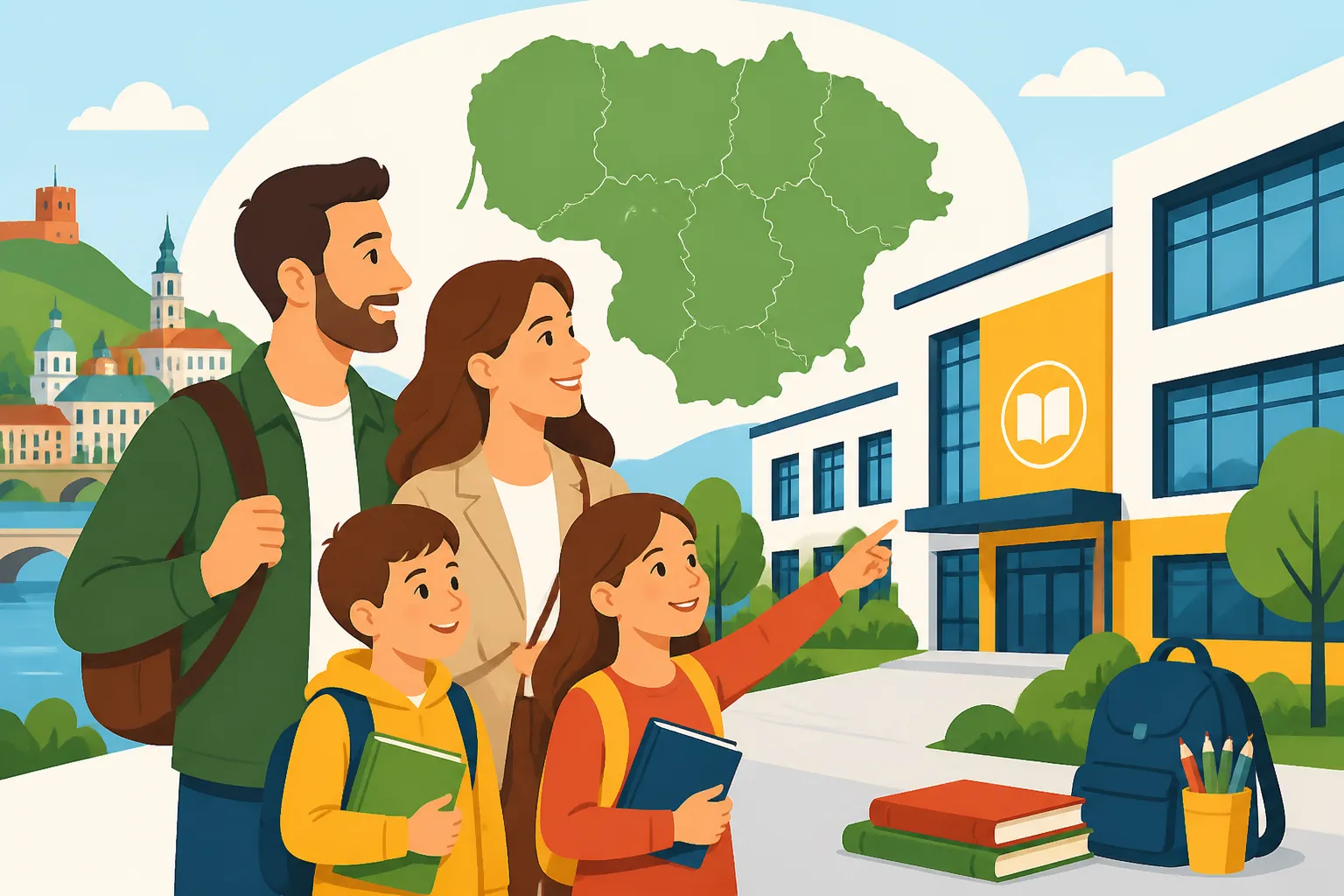
Schools and Education in Lithuania: A Complete Guide for Expat Families
Moving to a new country like Lithuania brings a whirlwind of adjustments, and for expat families, perhaps no task looms larger or more emotionally charged than figuring out the schooling for your children. It's not just about finding a building; it's about finding a community, a curriculum that fits, and a place where your kids can thrive while navigating a new culture and language. This guide aims to demystify the Lithuanian education system, offering a realistic, in-depth look at public, private, and international school options, and walk you through the practical steps to ensure a smooth transition for your little ones.
Understanding the Lithuanian Education System Structure
The Lithuanian education system, like many across Europe, is structured in several stages, generally starting young and progressing through to higher education. It's a system that emphasizes academic rigor, patriotism, and a strong sense of community, all underpinned by the national curriculum. For expat parents, understanding this framework is the first crucial step in making informed decisions for your children.
Early Childhood Education: Nurseries and Kindergartens
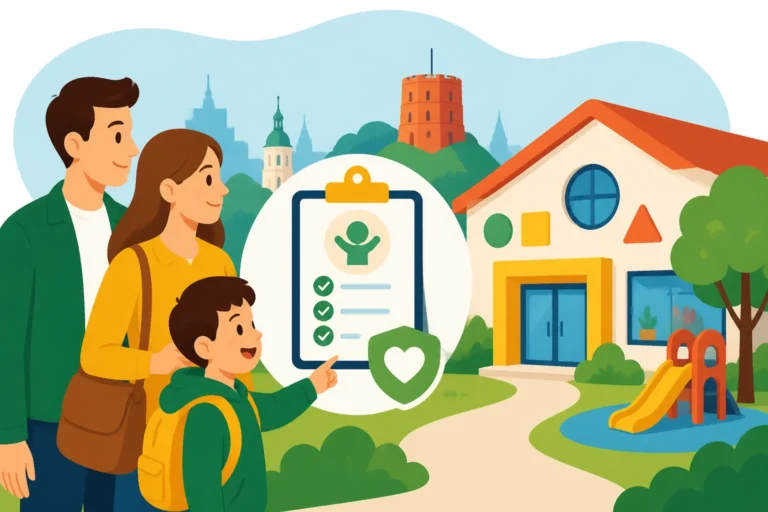
Before formal schooling even begins, Lithuania offers robust early childhood education options. This stage, known as darželis (kindergarten) or lopšelis (nursery for the youngest children), is largely run by municipalities and is immensely popular. Children can start attending nurseries from around one year old, transitioning to kindergartens typically between three and six years old. These institutions focus on play-based learning, social development, and preparing children for primary school.
Spaces in municipal kindergartens can be highly competitive, especially in larger cities like Vilnius and Kaunas, and priority is often given to local residents or families with specific social criteria. It's not uncommon for expat families to face waiting lists, so if you're planning to enroll a toddler or preschooler, start the application process well in advance. Many private kindergartens also exist, offering more flexibility, often smaller class sizes, and sometimes instruction in English or other languages, which can be a real blessing for non-Lithuanian speaking children. These private options, naturally, come with higher fees, but they can be a lifesaver for integration.
Primary and Basic Education: Foundation Years
Formal schooling begins with primary education (pradinis ugdymas) at age seven. This stage lasts for four years (grades 1-4) and is followed by basic education (pagrindinis ugdymas), which is divided into two parts: the first stage from grades 5-8 and the second stage from grades 9-10. So, in total, children are in basic education for six years. During these foundational years, the curriculum is broad, covering Lithuanian language, mathematics, natural sciences, social sciences, arts, and physical education.
The goal of primary and basic education is to lay a strong academic and social groundwork. While the public system is free and widely accessible, the language of instruction is overwhelmingly Lithuanian. For expat children arriving without prior Lithuanian language exposure, this can be a significant hurdle. Many public schools offer some form of language support for newcomers, but the effectiveness and intensity of this support can vary greatly depending on the school's resources and experience with foreign students. Parents often find themselves needing to supplement with private tutoring or intensive language camps.
Secondary Education: Gymnasium and Vocational Training
After completing basic education (grade 10), students move on to secondary education (vidurinis ugdymas), typically at a gymnasium (gimnazija), which covers grades 11-12. This stage is focused on preparing students for higher education, with a more specialized curriculum where students can choose subjects based on their interests and future academic plans. Alternatively, students can opt for vocational training institutions (profesinio mokymo įstaigos), which provide practical skills and qualifications for specific trades.
For older expat children, especially teenagers, entering the Lithuanian public gymnasium system can be particularly challenging due to the advanced language requirements and the academic pressure of preparing for the national matriculation exams (brandos egzaminai), which are necessary for university admission. Many expat families with older children find themselves leaning heavily towards international schools or specialized private institutions that offer a recognized international curriculum. It's a tough decision, weighing cultural immersion against academic continuity and avoiding unnecessary stress during formative years.
Public Schools in Lithuania: What Expats Need to Know
For many expat families, especially those on a budget or looking for a deeper cultural immersion, public schools in Lithuania are a compelling option. They are free, government-funded, and educate the vast majority of Lithuanian children. However, there are unique considerations and potential challenges that expats should be aware of before diving in.
The Language Barrier and Integration
The most significant hurdle for non-Lithuanian speaking expat children in public schools is, without a doubt, the language of instruction. From kindergarten up through gymnasium, classes are taught entirely in Lithuanian. While younger children tend to be linguistic sponges and can pick up a new language remarkably quickly, older children, particularly those in elementary or secondary school, may face a steeper and more stressful learning curve. Imagine trying to learn algebra or history in a language you barely understand – it's a huge ask.
Some public schools, especially in larger, more multicultural cities like Vilnius, have made efforts to provide some transitional language support. This might include extra Lithuanian language lessons, dedicated support teachers, or materials translated into other languages. However, these resources are not uniform across all schools or municipalities. Parents often report that while teachers are generally very welcoming and supportive, the systemic support for language acquisition can be limited. This often means parents must actively seek out external tutoring, after-school language programs, or immerse their children in Lithuanian-speaking environments outside of school to accelerate their language learning. The upside, of course, is that children who successfully integrate become truly bilingual and often gain a deeper understanding of Lithuanian culture.
Curriculum, Daily Life, and Extracurriculars
The curriculum in Lithuanian public schools is standardized nationally, emphasizing a broad education rooted in traditional academic subjects. There's a strong focus on core subjects, and depending on the grade, students might spend considerable time on Lithuanian literature, history, and geography, which can be fantastic for cultural immersion but also challenging if your child is new to the historical context. The school year typically runs from September 1st to late May or early June, with breaks for autumn, Christmas, and Easter.
Daily life in a Lithuanian public school is generally structured, with classes usually starting between 8:00 and 9:00 AM and ending in the early to mid-afternoon. After-school activities vary by school but often include sports clubs, art classes, music lessons, and academic support groups. These can be excellent avenues for expat children to make friends and practice their Lithuanian in a more relaxed setting. Facilities can range from older, more traditional buildings to modern, recently renovated schools, especially in more affluent areas. My friend, who moved her 8-year-old into a public school in Žirmūnai, Vilnius, found the teachers incredibly patient, but the initial weeks were rough with homework as her child struggled to keep up linguistically. They ended up hiring a tutor for a few hours a week, which made a world of difference.
The Application Process for Public Schools
Enrolling your child in a Lithuanian public school involves a few key steps and documents, and it's best to start early. The process is generally managed by your local municipality rather than individual schools directly, especially for primary and basic education. The first and foremost requirement is usually that you have declared your place of residence in Lithuania. You can't just rock up to any school; you'll typically be assigned to a school in your catchment area based on your registered address.
You'll need your child's birth certificate (translated and apostilled if from outside the EU/EEA), their passport or ID, and your own residence permit or proof of legal stay. Crucially, you'll need your child's Asmens Kodas (personal code), which is essential for almost all official transactions in Lithuania, including school enrollment and accessing healthcare. If your family doesn't have a local family doctor yet, you'll also likely need to arrange a medical check-up for your child and obtain a health certificate, often through the public polyclinic system. Remember that the public system requires you to register for compulsory health insurance (PSD) for your child as well. It’s a process that can feel like navigating a maze, but it's entirely doable with patience.
| Aspect | Public Schools |
|---|---|
| Cost | Free (government-funded); small fees for some extracurriculars or supplies |
| Language | Predominantly Lithuanian; limited language support for foreigners in some schools |
| Curriculum | National Lithuanian curriculum; traditional academic focus |
| Class Size | Varies, can be larger, especially in popular city schools |
| Cultural Immersion | High; direct exposure to Lithuanian language and customs |
| Admissions | Residence-based, municipal application, Asmens Kodas, health certificate, often waiting lists for popular schools |
| Typical Hours | Morning start (8-9 AM), early to mid-afternoon finish |
| Challenges for Expats | Language barrier, adapting to a new curriculum, limited English communication with staff |
International Schools: The Popular Choice for Expat Families
For many expat families, especially those on shorter assignments, with older children, or who prioritize an internationally recognized curriculum, international schools in Lithuania are the go-to option. These institutions are specifically designed to cater to a diverse student body and often offer a smoother transition for children from various educational backgrounds.
Curriculum and Language of Instruction
International schools in Lithuania typically follow well-known global curricula such as the International Baccalaureate (IB) Programme (Primary Years, Middle Years, and Diploma Programmes), the British Curriculum (IGCSEs and A-Levels), or the American Curriculum. This means that students can often continue their education with minimal disruption, making transfers to other international schools around the world much easier. The primary language of instruction is almost always English, which immediately removes the biggest barrier faced by children entering the public system. Some schools might also offer instruction in other languages, or provide extensive support for English as an Additional Language (EAL).
For parents who are keen on their children maintaining ties to their home country's educational standards or who anticipate further international moves, this consistency is invaluable. It also means that teachers are often internationally recruited, bringing a wealth of experience from diverse educational systems. However, while they offer a familiar academic environment, they can sometimes create a bit of a "bubble," so balancing international school with efforts to immerse in local Lithuanian culture is a common goal for expat parents.
Leading International Schools in Lithuania
Lithuania, particularly Vilnius, is home to several reputable international schools that cater to the expat community. Each has its own unique ethos, curriculum focus, and fee structure. Some of the most well-known include:
- American International School of Vilnius (AISV): This is one of the oldest and most established international schools in Lithuania, offering an American-based curriculum from early childhood through high school. It is accredited by the Middle States Association of Colleges and Schools and is known for its diverse student body and strong academic program, leading to a US high school diploma. They have excellent facilities and a wide range of extracurricular activities.
- British School in Vilnius (BSV): Following the English National Curriculum, BSV provides education from early years through to IGCSEs and A-Levels. It prides itself on delivering a rigorous British education in a multicultural setting, preparing students for universities worldwide. Their approach often emphasizes independent learning and critical thinking.
- Vilnius International Meridian School: This school offers an international curriculum with a strong emphasis on global citizenship, often incorporating elements of the IB Primary Years Programme. It caters to a wide age range and is known for its supportive community and extracurricular offerings.
When researching, it's always a good idea to check accreditations, teacher qualifications, and the specific programs offered. Many schools also host open days or offer virtual tours, which are fantastic opportunities to get a feel for the environment and ask specific questions. For parents moving their entire household, including school-age children, a smooth transition is paramount. Services like Sirelo can help coordinate your move, allowing you more time to focus on school visits and enrollment.
Costs and Application Process for International Schools
The convenience and specialized education offered by international schools come at a significant financial cost. Tuition fees vary widely depending on the school, the child's age, and the curriculum, but they can range from €5,000 to over €20,000 per year, per child. Beyond tuition, you should budget for additional costs such as application fees, enrollment fees (often a one-time charge), school trips, uniforms, textbooks, and extracurricular activities. It's an investment, certainly, but one that many expat parents deem essential for their child's academic and emotional well-being abroad.
The application process for international schools is generally more streamlined than for public schools, though equally important to start early due to limited spaces. It typically involves:
- Online Application: Filling out an application form and paying an application fee.
- Submission of Documents: Providing school reports, transcripts, letters of recommendation, birth certificates, and sometimes psychological assessments.
- Assessments/Interviews: Many schools require entrance exams (especially for older grades to assess English proficiency and academic readiness) or interviews with the child and parents.
- Enrollment: Once accepted, you'll pay an enrollment fee and sign a contract.
Unlike public schools, international schools usually don't require you to have your residence declared in Lithuania at the time of application, though you will need a valid residence permit or visa for your child to attend once accepted. Staying connected during this entire process is crucial; you'll be making calls, sending emails, and navigating new areas for school visits. Having a reliable data connection, perhaps with an eSIM from Airalo, can really smooth things over, especially if you're coordinating from abroad or before local SIM registration.
Private Local Schools and Alternative Education
While public and international schools are the most common choices, Lithuania also offers a selection of private local schools and, for certain families, alternative education paths. These options can provide a middle ground or a specialized focus not found in the mainstream systems.
Private Local Schools: Blending Worlds
Private local schools in Lithuania operate similarly to public schools in terms of curriculum and language of instruction, meaning the primary language is Lithuanian. However, they are privately funded and often offer advantages such as smaller class sizes, enhanced facilities, a specific pedagogical approach (e.g., Catholic schools, Montessori-inspired programs), or a higher teacher-to-student ratio. For expat families who are committed to their children learning Lithuanian and integrating deeply into the local culture, but desire a more personalized or resource-rich environment than some public schools might offer, these private local institutions can be an excellent choice.
The costs for private local schools are typically lower than international schools but still represent a significant expense compared to the free public system. Fees can range from a few hundred euros to over a thousand euros per month. Admission usually involves an application, an interview, and sometimes an assessment. For a family planning to stay in Lithuania long-term, where deeper integration is a priority but a specific educational philosophy is also sought, these schools can strike a good balance.
Special Needs Education
Lithuania has a framework in place to support children with special educational needs (SEN). In public schools, this support typically involves individualized education plans (IEPs), adapted curriculum, and the assistance of special educators, psychologists, and speech therapists. The degree and quality of this support can vary widely between municipalities and individual schools. Parents of children with SEN often find that advocating for their child's needs requires persistence and a good understanding of the local system, sometimes facilitated by a Lithuanian speaker.
International schools also generally have provisions for SEN, often employing learning support specialists. However, the extent of support depends heavily on the individual school's resources and philosophy. Some international schools are better equipped to handle a broader spectrum of needs than others, and it's vital for parents to be very upfront and detailed about their child's requirements during the application process. It’s always recommended to visit the school, speak with the SEN coordinator, and understand the specific resources available before committing.
Homeschooling and Distance Learning
While less common, homeschooling is legally permitted in Lithuania under certain conditions. It's generally subject to approval from the local municipality or education department, which will want to ensure that the child receives a proper education that meets national standards. Parents typically need to submit an educational plan and demonstrate how they will provide instruction. This option gives families maximum flexibility, but it places a significant burden on parents to structure and deliver the curriculum.
Distance learning, or online schooling, has also gained traction, especially with the rise of international online academies. These can be excellent for children who need a flexible schedule, are travelling frequently, or have specific learning styles. However, if you're residing in Lithuania and your child is doing a distance learning program from another country, it's worth checking with the local education authorities if there are any specific registration requirements or implications for their legal status as a student in Lithuania. For example, if you're trying to validate a foreign degree for future education or employment in Lithuania, you'll need to understand the How to Get Your Foreign Degree Recognised (SKVC) in Lithuania process. It’s always best to be compliant with local regulations.
Navigating Enrollment and Necessary Documents
Once you've decided on the type of school for your child, the actual enrollment process begins. This can feel like a bureaucratic labyrinth, especially when dealing with foreign documents and a new language. However, breaking it down into manageable steps can help.
Essential Documents for Enrollment
Regardless of whether you choose a public or private school, certain documents are universally required. It’s wise to gather and prepare these well in advance, and always have original copies as well as translated and notarized versions where necessary.
Here’s a general checklist:
- Child’s Birth Certificate: Original and a certified translation into Lithuanian. For documents from non-Hague Convention countries, an apostille or consular legalization might be needed.
- Child’s Passport/ID: A valid passport or national ID card.
- Parents’ Passports/IDs: Valid passports or national ID cards for both parents/legal guardians.
- Child’s Residence Permit/Visa: Proof of legal residency in Lithuania (e.g., temporary residence permit, national D visa, or EU/EEA registration certificate). If your family is still figuring out your legal status, understanding The Complete Guide to Lithuanian Residence Permits for Expats (2027) is critical.
- Parents’ Residence Permits/Visas: Similar to above.
- Asmens Kodas (Personal Code): Your child's Lithuanian personal code is mandatory for nearly all registrations, including school. If you haven't obtained one yet, you'll need to do so. This also links directly to critical services like healthcare, so knowing How to Get Your Asmens Kodas (Personal Code) and Why It Matters for Healthcare is vital.
- Proof of Address: A document proving your declared place of residence in Lithuania (e.g., tenancy agreement registered with Registrų Centras, or a certificate of declared residence). This is especially crucial for public school admissions. If you're new to this, read Declaring Your Place of Residence in Lithuania: The Complete Guide.
- Medical Certificate: A health certificate (Form 027-1/a) from a Lithuanian doctor, confirming your child is fit for school and has up-to-date vaccinations. You'll need to register your child with a local family doctor to get this. For guidance on this, see The Expat Guide to Finding a Family Doctor (Šeimos Gydytojas) in Lithuania. You'll also want to make sure your child is covered by health insurance, so How to Register Family Members for Health Insurance in Lithuania will be relevant.
- Previous School Reports/Transcripts: Translated into Lithuanian or English. This helps the new school understand your child's academic history and placement.
The Bureaucracy of Lithuanian Administration
Navigating the administrative side of schooling can be exasperating. The Lithuanian system relies heavily on specific forms, stamps, and processes that can feel foreign and slow. Patience is truly a virtue here. Many official documents might be exclusively in Lithuanian, and while staff at international schools are usually English-speaking, public school administration may require a translator or a Lithuanian-speaking friend to help.
The MIGRIS system for residence permits and the Registrų Centras for residence declarations are online portals you'll become very familiar with. For some municipal public school applications, there might also be an online portal, often linked through the E-Government Gateway, which can be useful once you get the hang of it. Remember to keep copies of every application, certificate, and correspondence. A good filing system (digital and physical) will save you immense headaches down the line. Newcomers are often advised to photocopy everything, then photocopy the photocopies!
Deadlines and Application Windows
School enrollment in Lithuania, especially for public schools and popular international schools, operates on specific timelines. For public schools, applications often open in early spring (e.g., March/April) for the following academic year starting in September. Missing these windows can mean fewer choices or even no place at all in your preferred school. My colleague missed the deadline for his son's kindergarten spot and ended up having to commute across Vilnius for a year to a less convenient location.
International schools also have application deadlines, though these can be more flexible, sometimes accepting rolling admissions if space permits. However, for the most sought-after schools or specific year groups, applying a year in advance is not unusual. Always check the specific school's website for their exact admission cycle and deadlines. For a more general overview of settling in, consider reading The Complete Guide to Moving to Lithuania: Your First 90 Days, which can help align your school enrollment timeline with other crucial integration tasks.
Supporting Your Child's Transition: Language, Culture, and Beyond
Moving to a new country and starting a new school is a huge adjustment for any child, regardless of age. For expat children in Lithuania, particularly those navigating a new language and culture, your active support as parents is absolutely critical for a successful transition.
Language Acquisition Strategies
If your child is attending a Lithuanian-speaking school, language acquisition will be their top priority. The younger they are, the faster they usually pick it up, but active strategies can significantly accelerate the process for all ages:
- Formal Language Lessons: Beyond any support offered by the school, consider private Lithuanian tutors or group language classes. Many language schools in Vilnius and Kaunas offer programs specifically designed for children and teenagers. This provides structured learning and dedicated practice time. Learning Lithuanian: A Complete Guide to Language Courses and Levels can give you an idea of available options for both you and your child.
- Immersive Experiences: Encourage playtime with local children, participation in Lithuanian-speaking extracurricular activities (sports, clubs, Scouts), and exposure to Lithuanian media (cartoons, movies, music). The more natural exposure, the better.
- At-Home Support: Even if you don't speak Lithuanian yourself, create a supportive environment. Ask about new words, encourage them to teach you, and celebrate every small step forward. Use translation apps together. Avoid putting too much pressure on them, but consistently show interest and encouragement.
- Connect with Other Expat Parents: Sharing experiences and strategies with other expat families who have gone through the same journey can be incredibly helpful. They might know about specific resources or tips that aren't widely advertised.
Cultural Adaptation and Social Integration
Beyond language, cultural adaptation is another significant piece of the puzzle. Lithuanian schools, both public and private, have their own social norms, unwritten rules, and cultural expectations. Your child might encounter different classroom dynamics, teaching styles, and social hierarchies.
- Talk About Expectations: Prepare your child for potential differences. Explain that things might be done differently than what they're used to, and that's okay. Encourage an open mind and curiosity.
- Encourage Friendships: Support your child in making friends. Arrange playdates with classmates, even if initially, there's a language barrier. Friendships are key to social integration and happiness.
- Learn About Local Traditions: Engaging in local festivities, traditions, and national holidays can help your child feel more connected. Schools often have celebrations that are wonderful opportunities for cultural learning.
- Be Patient and Empathetic: There will be good days and bad days. Your child might feel frustrated, isolated, or misunderstood at times. Validate their feelings, offer comfort, and remind them that these challenges are temporary and part of an incredible adventure. Remember that you, as parents, are also adjusting, so be kind to yourselves too.
Parental Involvement and Communication
Your active involvement in your child's education, even in a new country, remains paramount.
- Communicate with Teachers: Establish clear lines of communication with your child's teachers. If there's a language barrier, ask if there's a staff member who can translate or use translation apps during meetings. Regular check-ins can catch problems early.
- Attend School Events: Participate in parent-teacher conferences, school concerts, sports days, and other events. This shows your child you're invested and helps you understand the school community better.
- Understand Homework and Grading: Familiarize yourself with the school's homework policies and grading system. Help your child establish a routine for homework, and if needed, assist them in finding resources or additional help. For tasks that require internet access, ensuring you have How to Set Up Home Internet and TV in Lithuania is crucial.
Higher Education in Lithuania: A Look Ahead
For expat families settling in Lithuania for the long haul, or those whose children complete their secondary education here, understanding the landscape of higher education becomes the next natural step. Lithuania boasts a robust and evolving higher education system, with a growing number of programs offered in English.
Universities and Colleges
Lithuania has a well-established network of universities (universitetai) and colleges (kolegijos). Universities are generally research-oriented institutions offering bachelor's, master's, and doctoral degrees, while colleges tend to focus on more practical, applied higher education, granting professional bachelor's degrees.
Some of the leading universities include:
- Vilnius University: The oldest and largest university in Lithuania, offering a wide array of programs in various fields. It consistently ranks among the top universities in the region.
- Kaunas University of Technology (KTU): A prominent technical university, strong in engineering, IT, and technological sciences.
- Vilnius Gediminas Technical University (VILNIUS TECH): Another leading technical university, particularly strong in civil engineering, architecture, and aviation.
- Lithuanian University of Health Sciences (LSMU): The main institution for medical and health sciences education.
Many of these institutions offer a significant number of study programs in English, particularly at the Master's and PhD levels, but increasingly at the Bachelor's level as well. This makes them accessible to international students, including those who have completed their secondary education in international schools in Lithuania or abroad. The quality of education is generally high, and tuition fees, while applicable, are often more affordable than in Western Europe or North America.
Admission Requirements and Funding
Admission to Lithuanian universities typically requires a secondary education diploma (or equivalent international qualification like the IB Diploma or A-Levels) and satisfactory results in matriculation exams. For programs taught in English, proof of English language proficiency (e.g., IELTS or TOEFL scores) is almost always required. Some programs may also have specific entrance exams or interviews.
For international students, scholarships are available, though often competitive. The Lithuanian government offers some scholarships for international students, and individual universities also have their own scholarship programs. EU citizens generally pay the same tuition fees as Lithuanian citizens (which can be free for some top-performing students in certain fields), while non-EU citizens pay higher fees. Information on Understanding Scholarships for International Students in Lithuania can be a valuable resource if your child is considering higher education here.
Future Prospects After Graduation
Graduating from a Lithuanian university can open doors to career opportunities both within Lithuania and internationally. The country's economy, particularly in the IT, FinTech, and service sectors, is growing, and there's a demand for skilled professionals. Many graduates, both local and international, find employment within Lithuania after completing their studies. Furthermore, a degree from an accredited Lithuanian university is recognized across the European Union, facilitating further study or work opportunities throughout the continent.
For expat children who have grown up and been educated in Lithuania, pursuing higher education here can represent a seamless continuation of their life in the country they've come to call home. It allows them to leverage their linguistic skills, cultural understanding, and local networks, providing a strong foundation for their future careers, whether they choose to stay or explore opportunities elsewhere.
Disclaimer
The information provided in this guide is for general informational purposes only and does not constitute legal, financial, or educational advice. While we strive to keep the information up-to-date and accurate, educational policies, enrollment procedures, and school offerings in Lithuania can change. We strongly recommend verifying all details with official sources, such as the Ministry of Education, Science and Sport of the Republic of Lithuania, local municipalities, and individual schools, before making any decisions. For specific legal or immigration advice, please consult with a qualified professional.