Understanding the E-Sveikata (E-Health) System in Lithuania
When you first walk into a Lithuanian polyclinic, you might expect a dusty paper folder filled with your medical history. Instead, you'll find the doctor typing away into a system that seems invisible to you. Understanding the E-Sveikata (E-Health) system is the single most important step for any expat wanting to master their healthcare here. This guide breaks down the portal, from logging in to managing prescriptions, so you never feel left in the dark about your own health data.
The Digital Backbone of Lithuanian Healthcare
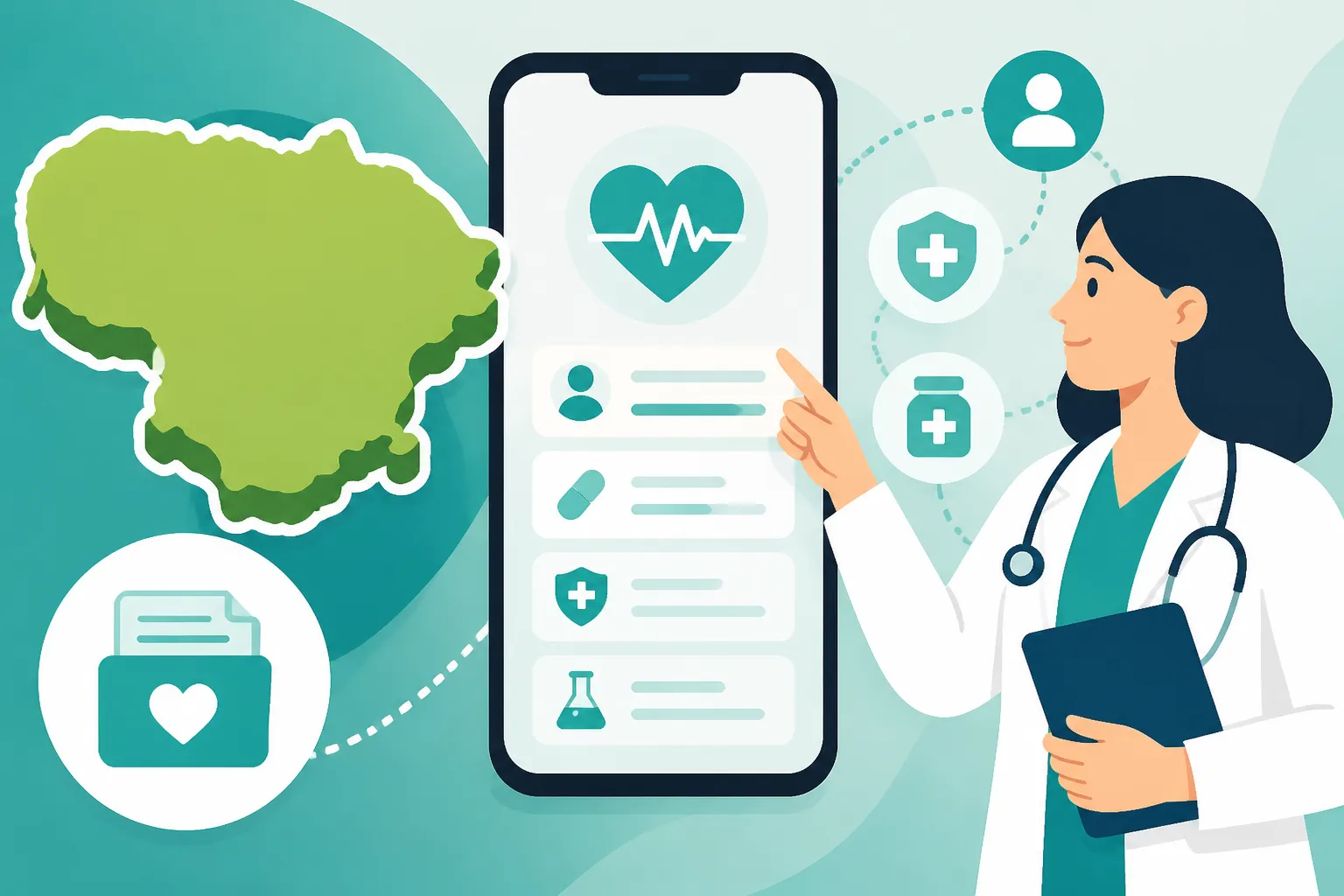
If you have spent any time in the administrative offices of Vilnius or Kaunas, you know that Lithuania prides itself on being a digital-first nation. E-Sveikata (esveikata.lt) is the manifestation of that pride in the medical sector. It is a centralized database where every doctor’s visit, every blood test result, and every prescription is logged. For us expats, this is both a blessing and a curse. It is a blessing because you don’t have to carry physical records from one clinic to another; it is a curse because the system is almost entirely in Lithuanian, and if you aren't in the system, you effectively don't exist to the public health apparatus.
Why Paper Records are a Thing of the Past
Gone are the days when you had to remember the name of that specific antibiotic you took three years ago. In the Lithuanian system, every licensed healthcare provider—whether they work at a public Poliklinika or a high-end private clinic—is legally required to upload data to E-Sveikata. This means that if you see a specialist in Klaipėda and then visit your family doctor in Vilnius, the latter can see exactly what the former diagnosed.
This centralization is vital for patient safety, particularly in preventing drug interactions. However, for a newcomer, it can feel like a loss of privacy or a technological barrier. If you are still waiting for your residence permit, you might feel a bit exposed. While you navigate these initial months, having a backup like SafetyWing can provide a safety net before you are fully integrated into the public digital records.
The Centralization of Your Medical Life
E-Sveikata acts as the "single source of truth." When you go to a pharmacy like Eurovaistinė or Camelia, you don't hand over a green piece of paper. You hand over your residence permit or ID card. The pharmacist then accesses your E-Sveikata profile to see your active prescriptions. This system also houses your "Siuntimas" or referrals. Without a digital referral in the system, the public healthcare fund (VLK) will not cover your visit to a specialist, and you will be asked to pay the full price out of pocket.
Accessing the Portal: The Identity Challenge
The biggest hurdle for most foreigners is the login process. You cannot simply create a username and password with an email address. Because it contains sensitive medical data, the portal is protected by the Lithuanian E-Government Gateway (Elektroniniai valdžios vartai).
Using the E-Government Gateway
To see your records, you must authenticate your identity. This usually happens in one of three ways: through a Lithuanian bank account (like Swedbank, SEB, or Luminor), via a Mobile-ID (a special SIM card feature), or using Smart-ID (specifically the "Qualified Electronic Signature" version). If you are a new arrival, you might find yourself in a "catch-22" situation: you need an ID to get a bank account, and you need a bank account to log into the health portal.
If you are a digital nomad or someone on a temporary stay, you might not have these tools yet. In those cases, you’ll often be relying on private clinics that provide their own internal portals, though they still eventually sync with the national system. During this transition, using Understanding Private Health Insurance Plans in Lithuania can help you bypass some of the login frustrations by giving you access to private platforms that are more expat-friendly.
The Critical Role of the Asmens Kodas
Your entry point into E-Sveikata is your Asmens Kodas (Personal Code). This 11-digit number is the "key" to your life in Lithuania. Without it, your records cannot be consolidated. If you have recently moved, you should prioritize How to Get Your Asmens Kodas (Personal Code) and Why It Matters for Healthcare to ensure that your medical history begins being recorded correctly from day one. If a doctor treats you before you have this code, they may record your data under a temporary internal ID, but merging that data later into your permanent E-Sveikata profile can be an administrative nightmare that involves multiple trips to the "Registratūra" (reception).
Managing E-Receptas (Digital Prescriptions)
The electronic prescription system, known as E-Receptas, is perhaps the most efficient part of the Lithuanian medical experience. Once a doctor prescribes a medication, it appears in the system instantly.
Buying Medication at the Vaistinė
When you walk into a "Vaistinė" (pharmacy), the process is remarkably simple. You present your ID, the pharmacist scans it, and they can see exactly what has been prescribed, the dosage, and whether the medication is subsidized by the government. They can also see if you have already picked up part of the prescription elsewhere.
One thing that surprises many expats is the "Compensated Medicines" list. Certain chronic medications are significantly discounted or even free for those with Compulsory Health Insurance (PSD). The E-Sveikata system automatically calculates these discounts. For a deeper look at this process, check Understanding the Electronic Prescription (E-Receptas) System in Lithuania to understand how to handle refills and out-of-stock medications.
Online Renewals and Chronic Conditions
If you have a chronic condition, such as asthma or hypertension, you don't always need to visit the doctor in person for a refill. Many family doctors at a Understanding the Role of the Polyclinic (Poliklinika) in Lithuania allow you to call or message them. They will then "extend" the prescription in E-Sveikata. You will see a new entry in your portal, and you can head straight to the pharmacy. This saves hours of waiting in clinics and is a major perk of the digital system.
| Feature | Description | Who Can Access? |
|---|---|---|
| E-Receptas | Digital prescriptions for medications. | Pharmacists, Doctors, Patient |
| Siuntimas | Referrals to specialists (e.g., Cardiologist). | Specialists, Family Doctors, Patient |
| Lab Results | Full blood panels, X-rays, and MRI reports. | Doctors, Patient |
| Vaccination Record | History of all vaccines received in Lithuania. | Schools, Doctors, Patient |
| Medical Certificates | Driving license or work-readiness forms. | Employers (limited), Regitra, Patient |
Referrals and Specialist Appointments
The referral system in Lithuania is strictly hierarchical. You generally cannot see a specialist in the public system without a "Siuntimas" from your family doctor (Šeimos Gydytojas).
The Siuntimas Workflow
When your family doctor decides you need to see a specialist, they issue a digital referral in E-Sveikata. This referral usually has a validity period (often 30 or 60 days). Once the referral is in the system, you can log in to E-Sveikata to search for appointments. The system allows you to see wait times at various clinics across the country. For example, if the wait for a neurologist in Vilnius is three months, you might see that a clinic in Kaunas or Panevėžys has an opening next week.
Understanding How E-Referrals (Siuntimas) Work for Specialists in Lithuania is crucial because if you book an appointment without a valid digital referral, the clinic will charge you the "private" rate, even if you are insured. It is also important to note that the referral must be for a specific type of specialist; a general referral for "health checks" doesn't usually exist.
Public vs Private Visibility
A common point of confusion is whether private doctors can see public records and vice versa. The answer is generally yes, but it depends on the doctor actually "uploading" the data. If you see a private specialist at a clinic like Kardiolita or InMedica, they will issue an electronic referral if you need further tests. This is why it's so important to know How to Set Up Your Account on the Patient Portal in Lithuania early on, so you can verify that all your visits—private or public—are being logged.
While the system is robust, expats are often advised that having supplemental insurance like SafetyWing is great for those gap periods where the public system's "wait and see" approach doesn't align with your personal health needs. Private clinics are faster, but they still use E-Sveikata to ensure your medical history remains continuous.
Viewing Lab Results and Medical Certificates
One of the most empowering features of E-Sveikata is the ability to view your own lab results. You no longer have to wait for a phone call from a busy nurse to find out if your iron levels are low.
Decoding Your Blood Tests
When you have blood work done at a Poliklinika, the results are usually uploaded within 24 to 48 hours. When you log in, you will find a section for "Laboratorinių tyrimų rezultatai." The results are typically presented in a table with your values next to the "normal" reference range.
However, the terminology is in Lithuanian. "Kraujo tyrimas" is a blood test, "Hemoglobinas" is easy to guess, but "Glitimo netoleravimas" (gluten intolerance) might require a translation app. If you are managing a family, you will also use this portal to keep track of Understanding Vaccination Schedules and Requirements in Lithuania for your children, which is often required for school registration.
Certificates for Driving or Work
In Lithuania, certain activities require a "Sveikatos pažymėjimas" (health certificate). If you are getting a Lithuanian driving license, you must undergo a medical exam. The results of this exam are not given to you on paper; they are uploaded to E-Sveikata. When you then go to Regitra to apply for your license, they simply pull up your Asmens Kodas and see the digital certificate.
The same applies to the "046/a" form often required by employers. The digitalization of these certificates significantly reduces the "paper-pushing" that used to define Lithuanian bureaucracy. If you are trying to find a doctor to issue these, refer to The Expat Guide to Finding a Family Doctor (Šeimos Gydytojas) in Lithuania to find someone who is comfortable navigating the digital certificate process for foreigners.
Practical Strategies for the Non-Lithuanian Speaker
The E-Sveikata portal is a masterpiece of function, but its form is aggressively Lithuanian. There is no official "English version" of the patient portal, which can lead to significant anxiety when trying to navigate sensitive health data.
Browser Extensions and Translation
The most practical tip I can give any expat is to use a browser like Google Chrome or Microsoft Edge that has an integrated "Translate Page" feature. While it won't be perfect—medical terminology is notoriously difficult for AI to translate—it will get you close enough to find the "Receptai" (Prescriptions) or "Siuntimai" (Referrals) tabs.
Be careful when looking at "Diagnozė" (Diagnosis). Automated translations can sometimes make a minor condition sound terrifying. If you are confused, it is always better to wait and discuss the results with your doctor. If you are struggling to find a provider who speaks English well enough to explain these digital records, you might want to look into How to Find an English-Speaking Doctor in Lithuania for a smoother experience.
When the System Fails
No system is perfect. Occasionally, E-Sveikata goes down for maintenance (usually late at night), or a doctor forgets to click "submit" on a referral. If you arrive at a specialist appointment and they say, "There is no Siuntimas in the system," do not panic.
First, ask them to check under your Asmens Kodas again. If it's still missing, you will need to contact the clinic that was supposed to issue it. Usually, a quick call to the "Registratūra" of your Poliklinika can solve the issue, as the doctor can push the digital record through in seconds. In the meantime, having the peace of mind of a global plan like SafetyWing can be helpful if you ever need to pivot to a private provider because of a system glitch in the public sector.
To make sure you are always covered, even when the digital systems feel overwhelming, it's wise to understand How to Access Specialist Care Through the Lithuanian Public System thoroughly. The more you know about the "pipes" of the system, the less likely you are to get stuck when a digital record goes missing.
Final Thoughts for the Digital Expat
Navigating E-Sveikata is a rite of passage for any expat in Lithuania. It represents the country's transition into a high-tech future, but it also demands a level of digital literacy and patience that can be exhausting for a newcomer. Once you have your Smart-ID set up and your first "E-Receptas" successfully filled, you will realize how much more efficient this is than the paper-based systems of many other Western countries.
Take the time to log in, explore the tabs, and familiarize yourself with where your records are stored. It is your data, after all. Whether you are managing a chronic illness or just getting a routine check-up for your residence permit, E-Sveikata is the tool that will keep your health journey in Lithuania organized and transparent.
Disclaimer
The information provided in this guide is for informational purposes only and does not constitute professional medical or legal advice. While we strive to keep the information up to date, the Lithuanian healthcare system and the E-Sveikata portal are subject to frequent administrative changes. Always consult with a licensed healthcare professional or the Lithuanian Migration Department for specific advice regarding your health and residency status.