How Do I Set Up Fibre Internet in Vilnius?
Ah, the internet! It’s one of those things you just assume will be there when you move to a new country, isn't it? But then you land in Vilnius, you've found your apartment, and suddenly the reality hits: you need to actually set it up. And not just any internet, you want that sweet, sweet fibre optic goodness that Lithuania is so famous for. Trying to navigate provider websites in a new language, figuring out contracts, and coordinating installations can feel like another administrative mountain to climb. But don't you worry, because this guide is going to walk you through exactly how to get fibre internet humming in your Vilnius home, making the process as smooth as possible for you.
Why Fibre Internet in Vilnius is a Game Changer for Expats
Let's be real, when you move to a new place, particularly as an expat, a reliable internet connection isn't a luxury; it's practically a basic human right. You're trying to stay connected with family back home, stream your favourite shows, work remotely, and maybe even dabble in some online gaming to unwind after a long week of bureaucratic battles. In Vilnius, you're in luck, because Lithuania has consistently ranked among the top countries globally for internet speed and accessibility, particularly when it comes to fibre optics. This isn't just marketing hype; it's a genuine advantage.
The Need for Speed and Unwavering Reliability
For many of us, our lives, both professional and personal, are heavily reliant on the internet. If you're working remotely, which is increasingly common for expats in Vilnius, lagging video calls or slow uploads simply aren't an option. Imagine trying to participate in an important team meeting only for your connection to drop every five minutes, or waiting an eternity for large files to upload. Fibre internet virtually eliminates these headaches. It offers symmetrical speeds, meaning your upload is as fast as your download, which is a dream come true for anyone sending large documents, backing up cloud data, or engaging in high-quality video conferencing.
Beyond work, think about your downtime. Binge-watching your favourite series in crystal-clear 4K, downloading massive game updates in minutes, or video chatting with loved ones halfway across the globe without a single pixelated face – these are the realities of fibre in Vilnius. The sheer bandwidth means multiple devices can be running simultaneously, from smart TVs to laptops to tablets, all without a noticeable dip in performance. It truly transforms your home into a seamlessly connected hub, which is so important when you're building a new life and relying on digital connections more than ever.
The Lithuanian Advantage: A Fibre Optic Wonderland
You might wonder why Lithuania, a relatively small Baltic nation, is such a powerhouse in fibre internet. It's largely due to strategic investments in infrastructure made years ago. The country started deploying fibre optic networks early and aggressively, ensuring widespread coverage even in smaller towns, let alone the capital city. This proactive approach has created a highly competitive market among internet service providers, which ultimately benefits you, the consumer. More competition often means better service, faster speeds, and sometimes, more competitive pricing.
This strong infrastructure also contributes to incredible stability. Unlike older copper-based ADSL or even some cable networks that can be susceptible to interference or degradation over distance, fibre optic cables use light to transmit data, making them incredibly robust and resistant to electromagnetic interference. This translates to fewer outages, more consistent speeds, and generally a much more dependable internet experience overall. It’s a genuine relief when you're trying to settle in, knowing that your internet connection is one less thing to worry about.
Navigating the Providers: Choosing Your Fibre Internet Partner in Vilnius
Okay, so you're convinced fibre is the way to go. Now comes the exciting (and sometimes slightly overwhelming) part: choosing a provider. Vilnius has a few major players, each with its own strengths and weaknesses. It's not just about speed; it's about contract terms, customer service, bundle options, and crucially, availability at your specific address. This is where a bit of research, and perhaps some patience with translation tools, will pay off.
Major Players in the Vilnius Market
When you're looking for fibre internet in Vilnius, you'll mostly be choosing between a handful of well-established providers. The two biggest names you'll likely encounter are Telia and Bitė, followed by others like Cgates and sometimes more regional options or smaller players focusing on specific buildings.
- Telia: As one of the largest telecommunications companies in the Baltic region, Telia has an extensive fibre optic network across Vilnius and beyond. They offer a wide range of packages, often bundling internet with TV and mobile services. Their infrastructure is generally considered top-tier, and they frequently have promotions. You'll find their customer service to be quite structured.
- Bitė: While historically strong in mobile services, Bitė has also expanded its fixed-line internet offerings, including fibre. They often present competitive deals, sometimes targeting younger demographics or those looking for modern, flexible packages. Their customer service might be perceived as a bit more informal than Telia's, but still effective.
- Cgates: Cgates is another significant player, especially for TV and internet bundles. They have a strong fibre presence, particularly in apartment buildings. Their pricing can be very competitive, and they are known for offering decent speeds.
- Other smaller providers: Depending on your specific building or neighbourhood, you might encounter other local providers. Sometimes these can offer hyper-competitive deals, but always check their reputation and customer service reviews, especially regarding English-speaking support.
Here’s a quick overview of what you might expect from the main players in Vilnius:
| Provider | Typical Speeds (Mbps) | Average Monthly Price (EUR) | Common Contract Lengths | Key Features |
|---|---|---|---|---|
| Telia | 300-1000 (DL/UL) | 20-35 | 12/24 months | Widespread network, TV bundles |
| Bitė | 300-1000 (DL/UL) | 18-30 | 12/24 months | Competitive pricing, mobile integration |
| Cgates | 200-800 (DL/UL) | 15-28 | 12/24 months | Good value, strong TV bundles |
Note: Prices and speeds are approximate and subject to change based on current promotions, specific plans, and your exact address. Always check the provider's official website for the most up-to-date information.
Deciphering Contracts and Bundles
One of the trickiest parts for expats is navigating the contracts. Many providers offer alluring deals when you sign up for a 12 or 24-month contract. While these longer terms often come with lower monthly fees, they also lock you in. Make sure you understand the early termination fees, just in case your plans in Lithuania change sooner than expected. It's easy to get excited about a low monthly price, only to discover a hefty penalty if you need to move out of the country before your contract is up.
Another common strategy is bundling. Providers love to package internet with TV channels, mobile phone plans, or even smart home services. These bundles can genuinely offer savings if you actually use all the services. However, don't fall for a bundle just because it looks cheaper if you only need internet. Sometimes, the standalone internet plan, though slightly more expensive on paper, is better value if you prefer to use your own streaming services and a separate mobile provider. Remember, when you first arrive in Vilnius, before you even think about setting up fixed-line internet, you'll want to ensure you have immediate connectivity. A solid eSIM provider like Airalo can be a lifesaver for those initial days or weeks, giving you time to research and decide on your long-term plan without being completely offline.
Checking Availability at Your Address
This is perhaps the most critical step. Even in Vilnius, fibre optic coverage isn't perfectly uniform. While most modern apartment buildings and central areas are well-covered, older buildings or very specific locations might have limitations. Don't assume anything! Every provider's website will have a tool where you can enter your exact address to check for fibre availability. This is usually the first thing you should do after identifying a few potential providers.
If your chosen provider doesn't offer fibre at your address, don't despair. They might offer a slower, but still decent, VDSL (copper-based) internet connection, or perhaps another provider has fibre where they don't. It's worth checking all the major players before settling. Sometimes, if you're in a newly built area, fibre might be installed, but it takes a little longer for providers to update their databases, so a quick call (if you're brave enough to attempt it in Lithuanian, or find an English-speaking agent) can sometimes yield a pleasant surprise.
The Fibre Installation Journey: From Application to Online
Once you’ve picked your champion internet provider, it's time for the actual setup. This process, while relatively straightforward on paper, can have its quirks when you're navigating it in a foreign country. Don't worry, I've been there, and with a little preparation, you'll have that sweet internet flowing in no time.
Prerequisites and Documentation
Before you even think about signing a contract, you'll need a few essentials. The most important one is your Asmens Kodas, your personal identification code. This is absolutely crucial for almost any administrative task in Lithuania, including signing utility contracts. If you haven't got yours yet, make sure you prioritize it. You'll also need proof of your legal right to reside in Lithuania (your temporary residence permit will usually suffice) and, of course, a valid rental agreement for your apartment.
Providers need to know they can bill you and that you're legitimately living at the address where they're installing the service. So, gather your How Do I Get an Asmens Kodas Before Renting an Apartment in Lithuania? and your How to Sign a Rental Contract (Nuomos Sutartis) in Lithuania – these are your golden tickets! Make sure you have clear copies of these documents ready, as you'll likely need to upload them if applying online, or present them in person. This entire process, from getting settled to arranging your utilities, comes after the initial big step of actually moving here. Services like Sirelo can be incredibly helpful for comparing international removal companies, ensuring your physical belongings arrive safely while you focus on setting up your digital life.
The Application Process: Online vs. In-Person
Most major providers in Vilnius offer an online application process, which is often the easiest route if you're comfortable with a bit of Google Translate. Their websites are usually quite intuitive, and they will walk you through selecting your plan, providing your personal details, and uploading necessary documents. Look for sections like "Užsisakyti paslaugas" (Order services) or "Interneto planai" (Internet plans).
However, if you feel more comfortable speaking to someone, or if you encounter issues with the online form, visiting a physical store is always an option. Telia, Bitė, and Cgates all have stores conveniently located in major shopping centres like Akropolis, Panorama, or Ozas in Vilnius. In person, you can directly ask questions, clarify contract terms, and ensure all your documents are correctly submitted. The challenge here might be finding an English-speaking representative, but increasingly, staff in Vilnius are proficient in English, especially in customer-facing roles. Be patient, bring all your documents, and be prepared to wait a little during peak hours.
Scheduling and Technician Visit
Once your application is approved, the provider will contact you to schedule an installation appointment. This usually happens within a few business days, but can sometimes take up to a week or two, especially during busy periods. Make sure you confirm the date and time, and if possible, ask for a confirmation in writing (email or SMS).
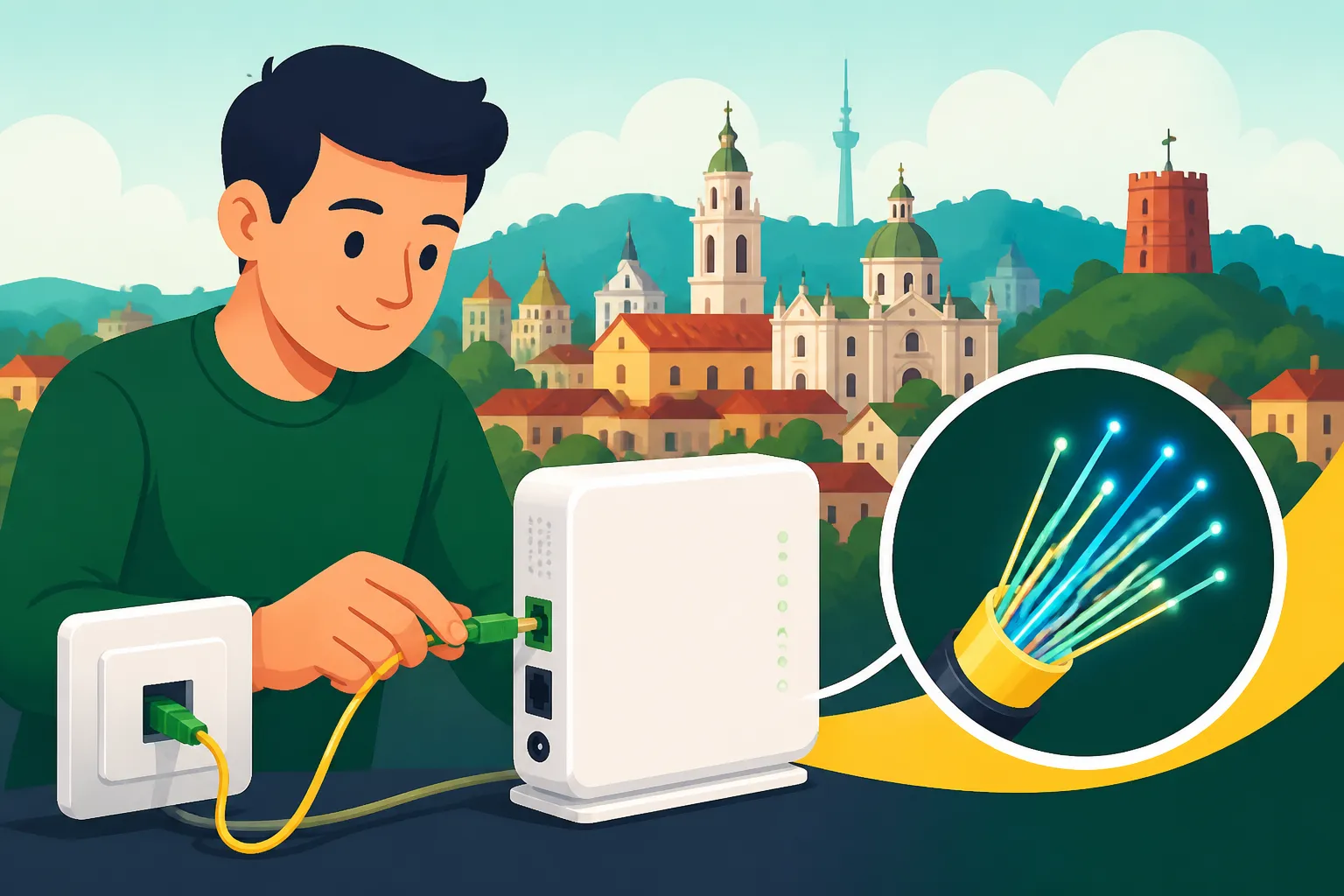
On the day of the installation, a technician will visit your apartment. You must be present, or arrange for someone trustworthy to be there on your behalf. The technician will need access to your apartment to run the fibre optic cable (if not already present), install the fibre termination box (ONT), and set up the router. The actual process usually takes 1-2 hours. While many technicians have a basic understanding of English, don't expect fluent conversation. It's often helpful to have a translation app ready on your phone, or if you know a local friend who could be on standby for a quick call, that's even better. They'll perform speed tests to ensure everything is working correctly before they leave.
Activation and First Steps
The moment the technician confirms everything is connected and your router lights up green, you're officially online! It's a fantastic feeling. Take a moment to confirm the Wi-Fi name (SSID) and password, usually found on a sticker on the router itself. Connect your devices and do your own speed test. There are many free online speed tests available that can confirm you're getting the speeds you signed up for.
It's also a good idea to familiarise yourself with the customer portal (if the provider offers one) where you can manage your account, view bills, and sometimes even troubleshoot. This is part of the larger journey of The Expat Guide to Setting Up Utilities in Lithuania and getting comfortable with your new digital life. Don't forget that understanding your utility bills is a separate beast, but just as important. For more on that, check out Understanding Utility and Communal Costs (Komunaliniai Mokesčiai) in Lithuania.
Living with Fibre: Tips and Troubleshooting
Having fibre internet is great, but like any utility, it requires a little ongoing management. From understanding your monthly bills to knowing who to call when things go wrong, a few practical tips can make your life much easier in the long run.
Understanding Your Bills and Payment Methods
Your internet bills will typically arrive monthly, either by post or, more commonly these days, electronically to your email or directly into your online customer portal. These bills, known as sąskaita in Lithuanian, will detail your monthly subscription fee and any other charges. Take the time to understand the breakdown, especially if you have a bundle. If you've signed up for a promotional price, be mindful of when that promotion ends, as your bill might increase afterwards.
Payment methods are usually straightforward. You can set up direct debit through your Lithuanian bank account (the easiest option), pay online via your bank's e-banking portal, or use payment kiosks found in supermarkets and post offices. For an overall picture of managing your household bills, it's worth reviewing how electricity works in the country with How to Set Up Electricity (ESO) in Your Lithuanian Home and other essentials with How to Set Up Water, Heating and Gas in Lithuania.
Common Issues and How to Solve Them
While fibre is generally reliable, issues can crop up. Most often, a problem isn't with the fibre line itself but with your router or Wi-Fi signal.
- No Internet / Slow Speed: The first thing to do is a classic: turn off your router, wait 30 seconds, and turn it back on. This simple reboot solves a surprising number of issues. If that doesn't work, check all cables are securely connected. If you're still experiencing slow speeds, try connecting a device directly to the router via an Ethernet cable to rule out Wi-Fi issues.
- Wi-Fi Problems: If only some devices are having trouble, or your Wi-Fi signal is weak in certain areas, consider your router's placement. Obstacles like thick walls or large appliances can interfere with Wi-Fi. Sometimes a simple relocation of the router or investing in a Wi-Fi extender can make a huge difference.
- Contacting Customer Support: If the problem persists, it's time to contact your provider's customer support. Their websites will list phone numbers and sometimes email addresses or online chat options. Look for a section like "Klientų aptarnavimas" (Customer service) or "Pagalba" (Help). Again, English support might be available but isn't guaranteed, so patience and translation apps are your friends. Clearly describe your issue, provide your account number, and explain what troubleshooting steps you've already taken.
Upgrading or Changing Plans
Life changes, and your internet needs might too. Maybe you started with a basic plan and now need more speed for remote work, or perhaps you want to downgrade if your usage has dropped. Most providers allow you to upgrade your plan at any time, usually without penalty, though it will naturally increase your monthly bill. Downgrading might be possible, but it could trigger contract renegotiations or, if you're locked into a promotional price, could mean losing out on a good deal.
Always read the terms and conditions carefully or speak to a customer service representative before making changes. If you're considering switching providers entirely, especially if you're still in a contract, be aware of potential early termination fees. It’s a good idea to compare offers regularly. After all, the market for How to Choose a Mobile and Internet Provider in Lithuania is dynamic, and new deals pop up all the time. Don't forget, setting up your life in a new place involves many administrative steps, and getting your The Complete Guide to Moving to Lithuania: Your First 90 Days (2027) sorted is a fantastic start before diving into these specifics.
Disclaimer
The information provided in this guide is intended for general informational purposes only and may not constitute the most up-to-date or specific advice. While we strive to provide accurate and current information, regulations, procedures, and service offerings in Lithuania can change frequently. It is always recommended to consult official government sources, legal professionals, and individual service providers directly for the most precise and current information applicable to your personal situation. We do not accept responsibility for any loss or inconvenience arising from reliance on the information contained in this guide.