How to Set Up Water, Heating and Gas in Lithuania
Oh, the joys of setting up a new home in Lithuania! I remember the days when merely understanding the labels on utility bills felt like deciphering ancient runes. It’s not just about finding a roof over your head; it’s about making sure that roof comes with running water, warmth in winter, and a way to cook your meals. The process for setting up water, heating, and gas in Lithuania can feel like a bureaucratic labyrinth, especially when you’re new here and navigating a different language and system. But don't you worry, this comprehensive guide will walk you through every step, helping you get these essential services connected smoothly and with minimal expat stress.
Understanding Lithuania's Utility Landscape
When you first arrive, you might expect a free-for-all market for utilities, where you get to pick and choose your providers. But Lithuania’s utility landscape, particularly for essential services like water and central heating, works a bit differently. It's not always about shopping around; it's often about plugging into existing, usually municipal, systems. This can be a relief in some ways – less choice, less decision-making – but also a source of frustration if you're used to more flexibility.
The Public vs. Private Providers
For core services like water and centralized heating, you’re generally dealing with public or state-owned companies, often with regional or municipal branches. For instance, the company responsible for your electricity distribution is typically Energijos Skirstymo Operatorius (ESO), a major player in the energy sector. For water, it's usually a municipal company, like Vilniaus Vandenys in the capital or Kauno Vandenys in Kaunas. These entities hold a near-monopoly in their respective service areas, meaning you won't be comparing prices between three different water suppliers. You just connect to the one that serves your address.
This contrasts somewhat with services like mobile and internet, where you have a clear choice between private companies like Telia, Bitė, or Tele2. But for the essentials that keep your home running, it's a more consolidated system. So, while you might find yourself wishing for more options, the reality is that for water and central heating, your provider is largely predetermined by your geographical location. Accepting this upfront can save you a lot of fruitless searching.
Regional Differences in Utility Services
It's crucial to understand that utility services and their specific providers can vary significantly from one municipality to another. While the general structure remains similar, the actual company names, their customer service procedures, and even the billing cycles might differ depending on whether you're living in Vilnius, Kaunas, Klaipėda, or a smaller town.
For example, water services in Vilnius are managed by Vilniaus Vandenys, whereas if you move to Klaipėda, you’ll be dealing with Klaipėdos Vanduo. Each of these companies will have its own online portal, customer service numbers, and physical service centers. The same can apply to heating providers. Therefore, generic advice needs to be adapted to your specific location. Always double-check which company services your exact address. Your landlord or a friendly neighbor can usually point you in the right direction, or a quick search for "[Your City Name] vanduo" or "[Your City Name] šildymas" will usually bring up the relevant local provider. This regional variability is one of those small details that can trip up even the most organized expat, so always keep your exact location in mind.
Navigating Water Services in Your New Home
Getting connected to the water supply in Lithuania is usually one of the more straightforward utility tasks, especially if you're renting. In most cases, the infrastructure is already in place, and it’s more about transferring the account into your name or ensuring your landlord does so.
Connecting to the Water Supply and Wastewater
If you’re moving into a rented apartment, the good news is that the water supply will almost certainly be connected already. It’s a bit like electricity – it’s just there. Your landlord will either transfer the existing contract into your name or instruct you on how to set up a new one with the local municipal water company (e.g., Vilniaus Vandenys). This is why having your rental contract in hand, alongside your Asmens Kodas (personal code), is crucial. These documents prove your legal right to occupy the property and your identity. Don't forget that a clear and comprehensive How to Sign a Rental Contract (Nuomos Sutartis) in Lithuania can make this process much smoother.
When you move in, make sure to take clear photos of your water meter readings (called vandens skaitiklis in Lithuanian). These initial readings are vital for ensuring you aren’t charged for the previous tenant's consumption. Make a note of them on your rental agreement or a separate document signed by both you and your landlord. In apartment blocks, especially older ones, the building administrator (namo administratorius) might also play a role in communal water management, so don't be surprised if their name pops up on your bills. For those purchasing a property, the process will involve a direct application to the local water company, usually requiring your property deed.
Understanding Your Water Bill (Vandens Mokesčiai)
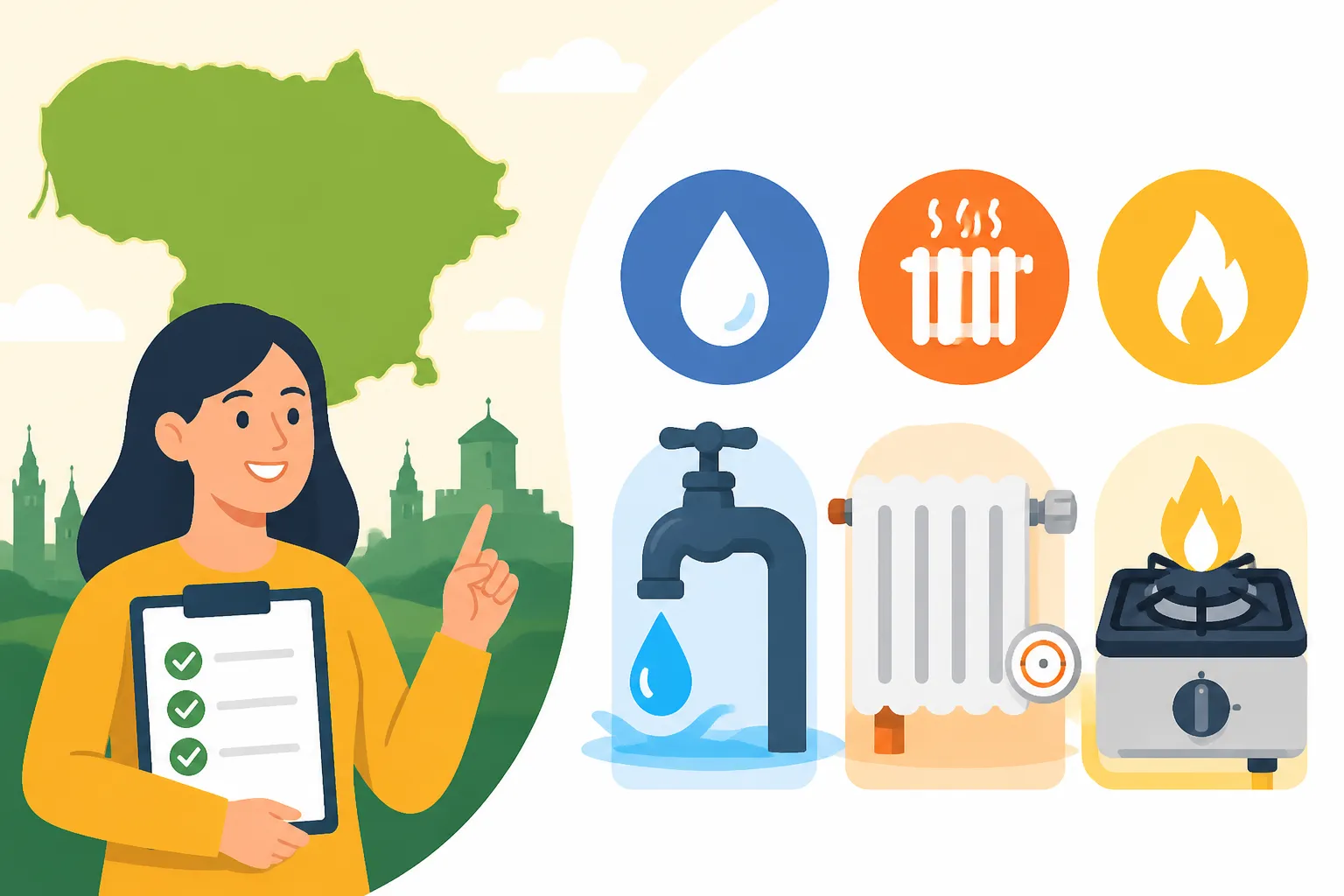
Once you're connected, understanding your monthly water bill (vandens mokesčiai) is the next step. These bills are typically issued monthly and will break down your costs into a few key components: a fixed charge (which is usually quite small), and then the main charge based on your consumption of cold and hot water (measured in cubic meters, m³). There will also be a charge for wastewater (nuotekos), which is usually calculated proportionally to your water consumption.
You’ll be expected to submit your meter readings regularly, often by a specific date each month. Many water companies offer convenient online portals where you can easily enter your readings. Some also have mobile apps, or you can even submit them via phone. Missing a submission often means you'll be billed based on an estimated average, which might be higher or lower than your actual usage and will be adjusted later. Payment options are generally plentiful: you can pay online via your Lithuanian bank account (the most common method for expats after they The Expat Guide to Opening a Bank Account in Lithuania), at post offices, via Perlas terminals found in many supermarkets, or even at the cashiers in stores like Maxima or Rimi. Those first few bills can be a bit bewildering, a mix of Lithuanian terms and numbers that don't immediately make sense, but consistent submission of readings and checking your online portal will soon make it second nature.
Heating Your Lithuanian Abode: Central vs. Individual
Lithuania's winters are no joke, so understanding how your home is heated is paramount. There are two main systems you'll encounter, each with its own quirks and billing structure. This is often the utility that sparks the most questions, and sometimes, the most frustration, for new arrivals.
Centralized Heating Systems (Šildymas)
Centralized heating, or centralizuotas šildymas, is very common, especially in older apartment blocks. This system is managed by municipal companies, with Vilniaus Šilumos Tinklai (VŠT) being the main provider in Vilnius. The most defining characteristic of central heating is its seasonal nature. The heating season typically begins in October and ends in April, but the exact start and end dates depend on the average outside temperature. This means you have no individual control over when your heating turns on or off, or how warm it gets (beyond adjusting radiators if you have them, which only regulates the heat entering your apartment, not the overall system).
For expats used to flicking a switch whenever they feel chilly, this can be a real culture shock and a source of significant frustration. Imagine a warm autumn day in October when the heating suddenly kicks in, or a chilly spring evening in May after it's already been switched off! The connection process for central heating is almost always handled by your landlord or the building administrator. You won’t need to do much beyond ensuring your name is linked to the property's heating account to receive bills. These bills can be surprisingly high in the coldest winter months, reflecting not just your apartment's consumption but also your share of the building's overall heat loss and common area heating.
Individual Heating Solutions and Alternatives
In contrast to central heating, newer apartment buildings and most private houses often boast individual heating solutions. The most prevalent of these is autonomous gas heating, where your apartment or house has its own gas boiler. This offers a significant advantage: you have complete control over your heating schedule and temperature. You decide when to turn it on, when to turn it off, and how warm you want your home to be. While you're responsible for the boiler's maintenance, the ability to tailor your heating to your needs can often lead to more efficient energy consumption and potentially lower costs overall, despite the initial setup or maintenance burden.
Electric heating is another option, though typically less common as a primary heating source due to the higher operating costs compared to gas or central heating. It’s often used for supplemental warmth or in smaller, highly insulated apartments. For those living in more rural settings or older private homes, wood or pellet stoves (krosnis, židinys) are still quite common, offering a cozy, traditional feel and potentially very low running costs if you source your own fuel. Each of these alternatives provides a level of independence that centralized heating cannot, giving you more agency over your comfort and your monthly budget. When considering a move, always ask about the heating system – it significantly impacts both comfort and cost, a key part of The Complete Guide to Cost of Living in Lithuania for Expats (2026).
Deciphering Your Heating Bill
Understanding your heating bill can be one of the most complex aspects of Lithuanian utilities. If you have central heating, the bill from companies like VŠT is notoriously intricate. It’s not just about how much heat your apartment consumed. Your bill will typically include a fixed component for common area heating and maintenance, a charge based on your apartment's square footage, and a portion reflecting your individual consumption if you have heat meters (which are becoming more common in renovated buildings). Factors like the building's overall insulation, the efficiency of the central heating network, and the severity of the winter all play a huge role. It’s not uncommon for a small apartment to have a heating bill equivalent to its rental cost in January or February. This is a common point of confusion and sometimes resentment for expats, highlighting the complexities of Understanding Utility and Communal Costs (Komunaliniai Mokesčiai) in Lithuania.
For individual gas heating, the bill is much simpler. You receive a monthly statement from your gas supplier (e.g., Ignitis) based on your metered gas consumption. This usage covers both heating and any gas cooking appliances you might have. You typically submit your meter readings online, and the bill is calculated directly from those numbers, plus any fixed service charges. This direct correlation between usage and cost makes it far easier to understand and manage your expenses. Regardless of the system, make sure you take initial meter readings when you move in and submit them regularly to avoid estimated billing surprises.
Gas Services: For Cooking and Heating
Gas in Lithuania primarily comes in two forms for residential use: natural gas supplied through a network, and bottled gas cylinders. Your options will depend heavily on your property and its location.
Connecting to the Gas Network (Dujos)
If your apartment or house has natural gas, it will be supplied through the national network. While Lietuvos Dujos used to be the main name associated with this, Energijos Skirstymo Operatorius (ESO) now handles the distribution network, and various suppliers like Ignitis sell the actual gas. This is similar to how your electricity is supplied by ESO (the grid operator) but sold by a different supplier. If your property uses natural gas, whether for individual heating or cooking, your landlord will typically assist with the registration process. You'll need your How to Get Your Asmens Kodas (Personal Code) and Why It Matters for Healthcare and your rental contract to register for an account.
Once registered, you'll receive monthly bills based on your meter readings. It’s important to submit these readings regularly through your supplier’s online portal or app to ensure accurate billing. Natural gas is generally considered a cost-effective and convenient energy source for both heating and cooking. However, safety is paramount. If you ever smell gas or suspect a leak, evacuate immediately and call the emergency services number 112. Do not attempt to locate the source yourself or operate any electrical switches.
Gas Cylinders and Alternative Cooking Methods
In some older apartments, smaller towns, or rural homes, natural gas might not be available. In these cases, residents often rely on bottled propane or butane gas cylinders for cooking. These cylinders (dujų balionai) can be purchased or exchanged at many petrol stations (e.g., Circle K, Neste) or specialized hardware stores. You'll usually need to bring an empty cylinder to swap for a full one, paying only for the gas.
While they offer flexibility and independence from the main gas network, gas cylinders come with their own set of considerations. They need to be regularly refilled or exchanged, and storing them safely in your home is important. Always ensure proper ventilation and check for leaks using soapy water. If you're not keen on managing gas cylinders, electric hobs and ovens are a perfectly viable and common alternative. They are simpler to set up – just plug them in – and eliminate the need for gas altogether, though your electricity bill will naturally be higher. The choice often comes down to personal preference, convenience, and what kind of connections your home is already equipped with.
Practical Tips for Smooth Utility Setup
Alright, you've got the lowdown on water, heating, and gas. Now, let’s talk practicalities – the nitty-gritty of making it all happen without tearing your hair out. The administrative side of moving to a new country can be overwhelming, so having a game plan for utilities is essential.
Essential Documents and Timing
First things first, gather your documents. For almost all utility connections, you'll need:
- Your passport or national ID card.
- Your Lithuanian Asmens Kodas (personal code). This is your golden ticket for pretty much anything administrative in Lithuania, including utilities. If you don't have it yet, prioritize getting it, as it's crucial for everything from healthcare to utilities. You can find more details on How to Apply for an Asmens Kodas as Part of Your Residence Process.
- Your residence permit (if you're a non-EU/EEA citizen).
- Your rental agreement (nuomos sutartis) or property deed (nuosavybės dokumentai) if you've bought your place. This proves you have the right to occupy the property.
- Initial meter readings. Take photos and note them down carefully for water, gas, and electricity.
Timing is also key. While water and existing gas connections are usually immediate, central heating is seasonal. You can't just "turn it on" early. However, registering your details with the providers as soon as you settle in ensures you'll receive your bills promptly and avoid any nasty surprises down the line. It's often best to address these as part of your initial "settling-in" tasks, perhaps after you’ve completed your Declaring Your Place of Residence in Lithuania: The Complete Guide.
Dealing with Language Barriers and Support
Ah, the language barrier – the perennial expat challenge! While younger Lithuanians, especially in Vilnius and Kaunas, often speak excellent English, you might encounter older staff at utility companies who do not. Don’t get discouraged. Here are some strategies:
- Online Portals: Many utility companies now have excellent online self-service portals, some of which offer English language options. These are often the easiest way to submit readings, view bills, and manage your account.
- Google Translate: Have it ready on your phone for quick translations of documents or during phone calls.
- Landlord Assistance: Your landlord is often your best ally. They know the local system and might even have established relationships with the utility companies. Don't be afraid to ask for their help, especially for initial setup or clarifying a confusing bill.
- Friends/Colleagues: If you have Lithuanian friends or colleagues, a quick phone call in Lithuanian can often resolve an issue in minutes that might take you hours of struggling.
- Contextual Brand Support: Even if you're not in Lithuania yet, or navigating administrative hurdles, remember services like Airalo can keep you connected with an eSIM, ensuring you always have internet for translations or calling your landlord. And when it comes to the bigger picture of moving, Sirelo is a great resource for finding reliable moving services and understanding the logistics, which can take a load off your mind so you can focus on these local setup details.
Managing Bills and Payments
Once your utilities are set up, managing your monthly bills becomes a routine. The most common and convenient method for payment in Lithuania is through online banking. All major Lithuanian banks (like Swedbank, SEB, Luminor) offer robust online platforms where you can easily make transfers to specific company accounts using their IBAN. Many companies also integrate directly with bank apps for even simpler payment.
Other payment options include:
- Perlas Terminals: Found in most supermarkets and kiosks, these terminals allow you to pay various bills using cash or card. Just bring your bill with the barcode.
- Post Offices (Lietuvos Paštas): You can pay bills at any post office.
- Direct Debit: Some companies offer direct debit options, but these might require a bit more setup and understanding of Lithuanian banking terms.
Always keep records of your payments, especially in the first few months. If you ever receive a bill that seems unusually high or confusing, don't hesitate to contact customer service. A clear explanation could save you money or stress. For instance, if you're coordinating with moving companies or dealing with paperwork from abroad, platforms like Sirelo can simplify logistics, freeing up time to focus on these local setup details. They help connect you with reputable movers, which can be invaluable. And for those initial weeks, making sure you have a reliable mobile connection, perhaps with an Airalo eSIM, is paramount. You'll be making calls to various utility companies, your landlord, and potentially translating documents on the fly. Getting comfortable with these systems will soon become a regular part of your life in Lithuania, much like understanding How to Set Up Home Internet and TV in Lithuania or How to Set Up Electricity (ESO) in Your Lithuanian Home.
Here's a quick summary table of the key aspects for each utility:
| Utility Type | Primary Providers (Examples) | Typical Connection | Billing Basis | Control Over Usage |
|---|---|---|---|---|
| Water | Vilniaus Vandenys, Kauno Vandenys | Landlord/Tenant registers (often pre-connected) | m³ consumed, fixed service fee | Limited (based on actual usage) |
| Central Heating | Vilniaus Šilumos Tinklai (VŠT) | Landlord registers | Apartment size, building efficiency | None (seasonal turn-on/off by provider) |
| Individual Gas Heating | Ignitis (via ESO network) | Tenant registers (if new contract) | m³ consumed (metered) | Full (you control boiler settings) |
| Bottled Gas Cylinders | Various petrol stations, hardware stores | Purchase/exchange cylinder | Cylinder size | Full (you decide when to use) |
Disclaimer
The information provided in this guide is intended for general informational purposes only and does not constitute legal, financial, or professional advice. While we strive to keep the information accurate and up-to-date, utility procedures and regulations in Lithuania can change. We recommend consulting official government sources, utility providers, or a local expert for the most current and personalized advice.