How Do I Get an Asmens Kodas Before Renting an Apartment in Lithuania?
Ah, the joys of navigating Lithuanian bureaucracy as an expat! One of the most common head-scratchers for newcomers is the infamous Asmens Kodas – your personal identification code. It feels like you need it for everything, especially if you're trying to secure a proper long-term rental, but getting it can feel like a classic chicken-and-egg situation. This guide will walk you through the realistic pathways to obtaining your Asmens Kodas and, crucially, how to manage your apartment search and rental agreements in Lithuania while you're still in the process.
Understanding the Asmens Kodas Your Lithuanian Personal Code
Let's be honest, when you first arrive in Lithuania, everything feels like a whirlwind of new terms and requirements. But among them, the "Asmens Kodas" quickly rises to the top of the "must-have" list. It's not just a number; it's your key to functioning within the system.
Why the Asmens Kodas is a Big Deal in Lithuania
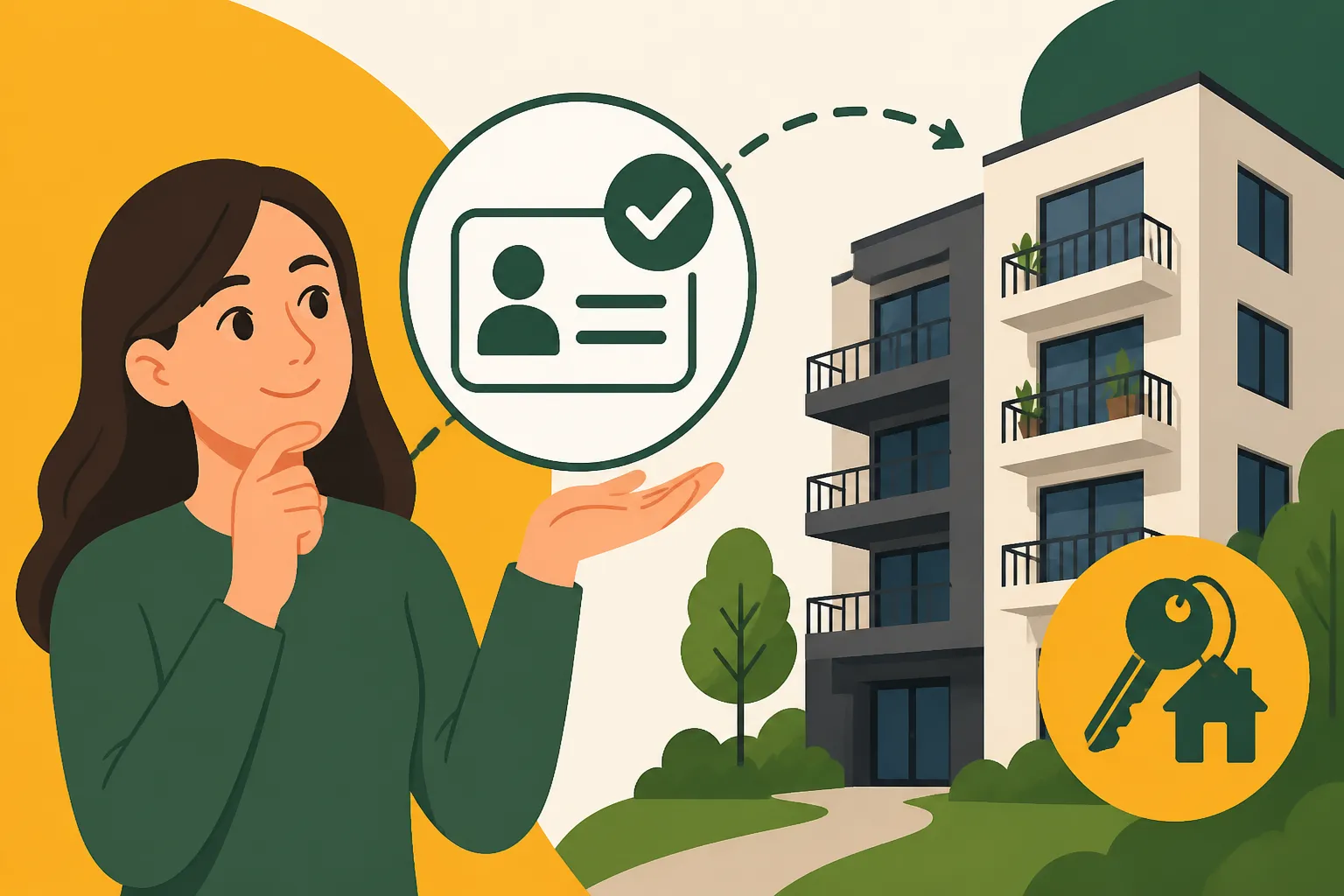
In Lithuania, your Asmens Kodas is more than just a personal code; it's practically your digital fingerprint, your unique identifier across almost all public services and administrative procedures. Think of it as your social security number, tax ID, and national ID rolled into one. You'll need it for things like:
- Registering your place of residence: This is a mandatory step for any foreigner planning to stay long-term.
- Opening a bank account: While some fintechs like Revolut or Wise might get you started, for traditional Lithuanian banks like Swedbank or Luminor, an Asmens Kodas simplifies the process immensely.
- Signing employment contracts: Your employer needs it for tax and social security contributions through Sodra.
- Accessing healthcare: When you register for compulsory health insurance (PSD) or visit a doctor, this code links all your medical records within the E-Sveikata system.
- Dealing with utilities: While not always strictly required to sign a rental contract, landlords often prefer or need it for transferring utility accounts into your name or for official declarations.
- Filing your annual tax return: The Lithuanian Tax Authority (VMI) uses it to track your income and deductions.
Without it, you're essentially operating on the fringes of the system, which can cause significant delays and frustrations. It’s no wonder expats often ask, "How do I get an Asmens Kodas Before Renting an Apartment in Lithuania?" because they quickly realise its ubiquity.
The Chicken-or-Egg Dilemma for Expats
Here's where the real expat headache often kicks in. You need an Asmens Kodas to officially register your residence, but landlords often want you to have a registered address (which implies having a lease) and sometimes even an Asmens Kodas to sign a long-term rental agreement. It's a classic catch-22, and it’s a valid frustration. Many landlords, especially private ones, simply aren't familiar with the nuances of expat immigration processes and prefer the simplicity of a tenant who already has all their ducks in a row.
This can lead to a lot of wasted time and energy, looking at apartments only to hit a wall when it comes to the paperwork. Some landlords might be flexible, especially if you have an official temporary residence permit application in progress, but many will be hesitant without that magic number. Understanding this upfront can save you a lot of grief.
The Essential First Steps: Securing Your Asmens Kodas
So, how do you actually get this all-important code? The process largely depends on your citizenship and your immigration status in Lithuania. There isn't really a way to get an Asmens Kodas before you've initiated your legal right to reside in the country.
The Most Common Pathway: Through Your Residence Permit
For most non-EU/EEA citizens, your Asmens Kodas is typically issued automatically once your application for a temporary residence permit (TRP) is approved and you receive your permit card. When you submit your application through the Migration Department (MIGRIS) portal, and it gets processed, the system generates this code for you.
Here’s the general flow for non-EU citizens:
- Visa Application (if required): Depending on your nationality, you might first need to apply for a National (D) Visa to enter Lithuania.
- Temporary Residence Permit Application: This is the big one. You apply online via the MIGRIS portal, submitting all required documents (proof of funds, accommodation, health insurance, etc.).
- Biometrics and Interview: Once your online application is pre-approved, you'll book an appointment at a MIGRIS office (e.g., in Vilnius or Kaunas) to submit your biometric data (fingerprints, photo) and potentially have a brief interview.
- Permit Issuance and Asmens Kodas: When your TRP is granted, your Asmens Kodas will be assigned, and it will be printed on your residence permit card. This card is your primary ID in Lithuania.
This means you’re unlikely to have an Asmens Kodas before you've even landed in Lithuania or before your residence permit application is well underway. The good news is that once you have your TRP, proving your identity and right to reside becomes much simpler. If you’re wondering how to navigate the system, our guide on How to Apply for a Temporary Residence Permit (TRP) in Lithuania can be a great starting point.
What If I Don't Have a Residence Permit Yet? The Dilemma
This is the "before renting" part of your question, and it's where things get a bit more nuanced.
- For EU/EEA Citizens: As an EU/EEA citizen, you don't need a residence permit. You have the right to reside in Lithuania for up to three months without any registration. If you plan to stay longer, you must declare your place of residence with the local municipality (often handled through the Registrų Centras – Centre of Registers) within those three months. When you declare your residence, your Asmens Kodas will be assigned. This process is generally simpler and faster than for non-EU citizens. Our article on How to Declare Your Right of Residence as an EU Citizen in Lithuania offers more details.
- Non-EU Citizens Waiting for TRP: If you're a non-EU citizen who has just arrived on a National (D) Visa and are waiting for your TRP application to be processed, you are in a transitional phase. You don't have an Asmens Kodas yet, but you have a legal right to be in the country. In this scenario, landlords might accept your passport and proof of your pending TRP application (like the MIGRIS application confirmation) as temporary identification. However, this is at the landlord's discretion and might require more negotiation. This is where the temporary rental strategies, which we'll discuss next, become vital.
The Documents You'll Absolutely Need
Regardless of your path, preparing a solid set of documents is crucial. For getting your Asmens Kodas through a residence permit, or simply for proving your identity and stability to a landlord, you'll likely need:
- Valid Passport: The cornerstone of your identity.
- Visa (if applicable): Your National (D) visa will prove your legal entry and initial stay.
- Proof of Funds: Bank statements showing you can support yourself.
- Health Insurance: This is a mandatory requirement for residence permits. Even if you're an EU citizen, having your EHIC card or private insurance details on hand is smart. Our comprehensive guide on Health Insurance in Lithuania: Compulsory, Private and Travel Options Explained covers all your options.
- Proof of Accommodation: This is the tricky part! For your residence permit, you'll need some proof of accommodation (a signed preliminary rental agreement, a letter from an employer offering accommodation, or a short-term booking). The exact requirements can be found on the MIGRIS website.
- Marriage Certificate/Birth Certificates: If applying for family reunification.
It’s a lot, I know. But having everything organised will make the process less painful.
Navigating the Rental Market Without an Asmens Kodas (Temporarily)
Okay, so you understand that getting the Asmens Kodas usually goes hand-in-hand with establishing your legal residency. But you need a place to live now. How do you bridge that gap?
Engaging with Landlords and Agents
The key here is transparency and being prepared. When you contact landlords or real estate agents, be upfront about your situation.
- Explain Your Status: Clearly state that you are a new arrival, either an EU citizen in the process of declaring residence or a non-EU citizen awaiting your temporary residence permit. Explain that your Asmens Kodas will be issued once your official status is confirmed.
- Offer Alternative Identification: Provide your passport, visa (if applicable), and any official confirmation documents from MIGRIS or Registrų Centras regarding your application. These show you are legitimately in the process of formalising your stay.
- Focus on Reputable Agents: Larger real estate agencies in cities like Vilnius or Kaunas are often more experienced with international clients and understand the nuances of expat immigration. They might have landlords who are more willing to be flexible or can advise you on the best approach. Individual private landlords might be less understanding or willing to take the "risk." You can find good agents through online platforms or expat groups. Our post on How to Find a Reliable Real Estate Agent (Brokeris) in Lithuania has useful tips.
- Propose a Temporary Agreement: If a landlord is hesitant about a full long-term lease without the Asmens Kodas, you could propose an initial short-term agreement (e.g., 3-6 months) that can be extended or converted to a long-term one once your Asmens Kodas is issued. This might be a viable compromise.
Short-Term Solutions and Temporary Accommodation
While you're waiting for your official documents to process and your Asmens Kodas to be issued, looking for short-term accommodation is often the most practical solution.
- Serviced Apartments: Many cities, especially Vilnius and Kaunas, have serviced apartments that offer flexible leases, often from a few weeks to several months. These usually come fully furnished with utilities included, and they are generally more accustomed to foreign tenants who might not yet have all their documents.
- Airbnb/Booking.com: These platforms are excellent for finding places to stay for a few days to a few months. While pricier than long-term rentals, they offer immediate housing without the need for an Asmens Kodas. They also provide a registered address for your initial residence permit application, which is a crucial step for non-EU citizens.
- Expat Groups/Facebook Marketplace: Sometimes, fellow expats or locals offer rooms or apartments for short-term rent in expat Facebook groups. These can be more flexible, but always exercise caution and ensure you visit the property and sign a clear agreement, even if informal.
While you're waiting for your official documents, having reliable internet is a lifesaver. Grab an eSIM from a provider like Airalo the moment you land so you can stay connected for all your apartment hunting and administrative tasks.
The Power of a Strong Rental Contract (Nuomos Sutartis)
Even if you don't have an Asmens Kodas yet, it’s absolutely critical to get a written rental contract (Nuomos Sutartis) for any long-term or even mid-term stay. This contract serves several vital purposes:
- Proof of Accommodation for Residence Permit: For non-EU citizens, a rental contract (even a preliminary one) is often required as proof of accommodation for your residence permit application. For EU citizens, it's what you'll use to declare your place of residence.
- Legal Protection: A written contract protects both you and the landlord. It should clearly outline the rent, deposit, duration of the lease, responsibilities for utilities, and conditions for termination. Our guide on How to Sign a Rental Contract (Nuomos Sutartis) in Lithuania offers an in-depth look at what to expect.
- Utility Connections: Once you have your Asmens Kodas and your residence permit, you’ll want to transfer utility accounts (electricity, gas, water) into your name. Having a formal rental contract will be essential for this, along with your Asmens Kodas. Landlords generally prefer that long-term tenants manage their own utility bills, even if they assist with the initial setup.
Here’s a comparison of typical rental scenarios for new arrivals:
| Feature | Short-Term Rental (e.g., Airbnb, Serviced Apt.) | Long-Term Rental (with Asmens Kodas) | Long-Term Rental (without Asmens Kodas, initially) |
|---|---|---|---|
| Asmens Kodas Required? | No, typically not | Yes, often preferred/needed by landlord | Often causes landlord hesitation, but not strictly required by law for signing if other ID provided. |
| Proof of Residence | Can serve as initial proof for TRP application | Essential for full residence registration | Will be used for full residence registration once Asmens Kodas obtained. |
| Utility Transfers | Usually included in price, no transfer needed | Tenant often registers utilities in own name | Landlord might keep utilities in their name initially, or require tenant's Asmens Kodas for transfer later. |
| Flexibility | High | Low-Medium (standard lease terms) | Medium (may start as temporary, then convert) |
| Cost | Higher daily/weekly rates | Lower monthly rates | Potentially higher initial deposit or less favorable terms due to perceived risk. |
| Paperwork | Minimal (platform booking) | Formal Nuomos Sutartis | Formal Nuomos Sutartis, possibly with clauses for Asmens Kodas update. |
Practical Tips for a Smoother Transition
Moving to a new country is never easy, and the initial administrative hurdles in Lithuania can feel daunting. But with a bit of foresight and the right approach, you can definitely make it smoother.
Communication is Key
I can't stress this enough: clear and proactive communication will save you countless headaches.
- With Landlords/Agents: Be honest about your situation. If you're a non-EU citizen, explain you have a pending TRP application and will receive your Asmens Kodas soon. If you're an EU citizen, explain you'll declare residence and get the code shortly after signing. Offer to provide all other valid identification.
- With Immigration Authorities (MIGRIS): If you have questions about your Asmens Kodas or residence permit status, reach out to MIGRIS. They have a helpful call centre, and while English support can sometimes be a mixed bag, it's worth trying. Knowing the exact status of your application empowers you to communicate better with potential landlords.
- With Your Employer/University: If you’re moving for work or study, your employer or university’s international office often has experience with this exact scenario and can provide valuable support, letters, or even initial accommodation assistance.
Leveraging Expat Resources and Communities
You are not alone in this struggle! There are vibrant expat communities in Lithuania, especially in Vilnius and Kaunas, who have navigated these exact waters.
- Online Forums and Social Media Groups: Join Facebook groups like "Expats in Vilnius" or "Expats in Kaunas." Ask specific questions, and you'll often find people willing to share their experiences and advice. They might even know of landlords or agents who are expat-friendly.
- Relocation Services: If your company is relocating you, they often provide relocation services that handle everything from finding accommodation to assisting with immigration paperwork. If you’re moving independently, consider hiring a local relocation specialist, especially if you anticipate language barriers or complex situations. If you're planning a full move, comparing international moving services on platforms like Sirelo can save you a lot of headache.
- Your Embassy/Consulate: While they can't directly help with Lithuanian bureaucracy, your country's embassy or consulate in Vilnius might have information or lists of service providers (like lawyers) who can assist expats.
When to Seek Professional Help
Sometimes, DIY is not the best approach, especially when dealing with legal documents and immigration.
- Immigration Lawyers: If your situation is complex (e.g., self-employment residence, family reunification with unique circumstances, or past immigration issues), consulting an immigration lawyer in Lithuania is a wise investment. They can guide you through the residence permit process, ensuring your Asmens Kodas is obtained correctly and without unnecessary delays.
- Real Estate Lawyers: For significant rental agreements, or if you encounter a landlord who seems particularly difficult or demands unusual terms, a real estate lawyer can review the rental contract (Nuomos Sutartis) to protect your interests. This is especially true if you're signing a long-term lease without yet having your Asmens Kodas.
Ultimately, while getting an Asmens Kodas before renting a long-term apartment in Lithuania is challenging because it's tied to your official residency, you can definitely rent temporary accommodation and start your formal immigration process. Once your residence permit is issued and your Asmens Kodas is assigned, the rental market will open up significantly, allowing you to settle into your new Lithuanian home with peace of mind.
Disclaimer
Please note that immigration laws and administrative procedures in Lithuania can change. While we strive to provide the most accurate and up-to-date information, this guide is for informational purposes only and does not constitute legal advice. Always consult with official sources such as the Lithuanian Migration Department (MIGRIS), the Centre of Registers (Registrų Centras), or a qualified legal professional for the most current and personalised guidance.