How Do I Apply for a Temporary Residence Permit in Lithuania?
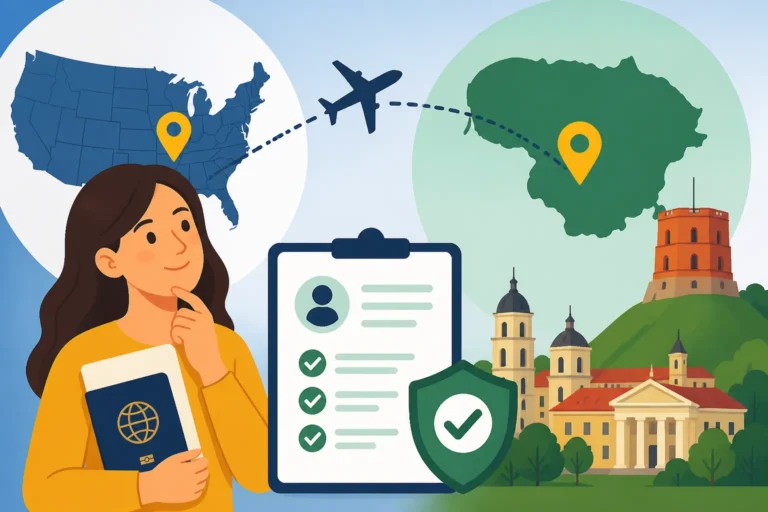
Navigating the world of Lithuanian residence permits can feel like trying to solve a Rubik's Cube blindfolded, especially when you're just trying to establish a new life here. The bureaucracy, the precise requirements, and the sheer volume of paperwork can be incredibly daunting. This guide is designed to walk you through every step of applying for a Temporary Residence Permit (TRP) in Lithuania, offering clear, empathetic advice so you can approach the process with confidence and avoid common pitfalls.
Understanding the Temporary Residence Permit (TRP) in Lithuania
Moving to a new country like Lithuania is an adventure, but for many non-EU/EEA citizens, it quickly bumps up against the reality of immigration requirements. A Temporary Residence Permit, or TRP (Laikino Gyvenimo Leidimas in Lithuanian), is your golden ticket for staying in Lithuania for more than 90 days within any 180-day period. It's essentially official permission from the Lithuanian government to live, work, or study here for a specific duration, typically one to three years, depending on your grounds for residency.
The TRP is a crucial document that validates your long-term commitment to living in Lithuania, whether you're relocating for a job in Vilnius's booming tech sector, pursuing a degree at Kaunas University of Technology, or joining your family. It’s more than just a piece of paper; it’s your key to accessing many aspects of life here, from healthcare to banking.
Who Exactly Needs a TRP?
If you're not a citizen of an EU or EEA country, or Switzerland, then chances are you'll need a TRP to settle down in Lithuania long-term. This applies to a wide range of individuals and situations. For example, if you've secured a job offer from a Lithuanian company, you’ll need a TRP based on employment. This is different from the shorter-term national (Type D) visa, which might get you into the country initially but won't cover your entire stay.
Students coming to study at one of Lithuania's universities also require a TRP, as their courses typically last longer than three months. Similarly, if you’re joining a spouse or other immediate family member who is already a legal resident or citizen here, you'll apply for a TRP under family reunification grounds. Even if you're looking to start a business or engage in self-employment, a TRP is your necessary credential. Basically, if your stay is intended to be for several months or years and you're not from a 'privileged' passport country, the TRP is what you'll be seeking.
Why a TRP, Not Just a Visa?
You might be thinking, "Can't I just get a long-stay visa?" While a National (Type D) Visa allows you to stay in Lithuania for more than 90 days, it’s often a stepping stone, valid for a maximum of one year, and usually associated with a specific purpose like a job or studies before applying for a full TRP. The TRP, on the other hand, grants you more stability and integrates you deeper into Lithuanian society. It’s explicitly designed for long-term residency.
With a TRP, you gain the right to access the public healthcare system (provided you register for Registering for Compulsory Health Insurance (PSD) in Lithuania (2027)) and other social services. You can open a bank account more easily – check out guides like The Expat Guide to Opening a Bank Account in Lithuania for specifics – and generally integrate into daily life without constant worry about your legal status. It allows you to feel truly rooted, rather than just a visitor. The permit card itself also acts as a valid travel document within the Schengen Area, offering a lot more flexibility than a simple visa.
The Application Journey: Step-by-Step for Your Lithuanian TRP
The journey to obtaining your Temporary Residence Permit can feel like a marathon, not a sprint. It demands patience, meticulous attention to detail, and a good understanding of the process. The main authority you'll be dealing with is the Migration Department (Migracijos departamentas) under the Ministry of Interior. Their online portal, MIGRIS, will become your best friend – or your biggest headache, depending on the day.
The process primarily involves an online application, followed by an in-person appointment. Skipping steps or providing incorrect information can lead to significant delays, so it's vital to get it right the first time.
Gathering Your Mountain of Documents
This is arguably the most critical and often the most frustrating part of the entire TRP application. The Migration Department requires a precise set of documents, and they are famously strict about completeness and accuracy. Imagine you're building a complex puzzle, and every single piece has to fit perfectly. Missing even a minor stamp or signature can send you back to square one. For a deeper dive into the specific paperwork, you might want to read How to Prepare Documents for a Lithuanian Residence Permit Application.
Here's a general checklist of what you'll typically need, but remember to always consult the official MIGRIS portal for your specific situation, as requirements can vary based on your nationality and the grounds for your permit (work, study, family, etc.):
- Valid Passport: This is obvious, but ensure it has sufficient validity beyond your intended permit duration.
- Application Form: Filled out online via MIGRIS.
- Photograph: A recent, high-quality passport-style photo.
- Proof of Sustenance: This means proving you have enough money to support yourself. This could be bank statements, an employment contract with your salary specified, or a letter from a sponsor. For 2026, the minimum required funds are typically 1 monthly minimum wage for each month of your intended stay, plus return travel costs.
- Proof of Accommodation: A rental agreement (nuomos sutartis), property ownership documents, or a letter from a host confirming your place of residence. Remember, declaring your place of residence is a requirement here.
- Health Insurance: A valid health insurance policy covering your entire intended stay. This is where a global provider like Cigna Global can be a lifesaver, as their policies are often recognized internationally and designed with expats in mind. Make sure your chosen policy meets the specific Lithuanian requirements for coverage limits and duration.
- Criminal Record Certificate: Often required from your home country, and sometimes from any other country where you've resided for a significant period.
- Grounds for Residence: This is the core of your application.
- For Work: An employment contract, a work permit (if applicable), and documents from your employer.
- For Study: A letter of acceptance from a Lithuanian educational institution.
- For Family Reunification: Marriage certificate, birth certificates, and proof of your family member's legal status in Lithuania.
- State Fee Payment Confirmation: You'll need to pay an administrative fee for processing your application.
- Asmens Kodas: While you might apply for this as part of your residence process, having it can streamline things. Check out How to Apply for an Asmens Kodas as Part of Your Residence Process for more information.
All foreign documents usually need to be translated into Lithuanian by a certified translator and, in many cases, apostilled or legalized. Don't underestimate this step; the Migration Department will not accept untranslated or improperly certified documents.
The Online Application via MIGRIS
Once you've diligently gathered all your documents, the next step is to head over to the MIGRIS e-system. This online portal is where you'll submit your application electronically. While it's designed for efficiency, it can still be tricky. You'll need to create an account, which often requires a valid email and phone number.
The system will guide you through various sections, asking for personal details, your chosen grounds for residence, and information about your finances and accommodation. You'll upload scanned copies of all your supporting documents here. Ensure your scans are clear, legible, and adhere to any size or format requirements specified by the system. A common mistake is uploading blurry or incomplete scans, which can lead to your application being rejected. Take your time, double-check every field, and save your progress frequently. It’s better to spend an extra hour verifying details online than facing a delay of weeks or months later.
Booking and Attending Your Appointment
After successfully submitting your application and uploading all documents on MIGRIS, you’ll typically be prompted to book an in-person appointment at a regional branch of the Migration Department. This is where they verify your identity, collect your biometric data (fingerprints and a live photo), and cross-check your physical documents against the uploaded versions. Slots can fill up quickly, especially in larger cities like Vilnius or Kaunas, so book your appointment as soon as the system allows. For advice on securing a slot, see How to Book an Appointment at the Migration Department (MIGRIS) in Lithuania.
On the day of your appointment, arrive on time with all your original documents, including your passport, and any translations or apostilles. Dress appropriately, as you’ll have your photo taken. The staff at the Migration Department will review your file, ask any clarifying questions, and take your fingerprints and photograph. This is usually the final physical interaction you'll have until it's time to collect your permit. Be polite, patient, and prepared to answer questions concisely.
Common Reasons for TRP Refusal and How to Avoid Them
It’s disheartening to hear about a TRP application being refused, especially after investing so much time and effort. While the Migration Department strives for fairness, they operate on strict regulations. Understanding the most common reasons for refusal can help you proactively avoid these pitfalls and ensure a smoother process.
The stress of waiting for a decision is real, and the last thing you want is a rejection. Many experienced expats will tell you that the key to success is preparation and attention to detail.
The Pitfalls of Incomplete or Incorrect Documents
This is hands down the number one reason for TRP application rejections. The Migration Department simply cannot process an application if the required information or documents are missing or incorrectly presented. There are countless reports of people being sent away because a translation wasn't certified correctly, a bank statement was missing a stamp, or a photograph didn't meet the exact specifications.
Hypothetical Scenario: Let's say you're applying for a TRP based on employment. You've uploaded your employment contract, but forgot to include the supplementary agreement detailing your work duties, which was referenced in the main contract. Or perhaps your criminal record certificate was from six months ago, and they require one no older than three months. These small oversights can lead to a formal rejection. To avoid this, create a detailed checklist based on the official MIGRIS requirements for your specific situation. Don't assume anything. Get professional help for translations if you're unsure, and double-check every date, signature, and stamp. When packing your documents for the in-person appointment, arrange them in the order they appear on the checklist to make it easier for the processing officer.
Proving Your Financial Stability
Lithuania wants to ensure that newcomers can support themselves and won't become a burden on the state. This is why proving sufficient funds is a non-negotiable part of the TRP application. The exact amount required changes and is typically linked to the national minimum wage. As a general rule, you must demonstrate you have enough funds to cover your living expenses for the entire period of your requested permit, plus the cost of your return travel.
What they look for:
- Bank Statements: These should clearly show consistent income or sufficient savings. They usually require statements covering the last 3-6 months.
- Employment Contract: If you have a job offer, your contract should clearly state your salary, which must meet or exceed the required minimum.
- Sponsorship Letters: If someone else is supporting you, they'll need to provide proof of their own financial stability and a notarized letter confirming their commitment to support you.
Failing to demonstrate these funds convincingly can lead to refusal. Avoid submitting statements from accounts with erratic deposits or last-minute large transfers, as these can raise red flags.
Maintaining Your "Good Standing"
Lithuanian immigration authorities conduct thorough background checks to ensure applicants do not pose a threat to public order or national security. This includes checking for any criminal records or serious breaches of immigration laws in Lithuania or elsewhere.
What this means for you:
- Clean Criminal Record: You'll generally need to provide a criminal record certificate from your home country and any other country you've resided in for over a year within a certain timeframe. Ensure these are properly translated and apostilled.
- Adherence to Laws: Any past immigration violations, such as overstaying a visa in the Schengen area, can significantly jeopardize your application. It’s crucial to be completely transparent about your history.
While minor traffic infractions are unlikely to be an issue, any serious criminal history or perceived threat to national security will almost certainly lead to a refusal. Be honest and upfront in your application, as inconsistencies or attempts to conceal information can be more damaging than the actual issue itself.
Life with a TRP: What Happens Next and Beyond
Congratulations, your application has been approved! After what can feel like an eternity of waiting, you’ll receive notification that your Temporary Residence Permit is ready. This isn't the end of your administrative journey, but it definitely marks a significant milestone. You've officially been welcomed into Lithuania for the long haul, and it’s time to embrace your new life.
Once you have your TRP in hand, you’re no longer just a visitor. You’re a resident, with new rights and responsibilities.
Receiving Your TRP Card
The final step in the application process is to collect your physical TRP card. You'll typically be informed via the MIGRIS system or directly by email when your card is ready for pickup at the Migration Department branch where you had your biometrics taken. Make sure to bring your passport for identification when collecting it.
The TRP card itself is a credit card-sized document with your photo, personal details (including your Asmens Kodas), and the validity period of your permit. This card is your official proof of residence in Lithuania and will be used for various purposes, from accessing services to travelling within the Schengen Area. Keep it safe, just like you would your passport. It's an essential document for your new life here.
Your Rights and Responsibilities as a TRP Holder
With a TRP, you gain several important rights. You have the right to legally reside in Lithuania for the duration of your permit. If your permit is based on work, you can engage in the specific employment activities outlined in your application. If it's for study, you can attend your chosen educational institution. You are also entitled to access public healthcare services once you've registered for compulsory health insurance (PSD). This means you can register with a family doctor, go to polyclinics, and receive medical treatment. For a full understanding of the system, check out The Complete Guide to Healthcare in Lithuania for Expats (2027).
Furthermore, your TRP card allows you to travel freely within the Schengen Area for up to 90 days in any 180-day period, just as if you had a Schengen visa, without needing additional visas for short trips to other member states. This is a huge perk for many expats who want to explore Europe.
However, with these rights come responsibilities. You must always abide by Lithuanian laws. You must also inform the Migration Department of any changes to your circumstances, such as a change of address (you need to declare your place of residence!), employer, or marital status. Failing to do so can lead to complications, including potential issues when you try to renew your permit. It's also your responsibility to ensure your permit remains valid; allowing it to expire can lead to serious legal consequences.
Renewing Your Permit: Don't Wait Until the Last Minute
Most TRPs are issued for one to three years. As the expiry date approaches, you'll need to apply for a renewal if you intend to continue living in Lithuania. The renewal process is similar to the initial application, though it can sometimes be a bit smoother as you already have an existing file with the Migration Department. You'll use the MIGRIS system again, update your information, and provide renewed proof of funds, accommodation, and the continuation of your grounds for residence (e.g., ongoing employment contract, continued studies).
Crucial Advice: Do not wait until your permit is about to expire to start the renewal process. The Migration Department recommends applying for renewal at least 2-4 months before your current TRP expires. This provides ample time for processing and avoids any gaps in your legal residency status, which can cause significant problems. Plan ahead, gather your documents early, and submit your application well in advance. For specific guidance, look into How to Renew Your Lithuanian Residence Permit. Thinking about future moves? Companies like Sirelo can help you plan logistics and ensure you're aware of continued residency requirements if you're ever considering a change.
Staying on top of your TRP status is key to a stress-free expat life in Lithuania.
| Aspect | Initial TRP Application (General) | TRP Renewal Application (General) |
|---|---|---|
| Submission Method | Primarily online via MIGRIS, followed by in-person appointment. | Primarily online via MIGRIS, followed by in-person appointment. |
| Key Documents | Passport, proof of funds, accommodation, health insurance (e.g., from Cigna Global), criminal record, grounds for residence. | Passport, updated proof of funds, accommodation, health insurance, proof of continued grounds for residence. |
| Proof of Funds | Often requires bank statements + employment contract/sponsorship for initial period. | Updated bank statements/employment contracts proving continued stability. |
| Accommodation Proof | Rental contract, ownership, or host letter. | Updated rental contract or proof of continued legal accommodation. |
| Criminal Record Certificate | Often required from home country/previous residences. | Typically not required for renewal if one was provided previously and you've been living legally in Lithuania. |
| Health Insurance | Mandated for the entire duration of the requested permit. | Mandated for the entire duration of the requested permit. |
| Processing Time | Can range from 1-4 months, sometimes longer. | Often faster than initial application, but still allow 1-3 months. |
| Timing | Apply from abroad or with a valid National (D) Visa. | Apply at least 2-4 months before current TRP expires. |
| MIGRIS Usage | Create new profile, upload all documents. | Log in to existing profile, update information, upload new/renewed documents. |
Disclaimer
The information provided in this guide is intended for general informational purposes only and does not constitute legal advice. While we strive to keep the information up-to-date and accurate, immigration laws and requirements in Lithuania are subject to change without notice. It is highly recommended to consult the official website of the Lithuanian Migration Department (Migracijos departamentas) or seek advice from a qualified immigration lawyer for the most current and personalized guidance regarding your specific situation.