Permanent Residence in Lithuania: The Complete Pathway (2027)
Ah, the quest for permanent residence in Lithuania! If you've spent years navigating the temporary permit labyrinth, you know the feeling: a constant whisper of "what if" in the back of your mind, the endless renewals, the subtle sense of being just a visitor. But fear not, my seasoned fellow expat, because this comprehensive guide is here to transform that daunting pathway into a clear, navigable road, meticulously laying out every step to finally calling Lithuania your forever home.
Understanding Permanent Residence in Lithuania: The Golden Ticket
After years of calling Lithuania home, even on a temporary basis, many of us begin to dream of something more enduring. We've built lives, made friends, learned enough Lithuanian to order coffee and deal with the komunaliniai mokesčiai (utility bills), and truly feel settled. That's where permanent residence comes in – it’s not just another stamp in your passport, it's a profound shift, a declaration that you're here to stay, with all the stability and rights that entails.
What Exactly is Permanent Residence (Leidimas Nuolat Gyventi Lietuvos Respublikoje)?
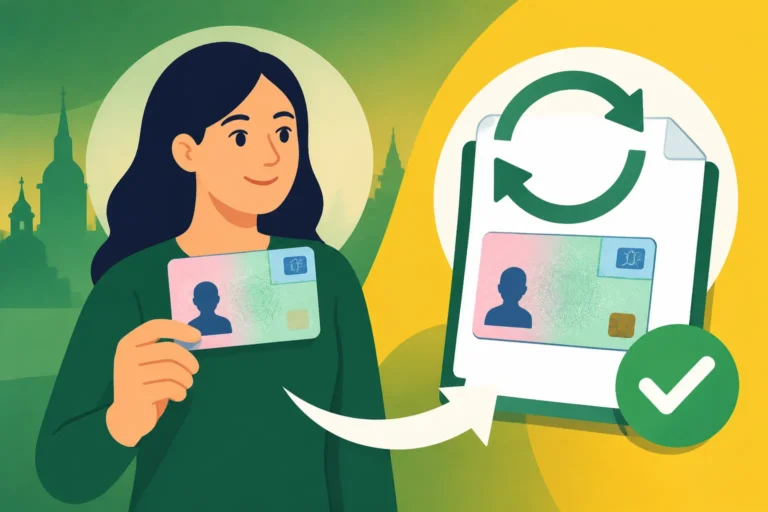
Let's cut through the jargon. In official terms, a Permanent Residence Permit is called a "Leidimas nuolat gyventi Lietuvos Respublikoje." For years, you might have held a "Leidimas laikinai gyventi," a Temporary Residence Permit (TRP). While your TRP allowed you to live, work, or study here, it always came with an expiry date, a nagging reminder of impending bureaucracy. You had to constantly worry about How to Renew Your Lithuanian Residence Permit and ensure all your ducks were in a row again.
Permanent residence, however, is a game-changer. It grants you the right to live in Lithuania indefinitely. Think of it as finally getting a key to the city that doesn't expire every year or two. While the physical card still has a validity period (usually 5 years), the status itself is permanent, meaning you won't be going through the full application process again and again. It truly validates the time and effort you've invested in building your life here, making you feel less like a guest and more like a true resident. This stability is invaluable, especially when planning a long-term future, whether it's buying property, starting a family, or simply knowing you don't have to keep proving your right to be here.
Key Benefits of Holding Permanent Residence
The transition from temporary to permanent residence opens up a world of benefits that significantly enhance your life in Lithuania. The most immediate and perhaps most impactful is the sense of stability it brings. No more worrying about renewing your permit or the anxiety of a pending application. This peace of mind alone is worth its weight in gold, allowing you to focus on truly living your life rather than constantly dealing with administrative hurdles.
Beyond the emotional comfort, permanent residence grants you nearly all the same rights as Lithuanian citizens, with a few key exceptions we'll touch on later. This includes unrestricted work and study rights – you're no longer tied to a specific employer or educational institution based on your permit type. You can switch jobs, start a business, or pursue any educational path without needing to inform the Migration Department of every change. Furthermore, you gain broader access to public services, including the public healthcare system – something many expats navigate carefully with options like Cigna Global during their temporary stay, but with permanent residence, your access is solid. You'll contribute to and benefit from the national social security and healthcare systems on par with citizens, streamlining your life considerably. Lastly, your freedom of movement within the Schengen Area becomes truly unrestricted, eliminating the pesky 90/180-day rule worries that can plague non-EU temporary residents. You can travel to other Schengen countries for extended periods without concern, treating Europe truly as your backyard.
The Difference Between Permanent Residence and Citizenship
While obtaining permanent residence is a huge milestone and offers tremendous benefits, it's essential to understand that it's not the same as gaining Lithuanian citizenship. Permanent residence grants you almost all the rights of a citizen within Lithuania, but without the actual passport or full political rights.
The most significant differences lie in:
- Voting Rights: As a permanent resident, you can vote in municipal elections, but you cannot vote in national parliamentary (Seimas) elections or presidential elections.
- Passport: You won't hold a Lithuanian passport, meaning you'll continue to travel on your country of origin's passport. This also means you don't receive diplomatic protection from Lithuania when abroad.
- Public Office: You generally cannot hold certain high-level public offices that require Lithuanian citizenship.
- Renunciation of Previous Citizenship: For citizenship, Lithuania often requires you to renounce your previous citizenship (though exceptions exist, particularly for those who can claim Lithuanian Citizenship: Routes Through Naturalisation and Descent (2027)). With permanent residence, you retain your original citizenship without any issues.
Think of permanent residence as the penultimate step towards full integration. It signifies your long-term commitment and deep ties to Lithuania, and for many, it serves as the crucial foundation for eventually pursuing citizenship, once they meet the additional requirements like a longer residence period, language proficiency, and knowledge of the Constitution, which are much more stringent than for PR.
Eligibility Criteria: Who Can Apply for Permanent Residence?
So, you're ready to make it official? Excellent! But before you dive into the paperwork, you need to understand the eligibility requirements. This isn't a quick sprint; it's a marathon that often requires years of established presence and a clear demonstration of your commitment to Lithuania. The Migration Department (MIGRIS) has strict guidelines, and understanding them from the outset will save you a lot of heartache.
The Five-Year Rule for Third-Country Nationals
This is, hands down, the most critical criterion for most non-EU/EEA citizens seeking permanent residence in Lithuania. You must demonstrate continuous legal residence in Lithuania for the last five years based on a valid Temporary Residence Permit (TRP). The word "continuous" here is key, and it trips up many expats who travel frequently for work or holidays. Generally, this means you haven't been absent from Lithuania for more than six consecutive months, or more than ten months in total, over the entire five-year period.
Imagine you've been living and working in Vilnius since January 1, 2021, on a series of TRPs. To apply for permanent residence in early 2026, you'd need to show that your TRPs have been valid without significant breaks and that your physical presence in Lithuania meets the continuous residence criteria. Short trips back home for holidays or brief work assignments are usually fine, but a six-month sabbatical in Thailand, for instance, could reset your clock. Even for EU Blue Card holders, while the rules can be slightly more flexible regarding accumulating time in other EU countries, the underlying principle of established, legitimate residency remains. Your previous TRPs could have been for work, study, family reunification, or as a highly skilled worker – as long as they were valid and uninterrupted, they count towards this vital five-year period.
Financial Stability and Means of Support
The Lithuanian government wants to ensure that you won't become a burden on the state once you gain permanent residence. Therefore, proving your financial stability is a non-negotiable part of the application. You need to demonstrate that you and any dependents (if applicable) have sufficient means to support yourselves without resorting to social assistance. This isn't about being rich; it's about being self-sufficient and financially responsible.
What does this look like in practice? Typically, you'll need to provide solid proof of income. For employed individuals, this means recent employment contracts, salary slips for the past several months (e.g., 6-12 months), and bank statements showing regular income deposits. If you're self-employed or run a business, you'll need to submit official company documents, tax returns, and business bank statements that clearly illustrate a consistent and adequate income stream. The specific amount required can fluctuate, but it's often tied to the national minimum wage or average wage, demonstrating that you earn enough to cover your living expenses comfortably. For 2026, you'll want to ensure your income significantly surpasses the minimum wage to show robust financial standing. Don't forget to factor in any dependents – the required amount increases with each family member you're supporting.
Accommodation and Integration Proof
Beyond ticking the boxes for time and money, demonstrating a genuine connection to Lithuania and a stable place to live is also crucial. The Migration Department is looking for evidence that you are integrated into society and have a permanent base here.
First up, stable accommodation. You'll need to provide proof that you have a consistent place to live. This could be a valid, long-term rental agreement (nuomos sutartis) registered with Registrų Centras, or if you've invested in a home, proof of property ownership. They want to see that your living situation is stable and not precarious. Secondly, while not always a hard legal requirement for permanent residence itself (it's often more strictly applied for citizenship), demonstrating some level of integration can certainly strengthen your application. This might include attending Lithuanian language courses (even if you're not yet at the A2 level required for naturalisation via Understanding the Lithuanian Language and Constitution Exams for Citizenship), showing involvement in local community activities, or simply having a long history of paying taxes and contributing to society. Any steps you've taken to understand and participate in Lithuanian life, beyond just living here, can be beneficial in painting a picture of a truly settled individual.
The Application Process: Navigating MIGRIS
Alright, you've checked your eligibility, meticulously counted your days in and out of the country, and compiled every financial statement known to man. Now, it's time for the real fun: the application itself. For most expats, this means a deep dive into the MIGRIS electronic services system, followed by the inevitable in-person appointment. It can feel like climbing Mount Everest with a stack of papers, but with a clear roadmap, you'll conquer it.
Gathering Your Documentation: A Mountain of Paperwork
Let's be brutally honest: this is often the most time-consuming and frustrating part of the process. The Migration Department requires a comprehensive set of documents, and any missing or incorrect piece can lead to delays or even rejection. It’s not just about having the documents; it’s about having them in the right format, translated, and legalised where necessary.
Here’s a common checklist, though you should always consult the official MIGRIS website for the most current requirements:
- Valid Passport: And copies of all pages, including your current TRP and entry stamps.
- Previous TRP Cards: Copies of all your temporary residence permits showing continuous residence.
- Proof of Income: As discussed, employment contracts, salary slips, bank statements. If self-employed, tax declarations and business registration documents.
- Proof of Accommodation: A valid rental agreement (nuomos sutartis), property ownership documents, or a letter from your landlord. Make sure your Declaring Your Place of Residence in Lithuania: The Complete Guide is up to date.
- Police Clearance Certificate: You’ll need this from your country of origin and any other country you have resided in for the past five years. These often have a short validity period (e.g., 3-6 months), so time this carefully.
- Birth Certificate: And for married individuals, your marriage certificate. These will almost certainly need to be officially translated into Lithuanian and apostilled/legalised in your home country.
- Health Insurance: While public health insurance (PSD) kicks in once you're employed or self-employed and paying contributions, you might need to show proof of supplementary private health insurance, especially if there were gaps in your PSD coverage or if you wish to show extra coverage. Companies like Cigna Global are often a popular choice among expats for comprehensive international health insurance.
- Application Form: Filled out diligently.
- State Fee Payment Receipt: Don't forget this!
The sheer volume and precision required can be overwhelming. Each document needs to be a perfect scan for the online portal, and the originals must be ready for your in-person appointment. If you're coming from a country that isn't part of the Hague Apostille Convention, documents might need a more complex consular legalisation, which takes even more time. My advice? Start gathering these documents months in advance, especially those requiring international processing or official translations. For a more detailed walkthrough, check out How to Prepare Documents for a Lithuanian Residence Permit Application.
Online Application via MIGRIS: Your Digital Gateway
Lithuania, in its forward-thinking way, has largely digitised its immigration processes through the MIGRIS electronic services portal. This is where most of your journey will begin, transforming that intimidating pile of paper into digital files.
Here’s a general step-by-step guide:
- Create an Account: If you haven't already, you'll need to register on the MIGRIS portal. This usually requires an email and creating a secure password.
- Select Your Application Type: Carefully choose the application for a Permanent Residence Permit (Leidimas nuolat gyventi). Be sure not to accidentally select a temporary permit!
- Fill Out the Application Form: This digital form is extensive. Take your time, double-check every field, and ensure all information matches your documents exactly. Any discrepancies can raise red flags.
- Upload Scanned Documents: This is where your carefully prepared digital copies come into play. MIGRIS has specific requirements for file types, sizes, and clarity. Make sure your scans are high-quality and easily readable. Categorise them correctly within the system.
- Pay the State Fee: The fee for processing a permanent residence permit application must be paid electronically through the portal. This fee covers the administrative costs, and it's non-refundable, so ensure everything is correct before you pay.
- Book an Appointment: Once your application is submitted and the fee is paid, you'll be able to book an in-person appointment at a MIGRIS branch in your chosen city (e.g., Vilnius, Kaunas, Klaipėda). These appointments can fill up quickly, especially in larger cities, so try to book as soon as possible after submitting your online application. For more specific advice on this step, refer to How to Book an Appointment at the Migration Department (MIGRIS) in Lithuania.
The In-Person Appointment and Biometrics
After the digital submission and the nail-biting wait for your appointment slot, the big day arrives. This is where you physically interact with the Migration Department and provide your biometrics. While the online system handles much of the data submission, the in-person visit is crucial for verification and identification.
When you go to your appointment, make sure you bring all your original documents, not just copies. The MIGRIS officer will cross-reference your uploaded digital copies with the physical originals. They might ask you questions about your application, your stay in Lithuania, or your future plans. Be prepared to answer honestly and clearly. This is also when your biometrics will be collected:
- Fingerprinting: Your fingerprints will be digitally scanned.
- Photo Capture: A photo will be taken for your new residence card. This is usually done on-site to ensure it meets their specifications, so don't worry too much about bringing your own passport-style photos unless specifically requested.
It’s important to remain patient and polite throughout the process, even if there are delays or the officer seems stern. They are simply doing their job to ensure all regulations are met. Once the biometrics are captured and your documents are verified, you'll usually receive a receipt and information on how to track the status of your application. The wait then begins, but at least this significant step is behind you. For details on what happens after this, you'll want to read How to Get a Lithuanian Residence Permit Card and Its Biometrics.
Key Considerations and Potential Hurdles
The path to permanent residence, while clear, is not always smooth. There are specific rules and potential pitfalls that can derail an otherwise perfectly prepared application. Knowing these in advance and planning accordingly can save you from significant disappointment and delays. After all the effort you've put in to make Lithuania your home, you don't want to stumble at the final stretch.
Absences from Lithuania: Mind the Clock!
This is where many expats unintentionally trip up. The "continuous residence" requirement is not just about having a valid TRP for five years; it's about physically being present in Lithuania for the vast majority of that time. The rule is quite strict: you cannot have been absent from Lithuania for more than six consecutive months at any one time, and your total cumulative absences over the entire five-year period must not exceed ten months.
Let’s imagine you took a seven-month break to travel back to your home country, or perhaps you had an extended work assignment in another European capital. Even if your TRP remained valid, that single seven-month absence would reset your five-year clock, meaning you'd have to start counting again from your return date. Similarly, if you take multiple short trips that add up to more than ten months over the five years, your eligibility could be jeopardised. This rule highlights the importance of keeping track of your travel dates, especially if your job involves frequent international travel. For EU Blue Card holders, there's a slight variation: you can accumulate the required 5 years of residence across different EU member states, provided you've lived in Lithuania for at least the last two years immediately preceding your application. Even then, overall absences are capped at 12 consecutive months and 18 months cumulatively within the EU. Be meticulous with your travel records!
Maintaining Financial Viability
We talked about proving financial stability during the application, but it's equally important to consider what happens if your financial situation changes during the application process or even after you've received your permanent residence. Life happens, jobs are lost, businesses face downturns.
If your income source changes significantly while your application is pending, MIGRIS might ask for updated proof of funds. If you lose your job, for example, you would need to demonstrate that you are actively seeking new employment and that you have sufficient savings to support yourself in the interim. Relying solely on unemployment benefits for an extended period could be problematic, as the core requirement is to be self-sufficient. It's about demonstrating future viability, not just past income. This underscores the need for a stable financial footing. If you're considering a career change or a period of unemployment, it might be prudent to ensure your permanent residence application is fully processed and approved beforehand, or at least have a robust financial buffer.
The Waiting Period and Decision
Once you've submitted your application and had your in-person appointment, the hardest part for many begins: the waiting game. The official processing times for permanent residence permits can vary, but generally, MIGRIS aims to process applications within 2 to 4 months. However, as any expat who has dealt with Lithuanian bureaucracy will tell you, official timelines are often "suggestions." It's not uncommon for applications to take longer, especially if your case is complex or if they require additional documentation.
The uncertainty can be incredibly stressful, particularly if your current TRP is nearing expiration. You can usually check the status of your application online via the MIGRIS portal, which can alleviate some anxiety, but it won't necessarily speed things up. If the Migration Department needs further information or clarification, they will usually notify you through the portal or by mail. Respond promptly and comprehensively to any requests to avoid further delays. There's little to do during this period but wait patiently, but understanding the typical waiting periods can help manage expectations. For insights into general processing times for residence permits, you might find What Is the Processing Time for a Lithuanian Residence Permit? helpful.
Special Pathways and Exceptions
While the five-year rule is the most common path to permanent residence, Lithuania, as an EU member state, also has specific provisions for certain categories of individuals. These alternative routes can offer a faster track or different criteria, acknowledging the unique circumstances of highly skilled workers and family members of EU citizens. It's worth exploring if your situation fits one of these categories, as it could simplify your journey significantly.
EU Blue Card Holders
For highly skilled non-EU professionals, the EU Blue Card offers a distinct advantage on the path to permanent residence. The EU Blue Card is a special residence and work permit for highly qualified individuals from outside the EU/EEA, designed to attract talent to the European Union. If you hold an EU Blue Card in Lithuania, your pathway to permanent residence is typically shorter and more flexible.
Instead of the standard five years of continuous residence exclusively in Lithuania, EU Blue Card holders can often apply for Long-Term Resident (EU) status (which is essentially permanent residence with wider EU mobility rights) after two years of continuous residence in Lithuania, provided that immediately prior to this, they have spent three years continuously residing with an EU Blue Card in another EU member state. This means you could potentially obtain permanent residence status after just two years in Lithuania, if you had a prior EU Blue Card experience. This also comes with other benefits, such as easier family reunification processes. This expedited route acknowledges the significant contribution and high demand for such skilled workers within the EU. For more information on this specific permit, you can consult Understanding the EU Blue Card for Skilled Workers in Lithuania.
Family Members of Lithuanian Citizens or EU/EEA Citizens
If your life in Lithuania is primarily linked through family ties to a Lithuanian citizen or an EU/EEA citizen exercising their free movement rights here, your route to permanent residence will likely follow different regulations, often rooted in EU law.
For instance, spouses, registered partners, dependent children, and sometimes dependent parents of a Lithuanian citizen or an EU/EEA citizen living in Lithuania usually have a more streamlined path. They typically apply for a temporary residence permit based on family reunification, and after a certain period of continuous residence (often five years, but under EU family reunification rules, which can be less restrictive regarding absences), they too can become eligible for permanent residence. The specifics depend on the nationality of the family member and whether the Lithuanian citizen is exercising EU free movement rights or residing in Lithuania. For example, a non-EU spouse of a Lithuanian citizen might apply for residence based on How to Apply for Residence Based on Marriage to a Lithuanian Citizen, while other family members might fall under general How to Apply for Family Reunification in Lithuania?. These routes generally prioritize keeping families together and leverage the fundamental right to family life recognized across the EU.
Long-Term Resident (EU) Status vs. Lithuanian PR
This is a point of frequent confusion for many expats. When you apply for permanent residence in Lithuania, you are actually applying for "Leidimas nuolat gyventi Lietuvos Respublikoje," which is national permanent residence. However, there's also the "Long-Term Resident (EU)" status, or "leidimas nuolat gyventi ES," which is granted under broader EU directives. While similar, there are key differences in scope.
National permanent residence grants you the right to live and work indefinitely in Lithuania. Long-Term Resident (EU) status, while also permanent in nature, offers enhanced mobility rights across the European Union. With an EU Long-Term Resident permit, after spending five years in an EU country, you can potentially move to other EU member states for longer periods or even apply for a residence permit there under more favourable conditions, without having to meet the full range of national immigration criteria from scratch. The eligibility criteria are largely the same – five years of continuous legal residence, stable income, health insurance, etc. – but the application form and the resulting card will specifically indicate "Long-Term Resident (EU)." For expats looking for maximum flexibility within Europe, aiming for the Long-Term Resident (EU) status is often the preferred choice. It's worth understanding the subtle but important distinctions between these two forms of "permanent" residence. You can delve deeper into this distinction by checking Understanding Long-Term Resident (EU) Status in Lithuania.
Post-Approval: What's Next?
Congratulations! You've navigated the bureaucracy, mastered the paperwork, and endured the waiting game. The Migration Department has officially granted you permanent residence. This is a monumental achievement, a testament to your perseverance and commitment to your new home. But the journey isn't quite over. There are still a few crucial steps to take, and understanding the long-term implications of your new status is key to fully embracing your life in Lithuania.
Collecting Your Permanent Residence Card
Once your application is approved, MIGRIS will notify you that your new permanent residence card is ready for collection. This is a moment to celebrate! You'll typically need to return to the Migration Department office where you had your biometrics taken. Make sure you bring your current temporary residence permit card (if you still have it) and your passport for identification. The officer will verify your identity, hand over your sleek new card, and likely retrieve your old TRP.
The permanent residence card itself will have a validity period, usually 5 years, and will clearly state "Leidimas nuolat gyventi Lietuvos Respublikoje" or "Leidimas nuolat gyventi ES" (if you obtained the EU-wide status). It's crucial to remember that while the card expires, your permanent residence status does not. When the card nears its expiry date, you'll simply apply for a renewal of the card itself, not a re-application for permanent status, which is a much simpler process. Upon collecting your card, ensure that your place of residence is accurately declared and registered with the local municipality, which is a legal requirement for all residents. This often involves registering with the Centre of Registers (Registrų Centras). For more details on the final steps of card collection, you can refer to How to Get Your Residence Permit Card After Approval in Lithuania? and for residence registration, check out Declaring Your Place of Residence in Lithuania: The Complete Guide.
The Pathway to Lithuanian Citizenship
For many expats, permanent residence is not the final destination, but a vital stepping stone towards full Lithuanian citizenship. Having permanent residence significantly simplifies the naturalisation process, as it means you've already met the initial, often most challenging, hurdles of long-term legal residence and integration.
To pursue Lithuanian citizenship by naturalisation, you'll typically need to demonstrate:
- Longer Residence: A total of 10 years of continuous legal residence in Lithuania (which includes your 5 years of TRP and 5 years of permanent residence).
- Lithuanian Language Proficiency: Passing an A2 level Lithuanian language exam, proving you can communicate effectively in daily life. This is often a significant challenge for many expats.
- Knowledge of the Constitution: Passing an exam on the basic provisions of the Constitution of the Republic of Lithuania.
- Stable Income: Continued financial self-sufficiency.
- Renunciation of Previous Citizenship: In most cases, you will be required to renounce your current citizenship, although there are specific exceptions (e.g., for those who regained Lithuanian citizenship, or specific cases of dual citizenship by birth).
The journey from permanent residence to citizenship is another commitment, but one that offers the ultimate level of integration and belonging. It means holding a Lithuanian passport, voting in national elections, and truly being a full member of the nation. If this is your long-term goal, maintaining your permanent residence status and continuously integrating into Lithuanian society are your next steps. For more on this, explore Lithuanian Citizenship: Routes Through Naturalisation and Descent (2027).
Maintaining Your Permanent Residence Status
While the "permanent" in permanent residence suggests an unending status, it's not entirely immutable. There are specific circumstances under which your permanent residence permit can be revoked. The most common reasons relate directly back to the criteria for obtaining it:
- Prolonged Absences: If you leave Lithuania and the EU/EEA for an extended period – typically more than 12 consecutive months (or more than 18 months for EU Long-Term Residents) – your permanent residence status can be cancelled. This rule is designed to ensure that permanent residents genuinely reside in Lithuania.
- Serious Crimes: Committing serious criminal offences in Lithuania can lead to the revocation of your residence status.
- Fraudulent Application: If it's discovered that your permanent residence was obtained through fraudulent means (e.g., false documents, misrepresentation of facts), it will be revoked.
- Threat to National Security: Though rare, if you are deemed a threat to national security, your status can be withdrawn.
It's essential to remain compliant with Lithuanian laws and be mindful of your time spent outside the country if you wish to maintain this hard-won status. For expats who might consider relocating for a temporary period but want to keep their option to return to Lithuania open, understanding these limitations is key. If you are considering an international move away from Lithuania, even temporarily, moving services like Sirelo can assist with the logistics, but always be sure to check the specific rules regarding maintaining your permanent status. It's a privilege, and like any privilege, it comes with responsibilities.
Temporary vs. Permanent Residence: A Quick Overview
To summarise, here's a brief comparison of the two main residence types for non-EU/EEA citizens in Lithuania:
| Feature | Temporary Residence Permit (TRP) | Permanent Residence Permit (PRP / EU Long-Term Resident) |
|---|---|---|
| Duration of Status | Limited (typically 1-3 years), requires regular renewal | Indefinite, status is permanent (card renewal every 5 years) |
| Eligibility | Specific purpose (work, study, family, business, etc.) | 5 years continuous legal residence (exceptions for EU Blue Card) |
| Work/Study Rights | Tied to purpose of permit; may be restricted | Unrestricted work and study rights |
| Social Benefits | Access to public healthcare (PSD) and limited social benefits if employed/contributing | Full access to public services, social security, and welfare benefits |
| Travel in Schengen | Subject to 90/180-day rule for non-Lithuanian Schengen states | Unrestricted travel within Schengen area |
| Family Reunification | Possible, but requirements can be more stringent | Generally simpler and broader |
| Pathway to Citizenship | Indirectly, by leading to PRP | Direct, essential prerequisite for naturalisation |
| Absence Limits | Varies by permit type, generally less flexible | Strict limits (e.g., 6/10 months over 5 yrs, 12/18 months for EU Long-Term Resident) |
Disclaimer
The information provided in this guide is intended for general informational purposes only and does not constitute legal advice. While we strive to ensure accuracy, immigration laws and procedures in Lithuania are subject to change. It is highly recommended that you consult the official website of the Lithuanian Migration Department (MIGRIS) or seek advice from a qualified immigration lawyer or specialist for the most current and personalised information regarding your specific situation. We cannot be held responsible for any errors or omissions, or for any actions taken based on the information provided herein.