How Do I Find a Dentist in Vilnius as an Expat?
Waking up with a throbbing toothache in a foreign city is a universal nightmare, but in a place like Vilnius, the stress is compounded by the fear of a language barrier and the mystery of a different medical system. You might worry about finding a professional who understands your history or fear that the costs will be astronomical without local insurance. This guide solves those anxieties by walking you through the exact steps to find a high-quality, English-speaking dentist in the Lithuanian capital.
Navigating the Public vs. Private Dental Divide in Vilnius
One of the first things you realize after moving to Lithuania is that the healthcare system is split into two very distinct worlds: the public polyclinics and the private medical centers. As an expat, understanding this distinction is crucial because your experience—and your wallet—will be affected by which path you choose.
In the public sector, the local Poliklinika is the cornerstone of healthcare. If you are working and paying social insurance contributions, you are covered by the Compulsory Health Insurance (PSD). However, dental care in the public system is a bit of a mixed bag. While the consultation and basic labor might be covered, you almost always have to pay for the materials used, such as the filling composite or the anesthesia. Furthermore, waiting lists at public clinics can be weeks or even months long. For a veteran expat, the advice is usually simple: if you need routine work or urgent care and want a high standard of comfort, go private. To better understand how the overall system works, you should look into Navigating the Lithuanian Healthcare System: An Expat's Roadmap (2027) to see where dentistry fits into the broader picture.
The private sector in Vilnius is where most foreigners find their "dental home." These clinics are usually smaller, highly modern, and much more likely to have staff who speak fluent English. Because Vilnius is a growing tech hub, many private clinics cater specifically to international workers and offer a level of service that rivals Western Europe or North America, often at a fraction of the price. If you are still deciding on your insurance coverage, Public vs Private Healthcare in Lithuania: Which Should Expats Choose? provides a deeper dive into these trade-offs.
How to Search for English-Speaking Dentists
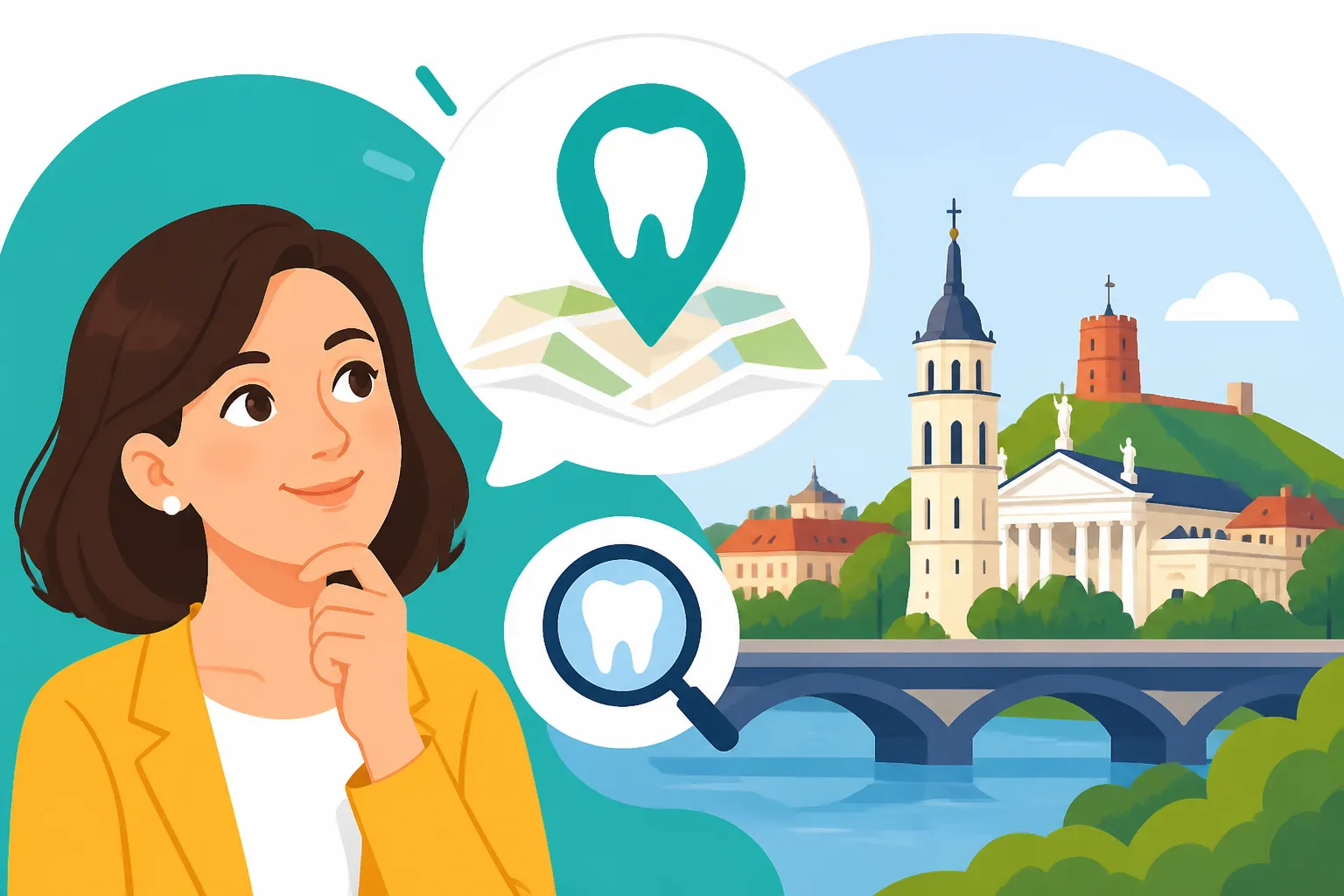
When you are starting your search, don't just rely on a generic search engine query. To find a dentist who truly fits your needs, you need to use the local tools that residents use. The most powerful resource in Lithuania is a website called ManoDaktaras. It functions similarly to Zocdoc or other doctor-booking platforms. You can filter by specialty (odontologas), city (Vilnius), and importantly, by the languages the doctor speaks. This is the fastest way to verify if a practitioner can communicate with you in English or another language you're comfortable with.
Social proof is also incredibly important in the Vilnius expat community. Facebook groups like "Foreigners in Vilnius" or "Expats in Lithuania" are goldmines for recommendations. If you search these groups, you will see a few names and clinics popping up repeatedly. People are very vocal about their experiences with bedside manner and pricing transparency. Before you book, it is also worth checking How to Find an English-Speaking Doctor in Lithuania to understand the general etiquette and expectations for medical appointments in the country.
If you have just arrived and haven't yet settled your local paperwork, you might be relying on a plan like SafetyWing to cover any sudden medical emergencies. While SafetyWing is primarily designed for travel and medical emergencies rather than routine check-ups, having that safety net is vital while you navigate the local registration process. Many private clinics in Vilnius are accustomed to providing detailed invoices that you can submit to international providers for reimbursement.
Understanding the Costs and Payment Procedures
One of the biggest surprises for expats is how affordable high-quality dental care is in Lithuania compared to the UK, Scandinavia, or the USA. However, "affordable" doesn't mean "free," and prices can vary significantly between a small neighborhood clinic in Naujininkai and a high-end boutique office in the Old Town (Senamiestis).
Generally, you will be expected to pay immediately after your appointment. Most clinics accept all major credit cards and bank transfers. If you are using the public system, you will need to ensure your insurance status is active. You can verify this by Understanding PSD Contributions Through Sodra in Lithuania. Even in the public system, the "free" aspect is limited. For example, a "free" filling at a polyclinic might still cost you 20 to 40 Euros for the high-quality light-cured composite material.
| Procedure Type | Estimated Private Cost (Vilnius) | Estimated Public Cost (Materials Only) |
|---|---|---|
| Professional Oral Hygiene | €60 – €100 | €20 – €40 |
| Standard Filling | €70 – €120 | €15 – €40 |
| Root Canal (Single Canal) | €150 – €250 | €50 – €100 |
| Dental Implant (Complete) | €900 – €1,500 | Not usually covered |
| Emergency Pain Relief | €40 – €80 | €5 – €15 |
For more extensive work, such as restorative surgery or orthodontics, it is always wise to ask for a "gydymo planas" (treatment plan) in writing. This document will outline every step of the process and the associated costs. If you are considering a major procedure, you might want to read What Is the Cost of a Dental Implant in Lithuania? to get a more granular breakdown of those specific expenses.
What to Expect During Your First Appointment
The first visit usually involves a consultation and a panoramic X-ray (panoraminė nuotrauka). In Lithuania, dentists are very proactive with technology. It is common for even small clinics to have digital X-ray machines on-site, meaning you won't have to go to a separate imaging center. If you have a complex history, you should bring any previous records, though the local Understanding the E-Sveikata (E-Health) System in Lithuania means that once you are in the system, your records are theoretically accessible by other doctors in the country.
During the consultation, the dentist will check your general oral health and likely suggest "burnos higiena" (professional dental cleaning). In Lithuania, this is often performed by a specialist hygienist rather than the dentist themselves. It is highly recommended to do this every six months, as it is a prerequisite for many clinics before they perform more complex fillings or surgeries.
If you are a digital nomad or a frequent traveler using SafetyWing, make sure to keep all your receipts and a signed medical report from the dentist. Even if you are just treating an acute tooth infection, the documentation is necessary for any potential claims. SafetyWing users often find that the efficiency of private Lithuanian clinics makes the claims process much smoother because the documentation is usually provided in a clear, professional format.
To register officially at any clinic, whether public or private, you will need to provide your personal identification. If you are a resident, this will be tied to your personal code. You can learn more about why this number is so important in the guide on How to Get Your Asmens Kodas (Personal Code) and Why It Matters for Healthcare.
Handling Emergencies and After-Hours Care
If you have a dental emergency in the middle of the night or on a Sunday, your options are more limited. Most private clinics in Vilnius operate on standard business hours (8:00 AM to 8:00 PM) and are closed on weekends. For true emergencies—uncontrollable bleeding, severe trauma, or swelling that affects your breathing—you should head to the emergency department of a major hospital. However, for a standard (but painful) toothache, there are a few private clinics that offer "skubi pagalba" (emergency help) on Saturdays.
If you are covered by the national health fund, you can look for the designated emergency dental room at the Vilnius University Hospital Stomatology Clinic (Žalgirio klinika). This is the primary center for maxillofacial surgery and complex dental emergencies in the country. It is helpful to familiarize yourself with Emergency Medical Care in Lithuania: What Every Expat Needs to Know before you find yourself in a crisis.
When dealing with an emergency, the stress of the situation can make communication difficult. This is where having a plan like SafetyWing can be a literal lifesaver, as they offer 24/7 support and can help you understand what steps to take when you are in pain and far from home. Their coverage for acute dental pain is a specific feature that many expats find reassuring during their first few months in Vilnius.
Specialized Care and Insurance Coordination
If you require specialized work, such as wisdom tooth extraction (protinių dantų šalinimas) or braces, you will likely be referred to a specialist. In the private system, this is a seamless process within the same clinic or a partner network. In the public system, you would typically need a "siuntimas" (referral) from your family doctor or general dentist to see a specialist at a lower cost. You can read more about how this works in How E-Referrals (Siuntimas) Work for Specialists in Lithuania.
For those with private insurance through an employer, such as Ergo, Gjensidige, or Compensa, the process is usually quite modern. Many clinics have direct billing agreements with these insurers. You simply show your insurance card (or app), and the clinic deducts the covered portion automatically, leaving you to pay only the "co-payment." If your insurance is international, like SafetyWing, you will likely pay upfront and then file a claim online later.
Finding a dentist in a new city is a rite of passage for any expat. While the first few calls might feel daunting, you will quickly find that the dental community in Vilnius is highly professional, technically advanced, and very welcoming to the international community. By choosing the right private clinic and ensuring you have some form of insurance—whether it's the local PSD or a flexible international plan—you can maintain your smile without the stress. For more information on the financial side of things, don't miss Understanding Dental Care Coverage Under the PSDF in Lithuania to see exactly what the government will and won't pay for.
Disclaimer
This guide is for informational purposes only and does not constitute professional medical or legal advice. Healthcare regulations and prices in Lithuania can change; always verify current procedures with the Migration Department, the National Health Insurance Fund (VLK), or your specific healthcare provider.