Emergency Medical Care in Lithuania: What Every Expat Needs to Know
Waking up with a sharp, unexplained pain or witnessing an accident in a foreign country is a terrifying experience that quickly strips away the romanticism of expat life. If you are in Vilnius, Kaunas, or a remote village, not knowing who to call or where to go can lead to dangerous delays. This guide provides a comprehensive roadmap for navigating emergency medical care in Lithuania, ensuring you understand the protocols, costs, and cultural nuances of the system before a crisis hits.
Understanding the Lithuanian Emergency Response System
When you are in the middle of a medical crisis, the first few minutes are the most critical. In Lithuania, the emergency infrastructure is robust but operates under specific linguistic and administrative rules that can be jarring if you are used to a different system. The primary goal is stabilization and urgent intervention, and the system is designed to prioritize those in life-threatening conditions over those with "urgent" but non-critical discomfort.
The Universal Emergency Number 112
The first thing every expat must memorize is the number 112. This is the universal emergency number in Lithuania, used for police, fire services, and medical emergencies. When you dial 112, you are connected to a centralized dispatcher. It is a common misconception that you should call a hospital directly for an ambulance; in fact, the 112 dispatch center is the only way to trigger a rapid emergency response.
The dispatchers are trained to handle high-stress situations, but you should be prepared for a brief linguistic hurdle. While many younger dispatchers in major cities speak excellent English, there is always a chance you may encounter someone who primarily speaks Lithuanian or Russian. If you don't speak the local language, stay calm and clearly state "English" or "Medical emergency." Have your address ready, and if you are in a large apartment complex, be prepared to provide the building code or specific directions to your door.
Ambulance Services and Greitoji Medicinos Pagalba
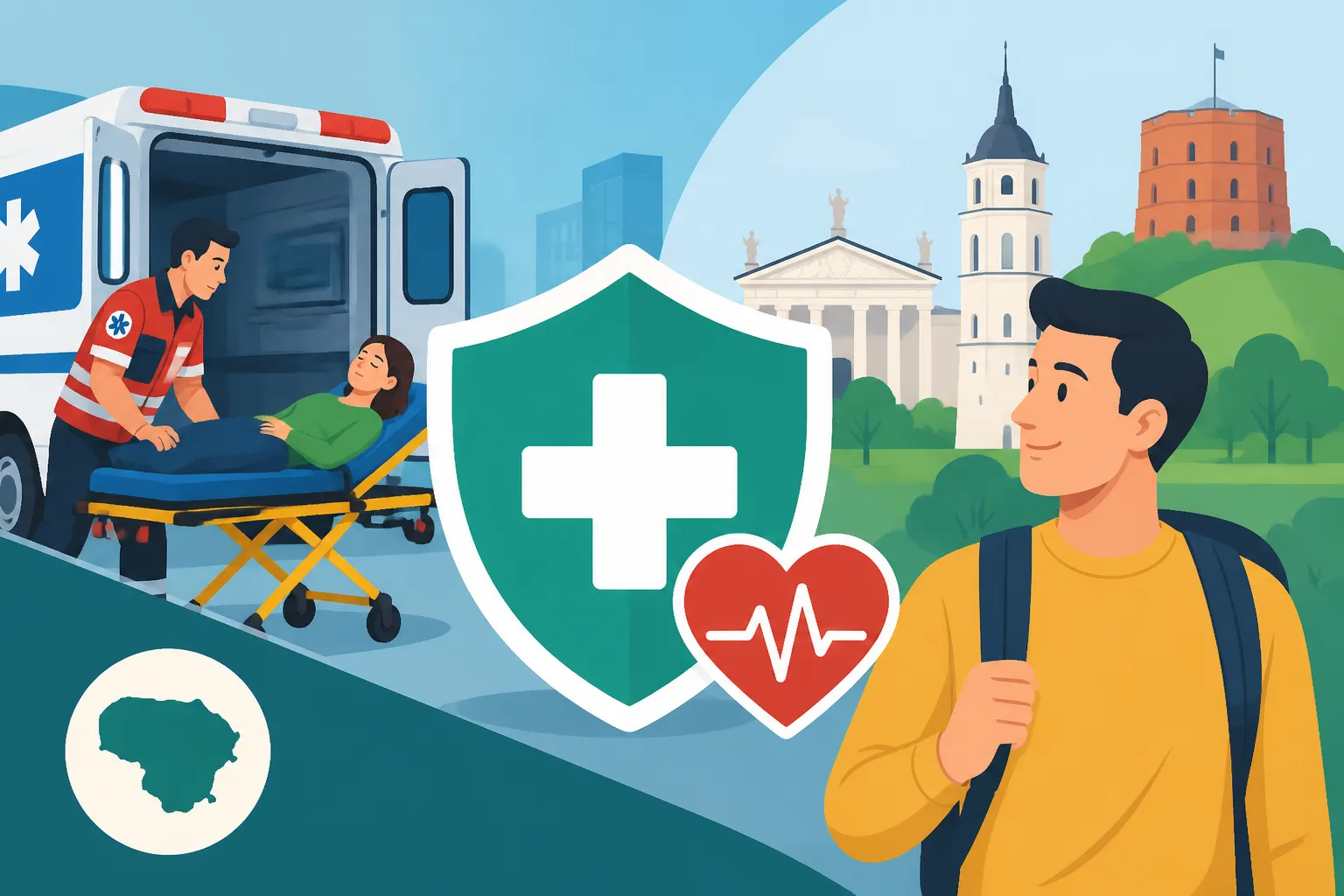
The ambulance service, known locally as Greitoji Medicinos Pagalba (GMP), is highly professional. These units are staffed by paramedics and sometimes emergency doctors who are equipped to perform advanced life support. It is important to realize that in Lithuania, ambulances are strictly for life-threatening or severely debilitating situations. If you call an ambulance for something that could be handled by a visit to a The Expat Guide to Finding a Family Doctor (Šeimos Gydytojas) in Lithuania, you might be advised to take a taxi or wait until your clinic opens.
When the ambulance arrives, the crew will assess the patient on-site. In many cases, they may provide treatment and advise you to follow up with your primary care provider the next day. They only transport patients to the hospital if immediate diagnostic tools or surgical intervention is required. If you are a digital nomad or waiting for your residency to be processed, having a plan like SafetyWing can be a lifesaver here, as it provides a safety net for those unexpected moments before you are fully integrated into the local social security system.
Dispatcher Communication and Real-World Scenarios
Imagine you are at home in Kaunas and your partner begins showing signs of an allergic reaction. You call 112. The dispatcher will ask a series of questions: Is the person breathing? Are they conscious? What is the exact location? It is helpful to have your How to Get Your Asmens Kodas (Personal Code) and Why It Matters for Healthcare written down near your phone or saved in your notes, as this helps the medical team access your records faster once you reach the hospital.
One realistic frustration foreigners face is the perceived "abruptness" of dispatchers or paramedics. In Lithuanian medical culture, communication is often very direct and functional. This isn't rudeness; it’s a focus on efficiency. Don't be offended if they don't offer much small talk or emotional comfort. Their priority is the clinical assessment. Once the crew decides to transport you, they will choose the hospital based on the type of emergency and the current capacity of local ERs. You generally do not get to choose which hospital you are taken to in an emergency.
Emergency Rooms and Hospitals Skubiosios Pagalbos Skyrius
Once you arrive at a hospital, you will enter the Skubiosios Pagalbos Skyrius, which is the emergency department. This is where the pace can either feel incredibly fast or painfully slow, depending on the triage system. Navigating a Lithuanian hospital as a non-speaker can be intimidating, but understanding the hierarchy of care helps manage expectations.
Difference Between a Poliklinika and a Ligoninė
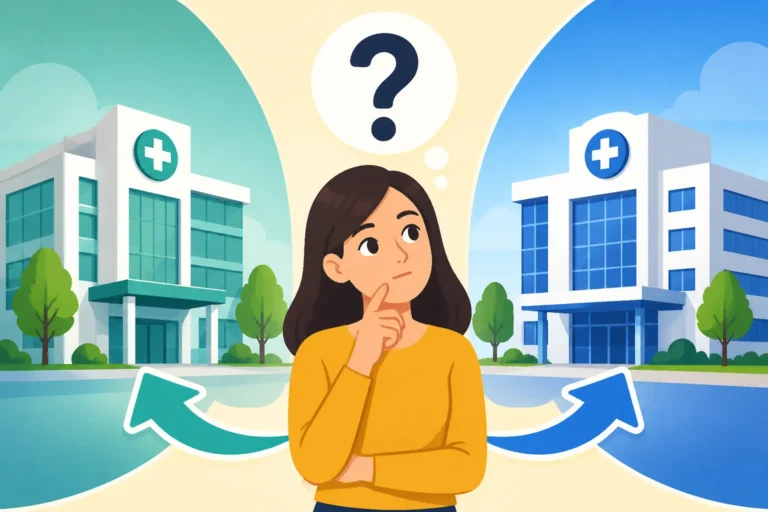
Newcomers often confuse these two types of facilities. A Poliklinika (polyclinic) is where you go for routine care, specialist consultations, and minor issues during business hours. A Ligoninė (hospital) is a large facility meant for inpatient care, surgery, and 24/7 emergencies. If you have a high fever or a minor cut at 2 PM on a Tuesday, you should contact your family doctor at the polyclinic. If you break your leg at 11 PM on a Saturday, you go straight to the hospital.
Understanding the Role of the Polyclinic (Poliklinika) in Lithuania is vital because many people show up at the hospital ER for issues that are not true emergencies. If the hospital staff determines your case is not urgent, they may redirect you back to your polyclinic, or you might find yourself at the very bottom of a very long waiting list. For expats who are still navigating the public system, some choose to utilize private clinics for non-emergencies to avoid these hurdles, often supported by supplemental coverage like SafetyWing to handle the bigger risks.
Triage Categories and Wait Times
Lithuanian emergency rooms use a color-coded triage system that dictates how quickly you will be seen. It is not "first-come, first-served."
- Red: Immediate life-threatening condition. You are seen instantly.
- Orange: Very urgent. Assessment within 10-20 minutes.
- Yellow: Urgent, but stable. You might wait 1-2 hours.
- Green: Non-urgent. You could wait 4-6 hours or more.
If you are in the "Green" category, be prepared for a long stay in the waiting room. The staff prioritizes trauma, heart attacks, and strokes. It is common to see people who arrived after you being taken in first if their condition is more severe. This is where a veteran expat’s patience is tested. Bringing a portable charger and some water is always a good idea, as hospital vending machines can be hit-or-miss.
What to Bring to the ER
In the rush of an emergency, it is hard to think clearly, but you need certain items to ensure the process goes smoothly. You must have your passport or ID card. If you are an EU citizen, your EHIC card is mandatory to avoid large out-of-pocket bills. For non-EU expats, you will need proof of your Registering for Compulsory Health Insurance (PSD) in Lithuania (2027) or your private insurance policy details.
If you have a chronic condition, it is incredibly helpful to have a list of your medications written down, preferably with the active ingredient names rather than just brand names, as brand names vary by country. The doctors will eventually look this up in the Understanding the E-Sveikata (E-Health) System in Lithuania portal, but having it on hand saves precious time. Also, don't forget your phone and a charger. You may need to use a translation app to communicate complex symptoms to the staff if an English-speaking doctor isn't immediately available.
Coverage and Costs for Emergency Care
One of the biggest anxieties for any foreigner is the bill. Lithuania’s healthcare system is based on a compulsory insurance model, but the rules for "emergency" versus "routine" care can be nuanced when it comes to who pays what.
PSD Compulsory Health Insurance and the PSDF
If you are legally working in Lithuania, you are likely paying into the Compulsory Health Insurance (PSD) fund. This means that almost all emergency care is "free" at the point of service in public hospitals. The costs are covered by the Patient Fund (VLK). However, "free" only applies if the doctors agree that your situation was a genuine emergency. If you visit the ER for a sore throat that has lasted three days, the hospital has the right to charge you for a "non-urgent consultation."
To understand how this fits into the broader system, you should read How Lithuania's Health Insurance Fund (VLK/PSDF) Works: A Full Overview. Having your PSD status active is essential. If you are self-employed or between jobs, ensure your contributions are up to date via Sodra. If there is a gap in your coverage, you will be billed as a private patient, and hospital stays in Lithuania can quickly become expensive, reaching hundreds or thousands of euros for complex procedures.
Emergency Care for EU Citizens (EHIC)
EU citizens visiting or recently moved to Lithuania can use their European Health Insurance Card (EHIC). This card entitles you to the same emergency care as a Lithuanian citizen. It is important to note that the EHIC is for "necessary" care—things that cannot wait until you return home. It does not cover private hospital costs or medical repatriation.
If you are using an EHIC, you must present the physical card (or a digital version if accepted) at the hospital registration desk. If you don't have it, you will likely be asked to pay upfront and then seek reimbursement from your home country’s health authority later. For many expats, How to Use Your EHIC (ESDK) Card in Lithuania as an EU Citizen is the first step in their healthcare journey before they transition to the local PSD system.
Costs for Uninsured or Non-EU Expats
If you are a non-EU citizen without a residency permit yet, or if you are on a National D visa, you are generally required to have private health insurance. In an emergency, a public hospital will treat you, but they will issue an invoice. These invoices are usually due within a specific timeframe. Prices are regulated by the Ministry of Health, but they are still significant.
For example, a simple ER consultation might cost between 40 and 80 EUR, but diagnostic tests like CT scans or MRIs can add several hundred more. If you are admitted for surgery, the costs can escalate. This is why many expats maintain a policy like SafetyWing even after they get their residence permit; it covers gaps that the public system might not, especially if you travel frequently outside of Lithuania. Without insurance, you are essentially "self-insuring" against the risk of a major accident, which is a gamble that rarely pays off.
| Service Type | Covered by PSD? | Covered by EHIC? | Estimated Private Cost (approx.) |
|---|---|---|---|
| Ambulance (Life-threatening) | Yes | Yes | 100 – 150 EUR |
| ER Consultation (Urgent) | Yes | Yes | 50 – 90 EUR |
| ER Consultation (Non-urgent) | No (usually) | No | 50 – 90 EUR |
| Hospital Stay (per day) | Yes | Yes | 150 – 300 EUR |
| Diagnostic MRI (Emergency) | Yes | Yes | 200 – 400 EUR |
Specialized Emergency Services
Not all emergencies involve a trip to the general hospital. Sometimes you need a specific specialist, and knowing where to find them can save you hours of wandering through the wrong corridors.
Emergency Dental Care
Tooth pain is a special kind of torture, and it rarely happens during office hours. Most polyclinics have a dental department, but they close in the evenings and on weekends. In Vilnius and Kaunas, there are designated 24-hour dental clinics or specific hospital departments that handle acute dental trauma (like a knocked-out tooth or severe abscess).
It is important to know that while the public system covers some dental emergencies, many Lithuanians and expats prefer private emergency dentists. The public wait times can be extreme, and the range of materials used might be limited. If you choose a private emergency dentist, you will pay out of pocket, but you will likely be seen much faster. Always call ahead to confirm they have an English-speaking dentist on duty, as technical dental terms are difficult to navigate via Google Translate.
Pediatric Emergencies (Children’s Care)
If you are an expat parent, a child’s emergency is your worst nightmare. In Lithuania, children receive high priority. In Vilnius, the Santariškės Children’s Hospital is the gold standard for pediatric emergencies. It is a specialized facility designed specifically for kids, which makes the experience much less traumatic than a general ER.
Children of residents are covered by the state, regardless of whether the parents have paid their PSD, though the administrative links are usually tied to the parents' residency status. When taking a child to the ER, bring their birth certificate or passport. The triage for children is often separate from adults, ensuring that "little patients" are seen in a more controlled environment. If you find yourself in this situation, knowing How to Get a Sick Leave Certificate Approved in Lithuania is helpful, as you will likely need to stay home with your child after they are discharged.
Mental Health Crisis Support
Medical emergencies aren't always physical. If you or someone you know is experiencing a mental health crisis, Lithuania has been working hard to improve its support systems. You can still call 112 for acute psychiatric emergencies. In major cities, there are "Mental Health Centers" (Psichikos sveikatos centrai) attached to polyclinics that offer urgent consultations.
For English speakers, there are also several helplines, though many are volunteer-run and may not always have an English speaker available 24/7. In a life-threatening situation involving self-harm, the emergency department of a psychiatric hospital (like the one in Vasaros g. in Vilnius) is the correct destination. The staff there are used to dealing with acute crises, though the facilities can feel quite "Soviet-era" in their aesthetic, which can be jarring. Empathy and professional care are there, but the environment is very clinical.
Navigating Pharmacies and Out-of-Hours Care
Sometimes your situation is urgent but doesn't require a hospital bed. Knowing how to get medication or a doctor's advice at 3 AM is a vital expat skill.
Finding a 24-Hour Pharmacy Vaistinė
Most pharmacies in Lithuania close by 8 PM or 9 PM. However, in every major city, there is at least one "Budinti vaistinė" (on-duty pharmacy) that stays open 24/7. In Vilnius, these are often located near the center or major transport hubs. It is a good idea to bookmark What Pharmacies Are Open Late or 24 Hours in Vilnius? on your phone today, before you actually need it.
When you go to a 24-hour pharmacy, the doors might be locked for safety. You will usually find a small window or a doorbell. You speak to the pharmacist through the window. Be aware that even in an emergency, pharmacists cannot sell you "prescription-only" medications without a valid E-Receptas (electronic prescription) in the system. They can, however, provide high-dose painkillers, bandages, and basic advice.
Out-of-Hours Family Doctor Consultations
If you are sick but it’s not an emergency, you might not want to wait 6 hours in an ER. Some polyclinics have a rotation system where one clinic in the city stays open later or on weekends to see patients from other clinics. You should check your own polyclinic's website for "Būtinoji pagalba" instructions. They will usually list a specific phone number or address for after-hours care.
There are also private "GP" services that offer house calls or late-night clinic visits for a fee. If you have SafetyWing or another private insurance policy, these costs might be reimbursable, depending on your plan. This is often the most comfortable option for expats who want to avoid the language barrier and long waits of the public hospital system for non-critical issues like a severe flu or a minor infection.
Prescription Medications in Emergencies
Lithuania uses an entirely electronic prescription system. If an emergency doctor treats you and decides you need antibiotics or other controlled medication, they will enter it into the E-Sveikata system using your Asmens Kodas. You do not need a paper slip. You simply go to any pharmacy, show your ID, and they pull up the prescription.
This system is incredibly efficient, but it relies on your ID being in the system. If you are a tourist or a new arrival without a personal code yet, the doctor will have to issue a paper prescription. Ensure you ask for this specifically, as pharmacists are strictly prohibited from dispensing many medications without it. If you lose your medication while traveling, having a digital record or a photo of your original prescription can help a local doctor re-issue it in the Lithuanian system.
Practical Tips for Expats in a Medical Crisis
Living through a medical emergency is stressful enough without the added layer of being in a foreign country. Here are some veteran tips to help you manage the situation with more confidence.
Overcoming the Language Gap
Language is the single biggest barrier to effective care in Lithuania. In an emergency, your adrenaline is high, and your ability to remember Lithuanian verbs will vanish. Use visual aids. Point to where it hurts. Use the Google Translate "Conversation" mode, which allows you to speak into the phone and play the translation aloud.
Another tip is to have a "medical cheat sheet" on your phone. Write down your allergies, blood type, current medications, and past surgeries in both English and Lithuanian. You can use a translation service or a local friend to ensure the Lithuanian part is accurate. Handing this to a nurse or doctor can immediately lower the stress levels for everyone involved.
Using Private Insurance vs. Public Care
Many expats wonder if they should go to a private clinic or a public hospital in an emergency. The rule of thumb is: for life-or-death (trauma, heart, unconsciousness), always go to the public hospital. They have the intensive care units, the surgical teams, and the heavy equipment that private clinics often lack. Private clinics in Lithuania are excellent for diagnostics, minor surgeries, and specialist consultations, but they aren't usually set up for major emergency trauma.
However, once the immediate crisis is over, you might prefer to move to a private facility for recovery or follow-up. This is where SafetyWing shines, as it can help cover the costs of private care that provides more English-speaking staff and more "Western-style" amenities. Balancing the two systems is the key to getting the best care possible in Lithuania.
Follow-up Care and E-Sveikata Records
After you are discharged from the ER, the work isn't over. You will receive a "formos Nr. 027/a" (an extract from your medical record). Ensure you keep this. While the data should be uploaded to E-Sveikata, sometimes there is a delay. You will need to bring this to your family doctor to get an official sick leave certificate for your employer.
The Lithuanian system is very strict about sick leave. You cannot just call your boss; you must have a doctor log the "Nedarbingumo pažymėjimas" in the national system. If you were treated in an emergency room, your family doctor needs to "close" the episode or continue the sick leave based on the hospital’s recommendations. This administrative step is crucial for ensuring you get paid while you recover.
Comparison Table: Emergency Options in Lithuania
| Scenario | Recommended Action | Typical Cost (with PSD) | Typical Cost (Uninsured) |
|---|---|---|---|
| Chest pain / Unconsciousness | Call 112 immediately | 0 EUR | 200+ EUR (Ambulance + ER) |
| Broken bone (Daytime) | Go to Hospital ER | 0 EUR | 150 – 300 EUR |
| High fever (3 AM) | Call polyclinic after-hours line | 0 EUR | 40 – 70 EUR |
| Severe toothache (Weekend) | 24h Private Dentist | 60 – 150 EUR | 60 – 150 EUR |
| Child with a deep cut | Santariškės (Vilnius) / Kauno Klinikos | 0 EUR | 100 – 200 EUR |
Disclaimer
The information provided in this guide is for informational purposes only and does not constitute professional medical or legal advice. While every effort has been made to ensure accuracy, healthcare regulations and costs in Lithuania can change. Always consult with a qualified healthcare professional or the Lithuanian Ministry of Health for the most current information. In a life-threatening emergency, always dial 112 immediately.