What Is the Cost of a Dental Implant in Lithuania?
Coming from the United States, the UK, or Scandinavia, the mere mention of a dental implant often triggers a Pavlovian response of checking one’s bank balance in a panic. In Lithuania, however, the landscape is radically different, yet navigating it requires more than just looking at a price tag on a clinic’s window. This guide solves the mystery of dental implant costs in Lithuania, detailing the price of components, the regional price variations between Vilnius and Kaunas, and the logistical hurdles expats face when seeking high-end restorative work.
Understanding the Base Cost of Dental Implants in Lithuania
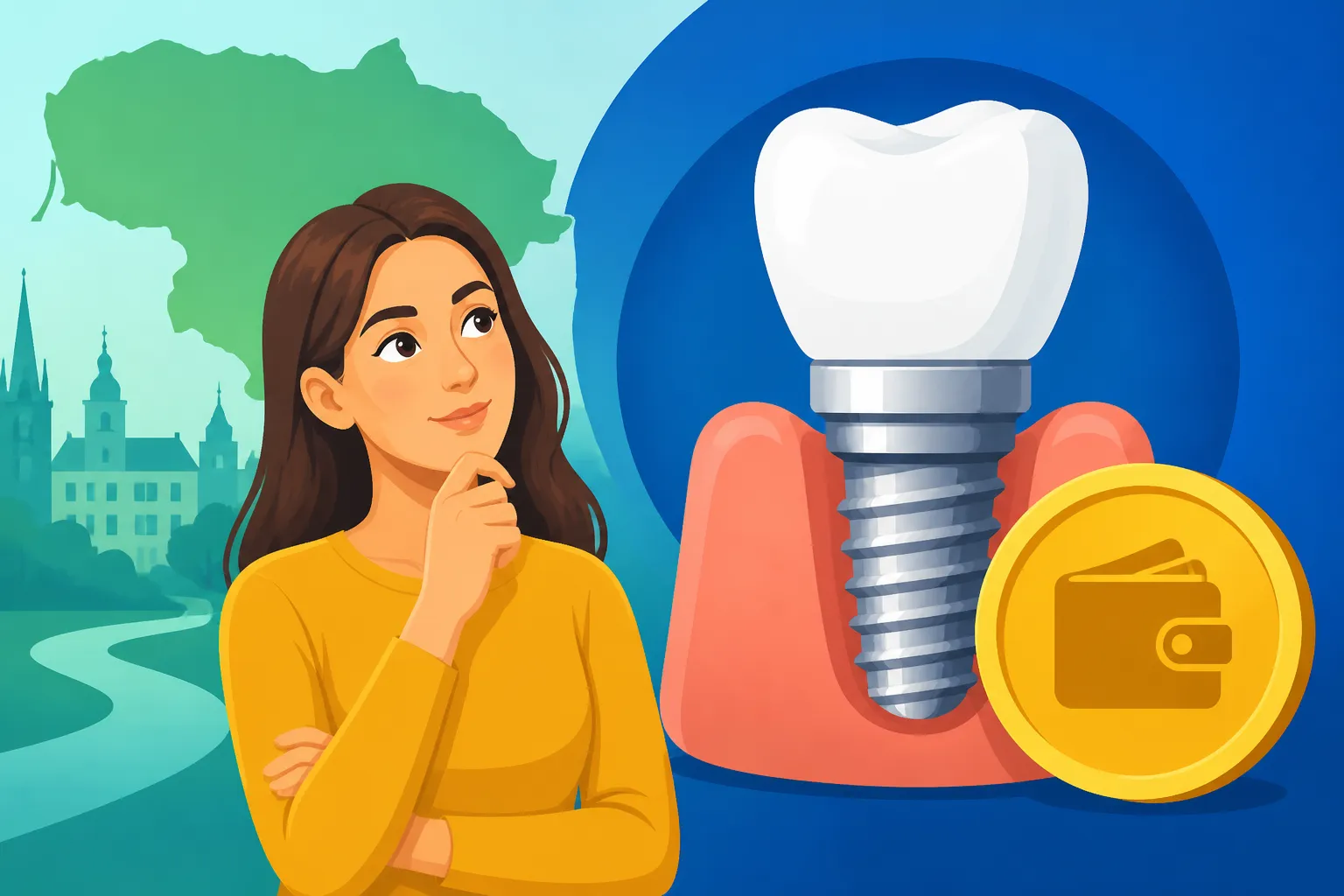
When you first start browsing clinic websites in Vilnius or Klaipėda, you might see a tempting headline price like "Implants from €450." Be aware: that is never the final price. That figure usually refers only to the titanium screw itself—the "fixture" that goes into your jawbone. To understand the total cost, you have to look at the three-part structure of the procedure: the implant, the abutment (the connector), and the crown (the visible tooth).
In a reputable private clinic, the total all-in cost for a single-tooth restoration typically ranges from €900 to €1,600. This wide range exists because of the brand of the implant used and the material of the crown. If you are looking for a mid-range solution using a reliable brand like Megagen or Neodent, you can expect the lower end of that scale. However, if you insist on premium Swiss or German engineering, your costs will naturally climb. Knowing How Much Does Dental Treatment Cost in Lithuania Without Insurance? is essential because, for the most part, dental implants are considered a private expense.
The administrative side also adds up. Before the surgeon even touches your mouth, you will need a 3D computed tomography (CT) scan. In the local medical scene, this is often billed separately from the consultation. A consultation might cost you €30 to €50, while the 3D scan can range from €60 to €100. It is vital to have your residency paperwork in order, specifically How to Get Your Asmens Kodas (Personal Code) and Why It Matters for Healthcare, as private clinics will use this code to create your electronic health record in the national system.
Breakdown of Physical Components and Labor
The first major cost is the implant fixture. This is the surgical stage where the "screw" is placed. In Lithuania, surgeons are highly qualified, often training in Western Europe, so you are paying for significant expertise. This stage usually costs between €400 and €700 for the labor and the hardware. You will then have a healing period of three to six months. During this time, you might have a temporary crown, which is another "hidden" cost of about €50 to €150.
The second stage involves the abutment and the final crown. The abutment generally costs between €100 and €200. The crown is where the price fluctuates the most. A metal-ceramic crown is the budget option, but most expats choose zirconium or full-porcelain crowns for their natural look and durability. A high-quality zirconium crown in Vilnius will set you back between €400 and €600. When you add these stages together, the "real" price starts to materialize, far beyond the initial marketing bait.
Average Pricing Across Major Cities
Location matters immensely in Lithuania. Vilnius, being the capital and the hub for "medical tourism," has the highest concentration of high-end clinics and, consequently, the highest prices. If you move your search to Kaunas, you might find that the same procedure with the same materials is 10% to 15% cheaper. This is often due to lower overhead costs for the clinics themselves rather than a dip in quality.
In Klaipėda or Šiauliai, prices can be even more competitive. However, for an expat, you must weigh the cost of travel and the time taken for multiple appointments against the savings. Since an implant requires at least three to four visits over several months, a €100 saving might be eaten up by fuel or train tickets. It is often more practical to find a clinic where you live, especially if you need to understand The Cost of Healthcare in Lithuania: A Complete Breakdown for Foreigners (2026) in a broader sense for your family.
Factors That Influence Your Final Dental Bill
The "sticker price" you see online is often a best-case scenario. In reality, several clinical factors can push the price up by hundreds, if not thousands, of euros. As someone who has spent hours in Lithuanian dental chairs, I’ve learned that the state of your jawbone is the ultimate budget-decider. If you have been missing a tooth for a long time, the bone may have recessed, leading to the need for supplementary surgeries.
One of the most common "add-ons" is bone grafting (kaulo priauginimas). If there isn't enough bone to hold the screw, the surgeon must add synthetic or harvested bone material. This can add €200 to €600 to your bill. Similarly, if the implant is in the upper jaw, you might require a sinus lift (sinuso pakėlimas) to create space. This is a complex surgical procedure that can cost between €400 and €800. These are not optional "extras"; they are foundational requirements for the implant to succeed.
Material Quality and Brand Reputation
Lithuanian clinics offer a hierarchy of brands. At the top of the pyramid are Straumann and Nobel Biocare. These brands are the "Gold Standard" globally. If you travel frequently, choosing these brands is wise because any dentist in London, New York, or Berlin will have the specific tools required to tighten or repair them if something goes wrong. Choosing a premium brand usually adds about €300 to €500 to the total cost.
On the other hand, many local Lithuanians and long-term expats opt for "Value Brands" like Medentika (owned by Straumann) or various Israeli and South Korean systems. These are excellent, reliable, and come with lifetime warranties on the hardware. For many, this is where the best balance of price and quality lies. If you are an expat who travels often, you might also consider how Health Insurance in Lithuania: Compulsory, Private and Travel Options Explained fits into your lifestyle, though these plans rarely cover the implants themselves.
Diagnostic Fees and Digital Imaging
Modern Lithuanian dentistry is heavily digitized. You should expect to pay for a 3D Panoramix X-ray at the start. While some clinics might offer a "free consultation," they almost always charge for the imaging. Furthermore, if the clinic uses "Digital Smile Design" or CAD/CAM technology to mill your crown on-site, there might be a technology fee associated with it.
It is also worth noting that many clinics charge for the "surgical kit" used during the procedure. This is the sterilized, single-use set of drills and guides specific to your implant brand. Always ask for a "Gydymo planas" (Treatment Plan) in writing. This document is a legal estimate that breaks down every single cost. If a clinic refuses to provide a detailed written plan, take that as a red flag and look elsewhere.
| Component / Procedure | Estimated Cost (Budget) | Estimated Cost (Premium) |
|---|---|---|
| Consultation & 3D CT Scan | €80 | €150 |
| Implant Fixture (Hardware & Surgery) | €450 | €850 |
| Healing Abutment & Connector | €100 | €250 |
| Zirconium Crown | €350 | €650 |
| Bone Grafting (If needed) | €200 | €600 |
| Total Estimated All-In | €980 | €2,500+ |
Public vs. Private: Where Can Expats Get Implants?
A common question among new arrivals is whether the public system—the "Poliklinika"—offers dental implants. The short answer is: technically yes, but practically no. The Lithuanian public health system is funded by the Compulsory Health Insurance (PSD). While the PSD covers basic dental care like fillings or simple extractions for children and certain vulnerable groups, it does not cover the cost of dental implants for the average working adult.
Even if you are fully registered and paying your monthly contributions through Sodra, you will find that the Understanding the Role of the Polyclinic (Poliklinika) in Lithuania involves long wait times and very basic equipment. For restorative work like implants, almost 99% of Lithuanians and expats head to private clinics. The private sector is where the investment in technology, English-speaking staff, and high-end materials happens.
The Role of Private Clinics and Medical Centres
Private dental clinics in Lithuania are world-class. Many of them operate like boutique hotels, offering coffee, modern interiors, and a high level of patient care. In these settings, you are paying for convenience and the assurance that the dentist has the time to explain the procedure in English. Choosing the right clinic is a significant decision, so understanding the landscape of Understanding Private Clinics and Medical Centres in Lithuania is a good first step.
Most private clinics also offer a "one-stop-shop" experience. They have their own X-ray machines, their own dental laboratories for making crowns, and their own oral surgeons. This saves you the frustration of being sent across town to different specialists. For an expat who might still be struggling with the language, having everything in one building is an massive relief.
Insurance and Financial Planning
One of the hardest pills to swallow as an expat is that Understanding Dental Care Coverage Under the PSDF in Lithuania is extremely limited for adults. You will be paying out of pocket for the vast majority of the implant cost. Some high-end local private health insurance plans provided by employers (like SEB or Ergo) might offer a small "dental bucket" of €100 to €300 per year, but this is a drop in the bucket for an implant.
For those who are moving to Lithuania or are here on a transitional basis, safety nets are important. While SafetyWing is primarily designed for travel medical insurance and doesn't cover elective cosmetic dental surgery like implants, it is an essential companion for expats. Having SafetyWing ensures that if a dental emergency—like an infection or a traumatic injury—occurs while you are traveling or before your local PSD is active, you aren't left stranded. Many expats use SafetyWing to bridge the gap while they are waiting for their residency permits to clear.
Navigating the Logistics of Your Dental Journey
The process of getting an implant in Lithuania usually spans several months. This is a "slow medicine" approach designed to ensure the implant integrates with your bone (osseointegration). You cannot rush this. If a clinic promises you a "tooth in a day" at a suspiciously low price, be very cautious. While "All-on-4" immediate loading exists, it is a specialized and expensive procedure that requires a very specific clinical profile.
During your first visit, the dentist will evaluate your oral health. If you have active gum disease or cavities in neighboring teeth, these must be treated first. You should check Public vs Private Healthcare in Lithuania: Which Should Expats Choose? to see how you might handle those preliminary treatments. Once your mouth is healthy, the "fixture" is placed under local anesthesia. Surprisingly, the surgery itself is usually quite fast—often less than 45 minutes.
Finding an English-Speaking Specialist
For many expats, the biggest hurdle isn't the price—it's the communication. You are having metal screwed into your jaw; you want to be 100% sure you understand the risks and the aftercare. Most younger dentists in Vilnius and Kaunas speak excellent English, as they often use English-language textbooks and attend international conferences.
When searching for a doctor, look for the title "Gydytojas burnos chirurgas" (Oral Surgeon) or "Gydytojas ortopedas odontologas" (Prosthodontist). You can use resources like The Expat Guide to Finding a Family Doctor (Šeimos Gydytojas) in Lithuania to understand how to navigate medical referrals, although for private dentistry, you can usually book directly. Don't be afraid to ask for a consultation with two different clinics to compare their "Gydymo planas" and see which specialist makes you feel most comfortable.
Payment Plans and Tax Deductions
If the cost of an implant is too high to pay upfront, most large private clinics in Lithuania offer financing (lizingas). They partner with banks like SB Lizingas or GF Bankas to offer monthly payment plans. As an expat, you will generally need a residence permit and a history of income in Lithuania to qualify for these plans. It's a common way for locals to afford expensive treatments, and it’s worth asking the clinic administrator about "mokėjimas dalimis" (payment in installments).
Another vital tip for expats: keep all your invoices! If you are a tax resident in Lithuania, you may be able to claim a portion of your dental expenses back during your annual tax declaration. While the rules change slightly each year, "treatment expenses" often qualify for a small percentage of income tax relief. It won't make the implant free, but every bit of "reclaimed" money helps when you are building a life in a new country.
Real-World Scenario: The "Hidden" Timeline
Let's look at a typical expat experience. You lose a molar. You visit a clinic in the Vilnius Old Town.
- Month 1: Consultation and CT scan (€120). You discover you need a small bone graft. Surgery happens two weeks later (€650 for implant + €300 for graft). Total so far: €1,070.
- Month 4: After three months of healing, you return. The dentist checks the stability. You pay for a "healing abutment" (€100).
- Month 5: Impressions are taken. Two weeks later, the zirconium crown is fitted (€550).
- Total Cost: €1,720.
- Timeline: 5 months.
This scenario is very realistic for 2026. While it sounds expensive, the same procedure in Norway or the USA could easily cost €4,000 to €6,000. This is why Lithuania remains a premier destination for dental work. Even if you encounter a complication, Emergency Medical Care in Lithuania: What Every Expat Needs to Know can provide peace of mind for the non-dental aspects of your health.
Always remember to ask about the warranty. Most Lithuanian clinics offer a 5-to-10-year warranty on the crown and a lifetime warranty on the implant screw itself. However, these warranties are usually contingent on you returning to the same clinic once a year for a professional cleaning and check-up. If you move away from Lithuania, the warranty becomes difficult to enforce, which is why choosing a global brand like Straumann is a smart move for the "global nomad" expat.
By pairing your local healthcare with a flexible plan like SafetyWing, you can navigate the gaps in coverage that occur when you are between countries or waiting for your PSD status to update. While SafetyWing won't pay for your new zirconium tooth, it ensures that an unexpected trip to the ER for a different issue doesn't derail your dental savings. Navigating the Lithuanian dental system is a rite of passage for many expats, but with a clear treatment plan and a realistic budget, you can walk away with a smile that didn't break the bank.
Disclaimer
This guide is for informational purposes only and does not constitute professional medical or financial advice. Prices and regulations in Lithuania are subject to change. Always consult with a qualified dental professional and your insurance provider before undergoing any medical procedures. The author and publisher are not responsible for any clinical outcomes or financial discrepancies arising from the use of this information.