How Do I Book a MIGRIS Appointment for My Residence Permit?
If you've ever tried to deal with official Lithuanian bureaucracy, you know the feeling: a mix of anticipation and dread, often ending in a frustrating loop. Securing a residence permit here in Lithuania often starts with one of the most crucial, and sometimes perplexing, steps – booking an appointment with the Migration Department, known locally as MIGRIS. Don't worry, you're not alone in finding this process a bit daunting. This comprehensive guide is here to walk you through every single step of how to book a MIGRIS appointment for your residence permit, from logging in to showing up prepared, easing some of that expat anxiety.
Understanding MIGRIS and Why Appointments are Essential
First things first, let's talk about MIGRIS. This isn't just some dusty government office; it's the beating heart of your immigration journey in Lithuania. The Migration Department is the primary institution responsible for all matters related to visas, residence permits, and citizenship for foreigners. For us expats, it’s the gateway to legal residency, longer stays, and frankly, a more peaceful existence in this beautiful Baltic nation.
The Central Role of MIGRIS in Your Expat Journey
Think of MIGRIS as your indispensable partner in setting up your life here. Whether you're here to work, study, reunite with family, or even start a business, almost every significant step in your long-term stay will involve them. From your initial application for a temporary residence permit to when you decide to renew your existing permit or even apply for permanent residence in Lithuania, MIGRIS is the authority you'll interact with.
For instance, when you first arrive and need to sort out your documents, a MIGRIS appointment is usually the first hurdle. Maybe you’ve just moved all your belongings with the help of a reputable international moving service like Sirelo, and now you’re staring at a pile of paperwork, wondering where to begin. That crucial first step—booking the appointment—is what gets the ball rolling. Without a confirmed time slot, you can’t submit your application, provide your biometric data, or discuss your specific situation with an immigration specialist. Missing this vital step, or delaying it, can lead to unnecessary stress, potential overstay issues, or even complications with other administrative tasks like getting your Lithuanian Asmens Kodas. It's truly the lynchpin of your legal stay.
The Importance of Timely Booking Your Slot
Here’s the harsh reality that many expats quickly learn: MIGRIS appointments, especially in popular cities like Vilnius and Kaunas, can be notoriously difficult to secure. Slots fill up incredibly fast, sometimes within minutes of being released. This isn't just a minor inconvenience; it can genuinely impact your timeline for everything else. Imagine your current visa or temporary permit is expiring, and you need to renew it. If you can't book an appointment in time, you could find yourself in a tricky situation, potentially facing legal complications or having to leave the country.
I remember one friend, let's call him Mark, who was trying to extend his work permit. He thought he had plenty of time, but he kept procrastinating. Suddenly, he was two weeks from expiry with no appointments available for months. He panicked, rightly so! He ended up having to travel to a smaller city's MIGRIS office, which thankfully had a few open slots, but it added significant stress and travel costs. The lesson? Don't underestimate the demand. Start checking for appointments well in advance of any deadlines. The moment you know you'll need a MIGRIS visit, whether it's for a new application or a renewal, mark your calendar and begin the hunt for that elusive slot.
A Step-by-Step Guide to Booking Your MIGRIS Appointment Online
Alright, let's get down to brass tacks. The vast majority of MIGRIS appointments are booked through their online portal. It might seem like a maze at first, but with a little guidance, you'll master it.
Getting Started: The MIGRIS E-Service Portal
Your journey begins at the official MIGRIS e-service portal. You can usually find it by searching "MIGRIS e-paslaugos" or "Migration Department Lithuania." While the main website has an English version, some parts of the booking system might default to Lithuanian, so having a browser translation tool handy can be a lifesaver.
Once you're on the portal, you'll need to identify yourself. If you already have an Asmens Kodas (Lithuanian personal identification code) and have set up your electronic identification through the Understanding the E-Government Gateway (Elektroniniai Valdžios Vartai) in Lithuania, you can log in using that. This is the smoothest way. If you're new to Lithuania and haven't received your Asmens Kodas yet, you might need to proceed as an unregistered user or seek guidance for initial registration which often requires an in-person visit for identity verification before you can fully utilize the electronic services. For most residence permit applications, you'll eventually need that personal code, and sometimes the initial application process will also help you to How to Apply for an Asmens Kodas as Part of Your Residence Process.
The system will typically ask you to confirm your identity via mobile signature, smart card, or bank ID. This secure login ensures that your appointment is tied directly to your profile. After logging in, look for a section related to "Appointment Booking" or "Registracija vizitui."
Choosing the Right Service and Location
This step is absolutely critical and where many people go wrong. The MIGRIS system offers a multitude of services, and picking the wrong one could mean you show up and are turned away, having wasted a precious slot.
You'll usually see options like:
- Prašymo dėl leidimo gyventi pateikimas (Submission of residence permit application) – This is what you'll pick for a first-time application for a temporary or permanent residence permit.
- Biometrinių duomenų pateikimas (Submission of biometric data) – If you've already submitted an online application and received an invitation to provide fingerprints and photos, you'll choose this. This is often part of the process to How to Get a Biometric Residence Permit Card in Lithuania.
- Dokumentų atsiėmimas (Document collection) – For picking up your new residence permit card.
- Konsultacija (Consultation) – If you just have general questions and aren't submitting an application.
Make sure you select the option that exactly matches your purpose. If you're unsure, it's safer to err on the side of a full "submission of residence permit application" if you're presenting a new case.
Next, you'll need to choose your preferred location. MIGRIS has offices in several cities: Vilnius, Kaunas, Klaipėda, Šiauliai, Panevėžys, and Alytus. While Vilnius and Kaunas are usually the busiest, sometimes you might find more availability in smaller cities. Don't be afraid to check other locations if your local office is fully booked, especially if you have a car or don't mind a train ride. Some expats have reportedly travelled to Alytus to secure an earlier appointment.
The Calendar Conundrum: Finding an Open Slot
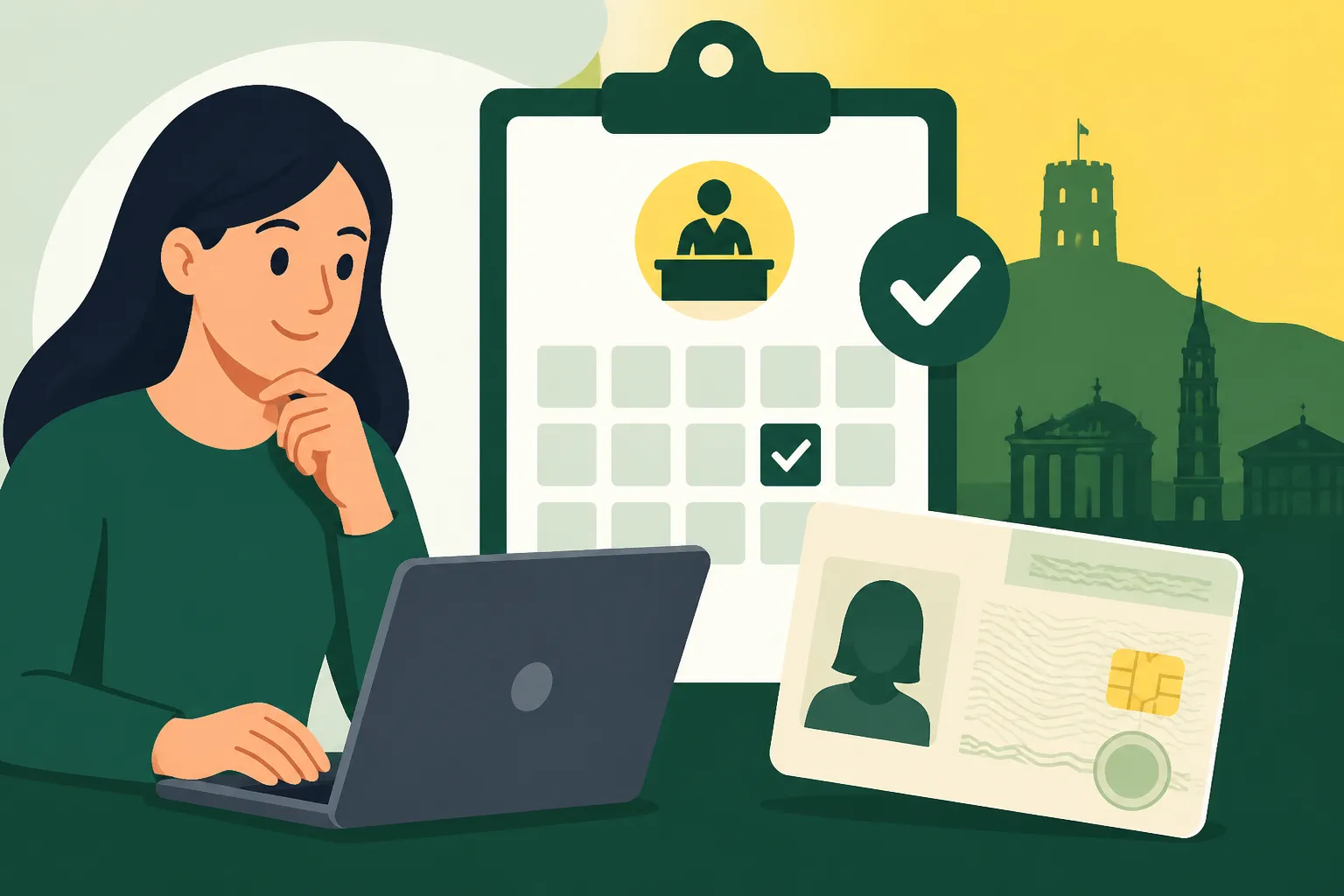
Ah, the calendar. This is where your patience will be truly tested. After selecting the service and location, a calendar will appear, showing available dates and times. Often, you'll see a sea of greyed-out dates, indicating no availability. Don't despair immediately!
Here's how this often works: new slots are typically released at specific times, often early in the morning on certain days of the week (e.g., Monday mornings). The system might also show slots that open up due to cancellations. My pro tip? Be persistent and flexible.
- Check frequently: Don't just check once. Check every morning, multiple times a day if you can, especially around 8-9 AM local time.
- Be flexible with dates: If your initial desired date is unavailable, expand your search to weeks or even months in advance if your deadline allows.
- Try different locations: As mentioned, sometimes smaller cities have more openings.
- Be quick: When a slot appears, grab it immediately. They vanish faster than a free coffee on a Monday morning. Click on the time, confirm, and proceed.
The system will then ask for your contact details (phone number, email) to send you a confirmation. Double-check these before finalizing.
Confirmation and What to Expect Next
Once you've successfully booked, you should receive an email confirmation containing your appointment date, time, location, and a unique registration number. Keep this email safe! It's your golden ticket. You'll need to present it, either digitally or printed, when you arrive for your appointment.
The confirmation email often also includes a list of documents you need to bring. While this list is helpful, always refer back to the official MIGRIS website for the most up-to-date and comprehensive requirements for your specific type of residence permit application. Relying solely on the email could lead to missing critical paperwork. For a deeper dive into what you'll need, check out our guide on How to Prepare Documents for a Lithuanian Residence Permit Application.
Navigating Common Challenges and Troubleshooting
Even with the best intentions, booking a MIGRIS appointment can throw a few curveballs your way. Let's tackle some of the most common frustrations.
When Slots Seem Non-Existent
It's a common expat lament: "There are no appointments available for months!" This is incredibly frustrating, especially when you're under a time crunch. But there are strategies you can employ:
- Become a Regular Checker: As I mentioned, new slots often appear without much warning, sometimes due to cancellations or MIGRIS releasing new batches. Make it a routine to check the portal first thing in the morning (Lithuanian time, usually 8 AM or 9 AM) and periodically throughout the day. Set a reminder on your phone! I know it sounds excessive, but for critical applications, it pays off.
- Check All Locations: Don't limit yourself to just Vilnius or Kaunas. Seriously, I cannot stress this enough. If you're living in Vilnius but see slots open in Panevėžys, consider the travel. A two-hour bus ride is a small price to pay for securing your permit on time.
- Call MIGRIS Directly (Last Resort): While their phone lines can be busy, if you're truly desperate and have an urgent situation (e.g., an expiring permit with no online slots), try calling their general inquiry line. They might be able to offer advice or, in very rare cases, squeeze you in if there's an emergency. Be polite, explain your situation clearly, and have all your details ready. Don't expect miracles, but it's worth a shot.
- Be Specific with Service Type: Sometimes, people get stuck trying to book a "general consultation" when what they need is "application submission." Make sure your service selection is precise. If you need to submit an application and provide biometrics, some categories might combine these or expect you to book sequentially.
Rescheduling, Cancelling, or Making Changes
Life happens. Maybe your flight got delayed, you had a medical emergency, or you realized you don't have all your documents ready. If you need to change your MIGRIS appointment, here's the drill:
- Online Portal: The easiest way is through the same e-service portal where you booked. Log in, find your existing appointment, and look for "Reschedule" (Perkelti) or "Cancel" (Atšaukti) options. If you cancel, please, please do so as soon as possible to free up the slot for another desperate soul!
- Early is Best: The sooner you reschedule or cancel, the better. Not only does it help others, but it also gives you more time to find a new slot that works for you.
- Don't Be a No-Show: Absolutely avoid being a no-show. It wastes everyone's time and contributes to the scarcity of appointments. Plus, it's just plain rude. If you can't make it, cancel it.
Rescheduling might mean going back to the "calendar conundrum" stage, so be prepared for another hunt. If you're trying to How to Renew Your Lithuanian Residence Permit, pay particular attention to your permit's expiry date and ensure you have enough buffer time.
Overcoming Language Barriers and Seeking Assistance
Lithuania is becoming more English-friendly, especially in cities and within institutions like MIGRIS. Many MIGRIS employees do speak English, but it's not guaranteed. The online portal also often has an English option, but some specific fields or instructions might still be in Lithuanian.
- Browser Translation Tools: Use Google Translate or DeepL for your browser. They can translate entire webpages, which is incredibly helpful when navigating menus or understanding specific prompts.
- Bring a Friend: If you're worried about communication during your actual appointment, consider bringing a Lithuanian-speaking friend or colleague. This isn't always allowed inside the interview room, but they can help you with check-in and general questions.
- Prepare Key Phrases: Jot down a few key phrases in Lithuanian related to your purpose (e.g., "Aš noriu pateikti prašymą leidimui gyventi" – "I want to submit an application for a residence permit").
- Professional Help: For complex cases or if you're really struggling, consider engaging a local immigration consultant or a lawyer who specializes in expat services. They can guide you through the process, help with document preparation, and even sometimes assist with booking appointments for a fee.
Preparing for Your MIGRIS Appointment: More Than Just Showing Up
Booking the appointment is half the battle; the other half is showing up fully prepared. This means having all your ducks in a row.
Assembling Your Essential Documents
This is arguably the most critical step. Showing up with incomplete documentation is the fastest way to get your application rejected and be told to rebook another (scarce!) appointment. The exact list of documents will vary depending on your specific residence permit type (e.g., work, study, family reunification), but there are common requirements. You can usually find the comprehensive lists on the MIGRIS website under the specific residence permit category you're applying for.
Here’s a general overview of what you might need, but always confirm the exact list for your situation:
| Document Category | Common Examples | Notes |
|---|---|---|
| Personal Identification | Valid passport (original + copy), previous residence permit (if renewing) | Ensure your passport is valid for at least 3 months beyond your intended stay. |
| Application Form | Duly completed online application form (printed and signed) | Fill this out meticulously. Errors can cause delays. |
| Proof of Accommodation | Rental agreement, property ownership documents, letter from landlord | The agreement must be officially registered. Read our guide on How Do I Prove Accommodation for a Lithuanian Residence Permit? for details. |
| Proof of Funds | Bank statements, employment contract, scholarship letter, sponsor's bank statements | Shows you can support yourself financially. Minimum amounts apply. Learn more about How Do I Prove My Income for a Lithuanian Residence Permit?. |
| Health Insurance | Valid private health insurance policy or proof of state health insurance (PSD) | Must cover your entire stay and meet specific criteria. Consider providers like Cigna Global. See What Health Insurance Do I Need for a Lithuanian Residence Permit? |
| Purpose of Stay | Employment contract, university acceptance letter, marriage certificate, business registration documents | Specific to your permit type. Often needs to be translated and notarized. |
| Criminal Record Check | Certificate of no criminal record from your home country and any country you've resided in for over a certain period. | Often required for first-time applicants from non-EU countries. |
| Photos | Passport-sized photos meeting specific biometric requirements (sometimes taken at MIGRIS, but always good to have physical copies) | Check current specifications on the MIGRIS website. |
| Payment Receipts | Proof of payment for state fees (typically paid online before the appointment) | Keep the receipt safe; you'll need to show it. |
Always bring both originals and copies of all documents. MIGRIS often wants to see the original and will keep the copies. If any documents are not in Lithuanian or English, they generally need to be officially translated and notarized. Start gathering these well in advance, as some, like criminal record checks, can take a long time to obtain.
What to Expect on Appointment Day
The big day! You've navigated the booking system, gathered your documents – now for the actual visit.
- Arrive Early: Aim to arrive at least 15-20 minutes before your scheduled time. This gives you buffer for unexpected public transport delays, finding parking, or locating the right entrance. MIGRIS offices can be busy, and being late is generally not tolerated.
- Check-in: Upon arrival, look for the self-service terminals or a reception desk. You'll usually need to input your registration number (from your confirmation email) to get a queue ticket. Pay attention to the screens; your number will be called, directing you to a specific window or room.
- The Interview/Submission: When your number is called, proceed to the designated window. A MIGRIS specialist will review your documents. This is where your thorough preparation pays off. They will cross-reference your submitted online application with your physical documents. They might ask questions about your stay, your work, your funds, or your plans. Answer truthfully and clearly. If there are any missing documents or discrepancies, they will inform you and often give you a deadline to provide them.
- Biometric Data Collection: If your appointment includes biometric data submission, you'll be directed to a separate area where your fingerprints will be taken and your photo captured for your residence permit card.
- Payment (if not paid online): Sometimes, there are additional fees or you might be asked to pay the state fee if you haven't already. Ensure you have a payment card or cash if necessary (though online payment is usually preferred).
- Patience is a Virtue: Even with an appointment, there might be waiting times. Bring a book, your phone, or something to keep you occupied. The process can feel slow, but it's part of the journey. Once everything is submitted and accepted, you'll be informed about the expected processing time and how you'll be notified when your card is ready for collection. This processing time can vary significantly, so don't expect to walk out with your permit card immediately. Generally, How Long Does It Take to Get a Lithuanian Residence Permit? varies from a few weeks to a few months.
Remember, the MIGRIS staff are there to process your application according to the law. Being polite, organized, and prepared will make the process much smoother for everyone involved. Good luck, and welcome to the next stage of your Lithuanian adventure!
Disclaimer
Please note that while this guide aims to provide accurate and up-to-date information for booking a MIGRIS appointment in Lithuania, immigration rules and procedures can change without prior notice. The information provided here is for general guidance only and does not constitute legal advice. Always consult the official Migration Department (MIGRIS) website or seek professional legal counsel for the most current and specific requirements pertaining to your individual situation.