How Do I Apply for Temporary Residence Based on Work in Lithuania?
Moving to a new country for work is an exhilarating adventure, but the administrative hurdles can quickly dampen the excitement. If you're a non-EU/EEA citizen looking to build a life and career in Lithuania, one of the most significant steps is securing your temporary residence permit (TRP) based on employment. This comprehensive guide aims to demystify the entire process, offering a clear, step-by-step roadmap to help you navigate the Lithuanian Migration Department (MIGRIS) system and successfully obtain your work-based TRP.
Understanding the Temporary Residence Permit for Work in Lithuania
Before you even start thinking about packing your bags, it's crucial to understand what a Temporary Residence Permit (TRP) in Lithuania actually is, and why it's so vital for non-EU/EEA citizens planning to work here. It’s essentially your official permission slip from the Lithuanian government, allowing you to live and work legally in the country for a specified period, typically one to three years, before requiring renewal. Without it, you simply cannot take up employment and reside long-term.
Who Needs a Work-Based TRP?
If you are a citizen of a country outside the European Union (EU) or European Economic Area (EEA), you will most certainly need a work-based TRP to legally reside and be employed in Lithuania. This also applies to citizens of Switzerland. The rules for EU/EEA citizens are thankfully much simpler; they usually only need to declare their right of residence with the Migration Department, a process that’s much less intensive than securing a TRP.
However, for the rest of us, if you've landed a job offer from a Lithuanian company – congratulations! That's your golden ticket to starting the TRP process. The job offer or a signed employment contract is the fundamental basis for your work-based TRP application. It signifies that there is a legitimate reason for you to come and contribute to the Lithuanian economy. Sometimes, depending on your nationality and the urgency, you might first apply for a National (Type D) Visa, which allows you to enter Lithuania and then apply for the TRP from within the country. This can be a useful bridge for many, though it’s not always strictly necessary if you can apply directly for the TRP from your home country. For a deeper dive into the different types of permits, you might want to read The Complete Guide to Lithuanian Residence Permits for Expats (2027).
Key Requirements and Eligibility
Getting approved for a work-based TRP isn’t just about having a job offer; there’s a whole list of boxes you need to tick. These requirements are in place to ensure you can support yourself, comply with local laws, and integrate smoothly into Lithuanian society. The primary requirements include holding a valid passport that will remain valid for at least three months beyond your intended TRP expiry date, possessing a genuine employment contract with a Lithuanian company, and having sufficient funds to sustain yourself. Let's not forget comprehensive health insurance, and concrete proof of accommodation in Lithuania.
One of the often-overlooked yet critical aspects for any expat in Lithuania is obtaining an Asmens Kodas (Personal Code). While you might not have this at the very initial stage of your TRP application, it’s a vital identifier for everything from banking to healthcare once you arrive and usually becomes part of your residence permit process. You can learn more about its importance by checking out How to Get Your Asmens Kodas (Personal Code) and Why It Matters for Healthcare.
As for "sufficient funds," the Migration Department generally wants to see that you have enough money to cover your living expenses for at least six months from the date of your application. This usually means demonstrating funds equivalent to the minimum monthly wage for that period. This isn't just a random number; it's a safety net for both you and the state, ensuring you won't become a public burden.
Then there's health insurance. This isn't just a suggestion; it's a mandatory requirement. Your health insurance policy must be valid for the entire duration of your requested TRP and provide a minimum coverage of €30,000 for medical expenses, repatriation, and emergency treatment. Choosing a reputable international provider like Cigna Global can often streamline this part of the process, as they are familiar with the specific requirements for long-term visas and residence permits in various countries, including Lithuania. This kind of robust coverage provides invaluable peace of mind when moving to a new country. To understand more about what exactly is needed, refer to What Health Insurance Do I Need for a Lithuanian Residence Permit?. Finally, you'll need proof that you have a place to live. This could be a rental agreement, a deed of ownership, or a letter from a property owner confirming your right to reside there.
The Role of Your Employer in the Process
Your prospective Lithuanian employer plays an absolutely crucial role in your journey to obtaining a work-based TRP. In most cases, they are the ones who kickstart the entire process on your behalf, often before you even touch the TRP application form itself. This is particularly true if you need a work permit.
The first step usually involves your employer registering the job vacancy with the Lithuanian Employment Service (Užimtumo Tarnyba). This is a formal procedure to confirm that there are no suitable candidates for the position within Lithuania or the EU/EEA, proving that your skills are genuinely needed. Once the Employment Service issues a decision (which may be a formal work permit or a positive assessment for highly skilled workers), your employer will then provide you with essential documents, such as your employment contract and an official invitation letter. These documents are indispensable for your TRP application.
For many highly skilled professionals, Lithuania offers a "Single Permit" system. This is a streamlined process where your work permit and residence permit are handled together in a single application to the Migration Department. It simplifies things considerably, avoiding the need for separate applications to different government bodies. Your employer will be key in determining if you qualify for this, typically based on your qualifications and the nature of your role. Understanding this "Single Permit" route is crucial, and you can find more details in Understanding the Single Permit (Work and Residence) in Lithuania. Your employer's full cooperation and provision of accurate, timely information are absolutely vital for a smooth application process.
Step-by-Step Application Process for Your Work TRP
Alright, so you understand the "why" and "what" of a work-based TRP. Now, let’s get down to the "how." This is where the rubber meets the road, and meticulous attention to detail can save you a lot of headaches, wasted time, and potential rejections. The Lithuanian Migration Department, or MIGRIS as it's commonly known, is your primary point of contact for this entire process.
Gathering Your Documents: The Essential Checklist
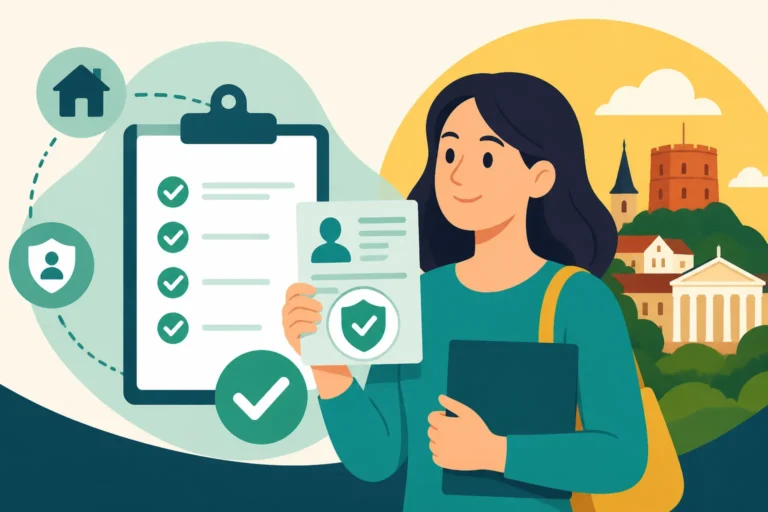
This is often the most time-consuming part, but getting it right from the start will make everything else much smoother. You need to gather a comprehensive set of documents, ensuring they are all valid, properly translated, and, where required, apostilled or legalised. Think of it like assembling the perfect puzzle; every piece must fit.
Here’s a general checklist of what you'll typically need:
Document Category Specific Document Examples Important Notes
Passport/Travel Document Valid for your entire stay plus at least six months. Original and copies, ensure good quality scans for online submission.
Temporary Residence Permit Application Form Filled electronically via the MIGRIS E-Services portal. Available in Lithuanian and English. Be thorough!
Documents Confirming Grounds for TRP
- Employment Contract (Darbo sutartis)
- Employer's decision or work permit issued by the Employment Service (Užimtumo Tarnyba)
- Company registration documents (copy)
- Employer's invitation letter (optional but helpful)
The contract must be valid for the TRP duration. The work permit is essential for non-shortage occupation roles.
Proof of Sufficient Funds | Bank statements from the last 3-6 months showing required amount. | Must clearly demonstrate financial stability (e.g., minimum wage x 6 months).
Proof of Accommodation | Rental agreement (Nuomos sutartis), property ownership deed, or host's letter. | Must be registered at Registrų Centras (Public Register).
Health Insurance Policy | Policy covering medical expenses and repatriation for TRP duration. | Minimum €30,000 coverage. Cigna Global is a good option for this.
Police Clearance Certificate | Issued by the relevant authority in your home country (and any country you’ve lived in for the past 2 years). | Must be apostilled or legalised and officially translated into Lithuanian.
Photographs | 1-2 passport-sized (35×45 mm) colour photos. | Meeting biometric standards, neutral background.
Receipt of Paid State Fee | Proof of payment for the TRP application processing fee. | Usually paid online or at a bank.
Translations and Apostilles | All non-Lithuanian documents must be translated by a certified translator. | Apostille or legalisation may be required for documents from non-Hague Convention countries.
For a comprehensive list of exactly what documents are needed, it's always best to check the official MIGRIS website, as requirements can shift slightly. You can also refer to How to Prepare Documents for a Lithuanian Residence Permit Application for more insights.
Submitting Your Application Through MIGRIS
Once you’ve got that hefty stack of documents perfectly prepared, it’s time to tackle the MIGRIS E-Services portal. This online platform is where almost all the initial heavy lifting happens.
- Create an Account: If you don't already have one, your first step is to register on the MIGRIS E-Services portal. It’s fairly straightforward, but make sure you keep your login details safe.
- Fill Out the Application Form: Navigate to the TRP application section. You’ll find a detailed electronic form that needs to be filled out meticulously. Answer every question accurately and truthfully. This is not the time for guesswork or leaving blanks.
- Upload Your Documents: This is where your well-prepared scanned documents come into play. Upload each document to its corresponding section. Ensure the scans are clear, legible, and in the correct format (usually PDF). If a document needs to be translated or apostilled, upload both the original and the certified translation/apostilled version.
- Pay the State Fee: As part of the online submission, you’ll be prompted to pay the state fee. This fee covers the administrative costs of processing your application. Keep the payment receipt, as you’ll need to upload it and potentially show it at your appointment.
- Book an Appointment: After submitting your online application and paying the fee, you’ll be able to book an appointment at a MIGRIS branch in Lithuania. This is for the in-person part of the process, where you’ll provide biometrics and present your original documents. Booking an appointment at MIGRIS can sometimes be a challenge due to high demand, so be prepared to check the portal frequently. For tips on how to secure your slot, read How to Book an Appointment at the Migration Department (MIGRIS) in Lithuania.
The Biometrics and Interview Stage
The in-person appointment at the Migration Department is your next critical step. This is where your online application truly comes to life.
When you attend your appointment, you will:
- Present Original Documents: You must bring all the original documents you uploaded to the MIGRIS portal. The officer will verify them against your digital copies. This is why thoroughness in the previous step is non-negotiable.
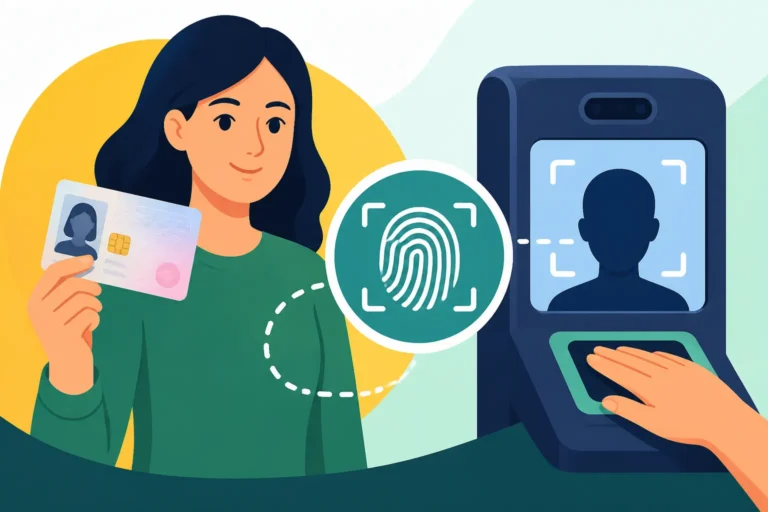
- Provide Biometrics: This involves having your fingerprints taken and a digital photograph captured. These biometrics will be stored and used for your residence permit card, ensuring it's uniquely linked to you.
- Potential Interview: While not every applicant undergoes a lengthy interview, be prepared for one. The officer might ask you questions about your purpose for moving to Lithuania, your job, your employer, your financial situation, and your future plans. They want to ensure your intentions are legitimate and that you meet all eligibility criteria. Don't be surprised if they ask about your understanding of Lithuanian culture or why you chose to work here. If you're not fluent in Lithuanian, you can request an English-speaking officer, or, ideally, bring someone who can translate for you if needed. Remember, honesty and clarity are your best tools here. For guidance on preparing for such a conversation, check out How Do I Prepare for a Migration Department Interview for My Permit?.
After this appointment, you've done your part. Now, the waiting game truly begins.
What to Expect After Application and Important Considerations
You’ve navigated the complex web of documents, submitted your application, and completed your in-person visit. A huge sigh of relief is in order! But the process isn’t entirely over yet. There are still a few crucial things to understand about what happens next and how to maintain your status in Lithuania.
Processing Times and Staying Informed
Ah, processing times – the bane of every expat's existence! While the Migration Department strives for efficiency, patience truly is a virtue here. Standard processing times for a work-based TRP application typically range from 1 to 3 months. However, it’s not uncommon for this to extend, sometimes even longer, especially during peak application periods or if your case requires additional verification. It’s incredibly important to manage your expectations and avoid making any irreversible plans, like quitting your current job or booking one-way flights, until you have received official approval.
You can usually check the status of your application online through the MIGRIS E-Services portal where you submitted it. This will provide updates on whether your application is being processed, if additional information is required, or if a decision has been made. If the process seems to be dragging on beyond the stated timeframe, you can try contacting MIGRIS directly through their helplines or email. Be polite, concise, and always have your application number handy. Persistence, without being pushy, can sometimes yield results. Remember, they handle a massive volume of applications, so a little understanding goes a long way.
Maintaining Your TRP Status and Future Renewals
Obtaining your TRP is a fantastic achievement, but it comes with responsibilities. To maintain your legal residence status, you must adhere to certain obligations. This includes promptly reporting any significant changes to your personal details, such as a change of address in Lithuania, a new employer, or any changes to your employment contract. Failure to report these changes can lead to complications, including the potential revocation of your permit.
Your initial TRP is temporary, meaning it has an expiry date. Most work-based TRPs are issued for one or two years, though some highly skilled worker permits might be for three. You'll need to renew it before it expires if you intend to continue living and working in Lithuania. The renewal process is quite similar to the initial application, requiring updated documents like a new employment contract (if applicable), proof of continued sufficient funds, and valid health insurance. It’s generally recommended to start the renewal process several months before your current TRP expires to avoid any gaps in your legal status. For more detailed information on this, be sure to read How to Extend Your Temporary Residence Permit in Lithuania.
After five years of continuous legal residence in Lithuania on a TRP, you might become eligible to apply for permanent residence. This is a significant milestone that offers more stability and fewer administrative burdens. You can learn more about this longer-term pathway in a guide like Permanent Residence in Lithuania: The Complete Pathway (2027).
Bringing Family Members Along
If you're moving to Lithuania for work, chances are you might want your loved ones to join you. The good news is that Lithuania offers avenues for family reunification, but it’s important to understand that this is generally a separate application process from your work-based TRP, even though it's intrinsically linked.
Once you have secured your own TRP, your spouse, minor children, and in some specific cases, dependent parents, may be eligible to apply for their own temporary residence permits based on family reunification. The primary applicant (you, in this case) will need to demonstrate sufficient funds to support the entire family, not just yourself. You will also need to prove that you have adequate accommodation for everyone. This means your rental agreement or property ownership should reflect enough space for all family members. The process for family members will involve similar document gathering, online submission via MIGRIS, and in-person appointments for biometrics and interviews. The Migration Department scrutinizes these applications to ensure genuine family ties and financial self-sufficiency.
Navigating Common Hurdles and Finding Support
Let's be real: moving to a new country and dealing with bureaucracy, even in a streamlined digital age, is rarely without its challenges. Lithuania, while generally welcoming, has its own unique administrative flavour. But don't despair! Many of us have been there, and there are ways to make the journey smoother.
Dealing with Language Barriers and Bureaucracy
One of the most common frustrations expats face, particularly outside of major cities like Vilnius or Kaunas, is the language barrier. While many younger Lithuanians, especially in the tech and service sectors, speak excellent English, not everyone in government offices will. This can make interactions with MIGRIS or other official bodies quite nerve-wracking. My best advice? Patience, politeness, and persistence. If you anticipate a language issue at an appointment, ask if an English-speaking officer is available beforehand, or, if possible, bring a Lithuanian-speaking friend or colleague to help translate. Professional translation services for your documents are a must anyway, so you’ll get used to working with them.
The bureaucracy itself can feel like a maze. Forms need to be filled out exactly, documents need specific stamps, and processes might seem illogical at times. Always double-check requirements on the official MIGRIS website, as information can sometimes change. If your situation is particularly complex or you're feeling overwhelmed, don't hesitate to seek advice from immigration lawyers or consultants specializing in Lithuanian residence permits. They can offer invaluable guidance and ensure everything is handled correctly. Remember, the goal is to get your permit, so an extra layer of professional support can be well worth the investment.
Essential Services and Resources for New Arrivals
Once your TRP is securely in your hands, the real fun begins – setting up your new life! This involves a whole host of other administrative and practical steps, and thankfully, there’s a growing ecosystem of support for expats in Lithuania.
First off, with your TRP, you’ll be able to finalise your Asmens Kodas if you don't have it already. This personal code is your key to almost everything official. Next, you'll need to open a local bank account. Major banks like Swedbank and Luminor are popular choices, but there are also fintech options like Revolut or Wise that many expats use. For a detailed guide on navigating the Lithuanian job market, you might find The Complete Guide to Working in Lithuania as a Foreigner (2027) very helpful.
Arranging your actual move can also be a significant undertaking. Services like Sirelo, a moving platform, can help you compare quotes from various international movers to get your belongings from your home country to Lithuania efficiently and affordably. Once here, you’ll need to officially declare your place of residence with the local municipality. You'll also want to choose and register with a family doctor (šeimos gydytojas) to access the public healthcare system. This is an essential step for your well-being. Getting connected with fellow expats, either through online forums, social media groups, or local meetups, can provide a fantastic support network for sharing experiences, tips, and making new friends. There are many communities in Vilnius, Kaunas, and Klaipėda ready to welcome you!
Embrace the challenges, celebrate the small victories, and remember that many have walked this path before you. Lithuania is a country full of opportunities, and with this guide, you're well on your way to making it your new home.
Disclaimer
The information provided in this guide is intended for general informational purposes only and does not constitute legal advice. While we strive to keep the information accurate and up-to-date, immigration laws and procedures in Lithuania can change frequently. It is always recommended to consult the official website of the Lithuanian Migration Department (MIGRIS) or seek advice from a qualified immigration lawyer or consultant for the most current and specific guidance regarding your individual situation. We are not responsible for any actions taken or not taken based on the information presented herein.