How Do I Get a Referral to a Hospital in Another City in Lithuania?
Moving to a new country like Lithuania comes with its own set of challenges, and navigating the healthcare system can often feel like a puzzle wrapped in a riddle, especially when you need specialized care that might not be available right around the corner. If you find yourself needing a referral to a hospital or specialist in another city in Lithuania, the process can seem even more daunting. This guide is here to demystify that process, walking you through the steps, pitfalls, and practicalities of getting cross-city medical care.
Understanding the Referral System in Lithuania's Public Healthcare
Lithuania's public healthcare system, largely funded by the Compulsory Health Insurance Fund (PSDF), operates on a tiered structure. For expats accustomed to direct access to specialists, this gatekeeper system can take some getting used to. Generally, your journey into specialist care always begins with your family doctor, or šeimos gydytojas.
The Pivotal Role of Your Family Doctor (Šeimos Gydytojas)
Think of your family doctor as the central hub of your healthcare in Lithuania. They are the first point of contact for virtually all non-emergency medical issues. You simply can't bypass them and walk into a specialist's office in another city, expecting to be seen under the public system. Your šeimos gydytojas holds the key to specialist referrals, and this includes any care you might need beyond your local polyclinic or hospital.
Their responsibility is to assess your symptoms, conduct initial examinations, and determine if a specialist consultation is truly necessary. If it is, they then decide which type of specialist you need and, crucially, where you should go. This is where the cross-city referral comes into play. They don't just hand out referrals freely; they're acting as a medical gatekeeper to ensure resources are used appropriately. It's a system designed to manage patient flow and ensure everyone gets the right level of care. If you haven't yet found one, our guide on The Expat Guide to Finding a Family Doctor (Šeimos Gydytojas) in Lithuania can help you get started, and understanding How to Choose and Register with a Family Doctor (Šeimos Gydytojas) in Lithuania is vital for any long-term resident.
When a Cross-City Referral Becomes Necessary
So, why would you even need to consider traveling to another city for medical care? It's not uncommon, and there are several legitimate reasons why your family doctor might issue a referral beyond your immediate locale:
- Highly Specialised Care: For rare conditions or highly complex procedures, expertise might be concentrated in major university hospitals like Santaros Klinikos in Vilnius or Kauno Klinikos in Kaunas. These institutions often boast the most advanced medical equipment and teams of specialists with very niche focuses.
- Specific Equipment or Technology: Some diagnostic tools or treatment machines are incredibly expensive and are only available in a few central locations. If your local hospital lacks a particular scanner or therapy unit, a referral to a city that has it is the only way forward.
- Seeking a Second Opinion: While challenging in any system, if you or your doctor feel that a second, expert opinion is needed, especially for a tricky diagnosis, seeking it from a different hospital, potentially in another city, can be a valid reason for referral.
- Shorter Waiting Times (Sometimes): Paradoxically, while major cities might have longer general waiting lists, for some highly sought-after specialists, specific hospitals might have a slightly shorter queue than your local options, or simply more available slots due to higher capacity.
- Patient Preference (with Doctor's Agreement): Sometimes, you might have heard good things about a particular hospital or a specific doctor in another city. While not always a guaranteed reason for a referral, if you can articulate a sound medical reason or if your doctor agrees that the alternative location offers better-suited care, it might be possible.
Step-by-Step: Securing Your Referral for Out-of-City Care
Now that we understand the 'why,' let's delve into the 'how.' The process, while bureaucratic, is manageable if you know the steps.
Initiating the Conversation with Your Family Doctor
This is arguably the most crucial step. You need to clearly and calmly explain to your family doctor why you believe care in another city is necessary. Don't just demand a referral; present your case.
- Be Prepared: Bring any previous medical records, test results, and a clear list of your symptoms and concerns. If you've done some research and identified a specific hospital or specialist in another city, mention it, explaining your reasoning (e.g., "I read that Santaros Klinikos has a leading department for X condition").
- Communicate Clearly: For non-Lithuanian speakers, this might mean bringing a friend or using a translation app. Ensure your doctor fully understands your situation and your request. Remember, they are the one making the medical judgment.
- Listen to Their Advice: Your doctor might have valid reasons for suggesting a local option first, or for disagreeing with your choice of city/specialist. Engaging in a respectful discussion is key. They might even have connections or knowledge of excellent specialists you weren't aware of locally. For a broader understanding of how to navigate the system, check out Navigating the Lithuanian Healthcare System: An Expat's Roadmap (2027).
The Electronic Referral (E-Siuntimas) Process
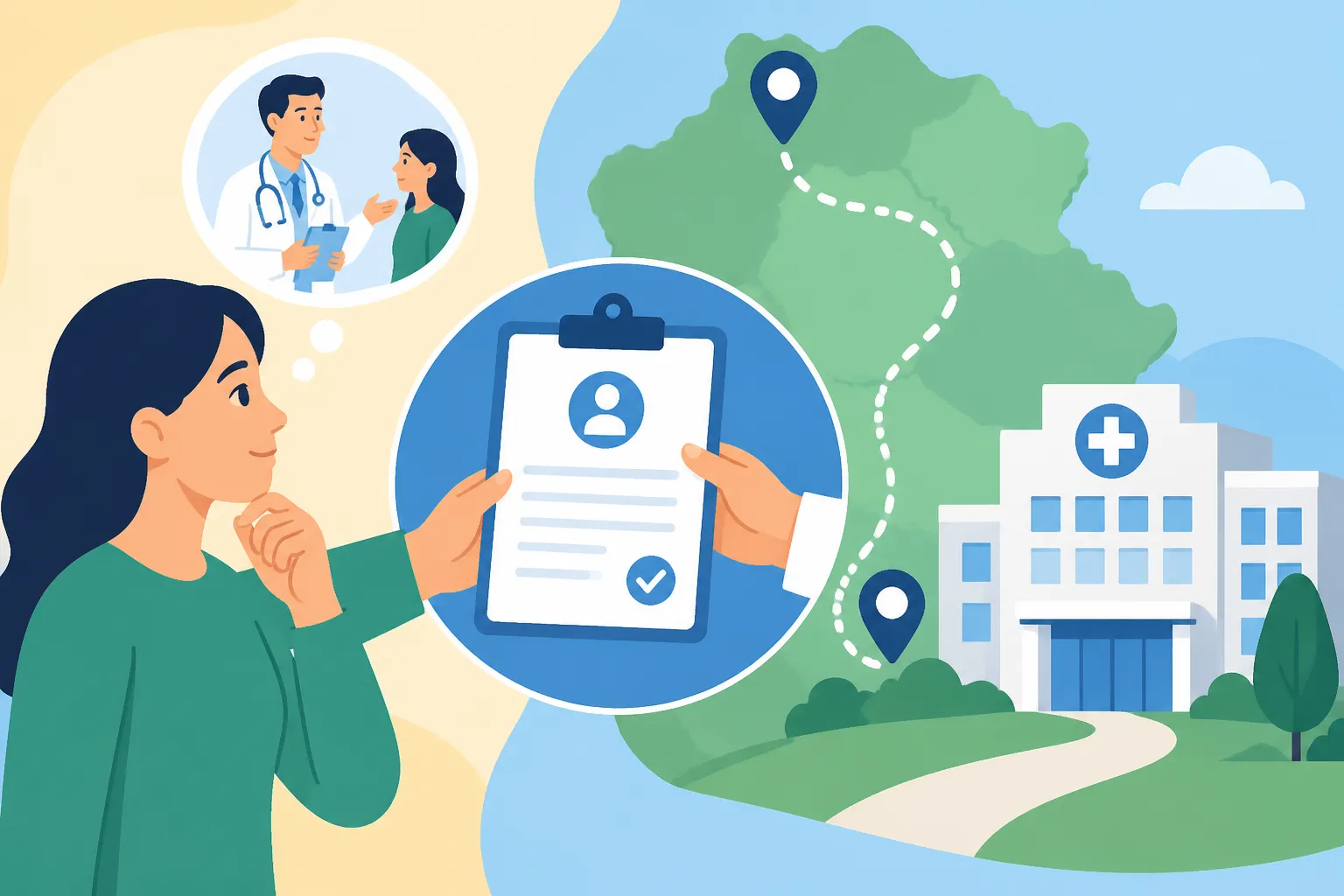
Once your family doctor agrees to the cross-city referral, they will issue what's called an e-siuntimas. This is an electronic referral, not a paper document you'll carry around. This system is part of Lithuania's broader e-health platform, E-Sveikata.
- How it Works: Your doctor will generate the e-siuntimas through the Understanding the E-Sveikata (E-Health) System in Lithuania portal. This referral is then visible to the healthcare system, meaning the specialist or hospital you're being referred to will be able to access it electronically once you book an appointment.
- What's on it: The e-siuntimas will contain your personal details, the reason for the referral, the recommended specialist type (e.g., kardiologas for cardiologist, neurologas for neurologist), and sometimes, a specific hospital. Always double-check with your doctor that the referral is for the correct specialist and, if applicable, the specific hospital you discussed.
- Validity Period: Crucially, e-siuntimas documents usually have a validity period, often 30 days. This means you need to book and attend your appointment within this timeframe. If you miss it, you'll need a new referral from your family doctor.
Booking Your Appointment in the Other City
With your e-siuntimas in hand (metaphorically speaking, as it's electronic), the next step is typically yours: booking the actual appointment.
- Finding the Right Place: You'll need to research hospitals or polyclinics in the target city that have the specialist you need. Major institutions like Santaros Klinikos (Vilnius), Kauno Klinikos (Kaunas), or Klaipėdos Universitetinė Ligoninė are good starting points. Their websites often list departments and specialist availability. Websites like sergu.lt or pincetas.lt can also help you find doctors and clinics, though you'll still need your e-referral for public system coverage.
- Making the Call: This is where the language barrier can become a real hurdle. Hospital receptionists are often busy and might not speak English. You might need to ask a Lithuanian-speaking friend, colleague, or even a language exchange partner to help you make the appointment. Be prepared to provide your Asmens Kodas (personal code), the type of specialist you need, and state that you have an e-siuntimas from your family doctor. Understanding How to Get Your Asmens Kodas (Personal Code) and Why It Matters for Healthcare is fundamental to this entire process.
- Be Patient: Getting through, explaining your situation, and finding a suitable slot can take time. Persistence is key.
Overcoming Challenges and Exploring Alternatives
Even with a clear process, expats often face unique hurdles. Anticipating these can make your journey smoother.
Dealing with Language Barriers and Communication Gaps
Let's be real: medical jargon is tough even in your native language. In Lithuanian, it can feel like trying to understand an alien language. While Lithuania is increasingly English-friendly, especially in Vilnius and Kaunas, not all medical professionals, particularly at the reception desk or in smaller towns, will be fluent.
- Finding English-Speaking Support: Ideally, you've registered with an How to Find an English-Speaking Doctor in Lithuania. If not, consider asking a trusted Lithuanian friend to accompany you to appointments, especially for initial consultations. For critical discussions, a professional medical interpreter might be worth the investment.
- Utilizing Technology (with caution): Google Translate can help with simple phrases or understanding signs, but for nuanced medical discussions, it’s not reliable enough. Misunderstandings can have serious consequences.
- Major Hospitals: Larger university hospitals sometimes have international patient departments or dedicated staff who can assist non-Lithuanian speakers. It's always worth checking their websites or calling ahead to inquire about such services.
Public System Waiting Times and Private Sector Options
One of the most common frustrations in the public healthcare system across Europe, including Lithuania, is waiting times for specialist appointments. While your referral might be to a different city, it doesn't always guarantee an immediate appointment.
- The Reality of Waiting Lists: For popular specialists or non-urgent conditions, waiting times can range from a few weeks to several months. It's a reality you need to mentally prepare for.
- Considering Private Healthcare: This is where many expats turn for faster access and often, more guaranteed English-speaking service. Lithuania has a growing private healthcare sector with numerous modern clinics in major cities. You don't need a family doctor referral to see a private specialist; you can book directly. Of course, this comes at a cost.
- Private Health Insurance: For those who value flexibility and speed, or perhaps aren't yet fully integrated into the public system, private health insurance like SafetyWing can be a real lifeline. While it won't magically make a public referral appear, it certainly makes accessing private clinics for consultations and even some procedures much more straightforward, often without the need for a public siuntimas at all. Many expats find a good private health insurance plan, perhaps even one like SafetyWing, essential for peace of mind, especially when considering Public vs Private Healthcare in Lithuania: Which Should Expats Choose? or wondering Is Private Health Insurance Worth It for Expats in Lithuania?. Some private clinics do have contracts with the PSDF, meaning they can accept public referrals for certain services, but this is specific to each clinic and service, so always inquire directly.
When Your Doctor is Reluctant to Refer
It’s not unheard of for a family doctor to be hesitant about referring a patient to a specialist, let alone one in another city. They have clinical guidelines to follow and are responsible for managing patient care efficiently.
- Re-evaluate Your Request: Is your request based on solid medical reasoning, or more on personal preference without a clear medical need? Try to articulate your symptoms and concerns clearly and objectively.
- Bring Supporting Evidence: If you have documentation from a previous doctor abroad, or recent test results suggesting a need for specialized care, present these to your doctor.
- Request a Second Opinion (from another GP): If you truly feel your concerns aren't being addressed, you have the right to switch family doctors, or even seek a consultation with another family doctor within the same polyclinic to get a second opinion on the referral. This might seem extreme, but sometimes a fresh pair of eyes helps. Our guide to Understanding the Role of the Polyclinic (Poliklinika) in Lithuania sheds more light on this.
Practicalities and What to Anticipate
Once your appointment is booked, there are still a few things to keep in mind to ensure a smooth visit.
Preparing for Your Out-of-City Appointment
Being well-prepared can significantly reduce stress and improve the effectiveness of your consultation.
- Essential Documents:
- Your valid identification document (passport or residence permit).
- Your Asmens Kodas.
- Your European Health Insurance Card (EHIC), if you're an EU citizen.
- Any existing medical records, previous test results (like blood work, X-rays, MRI scans), and a list of all current medications, including dosages.
- If you have private insurance from a provider like SafetyWing, bring your policy details and card, even if you are using a public referral, as it's good to have all your health information in one place.
- Logistics:
- Travel: Lithuania has a decent intercity bus and train network (LTG Link). Plan your journey well in advance, especially if it's an early morning appointment or you're traveling during peak hours.
- Accommodation: If the appointment is very early, very late, or requires you to stay overnight (e.g., for multiple tests), consider booking accommodation. This is particularly relevant if you're traveling from a remote area to Vilnius or Kaunas.
- Communication Aid: If you anticipate a significant language barrier, arrange for a friend or an interpreter to accompany you. Even if the specialist speaks some English, having someone to clarify complex medical terms can be invaluable.
Understanding Costs and Follow-Up
While the public healthcare system covers many costs with a valid referral, there are still financial aspects to consider. For a deeper dive into costs, see The Cost of Healthcare in Lithuania: A Complete Breakdown for Foreigners (2026).
- Public System Costs:
- Consultation: With a valid e-siuntimas and proof of PSDF coverage, the specialist consultation itself is covered.
- Tests/Procedures: Most diagnostic tests and procedures deemed medically necessary by the specialist, and covered by PSDF, will also be free. However, for certain advanced or elective procedures, or if you request specific services not deemed essential, there might be co-payments. Always ask about potential costs upfront if you have any doubts.
- Private System Costs: If you opt for private care without a PSDF referral or a clinic contract, you will pay out-of-pocket for all services. If you have private health insurance, they will cover costs according to your policy terms.
- Ancillary Costs: Remember that your travel expenses (fuel, bus/train tickets) and any accommodation costs are entirely your responsibility and are not covered by the PSDF.
- Follow-Up: After your appointment, the specialist will typically write a summary of their findings, recommendations, and any prescribed treatment. This document is usually sent electronically to your family doctor. It is absolutely crucial that you then schedule a follow-up appointment with your šeimos gydytojas to discuss the specialist's report, understand the next steps, and get any necessary prescriptions or further referrals. They remain your primary healthcare coordinator.
Disclaimer
The information provided in this guide is for general informational purposes only and does not constitute medical, legal, or professional advice. While we strive to provide accurate and up-to-date information, healthcare regulations and procedures in Lithuania can change. Always consult with qualified healthcare professionals, legal advisors, or the Lithuanian Migration Department (MIGRIS) for advice tailored to your specific situation. Reliance on any information in this guide is solely at your own risk.