How Do I Get a Work Permit for a Non-EU Spouse in Lithuania?
Bringing your loved one, especially a non-EU spouse, to Lithuania to live and work with you is a huge step, and let's be honest, navigating the bureaucracy can feel like trying to solve a Rubik's Cube blindfolded. You're already dealing with your own permits and settling in, and now you have to figure out how to get your spouse not just here, but legally working. This guide is here to walk you through the complex, often frustrating, but ultimately achievable process of securing a work permit for your non-EU spouse in Lithuania, sharing the practical realities and what to expect every step of the way.
Navigating the Initial Hurdles: Understanding the Spouse Visa and Work Permit Landscape
First things first, let's clear up some jargon because it's easy to get lost in the sea of "visas," "residence permits," and "work permits." When you're bringing a non-EU spouse to Lithuania, you're essentially looking at two main goals: getting them permission to live here, and then getting them permission to work here. These are often intertwined but distinct processes.
Differentiating Visas, Residence Permits, and Work Permits for Spouses
Before your spouse can even think about getting a work permit, they need a legal basis to reside in Lithuania long-term. This usually starts with either a National (Type D) Visa or, more commonly for long-term stays, a Temporary Residence Permit (TRP).
A National (Type D) Visa is a long-stay visa that typically allows entry and stays for more than 90 days within a 180-day period. It's often issued for specific purposes like studying, working, or awaiting a TRP decision. Your spouse might enter on a Type D visa, but it's generally a precursor to a TRP rather than a long-term solution in itself.
A Temporary Residence Permit (TRP), or Leidimas laikinai gyventi in Lithuanian, is the golden ticket for non-EU citizens who want to live in Lithuania for more than 90 days. It's permission to live, study, or work, and it's renewable. For spouses, this is almost always the ultimate goal for legal residency. Without a TRP, getting a work permit is practically impossible unless they apply for a "Single Permit," which combines work and residence, but this usually requires them to have a job offer before applying for residency, which isn't the typical route for a spouse joining an expat.
A Work Permit, or Leidimas dirbti, is exactly what it sounds like: specific permission to undertake employment in Lithuania. Crucially, a work permit is often tied to a specific job and employer. It's not a standalone document that lets your spouse live here; it's an add-on to their residence status. While some TRPs (like those for highly skilled workers) implicitly grant work rights, a spouse coming under family reunification will typically need an additional work permit if they want to get a job, unless their TRP specifically states they have unrestricted access to the labor market (which is rare initially for family reunification).
So, the usual path for a non-EU spouse is: first, secure a Temporary Residence Permit, usually based on family reunification, and then look for a job and get a work permit. It's a two-stage rocket, and you need to get the first stage off the ground successfully.
The Legal Basis: Family Reunification and Independent Work Routes
For most expat couples, the path for the non-EU spouse to come to Lithuania is through family reunification. This means your spouse's right to reside in Lithuania is dependent on your legal status as an expat already holding a valid Temporary Residence Permit (TRP) in the country, likely based on employment or self-employment. The Migration Department (MIGRIS) is the main authority for these applications. You, as the main applicant, must demonstrate that you can support your spouse financially and provide adequate accommodation. It's a heartwarming concept, but the administrative process can sometimes feel anything but. They want to see genuine relationships and genuine means to support them.
While family reunification is the most common and often least complicated route for a spouse to enter Lithuania, it's not the only one. Your spouse could technically pursue their own independent work-based TRP, essentially going through the same process you did to get your initial permit. This would involve finding a job offer from a Lithuanian employer before applying for their TRP and work permit (often as a "Single Permit"). This path, however, can be significantly more challenging as it requires them to compete directly in the Lithuanian job market from abroad, often without local networks or language skills. It can also involve demonstrating that no Lithuanian or EU/EEA citizen could fill the position, depending on the job's classification. For most couples, the family reunification route, followed by a separate work permit application, is the more pragmatic initial choice.
The Step-by-Step Application for Your Non-EU Spouse's Work Permit
Alright, let's get into the nitty-gritty of the process. This isn't a quick tick-box exercise, but by breaking it down, it becomes much more manageable.
Securing the Temporary Residence Permit (TRP) for Family Reunification
This is the foundational step. Your spouse cannot legally work in Lithuania without a valid right to reside here, and for a non-EU spouse, that means a TRP. The application is typically made through the MIGRIS electronic services portal.
Here's what you'll generally need:
- Application Form: Filled out online via the MIGRIS portal.
- Passport: A valid travel document, of course.
- Marriage Certificate: This is paramount. It must be legalized or apostilled (depending on the issuing country's adherence to the Hague Apostille Convention) and officially translated into Lithuanian. Do NOT underestimate the importance of this step – an incorrectly prepared certificate can cause significant delays.
- Proof of Your TRP: As the inviting spouse, you'll need to provide details and a copy of your own valid Lithuanian Temporary Residence Permit.
- Proof of Accommodation: You need to show that your spouse will have a place to live. This can be your rental agreement (with sufficient space for both of you, based on Lithuanian norms) or property ownership documents. The property owner might need to sign a declaration.
- Proof of Sufficient Funds: You, as the inviting spouse, must demonstrate that you have sufficient funds to support your spouse without recourse to social assistance. This means showing bank statements, employment contracts, or other income proof. The required amount is usually a certain multiple of the minimum monthly wage in Lithuania for each family member. Check the latest requirements on the MIGRIS website, as these figures can change.
- Health Insurance: Your spouse will need valid, comprehensive health insurance for the entire requested TRP period. This usually means private health insurance until they are employed and registered for the compulsory state health insurance (PSD). You can find more comprehensive details in our guide, The Complete Guide to Healthcare in Lithuania for Expats (2027).
- Police Clearance Certificate: A certificate from their home country (and any country they've lived in for more than 12 months in the last 5 years) proving no criminal record. Again, this needs to be apostilled/legalized and translated.
Once the online application is submitted, your spouse will need to book an appointment at a MIGRIS branch (or a Lithuanian embassy/consulate if applying from outside Lithuania) to submit original documents and biometric data. This appointment booking system can be a challenge in itself, so be prepared for some waiting. This process can be quite detailed, so for an exhaustive list, consult our guide on How to Prepare Documents for a Lithuanian Residence Permit Application. Once submitted, the waiting game begins. You can get more specific insights into the overall permit process in How to Apply for a Temporary Residence Permit (TRP) in Lithuania.
Applying for the Work Permit: The Employer's Role and Documentation
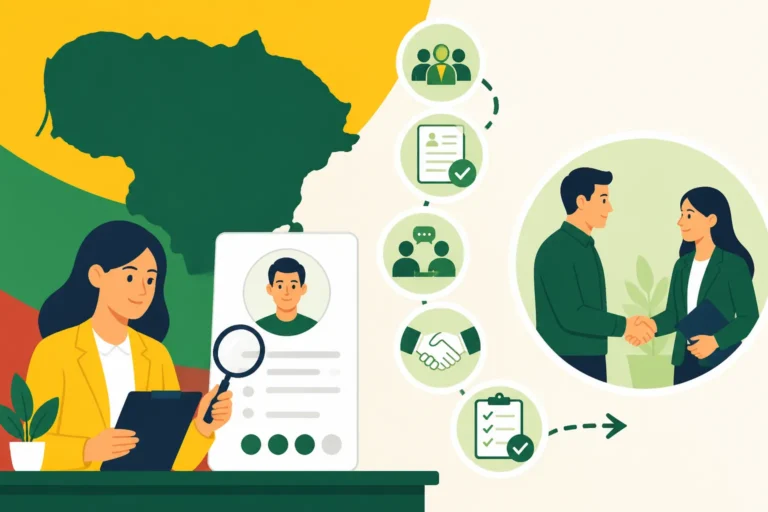
Once your spouse has their TRP and is legally residing in Lithuania (or at least the TRP application is well underway and a job offer has been secured), they can then look for employment. Crucially, the work permit application is primarily the responsibility of the potential employer in Lithuania, not your spouse.
Here’s how it usually works:
- Job Search: Your spouse finds a job and receives an offer from a Lithuanian employer. This is where local language skills can be a significant advantage. If your spouse isn't fluent in Lithuanian yet, resources like iTalki can be incredibly useful for language practice, not just for daily life but also for preparing for job interviews. Many international companies, particularly in Vilnius and Kaunas, operate in English, but understanding some Lithuanian will always make integration easier.
- Employer Initiates Application: The employer then applies to the Lithuanian Employment Service (Užimtumo Tarnyba) for the work permit. They need to prove that the position cannot be filled by a Lithuanian or EU/EEA citizen. This often involves advertising the job vacancy for a certain period and demonstrating a lack of suitable local candidates. This process is generally much simpler for jobs on Lithuania's "shortage occupation list," which includes many IT and engineering roles. If the job is on this list, the employer doesn't need to prove the scarcity of local candidates, significantly speeding up the process. Our guide How to Apply for a Lithuanian Work Permit delves into the specifics.
- Documents from Spouse to Employer: The employer will ask your spouse for several documents, including:
- Copies of their TRP (if already issued).
- Passport copy.
- Educational diplomas and transcripts (apostilled/legalized and translated).
- Proof of professional experience (letters from previous employers, translated).
- A detailed CV.
- Any professional certificates.
- Assessment and Issuance: The Employment Service assesses the application. If approved, a work permit is issued to the employer, which then formally employs your spouse.
It's vital to note that without a work permit (or a TRP that explicitly grants work rights, which is rare for family reunification TRPs), your spouse cannot legally start working. This sequential process is designed to ensure that national labor market needs are prioritized.
The Integrated Application and Timing Considerations
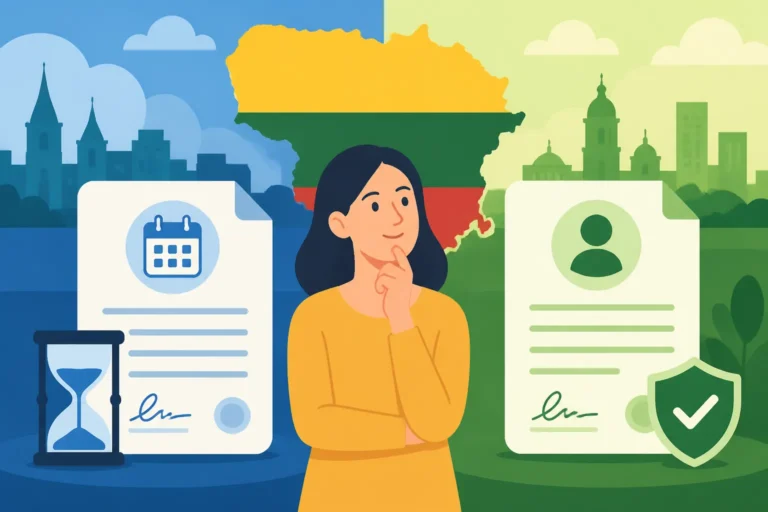
While the "Single Permit" exists for individuals who find a job first and then apply for combined residence and work rights, for non-EU spouses joining their partner, it’s often a two-step dance: TRP first (based on family reunification) and then the separate work permit if they find employment.
The timing can be a real test of patience:
- TRP Application (Family Reunification): Typically takes 2-4 months from the submission of all correct documents. However, this can be longer if documents are missing or if there are backlogs at MIGRIS. You must apply for a TRP and get it approved before your spouse can apply for a work permit.
- Work Permit Application (by employer): This can take anywhere from a few weeks to 2 months, especially if the job is not on the shortage occupation list and requires market testing.
Therefore, the entire journey from initial TRP application to actually starting work can easily take 4-6 months, sometimes longer. It's crucial to plan ahead and manage expectations to avoid unnecessary stress.
Essential Requirements, Documents, and Navigating Bureaucracy
Dealing with the Lithuanian bureaucracy can be daunting, but being meticulously prepared with all the right documents is your best defense against delays and rejections.
Key Documents and Translations for Both Permits
Let's consolidate the document checklist for clarity. For both the TRP (family reunification) and subsequent work permit, expect to provide:
- Valid Passport: Must have at least three months validity beyond the requested permit duration.
- Marriage Certificate: Original, apostilled/legalized from the issuing country, and officially translated into Lithuanian. This cannot be stressed enough. Check with the Lithuanian embassy in your spouse's home country for specific legalization requirements.
- Birth Certificates: For any accompanying children, also apostilled/legalized and translated.
- Your Valid Lithuanian TRP: Proof of your own legal residency.
- Proof of Accommodation: Rental contract, property ownership deeds, or a declaration from the property owner.
- Proof of Funds: Bank statements, employment contracts, payslips from you (as the inviting spouse) showing consistent income sufficient to support both of you.
- Comprehensive Private Health Insurance: Covering the entire period of the requested TRP, with a minimum coverage amount (check current MIGRIS requirements). This is until your spouse begins employment and enrolls in compulsory health insurance (PSD). Our guide, The Complete Guide to Healthcare in Lithuania for Expats (2027), has more on this.
- Police Clearance Certificate: From your spouse's home country and any country they've lived in for extended periods. Apostilled/legalized and translated.
- Educational Diplomas and Transcripts: For the work permit, these will need to be recognized by the Lithuanian Centre for Quality Assessment in Higher Education (SKVC) if they are from outside the EU/EEA, and of course, apostilled/legalized and translated.
- Professional Experience Letters: Detailed letters from previous employers outlining roles, responsibilities, and dates, also translated.
- Asmens Kodas (Personal Code): Once your spouse gets their TRP, they will be issued an Asmens Kodas. This personal identification number is absolutely crucial for almost everything in Lithuania – opening a bank account, registering for healthcare, paying taxes, etc. For more on its importance, see How to Get Your Asmens Kodas (Personal Code) and Why It Matters for Healthcare.
Important note on translations: Always use a sworn translator in Lithuania or a reputable, officially recognized translation service in your home country. Translations must be accurate and often require notarization.
Financial Stability and Health Insurance Requirements
Lithuania, like many countries, wants to ensure that new residents can support themselves and won't become a burden on the state.
- Proof of Sufficient Funds: As the inviting spouse, you will need to demonstrate adequate financial means. While the exact figure can fluctuate, it's typically pegged to a certain multiple of the minimum monthly wage in Lithuania (MMA). For a single person, it's usually at least 1 MMA per month for the duration of the TRP. For a family of two, it would be twice that. For example, if the MMA is €840, you might need to show roughly €1680 per month for yourself and your spouse, or enough savings to cover this amount for the entire TRP period (e.g., 1 year = €20,160). Always verify the current exact amounts on the MIGRIS website, as they are updated periodically.
- Health Insurance: For the TRP application, comprehensive private health insurance is mandatory. This insurance must cover all medical expenses, including emergency treatment, hospitalization, and repatriation, for the entire duration of the requested permit. Once your spouse secures employment and starts paying social security contributions (Sodra), they will become eligible for the state-funded compulsory health insurance (PSD). Until then, the private option is critical. You can learn more about how to set this up in How to Register for Compulsory Health Insurance (PSD) as a Foreigner in Lithuania.
Overcoming Language Barriers and Local Support
Let's be real, navigating any bureaucratic system in a foreign language is a nightmare. While many Lithuanians, especially younger generations in cities like Vilnius and Kaunas, speak English, official forms and communication with institutions are predominantly in Lithuanian.
- Language Learning: Encourage your spouse to start learning Lithuanian as early as possible. Even basic phrases can make a huge difference in daily life, job interviews, and integrating into society. Online platforms like iTalki offer flexible options for finding Lithuanian tutors, allowing your spouse to learn at their own pace and prepare for interactions with potential employers or government officials. For a deeper dive into language learning resources, check out Learning Lithuanian: A Complete Guide to Language Courses and Levels.
- Professional Assistance: If the paperwork feels overwhelming, consider hiring an immigration lawyer or a consultancy service specializing in expat relocation. While an added expense, their expertise can save you immense time, stress, and prevent costly mistakes. They can ensure all documents are correctly prepared, translated, and submitted according to Lithuanian law.
- Expat Communities: Join local expat Facebook groups or online forums. These communities are invaluable for sharing experiences, asking questions, and getting recommendations for translators, lawyers, or even job leads. You're not alone in this journey!
Post-Approval: What Happens Next and Ongoing Obligations
So, your spouse has their TRP and work permit! Congratulations! But the journey doesn't quite end there. There are still some ongoing obligations and things to be aware of.
Registering for Social Security (Sodra) and Taxes
Once your spouse officially starts working, their employer will automatically register them with Sodra (the State Social Insurance Fund Board). This means they will begin contributing to the Lithuanian social security system, which covers things like health insurance (PSD), pensions, sickness benefits, and maternity/paternity leave. Their monthly salary will have deductions for both social insurance and income tax (GPM).
- Income Tax (GPM): Income tax in Lithuania is progressive, meaning higher earners pay a slightly higher rate. Your employer handles these deductions automatically.
- Sodra Contributions: These are also automatically deducted from their salary. Being part of Sodra is essential, as it grants access to public healthcare and other social benefits. For a comprehensive look at the tax system, refer to The Complete Guide to Taxes in Lithuania for Expats (2027). For more complex tax situations, especially if your family has international income or investments, consulting with specialists like Taxes for Expats can be incredibly beneficial. They can help navigate potential double taxation issues and ensure compliance with Lithuanian tax laws.
Renewing Permits and Maintaining Legal Status
Your spouse's TRP and work permit will have expiry dates, usually one or two years. It is absolutely critical to initiate the renewal process well in advance of these dates – typically at least 2-4 months before expiry.
- TRP Renewal: This process is similar to the initial application but usually requires updated documents (proof of continued funds, accommodation, health insurance, criminal record certificate might be required again). If your spouse is employed, their employment contract will serve as proof of income. You can find more specific information on how to handle renewals in How to Renew Your Lithuanian Residence Permit.
- Work Permit Renewal: The employer will also need to re-apply for the work permit (if a separate one was issued) before it expires, assuming the employment continues.
Failing to renew permits on time can lead to serious legal complications, including fines, loss of legal status, and even deportation. Mark those calendars!
Long-Term Outlook: Towards Permanent Residence and Citizenship
The initial hurdles can be tough, but remember that the TRP is the first step towards a long-term future in Lithuania. After five years of continuous legal residency on a TRP, your spouse may become eligible to apply for Permanent Residence in Lithuania: The Complete Pathway. This grants much more stability and fewer restrictions.
Eventually, after a certain period of permanent residency (typically another five years, making it ten years total), your spouse could even apply for Lithuanian Citizenship: Routes Through Naturalisation and Descent, provided they meet all the criteria, including passing a Lithuanian language and constitution exam. It's a journey, not a sprint, and each step builds upon the last, offering greater security and integration into Lithuanian society.
Here’s a quick overview of the key document differences you might encounter:
| Document Type | Required for Temporary Residence Permit (TRP) | Required for Work Permit (Leidimas dirbti) | Notes |
|---|---|---|---|
| Passport | Yes | Yes | Must be valid. |
| Marriage Certificate | Yes | No (unless for identity verification) | Apostilled/legalized and translated. Core for family reunification TRP. |
| Main Applicant's TRP | Yes | No | Proof of inviting spouse's legal residency. |
| Proof of Accommodation | Yes | No | Rental agreement or ownership. |
| Proof of Funds | Yes (from inviting spouse) | No (employer provides job offer) | Bank statements, employment contract from inviting spouse. |
| Health Insurance | Yes (private, comprehensive) | Yes (PSD via employer upon employment) | Private for TRP, then compulsory PSD once employed. |
| Police Clearance | Yes | No | Apostilled/legalized and translated. |
| Educational Diplomas | No | Yes (for job suitability, often recognized by SKVC) | Apostilled/legalized and translated. |
| Professional Experience | No | Yes (letters from previous employers) | Translated. |
| Job Offer/Contract | No (unless applying for a Single Permit) | Yes (from Lithuanian employer) | Employer initiates work permit based on this. |
| Asmens Kodas (Personal Code) | Issued upon TRP approval | Required for employment registration, not application | Essential for all official services and employment once TRP is obtained. |
This table provides a generalized overview, and individual circumstances or changes in legislation might require additional documents. Always refer to the official MIGRIS and Employment Service websites for the most current and specific requirements.
Disclaimer
The information provided in this guide is intended for general informational purposes only and does not constitute legal, financial, or immigration advice. While every effort has been made to ensure accuracy and currency, laws and procedures in Lithuania can change frequently. It is highly recommended to consult directly with the official Lithuanian Migration Department (MIGRIS), the Lithuanian Employment Service (Užimtumo Tarnyba), or a qualified legal professional for advice tailored to your specific situation. Reliance on any information in this guide is solely at your own risk.