How Do I Open an Account at Šiaulių Bankas or a Fintech in Lithuania?
Ah, the Lithuanian banking scene for expats – it can feel like a labyrinth, especially when you're just finding your footing. Many of us arrive, full of optimism, only to be met with blank stares when we present our foreign documents at a traditional bank. The struggle is real: getting a reliable account set up is crucial, yet it often becomes one of the first major administrative hurdles. This guide will meticulously walk you through opening an account at a local gem like Šiaulių Bankas, and explore the rapidly growing world of fintech solutions, specifically focusing on how digital platforms like Wise can be your lifesaver in Lithuania.
Understanding Your Banking Options in Lithuania
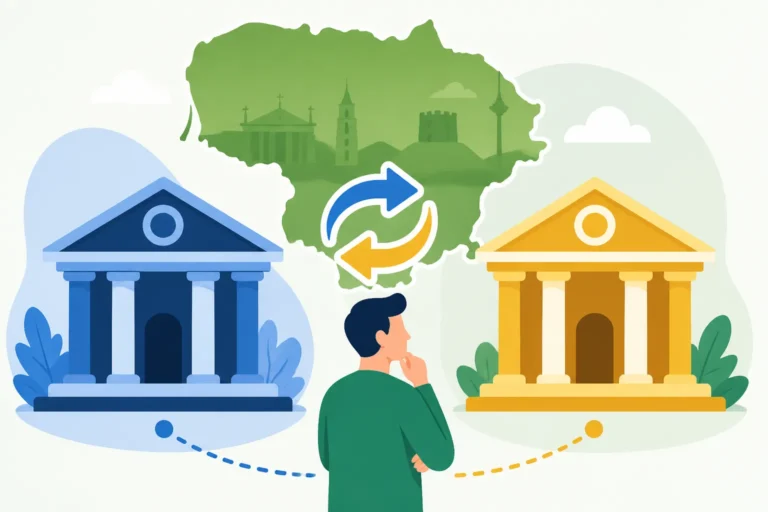
When you first land in Lithuania, fresh off the plane or perhaps just settling into your new apartment, one of the most pressing tasks, right after securing your [residence permit], is getting your finances sorted. The question of where to put your money, how to receive your salary, and how to pay bills quickly becomes paramount. You'll find yourself at a crossroads: do you go the traditional route with a well-established brick-and-mortar Lithuanian bank, or do you embrace the digital-first approach offered by a fintech company? Each has its merits and its particular set of challenges for us expats.
Traditional Banks vs. Fintechs: The Expat Dilemma
Let's be frank, navigating traditional Lithuanian banks like Swedbank, SEB, Luminor, or even the smaller but reputable Šiaulių Bankas, often feels like a rite of passage. On one hand, they offer the familiarity and perceived security of a physical presence. You can walk into a branch, speak to a person (sometimes in English, sometimes with the help of a very patient Google Translate or a kind Lithuanian friend), and feel like your money is firmly rooted in the local financial system. For things like mortgages, complex investments, or even just feeling "official" for certain governmental procedures, a traditional bank account can be invaluable. However, the process of opening one can be a test of patience. They almost invariably require an Asmens Kodas (personal code), a Lithuanian residence permit, and often proof of address, which can be a catch-22 when you need a bank account to prove anything. The paperwork can be extensive, and the online banking systems, while generally good, might not always be intuitive for someone used to systems from other countries.
Then there are the fintechs – the digital disruptors like Wise, Revolut, or N26. For many expats, these platforms are an absolute godsend. Their main appeal lies in their accessibility and ease of setup. You can often open an account purely online, with minimal fuss, sometimes even before you've fully registered your Lithuanian residence or received your Asmens Kodas. This flexibility makes them ideal for newcomers who need to hit the ground running, perhaps to receive initial transfers from home or to manage day-to-day spending. They typically offer multi-currency accounts, competitive exchange rates, and very user-friendly mobile apps. The downside? They don't have physical branches, so if you encounter a complex issue, you're relying solely on online or phone support. Also, some highly localized services or specific governmental payments might still prefer or require an account with a traditional Lithuanian bank.
Why Šiaulių Bankas Might Be a Good Fit
Amidst the larger banking giants, Šiaulių Bankas stands out as a solid, reliable, and increasingly expat-friendly option, particularly for those looking for a traditional banking experience without some of the complexities found elsewhere. While it's not as large as Swedbank or SEB, it has a strong presence across Lithuania, including major cities like Vilnius, Kaunas, and Klaipėda.
One of the reasons Šiaulių Bankas might appeal to you is its more personalized approach. In my experience, and that of many other expats, the staff in smaller banks can sometimes be more patient and willing to help navigate the intricacies for non-Lithuanian speakers. They offer a comprehensive range of services, from basic current accounts to savings, loans, and investment products. Their online banking system is robust, providing all the necessary functions for daily money management, bill payments, and transfers within the SEPA zone. If you're looking to establish long-term roots in Lithuania, perhaps even considering [buying property in Lithuania], a good relationship with a local bank like Šiaulių Bankas can be beneficial for future financial needs like mortgages or loans, where a history with a traditional bank can make a significant difference.
Diving into Šiaulių Bankas: What You Need to Know
Deciding to go with a traditional bank like Šiaulių Bankas means preparing for a slightly more involved process than with a digital challenger. But don't let that deter you! With the right documents and a bit of patience, you'll be set up with a fully functional Lithuanian bank account that can handle all your local financial needs. Think of it as another step in truly integrating into your new home.
The Application Process and Required Documents
To open an account at Šiaulių Bankas, or indeed most traditional banks in Lithuania, you'll need to gather a few essential documents. This is where the frustration often begins for new arrivals, as some documents are easier to obtain than others.
Here's what you'll typically need:
- Valid Passport or ID Card: This is a given for any official process. Ensure it's not expired and is clearly readable.
- Lithuanian Residence Permit (Leidimas Gyventi): This is usually non-negotiable for non-EU/EEA citizens. For EU/EEA citizens, you'll need to have declared your right of residence as an EU citizen in Lithuania.
- Asmens Kodas (Personal Identification Code): This is crucial. It's your unique 11-digit Lithuanian personal code, essential for almost all administrative tasks, including banking, healthcare, and taxes. If you don't have one yet, you need to prioritize getting it. Our guide on how to get your Asmens Kodas explains this in detail.
- Proof of Address: This can be tricky. Often, banks want to see a utility bill, a rental contract registered with the [Real Property Register (Registrų Centras)], or a certificate from the Registrų Centras confirming your declared place of residence. If you're struggling, a letter from your employer might sometimes work, but it's less common. For new expats, this is often a chicken-and-egg situation – you need an account to pay bills, but you need bills to open an account!
- Proof of Income/Employment: A work contract (darbo sutartis) from a Lithuanian company, or proof of self-employment registration, can often smooth the process. If you're coming to Lithuania on a work visa, your employment contract will be key. If you are self-employed, you'll want to review your registration for individual activity (individuali veikla) in Lithuania.
- Information on Source of Funds: Banks, due to anti-money laundering regulations, often ask where your initial funds are coming from, especially if you're making a significant deposit. Be prepared to explain this.
Step-by-step for Šiaulių Bankas:
- Schedule an Appointment: While you might try walking into a branch, especially in smaller towns, it's always best to book an appointment beforehand, particularly in cities like Vilnius or Kaunas. You can usually do this through their website or by calling their customer service. Request an English-speaking representative if possible.
- Visit the Branch: Arrive with all your original documents. Be prepared for some waiting, even with an appointment.
- The Interview: A bank representative will review your documents, ask questions about your purpose for the account, your source of funds, and your residency status. This is where language can be a barrier, so bring a friend or be ready with translation apps if you don't speak Lithuanian and an English-speaking banker isn't available.
- Sign the Contract: Once everything is approved, you'll sign the necessary agreements. Make sure you understand the terms and conditions, especially regarding fees for monthly maintenance, international transfers, and ATM withdrawals.
- Receive Your Card and Online Banking Details: You'll usually get a temporary debit card or receive your official card in the mail within a few business days. They will also guide you through setting up your online banking access, which might involve a secure code generator or a mobile app for authentication.
Services Offered by Šiaulių Bankas
Once your account is successfully opened with Šiaulių Bankas, you'll have access to a full suite of services that are essential for daily life in Lithuania.
- Current Accounts (Atsiskaitomoji Sąskaita): For your day-to-day transactions, receiving your salary, and making payments.
- Debit and Credit Cards: You'll get a debit card, typically a Mastercard or Visa, for purchases and ATM withdrawals. Credit cards are usually offered after you've established a banking history and creditworthiness in Lithuania.
- Online and Mobile Banking: Šiaulių Bankas, like other modern banks, offers comprehensive online banking portals and mobile apps. These allow you to check balances, transfer money locally and internationally, pay bills (including utility bills like [electricity (ESO)]), and manage your cards.
- International Transfers: You can send and receive money internationally, though fees and exchange rates for non-SEPA transfers might be less competitive than specialized fintech services like Wise. For regular international payments, keep an eye on these costs.
- Savings Accounts and Investments: If you plan to stay long-term, they offer various savings options and investment products.
- Loans and Mortgages: For larger financial commitments down the line, having a history with a local bank like Šiaulių Bankas is very advantageous. They are more likely to offer you favorable terms for things like a car loan or a mortgage to buy property once you've demonstrated financial stability here.
The Fintech Revolution: Wise and Other Digital Alternatives
For those moments when traditional banking feels like too much bureaucracy, or for specific needs like international money transfers, the fintech world offers incredibly appealing alternatives. They've truly transformed how many expats manage their finances, bridging gaps that traditional banks often struggle with. And let's be honest, sometimes you just need to get money moving without explaining your life story.
The Appeal of Fintech for Expats
Fintech companies, particularly those like Wise (formerly TransferWise), have become cornerstones of expat financial management globally, and Lithuania is no exception. Their primary draw is their incredible convenience and user-friendliness, especially for those who are new to the country and haven't yet gathered all the necessary local documentation.
Here's why they are so appealing:
- Ease of Opening: Forget appointments and reams of paperwork. Most fintech accounts can be opened online in minutes, often just needing a valid passport or national ID and a proof of address from any country. This means you can have a functioning account before you even have your Asmens Kodas or a Lithuanian residence permit.
- Multi-Currency Accounts: A huge advantage for expats. You can hold balances in multiple currencies (EUR, USD, GBP, etc.) within one account. This is fantastic for receiving money from your home country, managing funds in different currencies if you work with international clients, or simply having easy access to different currencies when traveling or shopping online.
- Lower Fees for International Transfers: This is where Wise truly shines, and why it's a household name among expats. Their mission is to make international money transfers cheaper, faster, and more transparent. Traditional banks often hit you with hidden markups on exchange rates and hefty transfer fees. Wise, on the other hand, uses the real mid-market exchange rate and charges a small, upfront fee, making it significantly more cost-effective for sending money home or receiving funds from abroad. Many expats managing their personal finances or [paying taxes as expats in Lithuania] appreciate these transparent rates.
- Virtual Cards and Mobile Payments: Most fintechs offer virtual debit cards, which are great for online shopping and can often be linked to mobile payment systems like Google Pay or Apple Pay right away.
- Speed: Transfers, especially within the SEPA zone, are often instant or near-instant, which is a blessing when you need to pay rent or a bill quickly.
How to Open an Account with a Fintech Like Wise
Opening an account with Wise is remarkably straightforward, designed precisely to minimize the administrative hassle that expats often face.
Step-by-step for Wise (or similar fintechs):
- Visit the Website or Download the App: Go to the Wise website or download their mobile app from your app store.
- Sign Up: You'll be asked to provide your email address and create a password.
- Choose Account Type: Select whether you want a personal or business account. For most expats, a personal account is sufficient initially.
- Verify Your Identity: This is a crucial step for regulatory compliance. You'll typically need to:
- Upload a photo of your valid passport or national ID card.
- Take a selfie to match your face to the document.
- Provide proof of address. This can be a utility bill (even from your home country), a bank statement, or a government-issued letter. As a new arrival, this is where fintechs are much more flexible than traditional banks; they don't necessarily require a Lithuanian address from day one.
- Fund Your Account: Once verified, you can add funds to your account. This can usually be done via a bank transfer, debit card, or credit card from another account.
- Order a Debit Card (Optional): If you want a physical debit card, you can order one after your account is verified and funded. It will be mailed to your chosen address (can be a Lithuanian address once you have one, or even your home country address if you're setting things up remotely).
Compared to the rigorous requirements of a traditional bank for an Asmens Kodas and local proof of address, fintechs offer a refreshing alternative. They recognize the global nature of expat life and provide a solution that caters to those who are in transition or have complex international financial needs.
While Wise is fantastic for international transfers and holding multiple currencies, you might also come across other digital banks like Revolut or N26, which offer similar benefits, often with slightly different features or pricing structures. It's always worth comparing a few to see which best fits your specific needs for fees, services, and customer support. However, for sheer reliability and cost-effectiveness in international money transfers, Wise remains a top choice for many.
Navigating the Nuances: Choosing and Using Your Account
So, you're faced with options: the familiar stability of a traditional bank like Šiaulių Bankas or the agile convenience of a fintech like Wise. The reality for many expats is that a single solution might not cover all their needs perfectly. A hybrid approach often proves to be the most effective. But how do you decide what's best for you? It boils down to your specific circumstances, priorities, and long-term plans in Lithuania.
Key Considerations When Choosing a Platform
Before you commit fully to one banking solution, take a moment to weigh these factors:
- Fees, Fees, Fees: This is perhaps the most critical point for any expat.
- Monthly Maintenance Fees: Some traditional banks charge a small monthly fee for account upkeep. Many fintechs also have premium tiers with monthly fees, but their basic accounts are often free.
- International Transfer Fees and Exchange Rates: If you'll be sending or receiving money regularly from outside the Eurozone, platforms like Wise are usually unbeatable for their transparent, low-cost transfers using the real mid-market rate. Traditional banks can be significantly more expensive here.
- ATM Withdrawal Fees: Check if there are fees for withdrawing cash, both in Lithuania and when traveling. Some fintechs offer a certain amount of free withdrawals per month.
- Customer Support and Language Options: How comfortable are you dealing with customer service in English, or potentially needing translation?
- Traditional Banks: Many larger banks in Vilnius or Kaunas will have English-speaking staff, but this isn't guaranteed in smaller towns or for every representative. Šiaulių Bankas is generally helpful, but don't assume everyone will speak English fluently.
- Fintechs: Support is usually online (chat, email) or via phone, and almost always in English, which is a huge relief for many expats.
- Integration with Local Services: This is where traditional banks often have an edge.
- Direct Debits (Automatizuoti Mokėjimai): Setting up direct debits for things like rent, electricity, internet, and phone bills is common in Lithuania. Traditional banks are seamlessly integrated into these systems. Fintechs often work, but sometimes specific billers or governmental bodies might prefer a local Lithuanian IBAN.
- Salary Payments: Most Lithuanian employers will expect to pay your salary into a Lithuanian IBAN. Both traditional and fintech accounts with a Lithuanian IBAN will work.
- Government Services: For certain interactions with Lithuanian government bodies, like tax declarations through the VMI EDS (Electronic Declaration System) or certain social benefits, having a traditional Lithuanian bank account can sometimes simplify matters.
- Security and Regulation: Both traditional banks and reputable fintechs are regulated.
- Traditional Banks: Regulated by the Bank of Lithuania and covered by the Deposit Insurance Fund. Your deposits are protected up to €100,000.
- Fintechs: Often regulated as Electronic Money Institutions (EMIs) or payment service providers. Your funds are usually safeguarded in segregated accounts, though the exact nature of protection might differ slightly from traditional bank deposit insurance. Always check the specific regulatory body for the fintech you choose.
Practical Tips for Managing Your Finances in Lithuania
Once you've made your choice (or decided on a dual strategy), here are some practical tips to make managing your money in Lithuania smoother:
- Understand Your IBAN: All Lithuanian bank accounts, whether traditional or fintech, will have an International Bank Account Number (IBAN) starting with LT. This is what you'll use for all transfers.
- Setting Up Bill Payments: Learn how to set up standing orders (nuolatiniai mokėjimai) or direct debits for your regular bills. This is usually done through your online banking portal. For utility bills, you might also have specific online portals where you log in and pay directly, or you can use services like Viena Sąskaita which consolidates many bills.
- Tax Implications: As an expat, understanding your income tax (GPM) in Lithuania is vital. If you're receiving income from abroad, or using a multi-currency account, you need to be aware of how foreign income is taxed. For comprehensive advice, consulting a service like Taxes for Expats can be incredibly helpful to ensure you're compliant with Lithuanian tax laws, especially if you have complex income streams or investments. Remember, the Lithuanian Tax Authority (VMI) needs to know about your worldwide income if you're a tax resident here.
- Mobile App Utilization: Embrace the mobile apps! Most Lithuanian banks and all fintechs offer excellent mobile apps that allow you to manage almost all your financial needs from your phone.
- Connect to E-Sveikata (if applicable): Once you have your Asmens Kodas and have registered for compulsory health insurance (PSD) in Lithuania, your banking details might link up with governmental e-services. For example, some interactions with the e-health system, [E-Sveikata], might require banking authentication.
- Keep Records: Always keep records of important transactions, especially international transfers or large payments. This is good practice for budgeting and for potential tax purposes.
Common Challenges and Troubleshooting for Expats
Even with all the preparation in the world, moving to a new country and setting up your life inevitably comes with its fair share of head-scratching moments. Banking is definitely one of those areas where you might hit a snag or two. Don't worry, you're not alone! Many expats before you have navigated these waters, and there are often ways around the hurdles.
Overcoming Language Barriers and Bureaucracy
This is perhaps the biggest exasperation point for many foreigners in Lithuania. While English proficiency is generally high among younger generations, especially in Vilnius and Kaunas, and in certain sectors like IT, you can't always count on it when dealing with administrative tasks, especially outside the capital or with older staff.
- Be Prepared with Translation: Always have Google Translate on your phone, or better yet, DeepL. For more complex conversations, write down key questions or phrases in Lithuanian beforehand. This shows effort and can often elicit more patience and helpfulness from the staff.
- Bring a Lithuanian Friend (if possible): If you're tackling a complicated issue, or if your Lithuanian language skills are still blossoming, bringing a Lithuanian-speaking friend or colleague to your bank appointment can be a game-changer. They can help clarify information and ensure nothing gets lost in translation.
- Prioritize English-Speaking Branches/Contacts: When booking an appointment at Šiaulių Bankas or any other traditional bank, explicitly ask for an English-speaking representative. In larger branches in major cities, this is often possible. For fintechs like Wise, their customer support is typically multinational and always available in English, which removes this particular stressor entirely.
- Understand the "Why": Bureaucracy can feel arbitrary, but often there's a specific "why" behind a request for a document or a procedure. Asking why something is needed, even if it feels repetitive, can sometimes help you understand what they're actually looking for and find an alternative solution.
- Patience is a Virtue (and a Necessity): Things might take longer than you expect, or you might be asked for a document you thought wasn't necessary. Take a deep breath. Getting frustrated rarely helps. Keep a calm demeanor, and be politely persistent.
When to Consider Both a Traditional Bank and a Fintech
For many expats, especially those planning a long-term stay, the "either/or" question often evolves into a "both/and" strategy. This hybrid approach leverages the strengths of each banking type, providing you with a robust financial setup.
Think of it this way:
- Fintech as Your Entry Point and International Hub: When you first arrive, a fintech account like Wise can be your immediate solution. It's quick to set up, allows you to receive money from abroad easily, and provides a debit card for immediate spending. It's perfect for managing your initial expenses, international transfers, and for day-to-day purchases while you get your feet on the ground. It remains an excellent tool for any cross-currency transfers, even after you're fully settled, due to its superior exchange rates and lower fees. You can still use it for how to transfer money internationally from a Lithuanian account at better rates.
- Traditional Bank for Long-Term Integration: As you establish yourself in Lithuania, you'll likely want or need a traditional bank account, perhaps with Šiaulių Bankas. This becomes your primary account for receiving your local salary, setting up direct debits for rent and utilities, and engaging with various government services that might prefer a local bank. For bigger financial goals, like getting a mortgage or a car loan, having a relationship and credit history with a Lithuanian bank is almost always required. It shows you're fully integrated into the local financial ecosystem.
- Complementary Use: You can link your Wise account to your Šiaulių Bankas account. Use Wise for receiving international payments or sending money home at favorable rates, and then transfer the necessary funds to your Šiaulių Bankas account for local bills and everyday spending. This way, you get the best of both worlds: the international flexibility and cost-effectiveness of a fintech, combined with the local integration and comprehensive services of a traditional Lithuanian bank.
Ultimately, the goal is to make your financial life in Lithuania as smooth and stress-free as possible. Whether you start purely digital, go straight to a traditional branch, or mix and match, understanding your options and being prepared for the journey will make all the difference.
Disclaimer
The information provided in this guide is for general informational purposes only and does not constitute financial, legal, or tax advice. While we strive to keep the information up-to-date and accurate, regulations and procedures in Lithuania can change. It is always recommended to consult with official institutions, financial advisors, or legal professionals for advice tailored to your specific situation. This guide is based on current understanding and general expat experiences.