What Is the Deadline for the Annual Tax Return in Lithuania?
That annual tax return deadline can creep up on you, can't it? One minute you're settling into life in Lithuania, enjoying a kavas and a bandelė, and the next you're staring at complex tax forms in a language you're still mastering, wondering when exactly you need to submit everything. Trust me, you're not alone in feeling that little pang of panic. It’s a hurdle many of us expats face, trying to decipher the local tax system while juggling everything else. But don't you fret, because this guide is going to walk you through everything you need to know about the annual tax return deadline in Lithuania, making sure you're well-prepared and stress-free.
Demystifying the Annual Income Tax Return GPM in Lithuania
When you first hear "GPM," it might sound like another perplexing acronym to add to your expat dictionary. But GPM, or Gyventojų pajamų mokestis, is simply the Personal Income Tax here in Lithuania. It's the annual declaration of your income and, often, your opportunity to claim back some overpaid taxes or apply for various tax reliefs. For many of us, especially those coming from countries with more straightforward tax systems, navigating the VMI (Valstybinė mokesčių inspekcija), or the Lithuanian State Tax Inspectorate, can feel like trying to solve a Rubik's Cube blindfolded.
So, who exactly needs to file this annual GPM declaration? Generally speaking, if you are considered a tax resident of Lithuania and have earned income here – whether from employment, self-employment, property rental, or other sources – you'll need to submit a return. Even if your only income is from a Lithuanian employer who already deducts your taxes at source, you might still need to file, especially if you want to claim deductions or if you changed jobs during the year. Non-residents who have earned income in Lithuania, such as from renting out property or certain types of work performed locally, also have specific filing obligations. It’s crucial to understand your tax residency status in Lithuania, which can sometimes be a bit of a grey area for digital nomads or those with international ties.
The importance of filing on time cannot be overstated. Beyond simply fulfilling your legal obligations, it’s about peace of mind. Getting it right ensures you avoid unnecessary penalties and interest, and critically, it allows you to claim any tax refunds you might be due. Imagine leaving money on the table just because you missed a deadline! Many expats find it challenging to get their Asmens Kodas (personal code) and register with the Lithuanian Tax Authority, which is a fundamental first step for everything related to taxes. Without it, the whole process becomes a lot harder.
The Non-Negotiable Deadline: Filing Your GPM Declaration on Time
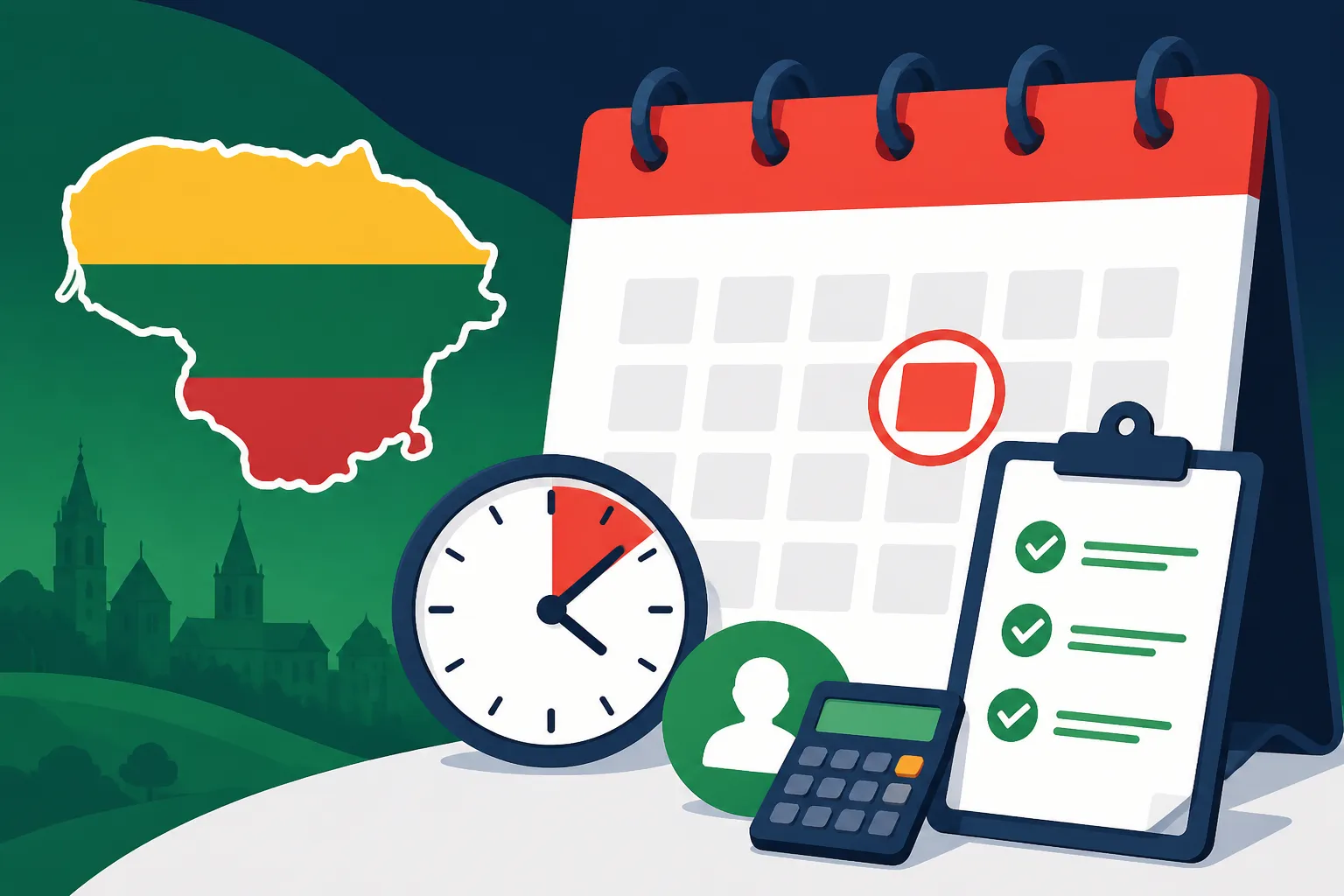
Alright, let's get down to the brass tacks – the deadline. This is the question that probably brought you here, and rightly so. Knowing this date is half the battle. For individual taxpayers in Lithuania, the standard, absolutely non-negotiable deadline for submitting your annual Personal Income Tax (GPM) declaration is May 1st of the year following the tax year in question.
So, for example, your income earned throughout 2023 must be declared by May 1st, 2024. Income earned in 2024 will need to be declared by May 1st, 2025, and so on. This date is fairly consistent year after year, though it's always wise to double-check the official VMI announcements as we approach April, just in case a public holiday shifts things slightly (though May 1st is usually a public holiday itself, so the deadline often gets pushed to the next working day if May 1st falls on a weekend or public holiday).
This deadline applies to the declaration of income, specifically the GPM311 form, which is the cornerstone of your annual tax filing. This means you need to have compiled all your income statements, gathered documents for any tax deductions you're eligible for, and submitted the form through the Electronic Declaration System (EDS) by this date. For those wondering, "How Much Income Tax (GPM) Will I Pay in Lithuania in 2026?" it's a good idea to start calculating well before May 1st.
What about other types of income or specific situations?
- Self-employed individuals (Individual Activity or Business Certificate holders): If you're running an Individuali Veikla (Individual Activity) or have a Verslo Liudijimas (Business Certificate), the May 1st deadline for income declaration also applies to you. However, you'll need to keep a very close eye on specific dates for quarterly or monthly advance payments throughout the year, as outlined by the VMI.
- Leaving Lithuania: If you're planning to leave Lithuania permanently and cease to be a tax resident, you might have an earlier filing obligation. It's often required to file your final tax return within 30 days of your departure or of ceasing to be a resident. This is a critical point that many expats overlook in the rush of relocation, leading to potential headaches down the line.
- Donations and Deductions: Any expenses you wish to deduct, such as contributions to Pillar III pensions, life insurance premiums, education fees, or interest on a housing loan (under certain conditions), must be included in this annual declaration. So, make sure you have all those receipts and certificates ready! Understanding how the Tax-Exempt Amount (NPD) works in Lithuania can also significantly impact your final tax bill or refund.
Here’s a quick overview of the key dates for individual income tax:
| Action | Deadline (Standard) | Covers (Tax Year) | Notes |
|---|---|---|---|
| Annual GPM Declaration (GPM311) Submission | May 1st | Previous calendar year | For all individual income, including self-employment (Individual Activity). |
| Annual GPM Payment (if tax due) | May 1st | Previous calendar year | Payment must be made by this date if your declaration shows tax payable. |
| Departure Tax Return (for leavers) | 30 days after departure/cessation of residency | Income up to departure | Specific rules apply; contact VMI for details. |
| Advance GPM Payments (e.g., for self-employed) | Quarterly/Monthly (variable) | Current year | Check VMI for specific dates based on your income type. |
Always remember that these dates are for the previous calendar year's income. So, when you're filing in April 2026, you're declaring all the income you earned between January 1st, 2025, and December 31st, 2025.
Your Step-by-Step Guide to Filing via the VMI's Electronic Declaration System EDS
The VMI's Electronic Declaration System (EDS) is where most individuals in Lithuania, including expats, will file their annual tax return. It's an online portal, which, while initially daunting, becomes quite manageable once you get the hang of it. The good news is that the VMI has been making efforts to simplify the process and pre-fill some information for you. The bad news? It's still in Lithuanian, and occasionally, even the "simplified" forms can throw you for a loop. Many expats find "The Complete Guide to Taxes in Lithuania for Expats (2026)" to be an invaluable resource when tackling the EDS.
Before you can even think about submitting your tax return, you absolutely need your Asmens kodas (personal code). This is your unique identifier in Lithuania and is essential for all administrative tasks, including taxes. If you don't have one, you need to prioritize getting it. You can learn more about "How to Get Your Asmens Kodas and Why It Matters for Healthcare" and other administrative functions in Lithuania.
Here’s a general step-by-step rundown for "Filing Your Annual Income Tax Return in Lithuania: The Complete Walkthrough (2026)":
-
Accessing the EDS:
- Go to the VMI's EDS website (deklaravimas.vmi.lt).
- You'll need to log in. The most common and easiest way for residents is through your Lithuanian bank's electronic banking system (e.g., Swedbank, SEB, Luminor). If you don't have a Lithuanian bank account or a reliable electronic signature, this step can be a significant hurdle.
- Once logged in, you'll enter the labyrinth of the EDS.
-
Finding Your Pre-filled Declaration:
- The VMI usually prepares a pre-filled GPM311 form for you. This is a blessing and a curse. It pulls data directly from your employers, banks, and other institutions.
- Navigate to the section for submitting the annual GPM (usually labeled GPM311). You should see an option to view or edit your pre-filled declaration for the relevant tax year.
- Crucial Step: Always review this pre-filled information meticulously. While it's generally accurate for employment income, it might not include all your other income sources (like foreign income, crypto gains, or private rental income). More importantly, it won't include any deductions you're entitled to. This is where you, the vigilant expat, come in.
-
Filling in the Blanks and Adding Deductions:
- Declare Other Income: If you have income not covered by your Lithuanian employer, you'll need to add it. This could be freelance income, rental income from a property abroad, or capital gains. This is especially relevant if you are working remotely from Lithuania for a foreign company, or if you are self-employed and paying taxes under Individual Activity in Lithuania.
- Claim Deductions: This is where you can potentially save money. Common deductions include:
- Life insurance premiums
- Payments for education (your own or family members')
- Interest paid on a housing loan (under specific conditions, e.g., first home)
- Contributions to Pillar III pension funds
- Donations to eligible charities.
- You'll need to locate the correct sections in the GPM311 form to input these details. The VMI's system can be a bit clunky, but look for sections related to "Mokesčio lengvatos" (tax reliefs) or "Atskaitymai" (deductions).
-
Review and Submit:
- Before hitting "submit," take a deep breath and review everything one last time. Check all the numbers, make sure you haven't missed any income, and verify all your deductions.
- The system will calculate your final tax liability or refund.
- If everything looks correct, click "Pateikti" (Submit). You'll usually receive a confirmation message or email.
Common Pitfalls and How to Avoid Them:
- Language Barrier: The EDS is primarily in Lithuanian. If your Lithuanian isn't up to par, use Google Translate, a browser extension, or, ideally, ask a Lithuanian-speaking friend for help.
- Login Issues: Ensure your electronic banking ID is active or that you have a valid electronic signature certificate. These are essential digital keys for various Lithuanian e-services.
- Missing Documents: Don't wait until the last minute to gather your income statements, bank statements, or certificates for deductions. Getting these can sometimes take time.
- Foreign Income: It's very easy to forget to declare foreign income, especially if it's already taxed abroad. Lithuania has double taxation agreements with many countries, so you likely won't be taxed twice, but you must declare it.
- No Pre-filled Form: Occasionally, the system might not generate a pre-filled form. If this happens, you'll have to fill it out manually, which is more complex but entirely doable. The VMI has various guides on "Understanding the VMI Electronic Declaration System (EDS) in Lithuania" that can help.
Using online money transfer services like Wise (formerly TransferWise) can be useful for managing foreign income and ensuring you have clear records of international transfers, which can simplify your tax declaration when dealing with cross-border earnings or receiving a refund in a foreign currency if you’ve moved away.
When the Clock Runs Out: Understanding Penalties and Rectifying Late Filing
Missing the annual tax return deadline in Lithuania is, unfortunately, not just a minor oversight. The VMI takes deadlines seriously, and there can be real financial consequences if you fail to submit your GPM declaration or pay any outstanding taxes on time. It's a common expat fear, getting tangled in bureaucracy and facing unexpected fines, but knowing what to expect can help mitigate the stress.
Penalties for Late Submission
If you don't submit your GPM311 form by the May 1st deadline, you could face penalties. The specific fines can vary depending on how late you are and whether it's your first offense. Generally, administrative fines for late filing can range from a warning to a monetary penalty, which can increase the longer you delay. The VMI also imposes late payment interest (delspinigiai) on any unpaid tax amount from the day after the deadline. This interest accumulates daily, so the sooner you rectify the situation, the better.
For instance, if you were due a tax refund but failed to file on time, you'll simply delay receiving your money. But if you owed taxes, that amount starts accumulating interest immediately after May 1st. These are the kinds of administrative hiccups that can really make expat life feel unnecessarily complicated.
What to Do If You've Missed the Deadline
So, what if you've realized, with a sudden jolt, that May 1st has come and gone? Don't panic, but act swiftly.
- File Immediately: The absolute best thing you can do is to log into the EDS and submit your GPM311 form as soon as you possibly can. The VMI generally prefers that you comply, even if late, rather than not filing at all. The penalties are usually less severe for those who proactively correct their mistake.
- Pay Any Outstanding Tax: If your declaration shows that you owe tax, make that payment without delay. The late payment interest starts accruing from May 2nd, so every day counts. You can usually make payments directly through your online banking using the VMI's payment details, which are provided on the EDS once you submit your declaration.
- Contact the VMI (if necessary): If your situation is complex, or you're unsure how to proceed, consider contacting the VMI directly. While their English-speaking staff can sometimes be limited, they do have a general information phone line and email. Be polite, explain your situation clearly, and ask for guidance. Sometimes, they might be more lenient if you show a clear intention to comply. This is especially true for honest mistakes rather than willful evasion. You might find it helpful to review "How the Lithuanian Tax Authority (VMI) Works" before reaching out.
- Seek Professional Advice: For more complicated scenarios, such as undeclared foreign income or significant delays, it might be worth consulting with a tax advisor who specializes in "Taxes for Expats" in Lithuania. They can help you navigate the system, minimize penalties, and ensure you become fully compliant.
Remember, the VMI's goal is to collect taxes, not necessarily to punish harshly. Proactive communication and prompt action after missing a deadline can often lead to a more favourable outcome than simply ignoring the problem.
Getting the Right Support for Your Lithuanian Tax Filing
Navigating the Lithuanian tax system as an expat can be a bit of a maze, even with all the deadlines clearly laid out. From understanding "Understanding Income Tax (GPM) in Lithuania: The Full Expat Guide" to deciphering the various forms, it’s okay to admit you might need a helping hand. Fortunately, there are several avenues for support.
VMI Support Services
The Lithuanian State Tax Inspectorate (VMI) is, naturally, the primary source of information. They have several ways you can get in touch:
- Phone Consultations: They have a general information line, 1882 or +370 5 260 5060 (for international calls). While many of their operators primarily speak Lithuanian, it's increasingly common to find English-speaking staff, especially during peak tax season. Be patient, clearly state you need assistance in English, and you might get connected to someone who can help.
- Email Queries: You can send an email through their website. This is often better for complex questions, as it allows you to explain your situation in detail (and use translation tools if needed) and receive a written response.
- Local Branches: While online filing is preferred, you can visit a local VMI branch in cities like Vilnius or Kaunas. However, be prepared for potential language barriers and waiting times, especially closer to the May 1st deadline. Always check if an appointment is needed.
Professional Tax Advisors
For many expats, especially those with complex financial situations (like owning property abroad, having diverse investment income, or running a business), hiring a professional tax advisor is money well spent. These experts can:
- Ensure Compliance: They stay up-to-date with all the latest tax laws and regulations, ensuring your declaration is fully compliant.
- Maximize Deductions: They know all the ins and outs of what you can and cannot deduct, potentially saving you a significant amount.
- Handle the Paperwork: They can take the stress out of the entire filing process, dealing with the EDS and any VMI queries on your behalf.
- Offer Bilingual Support: Many firms cater specifically to international clients and offer services in English. Look for accounting firms in Vilnius or other major cities that advertise expat services. Searching for "How Do I Get Help Filing My Lithuanian Tax Return in English?" will likely lead you to some reputable local firms.
Remember to choose a reputable advisor, perhaps through recommendations from other expats or professional bodies. While it's an added cost, the peace of mind and potential savings can easily outweigh the expense.
Expat Communities and Online Resources
Don't underestimate the power of fellow expats! Online forums, Facebook groups for expats in Lithuania, and local community gatherings can be fantastic resources. You'll find many people who have gone through the exact same tax filing challenges and are often willing to share their experiences and tips. Just be sure to cross-reference any advice with official VMI information or professional consultation, as tax rules can be complex and individual circumstances vary. Resources like "Filing Your Annual Income Tax Return in Lithuania: The Complete Walkthrough (2026)" are often collaboratively built with expat insights.
Whether you're new to Lithuania or a seasoned resident, the annual tax return deadline can be a source of anxiety. But by understanding the May 1st deadline, familiarizing yourself with the EDS, and knowing where to turn for help, you can navigate the process with confidence and avoid those dreaded late penalties.
Disclaimer
Please note that I am a conversational AI and not a qualified tax advisor. The information provided in this guide is for general informational purposes only and does not constitute professional tax or legal advice. Tax laws and regulations in Lithuania can change, and individual circumstances vary significantly. Always consult with a qualified Lithuanian tax professional or the official VMI (State Tax Inspectorate) for advice tailored to your specific situation. Reliance on any information provided in this guide is solely at your own risk.