How Do I Register with a Family Doctor If I Live in a Small Town in Lithuania?
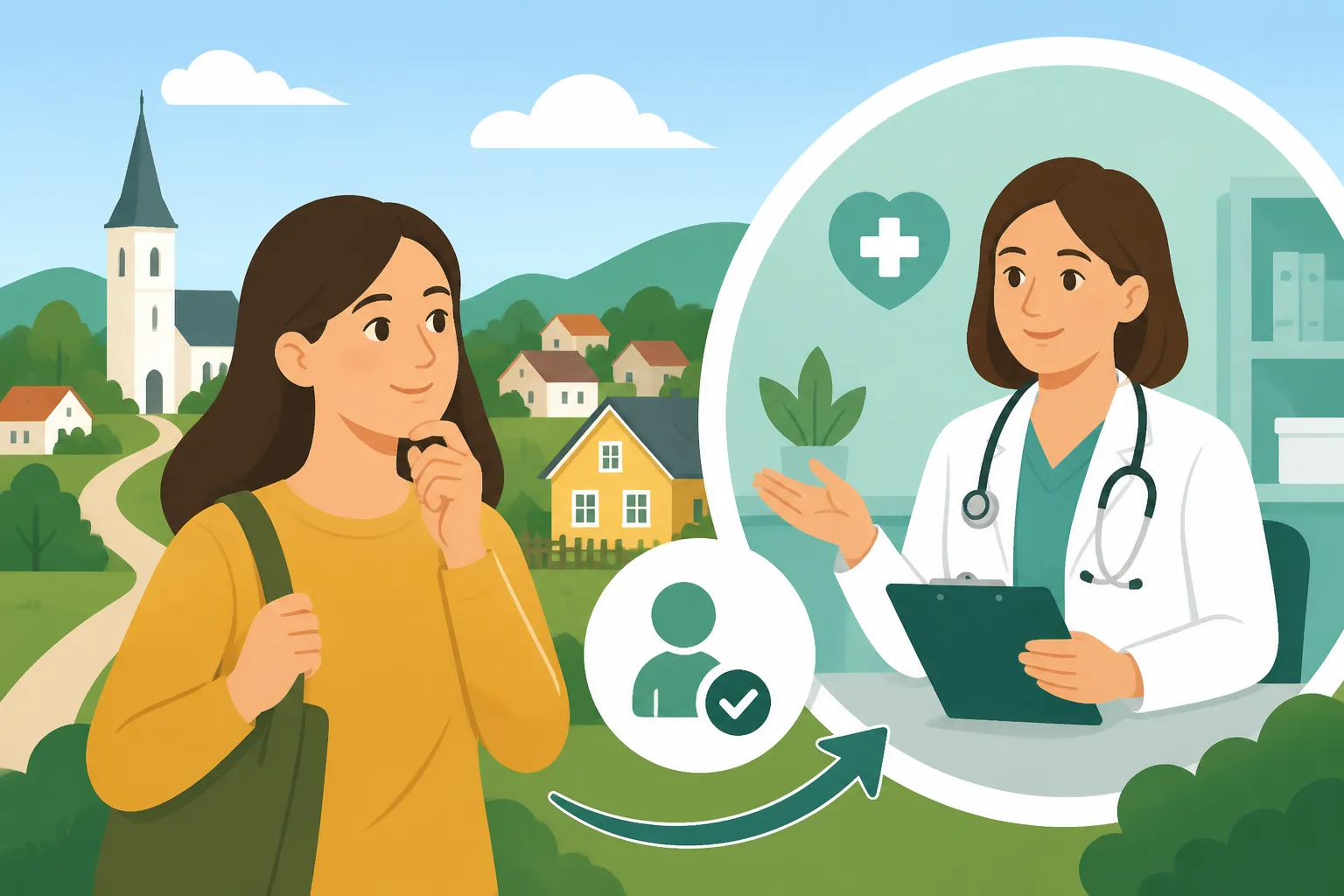
Moving to a serene town like Anykščiai, Zarasai, or Molėtai offers a peaceful escape from the bustle of Vilnius, but it also presents unique administrative challenges that can feel overwhelming when you do not speak the local language. One of the most urgent tasks you will face is securing medical access, specifically learning how to register with a family doctor in a setting where English-speaking staff might be the exception rather than the rule. This guide provides a detailed, boots-on-the-ground strategy for navigating rural Lithuanian healthcare, ensuring you and your family are protected from day one.
Understanding the Role of the Family Doctor in Rural Lithuania
When you settle into a smaller Lithuanian municipality, the local healthcare ecosystem revolves entirely around the primary healthcare centre, often called the Pirminės Sveikatos Priežiūros Centras or simply the poliklinika. Unlike the massive, multi-wing medical complexes you might find in the capital, a small-town clinic is often the heart of the community. Here, the family doctor—the šeimos gydytojas—is not just a medical professional but the essential gatekeeper to every other part of the national health system.
In a small town, you cannot simply walk into a specialist's office or a hospital for a non-emergency issue. You must first have a consultation with your family doctor, who will then issue an electronic referral, known as a siuntimas. This referral is what allows the national insurance system to cover your costs. Without a registered family doctor, you essentially exist outside the public health loop, which can lead to significant out-of-pocket expenses if you need anything beyond basic first aid. It is vital to understand How Lithuania's Health Insurance Fund (VLK/PSDF) Works: A Full Overview to appreciate why this registration is the most important administrative "win" you can achieve in your first few weeks.
Furthermore, small-town clinics often have a more personal, albeit more traditional, atmosphere. You might find that the registration desk staff have worked there for decades and have a very specific way of doing things. While this can feel intimidating, it also means that once you are "in the system," the care is often very consistent. However, before you can benefit from this community-based care, you must ensure your legal status is correct. Many expats choose to carry a flexible plan like SafetyWing during their first few months to bridge the gap between arriving and officially entering the state system.
The Essential Prerequisites for Registration
Before you even step foot inside a rural poliklinika, there are two non-negotiable items you must have: your residence permit (or the temporary document proving your right to reside) and your asmens kodas. In a large city, some private clinics might be more flexible, but in a small town, the administrative software used by the local health centres is strictly tied to this eleven-digit personal identification number. If you are still waiting for your paperwork to clear, you should read up on How to Get Your Asmens Kodas (Personal Code) and Why It Matters for Healthcare to expedite the process.
Once you have your code, you must ensure your Compulsory Health Insurance (PSD) is active. For those employed by a local company, this happens automatically via Sodra. However, if you are a freelancer or working remotely for a foreign entity, you will need to handle these contributions yourself. If your PSD status is inactive, the clinic's system will flag you as a "private patient," and you will be charged for every consultation. To avoid this, it is helpful to follow a guide on Registering for Compulsory Health Insurance (PSD) in Lithuania (2027) to confirm your status is "Draustas" (Insured).
If you are an EU citizen, you can use your European Health Insurance Card (EHIC) for necessary care, but this is not a substitute for registering with a family doctor for long-term residency. For non-EU citizens, the window between arrival and PSD activation can be a "gray zone" of high risk. This is where SafetyWing is frequently recommended by the expat community, as it provides a safety net for unexpected illnesses while you navigate the local bureaucracy of a small-town municipality.
Step-by-Step Registration Process in a Small Town
The actual process of registering with a family doctor in a small town requires a mix of preparation and patience. Unlike the digital-first approach in Vilnius, small-town clinics often prefer—or even require—a physical visit for the initial setup.
Step 1: Locating Your Primary Healthcare Centre
In small towns, there is usually one main public clinic (PSPC). You can find it by searching for the name of your town followed by "PSPC" or "poliklinika." For example, if you live in Utena, you would look for the Utenos Pirminės Sveikatos Priežiūros Centras. While there may be small private practices, the public PSPC is usually the most robust option in terms of integrated services like blood tests and basic diagnostics. You should gain a deeper Understanding the Role of the Polyclinic (Poliklinika) in Lithuania to know exactly what services to expect behind those doors.
Step 2: Choosing Your Doctor
In a small town, you might only have a choice between three or four family doctors. Some may be at full capacity, meaning they are legally allowed to refuse new patients unless you officially reside in their specific "service zone." It is a good idea to ask in local Facebook groups or expat forums if anyone knows of a doctor at the local clinic who speaks even a little bit of English or German. If no such doctor exists, do not panic; many expats bring a local friend or use a translation app during the initial meeting. You can find more tips on this in The Expat Guide to Finding a Family Doctor (Šeimos Gydytojas) in Lithuania.
Step 3: Filling Out the Application
You will need to ask the registration desk for an application form, specifically known as "Prašymas gydytis pasirinktoje psichikos sveikatos priežiūros įstaigoje" and the general registration form (Forma Nr. 025-025-1/a). You will need to provide:
- Your passport or ID card.
- Your asmens kodas.
- Proof of declared residence in that town (though the system usually sees this automatically).
- A small fee (usually under 2 Euros) for the management of your paper medical file, which is still a reality in many rural areas.
Overcoming the Language and Cultural Barrier
The most significant hurdle in a small-town clinic is almost always the language barrier. In Vilnius or Kaunas, the younger medical staff are usually fluent in English. In a town of 5,000 people, the staff may only speak Lithuanian and Russian. This can lead to a lot of anxiety, but remember that the medical staff are generally very professional and used to dealing with people in distress. They want to help you; they just need to understand the logistics of your paperwork.
To bridge this gap, prepare a small "cheat sheet" in Lithuanian that includes your name, address, asmens kodas, and the phrase "Aš noriu prisiregistruoti pas šeimos gydytoją" (I want to register with a family doctor). Having your details written down clearly reduces the chance of errors in the system. If you are worried about the gap in care during this transition, having a policy like SafetyWing can provide peace of mind, as they offer 24/7 support and can help you find private alternatives if the local public system feels too difficult to navigate initially.
Once you are registered, you will gain access to the national e-health portal. Understanding the E-Sveikata (E-Health) system in Lithuania is vital, as this is where all your prescriptions and test results will be stored. Even if your doctor doesn't speak English, the data in E-Sveikata is standardized, making it easier if you ever need to see a specialist in a larger city who does speak your language.
| Feature | Public Poliklinika (Small Town) | Private Clinic (Nearby City) |
|---|---|---|
| Cost | Free (covered by PSD) | 40€ – 100€ per visit |
| Language | Primarily Lithuanian/Russian | English often available |
| Waiting Times | 1-2 weeks for non-urgent | Same day or next day |
| Referrals | Issued directly for public system | May require extra steps for PSD coverage |
| Proximity | Within walking/short driving distance | Requires significant travel |
Maintaining Your Coverage and Switching Doctors
Once you have successfully registered, your journey isn't quite over. In small towns, doctors sometimes retire or move, and because the talent pool is smaller, you might find yourself assigned to a new doctor without much notice. It is important to periodically check your status. If you find that the doctor you chose is not a good fit—perhaps due to a personality clash or a persistent language barrier—you have the legal right to switch.
The process of switching is exactly the same as the initial registration. You simply go to the new clinic or the new doctor within the same clinic and fill out the forms. Your electronic records will follow you automatically through the E-Sveikata system. However, if you move to a completely different town, you must re-register at your new local PSPC. You can learn more about the specifics of How to Choose and Register with a Family Doctor (Šeimos Gydytojas) in Lithuania to ensure a smooth transition.
Don't forget the importance of the digital side of things. Once registered, you should learn How Do I Use an E-Receptas at a Pharmacy in Lithuania? because even in the smallest village, the local vaistinė (pharmacy) will expect you to provide your ID card so they can pull up your digital prescriptions. The integration of high-tech digital systems with sometimes old-fashioned rural clinics is one of the unique charms—and frustrations—of living in Lithuania. By staying proactive and perhaps keeping SafetyWing as a supplemental "just in case" measure, you can enjoy the beauty of rural Lithuania without sacrificing your health or your sanity.
Disclaimer
The information provided in this guide is for educational and informational purposes only. While every effort has been made to ensure the accuracy of the details regarding the Lithuanian healthcare system as of 2026, administrative rules and local clinic policies are subject to change. This guide does not constitute legal or professional medical advice. Always consult with the Lithuanian Migration Department (MIGRIS), the National Health Insurance Fund (VLK), or a qualified legal professional for your specific residency and healthcare situation.