How to Get Proof of Address (Pažyma) from Registrų Centras in Lithuania
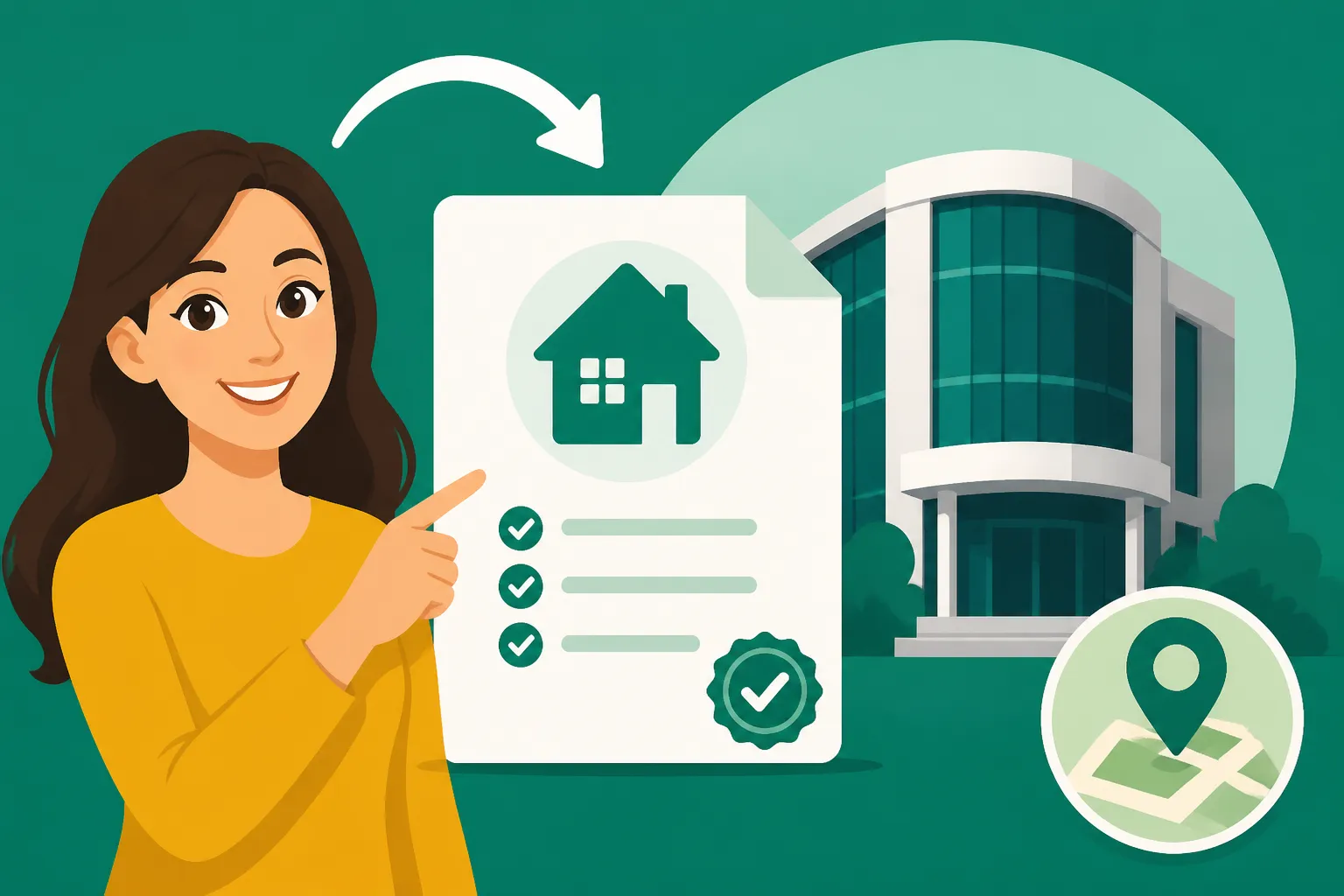
Moving to a new country like Lithuania is a grand adventure, but let's be honest, the administrative hurdles can sometimes feel like an Olympic sport. One of the documents that expats frequently find themselves scrambling for is the infamous Pažyma apie deklaruotą gyvenamąją vietą, which is essentially your official proof of address. This guide is going to walk you through exactly how to get your hands on this critical piece of paper from the Registrų Centras, saving you a headache or two in the process.
Understanding Proof of Address in Lithuania (Pažyma)
Ah, the Pažyma. It sounds so simple, right? "Just a piece of paper proving where I live." But in Lithuania, this isn't just any piece of paper; it's often the golden ticket that unlocks access to countless essential services. Without it, you might find yourself stuck in a bureaucratic limbo, unable to move forward with basic necessities.
Why You Need This Elusive Document
Believe me, you'll be surprised how often this document pops up as a requirement. It's not just a minor formality; it's fundamental. Picture this: you've just arrived, found a great apartment, and you're ready to set up your life. You head to a bank to How to Open a Bank Account at a Lithuanian Bank as a Foreigner, thinking it'll be a breeze. Then, the banker politely asks for your Pažyma. Or perhaps you're trying to Registering for Compulsory Health Insurance (PSD) in Lithuania (2027), which is crucial for accessing healthcare, and again, you're asked for proof of residence.
It's the same story when you're enrolling your children in school, applying for certain social benefits, or even just trying to get some government-issued identity documents updated. This document proves that you are legally residing at a specific address within Lithuania, making you an officially recognised resident in the eyes of the state. It's the official confirmation that your gyvenamoji vieta (place of residence) has been properly declared and recorded. Without it, many institutions simply can't process your request, leaving you frustrated and feeling like you're running in circles.
The Role of Registrų Centras in Residence Declaration
So, who's behind this powerful Pažyma? It's the Registrų Centras, which literally translates to "Register Centre." Think of it as the central registry for all things official in Lithuania, from property ownership to, yes, your declared place of residence. They are the keepers of the official records, and when it comes to your address, they're the ones who issue the definitive statement.
The Registrų Centras maintains the Real Property Register (Nekilnojamojo turto registras), which includes details about land and buildings, but it also manages the data related to individuals' declared residences. This is a crucial distinction: simply living somewhere, even with a rental contract, isn't enough. You need to officially declare your residence with the municipality, which then gets recorded in the Registrų Centras system. Only once your residence is properly declared and registered in their database can they issue you the Pažyma that confirms this fact. For a deep dive into this initial step, check out Declaring Your Place of Residence in Lithuania: The Complete Guide. It’s essentially the authoritative body that verifies your address status, so understanding their role is key to navigating this process successfully.
Prerequisites for Obtaining Your Pažyma
Before you even think about requesting your Pažyma, there are a couple of fundamental steps you absolutely must have in place. Skipping these will lead to a dead end, and trust me, you don't want to waste your time only to be told you're missing the crucial first ingredient.
The All-Important Declared Residence (Gyvenamoji Vieta)
This is the cornerstone. You cannot get a Pažyma unless your residence in Lithuania has been formally declared. This isn't just about moving into an apartment and signing a lease; it's about notifying the local municipality of your new address. The process of gyvenamosios vietos deklaravimas involves submitting a formal declaration, usually to the local seniūnija (elderate) or municipality administration.
Typically, this involves presenting your valid identification (like your passport and your The Complete Guide to Lithuanian Residence Permits for Expats (2027)), along with proof of your right to reside at the address, such as a rental contract or a landlord's consent form if you own the property or are staying with a friend. Once you submit these documents and the municipality processes them, your address is officially entered into the national register managed by Registrų Centras. If you try to request a Pažyma without having completed this declaration, the system simply won't have an address registered for you, and you'll be politely (or not-so-politely, depending on who you encounter!) turned away. So, please, make sure this step is done first.
Essential Documents You'll Need to Gather
Once your residence is properly declared, gathering the necessary documents for the Pažyma itself is usually straightforward. However, it's always best to be overprepared rather than underprepared, especially when dealing with Lithuanian bureaucracy. Here’s what you’ll typically need:
- Valid Passport or National ID Card: This is your primary form of identification. Make sure it's current and hasn't expired.
- Lithuanian Residence Permit (Leidimas Gyventi): If you are a non-EU/EEA citizen, your Temporary Residence Permit (TRP) or Permanent Residence Permit is essential. This proves your legal right to reside in Lithuania.
- Proof of Declared Residence (if applicable): While not always explicitly asked for if your data is already in the system, having a copy of your initial residence declaration form (gyvenamosios vietos deklaravimas) can sometimes expedite things or resolve any discrepancies.
- Application Form: Whether applying in person or online, you'll fill out a specific form requesting the Pažyma.
- Payment for State Fee: There is usually a small administrative fee associated with obtaining the Pažyma. Be prepared to pay this, often with a debit card if applying in person, or via online banking if using the e-services portal.
It's a good habit to bring both the original documents and a set of photocopies. While many places scan originals, having copies ready can save time and prevent issues if a scanner isn't working or they require a physical copy for their records. For any foreign documents (though unlikely for the Pažyma itself, but good practice for other administrative tasks), be aware that certified translations into Lithuanian might be required, though for a basic ID and residence permit, this is generally not the case.
Here’s a quick overview of what to prepare:
| Document Type | Purpose | Notes |
|---|---|---|
| Passport/ID Card | Primary identification | Must be valid. |
| Residence Permit | Proof of legal residency in Lithuania | For non-EU/EEA citizens. |
| Application Form | Formal request for Pažyma | Available at Registrų Centras or online. |
| State Fee Payment | Administrative cost for issuing the document | Small fee, payable via card or online transfer. |
| (Optional) Copy of Residence Declaration | Backup proof of initial declaration | Useful if there are any doubts or system discrepancies. |
Step-by-Step Guide to Getting Your Pažyma
Alright, you've declared your residence, you've got your documents lined up – now it's time to actually get that Pažyma. There are two main routes you can take: the increasingly popular online method or the traditional in-person visit. Both have their pros and cons, and your choice might depend on your comfort with technology and the Lithuanian language, as well as your available time.
Online Application Through E-Government Gateway
Lithuania has made significant strides in e-governance, and applying for your Pažyma online is often the quickest and most convenient option if you're set up for it. The main portal you'll use is the Elektroniniai Valdžios Vartai, or the E-Government Gateway. If you haven't familiarised yourself with it yet, this is a great time to start, as it's a hub for many administrative services. You can learn more about its functionalities in Understanding the E-Government Gateway (Elektroniniai Valdžios Vartai) in Lithuania.
To use the online system, you'll need a way to electronically identify yourself. The most common methods are a Mobile ID (Mobilusis Parašas) or a Smart Card with an e-signature (e.g., your personal ID card with a chip and a card reader). If you don't have these, you'll need to sort them out first, usually through your mobile operator or by activating the e-signature feature on your ID card at a Registrų Centras branch or municipality. Once you're logged into the E-Government Gateway, navigate to the section for Registrų Centras services, specifically looking for "Pažyma apie deklaruotą gyvenamąją vietą" or "Declaration of Residence Certificate." You'll fill in the required details, confirm your identity with your e-signature, and proceed to pay the small state fee electronically. The system is generally intuitive, but having a browser with a good translation tool can be a lifesaver.
The biggest pro of applying online is the sheer convenience – you can do it anytime, anywhere, without needing to take time off work or navigate public transport. The downside, of course, is the initial hurdle of setting up your e-identification and the potential for technical glitches if you're not tech-savvy. However, once you're in, it's usually a very smooth process, and your Pažyma will often be available digitally or mailed to you within a few business days, sometimes even faster.
In-Person Application at Registrų Centras or Municipality
For those who prefer face-to-face interaction, or who haven't yet set up their e-identification, applying in person is still a perfectly valid option. You'll typically head to your local municipality office (seniūnija) or directly to a Registrų Centras branch. Larger cities like Vilnius and Kaunas have several Registrų Centras offices, so it’s worth checking their website for the most convenient location and opening hours.
When you arrive, you might need to take a queue number for the relevant service. Be prepared for potential waiting times, especially during peak hours. It's a good idea to bring all your original documents, plus copies, as mentioned earlier. The staff at the counter will guide you through filling out the application form (if you haven't already downloaded and completed one) and will verify your identity and declared residence status. While some staff members might speak English, it's not guaranteed, so patience and politeness go a long way. If you're really struggling with the language, bringing a Lithuanian-speaking friend or even a professional interpreter can be immensely helpful. Services like Sirelo, while primarily a moving platform, also offer resources and advice for expats, and could indirectly help you find local assistance if you're feeling overwhelmed during the initial stages of settling in and dealing with administrative tasks.
Once your application is processed and the fee paid, you'll often receive the Pažyma on the spot. This immediate gratification is a huge advantage of the in-person method. However, you're sacrificing convenience and potentially spending a significant chunk of your day dealing with the process. Still, for many expats, it's the more straightforward path to ensure everything is done correctly.
Receiving Your Proof of Address
The moment of truth! After all the declarations and applications, you'll finally receive your Pažyma. If you applied in person, it's usually handed to you directly, printed on official paper with a stamp, making it instantly ready for use. It's quite satisfying to walk out with that physical document in hand.
For online applications, the process might be slightly different. Often, the document will be made available digitally within your E-Government Gateway account, which you can then download and print. Sometimes, Registrų Centras might also mail a physical copy to your declared address. The processing time for online applications is typically a few business days, though sometimes it can be faster, depending on the workload. What's important is that whether digital or physical, the Pažyma is an official government document. Pay attention to any validity dates mentioned on the document itself. While the Pažyma generally reflects your current declared address, some institutions might request a Pažyma issued within a very recent timeframe (e.g., within the last 30 days) for extra assurance. Always double-check the specific requirements of the institution you're presenting it to.
Common Pitfalls and Troubleshooting for Expats
Even with a clear guide, administrative processes in a new country can throw curveballs. Expats often encounter the unique frustrations that can arise. Here are some common pitfalls and how to troubleshoot them.
Language Barriers and Where to Find Help
Ah, the language barrier. It's the silent saboteur of many expat dreams. While Lithuanians, especially younger generations and those in larger cities, often speak excellent English, relying solely on it for critical administrative tasks can be risky. You might encounter an official who doesn't speak English, or the nuances of the Lithuanian language in official documents can be lost in translation apps. It's a genuinely frustrating experience to be trying to explain something important and feel like you're not being understood. If you're interested in tackling the language head-on, Learning Lithuanian: A Complete Guide to Language Courses and Levels can be a great starting point.
My advice? First, patience. Take a deep breath. Second, preparation. Have your questions written down simply, perhaps translated into Lithuanian using a reliable app or a kind local. Third, seek assistance. If applying in person, try to bring a Lithuanian-speaking friend or colleague. If you don't have one, consider hiring a professional assistant or interpreter for an hour. Many expat groups on social media also have members willing to offer informal help or recommend services. Remember, the officials are usually trying to help, but communication is key.
What If Your Residence Isn't Declared?
This is probably the most common reason for expats getting stuck when trying to obtain their Pažyma. I can't stress this enough: your residence must be officially declared first. It's a foundational step. You might think, "I have a rental contract, doesn't that count?" Unfortunately, no. The rental contract proves your right to occupy the property, but the declaration makes it official with the state.
If you find yourself in this situation, you'll need to back-track. You cannot skip the gyvenamosios vietos deklaravimas step. Head back to your local municipality office (seniūnija) with your passport/ID, residence permit, and your rental contract (or landlord's consent) and declare your address. Once that process is complete and your address is recorded in the Registrų Centras system, then you can proceed with requesting your Pažyma. Don't attempt to get the Pažyma before this; it will be a wasted trip or a failed online attempt. For a refresher on this vital first step, revisit How to Declare Your Place of Residence (Gyvenamoji Vieta) in Lithuania.
Dealing with Outdated or Incorrect Information
Life happens, and sometimes you move. Or perhaps there was a typo when your original declaration was entered. If your Pažyma comes back with an old address or incorrect information, don't panic, but do address it promptly. An outdated Pažyma is as good as no Pažyma for many official purposes.
If you've moved, the process is simple: you need to declare your new place of residence. This automatically updates your information in the Registrų Centras system. Once your new address is declared, you can then request a fresh Pažyma reflecting the correct, current details. If it's a simple error or typo on a recently issued Pažyma, you should contact the Registrų Centras or the municipality office where you made the declaration as soon as possible. Bring the incorrect document and any supporting evidence (like your rental contract) to prove the correct information. They will usually be able to correct it and issue a revised Pažyma. Keeping your communication tools reliable is key during these troubleshooting steps; having an eSIM from a service like Airalo can ensure you're always connected, whether you need to translate a phrase on the spot or quickly check Registrų Centras's contact details from your phone.
Beyond the Pažyma: Other Forms of Address Verification
While the Pažyma from Registrų Centras is the gold standard for proving your address in Lithuania, you might wonder if other documents can serve the same purpose. It's a common thought, especially if you're used to different systems in your home country.
Rental Contracts and Utility Bills
Yes, you have a rental contract, and it clearly states your address. You also get monthly utility bills showing your name and apartment number. These documents are undoubtedly proof that you are living at a certain location. However, for official purposes in Lithuania, they are often not sufficient on their own. For instance, when opening a bank account, many banks will insist on the Pažyma rather than just your How to Sign a Rental Contract (Nuomos Sutartis) in Lithuania). Similarly, for health insurance registration or certain immigration processes, a utility bill for your How to Set Up Electricity (ESO) in Your Lithuanian Home simply won't cut it.
These documents serve different purposes. A rental contract outlines your agreement with a landlord, while utility bills show your consumption of services. Neither of them officially confirms that your residence has been declared with the state, which is what the Pažyma uniquely does. So, while you should certainly keep them for your records and for other day-to-day needs, don't rely on them as a substitute for the official proof of address when dealing with government bodies or financial institutions.
Bank Statements and Official Letters
Another common misconception is that a bank statement or an official letter from an employer (with your address on it) can act as proof of address. Again, while these might show your address, they lack the specific governmental endorsement that Lithuanian institutions look for. A bank statement confirms your financial activity and where your bank sends correspondence, but it doesn't confirm your legal residence declaration status. An employer's letter confirms your employment, but not your official gyvenamoji vieta.
In countries with less centralised national registers, these might be acceptable, but Lithuania's system prefers a direct, unequivocal statement from the body responsible for maintaining official residence records: the Registrų Centras. So, while these documents are important for other aspects of your life here, save yourself the frustration of presenting them as proof of address where a Pažyma is explicitly requested.
Understanding the Limitations of Alternative Proofs
It's crucial to understand that for any significant administrative process in Lithuania – be it renewing your How to Apply for a Temporary Residence Permit (TRP) in Lithuania, registering for long-term services, or interacting with state institutions – the Pažyma apie deklaruotą gyvenamąją vietą from Registrų Centras is generally considered the definitive and most robust form of address verification. The Lithuanian system places high value on officially recorded declarations rather than circumstantial evidence.
Trying to use alternatives can lead to delays, rejection of your application, and a lot of wasted time and effort. While it might feel like an extra bureaucratic step, obtaining your Pažyma early on, once your residence is declared, will save you considerable headaches down the line. Treat it as a non-negotiable item on your expat checklist. It’s an investment in smoother administrative sailing throughout your time in Lithuania.
Disclaimer
The information provided in this guide is intended for general informational purposes only and does not constitute legal or professional advice. While we strive to keep the information up-to-date and accurate, regulations and procedures in Lithuania can change. Always consult official sources, such as the Registrų Centras website, the Migration Department (MIGRIS), or a qualified legal professional for the most current and specific advice pertaining to your individual situation. We are not responsible for any actions taken based on the information presented herein.