How to Exchange Your Foreign Driving Licence in Lithuania
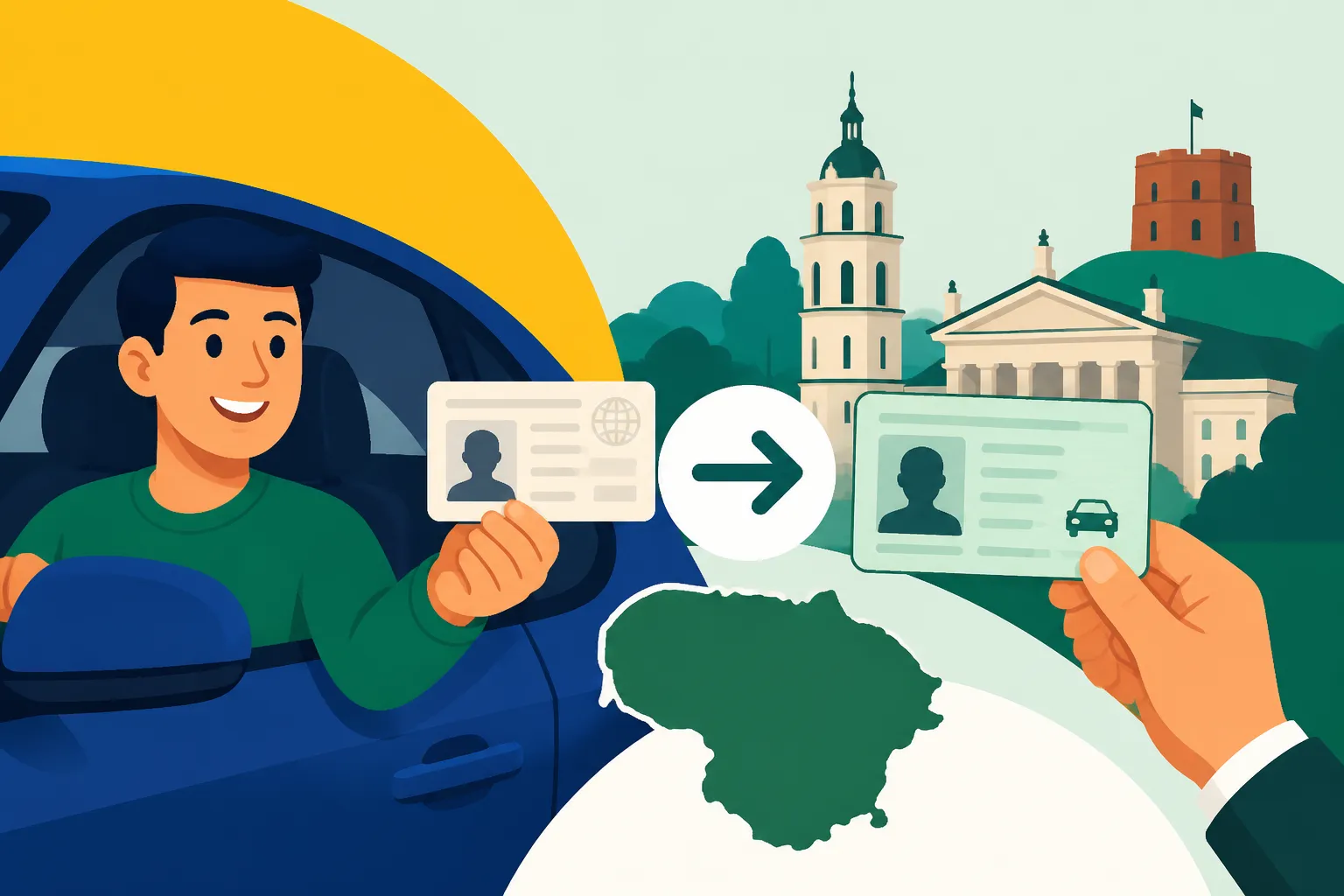
Navigating the labyrinthine administrative processes in a new country can feel like a full-time job, and exchanging your foreign driving licence in Lithuania is certainly one of those tasks that can leave even the most seasoned expat scratching their head. It's not always straightforward, and the rules can seem a bit opaque at first glance. This comprehensive guide aims to demystify the entire process, whether you're from an EU/EEA country or further afield, helping you get behind the wheel legally and with minimal fuss.
Understanding the Rules: When and Why You Need to Exchange Your Licence
So, you've arrived in Lithuania, perhaps you've even settled into your new apartment in Vilnius. You're probably eager to explore beyond the city limits, maybe even take a road trip to the coast or through the beautiful national parks. But before you hit the open road, it's crucial to understand the rules surrounding your foreign driving licence. Unlike some other countries where your home country licence might be valid indefinitely, Lithuania has specific timelines and requirements, primarily based on your residency status and the origin of your licence. Ignoring these rules can lead to significant penalties, from fines to even having your vehicle impounded, so it’s definitely something you want to get right.
The 6-Month Rule and Residency Status
This is the big one for most non-EU/EEA newcomers. Once you officially establish your residence in Lithuania – which often coincides with applying for your Lithuanian Residence Permit and declaring your place of residence – you generally have a grace period of six months to continue driving on your foreign licence. After these six months, if you haven't exchanged it, your foreign licence becomes invalid for use in Lithuania. This deadline is strictly enforced, and there's not much wiggle room.
Think of it this way: the Lithuanian authorities want to ensure that anyone who is a long-term resident adheres to their local standards for driving competency and health. It's not just about getting a local piece of plastic; it's about integrating you into the system. This also ties into important concepts like your Asmens Kodas (Personal Code), which you’ll need for pretty much any official interaction, including getting a driving licence. So, while you're busy setting up your utilities and getting internet, don't let this crucial deadline slip by. Many expats find it helpful to note this date down immediately upon arrival or permit approval to avoid a last-minute scramble.
EU/EEA vs. Non-EU/EEA Licences: A Tale of Two Paths
The process you'll follow depends heavily on where your existing driving licence was issued. This is the primary distinction that determines whether you'll face a relatively simple exchange or a more involved process.
-
EU/EEA Licences: If your licence was issued by an EU or EEA member state (which includes Iceland, Liechtenstein, and Norway), you're in luck! These licences are generally recognised throughout the EU/EEA and can be used in Lithuania for an indefinite period as long as they are valid. You are not obligated to exchange it immediately. However, many expats choose to exchange their EU/EEA licence for a Lithuanian one, especially if their original licence is nearing its expiry date, or if they prefer to have a local document for convenience. The exchange process for these licences is usually straightforward, involving fewer bureaucratic hurdles. It's essentially an administrative swap, not a re-evaluation of your driving skills.
-
Non-EU/EEA Licences: This is where things get a bit more complex. If your licence is from outside the EU/EEA (e.g., USA, Canada, Australia, UK post-Brexit, India, etc.), you will almost certainly need to exchange it for a Lithuanian one after the initial six-month grace period. This process typically involves undergoing a medical check, passing both a theoretical and a practical driving exam at Regitra (the Lithuanian Road Transport Directorate), and fulfilling various documentation requirements. It's a full re-evaluation, not just a simple swap. This can be a daunting prospect, especially if you haven't taken a driving test in years, or if you're accustomed to different road rules or driving conditions. For those undertaking a major move from a non-EU country, logistics services like Sirelo can often provide initial guidance on document requirements and the general relocation timeline, which might indirectly help you prepare for this process.
Driving with an International Driving Permit IDP
Many foreign licences, particularly those from outside the EU/EEA, can be supplemented with an International Driving Permit (IDP). An IDP is essentially a multi-language translation of your existing driving licence. It's not a standalone licence itself but must always be presented alongside your valid national driving licence.
For the initial six months of your residency in Lithuania, an IDP can be incredibly useful, especially if your national licence isn't in English, German, or Russian (languages commonly understood by Lithuanian authorities). It helps overcome potential language barriers during traffic stops or rental car pick-ups. However, it’s critical to remember that an IDP does not negate the six-month rule. It does not exempt you from eventually exchanging your non-EU/EEA licence for a Lithuanian one if you become a resident. After six months, both your foreign licence and the accompanying IDP become invalid for driving in Lithuania. So, while an IDP is a great temporary solution for tourists or new arrivals getting their bearings, it's not a long-term fix for residents.
The Step-by-Step Process for Non-EU/EEA Licence Holders
Alright, let’s tackle the more challenging path: exchanging a non-EU/EEA driving licence. This is where most expats face the biggest administrative challenge, often involving multiple visits and some proper preparation. It's a structured process, and missing any step will send you right back to the beginning. The key here is patience and meticulous attention to detail. Don't be surprised if it takes a few weeks, or even a couple of months, from start to finish.
Getting Your Medical Certificate Sveikatos Pažyma
Before you can even think about booking a driving test, you’ll need a valid medical certificate, known as a sveikatos pažyma, from a Lithuanian medical institution. This certificate confirms that you are physically and mentally fit to drive. This isn't just a formality; it's a legitimate medical check-up that assesses your vision, hearing, reflexes, and general health condition. You’ll also be screened for certain chronic conditions or psychological factors that could impair your driving ability.
You can obtain this certificate from most polyclinics (poliklinika) or private medical centres. When you visit, explain that you need a medical certificate for a driving licence exchange (vairuotojo pažymėjimo keitimui). You'll typically undergo examinations by a general practitioner, an ophthalmologist, and sometimes an audiologist. The cost can vary, but expect to pay anywhere from €20 to €50 for this service. Remember to bring your passport or residence permit and your compulsory health insurance (PSD) details, as you will need to be registered in the Lithuanian healthcare system. It's one of those initial tasks that highlights the interconnectedness of administrative hurdles here.
The Driving Theory and Practical Exams at Regitra
Once you have your medical certificate in hand, it’s time to face Regitra, the Lithuanian Road Transport Directorate. This is where you’ll prove your driving competency according to Lithuanian standards.
-
Theory Exam: The theory exam covers Lithuanian traffic laws, road signs, and safe driving practices. It's conducted on a computer, usually available in several languages including English, Russian, and sometimes German. You'll need to answer a set number of questions within a time limit, with a specific passing score. Many expats find it useful to study the Lithuanian traffic rules specifically, as there can be subtle differences from their home country's regulations. There are online resources and mobile apps (some unofficial, so verify information) that can help you prepare. Booking an appointment for the theory exam is usually done online through the Regitra website.
-
Practical Exam: After passing the theory, you can book your practical driving exam. This is the part that often causes the most anxiety. You’ll need to take the test in a vehicle with a manual transmission unless your existing licence (and medical condition) specifically restricts you to automatic. If you only pass in an automatic, your new Lithuanian licence will also be restricted to automatic vehicles. You’ll be tested on various manoeuvres, adherence to traffic laws, safe driving habits, and independent driving. You must use a vehicle provided by Regitra for the test, which typically means using one of their designated driving school cars. The instructor will evaluate you on specific criteria. If you've been driving for years in another country, it can feel strange to be re-tested, but remember they are assessing your ability to drive safely in Lithuania. Don't hesitate to take a few lessons with a local driving instructor if you feel rusty or unfamiliar with local driving customs and common test routes.
Submitting Your Application and Receiving Your New Licence
Once you’ve successfully conquered both the theory and practical exams (phew!), you're almost at the finish line. The final step is to formally submit your application for the new Lithuanian driving licence.
You'll head back to Regitra, this time with all your documents:
- Your valid foreign driving licence (which will be kept by Regitra).
- Your valid Lithuanian medical certificate (sveikatos pažyma).
- Your Lithuanian residence permit and passport.
- Proof of your declared place of residence (this might be checked automatically if you're in the system, but it's good to have a copy).
- Proof of payment for the licence issuance fee.
They will take your photo and fingerprints for the new biometric licence card. The staff will process your application, and you'll typically receive your new Lithuanian driving licence by post to your declared address within a week or two. In some cases, you might be able to pick it up in person at the Regitra office, but this depends on their current procedures and your chosen option during application. This is a moment of pure relief for many, as it marks the end of a sometimes stressful and time-consuming process.
Exchanging an EU/EEA Driving Licence: Simpler, But Still a Process
For those of us holding an EU/EEA driving licence, the process is considerably less arduous. While you can technically keep driving on your original licence indefinitely as long as it's valid, there are still good reasons why you might want to exchange it for a Lithuanian one. It's not entirely free of paperwork, but it avoids the dreaded driving tests.
When and Why to Exchange an EU/EEA Licence
As mentioned, EU/EEA licences are fully recognized in Lithuania, so there's no mandatory six-month exchange rule. You can continue using your licence until it expires. However, many expats still opt for an exchange for practical reasons:
- Approaching Expiry: If your original licence is nearing its expiry date, exchanging it in Lithuania can be more convenient than trying to renew it in your home country from abroad. Renewing it in Lithuania will mean you get a Lithuanian licence with Lithuanian expiry dates.
- Lost or Stolen Licence: If your EU/EEA licence is lost or stolen while you're residing in Lithuania, you cannot simply get a duplicate from your home country while living here. You'll need to apply for a Lithuanian one, which counts as an exchange.
- Administrative Convenience: Having a local driving licence can sometimes simplify other administrative tasks, like proving your identity or age in certain situations. It's one less foreign document to explain.
- Consolidation: If you're planning to make Lithuania your long-term home, slowly converting all your documents to Lithuanian versions can make life easier in the long run.
Ultimately, the decision to exchange an EU/EEA licence is a personal one, driven by convenience rather than strict legal obligation for residents.
The Required Documents and Regitra Visit
Even for EU/EEA licence holders, you'll still need to visit Regitra in person. The good news is that you won't need to take any driving tests. The process is more akin to a document submission and verification.
You will need to bring:
- Your valid EU/EEA driving licence (which will be surrendered to Regitra).
- Your valid Lithuanian residence permit or ID card (if you are an EU citizen).
- Your valid Lithuanian medical certificate (sveikatos pažyma). Yes, even for EU citizens, this is required as part of the health and safety checks for issuing a new licence in Lithuania.
- Proof of payment for the licence issuance fee.
You'll fill out an application form, and Regitra staff will verify your documents. They will take your photo and possibly fingerprints for the new biometric card. It's a much quicker process than for non-EU/EEA licences, usually completed in a single visit, after which your new licence will be delivered by post.
Understanding the Validity and Renewal
Once you receive your new Lithuanian driving licence, whether it was an exchange from an EU/EEA or non-EU/EEA country, it will have a specific validity period. For most standard categories (B for cars), licences are typically issued for 10 years. For professional categories (C, D, etc.), the validity period might be shorter, often 5 years, due to more frequent medical checks required for professional drivers.
When your Lithuanian licence approaches its expiry date, you will need to renew it. This process usually involves obtaining a new medical certificate and submitting an application to Regitra. It’s generally a straightforward renewal, again without re-taking driving tests unless there are specific medical concerns or changes in legislation. Keep track of your expiry date, just like you would with your passport or residence permit. Staying on top of these deadlines is part of becoming a fully integrated resident.
Common Roadblocks and How to Overcome Them
No administrative process in a foreign country is ever entirely without its quirks and challenges. Exchanging a driving licence in Lithuania is no exception. From language barriers to navigating busy offices, it helps to be prepared for potential hurdles.
Language Barriers and Translation Challenges
While Lithuanian officials, especially in larger cities like Vilnius or Kaunas, often speak English, it's not a guarantee. At Regitra, or when dealing with medical professionals for your sveikatos pažyma, you might encounter staff who are more comfortable speaking Lithuanian or Russian.
- Preparation is Key: Learn some key phrases related to driving licence exchange, medical certificates, and appointments.
- Bring a Translator: If you're feeling particularly nervous or dealing with complex medical history, consider bringing a Lithuanian-speaking friend or hiring a professional translator. This can significantly reduce stress and ensure clear communication.
- Official Document Translations: If your original driving licence or any supporting documents are not in English, German, or Russian, Regitra might require a notarised Lithuanian translation. This is an additional cost and step that you'll need to factor in. Always check with Regitra directly beforehand to confirm their exact translation requirements. This is where a reliable translation service becomes invaluable.
Navigating conversations and official forms in a new language can be daunting, but remember that many others have gone through it. Tools like Google Translate can offer basic assistance, but for official matters, a human touch is often best. For general communication, especially when you first arrive, getting a local SIM card with a decent data plan from providers like Telia or Bitė (or even an e-SIM from Airalo for immediate connectivity) can be a lifesaver for quick lookups and urgent calls.
The Dreaded Regitra Appointments and Waiting Times
Like any busy government agency, Regitra can sometimes have long queues or limited appointment slots, especially in peak seasons or larger cities.
- Book Online: Always, always try to book your appointments online through the official Regitra website. This saves you significant waiting time and ensures you have a scheduled slot. Their online system is generally user-friendly and available in English.
- Plan Ahead: Don't wait until the last minute before your six-month grace period expires. Start the process well in advance (e.g., three to four months after your residency is established) to give yourself ample time for multiple visits, exam retakes if necessary, and document processing.
- Off-Peak Times: If you have flexibility, try to schedule your appointments during off-peak hours (mid-week, mid-morning/afternoon) to potentially avoid crowds.
- Patience: Expect to wait a bit, even with an appointment. Bring a book, your phone, or something to keep you occupied. It's just part of the process.
Dealing with bureaucracy can test anyone's patience, but approaching it with a calm and prepared mindset will make it a much smoother experience.
Specific Scenarios: Lost Licences, Different Categories, and More
Sometimes, life throws a curveball. What if your original licence is lost? Or you want to add a new vehicle category?
- Lost or Stolen Foreign Licence: If your foreign licence is lost or stolen before you've exchanged it, the process becomes more complicated. You generally cannot exchange a licence you don't physically possess. In this scenario, you'll need to obtain an official document from your home country's issuing authority confirming your licence details and validity. This document would then likely need to be translated and notarised. Alternatively, if your country participates in data exchange agreements, Regitra might be able to verify your licence directly, but this is not guaranteed. It's often easier (though more time-consuming) to get a replacement licence from your home country first, then proceed with the exchange in Lithuania.
- Adding New Categories: If you only have a Category B (car) licence from your home country but want to obtain a Category A (motorcycle) or Category C (truck) licence in Lithuania, you'll need to go through the full Lithuanian training and testing process for those specific categories, just like any new driver. Your exchanged licence will only grant you the categories you held on your original licence.
- Licence Endorsements/Restrictions: If your original licence has specific endorsements or restrictions (e.g., "must wear corrective lenses"), these will be transferred to your new Lithuanian licence. Make sure these are clearly understood during your medical examination and application process.
Summary of Exchange Requirements:
| Feature | Non-EU/EEA Licence Holders | EU/EEA Licence Holders |
|---|---|---|
| Obligation to Exchange | Mandatory after 6 months of residency | Optional, can use original until expiry |
| Medical Certificate | Required (Sveikatos Pažyma) | Required (Sveikatos Pažyma) |
| Theory Exam | Required | Not required |
| Practical Exam | Required | Not required |
| Documents Needed | Foreign Licence, Residence Permit, Passport, Med. Cert. | EU/EEA Licence, Residence Permit/ID, Med. Cert. |
| Licence Surrender | Yes, original licence is kept by Regitra | Yes, original licence is kept by Regitra |
| Expected Timeframe | Weeks to months (incl. study/tests) | Typically one visit (plus postal delivery) |
| Language Translation | May be required for non-English/Russian/German documents | Unlikely, as EU standards often make direct interpretation possible |
| New Licence Validity | Typically 10 years (Category B) | Typically 10 years (Category B) |
Costs, Validity, and What Happens Next
Getting your Lithuanian driving licence is a significant step, but it's just one piece of the puzzle for staying legal on the road. Understanding the associated costs and ongoing responsibilities is crucial.
A Breakdown of Fees and Associated Expenses
Exchanging your driving licence comes with several costs that you need to budget for. These aren't just for the licence itself but for the preliminary steps too.
- Medical Certificate (Sveikatos Pažyma): As mentioned, this typically ranges from €20 to €50, depending on the clinic and specific examinations required.
- Regitra Exam Fees (for non-EU/EEA):
- Theory exam: Around €11-€12 per attempt.
- Practical exam: Around €30-€40 per attempt.
- If you need multiple attempts, these costs can add up.
- Driving Lessons (optional but recommended): If you opt for preparatory driving lessons with a local instructor, expect to pay around €25-€40 per hour.
- Licence Issuance Fee: The actual cost to issue the physical Lithuanian driving licence card is around €14.50. This is the fee you pay directly to Regitra.
- Translations (if needed): If your documents require notarised translations, this will be an additional cost, which can vary widely depending on the length and complexity of the document, but typically starts from €15-€20 per page.
All in all, for non-EU/EEA licence holders, the total cost can easily range from €100 to €250, potentially more if multiple driving test attempts or extensive lessons are needed. For EU/EEA licence holders, it's usually just the medical certificate and the licence issuance fee, making it considerably cheaper.
Understanding the Validity Period of Your New Lithuanian Licence
Your new Lithuanian driving licence will typically be valid for 10 years for standard passenger car categories (Category B). For other categories, such as lorries, buses, or professional drivers, the validity period might be shorter, often 5 years, due to stricter medical requirements. It's crucial to pay attention to the expiry date printed on your licence.
When your licence is nearing its expiry, you'll need to renew it by obtaining a new medical certificate and submitting an application to Regitra. This process is usually simpler than the initial exchange, as it typically doesn't require re-taking driving tests unless there's a significant change in health status or a specific legal requirement at that time. Keep your contact details with Regitra up to date, especially if you move, to ensure you receive any renewal notifications.
Staying Legal: Roadworthiness, Insurance, and Vehicle Registration
Having a valid Lithuanian driving licence is only one part of being road-legal. If you own a vehicle, there are other critical requirements you must meet.
- Vehicle Registration: If you brought your car from abroad, you'll need to register your vehicle with Regitra within a specific timeframe after establishing residency. This involves various checks and documentation.
- Compulsory Roadworthiness Test (Techninė Apžiūra): All vehicles in Lithuania must undergo a regular technical inspection to ensure they meet safety and environmental standards. This is known as the techninė apžiūra. This test is mandatory and must be passed regularly (e.g., every two years for private cars after the first three years). You can learn more about how the Techninė Apžiūra works in detail.
- Vehicle Insurance: Third-party liability insurance is compulsory for all vehicles in Lithuania. It's illegal to drive without it. You can purchase insurance from various providers. While it's not directly related to your licence exchange, it's an essential part of driving legally and responsibly.
Ensuring all these elements are in place means you can enjoy the freedom of driving in Lithuania without the added stress of legal worries. It might seem like a lot of steps, but once you've navigated them, you'll feel truly settled and ready to explore your new home on your own terms.
Disclaimer
The information provided in this guide is for general informational purposes only and does not constitute legal or professional advice. While we strive to keep the information up-to-date and accurate, regulations regarding driving licences, residency, and healthcare in Lithuania can change. It is always recommended to consult the official websites of Regitra (the Lithuanian Road Transport Directorate), the Migration Department (MIGRIS), and other relevant government bodies, or seek advice from a qualified legal professional, for the most current and specific information pertaining to your individual situation.