Understanding the E-Government Gateway (Elektroniniai Valdžios Vartai) in Lithuania
Navigating the administrative landscape in a new country can feel like trying to solve a Rubik's Cube blindfolded, especially when everything is in a foreign language. In Lithuania, the sheer volume of paperwork and appointments can be overwhelming. This comprehensive guide aims to demystify the Elektroniniai Valdžios Vartai, or the E-Government Gateway, providing expats with a clear roadmap to confidently manage their official affairs online.
What Exactly is Elektroniniai Valdžios Vartai E-Government Gateway?
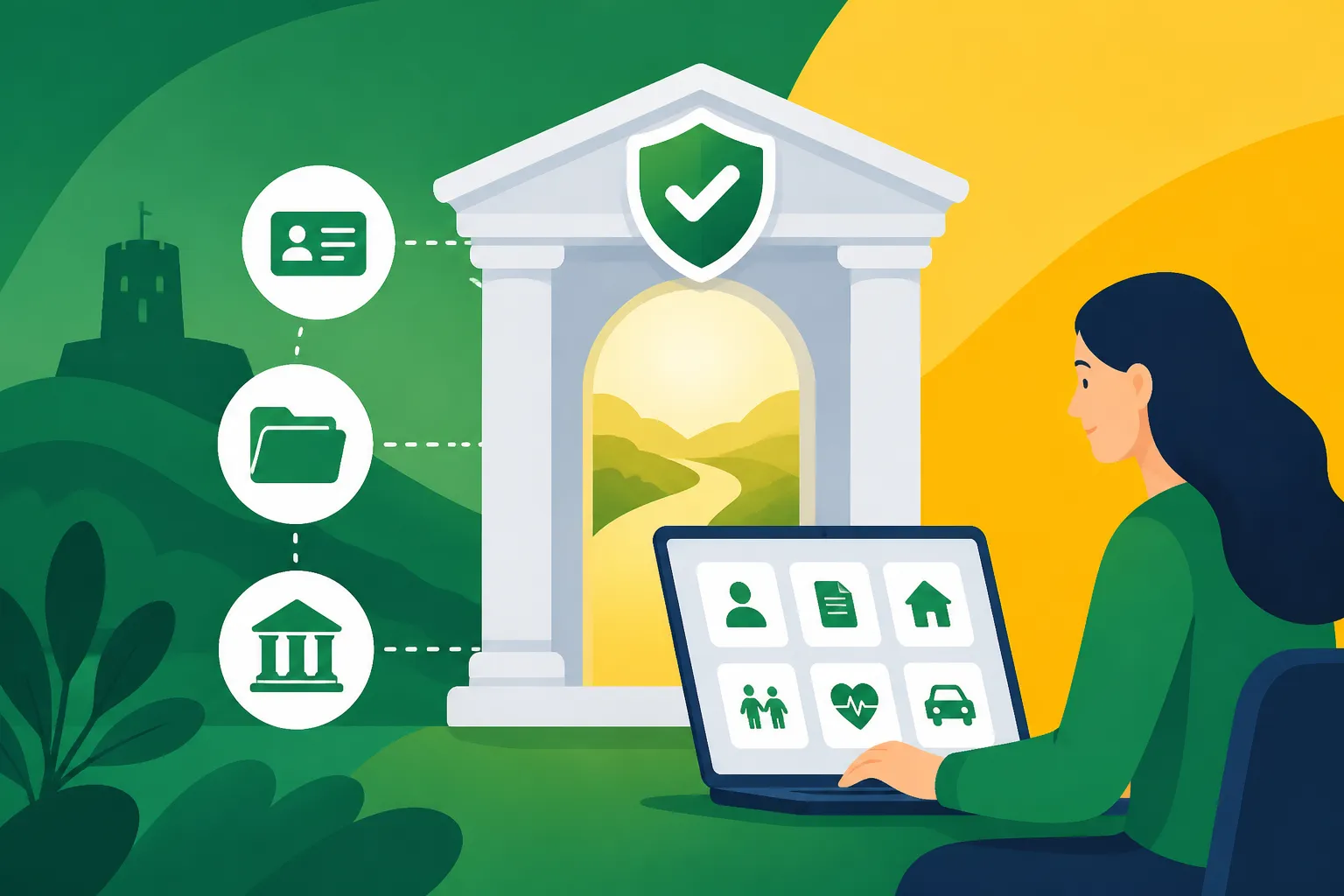
The E-Government Gateway, often just referred to by its Lithuanian name, Elektroniniai Valdžios Vartai, is Lithuania's centralized portal for accessing a vast array of public services online. Think of it as your single digital key to the entire Lithuanian administrative system. For years, newcomers to Lithuania, myself included, faced the daunting task of running from one government office to another, often with confusing forms and language barriers adding to the stress. This portal was designed precisely to alleviate that, streamlining access to everything from tax declarations to migration services, right from your living room, potentially saving you countless hours and grey hairs.
This incredible digital infrastructure acts as a bridge, connecting various government institutions and public service providers. Before its widespread adoption, each department—whether it was the tax office, the social security fund, or the migration department—operated largely in its own silo, demanding separate logins, forms, and often, in-person visits. The Elektroniniai Valdžios Vartai changed all that, consolidating these disparate services into one user-friendly platform. It's a prime example of Lithuania's commitment to modern governance, aiming to save both citizens and institutions precious time and resources, something that is incredibly valuable when you’re trying to build a new life in a foreign land.
The Vision Behind Digital Lithuania
Lithuania has, for a long time, been at the forefront of digitalizing public services, driven by a clear vision to make government more efficient, transparent, and user-friendly. The Elektroniniai Valdžios Vartai is the cornerstone of this ambition. It’s not just about putting existing forms online; it’s about integrating various institutions – from the Migration Department (MIGRIS) and the State Tax Inspectorate (VMI) to the National Health Insurance Fund (VLK) and municipalities – under one secure roof. This integration is particularly revolutionary for expats, as it means fewer physical visits, less waiting in lines, and often, faster processing times, once you get the hang of it. It’s a testament to Lithuania's commitment to modern governance, aiming to save both citizens and institutions precious time and resources.
The fundamental idea is simple: instead of dealing with each government body separately, requiring separate logins or forms, you use one secure portal. This not only centralizes access but also helps in verifying identity and sharing data securely between relevant government bodies, eliminating the need for you to submit the same information multiple times. For example, once your personal data is correctly recorded in the system, other departments can often access it, meaning you might not need to provide proof of your address or your asmens kodas (personal code) repeatedly for different services. It's a significant leap towards a truly paperless and hassle-free administrative experience, though as we all know, "hassle-free" often comes with its own set of digital challenges in the expat world.
This centralized approach also significantly enhances security. By having a single, highly secure authentication point, the government can better protect your personal data from breaches and identity theft. This is particularly reassuring in an age where digital privacy is a major concern. For expats, knowing that your sensitive information—from your residency status to your tax records—is handled through a robust and integrated system provides a layer of confidence that can be hard to find in less digitally advanced countries. It might seem like a small detail, but the underlying security architecture is one of the unsung heroes of the E-Government Gateway, constantly working in the background to keep your digital identity safe.
Key Functions and Services for Expats
For us foreigners living in Lithuania, the E-Government Gateway quickly becomes an indispensable tool. It unlocks a whole world of official interactions that would otherwise necessitate multiple trips and potentially frustrating communication attempts in Lithuanian. Whether you're here on a work visa, as a student, or have just moved your entire family, you'll find yourself relying on this portal for various crucial life administrative tasks, making your initial months and subsequent years much smoother.
Consider the sheer volume of services available: applying for or renewing your residence permit through the MIGRIS portal, which is integrated; declaring your taxes with the VMI; checking your social insurance contributions through Sodra; or even declaring your official place of residence. These are not just minor conveniences; they are core functions that directly impact your legal status and daily life in Lithuania. Without access and understanding of this gateway, you'd effectively be locked out of seamless engagement with Lithuanian public administration. Many documents that once required in-person collection or mailing are now available for secure download or submission through this platform, transforming the expat experience significantly.
Beyond the essentials, the gateway also provides access to less frequent but equally important services. You might need to check property records via the Registrų Centras, get a permit for a specific activity from a local municipality, or even interact with the national employment service. The beauty of the system is its scalability; as more services become digitized, they are typically integrated into this single portal or made accessible through its secure login, ensuring that you always have a familiar starting point for almost any official interaction. It truly streamlines what could otherwise be a labyrinthine bureaucratic process, offering a degree of digital autonomy that is rare for newcomers in many other countries.
Getting Started How to Access the E-Gateway
Alright, so you’re convinced the E-Government Gateway is your new best friend. But how do you actually get in? This is often the first major hurdle for new arrivals, and I can tell you from personal experience, it can feel like trying to get into an exclusive club without the secret handshake. The system relies heavily on secure electronic identification, which, while robust, requires you to have certain local documents or banking services already set up. Don't worry, once you're in, it's generally smooth sailing, but that initial access is key. This step is where many expats hit their first real administrative wall, so let's break it down methodically.
It's not like simply creating a username and password for a regular website; the E-Government Gateway deals with your most sensitive personal data and legal status, so the authentication methods are designed to be extremely secure. This means you need to verify your identity through channels that are already officially recognized and verified by the Lithuanian state. This might feel like a "chicken and egg" problem – how do I get these things if I just arrived? – but understanding the sequence is crucial. Essentially, you need to establish a foundational identity link with Lithuania before the full digital world opens up.
Required Identification for Access
To log into Elektroniniai Valdžios Vartai, you primarily need one of a few secure identification methods. The most common and robust option for residents is using your mobile signature (mobilusis parašas) or a qualified electronic signature (e-parašas) via an ID card reader. If you’ve got a Lithuanian mobile number, getting a mobile signature activated with your provider (like Telia, Bitė, or Tele2) is often the easiest route. It links your phone number to your identity and allows you to confirm your login with a simple PIN code sent to your phone. This is incredibly convenient once set up, making transactions on the go super easy, and it really becomes a daily administrative companion.
Another popular method is using your internet banking login from a Lithuanian bank. Banks like Swedbank, SEB, and Luminor offer robust online banking platforms that are integrated with the E-Government Gateway. So, once you've successfully managed to How to Open a Bank Account at a Lithuanian Bank as a Foreigner, you'll likely gain access to this option. This means your bank login credentials effectively become your digital ID for government services. For expats, getting a local bank account is often one of the first big administrative steps, so it’s natural that it then unlocks access to these wider services. These secure methods are designed to protect your personal data, so while they might seem complex initially, they offer a high level of security that paper-based systems simply can't match.
It’s crucial to remember that having your How to Get Your Asmens Kodas Personal Code and Why It Matters for Healthcare is absolutely fundamental for almost all these secure login methods and, indeed, for interacting with any Lithuanian administrative system. Without it, you’ll find yourself hitting brick walls time and time again, unable to proceed with even the most basic digital transactions. The Asmens Kodas is your unique identifier, woven into the fabric of every official interaction in Lithuania. If you're fresh off the plane, you might find yourself needing to coordinate these initial steps carefully. For example, ensuring you have mobile data to access authentication codes and information is vital; solutions like Airalo, providing eSIMs, can bridge the gap before you get a local SIM card and mobile signature activated.
Step-by-Step Login Methods
Let's walk through the most common login scenarios, so you know what to expect and which route might be best for you.
-
Using Mobile Signature (Mobilusis Parašas):
- Navigate to the Elektroniniai Valdžios Vartai website (e.gov.lt).
- Click on "Prisijungti" (Login), which is usually a prominent button.
- Select "Mobilusis Parašas" from the options presented.
- You'll be prompted to enter your Lithuanian phone number that is linked to your mobile signature.
- Next, enter your personal code (asmens kodas). As mentioned, if you don't have one yet, this is a roadblock. You'll need to sort out How to Get Your Asmens Kodas Personal Code and Why It Matters for Healthcare first, as it's fundamental to virtually all administrative interactions here.
- You’ll then receive a prompt on your phone (often via a dedicated app or a system message) to confirm your identity using your mobile signature PIN. Input the PIN, and you're in! This method is my personal favourite for its speed and convenience once activated, making it incredibly easy to log in from anywhere.
-
Using Internet Banking (Elektroninė Bankininkystė):
- Go to e.gov.lt and click "Prisijungti".
- Select your Lithuanian bank from the list provided (e.g., Swedbank, SEB, Luminor, or another local institution).
- You will be securely redirected to your chosen bank's official login page.
- Log in using your usual internet banking credentials (typically a user ID, password, and often a code generated by a physical code generator or confirmed via a mobile app).
- Once successfully authenticated by your bank, you will be automatically redirected back to the E-Government Gateway, logged in and ready to access services. This is a very common method for many expats, as getting a bank account is often one of the first administrative tasks they tackle upon arrival, making it a natural gateway to other digital services.
-
Using Qualified Electronic Signature (e-parašas):
- This usually involves a physical chip card (like a national ID card or a specific electronic signature card) and a card reader connected to your computer.
- Select "e-Parašas" on the E-Government Gateway login page.
- Insert your activated electronic signature card into the reader connected to your computer.
- The system will prompt you to enter your specific PIN for the electronic signature.
- Upon successful PIN entry, you will gain access to the E-Government Gateway. This method is extremely secure and legally binding, often used for high-level official documents. However, it requires specific hardware (the card reader) and an activated electronic signature on your card, which not all expats will have initially. It’s more common for long-term residents and Lithuanian citizens.
Remember, regardless of the method you choose, safeguarding your login details and any associated PINs or physical devices is paramount. These credentials are your digital identity in Lithuania, so treat them with the same care as your physical passport and wallet. Losing them or having them compromised could lead to significant administrative headaches.
Navigating the Maze Essential Services for Expats
Once you’ve successfully breached the digital fortress of the E-Government Gateway, a world of administrative possibilities opens up. The sheer volume of services can still be a bit daunting, with countless links and categories, but certain sections will become your go-to as an expat. Let's dive into the core functions that will make your life in Lithuania significantly easier, transforming what once seemed like insurmountable bureaucratic tasks into manageable online processes.
The initial feeling of being overwhelmed by the Lithuanian language and the sheer number of government websites quickly fades once you realize how interconnected and accessible everything is through this single portal. It truly is a testament to the country's digital vision, aiming to simplify complex processes for everyone, including those of us who are still mastering the local tongue. Knowing which services are most relevant to you as an expat will save you immense time and effort, cutting through the noise to get to what truly matters for your stay.
Residence Permits and Migration Department MIGRIS Services
For most non-EU expats, the Migration Department (MIGRIS) portal is probably the most frequently visited part of the E-Government Gateway. This is where you'll handle anything related to your legal stay in the country. From your initial application for a How to Apply for a Temporary Residence Permit TRP in Lithuania to extending it, or even applying for permanent residency, it all flows through here. You upload documents, track your application status, and communicate with migration specialists digitally. This integration is a lifesaver, as it eliminates the need to carry stacks of physical documents to every appointment, which used to be the exhausting norm.
Imagine the scenario: you need to renew your TRP. Instead of gathering original documents, printing countless copies, and hoping you haven't missed a crucial piece of paper, you can simply upload digital scans through the MIGRIS portal. The system guides you through the necessary fields, prompting you for information like your employment contract, proof of funds, and valid health insurance. You can even How to Book an Appointment at the Migration Department MIGRIS in Lithuania directly through the integrated system, choosing a convenient time slot in your preferred city, whether it’s Vilnius, Kaunas, or Klaipėda. This digital approach significantly reduces the stress and uncertainty that used to plague these vital processes, making it a truly indispensable tool for managing your legal status.
Furthermore, the MIGRIS portal’s integration means that once your application is submitted, you can usually track its progress online. No more anxious waiting or repeated phone calls. You receive updates directly through the system, often with clear instructions if any additional documents or information are required. This transparency is a huge relief for anyone whose legal right to stay in Lithuania depends on these permits. It ensures you’re always in the loop regarding the status of your Lithuanian Residence Permits for Expats, making the often stressful immigration process a lot more manageable and predictable.
Tax Authority VMI and Sodra Submissions
Dealing with taxes and social security contributions is another area where the E-Government Gateway becomes essential. The State Tax Inspectorate (VMI) has its own robust Electronic Declaration System (EDS) that is seamlessly accessible through the E-Government Gateway. This is where you'll file your annual income tax returns, declare any additional income, or manage your individual activity if you're self-employed. Understanding The Complete Guide to Taxes in Lithuania for Expats 2026 becomes far more manageable when you can interact with the VMI online, reducing the need for confusing trips to physical offices.
Similarly, for social insurance, the Sodra portal, also integrated, allows you to view your contributions, check your accrued pension points, and even apply for certain benefits if applicable. For those of us navigating the complexities of employment and social security in a new country, having direct access to our contribution history and declarations through Sodra provides invaluable transparency and peace of mind. It takes away much of the guesswork and the need for stressful office visits, as you can verify your status at any time, ensuring you are correctly contributing to your social safety net.
When you’re trying to understand Understanding Sodra Social Insurance in Lithuania The Full Guide, having these portals at your fingertips is an absolute game-changer, allowing you to track your financial obligations and benefits with relative ease. You can see precisely how much has been contributed on your behalf by an employer, or if you're self-employed, accurately manage your own payments. This level of digital oversight is incredibly helpful for financial planning and for ensuring that your entitlements, such as sick pay or parental leave benefits, are correctly recorded and accessible should you need them.
Declaring Your Place of Residence and Other Municipal Services
One of the first things you'll need to do after finding a place to live is to declare your place of residence. This is a legal requirement for anyone living in Lithuania for more than a certain period and is vital for accessing many other services, including registering with a family doctor. Happily, this can also be done via the E-Government Gateway, linking to the Registrų Centras (Centre of Registers) system. The days of trudging to the local municipality office with your landlord are largely behind us, thanks to this digital service, saving you significant time and coordination effort.
Beyond just declaring your residence, many municipalities offer various local services through the gateway. This could include registering a car with Regitra, obtaining certain permits, or even accessing information about local public services. While the level of municipal service integration can vary slightly between cities like Vilnius, Kaunas, and Klaipėda, the overarching goal is to provide a unified experience, striving for consistency across the country. Being able to Declaring Your Place of Residence in Lithuania The Complete Guide online not only saves time but also ensures that your official address is correctly updated across relevant government databases, preventing future headaches down the line when applying for other services that require proof of address.
This digital declaration is not just a formality; it has real-world implications for your daily life. It's often a prerequisite for opening bank accounts, signing up for utilities, and even enrolling children in local schools. By making this process accessible online, the E-Government Gateway significantly reduces the friction typically associated with establishing yourself in a new locality. It ensures that your official records are up-to-date and that you can seamlessly proceed with other essential steps in integrating into Lithuanian society.
Healthcare Access via E-Sveikata Integration
Perhaps one of the most impactful integrations for expats is with the E-Sveikata (E-Health) system. While not directly within the E-Government Gateway, you often use your E-Gateway login method (like mobile signature or internet banking) to access your personal E-Sveikata profile. This powerful system allows you to view your medical records, check your prescriptions (e-receptas), see specialist referrals (siuntimas), and even book appointments with your family doctor or specialists online. This makes Understanding the E-Sveikata E-Health System in Lithuania not just a concept, but a living, breathing part of your healthcare experience.
It’s incredibly reassuring to have all your health information in one digital place, especially when you might not be fluent in Lithuanian. Imagine needing a prescription refilled: instead of calling your doctor or making an appointment just to get a piece of paper, you can see if your family doctor has already issued an e-receptas and head straight to the pharmacy. This level of digital integration in healthcare is something many expats from other countries find truly impressive and beneficial, cutting down on administrative time and making healthcare access much more efficient, often reducing the need for direct communication when language might be a barrier.
The ability to access your medical history and upcoming appointments online also empowers you to take a more active role in managing your health. You can review past diagnoses, see the results of tests, and keep track of your vaccination schedule, all from your computer or smartphone. This invaluable resource minimizes the confusion and potential for miscommunication that can arise in a new healthcare system, ensuring you’re well-informed and in control of your medical journey in Lithuania.
Benefits and Challenges for Foreigners
The E-Government Gateway, for all its revolutionary efficiency, isn't without its quirks and challenges, especially for those of us who weren't born and raised navigating the Lithuanian administrative landscape. It's a powerful tool, but like any powerful tool, it requires a bit of finesse and understanding. Let’s look at both sides of the coin, acknowledging both the immense advantages and the common frustrations that expats might encounter.
It's easy to sing the praises of digitalization, and indeed, Lithuania has done an impressive job. However, glossing over the initial difficulties for foreigners would be disingenuous. We often arrive with different administrative backgrounds, expectations, and, crucially, without the immediate access to the foundational elements needed to unlock these digital services. This section aims to provide a balanced, realistic view, preparing you for both the seamless experiences and the inevitable bumps along the digital road.
The Perks of Digital Convenience
The most obvious benefit is, of course, convenience. The ability to manage critical administrative tasks from anywhere, at any time, is a huge advantage. No more taking time off work, enduring long queues, or trying to decipher obscure office hours. Whether you're applying for a new Lithuanian Residence Permits for Expats or just checking your tax status, it's all just a few clicks away. This flexibility is a godsend for busy expats who might be balancing a new job, learning a new language, and settling into a new culture, freeing up valuable time that would otherwise be spent in bureaucratic waiting rooms.
Beyond convenience, the system promotes transparency. You can often track the status of your applications, view your official documents, and see exactly what information the government holds about you. This can be incredibly empowering and helps reduce the feeling of being "in the dark" that often accompanies navigating bureaucracy in a foreign country. The standardized forms and processes also mean fewer errors, and if you do make a mistake, it’s often easier to correct it digitally than through endless paper submissions. Plus, once you've successfully logged in, you don't typically face the language barrier within the system itself, as many of the key portals offer English language options, though the level of translation can vary.
This digital accessibility also means you have a permanent record of your interactions. Every submission, every application, every document downloaded is typically logged and available for you to review at any time. This digital paper trail is invaluable for personal record-keeping, especially for expats who might need to refer back to past applications or official communications for future administrative tasks or even when eventually moving to another country. It provides a level of verifiable history that is often difficult to maintain with purely physical documents.
Common Hurdles and How to Overcome Them
However, it's not always sunshine and digital rainbows. The initial setup can be a significant hurdle. As mentioned, getting your Asmens Kodas and then a secure login method (like mobile signature or internet banking) are prerequisites. If you arrive without these, you're looking at an initial period of in-person interactions before you can unlock the digital gateway. This can be frustrating, especially if you're trying to get things done quickly, feeling like you're stuck in an analog loop while everyone else is zipping through digital forms. Patience, my friends, is truly a virtue here, and a good dose of perseverance will serve you well.
Language can also be a subtle challenge. While many core government sites now offer English translations, some lesser-used sections or specific forms within the E-Government Gateway might still be exclusively in Lithuanian. This is where Google Translate or a helpful Lithuanian friend becomes invaluable. Another issue I've heard from fellow expats is the sometimes-confusing terminology. Even with English translations, the specific legal or administrative jargon can be difficult to grasp, leading to uncertainty about what information to provide. Don't be afraid to double-check with official sources, expat groups, or even professional assistance if you're unsure. While you're getting settled and setting up your local connectivity, remember to consider solutions like Airalo to ensure you have mobile data, which is essential for two-factor authentication and looking up translations on the go.
Finally, technical glitches, while rare, can happen. The internet might drop out, your mobile signature app might act up, or the system might undergo maintenance precisely when you need to submit something urgent. These moments can be incredibly frustrating, especially when you're under a deadline. Having a backup plan, like knowing the phone number for technical support (if available in English), or understanding when physical offices might be open, can provide a crucial safety net. It's about being prepared for the inevitable minor hiccups in an otherwise highly efficient system.
Tips and Tricks for Seamless E-Governance in Lithuania
Having gone through the E-Government dance myself, I’ve picked up a few tips and tricks that can save you a lot of grief. The system is designed to be efficient, but knowing how to work with it, rather than against it, makes all the difference. Think of these as your insider tips from someone who's navigated the labyrinth and come out (mostly) sane on the other side.
The key to a smooth experience is not just understanding the technology, but also having a proactive mindset. Anticipating potential issues, knowing your resources, and being patient with yourself and the system will dramatically improve your ability to interact with Lithuanian public services effectively. These little nuggets of advice can turn potential frustrations into minor inconveniences.
Language Barriers and Translation Tools
As noted, while many parts of the E-Government Gateway and integrated services (like MIGRIS or E-Sveikata) offer English interfaces, you will undoubtedly encounter sections or specific documents that are only in Lithuanian. Don't panic! This is where browser-based translation tools come into their own. Google Chrome's built-in translation feature, for example, can be surprisingly effective for understanding the gist of a page. You can simply right-click and select "Translate to English" to get a quick overview.
For more critical documents or sections, don't rely solely on automated translation. If you're submitting something vital, like a tax declaration or a document for your How to Apply for a Temporary Residence Permit TRP in Lithuania, consider having a fluent Lithuanian speaker review it or using a professional translation service if you're truly unsure. Misunderstandings due to translation errors can lead to unnecessary delays or complications, so it's always better to be safe than sorry when it comes to official paperwork. Remember, even if the text itself is in Lithuanian, the general layout and flow of digital forms are often quite intuitive after a bit of practice, especially if you're familiar with similar government portals from your home country.
Another useful strategy is to use the contact information provided on the respective government agency's website. Many institutions, particularly in larger cities like Vilnius, offer English-speaking helplines or email support. Don't hesitate to reach out if a translated document still leaves you scratching your head. They are there to help, and clarifying things directly from the source is always the best approach when dealing with crucial legal or financial matters.
Staying Secure and Up-to-Date
Given the sensitive nature of the information you'll be accessing and submitting through the E-Government Gateway, security is paramount. Always ensure you are logging in from a secure, private connection, especially when dealing with financial or residency-related matters. Be wary of phishing attempts – official communications from Lithuanian government bodies will rarely ask you for your passwords or PINs via email or SMS. If in doubt, always navigate directly to the official e.gov.lt website or the specific institution's portal (like migracija.lt or vmi.lt) rather than clicking on links in suspicious emails or pop-ups. It’s better to type the URL manually than risk falling victim to a scam.
Furthermore, governmental procedures and digital services can sometimes change or be updated. It’s a good practice to periodically check the official announcements on the websites of institutions like MIGRIS or the VMI, or follow reliable expat forums and groups for updates. Keeping your mobile signature active and your internet banking details secure is also vital, as these are your primary keys to the system. Think of them as your digital passport and wallet – keep them safe, never share your PINs, and ensure your devices are protected with strong passwords and up-to-date antivirus software. A little vigilance goes a long way in protecting your digital life.
Consider setting up two-factor authentication (2FA) wherever possible, even beyond what the E-Gateway might strictly require. Most Lithuanian banks offer 2FA for online banking, and your mobile signature inherently includes a strong second factor. These extra layers of security, while sometimes adding a step to your login process, provide significant protection against unauthorized access to your personal and financial information, offering you greater peace of mind in this digital landscape.
When to Seek In-Person Assistance
While the E-Government Gateway aims to minimize physical visits, there will still be times when an in-person appointment is necessary or simply preferable. This might be for initial biometric data collection for a residence permit, for complex issues that require face-to-face clarification, or if you encounter a persistent technical glitch you can't resolve online. Don't view this as a failure of the digital system, but rather as a necessary part of a hybrid approach that recognizes not everything can, or should, be done purely online.
For instance, while you can fill out most of your residence permit application online, you’ll still need to visit MIGRIS to provide fingerprints and collect your physical permit card. Similarly, if you’re moving your entire life from abroad, perhaps with the help of international movers like Sirelo, you’ll find that while many things can be handled digitally, some initial registrations still require a physical presence. The Migration Department and other key institutions often have dedicated helplines or email support, and many now offer assistance in English. Don't hesitate to use these resources when you hit a wall; sometimes, a quick call can save you hours of online frustration.
It's also worth noting that for truly complex or unique situations, especially those involving nuanced legal interpretations, a consultation with a lawyer or specialist advisor might be the most prudent course of action. While the E-Government Gateway provides the platform, it doesn't always provide the in-depth guidance needed for every exceptional case. Knowing when to escalate from self-service to professional human assistance is a valuable skill for any expat navigating a new country's administrative system.
| Service Category | Key Institution(s) | Common E-Gateway Actions for Expats | Required for Access |
|---|---|---|---|
| Residency & Migration | Migration Department (MIGRIS) | Apply/Renew TRP, Track Application Status, Book Appointments | Asmens Kodas, Secure Login (Mobile Signature/Bank ID) |
| Taxes & Finance | State Tax Inspectorate (VMI) | File Annual Tax Return (GPM), Declare Individual Activity Income | Asmens Kodas, Secure Login (Mobile Signature/Bank ID) |
| Social Insurance | Sodra | View Contributions, Check Benefits, Access Social Security Information | Asmens Kodas, Secure Login (Mobile Signature/Bank ID) |
| Residence Declaration | Centre of Registers (Registrų Centras) / Municipality | Declare/Change Place of Residence, Obtain Proof of Address | Asmens Kodas, Secure Login (Mobile Signature/Bank ID) |
| Healthcare | E-Sveikata (accessed via E-Gateway login) | View Medical Records, Check e-Prescriptions, Book Doctor Appointments | Asmens Kodas, Secure Login (Mobile Signature/Bank ID), Family Doctor Reg. |
| Education | Ministry of Education / Municipalities (limited) | Access Information, Some school/kindergarten applications | Asmens Kodas, Secure Login (Mobile Signature/Bank ID) |
| Driving & Vehicles | Regitra (limited) | View vehicle data, manage some registration aspects (primary registration often in-person) | Asmens Kodas, Secure Login (Mobile Signature/Bank ID) |
Disclaimer
Please note that while this guide provides comprehensive information, administrative procedures and legal requirements in Lithuania can change. It is always advisable to consult the official websites of the relevant Lithuanian institutions or seek professional legal advice for the most current and specific guidance pertaining to your individual circumstances. The author and publisher are not liable for any outdated information or potential errors.