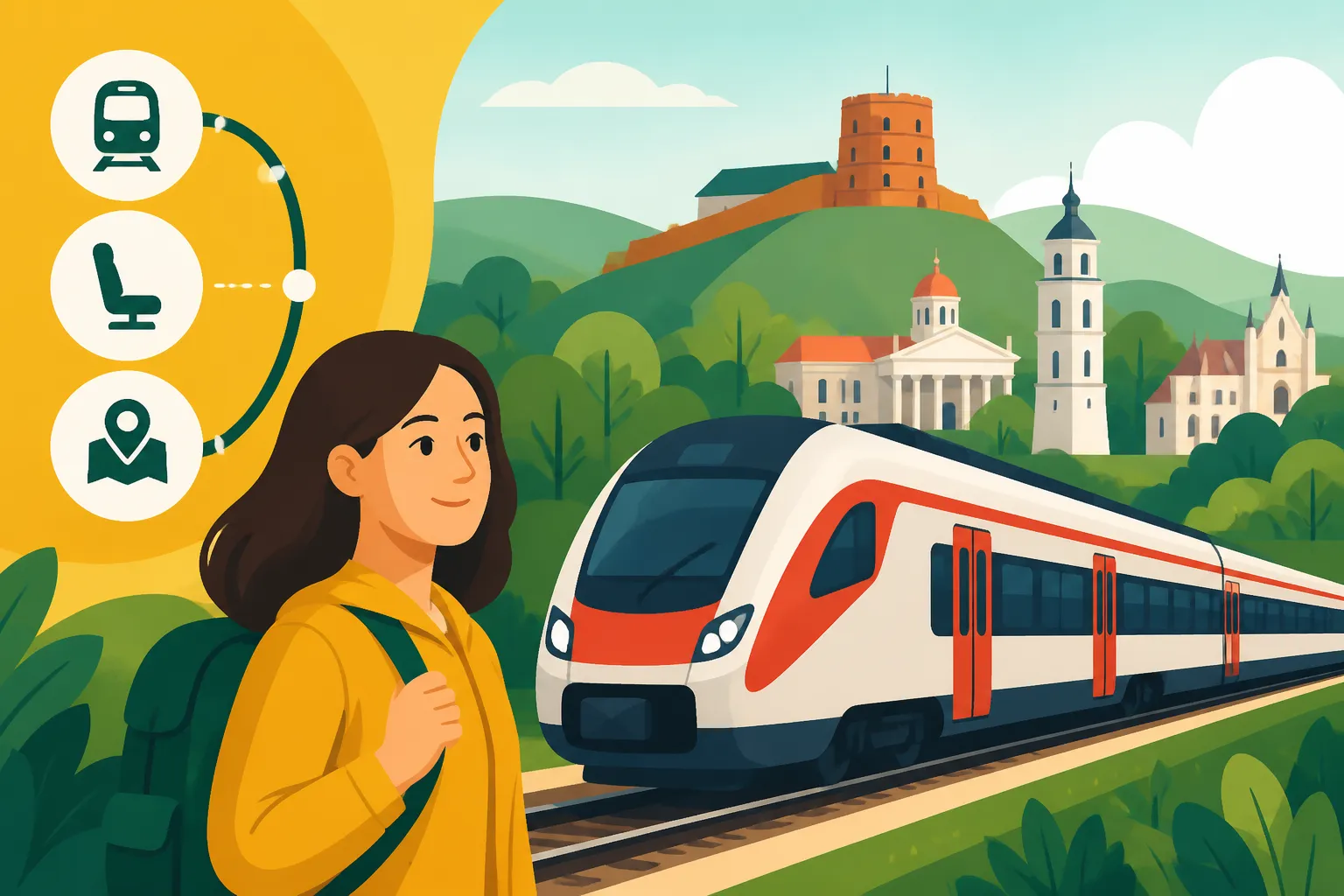
Understanding Train Travel with LTG Link in Lithuania
Navigating public transport in a new country can often feel like deciphering an ancient scroll, especially when you're trying to figure out which options actually work best for your lifestyle. While buses are a common choice for many routes in Lithuania, the country's train network, operated by LTG Link, offers a unique and often more comfortable way to explore. This comprehensive guide will pull back the curtain on train travel in Lithuania, from understanding the network and buying tickets to what you can expect onboard and how it fits into your broader expat life.
Getting to Know LTG Link: Lithuania's National Railway
For many of us who've moved to Lithuania, the initial thought of train travel might bring to mind grand European railways connecting bustling metropolises. While Lithuania's network might be smaller in scale, LTG Link, the passenger transport arm of Lietuvos Geležinkeliai (Lithuanian Railways), is a vital artery for domestic travel, quietly connecting cities and towns across the country. It's often overlooked by newcomers in favour of buses, but once you get the hang of it, train travel here can be a truly pleasant experience.
A Brief History and Modern Presence
Lithuanian Railways boasts a rich history, dating back to the 19th century. Over the years, it has played a crucial role in the country's development, weathering various historical upheavals. Today, LTG Link is focused on modernizing its fleet and services, providing passenger transport that is increasingly comfortable and efficient. Its primary hubs are, as you might expect, the major cities: Vilnius, Kaunas, and Klaipėda. From these central points, the network radiates outwards, offering connections to smaller towns like Šiauliai, Ignalina, and Visaginas, as well as some international routes.
For an expat, LTG Link represents more than just a way to get from A to B; it's an opportunity to see a different side of Lithuania. You'll pass through charming landscapes, dense forests, and quaint villages, often at a more relaxed pace than driving. It’s also a surprisingly serene escape from city life, allowing you to unwind, read a book, or simply gaze out the window as the Lithuanian countryside rolls by.
The Types of Trains and Classes You'll Encounter
When you step onto a Lithuanian train, you'll likely notice a mix of old and new. The fleet has seen significant upgrades in recent years, especially on popular routes. You might find yourself on a modern Stadler Flirt train, which offers a smooth, quiet ride, or on an older, more traditional carriage. Each has its own charm, though the newer trains are definitely a step up in terms of amenities.
Generally, LTG Link offers at least two seating classes: Economy and First Class (sometimes referred to as Business on the newer trains). Economy class is perfectly comfortable for most journeys, featuring standard seating, often with small tables or tray tables, and adequate legroom. First Class, as expected, provides more spacious seating, typically in a 2+1 configuration rather than 2+2, offering a bit more privacy and comfort – perfect if you need to work or just want a quieter journey. On some of the very latest trains, you might even find premium sections that offer enhanced seating, better access to power outlets, and occasionally, complimentary refreshments. Keep an eye out for these upgrades, especially on the Vilnius-Kaunas line, where modern trains are the norm.
Planning Your Journey: Routes, Tickets, and Pricing
Before you even step foot on a platform, a little planning goes a long way in ensuring a smooth train journey in Lithuania. The LTG Link network might not be as sprawling as some other European countries, but it efficiently connects key urban centers and offers some truly picturesque routes.
Navigating the LTG Link Network and Popular Routes
The backbone of the LTG Link network connects Lithuania's largest cities. The Vilnius-Kaunas route is particularly popular, boasting frequent, modern trains that whisk you between the two cities in just over an hour. It's a lifeline for commuters, students, and tourists alike, making day trips between the capital and the former capital incredibly easy. Another significant route connects Vilnius to the port city of Klaipėda, a longer journey that often involves a change in Kaišiadorys or Radviliškis, but offers a fantastic way to reach the coast without driving. This route can take around 3.5 to 4 hours, giving you plenty of time to enjoy the scenery.
Other notable routes include services from Vilnius to Šiauliai, known for the Hill of Crosses, and further north to the industrial city of Mažeikiai. For those seeking nature and tranquility, trains also head towards the Ignalina district, famous for its lakes and national parks, and even further east to Visaginas, near the Ignalina Nuclear Power Plant. While the network isn't as dense as some Western European countries, it effectively covers the most vital corridors. If you're pondering How Do I Travel by Train Between Vilnius and Kaunas?, you'll find it’s one of the most efficient options available.
How to Purchase Train Tickets: Online, App, and Station
Gone are the days when you absolutely needed to speak Lithuanian or navigate confusing ticket machines to secure your passage. LTG Link has done a commendable job in modernizing its ticket purchasing process.
The most convenient way for most expats is through the official LTG Link website (www.ltglink.lt). The site is available in English, making it straightforward to search for routes, check schedules, and book your tickets. You can select your departure and destination, choose your travel date, pick your preferred class (Economy or First Class), and even select your seat on many services. Payment is typically made via credit or debit card. It’s always a good idea to create an account, as it simplifies future bookings and keeps your travel history organised.
For those who prefer mobile convenience, the LTG Link mobile app is a fantastic tool. Available on both iOS and Android, it offers the same functionality as the website, allowing you to buy tickets on the go, view your bookings, and even get real-time updates. Having a reliable internet connection is key here, especially when you're rushing to catch a train. This is where a robust mobile plan or an eSIM from a provider like Airalo can really come in handy, ensuring you're never left scrambling for Wi-Fi when trying to secure a last-minute ticket or check for delays.
Of course, if you prefer the traditional route or have specific questions, you can always visit a ticket office at major train stations in cities like Vilnius, Kaunas, or Klaipėda. While staff might not always speak fluent English, they are generally helpful, and with a bit of patience and perhaps a translation app, you'll manage just fine. There are also self-service kiosks at some stations, though these might be more challenging if you're not familiar with the Lithuanian interface.
Understanding Ticket Prices, Discounts, and Loyalty Programs
Train ticket prices in Lithuania are generally quite reasonable, especially when compared to Western European counterparts. The cost of your journey will vary based on several factors: the distance of your route, the class of service you choose (Economy vs. First Class), how far in advance you book, and whether you're travelling during peak or off-peak hours. As with most transport providers, booking closer to your travel date or during popular times will likely result in higher fares.
LTG Link offers various discounts that can make train travel even more economical. Students with a valid Lithuanian ISIC card, seniors, and children often benefit from reduced fares. There are also specific family tickets or group discounts available, which can be particularly useful if you're planning a trip with friends or family. It's always worth checking the LTG Link website's "Offers" or "Discounts" section before booking. While there isn't a complex loyalty points program like some airlines, frequent promotions and seasonal deals are common. When you're considering The Complete Guide to Cost of Living in Lithuania for Expats (2026), factoring in these affordable train options can certainly help with your overall budget.
For instance, a standard one-way Economy ticket from Vilnius to Kaunas might range from €6 to €8, while a First Class ticket could be around €10-€12. A longer journey like Vilnius to Klaipėda would naturally be more, typically in the €15-€20 range for Economy. These prices are often competitive with, or even cheaper than, intercity bus services, especially if you factor in the added comfort and space.
Your Train Travel Experience: Onboard Amenities and Practicalities
Once you've got your ticket in hand, whether it's on your phone or a printed copy, it's time to consider the actual journey. Train travel with LTG Link is generally a relaxed affair, and knowing what to expect in terms of amenities and practicalities can enhance your experience significantly.
Onboard Comforts: WiFi, Power, and Refreshments
One of the big advantages of train travel over bus journeys in Lithuania is the enhanced comfort. Most modern LTG Link trains, especially those on the main routes like Vilnius-Kaunas, offer complimentary Wi-Fi. While it's generally reliable, like any public Wi-Fi, it can sometimes be a bit patchy, especially when passing through less populated areas. For crucial work or entertainment, having your own data plan is always a smart backup. This is where an eSIM from a provider like Airalo can be invaluable, ensuring you have uninterrupted connectivity even if the train's Wi-Fi decides to take a break.
Power sockets are also widely available in both Economy and First Class carriages on newer trains, allowing you to keep your devices charged throughout your journey. This is a huge plus for those of us who rely on laptops, tablets, or phones for work, entertainment, or simply to stay connected.
As for refreshments, don't expect a full-service dining car on most domestic routes. While some longer-distance trains might have a small trolley service offering coffee, tea, soft drinks, and light snacks (like sandwiches or crisps), it's not guaranteed. On shorter routes, this service is often non-existent. My advice? Come prepared! Grab a coffee and a pastry at the station before you board, or pack your own snacks and drinks for the journey. The restrooms on LTG Link trains are typically clean and well-maintained, another small comfort that makes a big difference on longer trips.
Luggage, Bikes, and Pets: What You Need to Know
When it comes to luggage, LTG Link is quite accommodating. There are usually overhead racks above the seats for smaller bags and backpacks, and larger luggage racks at the end of each carriage, or sometimes in the middle, for bigger suitcases. Unlike flying, there are generally no strict weight limits for personal luggage, just ensure you can comfortably manage your bags yourself. If you're still in the throes of relocating to Lithuania, and using trains for initial explorations or moving smaller items, remember that dedicated moving services like Sirelo can help with the larger logistical headaches, allowing you to enjoy the train journey for lighter items.
Bringing a bicycle onboard is possible on specific trains and routes, but it often requires a separate ticket for the bike and might be limited to certain carriages or times, especially during peak hours. It's always best to check the LTG Link website or inquire at a ticket office in advance if you plan to travel with a bike, as rules can change.
Travelling with pets is also generally permitted, but with certain conditions. Smaller pets must usually be kept in a carrier that can fit on your lap or under the seat, and a separate pet ticket is often required. Larger dogs might be allowed in designated areas, usually with a muzzle and on a leash, and also requiring a ticket. Service animals, of course, are usually exempt from these rules and fees. Always check the specific pet policy on the LTG Link website before your trip to avoid any surprises.
Accessibility and Special Assistance
LTG Link is working towards making its services more accessible for all passengers. Newer trains are designed with accessibility in mind, featuring wider doors, designated seating areas for passengers with reduced mobility, and accessible restrooms. Platforms at major stations are also increasingly being upgraded to facilitate easier boarding.
If you or a travel companion require special assistance – for example, with a wheelchair, or if you have visual or hearing impairments – it's highly recommended to inform LTG Link in advance. You can usually do this by contacting their customer service hotline or inquiring at a major ticket office. Providing notice allows the staff to prepare and ensure appropriate assistance is available upon your arrival and departure. While English might not be universally spoken by all train staff, the major stations and customer service lines often have English-speaking personnel. Having key phrases translated on your phone or a small note explaining your needs can also be very helpful. This commitment to accessibility ensures that train travel can be a viable and comfortable option for a wider range of expats.
International Connections and Future Plans
While domestic travel is a primary function of LTG Link, the Lithuanian railway network also plays a role in regional connectivity, and its future looks set to expand significantly with ambitious projects on the horizon.
Cross-Border Journeys: Connecting with Neighboring Countries
Historically, direct international train connections from Lithuania have been somewhat limited compared to its Western European counterparts. However, there are established routes that allow for cross-border journeys, primarily connecting with Latvia and Poland. For instance, you can typically find services from Vilnius to Daugavpils in Latvia, and onwards to Riga, although these may involve changes and varying frequencies.
More exciting for many expats is the direct connection between Vilnius and Warsaw, Poland. This route has become increasingly popular, offering a comfortable alternative to buses or flying, connecting the Lithuanian capital with the Polish capital. It's an excellent option for weekend getaways or for those needing to travel further into Central and Western Europe. However, frequencies and availability can vary, so it's always crucial to check the LTG Link website for the most up-to-date schedule and booking information for international routes. As Lithuania strengthens its ties within the EU, expect these connections to become even more streamlined and frequent in the coming years.
Rail Baltica: A Glimpse into the Future of Lithuanian Train Travel
The biggest game-changer for train travel in Lithuania, and indeed across the Baltic States, is the ambitious Rail Baltica project. This is not just a railway line; it’s a vision for a modern, high-speed rail connection that will integrate the Baltic countries into the European rail network, linking them to Poland, Germany, and beyond with standard European gauge tracks.
For expats, Rail Baltica promises to be transformative. Imagine being able to hop on a high-speed train from Vilnius and reach Warsaw, Riga, or Tallinn in a fraction of the current travel time, without the hassle of airport security or long bus journeys. It will also vastly improve domestic connections within Lithuania, making travel between cities even faster and more efficient. The project includes new state-of-the-art stations, modern signalling systems, and a fully electrified network. While construction is ongoing and it's a multi-year project, the progress is palpable. This infrastructure development is poised to make Lithuania an even more attractive place to live and explore, significantly enhancing mobility for residents and visitors alike. It's truly a testament to Lithuania's commitment to modern infrastructure and regional integration, promising to make journeys like The Complete Guide to Moving to Lithuania: Your First 90 Days (2027) much smoother for future arrivals.
Tips for a Smooth Journey: Avoiding Pitfalls and Enhancing Your Trip
Travelling by train in Lithuania is generally straightforward, but like any unfamiliar system, a few insider tips can make your journey even smoother. As an expat, you’ve already navigated plenty of administrative hurdles; let’s make train travel one of the simpler parts of your life here!
Essential Communication and Translation Tips
While English is increasingly common in major cities and among younger generations, particularly in customer service roles, don't assume everyone you encounter at a smaller train station or on board will be fluent. Having some basic Lithuanian phrases handy can go a long way – even a simple "Labas" (hello) or "Ačiū" (thank you) is appreciated.
More importantly, arm yourself with a good translation app on your phone. Google Translate or similar apps are lifesavers, especially for understanding station announcements or clarifying details with staff. When buying tickets at a station, having your destination written down in Lithuanian can also prevent any misunderstandings. Always carry a physical copy or screenshot of your e-ticket and a form of identification (your passport or Lithuanian ID card, if you have one) as tickets are often checked and sometimes IDs are requested. Being prepared with your documents will help you glide through any checks without a hitch.
Comparing Trains with Other Transport Options
Lithuania offers various public transport options, and understanding when to choose the train over a bus or car is key to efficient travel.
Trains vs. Buses: For major intercity routes, especially between Vilnius and Kaunas, trains are often faster and more comfortable than buses. They offer more legroom, the ability to walk around, and fewer traffic delays. The modern Stadler trains are particularly appealing. However, buses generally have a more extensive network, reaching smaller towns and villages that trains don't. Buses can also sometimes be cheaper, depending on the route and booking time. If your destination is directly on a major rail line, trains are often the superior choice for comfort and speed. For a comprehensive look at city-specific options, check out guides like How Do I Get a Vilniečio Kortelė Transport Card in Vilnius? which covers local transport. For a broader overview, take a look at The Expat Guide to Public Transport in Lithuania.
Trains vs. Cars: Driving offers unparalleled flexibility, allowing you to stop whenever and wherever you please. However, trains eliminate the stress of navigating unfamiliar roads, finding parking in city centres, or dealing with winter driving conditions. For city-to-city travel, particularly if you plan to explore the city centres on foot or using local public transport, the train is a relaxing alternative. Of course, for more remote areas, a car is indispensable. If you are considering driving, our guide on Driving in Lithuania: Licences, Registration and Rules for Expats (2027) can offer some valuable insights. Ultimately, the best choice depends on your specific destination, budget, and preference for comfort versus flexibility.
Safety and Security Onboard
Train travel in Lithuania is generally very safe. Like anywhere, it's wise to remain aware of your surroundings and take basic precautions. Keep an eye on your belongings, especially when boarding, disembarking, or if you store luggage on racks away from your seat. While serious incidents are rare, petty theft can occur anywhere, so don't leave valuables unattended.
Emergency procedures are usually outlined in pictograms in each carriage. In the unlikely event of an emergency, follow the instructions of the train staff. They are trained to handle various situations and ensure passenger safety. For any immediate concerns or issues during your journey, locate a train conductor or staff member; they are usually identifiable by their uniforms and can assist. Overall, you can expect a secure and pleasant environment on LTG Link trains, allowing you to relax and enjoy your journey through the beautiful Lithuanian landscape.
| Route | Approx. Travel Time | Frequency (Daily) | Approx. Cost (Economy) | Highlights |
|---|---|---|---|---|
| Vilnius – Kaunas | 1h 15m – 1h 25m | Very High (20+ trains) | €6-€8 | Modern trains, fastest connection between major cities, popular for commuters. |
| Vilnius – Klaipėda | 3h 30m – 4h 00m | Moderate (5-7 trains) | €15-€20 | Connects capital to the seaside, often requires a change, scenic longer journey. |
| Vilnius – Šiauliai | 2h 15m – 2h 45m | Moderate (5-6 trains) | €10-€14 | Links capital to northern Lithuania, access to the Hill of Crosses, direct service. |
| Vilnius – Ignalina/Visaginas | 1h 30m – 2h 30m | Moderate (4-5 trains) | €8-€12 | Gateway to Aukštaitija National Park and lake district, offers picturesque views. |
| Vilnius – Warsaw (Poland) | 7h 00m – 8h 00m | Limited (1-2 trains) | €25-€35 | International connection to Poland, comfortable alternative to bus/air. |
Note: Frequencies and prices are approximate and can vary based on season, promotions, and time of booking. Always check the official LTG Link website for the most current information.
Disclaimer
The information provided in this guide is intended for general informational purposes only and does not constitute professional advice. While we strive to keep the content accurate and up-to-date, train schedules, prices, policies, and regulations in Lithuania (LTG Link) can change frequently. It is always recommended to consult the official LTG Link website or contact their customer service directly for the most current and specific information regarding your travel plans. We are not responsible for any inaccuracies or outdated information.