How to Set Up Waste and Recycling Collection in Lithuania
Alright, fellow expat, let's talk trash – literally. When you first arrive in Lithuania, whether you're wide-eyed in bustling Vilnius or settling into a quieter life in historic Kaunas, you're hit with a barrage of administrative tasks: residence permits, bank accounts, figuring out where to buy decent dark rye bread… but one often overlooked, yet absolutely essential, chore is understanding how to deal with your waste and recycling. It's not always intuitive, especially if you're coming from a country with a different system, and believe me, getting it wrong can lead to some rather unwelcome surprises. This guide is here to help you unravel the mysteries of waste collection in Lithuania, ensuring your bins are happy, and so are your neighbours.
Understanding Lithuania's Waste Management Philosophy
Moving to a new country often means recalibrating how you think about everyday things, and waste management is certainly one of them. Lithuania, like many EU nations, has a robust and increasingly strict system designed to reduce landfill waste and promote recycling. It's not just about tossing things into a bin; it's about active participation in a larger ecological effort. For us expats, this means a bit of a learning curve, but it’s entirely manageable once you get the hang of it. The core principles here revolve around responsibility and sorting at the source, which directly influences how services are provided and how costs are calculated.
The "Pay As You Throw" Principle (Mokėk, Kiek Išmeti)
While not a literal "weigh your trash" system for every household, the philosophy of "Mokėk, Kiek Išmeti" (Pay As You Throw) underpins Lithuania's waste management approach. This principle aims to incentivize residents to reduce their waste and sort diligently, as it often directly impacts their waste collection fees. For apartment dwellers, this might mean a fixed fee that's part of your communal bill, with the understanding that the overall building's waste volume affects collective costs and potential future fee adjustments. If everyone sorts properly, the amount of general mixed waste, which is the most expensive to process, decreases.
For those living in individual houses, the connection is much more direct. You'll typically have separate bins for different waste types, and your fees will be calculated based on the size of your mixed residual waste bin and how often it's collected. The fewer times it needs emptying, or the smaller the bin you choose, the less you generally pay. This system really puts the onus on individual households to be mindful of what they're throwing away and encourages a proactive approach to recycling. It means becoming quite disciplined about separating plastics from paper, and ensuring organic waste isn't contaminating the general trash.
Municipal vs. Private Providers: Who Does What?
The structure of waste collection in Lithuania can seem a bit convoluted at first glance, primarily because it's a hybrid system. Generally, the municipalities (e.g., Vilnius City Municipality, Kaunas City Municipality) are responsible for organizing waste management services for their respective regions. They set the rules, define collection schedules, and oversee the entire process. However, they very rarely handle the actual physical collection themselves.
Instead, municipalities contract out these services to various private waste management companies. You'll often see trucks from names like Ecoservice, Ekonovus, or VSA Vilnius rumbling through the streets. These are the companies that provide the bins, pick up the waste, and transport it to sorting facilities or landfills. For those living in apartment buildings, your point of contact for any issues related to waste collection – like a missed pick-up or overflowing bins – will typically be your building administrator. They manage the contract with the waste company on behalf of the residents, and your waste fees are usually incorporated into your monthly Understanding Utility and Communal Costs (Komunaliniai Mokesčiai) in Lithuania statement.
If you live in a private house, however, you'll likely have a direct contractual relationship with one of these private waste management companies, as appointed by your municipality. For instance, in Kaunas region, the Kauno Regiono Atliekų Tvarkymo Centras (KRATC) coordinates services, which are then often executed by private partners. This means you'll be the one signing the agreement, choosing your bin sizes, and receiving the bills directly. It's a system designed for efficiency, but it does mean expats need to know which entity to contact for specific queries.
Sorting Your Waste: The Lithuanian Way
One of the biggest adjustments for expats, and indeed a point of considerable cultural emphasis, is proper waste sorting. Lithuanians take their recycling seriously, and there's an expectation that residents understand and adhere to the sorting guidelines. Failing to sort correctly isn't just a minor oversight; it can lead to your bins not being collected, or, in some cases, even fines. So, let's dive into the colour codes and common pitfalls.
Colour-Coded Bins and Their Meanings
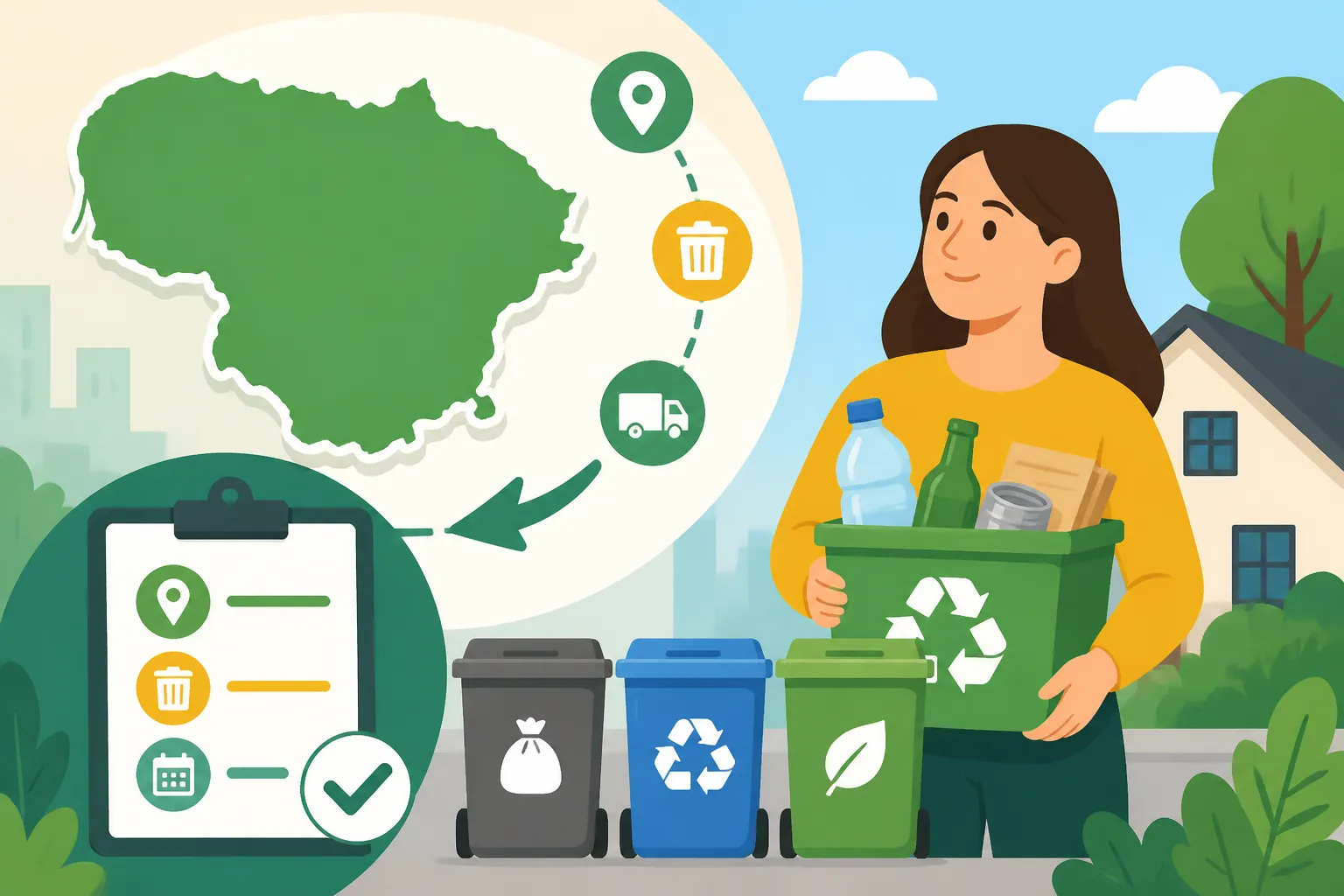
You'll quickly become familiar with the distinct colour-coded bins that are ubiquitous across Lithuania. These aren't just for aesthetics; each colour signifies a specific waste stream. Getting this right is fundamental to effective recycling.
-
Blue Bins: Paper and Cardboard (Popierius ir Kartonas)
- What goes in: Newspapers, magazines, advertising leaflets, cardboard boxes (flattened), paper packaging, egg cartons, office paper.
- What stays out: Greasy pizza boxes, wet or dirty paper, beverage cartons (Tetra Pak – these often have plastic or foil lining and usually go in the yellow bin), paper towels, tissues. The key here is clean and dry. If it's contaminated with food, it should go into mixed residual waste.
-
Yellow Bins: Plastics and Metal (Plastikas ir Metalas)
- What goes in: Plastic bottles (PET), plastic packaging for food, shampoo bottles, yogurt cups, plastic bags, foil, metal cans (e.g., soda cans, food cans), plastic films, beverage cartons.
- What stays out: Dirty or greasy food containers (e.g., heavily soiled plastic trays), plastic toys (these often contain different types of plastic and chemicals), disposable diapers, rubber, textiles, small electronic waste. It's crucial to give plastic food containers a quick rinse to remove most food residues before tossing them in.
-
Green Bins: Glass (Stiklas)
- What goes in: Glass bottles (clear, brown, green), glass jars for food.
- What stays out: Ceramic, porcelain, mirrors, window glass, light bulbs (these contain hazardous materials), drinking glasses (they have a different melting point than bottle/jar glass), heat-resistant glass (e.g., Pyrex). Again, a quick rinse is often appreciated.
-
Brown or Black Bins: Mixed Residual Waste (Mišrios Atliekos / Komunalinės)
- What goes in: This is for everything that cannot be recycled or composted through the other bins. This includes hygiene products (diapers, sanitary pads), broken ceramics, ash (cold!), non-recyclable packaging, certain food scraps if no organic waste bin is available.
- What stays out: Any recyclables, hazardous waste, electronics, bulky items. This bin should be your absolute last resort if you've diligently sorted everything else.
-
Separate Organic/Food Waste Bins (Maisto Atliekos / Žaliuojanos Atliekos)
- In some municipalities, particularly in larger cities like Vilnius, you'll find separate bins specifically for organic or food waste, often brown.
- What goes in: Food scraps, fruit and vegetable peels, coffee grounds, tea bags, small amounts of garden waste (leaves, grass clippings).
- What stays out: Packaging of any kind (especially plastic bags!), meat bones (unless specifically allowed), liquids. Using compostable bags for food waste is often encouraged if your municipality provides them.
| Waste Type | Colour-Coded Bin | What Goes In (Examples) | What Stays Out (Examples) | Best Practice Tip |
|---|---|---|---|---|
| Paper/Cardboard | Blue | Newspapers, magazines, flattened cardboard boxes, office paper | Greasy pizza boxes, wet paper, paper towels, beverage cartons | Always ensure items are clean and dry; flatten boxes. |
| Plastics/Metals | Yellow | PET bottles, plastic food packaging, metal cans, foil, Tetra Pak | Heavily soiled plastics, plastic toys, diapers, rubber | Rinse containers thoroughly; remove caps/lids (if separate material). |
| Glass | Green | Glass bottles, food jars (clear, brown, green) | Ceramic, mirrors, window glass, light bulbs, drinking glasses | Rinse; remove metal lids (to yellow bin); protect broken glass safely. |
| Mixed Residual Waste | Black/Brown | Hygiene products, non-recyclable packaging, ash (cold) | Any recyclables, hazardous waste, electronics, bulky items | Use only for truly non-recyclable waste; aim to minimize. |
| Organic/Food Waste | (Often Brown) | Food scraps, fruit/veg peels, coffee grounds, tea bags | Any packaging, bones (check local rules), liquids, cooking oil | Use compostable bags if available; avoid plastic bags. |
Common Contamination Mistakes Expats Make
It's easy to get things wrong, especially when you're used to a different system. Here are some of the most frequent contamination mistakes I've seen expats make:
- Not Rinsing Containers: This is a big one. A dollop of yogurt left in its pot, or a greasy film in a plastic take-out container, can contaminate an entire batch of otherwise clean recyclables. A quick rinse under the tap is usually sufficient.
- Putting Plastic Bags in Paper Bins: While plastic bags are recyclable (in yellow bins!), they don't belong in the paper bin. They tangle up machinery and contaminate the paper stream.
- "Wish-Cycling": This is when you're unsure if something is recyclable, but you toss it into the recycling bin anyway, "hoping" it will be processed. Unfortunately, this often does more harm than good, as it adds non-recyclable items that then need to be manually sorted out, increasing costs and effort. When in doubt, it's often better to put it in the mixed residual waste.
- Mixing Food Waste with Mixed Residual Waste: If your building or municipality provides an organic waste bin, it's crucial to use it. Food waste in the mixed residual bin increases its volume and weight, making it more expensive to process, and it contributes to methane emissions in landfills.
- Throwing Hazardous Waste into Regular Bins: Batteries, old paint cans, certain chemicals – these absolutely do not belong in any of the regular bins. They pose environmental and health risks. We'll cover where these go in a bit.
Setting Up Collection for Your Home
The process of setting up waste collection varies significantly depending on whether you live in an apartment or a private house. Understanding this distinction from the outset will save you a lot of headache. When you're in the process of finding and securing your How to Find and Rent Long-Term Accommodation in Lithuania , it's always a good idea to clarify these details with your landlord or real estate agent.
Apartments: Centralized Bins and Shared Responsibility
For most expats living in apartment buildings in Lithuanian cities, you won't need to worry about setting up individual waste collection contracts directly. This is generally handled at the building level.
Typically, apartment complexes have communal, centralized bins for all residents. These bins are usually located in designated areas within the courtyard, in underground parking garages, or in a specific waste shed. You'll find the distinct blue, yellow, green, and often black/brown bins, sometimes alongside organic waste bins.
Your responsibility, as a tenant or owner in an apartment, is to sort your household waste correctly and deposit it into the appropriate communal bins. The building manager or administrator is the one who holds the contract with the waste management company (e.g., Ecoservice, Ekonovus) and oversees the collection schedule and capacity. The costs associated with waste collection are then distributed among the residents and typically included as a line item on your monthly communal bill, which covers various utility and maintenance charges. You can learn more about how these costs are broken down in our guide on How Do I Understand My Komunaliniai Mokesčiai (Utility Bills) in Lithuania?.
If you encounter issues like consistently overflowing bins, missed collections, or need clarification on specific sorting rules for your building, your first point of contact should always be your building administrator. They are the liaison between residents and the waste management company and can address collective concerns more effectively.
Houses: Individual Bins and Direct Contracts
If you've opted for the privacy and space of a private house or a duplex, the waste collection setup is a different ball game. In this scenario, you, as the homeowner or tenant, are responsible for arranging your own waste management contract and ensuring you have the necessary bins.
The process usually involves:
- Identifying Your Local Provider: First, you need to know which waste management company operates in your specific municipality or region. This information is usually available on your local municipality's website or the website of the regional waste management centre (e.g., KRATC for Kaunas region). The municipality designates specific operators for different areas.
- Contacting the Company: Once you know your provider, you'll need to contact them directly to set up an account. Be prepared for this interaction to potentially be in Lithuanian, though larger companies might have English-speaking staff or online portals. Having a local SIM card with good data can be incredibly helpful for using translation apps or making calls; for those just arriving, an eSIM from a provider like Airalo can be a lifesaver.
- Choosing Bins and Collection Frequency: The company will offer various options for mixed residual waste bins, differing in size (e.g., 80L, 120L, 240L) and collection frequency (e.g., weekly, bi-weekly). Your choice here will directly impact your monthly fees, adhering to the "Pay As You Throw" principle. Bins for recyclables (paper, plastic/metal, glass) are usually provided free of charge or for a nominal initial fee, and their collection is less frequent, often monthly or bi-monthly, reflecting their lower volume and processing cost when properly sorted.
- Providing Documentation: You'll likely need to provide proof of your residence at the property. This could be your rental agreement or property ownership documents. Having your Declaring Your Place of Residence in Lithuania: The Complete Guide in place and possibly even your How Do I Get an Asmens Kodas Before Renting an Apartment in Lithuania? will be crucial for these administrative steps.
- Receiving Bills: You will receive separate bills directly from the waste management company, typically monthly or quarterly, detailing your specific charges based on your chosen bin sizes and collection schedule.
It's a more hands-on approach, but it gives you direct control over your waste management choices and costs.
Special Waste Items: Beyond the Basic Bins
Not everything fits neatly into those colour-coded bins. Lithuania has specific systems in place for items that are too large, too hazardous, or require specialized recycling processes. Understanding these options is vital for responsible waste disposal and avoiding penalties.
Bulky Waste (Didelių Atliekų Surinkimo Aikštelės)
Think old sofas, broken washing machines, mattresses, construction debris from a small DIY project, or even large tree branches – these are all examples of bulky waste. You absolutely cannot leave these by the communal bins or on the side of the street. This is considered illegal dumping and will lead to fines.
The solution in Lithuania for bulky waste is the Didelių Atliekų Surinkimo Aikštelės (DAĮ), which translates to "Large Waste Collection Sites" or simply "Bulky Waste Collection Points." These are dedicated facilities operated by the municipality or regional waste management centers, designed to accept a wide array of larger or less common waste items.
Here's what you need to know about DAĮ:
- What They Accept: DAĮ sites typically accept old furniture, household appliances (fridges, washing machines, TVs – also known as E-waste), construction and demolition waste (in limited quantities), car tires, garden waste, textiles, wood, and sometimes even specific types of hazardous household waste.
- Finding Your Nearest DAĮ: You can find the locations and opening hours of these sites on your local municipality's waste management website (e.g., Vilniaus atliekų sistemos administratorius – VASA in Vilnius, or KRATC in Kaunas). A quick search for "Didelių Atliekų Surinkimo Aikštelės [Your City Name]" should point you in the right direction.
- Conditions and Fees: For residents, dropping off waste at DAĮ sites is often free for certain types and quantities of waste (e.g., a certain number of old tires, or a few bags of construction waste). However, exceeding these limits or disposing of specific types of waste might incur a small fee. Always check the specific rules and price lists for your local DAĮ beforehand. You usually need to show proof of residency, like your ID or a utility bill.
- Transport: You are responsible for transporting your bulky waste to the DAĮ yourself. If you don't have a suitable vehicle, you might need to rent one or hire a local service. For those who used international moving services, companies like Sirelo often provide resources for initial moves, but for ongoing bulky waste, local solutions like DAĮ are essential.
Hazardous Waste, Electronics, and Batteries
This category is extremely important to handle correctly due to the environmental and health risks involved. Never, ever, put these items in your regular mixed residual waste or recycling bins.
- Electronics (E-waste): Old phones, laptops, TVs, small kitchen appliances, hair dryers, etc., are considered electronic waste. Many DAĮ sites accept larger E-waste items. For smaller electronics, you might find special collection boxes in large supermarkets (like Maxima, Rimi, Iki), electronics stores (e.g., Topo Centras), or even some post offices. These collection points are usually clearly marked.
- Batteries: Whether they're AA, AAA, phone batteries, or car batteries, these must be recycled separately. You'll find small battery collection boxes at the entrances of most supermarkets, pharmacies, and post offices across Lithuania. Car batteries can often be taken to auto repair shops or DAĮ sites.
- Medicines: Expired or unused medications should never be flushed down the toilet or thrown in the trash. They contain chemicals that can harm the environment. Most pharmacies (vaistinės) in Lithuania have designated bins for collecting old medicines. Simply drop them off at your local pharmacy.
- Chemicals, Paints, Oils, and Other Hazardous Household Waste: This includes things like old paint cans, solvents, cleaning chemicals, motor oils, pesticides, and aerosols. These are typically accepted at DAĮ sites. Some municipalities also organize special hazardous waste collection events a few times a year, where a mobile collection point visits different neighborhoods. Keep an eye on your local municipality's announcements for these events.
Proper disposal of these items is not just a matter of following rules; it's a critical part of protecting Lithuania's beautiful natural environment.
Navigating Common Challenges and Solutions
Let's be real: moving to a new country is full of little administrative hurdles, and waste management isn't immune. From deciphering Lithuanian instructions to figuring out who to call when things go sideways, expats often face unique challenges. But don't worry, there are ways to overcome them.
Language Barriers and Information Access
This is probably the biggest headache for many newcomers. While younger generations in Lithuania often speak excellent English, official documents, municipality websites, and direct communication with service providers can still be predominantly in Lithuanian.
- Online Resources: Your first stop for information is usually the municipal waste management website (e.g., VASA for Vilnius, KRATC for Kaunas). Many of these sites, while primarily in Lithuanian, often have some English sections or at least use common icons that can guide you. Google Translate is your absolute best friend here. Don't be afraid to copy and paste entire paragraphs. For those tricky moments where you need to look something up on the go, having a reliable internet connection is key – an eSIM from Airalo, for example, can ensure you’re always connected for those quick translations.
- Asking for Help: Don't hesitate to lean on your support network. Your landlord, building administrator, Lithuanian colleagues, or friends can be invaluable resources for translating documents, making phone calls, or simply explaining local nuances. Many expat groups on social media platforms also have members who've navigated these exact challenges and are happy to share their experiences.
- Learning Key Phrases: While you don't need to be fluent, learning a few key Lithuanian phrases related to waste ("atliekos," "rūšiavimas," "šiukšlės," "perdirbimas") can make a difference in understanding basic instructions or identifying bin types. This is also part of the broader journey of Learning Lithuanian: A Complete Guide to Language Courses and Levels.
Dealing with Missed Collections or Overflowing Bins
Sometimes, despite your best efforts, things don't go according to plan.
- Missed Collections: If your bins haven't been emptied on the scheduled day, first, don't panic.
- Check Holiday Schedules: Public holidays can alter collection schedules. Always check the waste management company's website for announcements.
- Look for Local Announcements: Sometimes, roadworks or unforeseen circumstances can cause delays. Check local news portals or your building's notice board (if applicable).
- Contact the Right Person:
- Apartment Dwellers: Your first point of contact is your building administrator. They manage the contract and can report the issue to the waste management company on behalf of the building.
- House Dwellers: Contact your waste management company directly. Have your customer number or address handy. Explain the situation clearly, using a translation app if needed.
- Overflowing Bins: This is a common complaint, especially in apartment courtyards.
- Communal Bins: If the communal bins are consistently overflowing, it often points to a larger issue: either residents aren't sorting properly (filling mixed waste bins with recyclables), or the bin capacity isn't sufficient for the number of residents, or the collection frequency is too low. Report this to your building administrator. They can liaise with the waste company to request more frequent collections or larger bins.
- Individual Bins (Houses): If your own bins are overflowing, it might be a sign that you need to adjust your bin size or collection frequency. Contact your waste management company to discuss options. It could also indicate that you're not sorting your waste effectively enough, and too much is ending up in your mixed residual bin. Reviewing your sorting habits or even our guide on The Expat Guide to Setting Up Utilities in Lithuania might help streamline your household waste generation.
Remember, patience and persistence are key. The system is there to work, but sometimes it needs a little nudge, especially when you're still finding your feet in a new environment.
Cost and Regulations You Should Know
Nobody wants unexpected bills or, worse, fines. Understanding the financial aspect and the legal obligations of waste management in Lithuania is crucial for a smooth expat life. The costs associated with waste management are part of the larger picture of The Complete Guide to Cost of Living in Lithuania for Expats (2026) and are unavoidable.
Understanding Your Waste Bill (Atliekų Rinkliava)
The fee you pay for waste collection is known as "Atliekų Rinkliava" – literally, the "waste fee" or "waste charge." This charge helps cover the costs of collection, transportation, sorting, and disposal of municipal waste.
- For Apartment Residents: As mentioned earlier, your waste fee is typically integrated into your monthly communal bill. It's usually a fixed component, which might be calculated per person registered at the address, or based on the apartment's size, plus a variable component that might relate to the building's overall waste generation. This is part of the broader Understanding Utility and Communal Costs (Komunaliniai Mokesčiai) in Lithuania. You won't receive a separate bill from the waste company directly.
- For House Residents: If you live in a private house, you will receive a direct bill from your waste management company. This bill will clearly itemize the charges based on your selected mixed residual waste bin size and collection frequency. You'll likely see a fixed annual or quarterly fee, plus charges per emptying of the mixed waste bin. Properly sorting your recyclables reduces the volume in your mixed waste bin, potentially allowing for less frequent collections and, therefore, lower variable costs.
- Payment: Payments for apartment residents are made via their communal bill, usually through online banking or designated payment points. House residents will pay their waste company directly, again, most commonly via online banking.
Here's a simplified table of how costs might be structured, though exact figures vary by municipality and provider:
| Cost Component | Apartment Dweller (Example) | House Dweller (Example) | Notes |
|---|---|---|---|
| Fixed Component | Included in communal bill, per person or apartment size | Annual fixed fee for access to system | Covers infrastructure, administration, and some recycling costs. |
| Variable Component | Indirect, based on building's general waste volume | Per mixed residual waste bin emptying (based on bin size) | Directly incentivizes waste reduction and proper sorting. |
| Recycling Bins | Included in communal fixed fee | Often provided free/nominal fee, collected at no direct extra charge | Collection of blue, yellow, green bins usually doesn't incur extra direct fees. |
| Special Waste (DAĮ) | May have small fees for excessive quantities | May have small fees for excessive quantities | Mostly free for household volumes, but check specific limits. |
Fines and Enforcement for Improper Sorting
This is where things can get serious. Lithuania has regulations in place, and they are enforced. Improper waste management isn't just an inconvenience; it can be an environmental hazard, and the authorities take it seriously.
- Inspections and Monitoring: Municipal inspectors or representatives from waste management companies can monitor communal waste areas and, in some cases, even check the contents of bins (though this is less common for individual household bins unless there's a specific complaint or recurring issue). They are looking for clear instances of improper sorting, such as large amounts of recyclables in mixed residual waste, or hazardous items in regular bins.
- Consequences for Individuals:
- Warnings: For minor, first-time offenses in communal areas, you might receive a warning, often posted on your building's notice board, reminding residents of proper sorting rules.
- Monetary Fines: For repeated offenses, or for egregious breaches (like illegal dumping of bulky waste), individuals can face significant monetary fines. These can range from tens to hundreds of euros, depending on the severity and nature of the violation. These fines are designed to deter irresponsible behaviour and encourage adherence to environmental protection laws.
- Refusal of Collection: In some cases, if a bin is found to be heavily contaminated, the waste management company might refuse to empty it until the contaminants are removed. This can then lead to overflowing waste and further issues.
- Consequences for Businesses: Businesses face even stricter regulations and higher fines for improper waste management, as their volumes are generally larger and their potential environmental impact greater.
The best way to avoid these unpleasant scenarios is simple: learn the rules, sort your waste diligently, and when in doubt, seek clarification. It's an adjustment, but it's one of the ways we, as expats, contribute positively to our new home.
Disclaimer
Please note that while this guide aims to provide accurate and up-to-date information on setting up waste and recycling collection in Lithuania, regulations and procedures can change. Always consult the official websites of your local municipality and waste management service providers for the most current and specific information pertaining to your exact location. This article is for informational purposes only and does not constitute legal or professional advice.