Understanding the Lithuanian Pharmacy (Vaistinė) System and Opening Hours
You wake up at 11:00 PM with a throbbing migraine or find your child has a sudden, spiking fever, and you realize your home medicine cabinet is completely empty. Navigating the Lithuanian pharmacy system, known locally as a "vaistinė," can feel like a daunting task when you are dealing with language barriers and unfamiliar regulations. This guide demystifies how pharmacies work in Lithuania, from finding 24-hour locations to picking up digital prescriptions.
Navigating the Major Pharmacy Chains in Lithuania
When you first arrive in Vilnius, Kaunas, or Klaipėda, you will quickly notice that the pharmacy market is dominated by a few very large, very bright chains. Unlike some countries where independent, family-owned pharmacies are the norm, Lithuania’s system is highly consolidated. Each chain has its own "vibe," pricing strategy, and loyalty program. Understanding these nuances can save you a significant amount of money over a long-term stay.
The Big Four: Eurovaistinė, Camelia, Gintarinė, and BENU
Eurovaistinė is arguably the most visible chain, often found in large "Akropolis" or "Maxima" shopping centers. They tend to have massive floor spaces, often stocking not just medicine but an extensive range of high-end dermatological skincare, vitamins, and even orthopedic shoes. If you are looking for a specific French skincare brand or a specialized supplement, this is usually your best bet. Their staff in larger cities almost always speaks proficient English, which is a huge relief when you are trying to explain a complex symptom.
Camelia is frequently cited by locals as the "budget" option. Their stores are often smaller and more functional, focusing heavily on competitive pricing. You might find that the queue is a bit longer here, especially during "senior hours" when additional discounts are applied. Gintarinė Vaistinė often positions itself as the friendly, neighborhood choice, frequently located near polyclinics. BENU, a European-wide chain, often carries a more "premium" feel with a highly organized layout and a strong selection of international brands. Knowing which one is closest to your home is essential for those rainy Baltic evenings when you don't want to trek across town.
Loyalty Programs and Expat Savings
I cannot stress this enough: get the loyalty cards. In Lithuania, the "kliento kortelė" is not just a data-harvesting tool; it provides immediate, often substantial, discounts at the register. For example, Camelia frequently offers "happy hours" where holders of their loyalty card get 10-20% off non-prescription items. If you are managing a chronic condition and need regular supplements or over-the-counter (OTC) meds, these savings add up to hundreds of euros over a year.
Most chains now offer digital versions of these cards through their apps. When you walk up to the counter, the pharmacist will usually ask, "Ar turite nuolaidų kortelę?" (Do you have a discount card?). Even if you don't speak Lithuanian, just showing the app or a physical card will trigger the discounts. For expats who have just moved and are still setting up their The Complete Guide to Healthcare in Lithuania for Expats (2027), these small savings on OTC products are a helpful way to manage the initial cost of living.
Pharmacy Layouts and Customer Service
Lithuanian pharmacies are usually split into two sections: the "self-service" area and the "behind-the-counter" area. Items like herbal teas, basic vitamins, bandages, and cosmetics are free for you to grab and bring to the register. However, anything that qualifies as "medicine"—even basic painkillers like Ibuprofen or Paracetamol—must be requested directly from the pharmacist.
This can be surprising for those coming from the US or UK, where you can buy a 50-pack of Aspirin next to the milk in a supermarket. In Lithuania, the pharmacist acts as a gatekeeper. They are highly trained medical professionals, often holding Master’s degrees in Pharmacy. Don't be afraid to ask for advice; they can often recommend a local equivalent to a brand you used back home. If you are still waiting for your residence permit and need a bridge for your health needs, having a plan like SafetyWing can provide peace of mind while you navigate these local interactions.
Understanding the E-Receptas and E-Sveikata Ecosystem
Lithuania is incredibly digitized, and nowhere is this more evident than in the healthcare sector. The days of carrying around a crumpled paper prescription are largely gone, replaced by a seamless digital system that connects your doctor directly to every pharmacy in the country. This system is a core part of Understanding the E-Sveikata (E-Health) System in Lithuania, and as an expat, getting comfortable with it is your first priority.
How Digital Prescriptions Work for Expats
Once you have had a consultation with your "šeimos gydytojas" (family doctor), they will log into the national system and issue an "E-Receptas." This prescription is tied directly to your "Asmens Kodas" (personal code). You don't need a printout; you don't even need a digital code on your phone. You simply walk into any pharmacy in Lithuania, hand over your ID card or passport, and tell them you have a prescription.
The pharmacist will scan your ID, and your entire prescription history will appear on their screen. They can see exactly what the doctor ordered, the dosage, and how many refills are left. This is incredibly efficient, but it does mean you must have your ID with you at all times. If you are wondering about the specifics of the pickup process, you can read more about How Do I Use an E-Receptas at a Pharmacy in Lithuania to ensure you don't run into issues at the counter.
Accessing Your Records via the Patient Portal
One of the coolest things about living here is the ability to see your own medical data. By logging into the E-Sveikata portal using your e-banking credentials or Mobile-ID, you can see every prescription ever issued to you. This is helpful if you forget the name of a medication the doctor gave you three months ago or if you need to check how many days of a treatment are left.
For expats, this transparency is a lifesaver. You can see the Latin names of the active ingredients, which makes it much easier to research the medication if the local brand name is unfamiliar. If you find your prescription is running low, you might want to look into How Do I Get a Prescription Renewed Online in Lithuania as many doctors allow for digital renewals without a physical visit for chronic conditions.
What to Do with Paper Prescriptions from Abroad
If you have just arrived and are carrying a paper prescription from your home country, things get a bit more complicated. Lithuanian pharmacies are generally hesitant to accept foreign paper prescriptions unless they meet very specific EU criteria (including the doctor’s full contact details, Latin name of the drug, and a clear stamp).
In most cases, a pharmacist will tell you to visit a local doctor to have the prescription "converted" into a Lithuanian E-Receptas. This is a safety measure to ensure the dosage and drug are appropriate according to local regulations. If you find yourself in this situation, it's worth checking Can I Use a Foreign Prescription at a Lithuanian Pharmacy for a deeper dive into the legal requirements and workarounds.
Prescription vs. Over-the-Counter (OTC) Realities
One of the biggest culture shocks for expats in Lithuania is the strictness regarding what requires a prescription. The "vaistinė" system is tightly regulated to prevent antibiotic resistance and medication abuse, which means some things you might consider "basic" back home require a doctor’s visit here.
The Strictness of Lithuanian Regulations
Antibiotics are never, under any circumstances, sold over the counter in Lithuania. Even certain high-strength anti-inflammatory gels or specific types of allergy medication that are OTC in other countries might require an Understanding the Electronic Prescription (E-Receptas) System in Lithuania entry here. This can be frustrating when you know exactly what you need for a recurring issue, but it's a non-negotiable part of the system.
Furthermore, the quantity of OTC meds you can buy is often restricted. For instance, you might only be allowed to buy one or two packs of a specific painkiller at a time. The goal is public safety, but for an expat used to "bulk buying" essentials, it requires a shift in mindset. Always keep a detailed record of your purchases for your insurance provider; companies like SafetyWing often require specific documentation if you are claiming for medications prescribed during an emergency stay.
Common OTC Medications and Brands
While the names on the boxes will be in Lithuanian, the active ingredients are the same. Paracetamol is still Paracetamol, and Ibuprofen is widely available (often under the brand "Ibumetin" or "Ibuprom"). For cold and flu, brands like "Theraflu" or "Gripex" are staples. If you are looking for digestive aids, "Mezym" or "Loperamide" are the go-to choices.
It is also worth noting that Lithuania has a deep love for herbal medicine. You will find entire aisles dedicated to "vaistažolių arbatos" (medicinal teas) for everything from kidney health to insomnia. Lithuanians often combine traditional medicine with modern pharmaceuticals, and your pharmacist might suggest a specific herbal tea to complement your prescription. To understand how these costs fit into your broader budget, see Prescription Medications and Pharmacies in Lithuania: The Complete Guide.
Language Barriers at the Counter
In the centers of Vilnius or Kaunas, you will almost certainly find a pharmacist who speaks English. However, in smaller towns or residential suburbs, you might need a few keywords.
- "Nuo skausmo" (for pain)
- "Nuo temperatūros" (for fever)
- "Nuo kosulio" (for cough)
- "Receptas" (prescription)
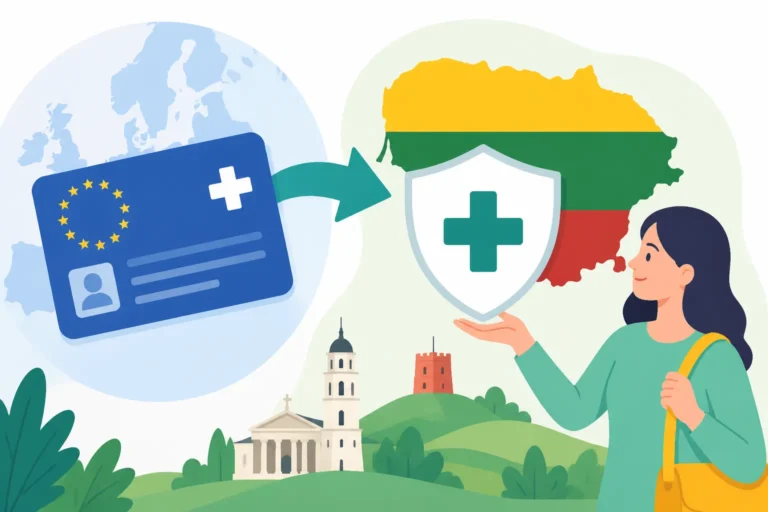
If you are struggling, most people find that using Google Translate to show the active ingredient name in Latin works perfectly, as pharmacists are trained in Latin medical terminology. If you are an EU citizen, remember that How to Use Your EHIC (ESDK) Card in Lithuania as an EU Citizen applies to medical care, but for the actual medication at the pharmacy, the rules on discounts depend on your insurance status in the Lithuanian PSD system.
Opening Hours and Finding a 24-Hour Budinti Vaistinė
Lithuania’s pharmacy hours generally follow the rhythm of the retail world, but there are critical exceptions you need to know before an emergency strikes. If you are used to 24/7 pharmacies on every corner, the Lithuanian "Budinti Vaistinė" system will be a new concept to learn.
Standard Hours in Shopping Malls vs. Residential Areas
Pharmacies located inside major malls like Akropolis, Ozas, or Mega typically stay open as long as the mall does—usually from 10:00 AM to 9:00 PM or 10:00 PM, seven days a week. These are your most reliable options for late-evening needs. Pharmacies in residential neighborhoods or "street-side" locations usually have more restricted hours, often closing at 7:00 PM or 8:00 PM on weekdays and having very short hours (or closing entirely) on Sundays.
If you live in a smaller city like Panevėžys or Šiauliai, Sunday hours can be particularly tricky. Most pharmacies will close by 3:00 PM or 4:00 PM. It is a good habit to check the "darbo laikas" (working hours) on the door of your local branch or check their website before heading out.
Emergency Night Pharmacies (Budinti Vaistinė)
In Lithuania, an emergency pharmacy is called a "Budinti Vaistinė." These are the only locations authorized to stay open 24/7, including on public holidays like Christmas or Easter. In Vilnius, the most famous one is located near the railway station (Gintarinė Vaistinė on Geležinkelio g. 6). In Kaunas, you can usually find one in the city center or near the clinics.
Be prepared: at night, the main door of a "Budinti Vaistinė" is often locked for safety. You will need to ring a bell, and a pharmacist will speak to you through a small window or intercom. You tell them what you need, they bring it to the window, and you pay through the slot. It feels a bit like a spy movie, but it’s a highly effective way to get medicine at 3:00 AM.
Weekend and Holiday Availability
During public holidays (and Lithuania has many), almost every "normal" pharmacy will be closed. This includes January 1st, February 16th, March 11th, and the high summer holiday of Joninės (June 24th). During these times, only the "Budinti" pharmacies stay open. If you are traveling within the country, it's wise to have a basic kit or a backup plan. For those on a temporary stay or digital nomads, SafetyWing provides an excellent safety net for unexpected medical costs that might arise during these holiday gaps.
| Pharmacy Chain | Typical Mall Hours | 24/7 Locations | Loyalty Card Name |
|---|---|---|---|
| Eurovaistinė | 08:00 – 22:00 | Limited (Vilnius/Kaunas) | Kortelė "Mylimiausia" |
| Camelia | 08:00 – 20:00 | No | Mažų kainų kortelė |
| Gintarinė | 08:00 – 21:00 | Yes (Main Hubs) | Gintarinė kortelė |
| BENU | 09:00 – 21:00 | Select Cities | BENU kortelė |
Costs, Payments, and Insurance Reimbursements
Understanding who pays for what is vital. Lithuania has a hybrid system where the state covers a significant portion of costs for those in the public system, but expats often find themselves navigating the private side of the counter as well.
How the PSDF Covers Your Costs
If you are employed in Lithuania or are self-employed and paying PSD (Compulsory Health Insurance), you are likely covered by the PSDF. For many chronic medications, the state compensates between 50% and 100% of the "base price." To understand how this works, it’s helpful to read How Lithuania's Health Insurance Fund (VLK/PSDF) Works: A Full Overview.
When the pharmacist scans your ID, the system automatically calculates the discount. You only pay the "priemoka" (the co-payment). Note that the co-payment can vary depending on whether you choose a "brand name" drug or a generic equivalent. Pharmacists are legally required to show you a screen with all available options from cheapest to most expensive. Choosing the "pigiausias" (cheapest) generic can save you a lot of money without sacrificing quality.
Private Insurance and Out-of-Pocket Expenses
Many expats also carry Understanding Private Health Insurance Plans in Lithuania provided by their employers. These plans often cover the "priemoka" that the state doesn't pay. In most cases, you pay the full amount at the pharmacy, get a detailed receipt (called a "Sąskaita-faktūra"), and then upload it to your insurance app for reimbursement.
If you are a freelancer or a digital nomad not yet in the state system, you will be paying 100% of the cost out-of-pocket. This is where services like SafetyWing are invaluable, as they can help cover costs related to unexpected illnesses or accidents that require immediate medication. Always ensure you ask for a "receptas" or a formal medical note from your doctor to justify the purchase for your insurance claim.
Price Comparisons and Generic Substitutes
Lithuanian law is very pro-consumer regarding drug prices. Every pharmacy must have a terminal or screen facing the customer that lists the prices of all drugs with the same active ingredient. It is a very transparent system. If a pharmacist tries to give you the most expensive one, you can simply point to the screen and ask for the cheaper version.
Generic drugs in Lithuania undergo rigorous testing and are just as effective as their branded counterparts. If you are on a budget, don't be afraid to ask, "Ar turite pigesnį analogą?" (Do you have a cheaper analog?). To get a broader sense of medical spending, you can check out The Cost of Healthcare in Lithuania: A Complete Breakdown for Foreigners (2026).
Practical Advice for Your First Pharmacy Visit
To wrap things up, let's look at a few "pro-tips" that I wish I had known when I first moved to Vilnius. These will help you avoid the common pitfalls and make your visit to the "vaistinė" as smooth as possible.
Documents You Must Carry
Unless you are just buying a bottle of water or some hand cream, you should always have your residence permit (the plastic card) or your passport with you. The E-Receptas system is foolproof, but only if they can verify your identity. If you are an EU citizen and haven't registered for a residence certificate yet, carrying your How to Use Your EHIC (ESDK) Card in Lithuania as an EU Citizen is vital for emergency medical interactions.
Dealing with Language Barriers
If you are in a situation where the pharmacist doesn't speak English, don't panic. Lithuanians are generally very helpful if they see you are trying. Use the "E-Sveikata" app on your phone to show them the prescription details. If you are looking for an OTC product, showing a photo of the box from your home country often helps the pharmacist identify the active ingredient.
Another tip: Many pharmacies have "consultation corners." If you have a sensitive issue, you can ask to speak to the pharmacist in a more private area. Just say "konsultacija," and they will usually lead you to a quieter spot. This level of care is a hallmark of The Complete Guide to Healthcare in Lithuania for Expats (2027) and something I've come to really appreciate.
Online Ordering and Home Delivery Options
In the last few years, online pharmacies have exploded in popularity in Lithuania. Websites like "Eurovaistine.lt" or "Barbora" (which delivers groceries and basic pharmacy items) allow you to order OTC meds, vitamins, and skincare directly to your door or to a "Paštomatas" (parcel locker).
However, you cannot get prescription meds delivered to your home for safety reasons; those must still be picked up in person so the pharmacist can verify your ID and provide instructions. Still, for stocking up on winter vitamins or bulk-buying baby supplies, online ordering is a massive time-saver. If you're feeling overwhelmed by all these steps, remember that Navigating the Lithuanian Healthcare System: An Expat's Roadmap (2027) is here to guide you through every administrative hurdle.
Disclaimer
This guide is for informational purposes only and does not constitute professional medical or legal advice. Regulations regarding medication and pharmacy operations in Lithuania can change; always consult with a qualified medical professional or the official Lithuanian Migration Department (MIGRIS) for the most current requirements.