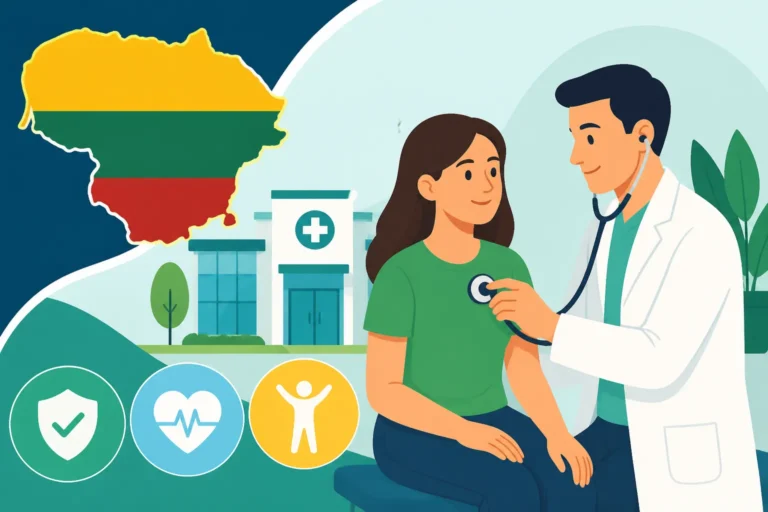
Understanding Private Clinics and Medical Centres in Lithuania
Moving to a new country like Lithuania is an exhilarating experience until the moment you feel a sharp pain in your tooth or a lingering fever that refuses to break. Navigating the local medical landscape—with its unique blend of Soviet-era architecture and cutting-edge digital health—can be overwhelming. This guide simplifies your journey by explaining how private clinics and medical centres function as a vital lifeline for the expat community.
Why Expats Often Lean Toward Private Healthcare in Lithuania
One of the most immediate shocks for any newcomer in Vilnius, Kaunas, or Klaipeda is the realization that the public healthcare system, while technically proficient, often moves at a glacial pace. If you have ever tried to book a specialist appointment at a local polyclinic during flu season, you know the frustration of being told the next available slot is three months away. For a foreigner who might not yet have mastered the nuances of the Lithuanian language, this wait is not just an inconvenience; it is a significant barrier to well-being. Private clinics bypass these administrative bottlenecks, offering appointments often within the same week or even the same day.
The language barrier is perhaps the most cited reason why expats choose the private route. While younger doctors in the public sector increasingly speak excellent English, the administrative staff and nursing personnel at many public institutions may only speak Lithuanian or Russian. Private medical centres, on the other hand, treat international patients as a core part of their business model. From the moment you call to book an appointment to the final consultation, you are much more likely to encounter staff who are fluent in English, which significantly reduces the stress of explaining complex symptoms or understanding a diagnosis.
Furthermore, the physical environment of private clinics is a world apart from the often-sterile and utilitarian feel of the public Understanding the Role of the Polyclinic (Poliklinika) in Lithuania system. Private centres invest heavily in patient comfort, offering modern waiting rooms, high-end diagnostic equipment, and a level of personalized care that is hard to maintain in the high-volume public sector. When you are feeling vulnerable and far from home, the psychological benefit of a comfortable, quiet, and efficient medical environment cannot be overstated. It provides a sense of security that your health is being handled with the utmost attention and modern expertise.
The Waiting List Hurdle and Time Efficiency
In the public system, the journey to see a specialist usually begins with your primary care provider. You first need to understand How to Choose and Register with a Family Doctor (Šeimos Gydytojas) in Lithuania before you can even request a referral. Even with a referral in hand, the "Kveitalas" or waiting list for popular specialists like dermatologists, neurologists, or cardiologists can be daunting. For many expats working in high-pressure sectors like fintech or IT, taking half a day off to sit in a public waiting room simply isn't feasible. Private clinics respect your time, usually running on a strict schedule where "10:15 AM" actually means you will be seen at 10:15 AM.
This efficiency extends beyond just the consultation. Diagnostic tests such as MRIs, CT scans, and comprehensive blood panels are often processed much faster in private facilities. In the public system, you might wait weeks for a high-tech scan, whereas a private centre like Affidea or Northway can often fit you in within 48 hours. When you are dealing with a potential injury or a worrying symptom, those saved weeks are invaluable for your mental health and the speed of your recovery.
Language Accessibility and Patient Experience
Imagine trying to explain a nuanced, stabbing pain in your abdomen to a receptionist who only speaks Lithuanian, while a line of impatient locals huffs behind you. This is a common "initiation" story for many expats. Private clinics eliminate this friction. Most have dedicated international patient departments or, at the very least, English-speaking operators on their phone lines. This ensures that your medical history is recorded accurately and that you fully comprehend the treatment plan being proposed.
The patient experience in private care also tends to be more holistic. Doctors in private centres are often allocated more time per patient—typically 20 to 30 minutes compared to the 10 or 15 minutes in a busy public clinic. This allows for a deeper conversation about your lifestyle, stressors, and long-term health goals. For many of us living abroad, our doctor is one of the few people we trust with our physical vulnerabilities; having the time to build that rapport in a language you speak fluently is worth the extra cost.
Facility Quality and Advanced Technology
Lithuania has become a regional hub for medical tourism, particularly in fields like plastic surgery, orthopedics, and fertility treatments. This is largely driven by the private sector's investment in the latest medical technology. Many private clinics in Vilnius and Kaunas boast equipment that is more advanced than what you might find in public hospitals. This includes 3D dental imaging, laser surgery tools, and high-precision diagnostic laboratories.
The aesthetics of these clinics also play a role. If you are accustomed to the healthcare standards of Western Europe or North America, the sleek, hotel-like interiors of private Lithuanian clinics will feel familiar. These facilities are designed to reduce "white coat hypertension," creating a calm atmosphere that aids in the healing process. Whether it is the ergonomic furniture or the availability of high-speed Wi-Fi while you wait for your results, the focus is clearly on the patient as a valued customer rather than just another number in a state database.
Top Private Clinics and Medical Centres in Lithuania
Knowing which names to look for can save you hours of searching. Lithuania’s private healthcare market is dominated by a few large, reputable chains and several highly specialized boutique centres. These institutions are frequently audited and maintain international standards of care, making them the "gold standard" for the international community. Whether you are living in the heart of Vilnius or the growing tech hub of Kaunas, these names will become familiar as you navigate your healthcare options.
Major chains like InMedica and Kardiolita have branches across the country, providing a wide range of services from routine check-ups to complex surgeries. These clinics often act as "one-stop shops" where you can see a family doctor, get your blood drawn, and visit a specialist all in the same building. For those who prefer a more specialized approach, there are clinics dedicated entirely to specific fields, such as the Baltic-American Clinic, which has a long-standing reputation for catering specifically to the needs of Western expats and diplomats.
It is also worth noting that many of these private centres have partnerships with international insurance providers. If you are using a plan like SafetyWing, you might find that the reimbursement process or direct billing is much smoother with these established private entities compared to smaller, independent practices. Before booking, it is always a good idea to check if the clinic is "in-network" or if they are accustomed to providing the detailed medical reports required by international insurers.
Major Chains and Multi-Profile Centres
Kardiolita Hospital is perhaps the most well-known private hospital in Lithuania, offering full-scale surgical interventions alongside outpatient care. They have a massive presence in Vilnius and have expanded significantly into Kaunas and Šiauliai. They are particularly famous for their cardiac and orthopedic departments. If you find yourself needing a procedure that requires an overnight stay, Kardiolita provides private rooms that feel more like a boutique hotel than a hospital ward, complete with specialized catering and 24/7 nursing care that is attentive to non-Lithuanian speakers.
InMedica is another giant in the field, with dozens of clinics scattered throughout residential neighborhoods. They offer a unique hybrid model where you can actually register your Compulsory Health Insurance (PSD) in Lithuania (2026) with them. This allows you to receive some basic services for free (covered by the state) while paying a premium for faster access to specialists and better facilities. This "best of both worlds" approach is very popular among expats who want the security of the state system but the convenience of private care.
Specialized Private Centres for Targeted Care
For dental care, many expats head to specialized clinics like Vicident or various high-end studios in the city centres. Dental work in the public system is notoriously difficult to access for adults and often lacks the cosmetic focus many foreigners desire. Private dental clinics in Lithuania are world-class, often using German or Swiss technology. You can learn more about the costs and coverage in our guide to Understanding Dental Care Coverage Under the PSDF in Lithuania.
Fertility and maternity care is another area where private centres like Northway excel. They offer comprehensive packages that cover everything from prenatal testing to the birth itself. While the public maternity hospitals in Lithuania are excellent, the private packages at Northway or the Baltic-American Clinic offer a level of privacy and "family-centric" care—such as allowing partners to stay overnight in the room—that is not always guaranteed in the public sector. For many expat families, the peace of mind during such a significant life event is worth every Euro.
Local Boutique Clinics in Vilnius and Kaunas
Outside of the major chains, there are numerous smaller "boutique" clinics that offer a more intimate experience. In Vilnius, the Baltic-American Clinic is a staple for the expat community. Located in a scenic, wooded area of the city, it was founded with the specific intent of providing Western-standard healthcare. They have a high concentration of English-speaking doctors and are very experienced in handling the administrative requirements of foreign embassies and international companies.
In Kaunas, clinics like Biofirst provide a high-tech approach to wellness and diagnostics. These boutique centres often focus on "preventative medicine," offering comprehensive health check-up packages that can be completed in a single morning. If you are an expat who hasn't had a full physical in a few years, these "Executive Health Checks" are an efficient way to get a baseline on your health without the hassle of multiple appointments across the city.
The Financial Aspect: Pricing, Insurance, and Payment
One of the biggest misconceptions among new residents is that private healthcare is prohibitively expensive. While it is certainly not free, the costs in Lithuania are often a fraction of what you would pay in the United Kingdom, Ireland, or the United States. However, understanding the interplay between your state insurance, private insurance, and "out-of-pocket" costs is essential to avoid "sticker shock" after a consultation.
The most important thing to remember is that even if you are paying the monthly PSD contribution (compulsory health insurance), you are not "locked into" the public system. You can choose to use private clinics for everything if you wish. Some clinics have contracts with the Territorial Health Insurance Fund (TLK), meaning the state will pay a small portion of your private bill, and you simply pay the "surcharge" for the private service. This is particularly common for surgeries or expensive diagnostic tests.
For those who do not yet qualify for the state system—perhaps you are here on a specific visa or are still waiting for your residence permit—having a robust private insurance policy is non-negotiable. Many expats opt for global health insurance like SafetyWing to cover them during these transition periods or to provide a higher level of coverage than the basic state plan offers. This can be especially helpful for emergency evacuations or treatments that might not be fully covered by the Lithuanian PSDF.
| Service Type | Public System (with PSD) | Private Clinic (Out-of-Pocket) |
|---|---|---|
| Family Doctor Visit | Free | €30 – €60 |
| Specialist Consultation | Free (with referral) | €50 – €120 |
| Basic Blood Test | Free | €15 – €40 |
| MRI Scan | Free (Long Wait) | €150 – €300 |
| Professional Dental Cleaning | Limited Coverage | €60 – €100 |
| Hospital Stay (Per Night) | Free (Standard Ward) | €150 – €400 (Private Room) |
Direct Pay vs. Insurance Coverage
If you are "Direct Paying," you will usually be asked to pay at the reception desk immediately after your appointment. Most clinics accept all major credit cards and even offer mobile payment options. It is crucial to ask for a "Sąskaita faktūra" (VAT invoice) if you plan on claiming this back from your private insurance later. Without a proper invoice that includes your personal code (Asmens Kodas) and the specific medical codes for the treatment, your insurer might reject the claim.
If you have private insurance provided by your employer (a common perk in the Lithuanian tech sector), the process is often simpler. Many clinics have "direct billing" agreements with local insurers like Ergo, Gjensidige, or Seesam. In these cases, you simply show your insurance card or app at the desk, and the clinic handles the payment directly with the insurer. This is a massive relief, as it means you don't have to front the cash for expensive treatments.
Understanding the PSDF Contribution to Private Care
As mentioned earlier, some private clinics are "partially funded" by the state. This means if you have a valid "Siuntimas" (referral) from a family doctor (even a public one), you can sometimes take that referral to a private clinic that has a contract with the TLK. You won't get the service entirely for free, but the cost will be significantly reduced. For example, if a specialist visit costs €80, the state might cover €20, leaving you to pay €60.
This is a strategy many savvy expats use for expensive procedures like cataract surgery or joint replacements. They get the diagnosis and referral through the public system and then "upgrade" to a private hospital for the surgery to avoid the 6-12 month waiting list. To make this work, you need to ensure your Registering for Compulsory Health Insurance (PSD) in Lithuania (2027) is fully active and that the private clinic you've chosen is an official partner of the state health fund.
The Role of International Travel and Expat Insurance
For those who travel frequently or are in Lithuania on a temporary basis, international plans like SafetyWing are a popular choice. These plans are designed to fill the gaps that local systems often leave behind, such as coverage while you are visiting other Schengen countries or returning home for a visit. In Lithuania, a plan like SafetyWing acts as a secondary layer of protection, ensuring that if you face a major medical emergency that requires specialized care outside the country, you are not left with a catastrophic bill.
Furthermore, some residence permit categories actually require you to show proof of private insurance before you can even get your card. In these scenarios, having a recognized international provider can speed up the immigration process. Even if you eventually transition to the local PSD system, many expats keep their private international coverage to ensure they have access to private clinics without worrying about whether a specific procedure is covered by the Lithuanian state fund.
Navigating the Booking and Consultation Process
Once you've decided to go private, the actual process of getting medical help is refreshingly straightforward, but there are a few local quirks to be aware of. Most private clinics have excellent websites where you can book appointments online. This is often the best route for expats, as the online systems are usually available in English and allow you to see the available time slots for specific doctors.
When you arrive at a private medical centre, the first thing they will ask for is your identification. If you have been in the country for a while, they will want your Asmens Kodas (Personal Code) and Why It Matters for Healthcare. If you are a new arrival or a tourist, your passport will suffice. The clinic will create a digital file for you, which will be linked to the national "E-Sveikata" system. This is a central database where all your prescriptions, test results, and doctor’s notes are stored.
During the consultation, do not be afraid to be assertive about your needs. Lithuanian culture can sometimes be quite direct, and doctors appreciate patients who are clear about their symptoms and their expectations. If you don't understand something, ask for a "Paaiškinimas" (explanation). Most private doctors are more than happy to explain the "why" behind a treatment, especially if they know you are navigating a foreign system for the first time.
Finding an English-Speaking Specialist
While most private clinics claim to have English-speaking staff, the level of fluency can vary. A good tip is to look at the "Our Doctors" section on a clinic's website. Often, their biographies will list the languages they speak and where they received their training. Doctors who have done residencies or fellowships in the US, UK, or Germany are almost certainly fluent in English medical terminology.
If you are looking for a very specific type of specialist—say, an endocrinologist who specializes in thyroid disorders—it can be helpful to join local expat groups on Facebook (like "Foreigners in Vilnius"). These communities are a gold mine for recommendations. You will often find people saying things like, "Go to Dr. Petrauskas at Northway; his English is perfect and he really listens." This peer-to-peer advice is often more reliable than a clinic’s marketing brochure.
Telemedicine and Remote Consultations
Since 2020, Lithuania has seen a boom in telemedicine. Most major private clinics now offer video consultations for non-emergency issues. This is a game-changer for expats who might live in smaller towns where English-speaking doctors are scarce. You can have a full consultation from your living room in Druskininkai with a top specialist based in Vilnius.
These remote appointments are also excellent for Understanding the Electronic Prescription (E-Receptas) System in Lithuania. If you simply need a renewal of a long-term medication, a 10-minute video call is much more efficient than traveling across the city. The doctor will upload the prescription to your E-Sveikata account, and you can pick it up at any "Vaistinė" (pharmacy) using just your ID card.
What to Bring to Your First Private Appointment
Even though the system is digital, it is always wise to bring any physical copies of your medical history from your home country. This includes recent blood test results, surgical reports, or a list of current medications (including the generic chemical names, as brand names like "Tylenol" or "Advil" are not used in Lithuania). Having this information ready helps the doctor integrate your past care into the Lithuanian system.
If you are using private insurance like SafetyWing, bring a printed copy of your insurance certificate or have the digital version ready on your phone. Some clinics will want to take a scan of it for their records. Also, if you have a "Siuntimas" from another doctor, make sure you have the reference number. While everything should be in the E-Sveikata system, digital glitches can happen, and having a backup ensures your appointment isn't wasted.
Quality of Care and Patient Rights in the Private Sector
The quality of private healthcare in Lithuania is exceptionally high, often exceeding the standards of many other EU nations. This is not just due to the modern facilities, but also the rigorous training Lithuanian doctors undergo. Most specialists working in private clinics also hold positions in major university hospitals, meaning they are at the forefront of medical research and practice.
As a patient in a private clinic, you have specific rights protected by both Lithuanian law and EU regulations. These include the right to privacy, the right to a second opinion, and the right to access your full medical records. One of the most significant advantages of the private sector is the transparency of these rights. Private clinics are very conscious of their reputation and are usually much more responsive to patient feedback or complaints than large, bureaucratic state institutions.
Managing chronic conditions in a foreign country can be stressful, but the private sector makes this significantly easier. Whether it’s regular monitoring of diabetes or managing an autoimmune condition, private clinics offer "continuity of care." You can usually see the same doctor every time, which is essential for building a long-term management plan. This is a stark contrast to the public system, where you might be shuffled between different doctors depending on who is on shift that day.
The Role of E-Health (E-Sveikata) in Private Clinics
The E-Sveikata system is the backbone of Lithuanian healthcare. When you visit a private clinic, the doctor is legally required to log the visit and any prescriptions in this system. This is a massive benefit for expats because it means your medical history is portable. If you see a private specialist in Kaunas and later visit an emergency room in Vilnius, the ER doctors can see exactly what the specialist diagnosed and prescribed.
You can personally access this portal if you have a Lithuanian bank account or an e-signature (Mobile-ID). It allows you to see your test results, download medical certificates, and see when your next appointment is. For a deep dive into how to use this, check out our guide on Understanding the E-Sveikata (E-Health) System in Lithuania. Being able to see your own data empowers you to be an active participant in your healthcare rather than just a passive recipient.
Managing Chronic Conditions and Long-Term Care
For those with chronic illnesses, the private sector offers specialized "Management Packages." These are pre-paid plans that include a set number of consultations, blood tests, and scans per year. This not only makes the costs more predictable but also ensures you don't miss necessary check-ups. The clinic's administration will often send you a "Priminimas" (reminder) via SMS when it is time for your next screening.
Furthermore, private clinics are often better equipped to handle "integrative" health needs. This includes access to nutritionists, physiotherapists, and mental health professionals all within the same ecosystem. If you are struggling with the dark Lithuanian winters and need mental health support, many private centres offer therapy in English, which can be life-saving for those feeling the "expat blues." You can find more specific resources in our article on How to Access Mental Health Services in Lithuania as an Expat.
Accreditation and Regulatory Oversight
All private medical centres in Lithuania must be licensed by the State Health Care Accreditation Agency under the Ministry of Health. This ensures that they meet strict safety and hygiene standards. Many of the larger clinics also seek international accreditations, such as ISO certifications or JCI (Joint Commission International) accreditation. This is an extra layer of assurance for expats that the care they are receiving meets global benchmarks.
If you ever feel that your rights have been violated or the care was substandard, there is a clear process for filing a "Skundas" (complaint). Private clinics usually have a dedicated quality manager to handle these issues. If the clinic doesn't resolve the matter to your satisfaction, you can escalate it to the national accreditation agency. This accountability is a key reason why the private sector maintains such a high level of service.
Transitioning Between Public and Private Systems
Many expats choose to "hybridize" their healthcare, using the public system for routine matters and the private sector for specialized needs. This is a perfectly valid and often cost-effective strategy. However, it requires a bit of coordination. The key is ensuring that information flows smoothly between your public family doctor and your private specialist.
For example, you might choose to Register for PSD After Moving to Vilnius and use a local public polyclinic for your basic needs (like getting a sick leave certificate for work). However, if you need a specific surgery, you might decide to go to a private hospital. To make this transition, you need to ensure your private records are correctly uploaded to the E-Sveikata system so your public doctor can see the outcome of the private treatment.
Another common scenario is getting diagnostic tests done privately to save time and then bringing those results back to the public system for treatment. Most public doctors are happy to accept private MRI or blood test results, as it saves the state money and speeds up the patient's journey. However, it’s always polite to ask your public doctor, "Ar galiu pasidaryti šį tyrimą privačiai?" (Can I do this test privately?) to ensure they will accept the results from a specific clinic.
Referrals and Diagnostic Sharing
The "Siuntimas" (referral) is the currency of the Lithuanian health system. If a private doctor tells you that you need to see a specialist or get a scan, they will issue a digital referral. This referral can be used at any other private clinic, and in some cases, even in public hospitals. The beauty of the digital system is that you don't need to carry paper around; the receiving clinic just needs your personal code to see the referral in the system.
If you find that a private clinic is too expensive for a specific procedure, you can take your private diagnosis back to your public family doctor. They can then issue a state-funded referral for the treatment in a public hospital. This "referral bridge" is one of the most useful tools for expats managing their healthcare budget. It allows you to pay for the speed of a private diagnosis while utilizing the "free" nature of the public system for expensive long-term treatments.
Mixing Systems for Surgery and Recovery
For major surgeries, some expats prefer the highly specialized equipment of the large public university hospitals (like Santaros Klinikos in Vilnius) but want the comfort of private recovery. It is sometimes possible to have the procedure in a public hospital and then hire private nursing care or a private room. Alternatively, you can have the surgery in a private clinic like Kardiolita and then do your Physiotherapy and Rehabilitation Covered in Lithuania through the public system if you have a referral.
The most important thing is communication. Always inform your doctors in both systems about the medications and treatments you are receiving. This prevents "drug interactions" and ensures your medical record is a complete picture of your health. While the systems are separate in terms of funding, they are increasingly linked by the digital E-Sveikata platform, making this "hybrid" approach easier than ever for the modern expat.
Disclaimer
This guide is for informational purposes only and does not constitute professional medical or legal advice. Healthcare regulations, costs, and the availability of English-speaking staff in Lithuania can change. Always verify the current status of a clinic's licensing and their specific insurance partnerships before booking an appointment. If you are experiencing a medical emergency, dial 112 immediately. The author is an expat sharing personal experiences and research, not a qualified medical professional or a representative of the Lithuanian Ministry of Health.