How to Access Healthcare on a Work Visa in Lithuania
Moving to Lithuania on a work visa is an exhilarating step, but the moment you feel that first scratchy throat or unexpected fever, the administrative labyrinth of the healthcare system can feel overwhelming. This guide breaks down exactly how to navigate the public and private medical landscape, ensuring you stay protected from day one without the typical expat headache.
The Foundation of Lithuanian Healthcare for Visa Holders
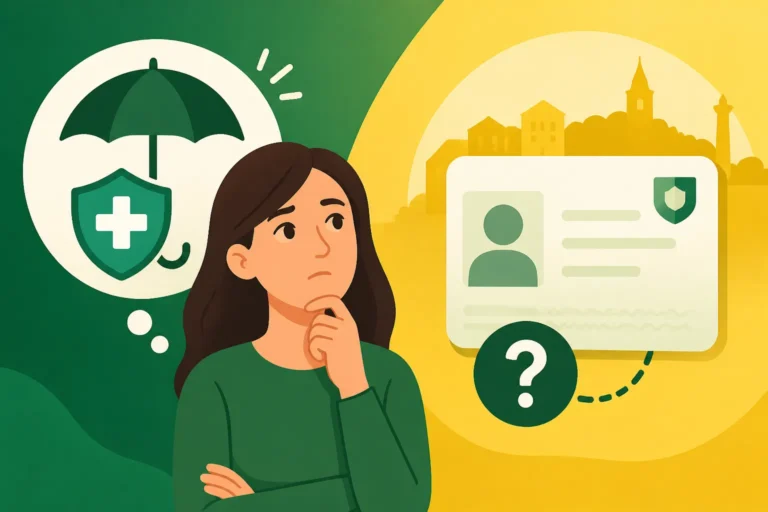
When you arrive in Lithuania on a National (Type D) visa for work, you are stepping into a system that is primarily built around the concept of Compulsory Health Insurance, known locally as PSD (Privalomasis Sveikatos Draudimas). For many newcomers, there is a confusing period between landing at the airport and receiving their first official paycheck where their insurance status feels like it is in limbo. It is important to understand that your right to healthcare is tied directly to your legal employment status and the contributions made to the State Social Insurance Fund Board, or Sodra.
Compulsory Health Insurance (PSD) Explained
The PSD system is the backbone of the Lithuanian medical world. It is a universal system funded by mandatory contributions from employers and employees. As a work visa holder, you aren't just "allowed" to be part of this system; you are legally required to be. The beauty of the PSD is that once you are in the system, most primary and secondary healthcare services are free at the point of use. This includes visits to your family doctor, most specialist consultations, and emergency hospital care.
However, the "activation" of this insurance is not instantaneous upon crossing the border. It typically triggers once your employer registers your employment contract with Sodra. For those first few days or weeks before your contract officially begins, many expats find peace of mind by using a flexible provider like SafetyWing to cover any immediate medical emergencies. This prevents a situation where an unlucky slip on a cobblestone street in Vilnius leads to a massive out-of-pocket hospital bill before your first day at the office. You can find more details on this specific legal status in our guide on Can I Use Public Healthcare in Lithuania on a Work Visa?
The Role of the Asmens Kodas
Your gateway to the healthcare system—and almost everything else in Lithuania—is the personal identification code known as the Asmens Kodas. This 11-digit number is unique to you and serves as your digital key for the health system. When you visit a clinic or a hospital, the first thing the receptionist will ask for is your residence permit or your passport, but what they are really looking for is that code in the system.
Without an Asmens Kodas, you technically do not exist in the public health database. For work visa holders, this code is usually issued during the visa application process or upon the declaration of residence. If you are still waiting for your formal ID card, you might face hurdles at public clinics. Understanding the timeline of getting this number is crucial, which is why we recommend reading How to Get Your Asmens Kodas (Personal Code) and Why It Matters for Healthcare to ensure you don't miss a beat.
Your First Point of Contact: The Polyclinic System
In Lithuania, the "Poliklinika" (Polyclinic) is where the majority of healthcare happens. These are large, state-funded centers that house family doctors, specialists, diagnostic labs, and sometimes even dental offices. For a foreigner, the first visit to a polyclinic can be a bit of a culture shock. The buildings often look like relics of a different era, but the medical technology inside is surprisingly modern.
Registration and the Šeimos Gydytojas
Your primary medical contact is your Šeimos Gydytojas, or family doctor. Unlike some countries where you can just walk into any clinic, in Lithuania, you must formally "register" with a specific polyclinic and a specific doctor. This is not an automatic process. Even if you are paying your PSD taxes, you aren't assigned a doctor by the state; you have to go and pick one.
When choosing a polyclinic, location is usually the deciding factor, but for expats, language is the real hurdle. Not every family doctor in the public system speaks fluent English. Many veteran expats suggest calling several clinics to ask specifically for an English-speaking GP. Once you find one, you will need to fill out a registration form and pay a very small administrative fee (usually under 2 Euros). For a deep dive into this process, check out our tutorial on How to Choose and Register with a Family Doctor (Šeimos Gydytojas) in Lithuania.
Understanding Referrals and Specialist Access
One of the most important things to learn about the Lithuanian system is the "Siuntimas," or referral. If you have a skin rash and want to see a dermatologist, or if you have a persistent knee pain and want to see an orthopedist, you cannot simply call the specialist and book an appointment through the public system. You must first visit your Šeimos Gydytojas.
The family doctor evaluates your condition and, if necessary, issues an electronic referral (Siuntimas). This referral is valid for a specific period and allows you to book a specialist appointment for free. Without it, you will be charged the "private" rate for the consultation, even at a state clinic. This "gatekeeper" system is designed to keep specialist queues manageable, though waiting times can still be significant. For more on how these facilities operate, see Understanding the Role of the Polyclinic (Poliklinika) in Lithuania.
The Digital Revolution: E-Sveikata and E-Prescriptions
Lithuania is one of the most digitally advanced countries in Europe when it comes to healthcare records. Almost everything—from your blood test results to your prescriptions—is stored in a central database called E-Sveikata. As a work visa holder, learning to navigate this portal will save you hours of phone calls and physical trips to the clinic.
Accessing Your Medical Records Online
The E-Sveikata portal allows you to see your entire medical history in Lithuania. You log in using your E-Government Gateway (usually via your mobile signature or bank link). Once inside, you can see every visit you’ve made, every diagnosis recorded, and every lab result. This is incredibly helpful if you need to show your medical history to a doctor in another country or if you simply forgot what dosage of medication you were prescribed.
This system also handles your "E-Receptas" (Electronic Prescription). When a doctor prescribes medication, they don't give you a piece of paper. Instead, they upload the prescription to the cloud and link it to your Asmens Kodas. This transparency is a major benefit of living here. You can learn more about the technical side in Understanding the E-Sveikata (E-Health) System in Lithuania.
Filling Prescriptions at the Vaistinė
When you walk into a "Vaistinė" (Pharmacy), you don't need a paper slip. You simply hand the pharmacist your ID card or residence permit. They scan it, see your active prescriptions on their screen, and bring you your medicine. It is a seamless process that feels like the future.
However, be aware that not all medications are fully covered by the PSD. While the consultation and the prescription process are free, you will often still have to pay a "co-payment" for the actual drug. The amount depends on whether the medication is on the government’s subsidized list. For more practical tips on finding pharmacies and understanding costs, read Understanding the Lithuanian Pharmacy (Vaistinė) System and Opening Hours.
Comparing Public and Private Healthcare Options
While the public system is comprehensive, many expats on work visas choose to supplement their care with private options. This is especially common among those working in the tech or fintech sectors, where private health insurance is often provided as a job benefit.
| Feature | Public Healthcare (PSD) | Private Healthcare |
|---|---|---|
| Cost | Free (covered by taxes) | Out-of-pocket or private insurance |
| Wait Times | Can be long (weeks/months) | Usually very short (days) |
| Language | Lithuanian (some English) | High English proficiency |
| Referrals | Required for specialists | Not required |
| Facilities | Functional, sometimes dated | Modern, hotel-like |
Why Many Expats Choose Private Clinics
The primary reason foreigners drift toward private clinics like Grybo Gatvės Medicinos Centras or Kardiolita is the speed of service. In the public system, waiting for an MRI or a specialized cardiologist can take months. In the private system, you can often get an appointment within 48 hours.
Furthermore, private clinics are much more likely to have a streamlined English-language experience, from the reception desk to the final consultation. If your employer provides private insurance, you should definitely take advantage of it. However, even if they don't, some expats choose to keep a flexible policy like SafetyWing active alongside their PSD. This can be particularly useful for those who travel frequently or want specialized coverage that the local public system might not prioritize. You can compare these options further in Understanding Private Clinics and Medical Centres in Lithuania.
The Role of Supplemental Travel and Expat Insurance
It is a common misconception that once you have a work visa and PSD, you are "done" with insurance. PSD is fantastic within Lithuania, but it has limitations when you travel. While you can get a European Health Insurance Card (EHIC) for travel within the EU, it only covers "necessary" care under the same conditions as locals in that country. It doesn't cover medical repatriation or private clinic visits in other countries.
This is where supplemental insurance comes in. Whether you are heading back home for a visit or taking a weekend trip to the Alps, having a global-minded policy ensures that your medical protection isn't tied strictly to the Lithuanian border. This is especially true for the initial move-in period where your PSD might not yet be fully active in the system.
Emergency Care and Hospitalization
No one wants to think about emergencies, but knowing the protocol in Lithuania is vital. The emergency system is robust and generally very efficient, especially in major cities like Vilnius, Kaunas, and Klaipeda.
What to Do in a Crisis
If you face a life-threatening situation, the universal emergency number is 112. The operators generally speak English, though you should be prepared to state your location clearly. If you can move but need urgent care (for example, a deep cut or a high fever in a child), you should head to the "Skubios Pagalbos Skyrius" (Emergency Room) of the nearest hospital.
In Vilnius, the main emergency hospitals are the Republican Vilnius University Hospital (RVUL) in Lazdynai and the Santaros Klinikos. For children, the Children's Hospital in Santariškės is the primary destination. For more details on what to expect during a crisis, see Understanding Emergency Numbers (112) and Ambulance Care in Lithuania.
Rights and Costs for Inpatient Care
If you are admitted to a "Ligoninė" (Hospital) and you have active PSD insurance, the cost of your stay, including surgery, medication, and food, is covered by the state. You will not receive a bill at the end of your stay. This is one of the most significant benefits of the Lithuanian social model.
However, there are "premium" options even in public hospitals. For instance, you might be able to pay extra for a private room instead of a shared ward. These costs are relatively low compared to Western European or American standards but are not covered by the PSD. The quality of care in Lithuanian hospitals is high, with many doctors being internationally recognized researchers and surgeons.
Managing the Gap: Transitioning and Waiting Periods
One of the most stressful parts of moving to Lithuania on a work visa is the "gap." This is the period between when your visa is issued and when your first PSD contribution is processed by Sodra.
Coverage Before Your First Paycheck
Technically, you are not covered by the public system until your employer registers you and the first contribution is made. If you arrive in Vilnius two weeks before your start date to find an apartment and settle in, you are effectively uninsured unless you have a private policy. This is a critical time to maintain a policy like SafetyWing. It acts as a bridge, covering you from the moment you leave your home country until the moment you are officially "in the system" in Lithuania.
Many expats have told stories of getting a minor infection or a toothache in those first ten days and being shocked by the private clinic prices they had to pay because their PSD hadn't kicked in yet. Don't let that be you. Plan for the transition period as carefully as you plan your visa application.
Understanding the E-Receptas for Chronic Conditions
If you arrive in Lithuania with a chronic condition that requires regular medication, you need to act quickly. You cannot simply use a prescription from your home country at a Lithuanian pharmacy. You will need to see a Lithuanian doctor (either a private one for speed or a public one via the registration process) to have them "convert" your medical history into a local E-Receptas.
Bringing a detailed medical summary from your previous doctor, translated if possible, will significantly speed up this process. Once the Lithuanian doctor enters your data into E-Sveikata, you can access your medication normally. To understand how the electronic side of this works, refer to Understanding the Electronic Prescription (E-Receptas) System in Lithuania.
Health and Medical Disclaimer
The information provided in this guide is for informational and educational purposes only and does not constitute professional medical or legal advice. While every effort has been made to ensure the accuracy of the details regarding the Lithuanian healthcare system, regulations and procedures can change frequently. Always consult with the Lithuanian Migration Department (MIGRIS), the National Health Insurance Fund (VLK), or a qualified legal professional regarding your specific visa and insurance status. If you are experiencing a medical emergency, please contact 112 immediately. Use of any information provided in this article is solely at your own risk.