Do I Need Private Insurance for a Lithuanian Residence Permit?
Moving to Lithuania is an exciting chapter, but the bureaucratic labyrinth of the Migration Department (MIGRIS) can be paralyzing for the uninitiated. One of the biggest points of confusion is whether you need private insurance to secure your residence permit. This guide demystifies the insurance requirements for Temporary Residence Permits (TRP), helping you avoid application rejection and ensuring you are legally covered.
Understanding the Legal Insurance Requirements for a Residence Permit
When you sit down to fill out your application on the MIGRIS portal, you will encounter a section asking for proof of health insurance. For veteran expats who have navigated this several times, we know this is often where the "paperwork panic" sets in. The Lithuanian government is very specific: you cannot be a burden on the state’s healthcare budget if you haven't yet contributed to it. Therefore, every foreigner applying for a residence permit must prove they have "health insurance valid in the Republic of Lithuania."
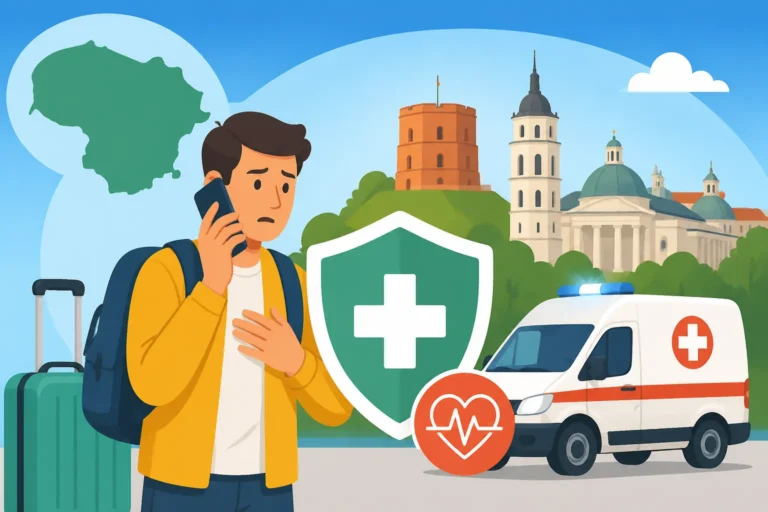
The primary concern for the Migration Department is that you are covered for emergency medical assistance and any costs related to repatriation for medical reasons. If you are applying from outside the country or have just arrived, you likely do not yet have access to the public system, known as Compulsory Health Insurance (PSD). This is where the question of private insurance becomes critical. In many cases, a private policy is the only way to bridge the gap between your arrival and your eventual registration with the national fund.
You should also be aware that the insurance policy must meet specific financial thresholds. As of 2026, the minimum coverage required by Lithuanian law for a residence permit is typically EUR 6,000, though many expats opt for higher coverage for peace of mind. If your policy lacks a clear statement that it is valid in Lithuania or the Schengen Area, or if the sum insured is too low, your application will be flagged, and you will be asked to provide a new policy, potentially delaying your permit by weeks. Checking these details beforehand is a crucial step in What Health Insurance Do I Need for a Lithuanian Residence Permit? to ensure a smooth process.
The Role of Private Insurance During the Application Phase
For most non-EU citizens, private insurance isn't just an "option"—it's a prerequisite for the initial application. Even if you have a job offer and your employer will eventually pay your social insurance taxes (Sodra), you aren't "in the system" the moment you land. There is a period between your arrival, the submission of your TRP application, and the actual issuance of your residence card where you are effectively a guest. During this window, you must be covered by a private policy.
Newcomers are often told that the Migration Department looks for a specific "magic phrase" on your insurance certificate: "Valid in the Republic of Lithuania and all Schengen countries." If your home country's private insurance doesn't explicitly state this, or if it only covers you for a limited number of days, it won't pass the sniff test. This is why many expats choose specialized travel medical insurance like SafetyWing during their first 90 days. It provides the necessary documentation in a format that European migration offices recognize instantly, reducing the risk of a bored official rejecting your file.
Furthermore, if you are applying for a residence permit based on being a student, a freelancer, or a remote worker, your reliance on private insurance is even higher. Unlike traditional employees who get enrolled in the public system automatically through payroll, these categories often have to wait until they have their residence permit and a personal code to even begin the process of Registering for Compulsory Health Insurance (PSD) in Lithuania (2027) on their own.
The Difference Between Visa Insurance and Residence Permit Insurance
It is easy to confuse the insurance needed for a National (D) Visa with the insurance needed for a Temporary Residence Permit. While they are related, they serve different purposes. A visa insurance policy is usually a short-term travel policy designed to get you into the country. However, once you apply for the TRP, the Migration Department expects a policy that covers a longer duration—often for the entire first year of your intended stay, or at least until you can prove you will be covered by the public system.
If you arrive on a visa and then apply for a TRP, you might find that your initial travel insurance is about to expire. You cannot submit an application with insurance that only has two weeks left on it. You need a policy that demonstrates continuity. For those who aren't sure how long the process will take, flexible monthly subscriptions like SafetyWing can be a lifesaver. It allows you to maintain continuous coverage without paying for a full year upfront if you expect to switch to the public system (PSD) within a few months.
Scenarios Where Private Insurance is Mandatory vs. Optional
The necessity of private insurance depends heavily on your "basis" for residence. If you are moving to Lithuania as a highly skilled professional on a Blue Card route, your employer is your safety net. However, if you are a digital nomad or a family member of a resident, the rules shift. It is vital to understand Understanding Private Health Insurance Plans in Lithuania to see which category you fall into before spending money on a policy.
For those moving for family reunification, the requirements are strict. If you are joining a spouse who is already working in Lithuania, you might eventually be covered under their insurance, but during the application phase for your own TRP, you still need to provide an individual private policy. The Migration Department needs to see that you are covered today, not that you might be covered in three months. Families often face unnecessary stress because they assumed the "working spouse's" insurance would cover the newcomer immediately.
Remote Workers and the Self-Employed
If you are a remote worker or freelancer, you are essentially your own HR department. This means the burden of proof for health insurance rests entirely on your shoulders. In Lithuania, you cannot pay into the public health insurance (PSD) until you have a residence permit and an Asmens Kodas. But you can't get the residence permit without insurance. This "catch-22" is the primary reason why private insurance is mandatory for this group.
For digital nomads, the best approach is to find a policy that satisfies the EUR 6,000 minimum but also offers genuine protection for your lifestyle. Many local Lithuanian private insurers offer "Migration Insurance" packages specifically for this purpose. They are cheap (around EUR 50–100 per year) but offer very thin clinical coverage. If you actually get sick, you might find these local "paperwork policies" lacking. This is why it is often wise to combine a cheap local policy for MIGRIS with a robust global plan like SafetyWing to ensure you actually get quality care if you end up in a Vilnius hospital.
The Transition Gap for New Employees
Even if you have a rock-solid job offer from a tech giant in Kaunas or a fintech firm in Vilnius, there is a "gap" you need to be aware of. Your public health insurance coverage usually begins on the day you officially start work and your employer registers you with Sodra. However, your TRP application happens before this. When you submit your documents to MIGRIS, you must show insurance that is currently active.
Most employers do not provide private health insurance as a benefit until after your three-month probation period. Therefore, you are responsible for your own coverage during that initial move-in phase. Relying on your National (D) visa insurance is common, but ensure it hasn't expired. If it has, you will need to buy a temporary private policy to bridge those first few weeks of residency. This is a common point of confusion that we address in our guide on Is Private Health Insurance Worth It for Expats in Lithuania?, as many find the double coverage worth the lack of administrative headaches.
| Insurance Type | Best For | MIGRIS Accepted? | Access to Public Hospitals? |
|---|---|---|---|
| National PSD | Employees, EU citizens, permanent residents | Yes (once active) | Full access, free at point of use |
| Local Private (TRP Policy) | Budget-conscious TRP applicants | Yes (specifically designed for it) | Emergency only, usually reimbursement-based |
| SafetyWing | Digital Nomads, bridge between arrival and PSD | Yes | Worldwide coverage, including Lithuania |
| EU Health Card (EHIC) | EU citizens on short stays | Yes (for temporary stay) | Emergency access only |
Choosing a Policy That MIGRIS Will Accept
Not all private insurance policies are created equal in the eyes of a Lithuanian migration officer. I have seen perfectly good international health plans rejected because they were printed in a language other than Lithuanian or English, or because they lacked a specific breakdown of coverage limits. When you are shopping for a policy, you aren't just looking for health coverage; you are looking for a "compliant document."
The most important document you will need is the "Certificate of Insurance." This is usually a one-page summary. Ensure it includes your full name (matching your passport), the policy number, the geographical area of validity (must include Lithuania), the start and end dates, and the total coverage amount. If you use a global provider like SafetyWing, their dashboard allows you to download a visa letter specifically formatted for immigration authorities, which saves you the trouble of explaining your coverage to the officer.
Minimum Coverage and Specific Clauses
The Lithuanian Migration Department is particularly fond of seeing coverage for "repatriation." This means that if you are so ill that you need to be flown back to your home country with medical supervision, the insurance company will foot the bill. Many standard travel insurances omit this or bury it in the fine print. If your policy doesn't explicitly mention repatriation of remains or medical repatriation, MIGRIS may reject it.
In addition to repatriation, the policy must cover all emergency medical expenses. This includes the cost of an ambulance (Greitoji pagalba), emergency room visits, and urgent surgeries. When you are looking for a plan, check that the "emergency" definition isn't too restrictive. Some cheap "Schengen visa" policies only cover life-threatening situations, which could leave you with a massive bill for a broken leg or a severe infection.
Language and Translation Requirements
Lithuania is increasingly digital, and the MIGRIS portal is quite modern. However, the legal language is still Lithuanian. If your insurance policy is in English, it is almost always accepted without a problem. If your policy is in Spanish, French, or Chinese, you will almost certainly need to provide a certified translation. This can cost more than the insurance policy itself!
To avoid this, always request an English version of your insurance certificate. Most international companies provide this automatically. If you are moving to a smaller city like Šiauliai or Panevėžys, the local migration officers might be slightly more traditional than those in Vilnius, so having a clear, jargon-free English certificate is your best bet for a fast approval.
Transitioning from Private to Public Insurance (PSD)
Once your residence permit is approved and you have that plastic card in your hand, your relationship with private insurance changes. For many, it becomes a secondary layer of protection rather than a legal necessity. The next step in your expat journey is usually How to Get Your Asmens Kodas (Personal Code) and Why It Matters for Healthcare, because this code is the "key" to the public system.
Once you have your Asmens Kodas and you are either employed or paying PSD contributions voluntarily, you are fully covered by the Lithuanian state. At this point, you may choose to cancel your private insurance or keep it to access private clinics (like Grybo g. or Kardiolita) without the long wait times often found in the public "Poliklinika" system.
When Can You Stop Paying for Private Insurance?
The legal requirement for the "residence permit insurance" is essentially to cover the period during which you are not a part of the public system. Once you are registered for PSD, you are technically fulfilling your legal obligation to be insured. However, I usually advise my clients to keep their private policy active until they have physically visited their local clinic and confirmed they are "active" in the e-sveikata (e-health) system.
The data sync between Sodra (social insurance) and the Health Insurance Fund (VLK) can sometimes take a few days. You don't want to find yourself in a situation where you've cancelled your SafetyWing policy on Monday, but the clinic tells you on Tuesday that your PSD status is still "inactive." A week of overlap is a small price to pay for the security of knowing you are covered 24/7.
Why Many Expats Keep Private Insurance Long-Term
While the public system in Lithuania is surprisingly high-quality—especially for major surgeries and chronic conditions—the "user experience" can be frustrating. Long wait times for specialists and the "referral" (siuntimas) system can be a headache. This is why a significant portion of the expat community chooses to maintain a private policy even after they are fully integrated into the PSD system.
Private insurance allows you to bypass the GP (Šeimos gydytojas) and go straight to a specialist at a private medical center. If you value your time and prefer doctors who are guaranteed to speak fluent English, keeping your private plan is a wise investment. It also covers you when you travel outside of Lithuania, which the standard PSD does not do as effectively (even with the EHIC card). If you're planning on exploring the rest of Europe from your new base in Vilnius, having that continuous global coverage remains incredibly useful.
Final Steps for Your Application
Before you hit "Submit" on your MIGRIS application, do a final audit of your insurance document. Ensure the dates cover the entire period you are asking for, or at least one full year. Check that your name is spelled exactly as it appears in your passport's machine-readable zone. Make sure the EUR 6,000 minimum is clearly visible.
If you follow these steps and ensure you are How to Register for Compulsory Health Insurance (PSD) as a Foreigner in Lithuania correctly once you arrive, the healthcare aspect of your relocation will be the least of your worries. Lithuania is a wonderful place to live, with a healthcare system that is modernizing at a rapid pace. Getting the insurance right at the start is simply the "entry fee" to a high-quality life in the Baltics.
Disclaimer
This guide is for informational purposes only and does not constitute legal or professional medical advice. Immigration laws and insurance requirements in Lithuania are subject to change. Always verify the latest requirements on the official website of the Migration Department under the Ministry of the Interior of the Republic of Lithuania (MIGRIS) or consult with a qualified legal professional before making your application.