How Much Does Private Health Insurance for a Family Cost in Lithuania?
Moving your spouse and children to a new country like Lithuania is a massive adventure, but the moment a child develops a persistent fever or you realize you need a specialist appointment, the administrative fog of the local health system can feel overwhelming. This guide breaks down the actual costs, coverage levels, and practical realities of private health insurance for families to ensure you aren't left waiting months for essential care.
Understanding the Private Health Insurance Landscape for Families in Lithuania
When you first arrive in Lithuania, you will quickly hear about the Compulsory Health Insurance, often referred to as PSD. While this system is robust and provides a safety net for everyone from local citizens to expats on work visas, the reality of using the public system can be a culture shock. The public system relies on the "Poliklinika" model, which, while free or very low cost at the point of use, often involves long waiting lists and a gamble on whether your assigned doctor speaks fluent English. For a family, these delays aren't just an inconvenience; they are a source of genuine stress.
This is where private health insurance steps in. In Lithuania, private insurance isn't usually a replacement for the public system—since you are legally required to pay into the public fund if you are a resident—but rather a "fast-track" layer on top of it. Private insurance allows you to bypass the public queues and visit high-end clinics like Kardiolita, Northway, or Baltic American Clinic. For a veteran expat, the peace of mind that comes with knowing you can get a same-day pediatric appointment is often worth every cent of the premium.
If you are just arriving and haven't yet secured your residency or your How to Get Your Asmens Kodas (Personal Code) and Why It Matters for Healthcare status, you might find yourself in a coverage gap. During this transitional period, many families look toward international providers like SafetyWing to provide a bridge of protection before they can sign up for a local Lithuanian private policy. SafetyWing is particularly popular among the "digital nomad" families who are testing the waters in Vilnius before committing to a long-term residency.
To get a full picture of how these systems interact, I highly recommend reading The Complete Guide to Healthcare in Lithuania for Expats (2027) and Health Insurance in Lithuania: Compulsory, Private and Travel Options Explained. Understanding the foundation will help you realize why the private "top-up" is so popular among the international community.
Factors Influencing Private Insurance Premiums for Families
The cost of insuring a family in Lithuania is not a flat rate. Local insurers like Ergo, Gjensidige, and BTA calculate premiums based on a variety of risk factors and the specific "basket" of services you choose. Unlike some Western European countries where private insurance can cost a significant portion of your salary, Lithuania remains relatively affordable, though prices have been creeping up as the quality of private clinics improves.
The first major factor is the age of the family members. Insuring a 35-year-old parent and a 5-year-old child is generally more affordable than insuring a family with teenagers or older dependents. Furthermore, the "level" of the plan is the biggest price driver. Basic plans might only cover outpatient specialist consultations and basic blood tests. Mid-tier plans usually include a specific allowance for dental care, vaccinations, and perhaps a certain number of physiotherapy sessions. Top-tier plans, which are what most expat families gravitate toward, offer higher limits for expensive diagnostics like MRIs and broader coverage for prescription medications.
Another nuance to consider is the "deductible" or "co-payment" structure. Some Lithuanian private plans require you to pay a small percentage (usually 10% to 20%) of each visit, while others offer 100% reimbursement up to a certain annual limit. For a family with young children who might need frequent visits to the doctor during the winter flu season, a 100% reimbursement plan, despite the higher monthly premium, often ends up being the more economical choice.
When comparing these options, it is helpful to look at Understanding Private Health Insurance Plans in Lithuania to see how different providers structure their benefits. You should also consider whether you want a local-only plan or a global plan. For families who travel frequently back to their home country or around the EU, global options like SafetyWing’s Nomad Health can be more effective than a local Lithuanian plan that only covers you within the borders of the Republic.
Estimating Monthly and Annual Costs for 2026
To give you a realistic idea of what you will be paying, we need to look at the current market rates. Generally, a comprehensive private health insurance policy for a single adult in Lithuania ranges from €450 to €900 per year, depending on the depth of the "basket." When you bundle this into a family package, some insurers offer a slight discount, but you should generally budget per person.
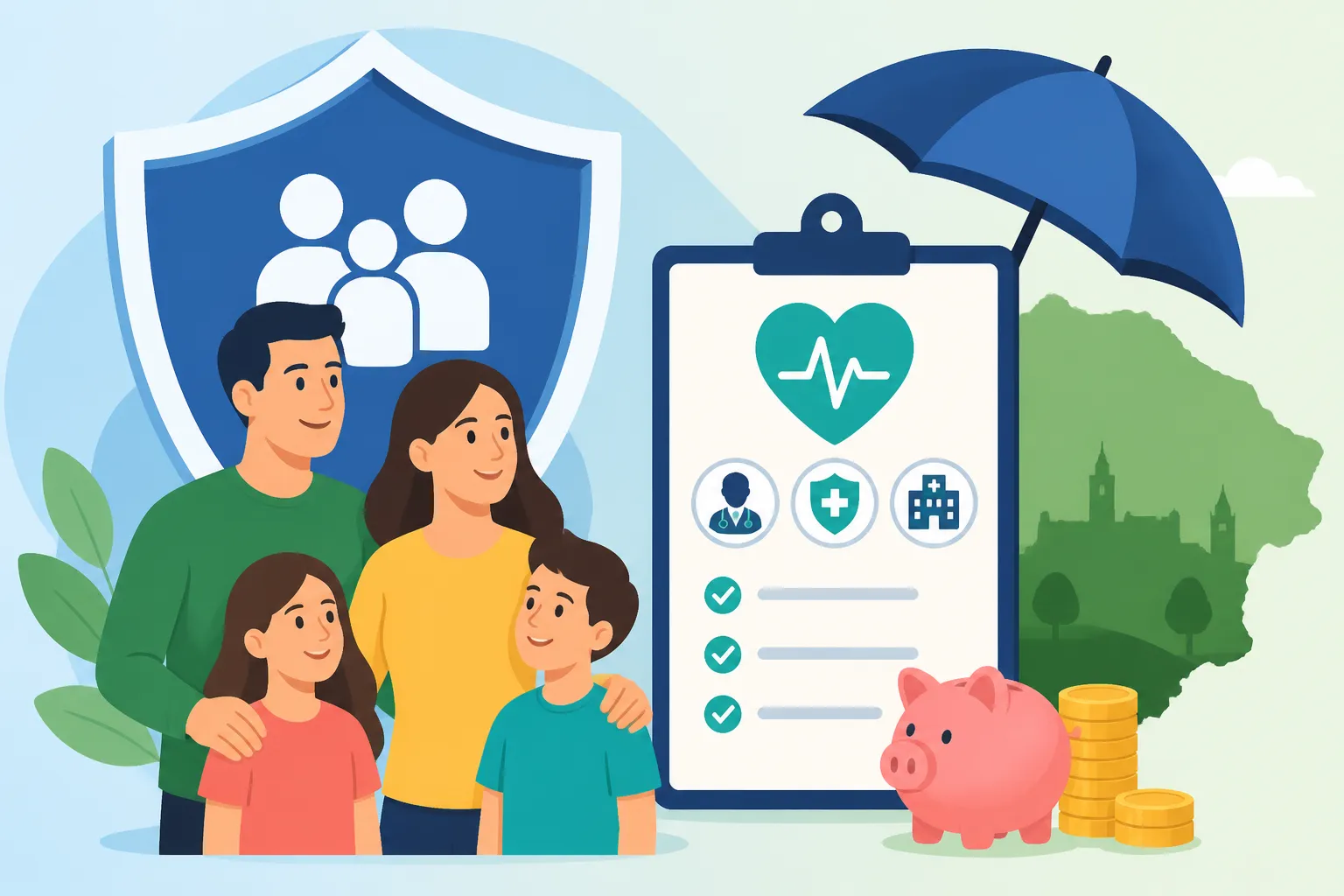
For a family of four (two adults and two children), you can expect to pay anywhere from €1,800 to €3,200 per year for a high-quality private plan. This might sound like a lot, but when broken down monthly, it’s roughly €150 to €270 for the entire family. When you consider that a single private consultation with a specialist in Vilnius can cost between €80 and €120 out of pocket, the insurance pays for itself after just a few visits.
| Coverage Tier | Estimated Monthly Cost (Family of 4) | Key Benefits Included |
|---|---|---|
| Basic / Essential | €120 – €150 | Specialist consultations, basic lab tests, 50% dental discount. |
| Standard / Balanced | €160 – €210 | Diagnostics (X-ray, Ultrasound), partial medicine reimbursement, mental health. |
| Premium / Comprehensive | €220 – €300+ | MRI/CT scans, full dental allowance, vaccinations, maternity support. |
| International / Global | €250 – €450+ | Worldwide coverage, emergency evacuation, higher limits (e.g., SafetyWing). |
For those specifically looking at the financial impact, our guide on The Cost of Healthcare in Lithuania: A Complete Breakdown for Foreigners (2026) provides a deeper dive into the specific prices of common medical procedures if you were to pay without insurance. If you are trying to decide if this fits your budget, you might also want to check out How Much Private Health Insurance Cost in Lithuania in 2026? for a more individualized cost analysis.
SafetyWing offers a unique value proposition here because their pricing is often more transparent and doesn't require the same level of local administrative "hoop-jumping" as a traditional Lithuanian insurer might. For a family who isn't sure how long they will stay in the Baltics, the monthly subscription model of SafetyWing can be less of a financial commitment than an annual local contract.
Public vs. Private: Is the Extra Cost Worth It for Your Family?
This is the question every expat parent asks during their first month in Vilnius or Kaunas. To answer it, you have to look at the "hidden" costs of the public system. While the public system is technically "free" (covered by your taxes), the cost in time and frustration is high. In the public system, if your child needs to see an ophthalmologist or an ear, nose, and throat (ENT) specialist, you might be told the next available appointment is in three months. In the private system, with the right insurance, you can usually see that same specialist within 48 hours.
There is also the language barrier. While many younger doctors in the public sector speak excellent English, the administrative staff at the registration desks often do not. Private clinics, on the other hand, cater specifically to a clientele that expects English-speaking service. For a parent trying to explain a complex medical history while their child is crying, being understood immediately is not a luxury—it’s a necessity.
New arrivals are often advised to read Public vs Private Healthcare in Lithuania: Which Should Expats Choose? to get a balanced view. For some, the public system is perfectly adequate for routine "wellness" checks, but they keep private insurance specifically for specialist access and diagnostics. This hybrid approach is common. You might use your local "Family Doctor" (Šeimos Gydytojas) for basic sick notes, but head straight to a private clinic for anything more complex.
If you are still on the fence, consider the ease of use. Private insurance usually comes with an app or a direct billing system. You show your card, and the clinic handles the rest. In the public system, you are often dealing with referrals (siuntimas) and bureaucratic steps that can be exhausting. To understand the "why" behind the private clinic popularity, take a look at Are Private Clinics in Lithuania Worth the Cost? and How to Find an English-Speaking Doctor in Lithuania.
Navigating the Application Process for Family Insurance
Applying for family health insurance in Lithuania is generally straightforward, but it requires you to have your paperwork in order. Most local insurers will ask for your residence permit or at least proof that you have applied for one. They will also require the personal codes (asmens kodas) for every family member you wish to include in the policy. If you haven't received these yet, you might be restricted to "travel-style" international insurance until your residency is finalized.
When you apply, you will likely be asked to fill out a health questionnaire. It is vital to be honest here, especially regarding pre-existing conditions. Most local private plans in Lithuania have exclusions for pre-existing conditions, meaning they won't cover treatments for an illness you already had before signing up. This is another area where international plans like those from SafetyWing can differ, as they are often designed with the mobile expat in mind and may have different underwriting criteria.
The process of selecting the right company can be daunting because there are so many players. I recommend checking out How Do I Choose a Private Health Insurer in Lithuania? to see a comparison of the top-rated local providers. Once you choose a provider, the policy is usually issued digitally, and you can start using it almost immediately, though some have a "waiting period" of 14 to 30 days for certain elective services.
For families who are still in the process of relocating, the 90-day transition period is the most vulnerable time. Make sure you have a plan in place before you land. Whether it is a local plan you've researched in advance or a flexible policy like SafetyWing, having that digital insurance card in your phone's wallet is the first step to feeling truly at home in Lithuania.
Important Disclaimer
The information provided in this guide is for informational purposes only and does not constitute professional medical, legal, or financial advice. Healthcare laws, insurance premiums, and policy terms in Lithuania are subject to change. Always consult directly with a licensed insurance provider or a legal expert specializing in Lithuanian residency and healthcare before making decisions for your family.