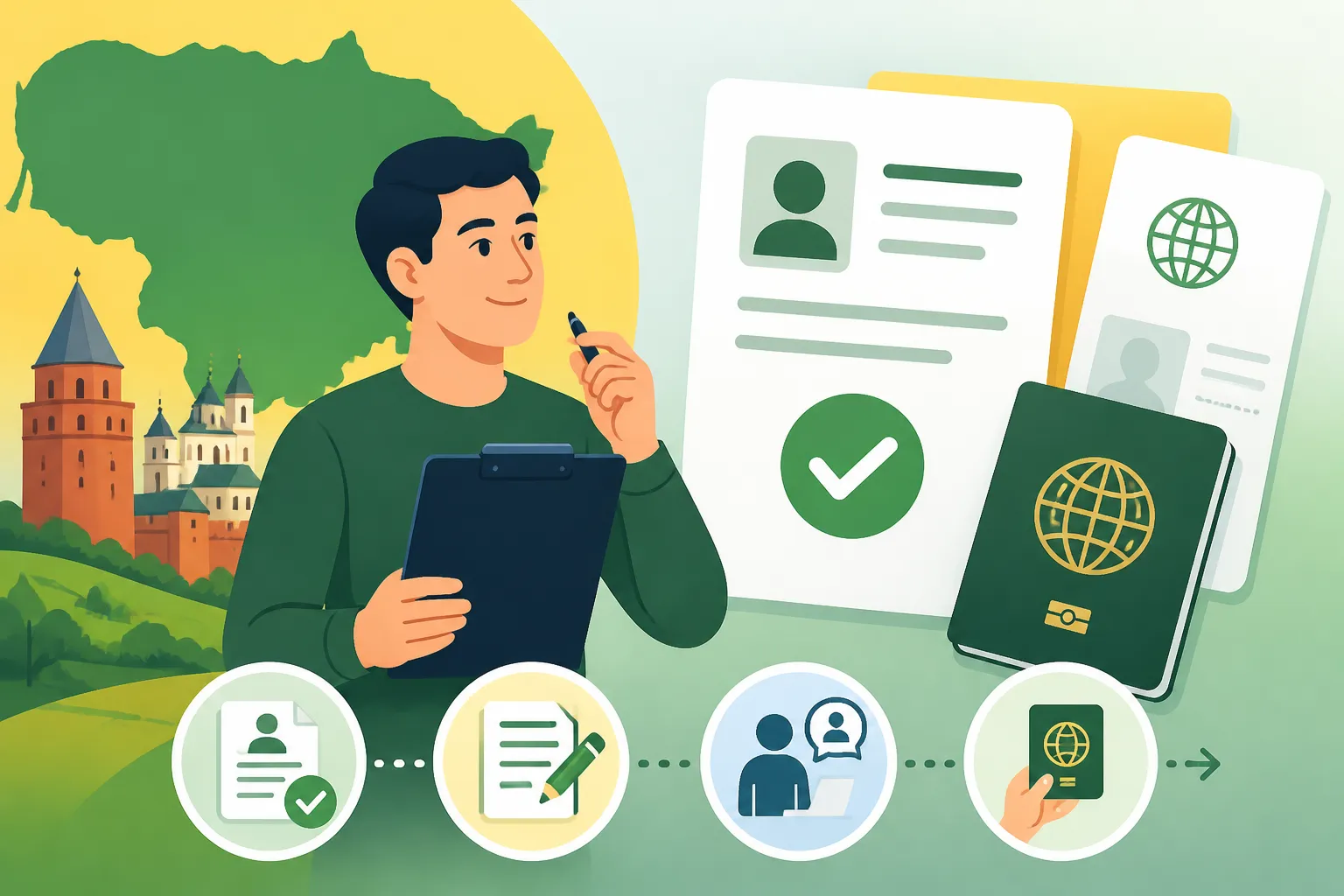
How Do I Apply for a Work Permit and Visa in Lithuania?
Trying to navigate the Lithuanian immigration system to work here can feel like trying to solve a Rubik's Cube blindfolded – utterly confusing, sometimes frustrating, and full of subtle nuances that can trip you up. This guide is here to untangle the process for you, breaking down exactly how to apply for a work permit and subsequently a National (Type D) visa, ensuring you understand each crucial step to make your dream of working in Lithuania a reality.
Understanding the Essentials: Work Permit vs. National Visa
When you're dreaming of working in Lithuania, especially if you're coming from outside the EU/EEA, the terms "work permit" and "National Visa" often get thrown around interchangeably, causing a fair bit of confusion. Trust me, I've seen countless expats get tangled up here, so let's clear things up right from the start. They are distinct, yet interconnected, steps in your journey to legally work and reside in this beautiful Baltic nation.
The Crucial Distinction and Why It Matters
Think of it this way: a work permit (or a decision regarding its necessity) is essentially the Lithuanian government (specifically the Lithuanian Employment Service, or Užimtumo Tarnyba) saying, "Yes, we agree there's a need for you to work this specific job, for this specific employer, in Lithuania." It's about your right to work. This document is typically issued to your prospective employer, confirming that your skills are needed and that a Lithuanian or EU/EEA citizen couldn't easily fill the role. It's the green light for your employment.
On the other hand, a National Visa (Type D) is the travel document that allows you to enter and stay in Lithuania for a long-term purpose, in this case, for work. It's about your right to enter and reside. This visa is what gets stamped in your passport, and it's almost always a prerequisite for applying for your actual Temporary Residence Permit (TRP) once you arrive. You can't just rock up with a work permit; you need the visa to actually get here and then transition to a more permanent residency status. Without the National Visa, even with a confirmed work permit, you won't be able to legally cross the border and begin your life in Lithuania.
The distinction is crucial because the application processes, required documentation, and even the authorities you deal with for each are different. Mixing them up can lead to delays, rejections, and a whole lot of unnecessary stress. You tackle the work authorization first, and then, armed with that approval, you apply for the visa to physically move to Lithuania.
Who Needs What: EU/EEA Citizens vs. Third-Country Nationals
This is where your passport truly makes a difference.
If you are a citizen of an EU/EEA country or Switzerland, congratulations! Your path to working in Lithuania is significantly smoother. Thanks to the principle of free movement of workers, you generally do not need a work permit or a National (Type D) visa. You have the right to live and work in Lithuania just like a Lithuanian citizen. Your main administrative task will be to declare your place of residence with the Migration Department and register your right of residence within three months of your arrival. While this might sound simple, remember that bureaucratic processes still exist. Even if you're an EU citizen, it's wise to get your head around topics like Registering for Compulsory Health Insurance (PSD) in Lithuania (2027) early on, as public services will be crucial.
However, if you are a third-country national (meaning you're from outside the EU/EEA or Switzerland), then this guide is specifically for you. You will absolutely need both a work permit (or a decision on the necessity of your work) and a National (Type D) visa as your initial entry point. Once you arrive in Lithuania with your National Visa, your next big step will be to apply for a How to Get a Temporary Residence Permit (TRP) in Lithuania (2027) from the Migration Department, which will become your primary identification and proof of residence for the duration of your stay. The journey is longer, with more checkpoints, but it's entirely manageable with the right preparation and understanding.
Let's break down the process step-by-step to make it as clear as possible.
Step-by-Step: The Lithuanian Work Permit Application Process
The initial hurdle for most non-EU/EEA expats wishing to work in Lithuania is securing the work permit itself. This isn't something you do on your own in a vacuum; it's a collaborative effort with your prospective employer. They play a pivotal role, so choosing an employer who is familiar with the process or willing to learn is half the battle won.
Before You Apply: Employer's Role and Documentation
The work permit application largely falls on your future employer's shoulders. They are the ones who must prove to the Lithuanian Employment Service (Užimtumo Tarnyba) that they need you specifically, and that your role cannot be filled by someone already legally present in the Lithuanian labour market. This often involves demonstrating your unique qualifications, experience, or specialized skills that align with the job requirements.
Here’s what your employer typically needs to do before they can even think about submitting an application for your work permit:
- Job Vacancy Registration: Your employer must first register the job vacancy with the Užimtumo Tarnyba. This isn't just a formality; it's a critical step where the position is advertised publicly for a certain period (usually 14 calendar days). This period allows Lithuanian and EU/EEA job seekers to apply. If no suitable candidates are found within this timeframe, then and only then can your employer proceed with your application. This is a common requirement in many European countries and is designed to protect the domestic labour market.
- Preparing the Application: Once the local search yields no suitable candidates, your employer can then apply for a decision on the necessity of your work (which is essentially your work permit) to the Užimtumo Tarnyba. They will need to gather a comprehensive set of documents, including:
- Application Form: Filled out and signed by the employer.
- Your Education Documents: Copies of your diplomas, degrees, and transcripts. Make sure these are legalized or apostilled as required by Lithuanian law, and officially translated into Lithuanian. This is where topics like How to Get Your Foreign Degree Recognised (SKVC) in Lithuania become incredibly relevant.
- Your Work Experience Documents: Certificates of employment, reference letters, and any other proof of your professional experience, also translated and legalized/apostilled.
- Your Passport Copy: A clear copy of your valid passport, often including all stamped pages.
- Employment Contract (Draft): A draft of the employment contract between you and your Lithuanian employer. This contract should clearly outline your position, responsibilities, salary, and working conditions. The salary must meet at least the national average salary in Lithuania for your specific sector, or for the country generally, depending on the role.
- Employer's Justification Letter: A letter from the employer explaining why your specific skills and experience are necessary for the role and why no suitable candidate was found locally.
- Company Registration Documents: Proof of the employer's legal registration in Lithuania.
- Understanding Shortage Occupations: Lithuania has a 'shortage occupations list' that is updated periodically. If your profession is on this list, the process can be significantly streamlined, and the requirement for the employer to advertise the position locally might be waived. This is definitely worth checking, as it can speed things up considerably. You can find more details on this via Understanding the Shortage Occupations List for Work Permits in Lithuania.
It's a lot of paperwork, both for you and your employer, but getting it right at this stage prevents future headaches. Many companies are well-versed in this, especially in booming sectors like IT and Fintech in Vilnius, but don't assume. Ensure your employer understands their responsibilities.
Submitting Your Application: What to Expect
Once all the necessary documents are compiled by your employer, they submit the application to the Užimtumo Tarnyba. This can often be done electronically through their system, which is generally more efficient than physical submissions.
Here's what you can expect:
- Processing Time: The Užimtumo Tarnyba typically takes about 7 working days to process a work permit application if all documents are in order. However, if they need additional information or clarification, the process can take longer. Patience is truly a virtue here.
- Decision: You and your employer will be notified of the decision. If approved, your employer will receive a decision letter confirming the necessity of your work, which acts as your official work permit. This document is golden and will be essential for your subsequent visa application.
- Fees: There are administrative fees associated with the work permit application, which are usually covered by the employer, though it's always good to clarify this beforehand.
It's crucial that you maintain open communication with your employer throughout this phase. They will often be your primary point of contact with the Lithuanian authorities until you arrive.
Common Pitfalls and How to Avoid Them
Even with the best intentions, things can go wrong. Here are some common pitfalls and tips to avoid them:
- Incomplete or Incorrect Documentation: This is the number one reason for delays and rejections. Double-check everything. Ensure all translations are certified, and all documents are properly legalized or apostilled. If you're providing academic transcripts, ensure they detail the courses taken and grades received, not just the final degree.
- Employer's Lack of Experience: If your employer is new to hiring foreign nationals, they might underestimate the complexity. Offer to help where you can, but ensure they are taking the lead on their legal obligations. Encourage them to consult with a legal professional specializing in immigration if they are unsure.
- Not Meeting Salary Requirements: The draft employment contract must stipulate a salary that meets the average gross monthly wage for the respective economic activity in Lithuania, or generally in the country. If the salary is too low, the application will be rejected. This is a common sticking point.
- Mismatched Qualifications: Your education and experience must clearly align with the job description and the employer's justification for hiring you. If there's a disconnect, the authorities might question the necessity of your employment. For instance, applying for a senior IT role with only a high school diploma and no demonstrable experience will raise red flags.
- Waiting Period for Shortage Occupations: Even for shortage occupations, while the local advertising requirement might be waived, there's still a processing time. Don't assume it's instant.
Securing Your National (Type D) Visa: The Next Big Hurdle
Once your employer has successfully obtained the work permit decision from the Užimtumo Tarnyba, you, the aspiring expat, take center stage. Now it's time to apply for your National (Type D) visa, which is your ticket into Lithuania. This application is typically submitted at a Lithuanian embassy or consulate in your home country or country of legal residence.
Required Documents for Your Visa Application
This is where you bring together all your personal documents, plus the crucial work permit decision. Be meticulous; missing a single document can lead to rejection and significant delays.
Here’s a general list of documents you'll typically need for your National (Type D) visa application for work purposes:
- Valid Passport: Your passport must be valid for at least three months beyond your intended departure date from the Schengen area and have at least two blank pages for the visa stamp.
- Visa Application Form: Duly completed and signed. Many countries now use an online application portal for this, so check the specific consulate's website.
- Passport-Sized Photo: A recent photograph meeting Schengen visa requirements (usually 35x45mm, white background).
- Work Permit Decision: The original (or a certified copy) of the decision from the Užimtumo Tarnyba confirming the necessity of your work. This is the cornerstone of your application.
- Employment Contract: A copy of your signed employment contract with the Lithuanian employer. This should match the draft provided for the work permit application.
- Proof of Sufficient Funds: Documents demonstrating that you have sufficient financial means to cover your expenses during your stay in Lithuania. This could be bank statements, salary slips, or a letter from your employer guaranteeing financial support. The exact amount required can vary, so always check the consulate's specific requirements.
- Proof of Accommodation: Evidence of where you will live in Lithuania. This could be a rental agreement, a letter from your employer stating they will provide accommodation, or a hotel booking for your initial period. If you're coming to Vilnius, finding How Do I Find a Long-Term Rental in Kaunas? might be a good starting point for your research.
- Travel Medical Insurance: A valid travel medical insurance policy covering your entire intended stay in the Schengen area, with a minimum coverage of €30,000 for medical emergencies, hospitalization, and repatriation. This insurance should be valid from the date of your entry until your Temporary Residence Permit is issued. While some employers might arrange this, it's often your responsibility.
- Criminal Record Certificate: An official certificate from your home country (and any other countries you've lived in for a significant period) confirming you have no criminal record. This usually needs to be legalized/apostilled and translated.
- Travel Itinerary (Optional but Recommended): While not always strictly required for a Type D visa, providing flight reservations can show your intent to travel.
- Visa Fee: The application fee for the National (Type D) visa.
It's a formidable list, but gathering these documents diligently is crucial. A great resource for preparing documents for your residence permit application (which follows the visa) is available through How to Prepare Documents for a Lithuanian Residence Permit Application.
| Document Category | Work Permit Application (Employer's Role) | National (Type D) Visa Application (Your Role) |
|---|---|---|
| Key Purpose | Permission for you to work that specific job in Lithuania | Permission for you to enter and stay in Lithuania long-term |
| Applicant | Lithuanian Employer | Individual Applicant (You) |
| Authority | Lithuanian Employment Service (Užimtumo Tarnyba) | Lithuanian Embassy/Consulate Abroad |
| Core Document | Employer's justification, your qualifications & experience | Approved Work Permit Decision Letter from Užimtumo Tarnyba |
| Additional Docs | Draft employment contract, employer's company details | Signed employment contract, proof of funds, accommodation, insurance |
| Location of App. | Within Lithuania (by employer) | Your country of residence (by you) |
| Result | Decision on necessity of work / Work Permit approval | National (Type D) Visa stamp in passport |
The Application Submission and Interview Process
Once you have meticulously gathered all your documents, the next step is to submit your application.
- Book an Appointment: You will almost certainly need to book an appointment at the Lithuanian embassy or consulate responsible for your region. Due to high demand, these appointments can sometimes have long waiting times, so plan ahead! Some consulates use third-party visa application centers, which might offer more flexibility.
- Submission and Biometrics: At your appointment, you will submit your complete application package. This is also when your biometric data (fingerprints and a digital photo) will be collected. Be prepared for any questions they might have about your documents or your intentions in Lithuania.
- The Interview: While not always mandatory, be prepared for a short interview. The consular officer might ask about your job, your employer, your qualifications, and your reasons for wanting to work in Lithuania. Be honest, clear, and confident. If you're hoping to learn some Lithuanian before you arrive, services like iTalki can be a great way to get started with a tutor and practice conversational phrases, which could certainly help you in an interview or simply for daily life here.
- Processing Time: Visa processing times can vary significantly depending on the consulate and the complexity of your case, but generally, expect it to take a few weeks. Always check the specific processing times advised by the consulate you're applying to.
It's important to be patient and keep all your original documents safe, as you might need them again when you apply for your Temporary Residence Permit in Lithuania.
After Approval: Arrival and Residence Permit Application
Congratulations! You've received your National (Type D) visa. This is a huge milestone, but it's not the final step in your journey to fully settling in Lithuania.
- Arrival in Lithuania: With your National (Type D) visa stamped in your passport, you can now legally enter Lithuania. Most Type D visas are valid for a maximum of one year, but sometimes they are issued for shorter periods, emphasizing the need to get your residence permit sorted promptly.
- The Migration Department (MIGRIS): Your very next crucial step after arriving is to apply for your Temporary Residence Permit (TRP) with the Lithuanian Migration Department (Migracijos departamentas). The National Visa is a temporary solution to get you into the country; the TRP is your official, long-term legal status. You should initiate this process as soon as possible after arrival, definitely within the validity period of your Type D visa. Booking an appointment with MIGRIS can also have waiting times, so it's wise to look into How to Book an Appointment at the Migration Department (MIGRIS) in Lithuania even before you arrive.
- Asmens Kodas: As part of your residence permit application, you will also receive your Asmens Kodas (Personal Code). This is Lithuania's equivalent of a national ID number and is absolutely vital for almost every aspect of life here – from opening a bank account to registering for healthcare, paying your Taxes for Expats, and more. You can learn more about this crucial number via How to Apply for an Asmens Kodas as Part of Your Residence Process.
- Integration: Once you have your TRP and Asmens Kodas, you are officially a resident. Now you can focus on the practicalities of settling in. This includes things like Understanding the Lithuanian E-Sveikata (E-Health) System in Lithuania, navigating public transport, and perhaps even picking up some more Lithuanian phrases. While English is widely spoken in professional settings in major cities like Vilnius and Kaunas, a little bit of Lithuanian goes a long way in everyday interactions and truly helps you integrate. Using apps like iTalki can give you the confidence to order coffee or ask for directions.
The journey to working in Lithuania as a non-EU/EEA national is multi-layered, but each step is a logical progression. By understanding the distinction between a work permit and a National Visa, preparing your documents meticulously, and knowing what to expect at each stage, you can navigate the bureaucracy with confidence.
Disclaimer
Please remember that immigration laws and procedures can change. While this guide aims to provide accurate and up-to-date information, it is based on current regulations. Always verify the latest requirements with official sources such as the Lithuanian Employment Service (Užimtumo Tarnyba), the Lithuanian Migration Department (Migracijos departamentas), or the specific Lithuanian embassy or consulate responsible for your region before making any decisions or submitting applications. Consulting with an immigration legal professional in Lithuania is always recommended for personalized advice.