Registering for Compulsory Health Insurance (PSD) in Lithuania (2027)
Moving to a new country is an exhilarating whirlwind of new sights and tastes, but nothing grounds that excitement faster than the sudden realization that you have no idea how the medical system works. Many expats arrive in Vilnius or Kaunas and assume that their residency permit automatically grants them healthcare access, only to find themselves facing massive bills or rejected appointments at the local clinic. This guide provides a comprehensive, step-by-step roadmap to navigating the Privalomasis sveikatos draudimas (PSD) system, ensuring you are legally covered and can access doctors without the stress of bureaucratic surprises.
Understanding the PSD System: Why It Matters for Your Life in Lithuania
Lithuania operates on a universal healthcare model funded by compulsory contributions. This is known as PSD, or Privalomasis sveikatos draudimas. For a newcomer, the system can seem like a labyrinth of acronyms and overlapping government departments. However, understanding the core philosophy—that everyone contributes so that everyone can access care—is the first step toward integrated living. If you are a resident, you are legally obligated to be part of this system, but more importantly, it is your ticket to the extensive network of public clinics and hospitals across the country.
What is PSD and Who is it For?
Compulsory Health Insurance is not a suggestion; it is a legal requirement for all permanent residents of Lithuania and most temporary residents. This includes people working under employment contracts, those who are self-employed, and even students from abroad. The logic is simple: by pooling resources into the Compulsory Health Insurance Fund (PSDF), the state can provide "free" services at the point of use. How Lithuania's Health Insurance Fund (VLK/PSDF) Works: A Full Overview provides an even deeper look into how these funds are allocated, but for you, the individual, it means that once you are "active" in the system, you can visit a specialist or get a prescription filled for a fraction of the market cost.
The system is designed to be inclusive, yet it is strictly tied to your legal status. If you are here on a National D Visa or a Temporary Residence Permit (TRP), your right to PSD often depends on the specific grounds of your stay. For example, those on a work permit are covered immediately through their employer's contributions, whereas those on a family reunification permit might need to handle their own voluntary payments if they aren't working. It is a nuanced landscape where your visa type dictates your path to insurance.
The Role of VLK and Sodra in Your Healthcare
Navigating Lithuanian bureaucracy requires knowing which "office" handles which part of your life. In the world of healthcare, you will deal with two main entities: Sodra and the VLK (Valstybinė ligonių kasa). Sodra is the State Social Insurance Fund; they are the ones who collect your money. Whether it is deducted from your salary or paid manually via a bank transfer, Sodra keeps the ledger of your contributions. If Sodra says you haven't paid, your insurance status turns red, and you are effectively uninsured.
On the other hand, the VLK manages the actual healthcare services. They negotiate prices with hospitals, manage the list of subsidized medications, and oversee the patient database. While Sodra handles the "income" side of the equation, the VLK handles the "outcome" side. When you go to a clinic, the receptionist checks the VLK database to see if Sodra has confirmed your payment. This connection is vital; a lag in communication between these two departments is often the reason an expat might be told they are not insured even after paying their dues. Understanding PSD Contributions Through Sodra in Lithuania is a must-read if you want to avoid these specific technical hiccups.
Why You Cannot Afford to Skip Registration
There is a common misconception among young, healthy expats that they can just "risk it" and pay for a private doctor once in a while. In Lithuania, this is a dangerous gamble. First, PSD is a legal obligation; if you are a resident and fail to pay, the debt accumulates with interest, and the state will eventually collect it through your bank account. Secondly, private healthcare in Lithuania is excellent for consultations, but it is not built for emergencies. If you are in a serious car accident or require emergency surgery, you will be taken to a public hospital. Without PSD, the costs for intensive care or major surgery can reach tens of thousands of euros.
Furthermore, being in the PSD system is often a prerequisite for other administrative tasks, such as renewing your residence permit. The Migration Department wants to see that you are not going to be a burden on the state's finances. Having an active insurance status proves you are a contributing member of society. Beyond the legalities, there is a peace of mind that comes with knowing you can walk into any Poliklinika and be seen by a professional without worrying about your bank balance.
Eligibility and the Critical Role of Legal Residence
You cannot simply walk into a health insurance office and sign up the day you land at the airport. The Lithuanian system is deeply integrated with your legal residency status. Before you even think about PSD, you need to have your "papers" in order. For many of us who have moved here, this stage was the most frustrating part of the journey, involving multiple trips to the Migration Department and a lot of waiting for letters in the mail.
EU Citizens vs. Non-EU Citizens
The path to healthcare looks very different depending on what passport you hold. If you are an EU citizen, you have the right to live and work here, but you still need to register your residence if you stay longer than 90 days. EU citizens often arrive with an EHIC (European Health Insurance Card), which is great for temporary stays. However, once you become a resident and start working or living here long-term, you must transition to the local PSD system. You cannot indefinitely rely on your home country's insurance once you have moved your "center of life" to Lithuania.
For non-EU citizens, the process is stricter. You generally need a Temporary Residence Permit (TRP) or a National Visa (D) that allows for work. Most TRP holders are automatically eligible for PSD once they start an employment contract. However, if you are here on a different basis—perhaps as a student or a freelancer—the rules for when your coverage starts can be tricky. You must ensure that your insurance remains valid during the "gap" between your arrival and the issuance of your residence card. During these bridge periods, many expats rely on flexible plans like SafetyWing to ensure they aren't left vulnerable while the Migration Department processes their files.
The Asmens Kodas: Your Golden Ticket to PSD
If there is one number that will define your life in Lithuania, it is the Asmens kodas. This 11-digit personal identification code is used for everything: banking, taxes, and crucially, healthcare. Without an Asmens kodas, you basically do not exist in the state's digital databases. When you apply for your residence permit, this code is assigned to you. How to Get Your Asmens Kodas (Personal Code) and Why It Matters for Healthcare explains the mechanics of obtaining this number, which is the foundational step for any health registration.
Once you have your code, it acts as your "account number" for Sodra and the VLK. When you pay your contributions, you must include this code in the payment reference. When you visit a doctor, they enter this code into their system to see your entire medical history and insurance status. It is the thread that connects all the disparate parts of the Lithuanian administrative machine. If you are a new arrival and haven't received your code yet, you are often in a state of "insurance limbo," making private medical insurance a necessity until your official residency is finalized.
Declaring Residence (Gyvenamosios vietos deklaravimas)
Even after you have your TRP and your Asmens kodas, there is one more hurdle: declaring where you live. In Lithuania, you must officially register your address with the local Seniūnija (neighborhood office) or via the online E-Government Gateway. This is known as "deklaravimas." It is a vital step because PSD coverage is often tied to the specific municipality where you live, especially when it comes to assigning you to a public clinic.
Declaring Your Place of Residence in Lithuania: The Complete Guide walks you through the process of getting your landlord's permission and submitting the right forms. Many expats find this step annoying because it requires cooperation from a landlord who might be hesitant to "officially" register a tenant. However, without a declared residence, you cannot register with a family doctor at a public clinic. The system needs to know which district's budget will cover your care. It is a detail that many overlook, only to find out they are "unregistered" when they try to book an appointment for a flu shot.
Step-by-Step Registration Process for Different Expat Categories
Once the residency groundwork is laid, the actual "registration" for PSD happens in different ways depending on why you are in Lithuania. The system is designed to be automatic for some and manual for others, which is where much of the confusion arises for the international community.
Employed on a Lithuanian Contract
If you have moved to Lithuania for a job with a local company, you are in the easiest category. Your registration for PSD is effectively automatic. When your employer registers your employment contract with Sodra, the system creates a health insurance record for you. A percentage of your "gross" salary is automatically deducted each month and sent to Sodra. You don't need to fill out any extra forms at the health insurance office; you just need to wait a few days for the systems to sync.
It is always a good idea to verify this, though. You can log into the Sodra portal using your e-banking credentials or an m-signature to see your "Draudimas" (insurance) status. If it says "Draustas," you are good to go. This coverage starts from your first day of work and ends the moment your contract is terminated. If you lose your job, there is usually a one-month "grace period" where you remain covered, but after that, you must take manual action to stay insured.
Self-Employed and Freelance Workers
For the digital nomads and independent consultants, the process is a bit more hands-on. If you How to Register Individual Activity (Individuali Veikla) in Lithuania, you are responsible for paying your own PSD contributions. Unlike employees, you don't always have the luxury of automatic deductions. You are required to pay a monthly minimum PSD contribution to Sodra by the end of each month. As of 2026, these rates are adjusted annually based on the minimum wage, so it is crucial to check the exact euro amount on the Sodra website.
The danger here is forgetting a payment. If you miss even one month, your status in the VLK database will flip to "Nedraustas" (Not Insured). Even if you pay the debt the next day, it can take several business days for the status to update. For freelancers, this means you need to be disciplined. Many of us set up a recurring bank transfer to Sodra to ensure we never have a gap in coverage. If your income fluctuates or you are working for clients outside of Lithuania, managing these local social contributions is a non-negotiable part of your administrative life.
Non-Working Residents and Students
If you are in Lithuania but not working—perhaps you are a student or a spouse of someone who is working—your path is different. Students from the EU are usually covered by their home country, but non-EU students generally get PSD through their university's registration. However, non-working spouses or those here on a "wealthy" residence permit must pay PSD contributions voluntarily.
To do this, you essentially "self-insure." You pay the same monthly minimum rate as the self-employed to a specific Sodra account. This ensures you have access to the public health system. If you are a student from a non-EU country, make sure to check with your university's international office. They often have a simplified process for ensuring students are added to the national database, but you may still be required to provide proof of payment or a specific certificate of enrollment to the VLK.
| Category | Registration Type | Payment Method | Main Responsibility |
|---|---|---|---|
| Employee | Automatic | Deducted from salary | Verify status on Sodra portal |
| Individual Activity | Manual | Bank transfer to Sodra | Pay by the end of each month |
| EU Student | EHIC / S1 Form | Covered by home country | Register EHIC with local VLK |
| Non-EU Student | University-linked | Included in fees or manual | Provide proof of enrollment to VLK |
| Non-Working (TRP) | Voluntary | Bank transfer to Sodra | Monthly manual payments required |
Calculating and Paying Your PSD Contributions
The financial side of PSD is where things get "real." In Lithuania, the amount you pay isn't just a random fee; it is a calculated percentage of the Minimum Monthly Wage (MMA). This means that as the cost of living and wages go up, so does your insurance premium.
Current Rates and Sodra Payment Deadlines
As of early 2026, the PSD rate remains pegged at 6.98% of the minimum wage for those paying voluntarily or through self-employment. For employees, the total social insurance package is higher, but the specific healthcare portion is handled by the employer. If you are paying manually, you must find the current "PSD įmoka" amount. It is usually around 60 to 70 euros per month, though this fluctuates with government policy.
The deadline is the most important part: you must pay for the current month by the last day of that month. If you are paying for January, the money must be in Sodra’s account by January 31st. Sodra is quite modern and provides clear instructions on their website regarding IBANs and payment codes (the most common code for PSD is 444). Using the wrong payment code is a classic expat mistake that leads to the money sitting in a "suspense account" while your insurance remains inactive.
Voluntary PSD Payments for the Unemployed
Life happens. Sometimes you leave a job and take a few months off to travel or find a new role. During this time, you do not want to be uninsured. You can transition to "voluntary" payments. You don't need a special contract for this; you simply start making the monthly payments to the Sodra account using your Asmens kodas.
This is particularly important for expats who are transitioning between different types of residence permits. For example, if you were a student and are now waiting for a work-based TRP, there might be a two-month gap where no one is paying for your insurance. By making these voluntary payments, you keep your "streak" alive. This "streak" is important because some benefits, like maternity leave or long-term sick pay, require a certain period of continuous contributions.
Penalties for Late Payments or Gaps
Sodra is remarkably efficient at tracking debt. If you stop paying your PSD but remain a declared resident of Lithuania, the system assumes you still owe the money. This isn't like a private subscription you can just cancel; it is a tax. If you leave the country without "undeclaring" your residence, Sodra will continue to bill you for PSD every month.
I have known expats who left Lithuania for a year, didn't file the paperwork to say they were gone, and returned to find a 800-euro bill and a frozen bank account. If you have a gap in payments, you won't just be denied care at the doctor; you will also be charged interest on the debt. If you are planning to be away for more than six months, you must officially declare your departure to pause these obligations.
Managing Your Coverage and Accessing Care
Once you are registered and your payments are flowing, you aren't finished. You need to actually connect with the healthcare providers. The insurance is the "money," but the Poliklinika is the "service."
Checking Your Insurance Status Online
In the digital age, you should never be guessing whether you are covered. The VLK provides a very simple online tool where you can enter your Asmens kodas and immediately see your status. It will either say "Apdraustas" (Insured) or "Neapdraustas" (Not Insured).
It is a good habit to check this once a quarter, especially if you are self-employed. Sometimes bank errors or system glitches can happen. If you see "Neapdraustas," your first stop should be the Sodra portal to see if there is an unpaid balance. If Sodra shows everything is paid but the VLK says you aren't covered, you may need to email a screenshot of your payment to the local VLK office (Territorial Health Insurance Fund) to have them manually refresh your record.
Registering with a Family Doctor (Poliklinika)
Having PSD doesn't mean you can just walk into any hospital for a sore throat. You must be registered with a specific "Šeimos gydytojas" (Family Doctor). This is usually done at a public Poliklinika near your declared residence. The Expat Guide to Finding a Family Doctor (Šeimos Gydytojas) in Lithuania is a vital resource for this stage. You will need to go to the clinic in person, fill out an application, and choose a doctor from their list.
Once registered, this doctor becomes your "gatekeeper." If you need to see a cardiologist or a dermatologist, you first visit your family doctor to get an "e-siuntimas" (electronic referral). Without this referral, you can still see a specialist, but you will have to pay the full price out of pocket, even with PSD. The public system is very strict about this hierarchy. Understanding the Role of the Polyclinic (Poliklinika) in Lithuania explains why this system exists and how to navigate the often-crowded waiting rooms of the public centers.
E-Sveikata and the Digital Health Ecosystem
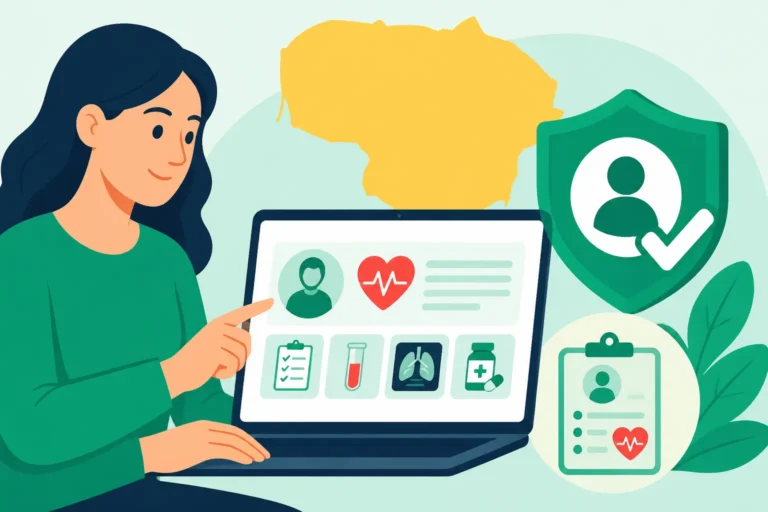
Lithuania is incredibly advanced when it comes to digital health records. The system is called E-Sveikata. Every time you see a doctor, get a prescription, or have a blood test, the results are uploaded to your personal portal. You can log in with your m-signature or e-banking to see your entire medical history.
This is also where Understanding the Electronic Prescription (E-Receptas) System in Lithuania comes into play. Doctors don't give you paper slips anymore. They type the prescription into the computer, and you simply go to any pharmacy (Vaistinė) and show your ID or give your Asmens kodas. The pharmacist sees your prescription on their screen and hands you the medicine. It is incredibly efficient, but it relies entirely on you having an active PSD status. If your insurance is inactive, the system might block the subsidized price of your medication, forcing you to pay the full amount.
Bridging the Gap: What to Do Before Your PSD is Active
The most vulnerable time for any expat is the "first 90 days." You are often waiting for your residence permit, your Asmens kodas, or your first paycheck. During this window, you are essentially "invisible" to the Lithuanian public health system.
The "Waiting Period" Reality
Even if you apply for your TRP on day one, it can take 2-4 months to receive the card and have your insurance status activated. During this time, the public clinics will treat you as a "private" patient. This means you pay for everything. A simple consultation might cost 50 euros, and a blood panel could be another 100 euros. While this is cheaper than in the US, it is an unexpected expense that many expats aren't prepared for.
If you have an emergency during this period, you will be treated, but you will receive a bill afterward. The "free" emergency care in Lithuania is generally reserved for those with active PSD or EU citizens with a valid EHIC. For everyone else, the hospital will send an invoice to your registered address. This is why having a "bridge" plan is so critical for the moving process.
Private Alternatives and Emergency-Only Scenarios
Some expats choose to use private medical centers like Kardiolita or InMedica for everything. These clinics are faster, often have more English-speaking staff, and look more like modern hotels than sterile hospitals. However, they do not replace PSD. Even these private clinics will ask for your Asmens kodas and check your insurance status, as many of them have contracts with the VLK to provide certain services for "free" to insured patients.
If you rely solely on private care, you are essentially paying twice: once via your compulsory taxes and again via the private clinic fees. Most seasoned expats use PSD for routine things and emergencies, and private clinics for when they need to see a specialist "now" rather than waiting three weeks for a public opening. But in that initial gap before your PSD starts, private care is your only option.
Why SafetyWing is a Vital Safety Net for New Arrivals
For those of us who have lived through the "residency limbo," having a flexible insurance option is a lifesaver. SafetyWing is frequently used by the expat community in Lithuania because it acts as a perfect bridge. Unlike traditional travel insurance, it is designed for people living outside their home country for long periods. It covers emergencies and unexpected illnesses during those months when the Lithuanian government is still processing your paperwork.
One of the best features for a new expat is that it can be started or stopped at any time. This means as soon as your TRP arrives and your Sodra status turns "Draustas," you can cancel the private coverage. It provides that essential layer of protection so that a random appendicitis or a broken leg during your first month in Vilnius doesn't result in a 5,000-euro debt before you've even received your first local paycheck. It’s about managing the risk of the "unknown" while the wheels of bureaucracy turn at their own pace.
Common Pitfalls and Troubleshooting for Foreigners
Even after years in Lithuania, some things can still go wrong with your health insurance. The system is data-driven, and data can sometimes be messy.
Dealing with Inactive Insurance Status
The most common shock is going to the pharmacy and being told your insurance is "invalid." This usually happens for one of three reasons: a missed payment (for freelancers), a delay in Sodra-VLK data syncing, or your residence permit has expired. If you are sure you have paid, do not panic. Download your payment confirmation from your bank and head to the nearest VLK office.
Often, the issue is that a payment was made without the correct reference code. The administrators at the VLK are generally very helpful if you provide proof of payment. They can manually verify the transaction and update your status on the spot. If the issue is related to your residence permit, you must resolve your status with the Migration Department before the health insurance can be reactivated.
Changing Jobs or Starting Individual Activity
When you switch jobs, your old employer stops paying for your PSD on your last day. Your new employer starts paying on your first day. Usually, this is seamless. However, if you take a month off between jobs, you are technically uninsured during that gap. To stay covered, you should make a manual voluntary payment to Sodra for that gap month.
If you decide to leave corporate life and start How to Register Individual Activity (Individuali Veikla) in Lithuania, you must remember that you are now the HR department. You have to handle the transition from automatic deductions to manual bank transfers. Many people forget this transition and end up with "insurance debt" that they only discover months later. Always double-check your status on the Sodra portal whenever your employment status changes.
Leaving Lithuania: How to Pause Your PSD
Finally, if your Lithuanian adventure comes to an end, you cannot just pack your bags and go. You must officially "undeclare" your residence. If you don't, the government assumes you are still living here and will continue to charge you for PSD. This debt can follow you across borders, especially within the EU.
You can declare your departure online through the E-Government Gateway. Once this is filed, your obligation to pay PSD ends on the day of your departure. If you are moving back to another EU country, you might also want to request an S1 form or a similar certificate from the VLK to prove your insurance periods in Lithuania, which can help you get covered faster in your next destination. Proper "offboarding" is just as important as the initial registration.
Disclaimer
The information provided in this guide is for informational purposes only and does not constitute legal or official medical advice. Lithuania's laws and healthcare regulations, including PSD rates and registration procedures, are subject to change by the government and the State Social Insurance Fund (Sodra). While we strive to provide the most up-to-date information for 2026, always verify current requirements with the official Migration Department (MIGRIS), Sodra, or the National Health Insurance Fund (VLK) before making financial or legal decisions. For medical emergencies, always dial 112.