Can EU Citizens Work in Lithuania Without a Permit?
One of the biggest anxieties when contemplating a move to a new country, even within the European Union, is figuring out the labyrinthine world of work permits and bureaucratic hurdles. You might be an EU citizen, thinking you can just waltz in and start a new life, but while the permit part is blessedly straightforward, assuming everything else is too can lead to a few nasty surprises down the road. This guide is here to untangle the specifics for you, focusing on the practical steps and considerations beyond just the "yes or no" permit question.
The Freedom of Movement Principle and What It Means for EU Citizens in Lithuania
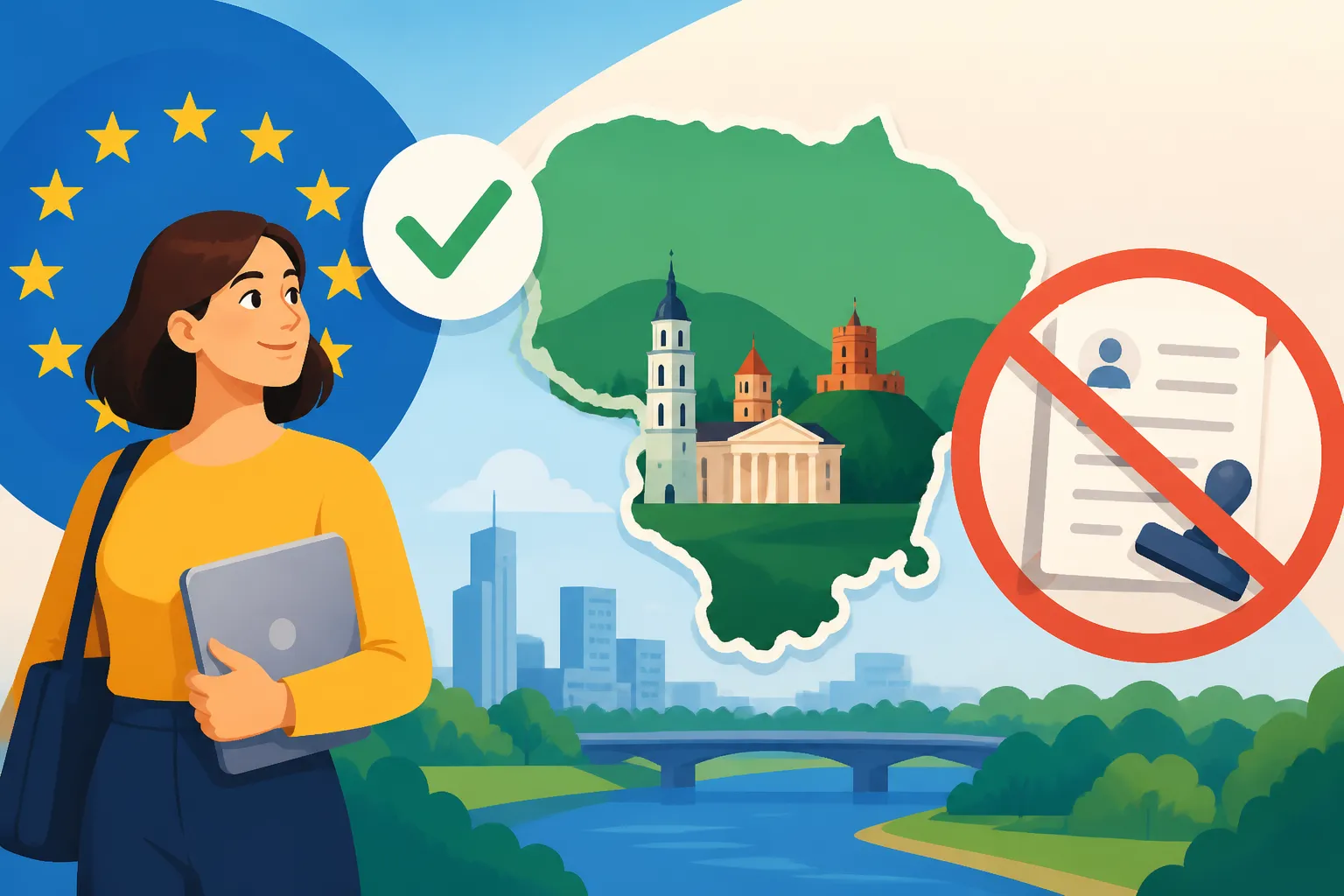
Ah, the beauty of being an EU citizen! The concept of freedom of movement is truly one of the cornerstones of the European Union, allowing citizens to live, study, work, and retire in any member state without needing a traditional visa or work permit. For Lithuania, this means exactly what it sounds like: if you hold a passport from any EU, EEA (European Economic Area – Iceland, Liechtenstein, Norway), or Swiss Confederation country, you are generally free to take up employment here without needing a separate work permit.
No Work Permit, But Other Formalities Remain
While the work permit isn't a concern, that doesn't mean you can just hop off the plane and immediately start your new job in Vilnius or Kaunas. Lithuania, like every other country, needs to know who is residing within its borders, especially for tax and social security purposes. Think of it less as a hurdle and more as a necessary registration process to ensure you're integrated into the system properly. It's about establishing your legal residency and making sure you’re contributing and benefiting from local services.
For instance, after a certain period, you'll need to officially declare your presence. This might feel like a minor detail, but skipping it can cause headaches later when you need to access healthcare, open a bank account, or even just prove your address. It’s not about permission to work, but rather formalising your long-term stay. So, while you can technically start looking for jobs and even sign an employment contract before these formalities are complete, you absolutely must tackle them soon after your arrival to ensure a smooth transition and legal compliance.
Who Qualifies as an EU Citizen
When we talk about "EU citizens" in this context, we're casting a slightly wider net than just the 27 member states. Specifically, this includes citizens of:
- European Union (EU) Member States: Austria, Belgium, Bulgaria, Croatia, Cyprus, Czechia, Denmark, Estonia, Finland, France, Germany, Greece, Hungary, Ireland, Italy, Latvia, Luxembourg, Malta, Netherlands, Poland, Portugal, Romania, Slovakia, Slovenia, Spain, Sweden.
- European Economic Area (EEA) Member States: Iceland, Liechtenstein, and Norway.
- Swiss Confederation: Switzerland, through a separate agreement, also enjoys similar rights concerning free movement and employment within the EU/EEA.
If your passport is from any of these countries, congratulations! You've cleared the first, often most daunting, hurdle for many non-EU expats. You won't need to navigate the complexities of obtaining a specific work permit or a national (D) visa, which can be a relief. However, as mentioned, there are still crucial administrative steps to undertake to ensure your work and residence in Lithuania are fully legal and integrated.
Essential Steps for EU Citizens Working in Lithuania
Even without a work permit, there are foundational administrative steps that every EU citizen planning to work and live in Lithuania needs to complete. These aren't just bureaucratic checkboxes; they are your gateway to everything from receiving a salary to accessing public services. Missing these steps can lead to severe complications, so treat them with the importance they deserve.
Declaring Your Right of Residence
This is probably the most critical administrative step for any EU citizen planning a stay longer than three months. While you don't need a permit to work, you do need to declare your right of residence. Think of it as telling the Lithuanian authorities, "Hey, I'm here, I'm working, and I plan to stay a while." This declaration is handled by the Migration Department (MIGRIS).
You generally have three months from your arrival to declare your place of residence if you intend to stay longer than that period. The process involves submitting an application and certain documents, typically including your valid passport or ID card, proof of sufficient means of subsistence (like an employment contract or bank statements), and proof of accommodation (a rental agreement or a statement from a property owner). Once approved, you’ll receive a certificate confirming your right to reside in Lithuania. This document is invaluable for many other processes, such as opening a bank account or registering with a doctor. For a more detailed walkthrough, you can refer to our guide on How to Declare Your Right of Residence as an EU Citizen in Lithuania.
Obtaining Your Asmens Kodas and Registering with VMI
Your Asmens Kodas, or personal code, is Lithuania's equivalent of a social security number or national ID number in many other countries. It’s a unique, eleven-digit number assigned to you, and it’s absolutely indispensable for pretty much every official interaction you’ll have here. Without it, you can’t get paid, register for social security, or access public healthcare. It is, in essence, your key to navigating Lithuanian bureaucracy.
Once you have your Asmens Kodas, the next crucial step is to register with the State Tax Inspectorate (VMI). This ensures that you are properly set up in the Lithuanian tax system as an employed or self-employed individual. Your employer will usually handle the initial registration for tax and social security with Sodra (the national social insurance fund) once you start working, but it’s always good practice to confirm your status yourself. The VMI is the primary body responsible for administering taxes, and getting yourself registered means you’re on the right track for understanding and fulfilling your tax obligations. Our article on How to Get an Asmens Kodas and Register with the Lithuanian Tax Authority provides a comprehensive overview of this process. It's often intertwined with your residency declaration, making it efficient to tackle them together.
Understanding Employment Contracts and Rights
Even with the freedom to work, you'll be entering into an employment relationship governed by Lithuanian law. This means signing an employment contract that outlines your terms of employment, salary, working hours, and other conditions. It's vital to understand the nuances of these contracts, as they differ from those you might be familiar with in your home country.
Lithuanian labour law is generally employee-friendly, but knowing your rights and obligations is key. For example, there are specific rules regarding probation periods, notice periods for termination, and entitlements to annual leave. Always ensure you receive a written contract, ideally in both Lithuanian and English, so there’s no room for misunderstanding. If you have any doubts, it's advisable to seek legal counsel to review your contract before signing. Understanding Lithuanian Employment Contracts and Worker Rights (2027) will empower you to navigate your professional life with confidence.
Understanding Your Tax and Social Security Obligations
Working in Lithuania, even as an EU citizen, means you'll be contributing to the local economy through taxes and social security. This isn't just a requirement; it's how you gain access to the country's social welfare benefits, including healthcare, unemployment benefits, and future pension entitlements. Understanding these obligations from the outset will save you a lot of stress.
Income Tax and Social Insurance (Sodra) Contributions
When you receive your salary in Lithuania, you'll notice deductions for income tax (GPM – Gyventojų pajamų mokestis) and social insurance contributions (Sodra). The Lithuanian income tax system is progressive, meaning higher earners pay a slightly higher rate, though there is a non-taxable amount (NPD) that applies to lower incomes. Social insurance contributions, managed by Sodra, cover various benefits such as pensions, sickness, maternity, and unemployment.
Your employer is typically responsible for deducting these contributions directly from your gross salary and remitting them to the VMI and Sodra. This means that the amount you see in your bank account is usually your net salary. It's crucial to understand these deductions so you can accurately budget and ensure your payslips are correct. Navigating the tax landscape can feel complex, but resources like The Complete Guide to Taxes in Lithuania for Expats (2027) offer invaluable insights. For detailed information on what’s deducted and why, exploring our guide on Understanding Income Tax (GPM) in Lithuania: The Full Expat Guide and Understanding Sodra Social Insurance in Lithuania: The Full Guide will be incredibly helpful. If you have complex financial situations, consider seeking advice from a specialist in Lithuanian Taxes for Expats.
Cross-Border Employment and A1 Certificates
For many EU citizens, work isn't always neatly confined to one country. If you're an EU citizen working in Lithuania for a Lithuanian company, it's straightforward: you pay taxes and social security in Lithuania. However, things can get a bit more intricate if you're:
- Working remotely for a foreign company while residing in Lithuania: In this scenario, you might become a Lithuanian tax resident and be liable for Lithuanian taxes, even if your employer is abroad. You'll likely need to register as self-employed or through a specific employment arrangement.
- Posted to Lithuania by an employer in another EU country: In such cases, you might remain subject to the social security system of your home country for a certain period, evidenced by an A1 Portable Document. This document ensures you only contribute to one social security system within the EU/EEA.
It's vital to clarify your status to avoid double taxation or gaps in social security coverage. If you are working for a foreign company from Lithuania, it’s advisable to consult with a tax expert to understand your obligations under Lithuanian law, which can differ significantly depending on the nature of your remote work arrangement. This is one area where expert advice for Taxes for Expats truly shines, helping you ensure full compliance.
Here's a quick overview of key tax and social security contributions for an employed person in Lithuania (figures are approximate and subject to change annually):
| Contribution Type | Employee Contribution (from Gross Salary) | Employer Contribution (on top of Gross Salary) | Notes |
|---|---|---|---|
| Personal Income Tax (GPM) | 20% (up to approx. €2,246 gross/month) | 0% | Progressive rates apply above a certain income threshold. Non-taxable amount (NPD) also reduces this. |
| State Social Insurance (Sodra) – Pensions, Sickness, Maternity, Unemployment | 19.5% | 1.45-2.45% (Unemployment insurance) | Covers various social benefits. |
| Compulsory Health Insurance (PSD) | Included in 19.5% Sodra contributions | 0% (but covers state health insurance) | Provides access to public healthcare. |
Please note: These figures are indicative for 2024/2025 and specific rates, thresholds, and calculations (especially regarding NPD and the progressive GPM rates) can vary based on individual circumstances and legislative changes. Always consult official VMI and Sodra resources or a tax advisor for the most current and personalised information.
Practical Tips and Further Considerations for EU Expats
Beyond the paperwork, settling into a new country like Lithuania involves adapting to a new culture, language, and professional environment. These practical considerations can significantly impact your overall experience and success.
Language Skills and Integration
While English is widely spoken in many business environments, particularly in the tech and international sectors of cities like Vilnius and Kaunas, learning at least some basic Lithuanian will profoundly enhance your daily life and integration. From grocery shopping to interacting with neighbours or local service providers, even a few phrases can make a huge difference. Moreover, showing an effort to learn the local language is often deeply appreciated by Lithuanians and can open doors both socially and professionally.
Many resources are available to help you get started. Formal language schools exist in major cities, offering various levels of instruction. Online platforms, language exchange groups, and even apps can supplement your learning. Services like iTalki, for example, connect you with native Lithuanian speakers for one-on-one lessons, which can be incredibly effective for practical communication skills. Engaging with the language isn't just about utility; it's about connecting with the rich cultural fabric of Lithuania. For a dedicated guide, check out Learning Lithuanian: A Complete Guide to Language Courses and Levels.
Finding Employment and Professional Recognition
The job market in Lithuania, especially in larger cities, is vibrant in certain sectors. IT, fintech, shared service centres, and international business companies often seek English-speaking professionals. Networking is key, and online job portals are widely used. Many large international companies operate in Lithuania, such as Western Union, Telia, Swedbank, and Revolut, frequently hiring expats.
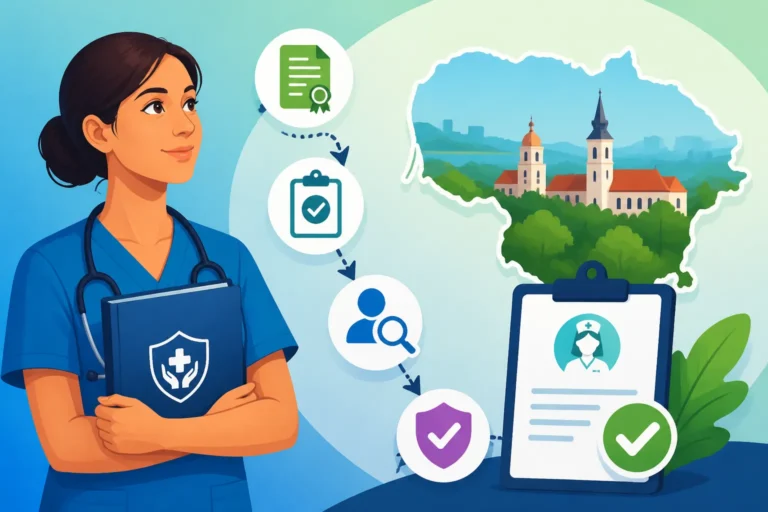
If you have specific professional qualifications or a university degree from another EU country, you generally won't need a separate recognition process for most professions, thanks to EU directives on mutual recognition of qualifications. However, for regulated professions (e.g., doctors, nurses, architects, teachers), you might need to register your qualifications with the relevant Lithuanian authorities (e.g., the Centre for Quality Assessment in Higher Education, SKVC). This ensures your qualifications meet local standards. Our comprehensive guide, The Expat Guide to Finding a Job in Lithuania (2027), delves into job search strategies, and if you have a foreign degree, you might find our article How to Get Your Foreign Degree Recognised (SKVC) in Lithuania useful.
When actively seeking work, it's also worth familiarising yourself with the Lithuanian Employment Service (Užimtumo Tarnyba). While primarily focused on job seekers and employers, they offer resources and insights into the local labour market that can be beneficial. Getting acquainted with How to Register with the Užimtumo Tarnyba in Lithuania could be a good step, even if you don't require their full suite of services.
Disclaimer
The information provided in this guide is intended for general informational purposes only and does not constitute legal, financial, or immigration advice. While we strive to keep the information up-to-date and accurate, laws and regulations in Lithuania are subject to change. It is strongly recommended that you consult with official Lithuanian government sources, a qualified legal professional, a tax advisor, or the Migration Department (MIGRIS) for advice tailored to your specific situation. Reliance on any information in this guide is solely at your own risk.