Can I Travel in the Schengen Area on a Lithuanian Residence Card?
One of the most exciting perks of settling into life here in Lithuania, after you've navigated all the initial hurdles of visas and residence permits, is the newfound freedom to explore. It's a common question, and quite frankly, a valid point of confusion for many expats: "Now that I have my Lithuanian residence card, can I actually travel freely throughout the rest of Europe?" The short answer is usually a resounding yes, but like most things in the expat world, the devil is in the details. This comprehensive guide is here to unravel those details, clear up any misunderstandings, and empower you to confidently plan your European adventures.
The Power of Your Lithuanian Residence Card in Schengen
Getting your residence permit in Lithuania feels like winning a marathon, doesn't it? After all the paperwork, the appointments at MIGRIS, and the anxious waiting, that little card in your hand is more than just proof of your right to live here; it's a key to unlocking much of continental Europe. It signifies that Lithuania, a member of the Schengen Area, has officially welcomed you.
What Your Residence Card Actually Means
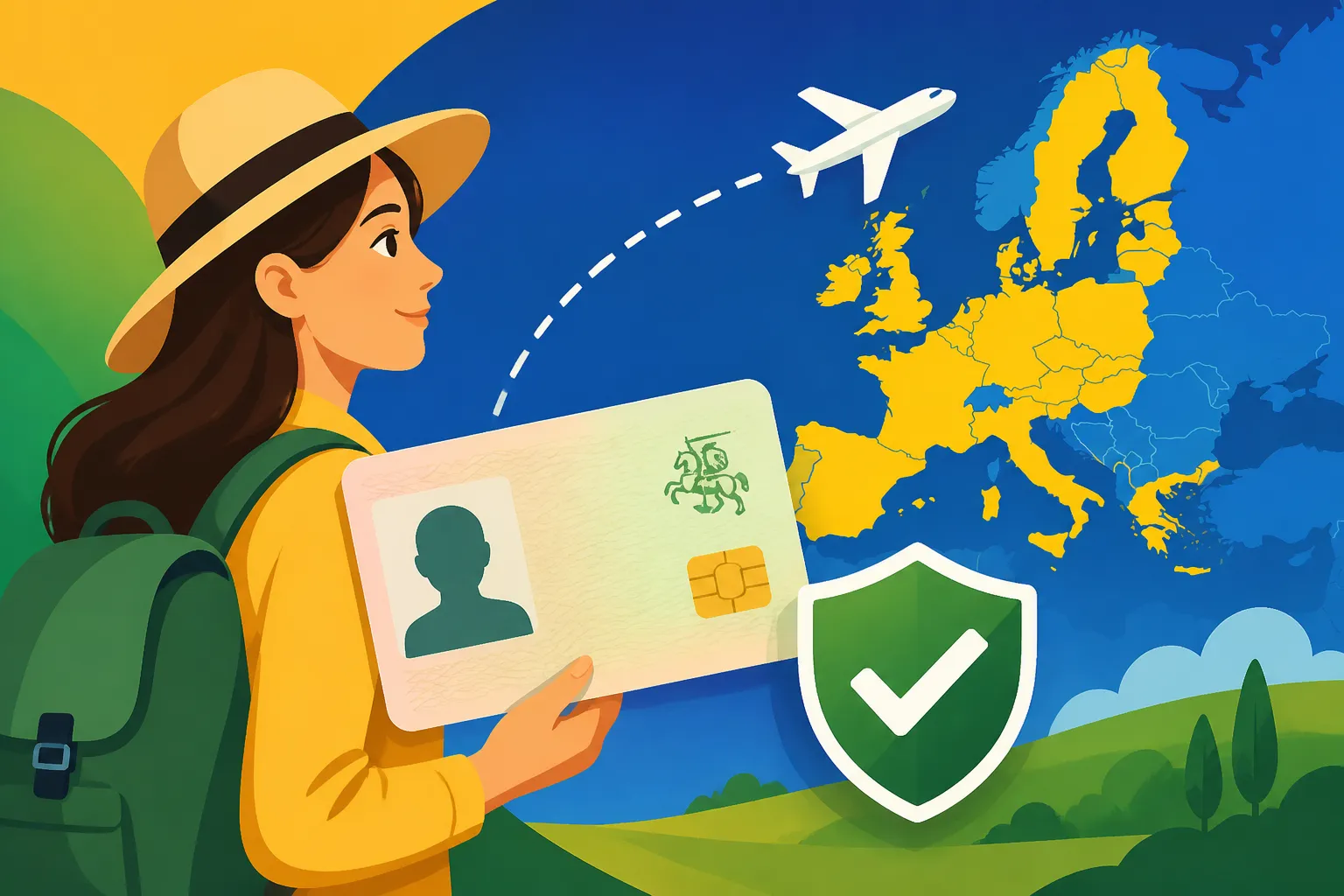
When you receive your Lithuanian residence card, whether it's a Temporary Residence Permit (TRP) or even Permanent Residence in Lithuania, you're not just getting permission to reside within Lithuania's borders. You are, in effect, being granted a form of entry clearance for the entire Schengen Area. Think of it as a multi-entry, short-stay visa for 26 other European countries. This means that with your valid Lithuanian residence card and your passport, you can travel visa-free for short stays (up to 90 days within any 180-day period) to any other Schengen country.
This is often a huge relief, and frankly, a game-changer for many of us who remember the days of needing separate visas for every little trip. I remember planning my first few trips from Vilnius – wondering if I'd need to go through another visa application process just to see Paris or Rome. The sheer joy of realizing that my little Lithuanian card was my ticket was immense. It opens up weekend trips, spontaneous holidays, and the chance to truly experience diverse cultures across Europe without additional bureaucratic headaches. It's truly one of the biggest benefits, right up there with the generally affordable cost of living in Lithuania.
Understanding the 90/180-Day Rule
Now, while your Lithuanian residence card is indeed your golden ticket, it’s not an unlimited pass. The most critical rule to internalize is the "90/180-day rule." This rule dictates that you, as a third-country national (non-EU/EEA citizen) residing in a Schengen country, can visit other Schengen countries for a maximum of 90 days within any 180-day period.
Let's break that down because it can be a bit tricky. The 180-day period is a rolling window. Every day you are within the Schengen Area (outside of Lithuania, your country of residence), you look back 180 days, and you must not have exceeded 90 days of stay during that period.
For example, if you reside in Vilnius and decide to spend a month in Spain, then two weeks in Italy, and later a month in Germany, all these days are tallied. If you hit 90 days within that rolling 180-day period, you need to return to Lithuania (or exit the Schengen Area entirely) and wait until your accumulated travel days fall below the 90-day limit before venturing out again. Your time spent in Lithuania, where you hold residence, does not count towards this 90-day limit. This rule is designed to prevent people from using their residence permits as de facto tourist visas for indefinite stays across the zone. For a deeper dive, our guide on Understanding Schengen Rules and the 90/180 Limit for Lithuania is an absolute must-read. Ignoring this rule can lead to fines, deportation, and even a ban from the Schengen Area, which is definitely something you want to avoid after all the effort you put into getting your Lithuanian Residence Permits.
Practicalities of Traveling within Schengen with Your Card
While the concept of free movement is liberating, responsible travel requires a bit of planning, even within the Schengen zone. Don't just pack a toothbrush and your residence card and expect everything to go perfectly smoothly.
Documents to Carry Beyond Your Card
Although internal border checks within the Schengen Area are generally abolished, meaning you usually won't encounter passport control when crossing from, say, Lithuania to Poland, it's paramount to be prepared for the unexpected. Border guards in any Schengen country, or even police during routine checks, retain the right to request your documents.
Here’s what you absolutely must carry:
- Your Valid Passport: This is your primary identification document. Your residence card is only valid with your passport. Always ensure your passport's validity extends at least three months beyond your intended return date from the Schengen Area, especially if you are leaving and re-entering the entire zone.
- Your Valid Lithuanian Residence Card: This is the proof of your right to reside in Lithuania and, by extension, travel within Schengen. Make sure it hasn't expired!
- Proof of Sufficient Funds: While less frequently asked for internal Schengen travel for residents, it's always wise to be able to demonstrate you have enough money to support yourself for the duration of your trip. This could be bank statements, a credit card, or cash.
- Travel Insurance: This is often overlooked but incredibly important. While your Lithuanian compulsory health insurance (PSD) might cover emergencies in other EU/EEA countries via the EHIC (European Health Insurance Card) for certain citizens, private travel insurance offers far more comprehensive protection. It can cover trip cancellations, lost luggage, personal liability, and emergency medical repatriation – things your basic EHIC won't touch. A reputable provider like Cigna Global can offer peace of mind, knowing you're covered no matter where your Schengen adventures take you. It's not just about meeting a requirement; it's about safeguarding yourself from unforeseen expenses.
- Return or Onward Tickets: Again, less likely to be asked for residents, but having proof of your planned exit from the country you are visiting, or indeed from the entire Schengen Area, can be helpful.
I learned this the hard way once when my flight to Germany was delayed, and I nearly missed a connection. Having all my documents, including my travel insurance details, quickly accessible saved me a lot of stress during a very frantic layover. Always keep digital copies on your phone or in the cloud, separate from your physical documents.
Non-Schengen EU Countries and Beyond
It's a common misconception that your Lithuanian residence card grants you visa-free access to all European Union countries. This is incorrect. The freedom of movement granted by your residence card applies specifically to the Schengen Area. The European Union is a broader political and economic union, while the Schengen Area is a subset focused on border control.
Currently, several EU member states are not part of the full Schengen Area, or have only recently joined partially:
- Ireland: This country has always maintained its own border controls and is not part of Schengen. You will need to check Ireland's specific visa requirements based on your nationality.
- Bulgaria and Romania: As of March 31, 2024, these countries joined the Schengen Area for air and sea borders. However, land border controls are still in place, meaning you'll face passport checks if you drive or take a train there. For non-EU citizens with a Lithuanian residence card, this means you can fly or sail in visa-free, but check specific rules for land crossings as they evolve.
- Cyprus: While an EU member, it is not part of the Schengen Area, and its own visa rules apply.
Furthermore, there are several non-EU countries that are part of the Schengen Area, such as Switzerland, Norway, Iceland, and Liechtenstein. Your Lithuanian residence card does cover travel to these countries under the same 90/180-day rule.
Always, always double-check the latest travel requirements for your specific nationality and destination before you plan any trip outside the Schengen zone, or to these specific EU countries. Government websites of the destination country are your best friend here.
Common Pitfalls and Tips for Smooth Schengen Travel
You've got the card, you know the rules, but life loves to throw curveballs. Being a seasoned expat in Lithuania means anticipating and preparing for potential issues.
Keeping Your Residence Permit Valid and Up-to-Date
The most critical aspect of your Schengen travel freedom hinges entirely on the validity of your Lithuanian residence permit. An expired card is simply a plastic rectangle; it holds no power. If you find yourself in another Schengen country with an expired Lithuanian residence card, you're effectively an undocumented visitor there, which can lead to serious consequences.
- Monitor Expiry Dates: Mark your calendar, set reminders, tattoo it on your arm if you have to! Understand the timeline for renewing your permit well in advance. The process of renewing your Lithuanian residence permit can take time, so don't leave it to the last minute. Our guide on How to Renew Your Lithuanian Residence Permit provides all the necessary steps.
- Plan Renewals Around Travel: If your permit is due to expire soon, it’s best to complete the renewal process before embarking on any extensive Schengen travel. You generally cannot travel out of Lithuania and re-enter without a valid permit, especially if your old one has expired and your new one isn't yet issued. This is particularly relevant if you're waiting for MIGRIS to process your application or issue a new biometric card.
- Address Changes: If you move within Lithuania, remember that your residence permit is linked to your declared place of residence. Always update your address with the Migration Department (MIGRIS) promptly. This might not directly impact Schengen travel, but it's part of keeping your official records pristine. You'll need to know How Do I Book an Appointment at the Migration Department (MIGRIS) in Lithuania? for such changes.
What to Do in Case of an Emergency or Lost Card Abroad
It's the stuff of nightmares: you're enjoying a beautiful holiday in Portugal, and suddenly, your wallet is gone – along with your residence card and passport. Panic is a natural first reaction, but a clear head and a plan are essential.
- Report to Local Police Immediately: File a police report for lost or stolen documents. This report is crucial for any subsequent steps and can help prevent misuse of your identity. Get multiple copies if possible.
- Contact Your Embassy/Consulate: Your home country's embassy or consulate in the country where you are stranded is your next point of contact. They can issue you an emergency travel document or a temporary passport to get you back to Lithuania or your home country.
- Contact the Lithuanian Migration Department (MIGRIS): While they won't issue you a travel document abroad, informing them of your lost permit is important. Once you return to Lithuania, you'll need to apply for a replacement, and having a record of the loss helps.
- Keep Copies of Documents: Before any trip, make digital copies (photos on your phone, scanned copies in cloud storage, or even email them to yourself) of your passport, residence card, and any other important travel documents. This won't replace the originals but will significantly expedite the process of getting replacements.
- Emergency Funds: Always have a backup plan for money, perhaps a hidden credit card or some emergency cash, separate from your main wallet.
Dealing with a lost permit while abroad is incredibly stressful, but knowing the steps can make a huge difference. You've already managed to move here, perhaps using a service like Sirelo for your international move, so you know a thing or two about navigating new systems. This is just another layer of that expat resilience.
Navigating Different Types of Residence Permits for Travel
Not all Lithuanian residence permits are created equal, although for general Schengen travel, most provide similar rights. Understanding your specific permit and its implications is helpful.
Temporary Residence Permits and Their Specifics
The most common type of permit for new arrivals is the Temporary Residence Permit (TRP). Whether you're here for work, study, family reunification, or even through the EU Blue Card for Skilled Workers in Lithuania, your TRP grants you the right to stay in Lithuania for a specified period, typically one or two years, and allows Schengen travel as discussed.
When you apply for your Temporary Residence Permit (TRP) in Lithuania, you'll have had to gather various documents, including proof of accommodation, sufficient funds, and health insurance. These requirements are primarily for your stay in Lithuania, but they indirectly support your ability to travel by proving your stable status here. When you're preparing for renewal, remember that keeping these proofs up-to-date is crucial. Our guide on How to Prepare Documents for a Lithuanian Residence Permit Application can help you keep everything in order.
Permanent Residence and Long-Term EU Resident Status
For those who have been here for a longer stretch, perhaps five years or more, you might be looking at Permanent Residence in Lithuania or even Long-Term Resident (EU) status. These permits often come with enhanced stability and are even more robust for Schengen travel.
A "Long-Term Resident (EU)" permit, for instance, allows for greater flexibility regarding stays in other EU countries. While the 90/180-day rule still applies for tourism in other Schengen states, an EU Long-Term Resident might have an easier path to obtaining a residence permit in another EU country if they decide to move, as opposed to someone holding only a national TRP. This is a significant advantage if you're considering a future that might involve living in a different EU country. However, these are complex legal statuses, and if you're considering such a move, always seek up-to-date legal advice specific to your situation.
| Feature | Lithuanian Residence Card (TRP) |
|---|---|
| Schengen Travel Rights | Yes, visa-free for up to 90 days within any 180-day period. |
| Primary Use | Reside in Lithuania, travel within Schengen for short stays. |
| Required Documents | Valid Passport, Residence Card, Proof of Funds, Travel Insurance, Return/Onward Tickets. |
| Countries Covered | All 27 Schengen countries (e.g., Germany, France, Spain, Poland, Switzerland). |
| Countries NOT Covered | Ireland, Cyprus, Bulgaria & Romania (land borders), other non-Schengen countries globally. |
| Validity | Tied to your Lithuanian permit's expiry date. Must be valid for all travel. |
| Renewal Impact | Plan travel carefully around renewal dates to avoid issues. |
| Emergency Preparedness | Police report for lost card, contact embassy/consulate, digital copies of documents. |
It really boils down to this: your Lithuanian residence card is a powerful document, but understanding its scope and limitations is key to stress-free travel. Embrace the opportunities it provides to explore Europe, but always with a dash of expat preparedness!
Disclaimer
The information provided in this guide is for general informational purposes only and does not constitute legal advice. While we strive to keep the information up-to-date and correct, rules and regulations regarding immigration, visas, and travel can change frequently. It is essential to consult with the official Lithuanian Migration Department (MIGRIS) or a qualified immigration lawyer for the most current and accurate information pertaining to your specific situation. Travel requirements for specific nationalities and destinations may vary, so always check with the respective embassy or consulate before planning your trip.