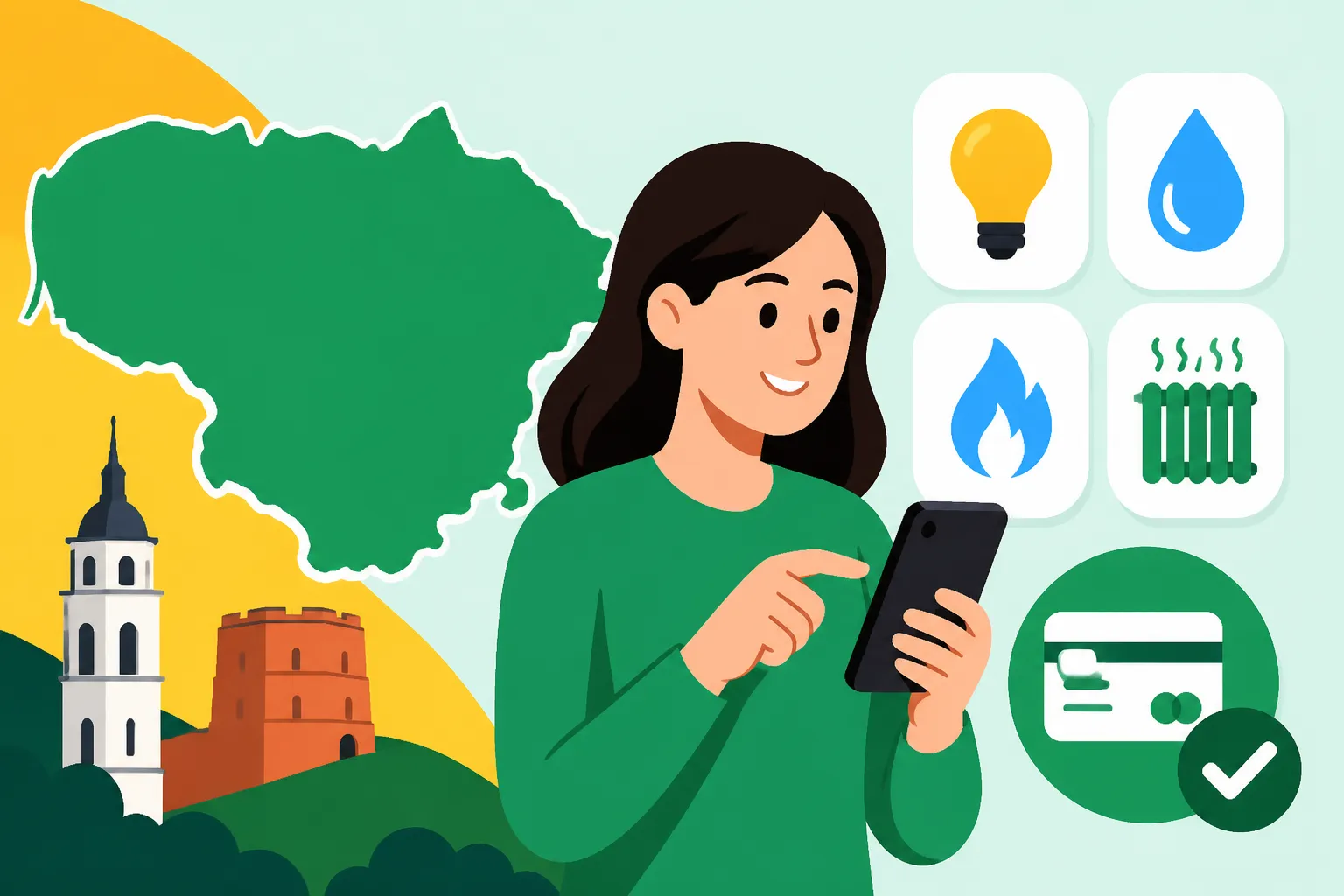
How Do I Pay My Utility Bills in Lithuania?
Alright, let's talk about one of those essential, yet often perplexing, parts of life here in Lithuania: the dreaded utility bills. When you first move here, especially from a country with a more consolidated system, it can feel like you're trying to solve a complex puzzle every month just to keep the lights on and the water running. From understanding the various providers to deciphering the invoices, it’s a journey many of us expats have navigated. This guide will walk you through exactly how to pay your utility bills in Lithuania, outlining the various methods, what to look for, and sharing some tips to make it less of a headache.
Understanding Your Lithuanian Utility Bills
First things first, let's demystify what lands in your mailbox (or, more commonly, your email inbox or e-banking portal) each month. Unlike some countries where a single bill covers everything, Lithuania often operates with separate entities for different services. This can be a bit of a shock, but once you get the hang of it, it's manageable.
The Jumble of Providers and Services
When you first moved in, you probably had to go through the process of The Expat Guide to Setting Up Utilities in Lithuania for electricity, gas, water, and heating. Each of these services typically comes from a different provider, and sometimes even within the same service, you might have options. For instance, electricity is usually from ESO (Energijos Skirstymo Operatorius), while gas often comes from Ignitis (or other smaller regional suppliers). Water and sewerage are handled by municipal companies, like Vilniaus Vandenys in Vilnius or Kauno Vandenys in Kaunas. Heating, especially for apartment buildings, is usually managed by a central heating company like Vilniaus Šilumos Tinklai, often bundled with other communal costs by your building administrator.
Then there’s internet and mobile. While not always considered a "utility" in the same vein as water or electricity, these are essential services you’ll be paying for monthly. Companies like Telia, Bitė, and Tele2 dominate this market, and their bills operate on a different system than your core utilities. If you're using a local eSIM like from Airalo for initial connectivity before getting a permanent plan, you might be used to simple top-ups, but once you're on a contract, monthly bills become a reality.
Adding to this complexity are the "komunaliniai mokesčiai" or communal costs. These aren't direct utility usage charges but rather fees for building maintenance, refuse collection, lift services, and often a consolidated payment for your central heating, managed by your building's administrator (administratorius) or homeowner association (bendrija). It’s crucial to understand Understanding Utility and Communal Costs (Komunaliniai Mokesčiai) in Lithuania because these can be a significant portion of your monthly outgoings.
Deciphering the Bill Sąskaita
So, you've got a paper or digital sąskaita (bill) in front of you. What are you looking for? The good news is that most major utility providers, especially ESO and Ignitis, have at least some English translation on their online portals or apps, if not directly on the bill itself.
Key information you absolutely need to locate on any utility bill includes:
- Mokėtojo kodas / Kliento kodas / Abonento numeris: This is your unique client or subscriber code. It's like your account number with that specific provider. You'll need this every time you make a payment.
- Sąskaitos numeris / Mokėjimo nurodymo numeris: The invoice number or payment order number. This changes with each billing period.
- Suma mokėjimui / Mokėtina suma: The amount due.
- Mokėjimo terminas / Iki kada mokėti: The payment deadline. Missing this can sometimes incur late fees, although providers are usually quite lenient if it's a first-time oversight.
- Banko sąskaita (IBAN) ir Gavėjo pavadinimas: The bank account (IBAN) and name of the recipient (the utility company) where the payment should be sent. This is crucial for online banking payments.
- Adresas: Your service address.
For electricity and gas, your bill will often show your previous and current meter readings, along with the calculated consumption (suvartojimas) and the applied tariff (tarifai). For communal bills, it's usually a breakdown of all the various services provided by the building administrator, which might include anything from cleaning services to elevator maintenance and even How Do I Pay the Apartment Building Maintenance Fee in Lithuania?. It can be a lot to take in, but remember, every expat has been there!
Common Methods for Paying Utility Bills
Thankfully, while the bills themselves might seem complex, the payment methods are quite straightforward and diverse. You'll likely find a method that suits your preference.
Online Banking: The Most Convenient Option
For most expats in Lithuania, online banking is the go-to method for paying bills. All major Lithuanian banks – Swedbank, SEB, and Luminor – offer robust online banking platforms with English interfaces. Once you've opened a bank account (and remember, you'll need your How to Get Your Asmens Kodas Personal Code and Why It Matters for Healthcare for this), setting up payments is relatively simple.
The beauty of online banking is the control and record-keeping it offers. You can clearly see your payment history, set up templates for recurring payments, and even schedule payments in advance. Many utility providers are integrated into the banks' systems, meaning you can often find them by searching their name and then just entering your client code and the amount. For others, you might need to manually input the recipient's IBAN, name, and the specific invoice number in the payment details. Always double-check these details to ensure your payment reaches the right place. This method is generally free of charge, making it the most economical choice too.
Via Mobile Apps and Payment Platforms
Beyond traditional online banking, many utility providers have their own dedicated mobile apps. For instance, Ignitis and ESO offer user-friendly apps that allow you to check consumption, submit meter readings, view bills, and pay directly within the app. These apps often support various payment methods, including direct bank transfers, card payments, or even popular Lithuanian payment systems.
Moreover, there are third-party payment platforms that consolidate various bill payments. One prominent example is Mokipay. These platforms aim to simplify the process by allowing you to register all your utility accounts in one place and pay them with a single transaction or a few clicks. They can be particularly useful if you have many different bills and want to avoid logging into multiple provider portals or your bank’s website constantly. While convenient, some of these platforms might charge a small transaction fee, so always check before committing.
At Payment Kiosks Maxima, IKI, Perlas
For those who prefer a more traditional, cash-based, or face-to-face method, Lithuania has a widespread network of payment kiosks and service points. These are commonly found in supermarkets like Maxima, IKI, and Rimi, as well as dedicated Perlas terminals, which are ubiquitous.
Here's how they generally work:
- Locate a Terminal/Counter: Look for a Perlas kiosk, a dedicated payment counter at a supermarket (often labelled "Mokėjimų priėmimas" or "Info"), or a regular checkout lane if they offer the service.
- Select Provider: On a Perlas terminal touchscreen, you'll usually find a list of utility providers. For counter payments, you'll tell the attendant the name of the company.
- Enter Client Code: You'll need your client code (mokėtojo kodas). Make sure to have this handy.
- Enter Amount: Input the amount you need to pay.
- Pay: Hand over cash or use your debit/credit card.
- Receipt: Always, always get and keep the receipt. This is your proof of payment.
This method is great if you deal primarily in cash, or if you're not comfortable with online transactions. It does, however, usually come with a small service fee, typically ranging from 0.50 EUR to 1 EUR per bill.
Direct Debit Tiesioginis Debetas
For ultimate convenience, setting up a direct debit (tiesioginis debetas) is highly recommended. This means you authorise the utility company to automatically withdraw the due amount from your bank account on the payment due date. This eliminates the risk of missing payments and saves you the monthly hassle of manually initiating transfers.
Setting this up usually involves going into your online banking portal (for example, with Swedbank, SEB, or Luminor) and finding the "Direct Debits" or "E-invoices" section. You'll then specify the utility provider and your client code. Once authorised, the bill will appear as an e-invoice in your bank, and the payment will be processed automatically. This is by far the most hassle-free option once it's set up correctly. Many expats find great relief in How to Set Up Direct Debit for Electricity Bills in Lithuania for various utilities.
Step-by-Step Guide to Online Payment
Let's dive a bit deeper into the most popular method for expats: online banking. This is typically the most efficient and cost-effective way to manage your bills.
Finding Your Payment Details
Before you even log into your bank, make sure you have all the necessary information from your bill. As mentioned, the client code (mokėtojo kodas), invoice number (sąskaitos numeris), the exact amount due (mokėtina suma), and the recipient's bank account (IBAN) and name (gavėjas) are paramount. For utility companies like ESO or Ignitis, you might be able to log into their self-service portals (e.g., manogama.lt for Ignitis or Enefit for some electricity plans) to find digital versions of your bills with all these details easily accessible. These portals also allow you to submit meter readings, track consumption, and review your historical payments.
Sometimes, especially with communal bills from building administrators, you might only receive a printed paper bill or an email with an attached PDF. In these cases, carefully scan the document for the crucial numbers. If it's in Lithuanian, use a translation app on your phone if you're unsure. Google Translate's camera feature can be a real lifesaver here!
Navigating Your Bank's Online Portal
Once you have your details, log into your Lithuanian bank's online platform. While interfaces might vary slightly between Swedbank, SEB, Luminor, or even smaller banks and fintechs, the general process for making a transfer is quite similar:
- Select "Payments" or "Transfers": This is usually a prominent option on the main menu.
- Choose "New Payment" or "Domestic Transfer": You're sending money within Lithuania.
- Enter Recipient Details:
- Recipient's Name (Gavėjo pavadinimas): Type the full name of the utility company (e.g., UAB "Vilniaus Vandenys," ESO, AB "Ignitis").
- Recipient's IBAN (Gavėjo IBAN): Carefully input the bank account number. Double-check every digit!
- Amount (Suma): Enter the exact amount due.
- Payment Purpose (Mokėjimo paskirtis / Informacija gavėjui): THIS IS CRUCIAL. This field is where you enter your client code and the invoice number. Without these, the utility company might not be able to correctly attribute the payment to your account, leading to headaches. A typical format might be: "Mokėtojo kodas: [Your Client Code], sąskaitos Nr. [Invoice Number]". Always use the exact wording provided on your bill if possible.
- Confirm and Authorise: Review all the details one last time. If everything looks correct, authorise the payment using your preferred method (e.g., Smart-ID, Mobile-ID, code card).
For internet and mobile services like Telia or Bitė, you can often set up recurring payments directly through their portals or apps, linking your bank card for automatic deduction, or via e-invoice through your bank. If you're using a relatively new mobile provider, you might want to learn How to Set Up a Mobile Plan with Telia or Bitė in Lithuania? to ensure smooth billing.
Confirming and Tracking Payments
After you've authorised the payment, your bank will usually show a confirmation message. It's good practice to either screenshot this or download the payment order confirmation. Most online banking systems keep a detailed transaction history, which serves as your electronic receipt. Payments within Lithuania are usually very fast, often processed within minutes or a few hours on business days. If you make a payment late in the evening or on a weekend, it might only show up on the utility company's side on the next business day.
It is wise to check your utility provider's self-service portal a day or two after payment to ensure it has been registered. This proactive approach can catch any payment attribution issues early on. If for some reason a payment doesn't show up, having your bank's payment confirmation will be essential for contacting the utility company and proving you've done your part.
Tips for Expats Navigating Utility Payments
Living in a new country comes with its unique challenges, and utility bills are definitely one of them. Here are some seasoned expat tips to help you keep calm and carry on.
Language Barriers and Translation Tools
Let’s be honest, those initial bills in Lithuanian can feel like ancient scrolls. While more providers are offering English support online, it’s not always universal, especially for smaller building management companies. Don't be afraid to lean on technology. Google Translate (especially its camera function for snapping a picture of a paper bill) or DeepL can be invaluable for understanding the key terms. Many of us have spent evenings carefully translating each line item!
Another trick is to look for templates. Once you’ve translated one bill from a specific provider, save it. Future bills from the same company will likely follow a similar format, making them easier to decipher. If you’re really stuck, don't hesitate to ask a Lithuanian colleague, friend, or even your landlord for help. They’ve all been through it and are usually happy to offer a quick translation or explanation.
Setting Up Auto-Payments
This is probably the single best piece of advice any expat can give you regarding bills. Set up direct debits or recurring payments whenever possible. This eliminates the monthly mental load, the stress of remembering deadlines, and the potential for late fees. It's one less thing to worry about in your busy life, allowing you to focus on enjoying your time in Lithuania rather than navigating administrative hurdles.
As mentioned, look for "e-sąskaitos" (e-invoices) or "tiesioginis debetas" (direct debit) options within your online banking portal. Most major utility providers support these integrations. For services like internet or mobile, you can usually link a debit or credit card for automatic monthly deductions through their own portals. Just ensure you have enough funds in your account each month to cover the payments!
Understanding Consumption and Tariffs
Especially for electricity and gas, understanding your consumption patterns and the tariffs applied can help you manage your costs. Are you on a single tariff, or do you have different rates for day and night usage? Many smart meters and apps allow you to track your real-time consumption. Being aware of peak usage times can help you adjust your habits and save money. For example, How to Set Up Electricity (ESO) in Your Lithuanian Home details how you can choose different plans.
Heating bills, particularly in older apartment buildings, can fluctuate wildly depending on the outdoor temperature and the efficiency of your building's system. Don't be surprised if your winter heating bill is significantly higher than your summer one; this is normal. If you live in an apartment where heating is centrally managed, there's little you can do to control it directly, but understanding why it changes helps manage expectations. If you’re renting, your landlord should be able to explain the specifics of your building’s heating system.
It's also worth noting that as you settle in, you might reconsider services. Perhaps you've moved and need to arrange a company like Sirelo for your belongings, but then need to sort out new utilities. Taking the time to understand each bill, rather than just blindly paying, will empower you.
Summary of Payment Methods for Lithuanian Utilities
Here’s a quick overview of the most common ways to pay your utility bills in Lithuania, outlining their pros and cons for expats:
| Payment Method | Pros | Cons | English Support | Cost (Fees) |
|---|---|---|---|---|
| Online Banking | Convenient, fast, good record-keeping, often no fees. | Requires internet access, initial setup might be daunting. | Excellent for major banks (Swedbank, SEB, Luminor). | Generally free |
| Direct Debit | Fully automatic, no missed payments, ultimate convenience. | Requires initial setup, need to ensure sufficient funds. | Good, often set up via online banking. | Generally free |
| Utility Apps/Platforms | Consolidates bills, easy tracking of consumption, push notifications. | Might incur small transaction fees, requires downloading multiple apps. | Varies by provider; major ones like Ignitis, ESO have good English interfaces. | Often free, some fees |
| Payment Kiosks (Perlas, Maxima) | Cash payment option, widely available, no bank account needed. | Small service fees, can be time-consuming, less privacy, paper receipts. | Limited, typically Lithuanian only on screens/staff may not speak English well. | ~0.50-1 EUR per bill |
| Post Office (Paštas) | Similar to kiosks, good for cash, widely available. | Small service fees, potentially longer queues. | Limited, typically Lithuanian only. | ~0.50-1 EUR per bill |
Remember, as an expat, setting up these systems early on, perhaps even before you get your How Do I Get Proof of Address Pažyma from Registrų Centras in Lithuania sorted, can save you a lot of future hassle. It's all part of the adventure of making Lithuania your home!
Disclaimer
The information provided in this guide is intended for general informational purposes only and does not constitute legal, financial, or professional advice. While we strive to keep the content up-to-date and accurate, regulations, procedures, and service offerings in Lithuania can change frequently. Expats are strongly advised to consult official government websites, financial advisors, or relevant utility providers for the most current and specific information pertaining to their individual circumstances. We do not assume any liability for any actions taken based on the information provided herein.